← Dive Club 🤿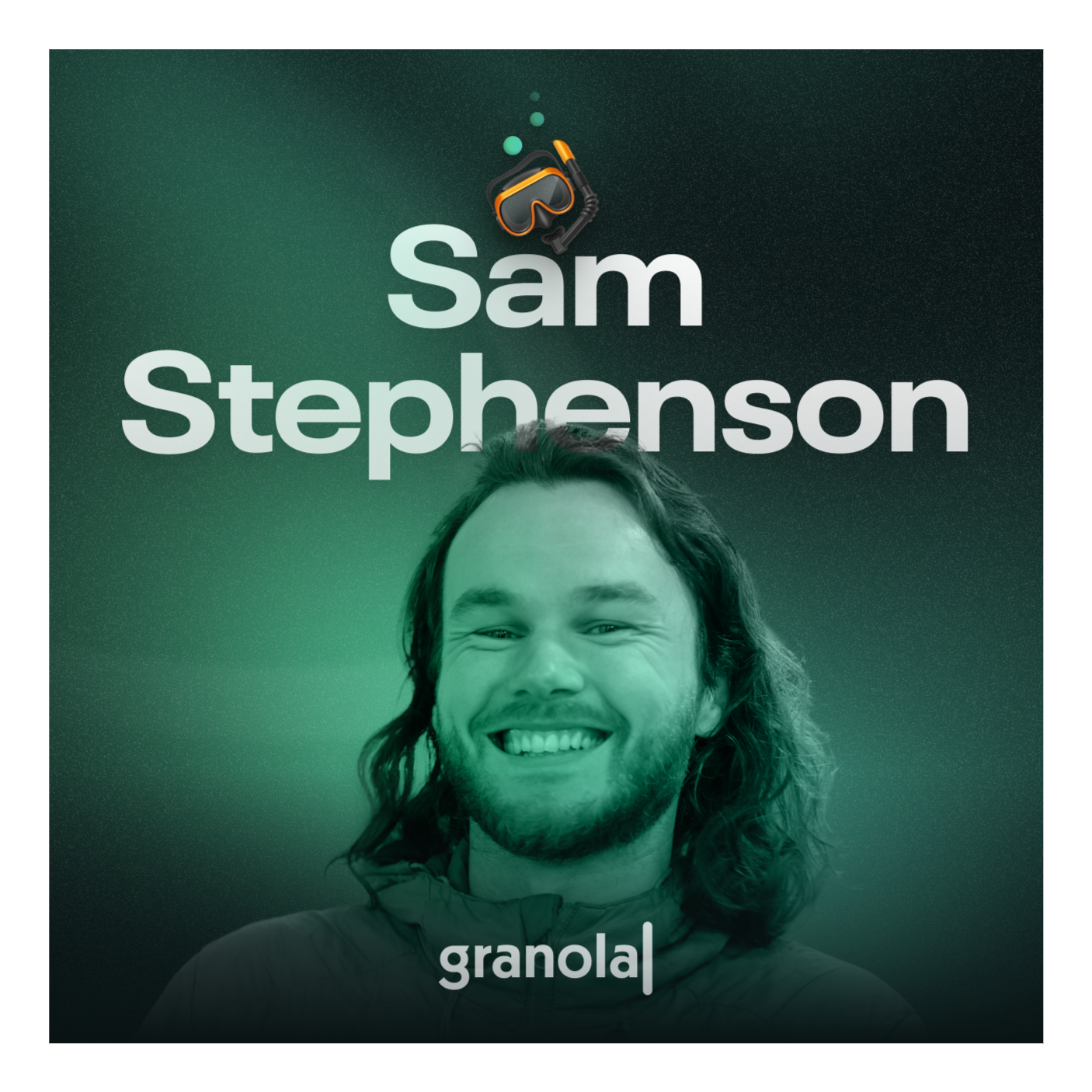
Loading summary
Transcript99 lines
- [00:00]
Sam Stevenson
We get to kind of invent the future of how people interact with software and how they kind of work alongside this AI stuff.
- [00:06]
Rid
By capturing the meeting, you're upstream of almost everything else that happens in an org.
- [00:10]
Sam Stevenson
So much of the most important context of what's going on in a company is in the meetings. And we always thought of this as kind of like it's our foot in the door to be able to play in this space.
- [00:17]
Rid
Where do you take the product from here?
- [00:19]
Sam Stevenson
What's the interaction pattern that lets them do 10x more? And that's going to take prototyping and exploration and a bunch of wrong turns.
- [00:26]
Rid
How do you even think about carving that path as a designer where you don't want to go too far in one direction?
- [00:34]
Sam Stevenson
If you're an early stage designer, you've got to be able to kind of wear both hats and know when to deploy which skill.
- [00:40]
Rid
Welcome to Dive Club. My name is Rid and this is where designers never stop learning. This week's episode is with Sam Stevenson, who's the co founder and designer of Granola, which has pretty quickly become a staple of my workflow and is easily one of today's hottest new startups. So we're going to get get the full backstory of their journey, including how they figured out the right set of problems to solve everything that it took to navigate the idea maze and ultimately create a great product with AI. So let's dive right in to figure out how their story started.
- [01:15]
Sam Stevenson
I quit my job and was like messing around with side projects. Chris had quit his job to figure out what to do next as well. We met like halfway through that, so we didn't know each other. And then we started hanging out and basically just jamming on our own side projects together. And we had a period of a few months just doing that. I think at the time I was building my own note taking app, like a general purpose kind of note taking app. Chris was like, I think had discovered GPT3. This was, it's like hard to put yourself back in that time. But this was like pre chatgpt. I think his thinking was like, this is going to change everything in technology and but it's not obvious how to apply it, what the use cases are going to be and how we're going to interact with this new thing. So he was kind of just like building little things to kind of poke and prod at what might be possible with LLMs. We kind of went down a few rabbit holes, I guess. We talked about how could we kind of change like build a new kind of note taking app or like a tools for thought type product. That would be the kind of your second brain. And we could do that kind of all automatically through AI organizing everything. And we got a couple of those conversations and then we very quickly realized that this was like a. It's like a trap that I think I've definitely been in before building products. And I think it's a common one among like product builders where like it's real tempting to try and like design this beautiful system from the top down of like how a piece of software should work and how you should use it. It's real seductive, you know, But I think that's not how useful things actually get built. They get useful things get built by like figuring out point in someone's workflow where they're struggling with the thing or whether they're not able to do it and just focusing on that and trying to build a thing to help them do just one thing better. And then you can build the next one and the next one and eventually get somewhere broader than that. But yeah, I think it took a couple of conversations and then we realized like, shit, we've fallen into the trap, we need to take a step back. I think at that point we deliberately decided we're going to let down tools and not build anything for a little bit and we're just going to talk to people we knew we wanted to work in or build in the kind of AI work tools space. So we kind of started with a super high level brief to ourselves. It was just like, let's talk to a dozen, two dozen people about their work and just look at their day, look at what sucks about your day, what takes you up time where it shouldn't do. What stuff do you regret having spent time on? What would you like to do? That stuff, that kind of thing. Just kind of fishing for problems, I guess, in people's days.
- [03:48]
Rid
Once you'd identified that ballpark of problems, what were some of those initial experiments that you were running and in general, what were you doing to learn from people in those early days?
- [03:58]
Sam Stevenson
I've been a designer and doing user research for a long time and have found through trial and error that observing what people actually do gives you very different results to just asking people what they think they do. I think we noticed pretty quickly talking to people about their work that the things people would verbalize were often very rosy pictures of what their real work life is like. One thing we found super helpful was we would sit with someone and look at their Calendar and then get them to basically go blow by blow, be like, cool, it's 9:00 yesterday, tell me what you were doing. And then 9, 15, 9 30, 9, 45. And actually grounding the conversation in the real thing, where they couldn't post rationalize what they were doing with their time helped us get much more realistic, I think, kind of insight into what their work life was like. And one common thing that came up again and again was like, I suck at taking notes and therefore I don't know what I'm supposed to do after the meeting. I lose track of the things I promised. That causes a lot of stress. When we looked at how people actually took notes, basically you get two modes. Mode one is you are furiously transcribing everything that's been said on the call. That's me. Yeah, it's a real split. There's a lot in each bucket. And the flip side of that was people who barely take any notes, they take like one or two little scribbles, often things that don't make sense later. It's like a random piece of gibberish which meant something to them at the time, but didn't. You could look at it like an hour later and it looks like junk on the piece paper, I guess. Another thing that was in the mix, which was interesting, was AI notetakers had already kind of been on the scene for a while at this point, and a lot of the people we talked to had tried them. Everyone we spoke to who tried them had kind of been enamored with the idea of it, but then in practice just hadn't found it that useful. Lots of folks would just kind of leave it running on the call, but then never go back to stuff afterwards. When we interrogated why a bit on that, I think things that came up were transcripts. Not actually a very useful artifact from a meeting. They're too detailed. I kind of like to think of it like the raw material of a call. And it's not actually something I think that you should be looking at really after the meeting's over. It's too full of noise. And these tools present the transcript as kind of like the main interface, or at least they did at the time. Basically, the feedback we got was that like 90% of it isn't useful to me. What I really just want is the two or three things that I said I would do or that I need to take away from this meeting, and I just want to be able to remember that. So people were finding it hard to write notes These tools weren't solving the problem for them and it felt like we could do something with that. There was a space to build something better there.
- [06:30]
Rid
Real quick message and then we can jump back into it. So you know how I've been talking about how I use genway to do research with AI? Well, something surprising is happening and just for context, I use genway in two different ways. One is contextual interviews. So I prompt the AI with what I'm hoping to learn and it has a dynamic conversation with each person. And the second is usability testing. So I upload a Figma prototype and their AI agent helps me test them with people all over the world. I mean, you should see the quality of the follow up questions. It's pretty crazy. But here's the surprising part. At the end of the interview, most people say they're more comfortable opening up to an AI agent than a real human. And it's just another reason why I'm hooked on the product. If you want to try it out, there's even a secret landing page just for Dive Club listeners which gets you two months free and 10 credits. To recruit people, just head to Dive Club Genway that's G E N W A Y. Raycast has a new announcement, but it's not what you'd expect. It's a partnership with Terminal to create a flow coffee and they released this beautiful behind the scenes video to go with it. I scooped a bag, but not just because I love coffee. And obviously the Terminal website is beautiful. The whole thing is a window into what Raycast cares about and stands for as a company. And their commitment to quality and making things that they're proud of goes way beyond productivity and it makes me proud to support them as a company. So definitely check out the new Terminal collab. You can learn more at Dive Stack Club Coffee. Okay, now on to the episode. Was there a clear moment where you realized like, okay, we're on to something here?
- [08:09]
Sam Stevenson
I think a lot later, honestly, like, I don't know. I think at this point we were still in just like, let's try this, let's try that.
- [08:14]
Rid
Talk to me a little bit about what are some of the different things that you were trying then? Like what were those experiments that you're running?
- [08:19]
Sam Stevenson
We tried, I guess one thing we tried early on was like a very simple interaction where you would type a word about something that was said in the last 30 seconds or whatever. And this tool would have the transcript as running in the background. And so when you type that word it could kind of Flesh that out into a bullet, into like a useful piece. That prototype was literally just that. It was like a web UI where no database behind it, no storage. You could only do one of these at a time. It was just to try out the interaction of like, write a thing, hit tab, get it to autocomplete a sentence. That felt promising and that one felt pushing on further. We tried a bunch of other ones that were more like buttons you could hit during a meeting. Like, just like, bookmark this moment, or like that was an action item or that was a quote that I want to get kind of thing. We might come back to them, I think, in some form, some of them in the future. But at least at the time, we kind of failed to make it feel like a really effortless thing. You have to remember that the tool is there and you're going to move your mouse and go click the button and all of that takes you out of the meeting, which is not what we want to do. Yeah, it was things like that. It was like deliberately just trying out individual interactions without worrying about the infrastructure or the whole product around it. I guess the thinking was like, if we can nail this one thing, then we can probably build a product around it. But it's the one thing. It's got to feel really effortless.
- [09:37]
Rid
It's cool knowing where you arrived and then hearing all of the different explorations where you really were attacking this from so many different angles all at once. Were there clear tipping points or maybe a moment where you had some kind of an insight that put you on the right track, which ultimately manifested as the product that we see today?
- [09:57]
Sam Stevenson
I guess we would be showing these prototypes to people kind of as we build them, and people's reaction to them was like a lot of what we used to decide what was interesting or not. Like, for example, the bookmarking and favoriting stuff felt like a good idea to us at the time. We put it in front of people and ask them to do a meeting with it and they would mostly just forget, honestly. Or they would think it was a good idea, but then they would hit it just once and then the result wouldn't actually be that useful. The first one I mentioned that ended up having more legs and we kind of ran with that for a bit longer. And that was like a real. People got it. When you looked at it, it was like an instant, like, oh, yeah, that's how it should be. Like that just. That makes total sense.
- [10:38]
Rid
You're talking about kind of like the autocomplete. Once you're complete.
- [10:41]
Sam Stevenson
Yeah, yeah.
- [10:42]
Rid
So how'd you build off of that?
- [10:43]
Sam Stevenson
We basically built like a proof of concept product, I guess at that point, like around that interaction. Basically the minimum thing you could use to do an actual meeting with and use it to get meeting notes. This was over like Christmas 2022. I remember sitting at the dining table of my family's house building this and it was like a single page web app, I guess, rich text editor. And we just had this one interaction where it would transcribe in the background. You would type a word, hit tab and it would autocomplete a sentence. You can think of it like a GitHub copilot or something, but with a bit more nudging from you. You write the word that you want the thing to be about. It was really dumb. Like the app, it wasn't really unsophisticated. There was no database behind it, so no long term memory for the app. You had to copy paste your notes out of it into notion or notes or wherever you wanted to keep it afterwards. There's no user accounts. The transcription was all done through the speakers of your computer, so you couldn't use headphones. You had to just kind of like let the sound come out and back in again to be transcribed. That one stuck around a long time. Actually. We didn't fix that for like six months.
- [11:54]
Rid
Six months?
- [11:55]
Sam Stevenson
Yeah, yeah, yeah, yeah. It was a mission.
- [11:59]
Rid
At what point did you start thinking of this as a startup that you were going to raise money for and really go after.
- [12:04]
Sam Stevenson
I was in side project land for longer, I think. I think Chris was kind of set on trying to figure out what his next startup would be. I was happy tinkering and making a thing that was cool and people liked. I think the tipping point was Solea, who we both know had been chatting with Chris on and off for a few months. I think before leading up to Christmas of that year. I think we had a conversation with him in January of that year where we showed him what we built. He was into it or I don't think he was into this idea particularly, but I think the trajectory was starting to look promising from where we come to where we were now. And yeah, at that point he basically said, I might be in. If you guys are thinking about raising, then count me in. I don't know what it was like for Chris, but for me that was real. That felt like a moment. I've never had somebody express backing for you like that, I guess, and believe that you could get somewhere good with it.
- [12:56]
Rid
Yeah, I'D imagine that reshapes even what you're thinking of in terms of, like, what this could become at that point.
- [13:01]
Sam Stevenson
Yeah, yeah, yeah. I had a lot of, like, a lot of soul searching that, that month. Like, what am I going to do with my. I was. I was like kind of 2 timing or 3 timing with other projects at the time as well, and deciding to let those go so I could just be all in on this was a. Was a process. Like, it sounds like an obviously good idea now, thinking about it, but back then I was really, like, not sure what to do.
- [13:26]
Rid
I mean, a lot of the product feels obvious to me right now, which is why I think it's so good. But even in our short discussions before this, it's been like a winding path to get to this point. And so a big part of the conversation. I really just want to understand the winding path because you have reached this place of informed simplicity that is, you know, it's obvious, like you said. So you have this moment on Christmas. What most people are familiar with when they think of Granola is this polished Mac app that's ready to go out of the box. This beautiful onboarding help us bridge that gap a little bit. What were you doing to really design the product after you've made this mental switch to go all in?
- [14:08]
Sam Stevenson
At first, we just started sending the app digitally to people like our friends and being like, hey, try this out and tell us what you think. And we really didn't get much from that. I think very quickly realized that people are usually too busy to try a thing. And also the tool that we had sucked at the time, we could get useful, like, insight from watching people use it, but you had to kind of be on a call or give them, like, a reason to be trying it. Otherwise it wasn't really worth the time to use it. To caveat that, we did have a couple of people who very early on were like, I believe in you guys. I'm going to use Granola from now, starting now, for all of my meetings. Michael, one of our investors in particular, was like this. And. And he stuck to it. He's like, as far as I can tell, every one of his meetings since then, he's used granola 4. And that was so, so helpful because it was kind of unusable at the beginning.
- [14:57]
Rid
Yeah, I was going to say Michael's AirPods were gathering dust.
- [15:01]
Sam Stevenson
Yeah, he's a real investor. He's like, startups are pitching him. He's got to make decisions worth millions of dollars, and he's Using our shitty tool to collect to make those decisions. Yeah, we owe a lot to him sticking with it. But I guess what really helped from that was he would complain at us and it was like real complaining, guys, I need this and it's not doing the thing I need it to do. Just the quality of the feedback was so much higher than someone kind of pontificating about what they think might be cool for it. And then we were just trying a lot of stuff, trying a lot of different interactions. The kind of tab autocomplete things that I talked about before, we tried a long time to make that work. I think the idea behind it felt very seductive that basically you could do all your note taking in real time and you could be kind of like real time partnering with the AI. It felt very sci fi, you know, it still feels cooler than using granola today, but I guess the more we watched people using it, just the problems came up very quickly where we keep hearing things like every time granola writes a note, I need to check what it said and I don't trust that it's going to be good until I've looked at it. And as soon as I look at the note, I'm out of the meeting and I'm not present in the conversation anymore. That's the whole point of granola. You should be more present in the conversation because you're using it, not less. Yeah, we tried lots of things to try and mitigate this. We made the notes way shorter. We turned them into quotes rather than summarize bullet points. We gave you more control, we gave you ways to summon action. Item just wasted. Kind of like narrow the gap between what you had in your head and what the AI produced on the paper. But I don't know, we never really got there. I think just as soon as there is a gap between what you want and what the AI produces, it's frustrating if you can't change it in real time and you can't help but kind of gravitate towards looking at that on the screen.
- [16:49]
Rid
What was it like letting go of an idea that you probably established a bit of an emotional attachment to over the months?
- [16:55]
Sam Stevenson
It was tough. We didn't let go of it for a long time. What we did was we just added more stuff. The app started out simple, but basically every experiment we tried, we just added it and added it and added it into the app and we didn't often take things away. So at some point, I can't remember how many months in it was, but we were like, cool. This real time thing is like not sure. Let's try a different approach. Let's just try just taking whatever you wrote from one column and back then there was many, many columns in the ui and we take all the notes you wrote and we'll just put them in a summary separately after the call and let's see what happens. If people like it, then they'll use the summary thing and if they don't like it, maybe they'll keep using the real time thing. I don't know if it was a great methodology for trying out ideas. Just adding and adding and adding. It made the product horrifically complex looking and really hard to kind of get to grips with.
- [17:45]
Rid
The pile of interactions and UI that you've discarded is so much bigger than what is in production today. And like I knew that, but listening to you talk, it's clear I really underestimated just how much you've experimented and tried.
- [17:59]
Sam Stevenson
I need to aggregate it all in one big figma board or something. I don't know. It'd be cool to see all of the iterations.
- [18:05]
Rid
Yeah, I want to talk a little bit about your past experience because you mentioned that you kind of were experimenting and working in this note taking tools for thought kind of second brain space. So how did that experience influence the way that you thought about the design for Granola?
- [18:21]
Sam Stevenson
Been a designer for a bunch of startups before Granola and I guess I've always, because I've been into this space, I've been like hacking on note taking apps for myself and there's a tool called workflowy which has been around for donkeys years and I was big into making themes for it like 10 years ago because it was great. It felt really ugly and I was trying to make prettier themes for it. More recently I was at a company called IdeaFlow who were building one of these, like a general purpose notepad. You type all your thoughts in IdeaFlow helps organize it for you, helps you make sense of bigger ideas. I guess through all of this time spent in that space, I've spoken to a lot of users and a lot of people who use products like this. I count myself as one of those types of people too. I think one thing you see is using a kind of second brain note taking knowledge organization tool. When you're in that mode using a tool like that, it's a very kind of reflective, slow thinking way of operating. There's this psychologist, Daniel Kahneman who has this famous concept of System 1 and System 2 thinking System 1 is like the kind of animal part of our brain. I think it's actually the kind of stem of your brain or something. It's very reactive, panicky. It's the thing designed to keep you alive and running from predators and that kind of thing. And then there's System two, which is the kind of prefrontal cortexy front part of your brain that's reasoning and rational thought and can solve complex problems, that kind of thing. I think a lot of the tools for thought space works on the assumption that we're like System two creatures and that we're capable of these very complex reasoning and rational thought and blah blah, blah. And I think it's partially true. I think obviously humans can solve incredibly complex problems and can be very sophisticated thinkers, but I think a lot of real work, unfortunately is much more System one, if you look at people's day to day, if you work on a computer, it's a lot of over promising people, promising that you'll do these 10 things for different people, and being late to meetings and kind of struggling to keep on top of your to do list or your inbox and all of that puts you in quite a reactive mode. And I think a tricky part of designing in this space is that if you assume that this person is System two rational thinker, then I think it just clashes with reality. Actually, your users probably a lot of the time are just trying to keep up with the deluge of information they're being hit with and things they promised and they're just not going to have the time to engage with your product in the way that you think they should. I think in the future you'll be able to kind of like take a step back from all your meetings in the last week and look at kind of patterns from the meetings you've had or like things that are bubbling up from different customer calls and kind of take your time to wade through interesting things like that. But that's not where we wanted to start with granola. I think we knew that we wanted to get utility in a meeting, which is a stressful situation. And so we needed to solve for system 2 brain first and we could get to the other stuff later.
- [21:28]
Rid
How does that high level principle translate into what the interface looks and feels like?
- [21:32]
Sam Stevenson
I'd say the main thing is that we just kind of try to ruthlessly prioritize the core flow of starting a meeting from the notification, jotting down a few things that you care about and getting really great notes at the end, and that kind of happening seamlessly without you needing to Think about granola during the meeting. It has trade offs. I think a lot of the kind of features on the edges of granola, like templates are not nearly discoverable enough. People regularly go like 6 months before they realize that templates exist or that you can view the transcript. And I would like to fix a few of those things, but I think, yeah, it's just like ruthless attention to the core flow and making that as seamless as we can.
- [22:12]
Rid
Can we talk about viewing the transcript for a second? Because you put that in this tiny little popover dialogue where it is very clearly a second class citizen. And tying back to your view of the transcript as a raw material and how much of that is intentional differentiation from existing products or your opinion of what makes a good note taking tool today versus hey, we just got a bunch of moving pieces and that's the way that it ended up being.
- [22:40]
Sam Stevenson
Yeah, we've been on a journey with the transcript and I feel like we still haven't. It's not, it's in like ideal form right now. You know, I think we can make it better over time too. But when we were talking to folks who used existing note takers, it became apparent very quickly that the transcript was kind of useless, you know, except for like very specific things, but generally speaking, not very helpful.
- [22:59]
Rid
So you put it in a 400 pixel box.
- [23:02]
Sam Stevenson
Not even, not even at the beginning we hit it. That was V. One was like no transcript. It was literally, I guess we had the tab thing at the time. So it was like just a white sheet of paper with a little listening indicator and you would type stuff, hit tab, and that was it. No transcript. And very quickly people were like, one, I can't tell if the thing is on, if it's working. I don't trust it is working. Two, this note feels like bullshit, but I can't tell if it's bullshit or not. I don't know what was actually said here. And three, I think another utility of the transcript which we discovered over time was just like having the thing coming in in real time is really helpful for a lot of people in just understanding the conversation. Especially non native English speakers, I think often appreciate being able to see the conversation printed in words in real time during the conversation.
- [23:45]
Rid
Interesting.
- [23:46]
Sam Stevenson
It's like subtitles, I guess. We kind of conceded that we put it in a sidebar at the beginning. It was in the sidebar for a long time. Always much smaller and I guess kind of deliberately hard to read. I think we wanted the hierarchy to feel very strong where your notes were the thing in granola. That's what granola is. It's just a place for your notes. And the transcript is this supporting thing which you can look at if you want, but otherwise you shouldn't be thinking about. It's moved around the UI a few times, but it's always been this small, kind of hard to read thing, which I guess should feel kind of frictionful operating with it. It's behind a click for a reason.
- [24:23]
Rid
I mean, that was my impression. That was intentional friction, which I do think it's working. I don't click into it. But maybe there is that subconscious trust that you've created because I know that it's a click away.
- [24:33]
Sam Stevenson
Yeah.
- [24:34]
Rid
It does remind me of something that you talked about earlier where you were saying how you want granola to feel like your personal space, like this is, you know, your stuff. And I would imagine that having your notes in front of the transcript is tied back to that overarching idea. Is there anything else that you're doing to create that feeling? Especially when the interface itself is incredibly minimal?
- [24:56]
Sam Stevenson
Yeah. Yeah, Good question. There's this idea I read in a book a long time ago. It's called like the Science of Organizing our Digital stuff or something like that. It's like the most nerdy computer book ever.
- [25:06]
Rid
Yeah, you really are a second brain guy.
- [25:09]
Sam Stevenson
I'm really into it. Yeah.
- [25:11]
Rid
I didn't realize we were at that level.
- [25:14]
Sam Stevenson
Yeah, there was one bit of it which, like, I forgot most of the book. But like, this is one chapter where they talk about doing a study where they basically compared a nested folder structure UI in like, you know, Finder or Windows Explorer or whatever to search for like, retrieving stuff. You know, they gave like 100 people a computer and were like, find this file and off you go. I think the thing that stuck with me from that was they said, I think search and browsing won in different scenarios, different for different reasons. Doesn't matter. But the interesting thing was that navigating files and folders activated a different part of your brain. It activated the spatial navigation part of your brain, whereas anything search related activated the linguistic communication part of your brain. And the thing that was interesting there to me was navigation. And the spatial part of your brain is much older and much. We've had that as humans for millennia, more than language. And so we're much faster and it happens much more subconsciously, whereas linguistic thinking is much more like single threaded and much slower and feels more effortful. And I thought that was a really cool idea. I Have no idea what's going on in granola, but that really resonated. So I guess I've always been very keen from the start that granola should feel kind of spatial. There should be a physicality to it. And we should try and keep the user in their spatial brain rather than just in the language, kind of thinking brain that manifests in a few ways, like it's a Mac app on your desktop. Like it feels more like a place, I guess, that has weight on your screen and sits there and takes up space. The home screen. We've tried so many times to redesign this and haven't found. It's like a running joke at this point that every couple of weeks someone tries to rethink the home screen. It should feel kind of like a stack of objects, like a stack of notes. There's this weird tension in granola where we call them notes, but actually they're kind of like meetings, mostly with exceptions. But I think as soon as you call it a meeting, it's like a conceptual idea rather than a note, which feels like a piece of paper that has physicality. It should feel a bit like a list of objects. And as you use it over time, it should feel like you're building a collection of your stuff that feels like it has significance. The UI is like one piece of paper and it kind of puts your content very front and center. It's very clear that there's like one main object in granola. A lot of the notetaker bot interfaces that we looked at at the beginning are like three columns and different panels everywhere. And there's no real feeling that like this is like, what am I looking at? I can't pin down what kind of object this is that I'm looking at. We wanted that to feel very obvious in Granola too.
- [27:56]
Rid
Can we talk about onboarding for a second? Something that stood out to me in the early days was the amount of time that you were spending just putting what you have in front of people, talking through it, talking through, you know, their workflow, how your product works. What was the journey like for you to figure out how to do self serve onboarding? Because I do think you have a pretty unique approach. And I sent Granola to multiple people just for the fact that, hey, you should look at this onboarding for inspiration. So what's the backstory there?
- [28:23]
Sam Stevenson
Up until like two or three months before launch, we didn't have any onboarding and the thing was really hard to understand. We had some very good advice early on. David Leap, who's a. He's a YC partner, but also angel invested in Granola, and he was like, if you just give your product to people and watch them try and use it when you're very early, you're actually trying to solve two problems at the same time. You're trying to solve the problem of, have you made a useful product that people pick up and use and get utility out of? And can you solve this problem of making the thing easy to understand and easy to use and to figure out? And those are, like, independent problems. You don't need to think about them. They're interdependent. The simpler you make the product, the easier it is to understand and pick up. But you don't need to do both at the same time. You're kind of like doing it on hard mode if you try to. We heard that. We were like, ah, yeah, okay, this is kind of stupid, what we were doing before. And we switched to hand onboarding every user that we gave Granola to, by which I mean, we would get them on a video call and I would share my screen. And I would. Or no, they would share their screen, but I'd be like, okay, now click the sign in button. Now, when you want to create a new note, go to the top right and click this one and then this and then this. The idea being we just show them how to use it, and even if the thing looks as complicated as hell, they can use it and then we can get feedback on what it's like to live with.
- [29:41]
Rid
How many of those do you think you did?
- [29:42]
Sam Stevenson
We did, like, five a week. We had, like, 150 beta users, like, when we started thinking about onboarding, at which point we started adding people at scale a bit more. But, yeah, so it wasn't a ton, but, you know, like 150.
- [29:55]
Rid
That's still pretty onboarding.
- [29:56]
Sam Stevenson
Yeah.
- [29:57]
Rid
You're learning a lot in those calls, I'm sure.
- [29:59]
Sam Stevenson
Yeah, yeah, big time. And I think we got to the point where we started to have confidence that the core product was kind of working. Retention was good. People used it many times a day. People started talking about how great it was to other people. Like, all those signs were really good. The only problem was that if you gave it to someone, they couldn't figure out what the hell it was and why they should use it and all that. And it was kind of a Frankenstein at this point. There was, like, a transcript sidebar, and then tabs with your private notes that you could flick between. And then there was like, a summary page that Also had tabs, so you could have many summaries. I think we still had those template buttons on the right. So you could generate random stuff as well. Chat. There's a lot of things. So you know the problem. We kind of switched modes to like, okay, the thing kind of works. I think we just need to figure out how to get some random person on the Internet to figure it out and start to use it for themselves. What that looked like was basically we just stopped holding people's hands on the video calls, but otherwise kept the same thing and slowly started watching them struggle with things. And we could pick away at the problems and what was working or what wasn't working.
- [30:58]
Rid
So it sounds like there was almost this correlation between self serve onboarding and the forced simplification of the product. Where before it's like, okay, can we solve the problem? Maybe we're oversolving the problem in more ways than we should be even thinking about it. Yeah, okay, check. Now how do we create something that people can understand?
- [31:17]
Sam Stevenson
Yeah, yeah, big time. Yeah. I guess the self serve onboarding brought up a bunch of things. Like there was a bunch of really obvious stuff like making the onboarding flow, like the, you know, the sign up button and the permission screens and all of that stuff comforting and you feel okay about what you're signing up to and all that stuff. I guess the harder ones were like, what's the mental model someone should have of what granola is and what it's doing? And we really struggle with that a long time because I guess back then granola was like, there was your notes in a sidebar, which was like, it's hard to explain. It was like the main UI in the meaning. And then once the meeting was finished, it would collapse down into a sidebar and give you this panel with the summary. But what that meant was you had kind of like two artifacts. You had the notes that you'd written and then you had the thing that granola made and they look like separate objects. What we saw was basically people gravitated towards just playing with their notes because that's what they knew and that's what they thought they created during the meeting. And the granola summary was like this other thing which they just come out of nowhere and they didn't trust. It's just confusing for the user to have two artifacts and it needs to feel like one artifact and it should feel like the same. When you write notes during a meeting, it's the same piece of paper that then becomes the summary at the end. It's just like granola is just taking your notes and it's like adding bits and tidying stuff up. But they're the same notes. It's nothing different. It's the same artifact that took a while to build conviction in. And then I think, like, the animation of it revealing was really important in making it feel seamless. And we tried a few different things before we landed on that as the approach we took on a bit of design debt, for want of a better term, in other parts of the app to make this happen. I think the tabs we have between your private notes and the summary, it's kind of weird and it confuses people still. It's like a product of the fact that we basically don't want most people to think about it. And so we make it smaller than in the bottom. And really, you just look at one piece of paper, which is the summary at the end. But people need to be able to see what they wrote. Otherwise it just solves a bunch of edge cases. And they trust the thing they wrote much more than the thing we generated.
- [33:15]
Rid
Same. And it's interesting again to hear how intentionally adding just a little bit of friction bearing something just a little bit more than maybe some people would feel comfortable doing is actually what allows for that simplicity of the product. And I think it works. And even when I think of granola, that interaction, that bar floating over and transforming my notes into the AI like smart notes, that is the interaction that I associate with your product. And it's fascinating to hear how you went through a lot of code and a lot of design explorations in order to get to that place.
- [33:51]
Sam Stevenson
Yeah, yeah, It's a very happy memory. We coincidentally had an offsite in Tenerife in January. I think we kind of built conviction that this single piece of paper route was going to be the thing we'd try. And so we basically took this week in Tenerife to build a lot of what you see as granola today or like, the main interaction. And it was like one of those happy, you know, like hacking away the single day, but in the sun. And we did it, like, in. By the end of the week, there was a working thing which felt really good.
- [34:21]
Rid
Hey, it's rid. I'm constantly asked about my favorite product, so I want to take just one minute and give you a quick rundown of my stack. Desen is how I ship design changes without having to code. Framer is how I build my websites. Genway is how I do research. Jitter is how I animate my designs and Play is how I design and prototype mobile apps. Visual Electric is how I generate all of my imagery. And Raycast is my shortcut every step of the way. Now, I've hand selected these companies to partner with me so that I can do these episodes full time. So the best way by far to support the show is to check them out. You can find the full list at Dive Club, slash Partners. Okay, now on to the rest of the episode. So much of the quality of the product is tied to the output of that interaction. What does the AI write for me? So what have you learned about prompt engineering while designing this product?
- [35:19]
Sam Stevenson
Yeah, it's really hard. When I look at our notes, I'm like. I'm like, mostly disappointed still, I think a few things I guess we've learned or that have been helpful. So the context you give the notes really, really matters. If you just give a transcript to ChatGPT and ask it to summarize it, it'll be super generic. And I think an analogy I like is think of the AI like an intern, like an intelligent college graduate, but someone you just basically just plucked off the street. They don't know who you are or why they're there. They've just been told to summarize something. Yeah. You pluck a person off the street, bring them into your meeting room and ask you to take notes for you, they're going to have no idea what's important or what you care about or who you are or why this meeting is happening, or what is the one most important thing that everybody needs to take out of this meeting. And so we shouldn't expect the AI to be able to do that either. We need to provide as much of that context as possible, I guess over the. We're still improving on this, but we basically are doing our best to add in extra context for the AI so it knows as much as possible about why this meeting's happening and who the people are and stuff like that.
- [36:24]
Rid
All right, let's look ahead a little bit. So you have product market fit, things are growing, the product's very sticky. Where do you take the product from here?
- [36:32]
Sam Stevenson
Ultimately, we want to build a tool that you're using for a lot of your day, a lot of your work, there's a big part of your life that can help you in lots of ways. The thing that gets me out of bed, at least in the morning, is we get to kind of invent the future of how people interact with software and how they work alongside this AI stuff. And it's a really cool Opportunity. Yeah. I think over time we'll look for more and more ways to let you do that in more contexts. The big things on our mind right now more concretely are like, I think granola is a very valuable product for you as an individual, just getting notes for yourself. But we could do so much more to help a whole team work together more productively. And a team should be better if everybody's using granola because you can do so much more with that stuff rather than just any one individual. The other big area to push on is helping you with more than notes. Notes are useful, but they're definitely not everything you want out of a meeting. And often it's the things that you promised to do for someone are the more pressing, more important things that you need to do afterwards. The kind of hand wavy vision of the future, which I like, is like a granola. Like you use granola. It's kind of like on your screen, taking over third of your screen or whatever, you're having a meeting and as the meeting goes on you say, oh, yeah, I'll do that for you, or let's schedule the next call to do this. And then, oh, I need to update that ticket in linear here. And I need to do this and I need to do that. And. And granola's smart enough with your kind of nudging it along the way to be doing those things in the background for you. It needs to be connected to the right tools and it needs to understand enough about your context to be able to do that. But that's kind of like, I don't know, I think there's a bunch of cool sci fi stuff there which totally will be fun to play with.
- [38:05]
Rid
I mean, by capturing the meeting, you're upstream of almost everything else that happens in an org.
- [38:09]
Sam Stevenson
Yeah, Yeah, I think so. Yeah. So much of the most important context of what's going on in a company is in the meetings. And we always thought of this as kind of like it's our foot in the door to be able to play in this space and to be able to give you value as a knowledge worker, I guess.
- [38:22]
Rid
Hey, quick note, I'm not kidding when I say I use granola for every single meeting that I have. Like, I can't imagine not using this product every day now. So I asked them if they'd be willing to hook it up for the dive community and they're giving like an amazing offer. So if you go to dive club Granola, there's a secret landing page where you and everyone on your team can get three months free. It's like a crazy good offers. So if you're a designer, then I can't recommend the product enough. Definitely check that out. And now let's keep going with the episode. There's a fun tension though where right now you have this beautiful simplicity. It feels like my space. It's. Everything's stripped down and there's a world where you totally botch this. It's like full of integrations and a big old add to linear button and CTAs to invite your teams on every page. So yeah, yeah. How do you even think about carving that path as a designer where you don't want to go too far in one direction?
- [39:26]
Sam Stevenson
We have to be kind of dogmatic, I think, about protecting the core flow of using granola like we're dead in the water if you aren't using it for your meetings and aren't using it to collect context about what's happening. So that kind of has to win above everything else. It happens regularly. Even now we're pretty as a team, I guess we want to move fast and so folks are kind of shipping stuff autonomously into the app all the time, which is great by design, but there's often things that if something kind of touches the notification flow or the generating notes after the meeting automatically, that kind of thing. Chris and I especially are real paranoid about things like that. I think we just need to have a real light touch there because this kind of goes back to the whole System one, System two thing I was talking about. I think as you start to use granola for more kinds of work, we'll be able to get a bit beyond the System one only way of thinking, like I think during meetings, especially back to back meetings, is a very tense, stressful time where you don't have a lot of space in your brain for anything else. But I think like we have an internal build now where you can. You can see all your customer calls in one place and chat with them in aggregate. And that. That's incredibly useful. We use it all the time here and I think that is. It's just a totally different mode of operating. If you're doing that kind of thing, you've probably carved out an hour or two in your day to do some reflection and thinking about what are we going to build next? Or I need to write this product spec and therefore you have the time and therefore we can kind of afford to have a denser UI with more control and a lot more buttons to play with. Basically. I think I could See Granola feeling quite. Future versions of Granola. The difference being quite apparent between, like, the core meeting flow being super simple and stripped back, and then the kind of more analytical, reflective parts of Granola being more powerful and more power usery and. Yeah, yeah. I don't know. We'll see how that shakes out, but that's kind of where it's going at the moment.
- [41:23]
Rid
That's interesting. You're totally right. Because I'm not in, like, sales or anything. I don't have a million meetings. But when I do have meetings, I stack them back to back quite intentionally because I want to compress them into as.
- [41:32]
Sam Stevenson
Yeah.
- [41:33]
Rid
I want to create as much empty space in my day as I possibly can.
- [41:36]
Sam Stevenson
Yeah, yeah.
- [41:37]
Rid
And I don't go back and look at those notes at all. But maybe I'll get to the point where I'll have, like eight or ten demos for inflight or something like that, and I'll go back then and say, okay, what do I actually want to pull out of these? And you're right. I could see that feeling like a very, very different type of product.
- [41:53]
Sam Stevenson
Yeah. Yeah, I think so. Before we strip Granola back, you know, to the thing it is today, like when it was back in complicated mode, I guess that was kind of what we were going for a little bit. Like, we had. We had. As well as all the panels and sidebars, we had two modes. We had meeting mode and non meeting mode. And as soon as you hit the notification or started transcribing, Granola would go into meeting mode, which was this compact window with nothing on it, just a notepad. And then you hit end meeting, and you get this huge airplane cockpit of buttons and stuff. And I think we got the placement of it wrong, or the meeting notes weren't the place to do the airplane cockpit thing, but I could see other parts of the app where that's more appropriate, you know, or. We want to hear that more.
- [42:35]
Rid
All right, so up until this point, it's just been you designing the product. You're bringing on someone else. I think by the time maybe this episode goes live. Is that correct?
- [42:44]
Sam Stevenson
That's the plan. Yeah. Yeah. We have actually. We've started working with a contractor designer who's doing brand and some product stuff for us. But this. Yeah, we're kind of like a. I'm just starting to look for our first full time in house product designer.
- [43:00]
Rid
Let's say, hypothetically, we're having this conversation a year from now. And then you're reflecting on what has become the super successful hire. What are some of the core traits or skills that you're particularly appreciative of from that person?
- [43:15]
Sam Stevenson
Good question. We're in an incredibly fast moving space, AI powered work tools. A lot of people are coming after the meeting, meeting notes, meeting, transcribing thing, because it's got so much potential and so much usefulness. So I think as a product we can't really afford to sit still. Like we have to keep innovating and I think that means basically we're going to have to go through this cycle of given a particular problem or part of someone's workflow, what's the interaction pattern that lets them do 10x more? And that's going to take prototyping and exploration and a bunch of wrong turns. I would love to have more mental firepower to be trying stuff on that front and to be figuring out what's next for us. We now have a product that's working and has many users and so we have the challenge of keeping that going and protecting that. But also we've still got to keep iterating in other places.
- [44:03]
Rid
You just shift to prod every day anymore.
- [44:06]
Sam Stevenson
Exactly. We're at the point where we're just going to need parallel threads of exploration and discovery and prototyping to figure out what's next for us. Yeah. I mean, I also think we have to shift things to a super high level of execution in a way that doesn't mess up the granola UI and keeps it to simple, calm feeling place that everybody thinks of it at the moment. I think it's the game. If you're an early stage designer, you've got to be able to kind of wear both hats and know when to deploy which skill, you know and that.
- [44:30]
Rid
Yeah.
- [44:30]
Sam Stevenson
But it's part of the fun. That's what I like about it.
- [44:32]
Rid
I like the idea of wrong turns. Like even as you were talking, I was picturing someone in a maze and you just need a designer who can sprint and take as many wrong turns as quickly as possible in order to figure out what the right direction to go is.
- [44:42]
Sam Stevenson
It's been interesting as their team's grown because we've had to like learn to externalize, I guess some of the things we kind of believe or the ways we operate a bit more so that we can do that with more people in the scale. I think one of the things we're trying out is for a given project, are we in explore mode for this project where we don't know what the solution looks like and the whole Point is to try a bunch of stuff and see what resonates with people and what works. Or are we in exploit mode? Is this a problem where there are known solutions and we just need to pick one off the shelf and go execute it to a high level? As an example, like search, for example, in the app, like the search bar, type the company, see the results. There's a bunch of design work in that to make it feel nice, but it's also beautiful. Search isn't going to change the game for us, but we need it and we should do it. Well, I think for those kind of problems, it's totally okay to just to go look out there in the world, see who does it best, take what you can from that, apply it to us and execute really fast.
- [45:38]
Rid
And that familiarity hit too. Like I was using the product, I command K searched without having ever seen that window. And it worked exactly as I would expect because yeah, it's a solved problem.
- [45:49]
Sam Stevenson
An example of explore mode problems we're going to be grappling with is like, how do you turn a set of meetings into a brief for a client that's actually useful? You know, like if you're a. If you work at an agency and you're trying to produce a brief for a client or a proposal. Looking at all my customer calls from the last week helped me make sense and find the useful stuff out of that. That's an unsolved problem. No one figured that out. And the way to figure out what's useful there is often not to just produce figma mocks of different layouts, it's to try stuff in the product.
- [46:15]
Rid
I was about to say those aren't really pixel problems.
- [46:17]
Sam Stevenson
No, no, no. We've done this a few times since Granola's been out in prodding in the wild. Like, if there's a problem in this kind of explore mode territory, we'll deliberately, like fork the app. It's usually me, but sometimes other folks on the team will just like hack away at it and kind of like brute force potential solution into the app and code can be horrible, things can be broken, it's like totally fine. And then a few of us will go and live on that version for a few days or a week or two and see how it feels. And the point is, once we have conviction, we throw away the app and we build it properly in production. But it affords us the freedom to go nuts and not worry about real users at the same time.
- [46:59]
Rid
Is there an example where you've done that and arrived at the solution just by playing with real code.
- [47:05]
Sam Stevenson
The multiplayer stuff that we're going to ship soon is probably an example of that. I think I won't talk too much into specifics because we're still figuring it out, but like how you make granola notes visible to other people in the app in a way that feels where we're not like invading your privacy and like how you help, you know, in the world where you have like 100 people at a company using granola sharing notes with each other, you need some level of organization on top of that to help people kind of cluster stuff into places that make sense. It's kind of like a one way door problem, I guess, where like we've got to choose the kind of primitives, like the organizational structure that we're going to give users. And as soon as we put that out in the wild, it's going to be real hard to pull back. People are going to use it, they're going to set up folders or they're going to invite people with this particular sharing mechanic and it's going to be real hard to kind of backtrack and try something else. So that was one where we did, I guess one A. I did a bunch of upfront, open ended, talking to people, research type stuff about it. But then we started trying solutions by just building versions in the code. Like first versions were purely kind of like right at the beginning, like all ui, no memory, no connection to the backend, anything like that. Just how does it feel to put a note in a folder like this? Or how does it feel to invite people to look at this note like this, all kind of smoke and mirrors UI stuff. And then over time we kind of solidified it a little bit. But at the end of the day it's all throwaway code that we're just trying to try out the ideas in.
- [48:28]
Rid
Real, in real life we've covered a ton of ground. And I love this story because it really did just start off with side project friends super, super broadly trying to look at people's day to day workflows and try to figure out what's the right problem to solve. And here you are now with, you know, really one of the most exciting startups that I know of. So it's an inspiring journey. I'm sure somebody out there listening is, you know, hopeful that they can go on a similar journey. So are there any other insights or lessons or learnings that we haven't talked about yet that you want to leave people with before I let you go?
- [49:01]
Sam Stevenson
It's said so often that it's kind of triton like a. I think people say for the sake of it at the moment to like make something people love or that's really useful or whatever. I've obviously like, as a designer over my career I've had to learn this, but I think building granola has like hammered it into me even stronger that as a person building product. It's like so easy to get to like fall in love with your ideas and think something sounds great and that you've got the right answer. But really the only thing that matters is does somebody actually find it useful and do they pick it up and pick it up again and again and does it really solve their problem? And it's like a really hard thing to keep yourself honest too. I think we continually still as a team fall into the trap of thinking we've solved it and then finding out that we haven't. And what's hard about it is people will tell you that you're doing good things and that you're building a great, you're building a great company and a great product and oh my God, yeah, I want that feature you're talking about. But really the only thing that matters is whether they pick it up again and again. I just have to keep continuously reminding myself to stay honest to that and to keep grounding myself in talking to real people and watching them use our thing and watching them struggle with it and then fixing the things that they struggle with. And that's kind of like at the end of the day, that's how we make a better thing.
- [50:12]
Rid
And you're perfectly qualified to give that answer too. As someone who really deeply understands the space and has spent years working on different implementations and different, different types of note taking experiences. So for you to still say like, at the end of the day, do they keep picking it up or not? And how important and difficult it is to operate with that being the only thing that matters at the end of the day. I've taken a personal note for myself because it's definitely applicable right now. So I appreciate you coming on and just giving the like really nitty gritty into your thought process and all of the different experiments and lessons that make up the winding road. So thank you for coming on, Sam. Big, big, big fan of granola and everything that you all are building. So appreciate your time today.
- [50:59]
Sam Stevenson
Thank you. I really appreciate it, really appreciate getting to come on here. I've been a fan of the show for a long time. It's a, it's. Yeah, it's super cool to be here.