Loading summary
Transcript280 lines
- [00:00]
Duncan Trussell
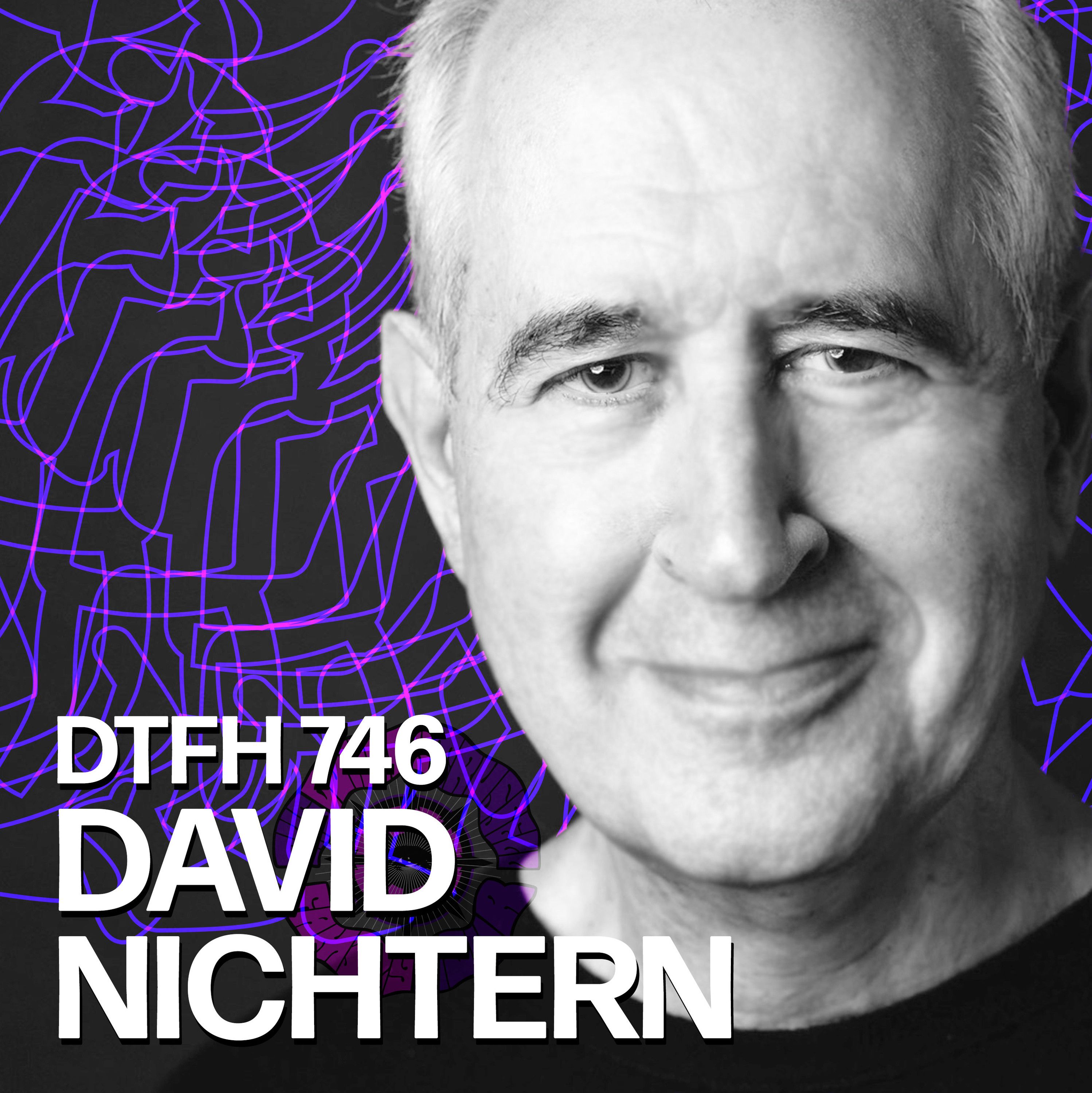
Welcome to you, my friends, and welcome to the dtfh. Today we have a premiere episode for you. But first, some dates. I am very excited about the next few dates coming up. And I want you to come see me in Cleveland this weekend at Hilarity's 4th Street Theater. After that, you could find me at the La Jolla Comedy Store coming back home. That's May 15th through the 17th. And then after that, I'm going to be back in Charlotte, North Carolina, at the Comedy Zone. Come out and see me, won't you? All right, listen, I know the DTFH goes off the rails sometimes. I know that I have people who are generally considered by default, reality to be maniacs on the show. People like Jeremy Corbell, Alex Jones. I love listening to what these people have to say. I find it to be fascinating and interesting and educational. But every once in a while, it's time to ground ourselves into something maybe not so out there. And so I would invite you to stick around for this episode with David Nichtern. Not only is he an incredible musician, not only does he play for Krishna Das, the famous Kirtan Walla, but he's also an incredible meditation teacher. And he studied under one of the most enigmatic Buddhist teachers of our time, Chogyam Trungpa Rinpoche. And I'm lucky enough to have him as my teacher, and he's awesome. So if you're interested in Buddhism or if you find the stuff that David talks about interesting. I definitely do. Then I would invite you to check out Dharma Moon. This is David's online and offline Buddhist community. You'll hear him talk about that in today's episode. David studies Tibetan Buddhism, but he's just really good at breaking things down and simplifying things in a way that people like me can understand. And in this wild maelstrom that we are all experiencing, I think you're going to find some. Some tools you can use to calm down a little bit in this episode. So, everybody, welcome to the dtfh. David Nichtern. David, welcome back to the dtfh. It's good to see you. It's been a while.
- [02:32]
David Nichtern
Yeah, thank you, Duncan. And I know you've been traveling a lot too, right?
- [02:35]
Duncan Trussell
Oh, on the road, non stop. Every weekend. Going to Cleveland tomorrow.
- [02:43]
David Nichtern
Wow.
- [02:43]
Duncan Trussell
You know, got a bunch of kids, you know, bunch of kids. They need organic food, mortgages, householder stuff.
- [02:53]
David Nichtern
Do you have any idea whether they're gonna be following in your footsteps or not?
- [02:57]
Duncan Trussell
If they're gonna be comedians.
- [02:59]
David Nichtern
Well. Or what? However, what Else do you consider yourself to be God?
- [03:05]
Duncan Trussell
D a got an hour? I don't know.
- [03:09]
David Nichtern
Well, that's exactly what we. We exactly have one hour.
- [03:12]
Duncan Trussell
I have no idea. And you know, I mean, I try not to think about that too much. I know I love making stuff. And I also know that, you know, if you like, I have to support whatever it is that they're doing. This is something Ram Dass said to me when I asked him a rather cheesy question at one of the retreats. How can I be a good dad? And he goes, dad, roll sun, roll soul, not roll. And I thought I was very Ram Dass, very powerful, very beautiful. And so that's. I try to remember that, though. You know how it is with parenting. You're not going to remember that all day.
- [03:56]
David Nichtern
It doesn't change, cease, though even when you get older and they get older, you never reverse. You're still the parent.
- [04:05]
Duncan Trussell
That's right. I mean, but your son has followed in your footsteps, you know. That did happen.
- [04:10]
David Nichtern
Yeah, yeah. Yes and no. He has his very own unique way of doing things. And you know, as a musician. He definitely is not a musician. That part of my whole arc. He didn't track. But he is a wonderful Dharma teacher and he's also quite a good writer. He's written a bunch of books.
- [04:30]
Duncan Trussell
Very insightful human, very sharp, clear mind. Like a library, a walking codex of obscure Buddhism that he can articulate in incredibly clear and precise ways. Such a good teacher.
- [04:44]
David Nichtern
Agreed. Yeah, agreed. Yeah.
- [04:46]
Duncan Trussell
That's got to feel good.
- [04:47]
David Nichtern
Well, yes. And you know, it's so ongoing, you know, I've enjoyed being your friend as a dad, you know, and you becoming a dad.
- [04:58]
Duncan Trussell
Yes.
- [04:58]
David Nichtern
And sharing a piece of that action because it keeps evolving. It's funny how it just keeps evolving. You have to stay loose to be a dad or a parent.
- [05:09]
Duncan Trussell
Absolutely. When you're juggling four of these sweeties, it's a constant analysis because it's easy to accidentally leave one of them out and you're focusing with the little ones because you've got three little ones and a seven year old. You know what I mean? And so then just accidentally that it can happen where you, you, you snap into reality and realize, oh my God, he's just home alone. He's seven. Yeah. What do we, what do. Like, I have to get these kids bathed and there's more energy that goes into getting them ready for bedtime and stuff. But he's just a seven year old. He deserves as much attention to as you can give. So it it's constantly a strange kind of dance that you're doing and trying to stay tuned in and not being too permissive and not being too strict and not projecting. Oh, the projections, you know, like you're. You're projecting the things you wanted to happen to you and your childhood onto them.
- [06:15]
Advertisement Voice
Oh.
- [06:15]
Duncan Trussell
You know, and then that's how you turn into a Disneyland dad, which is the term for a dad. Just wants to have fun with the kids while the mom has to be strict. And that's a real trap.
- [06:28]
David Nichtern
I had a friend back in the day who had four kids, and she realized little kids, and she realized she was losing it when she found herself in the bathroom with the four of them in the bathtub together. And she was pouring tide into the bathtub.
- [06:40]
Duncan Trussell
Oh, shit.
- [06:42]
David Nichtern
Oh, you know, all four of them. Been there. Laundry detergent. Let's get this. This piece over with.
- [06:50]
Duncan Trussell
You know, that's sleep deprivation right there. That's pure sleep depth. That's probably three hours of sleep for the last two nights.
- [06:58]
David Nichtern
Duncan, I hate to tell you this. I think there's going to be another one.
- [07:05]
Duncan Trussell
No, there's not.
- [07:07]
David Nichtern
No, you did the thing.
- [07:08]
Duncan Trussell
No, but now I am. After you say that, I'm definitely getting snipped. We can't do five. I don't have a farm. I don't have mules. I don't have cows. I don't have crops to till. I don't want to have five kids. I can't do that. Four is enough. These sweet darlings. I'm too old to have another kid, by the way. I'm too old.
- [07:26]
David Nichtern
Okay. All right. All duly noted.
- [07:29]
Duncan Trussell
What do you say we launch into this with a weird thing that has just emerged into the zeitgeist, which I know isn't your standard sort of lane, but this just happened, and I find it to be so funny and so weird. Here is my question for you. To start this off, I'm going to name just a few quick things that just happened. We got a pastor, Pastor Stone, Evangelical Christian, claiming he was approached by government agents, telling him to prepare his congregation for alien disclosure. He also said that they told him there were his. They told his friends there were lizards. Now I think it's horseshit. I'm not trying to get into an alien conversation with you, David. That'd be a complete waste of your time. Time. But it spread like wildfire through the Internet and this story, and on top of that, we have a convergence of so many bizarre things happening simultaneously right now that I am astounded. And delighted by it. But also, if I had to take a temperature of the room, it feels like people are really scrambling right now for meaning. People are scrambling right now for anything that they could grow roots into that isn't being upended and changed. Jobs are going away because of AI. It's going to crescendo the entire reality tunnel people are existing in where they're aren't. Aliens could theoretically be shattered. And then on top of that, the never ending political madness and potentially World War 3 or boots on the ground in Iran. And so anyone who's going online right now is touching an electric fence with their brain. And what I'm grokking is that people have no sense of stability at all. Not to mention the economic factors involved in most people's lives. Most people are living paycheck to paycheck. They can't get a house. People in college don't even know if they should be studying for what they're studying for because those jobs might not exist. So this is to me, pure Kali Yuga. Pure like just the collision of so many different historic events meeting the individual and the individual. The human wants stability. The human wants some sense of relevance, some sense of being able to prognosticate what's around the corner. And it feels like many of us are feeling completely confused. And maybe we're masking the underlying fear with pretending to be fascinated or nihilism or whatever. But what's your take? What is Buddhism offer people in this moment in time?
- [10:39]
David Nichtern
Yeah, well, it's great to, you know, frame out a period of time and see what the mood ring says about it all. And whether it's our. Our take on it or the group take on it, or as you said, the zeitgeist, you know, earlier. So it's always good to check back in on. I would say anytime I perceive, like something seems to be happening.
- [11:00]
Duncan Trussell
David, I'm sorry. You have a fan on, I believe. Air conditioning on? No, you don't have any. When you talk, I'm hearing a. You don't have any ambient noise happening in your house at all. Okay, we'll just live with it. Keep going. Sorry, guys. We're going to live with that one. This is.
- [11:21]
David Nichtern
Should I try it without the headphones? Use the mic on the.
- [11:25]
Duncan Trussell
Yeah, try that. Sorry, this is a tumult. This is what I'm talking about. This is every. Everything is so incredibly technologically.
- [11:34]
David Nichtern
Oh, you know what? I think it might be my laptop.
- [11:38]
Duncan Trussell
Your fan. I'd say we roll with it, David. It's A podcast. It's not the Gettysburg Address.
- [11:53]
David Nichtern
Is it any better or worse or the same?
- [11:55]
Duncan Trussell
You can fix it in post. Really, Josh? Okay. Josh says he can fix it in post. Sounds like that's a lot of posts, Josh. Okay, maybe there's a frequency you could just like throw a filter on, drop a frequency down. Let's just do it, David. Let's just do it. Let's not let these obstacles get in the way of this conversation. Usually the best ones are the ones met with some kind of technological problem that wants you to like, get distracted.
- [12:20]
David Nichtern
Well, yeah, and I was just saying. Can you hear me okay now?
- [12:23]
Duncan Trussell
Yeah, I can.
- [12:25]
David Nichtern
I was just saying to everybody last night, a good dress rehearsal always indicates a bad show coming up.
- [12:34]
Duncan Trussell
Wow.
- [12:34]
David Nichtern
I don't know if you've been introduced to that principle, but yeah, absolutely. So, yeah, so overcoming and working with obstacles separates out the gliders from the sliders, you know?
- [12:47]
Duncan Trussell
Okay, yeah, sure.
- [12:50]
David Nichtern
So yeah, this idea of checking back with oneself, obviously always is a good idea. Or, or like in, in that Seinfeld episode, it's not you, it's me. You know, that, that kind of perception.
- [13:02]
Duncan Trussell
Yeah.
- [13:03]
David Nichtern
So we, we want to do a self assessment always when we feel that there's something in the zeitgeist or in the atmosphere, how are we doing then? Reaching out to. With the recognition that whatever it is, it's momentary by definition, by nature. So it may be a wave coming in and then a big wave comes in. Like when you're out at the ocean and then a little wave comes in. There's no permanent waveforms. If you're asking Buddhism. Buddhism says there's no permanent waveforms.
- [13:34]
Duncan Trussell
Let's use the wave analogy. It's like, yeah, there's one wave coming in, another wave coming in. Pretty soon there won't be any more waves because I'm going to be underwater.
- [13:42]
David Nichtern
Well, okay. That's where learning how to swim is a good idea.
- [13:46]
Duncan Trussell
Yeah. But sometimes it doesn't matter.
- [13:48]
David Nichtern
Yeah.
- [13:49]
Duncan Trussell
You could be the best swimmer ever. You're out there in the North Atlantic, fell off a boat, cold ass giant waves, you're done. I mean, the transient thing I get, but I mean, it's like sometimes you don't make it from out of the next wave. That's just true.
- [14:07]
David Nichtern
Well, yeah, and like it should, if you're, if you're relating to Buddhism as a transcendent kind of approach, you know, that goes beyond just the iteration of this moment and this lifetime and so forth.
- [14:18]
Duncan Trussell
Yes.
- [14:19]
David Nichtern
Like I was drowning two years ago. I was in A ocean. And it got out of control, like what you're talking about there. But from my point of view, the practice was the same whether it was or it wasn't. I just went one moment at a time. This is what's happening.
- [14:35]
Duncan Trussell
Yes.
- [14:36]
David Nichtern
And so rather than panicking, I think is. The other approach is that we. This was a very pith instruction I got from my teacher, which was, when you've heard it before, when things are going bad, don't panic, and when they're going, well, don't relax.
- [14:50]
Duncan Trussell
Right. Yeah.
- [14:51]
David Nichtern
So you keep that. That kind of sensibility about it. Now, of course, it's more challenging when you're drowning to try to be mindful.
- [14:58]
Duncan Trussell
Sure, absolutely.
- [15:02]
David Nichtern
And it's even more penetrating to try to stay aware when you can't breathe.
- [15:07]
Duncan Trussell
But I want to point out something here, which is the reality of achieving this kind of peaceful reaction to chaos, but being surrounded by people who haven't gotten there yet. And that, in fact, your lack of panic regarding certain situations can seem offensive to them. You can seem like you are in denial. That could be an accusation leveled at you. You're ignorant. You're in denial. You don't want to face the truth as it really is. And have you experienced that before, where people who are not. Who haven't done any kind of practice or training or don't have any kind of platform that they can find some stability in stable moments, are legitimately offended by your lack of being freaked out?
- [16:11]
David Nichtern
Yeah. And should we worry about that, is what you're saying?
- [16:16]
Duncan Trussell
Well, yeah, I mean, because we're social animals. It's a reality. And, you know, not everyone's Buddhist. Certainly not everyone has had, like, Chogyam Trump or Rinpoche is a teacher. But some people don't even understand this idea that you don't have to be reactive when things aren't going your way.
- [16:35]
David Nichtern
That's why we're having this conversation.
- [16:37]
Duncan Trussell
Yeah.
- [16:37]
David Nichtern
From my point of view.
- [16:38]
Duncan Trussell
Yeah. Right.
- [16:39]
David Nichtern
So. And it just trickled onto, like, every year for me. There are themes that are coming out of the Buddhist vault that seem to thread themselves into every conversation that I have for that period of time. So, appropriately, the theme this year is Imprints and triggers.
- [16:57]
Duncan Trussell
All right. Okay, cool.
- [16:59]
David Nichtern
Okay. And it is. Reactivity is the essence of what we're talking about. So we have a Buddhist psychology course going on right now at Dharmamoon that is just all about imprints and triggers based on the Buddhist teachings of Avidharma, which is the study of mind and consciousness and how it actually operates so we are trying to learn more about our own apparatus. Right, that's what you meant by somebody who's a practitioner. As far as I'm concerned, you're trying to learn more about your own equipment and how it operates and how you can work with it.
- [17:28]
Duncan Trussell
Tell me about imprints. I think most people are familiar with triggers. This is a. I mean, it's in the pop culture vernacular, I'm triggered. Is this triggering to you? But imprints, I don't think people are quite as familiar with that concept. This episode of the DTFH is brought to you by BlueChew. The future of erectile function is here. Blue Chew Gold is changing the way millions of men are having sex in 2026. The new arousal boosting formula combines passion and performance into one tablet that dissolves under your tongue for super fast onset. No more waiting for a pill to kick in. No more moments ruined by performance anxiety. Just the results you want when you want them. Most ED meds only focus on blood flow, but bluechew Gold goes further by combining two ingredients for blood flow with two for mental arousal and connection. So you're not just physically ready, you're actually in the mood. This type of innovation is why bluechew Gold is the number one brand in erectile function. The process is simple and all online. Get started today@bluechew.com and go for gold. It works. I can just say that I have a subscription. I eat them. They work. I would not lead you astray with something like this. They work really well. We've got a special deal for our listeners right now. When you buy two months of BlueChew Gold, you get the third for free with promo code Duncan. That's promo code duncan. Visit bluechew.com for more details and important safety information. And we thank BlueChew for sponsoring the podcast.
- [19:45]
David Nichtern
Yeah, it's like the trigger would be the cheese in the mousetrap, and. And then you go to try to get the cheese, and the trap drops, which is the imprint is a deeper, rooted, conditioned imprint into our experience and often embody before we're aware of it, sense of being wired up like a pre. Like a mine. A mine would be an imprint. You drop mines in the Strait of Hormuz and they're just sitting there now. They'll just sit there forever until a boat comes along, hits it. So that being the trigger, the mind being the imprint.
- [20:27]
Duncan Trussell
Okay, that's cool. Okay. Okay, gotcha. Okay, gotcha. That's really cool.
- [20:31]
David Nichtern
And in our makeup, in. In the way we talk about it. It's called the Seventh Consciousness, or the Kleisa Consciousness.
- [20:37]
Duncan Trussell
Yeah.
- [20:38]
David Nichtern
It's unprocessed. Our unprocessed emotional psychological septic system.
- [20:43]
Duncan Trussell
Yeah.
- [20:44]
David Nichtern
That is stuff that's kind of lurking there, but we're not really aware of it in a similar way that the Western psychologists said. You're not really aware of that it's subconscious.
- [20:52]
Duncan Trussell
Yeah. Right.
- [20:53]
David Nichtern
But the everyday activity puts us in touch with triggering that off. If there was nothing there to trigger, you can't be triggered if there's no imprint.
- [21:02]
Duncan Trussell
Yeah. Right.
- [21:03]
David Nichtern
It's impossible.
- [21:03]
Duncan Trussell
Right.
- [21:04]
David Nichtern
Does that make sense?
- [21:05]
Duncan Trussell
Yeah, absolutely. Of course. Yeah, that makes sense.
- [21:07]
David Nichtern
Okay. So the two are interdependent in that way. So we're not just looking at the trigger and reifying the trigger and saying, oh, I'm so sensitive. Look for the imprint. Look for what it is that's being triggered. That's a matter of personal work that anybody can do under any circumstances.
- [21:23]
Duncan Trussell
Yeah. From this perspective, it's almost like the trigger is a secondary consideration that, you know, you can. You can adjust and maybe, you know, adjust the way you're navigating your boat through this trade of horn moves, and maybe you'll get lucky. You won't hit some mines or, you know, where the mines are at. But, I mean, that's a terrible analogy. But what I'm saying is, like, if you've got these imprints, inevitably the mine's going to go off. Inevitably, you know, you will. And that would create this cyclical hell pattern that a lot of people experience, because as long as those imprints are there, you can expect them to blow up, or you can expect them to be triggered for the rest of your life until they're gone.
- [22:08]
David Nichtern
Well, and our work that you talked about, if somebody is involved in any kind of psychological or spiritual work, is to learn more about their substrata and what they've been through, and to make it more conscious, become more aware of it, and so that you don't keep getting blindsided as you walk through life.
- [22:25]
Duncan Trussell
Right. Yeah. I do think it's interesting from a pop culture perspective, and not that you can establish the psychology of all humanity by a word that gets used over and over again, but the focus does seem to be these days on triggers more than imprints. In blaming someone, you. You triggered me. Trigger warning. The burden for your imprints is on the. It's like asking minds to get out of the way, you know, when really, if you're being triggered, probably you should be looking into why. What is that? Is it Some part of you that is just permanent, some as stain that's there forever.
- [23:14]
David Nichtern
No, no, no. Okay, so that's an important thing you're bringing up there from. And again, I'm speaking in this context as a Buddhist practitioner and student, but none of it would be permanent. That is a fundamental view that you could test, right? You could, you could explore that. So, you know, if, if, let's say, you know, in, in an inter. Relational space, somebody says something, you're always doing that, you know, and it kind of winds us up and then we're kind of like. And stuff. We could look at our own piece of that equation. It doesn't mean the other person wasn't rude or wasn't unconscious themselves, but we could look at our piece of it to start with.
- [23:55]
Duncan Trussell
Right, right.
- [23:56]
David Nichtern
We do that.
- [23:56]
Duncan Trussell
Right, right, right.
- [23:58]
David Nichtern
So if we're just blaming the other person and the external reality, there's not much traction going to be there.
- [24:05]
Duncan Trussell
Right. And who wants to be marionetted by rude people? You know, who wants to be a puppet for the rude of the earth? Because you are at that point, you're a puppet, like at that point. This is sort of when the term pushing buttons comes up, which is, you know, if someone knows your imprints, then it's like knowing the most vulnerable spots. And that puts you in a very weak position when it comes to being with people who don't have your best interest at heart. You can. Now, you know, this is famously used by exploitive types to manipulate, to con, to force people to do things they don't want to do just by knowing which trigger, which imprint buttons to press. It's like a code, a typewriter of imprints that you could type into somebody and make them do whatever you want.
- [24:58]
David Nichtern
And you could almost define it as the toxic version of leadership.
- [25:02]
Duncan Trussell
Ah, right.
- [25:05]
David Nichtern
Is, you know, and some of the most famous kind of bad guys and girls in Buddhist history were the ones who actually knew quite a bit.
- [25:13]
Duncan Trussell
Right.
- [25:14]
David Nichtern
Not the ignorant, you know, sort of untrained ones. But if you have some training psychologically and you can see what's happening with people and you use that like in a cult or in a, you know, sycophantic relationship, use that to manipulate the person. That's really considered very, very bad. Well, yeah, yeah, that's really not good.
- [25:33]
Duncan Trussell
It's the worst. It's the very worst thing you could do. But, you know, before we carry on here is from this Buddhist psychology, from the perspective of this Buddhist psychology, are these imprints always negative? Are there positive imprints Are there various types of imprints, horny imprints?
- [25:56]
David Nichtern
Such a great question.
- [25:57]
Duncan Trussell
Horny imprints, for example.
- [25:59]
David Nichtern
It's such a great question. That's a great question because on some level I think I'm right in saying this. They would be characterized as neutral, ultimate. The ultimate nature of them is neutral because they also have wisdom in them.
- [26:12]
Duncan Trussell
Right. There's imprints. There isn't a negative imprint. They're neutral. These are just facets of where you're at right now.
- [26:22]
David Nichtern
If they're stuck and your relationship to them is frozen, that's what we mean by negative.
- [26:27]
Duncan Trussell
Okay?
- [26:28]
David Nichtern
Not that there's some relational situation that has qualities because it always has the wisdom quality too. For example, we talk about the three root imprints. You know, this are, are grasping, you know, attachment and, and aggression, pushing things away or ignoring.
- [26:44]
Duncan Trussell
Right.
- [26:44]
David Nichtern
That's really basic engine of duality right there. You, you, you see something that's other, you either like want to bring it in, you want to push it away, or just space it out.
- [26:53]
Duncan Trussell
Right?
- [26:53]
David Nichtern
And we're doing that very quick. All day long in every situation.
- [26:56]
Duncan Trussell
All day long.
- [26:57]
David Nichtern
Now the, you could say flip it every time you want to grasp at something, connect with it and communicate authentically with it. So the passion or grasping becomes communication. You could say that. Okay, sorry.
- [27:12]
Duncan Trussell
No, please go ahead, finish your thoughts.
- [27:14]
David Nichtern
You could say that the enlightened dimension of aggression is clarifying the situation, creating proper relationships, boundaries. Somebody's hitting your kid in the playground, you don't go up and say, oh, we're all one man, you know. No, you say, stop doing that right now.
- [27:28]
Duncan Trussell
Yeah.
- [27:29]
David Nichtern
You know. Yeah, but you don't have to get all, you know, the aggression thing tends to reify a solid sense of self. That's, that's the problem. The glaciers create a very strong sense of self justification, all the rest of that, right?
- [27:41]
Duncan Trussell
Yeah. This is sort of the like personality matrix or something that you use to identify. This is me versus the other assholes out there. And the, and usually the imprints are justified. Right. It's like, you know, whenever anybody's quote, triggered, it's not like they're saying that all the time, but they will set out in a fairly predictable series of behaviors. Like, you know, it's like a wind up doll or something. Like you, when someone's triggered, they'll go through a set, you know, series of a looping kind of reaction. This is what I've noticed in my own self, you know, it's a sort of loop. And I guess the obvious question here Is I think most people listening to this are aware in some way. Maybe not from a Buddhist psychology perspective, but they are aware of modern terminology. Trauma, trauma, reactions. All these things seem to be pointing to this place. And then if you have any kind of meditative practice or anything at all, whatever your religion may be, you start becoming aware of these imprints more than they go from being unconscious in some kind of liminal place, maybe even conscious. And at that point, that's where it gets interesting for me, because I can recognize some of these things. The heaviness of them, the unwieldy nature of them, the sort of the way that they hurt just being there, you
- [29:23]
David Nichtern
know, And I've seen you. I've witnessed you doing exactly that, recognizing.
- [29:28]
Duncan Trussell
But I don't like where I run into a. Kind of. Where I run into a wall here is like I could see them. I think most people are aware of, like, these things in them. But then now you're just sitting with this fucking thing. You know, this thing inside of you that you. That hurts. It's like a thorn in your paw or something. It just hurts. Nothing good about it. You stop ennobling it. You stop pretending that you're strong because you don't let anyone near your heart or any of that stuff. And then you're just like, what the fuck? I don't want this in me anymore. And that's. Then it's almost worse because now you're just aware of this poisonous thing inside of you. How do you get rid of it?
- [30:19]
David Nichtern
Well, okay, so technically, again, for the moment at least, just holding this perspective from traditional Buddhist teachings, the first step is always awareness. Because without awareness, you don't even know, like, you know, if you're trying to put a nail into a piece of wood. If you're not aware of the hammer and you're not aware of the nail, you're not aware of the wood, there's no chance at all. But the second level of the practice is sometimes called purification. Actually, that word is used. And in that way it resembles certain Western traditions, like what process people go through when they're going through addiction issues. You know, they have to clean. You have to clean up your business a little bit within that awareness. And you have to apologize to somebody you hurt. Oh, my God, you have to think, I'm not going to do that again. I'm going to really try to, you know, maintain a kind of decorum about that. Even if I'm feeling that, I'm not going to project it onto somebody else and. Cause Harm those kind of things.
- [31:14]
Duncan Trussell
Right?
- [31:14]
David Nichtern
And then you look at. Then. Then the third step would be really seeing the nature of it, which is energy.
- [31:21]
Duncan Trussell
Right. It's an. I've gotten that far with it where you can just see, you know, I've done things with it. I've actually like, experienced. Experimented with moving it around in my body. Like, you know, things like that. You can move it around. It's definitely. It's some form of psychic constipation. You know, it's. It's just. God, what's worse than being constipated? I guess diarrhea. But, like,
- [31:45]
David Nichtern
I don't know. I think we. That's a straw poll, if you want my opinion. That's a poll.
- [31:49]
Duncan Trussell
That's a poll for sure. But you know, when. You know, when you know that you have not had a bowel movement in the last couple of days and you feel it in your body and you know, like, on the other side of. The other side of. This is going to be the greatest shit of your life. Sorry for being vulgar and like. But you. You know what I mean? It's still. It's in you and this thing where. What orifice do you squeeze.
- [32:18]
David Nichtern
Yeah, great.
- [32:19]
Duncan Trussell
What orifice do you squeeze the imprints out of? Like, what is the. What. What do you do? Because some of these things, they, you know, the older you get, the more dismaying they become. It's. It's the worst.
- [32:36]
David Nichtern
Well, there's a couple of different perspectives on that. One is that there are methods. You know, there's. In. In the Buddhist tradition, there's a lot of skillful means that have been developed over time. Like here, methods to. To. To become more aware, to. To clarify, to release, to purify certain imprints. And then the kind of commentary on those methods, like, for example, here's a great commentary. Don't spiritual bypass. Don't use spiritual technology to just become a, you know, a artist, you know. So. So, yeah, so one of the methods in the. In the tantric tradition is called Vajrasatva mantra, which is a practice. You have to be given this by a qualified teacher. But you repeat the mantra, which is sort of associated with cleansing, and there's a whole visualization that's. And you're sort of expelling the dude
- [33:28]
Duncan Trussell
on top of your head.
- [33:28]
David Nichtern
Compliments.
- [33:29]
Duncan Trussell
It's like, there's a guy on top of that.
- [33:31]
David Nichtern
Yeah, there's Vajrasattva, which is a kind of representation of some inherent purity, you know, that it's all based on the view that inherently, this is very important. Inherently, the situation is quite clean at its ultimate nature.
- [33:45]
Duncan Trussell
Right, right, right.
- [33:47]
David Nichtern
I saw Jet Li talk somebody like that. Here's the cup. Here's the. Oh, no. As long as I can't say Rinpoche, here's the cup. It's not inherently dirty. You just wash it, you clean it, and it's that nice cup again.
- [33:58]
Duncan Trussell
Right, right, right, right, right.
- [34:00]
David Nichtern
That's our Buddha. Nature is said to be like that. It has a certain kind of positive valence to it in the cosmic sense. It's a good thing. I'm sure other religions have a way of talking about that kind of basic goodness, but it requires maintenance, cleansing awareness, and then sincere regret or effort to avoid harm to, you know, to which is coming from the heart. It's not. It's not a mechanized thing. It's like. It's sincere.
- [34:31]
Duncan Trussell
Right.
- [34:31]
David Nichtern
In that sense, you really do want to clean up your world.
- [34:36]
Duncan Trussell
I mean, you know, speaking from my own personal experience, I don't like to be wrong. And, you know, it's such an unnerving. It's not unnerving to be wrong about, you know, basic stuff. I'm used to being wrong about, like, directions. I have no problem realizing that I'm lost, like, in the car or something like that. But there are deeper forms of being wrong that are existentially threatening that, you know, I don't mean literally to your existence, but it's like your entire paradigm, your entire mode, everything. See, it can feel threatened by this inherent cleanliness. You know, if you've defined yourself as a dirty cup, what will I be if I'm a clean cup?
- [35:28]
David Nichtern
Yeah. Less. Less conventionally important.
- [35:32]
Duncan Trussell
What do you mean? Oh, right.
- [35:34]
David Nichtern
It's humbling.
- [35:35]
Duncan Trussell
Oh, that's absolutely humbling. Incredibly humbling. But, you know, this is my wrong reaction to what you're saying, my ego. And hear stuff like this. It's like, I don't want to be sidelined. You're asking me to go sit on the bench, man. I don't want to go sit on the bench and just watch the world and not get mad, you know, like, what about my claws? You know, all of the things that.
- [36:01]
David Nichtern
Well, but then you could. It's always interesting to flip. So you said that's what you don't want. What do you want?
- [36:10]
Duncan Trussell
Yeah, well, I'll tell you. I'll tell you what I want. Maybe it's because.
- [36:13]
David Nichtern
And I want the first thought there. Can I get the first thought?
- [36:16]
Duncan Trussell
Maybe because we were podcasting today, so I'm falling asleep last night. And I'm telling you, man, I had this. You know what I was thinking about? I was thinking about. You were telling me about this strange Buddhist practice where apparently practitioners can open a slit in the back of their head, eject their what astral body out of this. What's it called? It's got a cool name. It's essentially like. It's like the thing that pilots use for planes. You know, it ejects you out of the plane. You parachute down. It's something.
- [36:55]
David Nichtern
Yeah, you can shoot the consciousness out of the crown chakra.
- [36:59]
Duncan Trussell
Consciousness blasting.
- [37:00]
David Nichtern
I think it's called consciousness ejection.
- [37:04]
Duncan Trussell
Ejection. So I'm sitting there thinking about consciousness ejection because I was having problems going to sleep and I was just thinking, man, I wish I could just open that little slit in the back of my head and eject my consciousness right now. I was trying to remember. You were telling me there was some kind of mantra around it. And you were also saying, don't do it. And I remember thinking to myself, I'm not going to remember that mantra. You had nothing to worry about. But I, In my head, because especially someone says, don't do it. I'm like, I'm doing that. I'm not going to remember what those words are. But I'm telling you, I didn't eject my consciousness or anything. But for one split second, I was no longer in my life. Like, not in a disassociative way, not in an ignorance way, but more probably because I was about to fall asleep in a way of like, oh, that was some kind of dream or it wasn't insignificant or something. That was something. And the immense freedom. Immense. Just absolute sense of pure liberation. And I would love to. To feel like that and still be able to maintain my role as a provider and a father while experiencing that
- [38:18]
David Nichtern
level of pure freedom that's absolute and relative. Bodhichitta. That's what it means. You have the sense of expanse and kind of non stuckness. You know, there's nothing stuck. Nowhere. However, the relative world unfolds in a kind of. With a colorful drama in which all the clays are seen as ornaments. Ornaments.
- [38:45]
Duncan Trussell
So wait, that's why we should have opened. These imprints that you're talking about are viewed as decoration, Christmas tree lights or something.
- [38:56]
David Nichtern
Yeah, I mean, without trivializing it and without bypassing the heartfelt concern about the interactive situation that would be the nihilistic version of it, you could say, well, it's empty, it's nothing. That's not what this is saying, but it is saying that it, it is inherently free from permanent existence, from independent existence, and from a substantial locus of existence. What you call yourself is free from those three things, unless you can prove otherwise, which is go ahead and drive, people, drive for thousands of years. If you can make a case for a permanent identity, if you can make a case for an independently existent consciousness, if you can make a case for something that is, you know, has a substance that is ongoing and ongoing that's, you know, that's the kind of thing that you want to try to see if it, if it, if it floats or not, you know, Right. If the boat, if the boat floats, you got to ride it, got to
- [39:52]
Duncan Trussell
see if that boat floats. But you don't want to do that. I mean, the reason people don't want to do that kind of interrogation is because it's, it's really unnerving. I think for some people, that's an unnerving thing to start working with.
- [40:07]
David Nichtern
Yeah. Depending if there's a lot of fixation and attachment to a reified self identity, which is all of us on some level or another. Yeah, you're dismantling like, you know, the bungee jump and you're unhooking it and jumping anyhow. You don't see people doing that, right?
- [40:27]
Duncan Trussell
No, you don't see people and.
- [40:29]
David Nichtern
Good thing. Yeah, good thing.
- [40:30]
Duncan Trussell
But you also see this addiction to like, you know, I'm sorry to cut you off, but last thought in this regard, it just. The first thought, as you say. You know, I think about, like, when you see, like, animals being rescued or something, they might be living in just squalor. They might be in some kind of filthy cage, or they might be in some kind of like just, you know, decimated under the porch of an abandoned house covered in oil and shit. And they don't want to come out of that place that's safe for them. That's what they know. That's everything. And so they bite your ass or they growl at you or they run away. So I think this, when people are hearing what you're talking about, they don't look at it as, like, getting out of a filthy, you know, cage or like, they look at it as annihilation. They look at it as, what else do I have then? If I don't have a soul to lean into, what else do I have? If I don't have some permanent thing, what I don't want oblivion, in their view of oblivion is just sure, you know, it's. It's not oblivion. Because they can picture it in their head.
- [41:51]
David Nichtern
Yeah. That's why the. The gradual approach is. Is. Is most often the best one where you go, okay, there's that animal under the stairs and in a terrified. It's basically terrified, let's face it. That's the. It's panicked and terrified, and you just give it a little spoonful of food or something like that. You. You introduce a loving kindness, you introduce some kind of compassion into the situation. And then. And then without that, there's not much hope of just kind of, you know, ejecting people into like, you know, kind of trans. Dharmakaya consciousness. And you know, that that's very risky and. And not really called for and often misguided.
- [42:32]
Duncan Trussell
Why risky?
- [42:33]
David Nichtern
My humble opinion. Well, because, as you said, they're used to. We are used to. You know, Tonka Richie called it the cocoon. Remember that? That was that whole description of a kind of state of being. That's. Even though it's in. You're enmeshed in this kind of web of habitual patterns, it still feels comfortable. It's dank and sweaty, and it's kind of close and claustrophobic. But that's what I know, and I'm sticking to it.
- [43:01]
Duncan Trussell
Right.
- [43:01]
David Nichtern
So I wanted to go one more notch on that. Can we go one more notch into that? Okay. Because this is sort of a conversation that is ongoing. So let's say you have a moment, and let's say you either with a meditation practice or without one, where you have a moment of clarity, you know, where you say, yeah, I'm triggered right now. I can feel this. This is not this person being nasty to me. This is. I can feel my body. My whole energy system feels really stuck. And at that moment, you simultaneously have a sense of the spaciousness that. That. That is surrounded by the open possibility at the same time. Because the awareness is what brings that.
- [43:41]
Duncan Trussell
Yeah.
- [43:41]
David Nichtern
You see what I mean? And that's called co. Emergent wisdom. The two things arise, the neurosis and the space arise at the same time. Your habit is to grasp onto the neurotic response. That's mine. I want. Give it back to me now. In that moment, you do have a choice. That's why people do mindfulness meditation. You have a choice in that moment of wakefulness. I'm not going to go there. I'm not going to do. I'm going to let that thought go. It's just. It's just a form.
- [44:07]
Duncan Trussell
Yeah.
- [44:08]
David Nichtern
And then you. But then you either. You either go out into a Kind of spaced out quality, which is not the point. You stay with the vividness of the experience, the clarity of it. And at that moment you're kind of like in. In a kind of interesting moment of recognizing the full situation. Then the forces that come along to glue you back into your place. I called the first one. The lawyers. The lawyers. Oh, no, no, no. You're right to be pissed off. My client. Not only was my client violated and abused, but even in this current situation, if you follow my logic, members of the jury, they are completely justified in the way they feel and their actions.
- [44:52]
Duncan Trussell
Yes.
- [44:53]
David Nichtern
And so there's that kind of justification. They call that the lawyers. Now let's say the lawyers strike out. Next group of the defense team comes in and says, doesn't this feel good?
- [45:06]
Duncan Trussell
Right.
- [45:07]
David Nichtern
Isn't this delicious rage? No, not even. No, it's just tasty. You know, horny is tasty.
- [45:14]
Duncan Trussell
Oh, wait, you mean doesn't it feel good? Doesn't it feel good to lash out? I thought you were talking about the team. That always comes into my head. If I maintain the state you're talking about for more than maybe three seconds is even. Maybe even worse. Which is like, I guess you're enlightened now. Looks like you've achieved realization.
- [45:32]
David Nichtern
Yeah, yeah, that would be a nod.
- [45:35]
Duncan Trussell
Then it kicks back into the other shit.
- [45:39]
David Nichtern
In all fairness, I never have that thought.
- [45:42]
Duncan Trussell
That's because you're enlightening.
- [45:43]
David Nichtern
I know it can't possibly be true. It's just too. You just take. Do the case history. You know, when was the last time that that lasted more than three seconds? No, no, just be a little bit. Be a histor historian about it. But. But it can taste kind of like the way sugar tastes good.
- [45:59]
Duncan Trussell
Yeah.
- [45:59]
David Nichtern
You know, like. Like the way addiction is. So you start to go like, oh, yummy, yummy, yummy. You know, this, this. This is love in my tummy. Even though it's crap and toxic and neurotic.
- [46:09]
Duncan Trussell
Yeah.
- [46:10]
David Nichtern
Then if that it doesn't get dispelled and. Or if you're able to go, okay, I recognize that too. The next one is, it goes, I'm going into your body, baby. I'm out in open space here. Now you can see me, but now I'm going to. Oh, right there, your left shoulder. I'm going in there. And then you see people walking down the street like this, you know, so the body becomes the kind of last refuge of ignorance and.
- [46:38]
Duncan Trussell
Wow.
- [46:39]
David Nichtern
The resting place of the Clacius. Right?
- [46:41]
Duncan Trussell
Wow, that is so cool. So if it can't like spawn some kind of like aggressive response, then it just nests in your back in the form of a spasm. It nests in your legs. That's so fucked up. And then what? Now you've got a spasmy back. You're, you know what I mean? You don't have to feel bad because you didn't blow up at somebody, but now you've got a knot in your back or you're, you know, suddenly your legs are cramping at night. Now what do you. This episode has been supported by Mint Mobile. I don't know about you, but I like keeping my money where I can see it. Unfortunately, big wireless carriers also seem to like keeping my money too. I'm just, just bleeding money, bleeding money into one of these. I don't think I could say their name. I'm seriously considering making this switch to Mint Mobile. You know, you just get sucked into this thing. What am I even doing? Why when Mint Mobile exists, stop overpaying for wireless just because that's how it's always been. Mint exists. Purely to fix that, Mint Mobile is here to rescue you with premium wireless plans starting at $15 a month. Every plan comes with high speed data and unlimited talk and text delivered on the nation's largest 5G network. Bring your own phone and number, activate with ESIM in minutes and start saving immediately. No long term contracts, no hassle. Ditch overpriced wireless and get three months of premium wireless service from Mint Mobile for 15 bucks a month. I don't know what I'm doing. Why am I doing this? Why am I locked into some insane massive company that's charging infinitely more than Mint Mobile? If you like your money, Mint Mobile is for you. Shop plans@mintmobile.com duncan that's mintmobile.com duncan upfront payment of $45 for 3 month 5 gigabyte plan required equivalent to $15 a month new customer offer for first 3 months only. Then full price plan options available, taxes and fees extra. See Mint Mobile for details. Thanks. Mint Mobile.
- [49:19]
David Nichtern
Well, basically practice, the way I have come to understand is reversing you. You like literally go back, you back up from where you got to be and reverse your track. So the first thing you do if you, if you, if it's so deeply embodied that way you do some body work, don't go well. Well or you know, people who do body work, they like I study tai chi and qigong. It's like you, you if you're gonna really open and relax, you have to feel the, the constriction so you have. And you have to work with moving and letting energy come back through it. Because what it really is is blocked energy. That's what it really is.
- [49:59]
Duncan Trussell
Right, right.
- [50:00]
David Nichtern
Then if you go back to that and now you're into the toxic food, you need some discipline. Because we eat a lot of poison food and kind of. And it's. In a way, it's because we're not disciplined enough that we. Like. If I'm trying to not eat a lot of sugar and I have to be very disciplined, it doesn't matter what I think about it. I know that it's, you know, has certain toxic effect. I just have to have some discipline and not do it.
- [50:24]
Duncan Trussell
Yeah. Too bad they don't have Ozempic for the Klatius.
- [50:28]
David Nichtern
No, it's good.
- [50:31]
Duncan Trussell
Okay, so what about this. This pattern you're talking about? It seems like the most obvious version of it is what you're describing. You know, some typical fight, an argument, reaction online or something like that. It's the most overt version of it. But isn't there sort of iterations of it happening at any given moment inside of you like this? Like. Do you know what I mean? Like the way that you are responding to other people, you're probably responding to yourself. In other words, you don't have to wait for the next trigger. It's almost like you're tricking yourself into thinking you're not being. Your imprints aren't being activated in any given moment. If they're there, they're there. If you've got a blister, you don't have to just stick your finger in it to feel the blister hurts. But if you're wearing a shoe, you might get used to it. I'm just saying, isn't there something in Buddhism showing that these externalized, reactive habits are actually constantly happening inside of you at any given moment? This shit's going down.
- [51:50]
David Nichtern
That is, you know, extremely powerful to have that recognition of the kind of granularity of all what we're talking about. And so, for example, when we're teaching the Abhidharma teachings, they say one moment of consciousness, and this is written like 2,500 years ago is about a 500th of a second. Yeah, that's how granular it is. And in the west, we would say microaggression. That's interesting. They say pay attention in understanding systematic and systemic kind of problems. You look at the little things. Just the little way that you don't acknowledge somebody, the little habits that you Have. That don't seem all that dramatic. But, yeah, to really clean out the barn, you know, you move the big bales of hay, but then you gotta
- [52:37]
Duncan Trussell
get to the mice.
- [52:39]
David Nichtern
You gotta get to the mice.
- [52:40]
Duncan Trussell
Because it isn't. You know, but it's. This is my. Like, it seems like, in fact, the primary problem isn't this whatever the shit is you're doing with your, like, the people around you. I mean, the primary problem, you don't need anyone around you for these things be triggered. They're just weather systems or they're looping. They're just feedback loops that are happening inside of you all the time. Right. Like, this seems to me like. All I'm saying is one could hear what you're saying and just think, all right, the next time that son of a bitch says that to me, I'm not going to even get a muscle spasm, much less react. But it's like, you don't need to wait for that. If these things are in you, they're in you. They're happening all the time. If you listen close enough, right. Like, they're just going on all the time. It's a constant fireworks show.
- [53:34]
David Nichtern
A 500th of a second.
- [53:36]
Duncan Trussell
Right? Yeah. I'm really interested in that 500th of a second moment. That is a very fast microcomputer running inside of us. It's very.
- [53:48]
David Nichtern
Yeah, it's bordering on a kind of quantum level of speed.
- [53:52]
Duncan Trussell
Yes. And, you know, I don't. I certainly am not getting down to that, but I have paid enough attention to notice that the things that I'm seeing going on around me are happening inside of me. Even when those things aren't going on all around me. It's the same shit is happening from the top to the bottom.
- [54:11]
David Nichtern
Yeah. Well. And then, you know, some. Some analogy was given, like, if you're driving a race car fast, which I think you've probably done. Have you done that?
- [54:21]
Duncan Trussell
Yeah, I have.
- [54:23]
David Nichtern
Yeah.
- [54:23]
Duncan Trussell
It was fun.
- [54:24]
David Nichtern
You have to go with the speed of it. You can't, like, get panicked. If you. If you tighten up that this is something Trunk Rimache said, you. If you. If you tighten up and freeze, you're going to have an accident. But if you go with the speed and that. That's what I was doing when I was drowning. I said, I just got to go along with this. And what I was able to do is just not panic. And one of my teachers said, yeah, you know, most people in a drowning situation, they die from a heart attack. They don't die from drowning. They freak out. They panic.
- [54:54]
Duncan Trussell
Oh, 100%. Yeah, yeah, that one.
- [54:57]
David Nichtern
So I did. I tried to use what little training I have to not panic, and then I sort of found my way to these very sharp, slippery rocks. But then I could sort of take one step at a time and go in and, you know, it was an interesting moment because the alternative was just get blown out to sea because the current had caught me.
- [55:16]
Duncan Trussell
You know, what's weird about panic is it's very. It's strangely very structured. It's not as chaotic as one would say. Like, if you really like panic, what we would call panic, it's just sort of like throwing yourself into a kind of flailing autopilot or something. Right. And based on these microseconds that you're talking about, it's like essentially you've. You've decided to panic. Like, you. You do choose to panic. It's a choice in some place, maybe in your mind. It's not you didn't choose to panic, but if you go deep enough in there, it's the. That's what I'm saying. It's the exact same thing. It's. This is. This. This is the repeating pattern in Buddhism is. It's like, no, you're doing this, like, this thing that you think, well, you
- [56:05]
David Nichtern
could call the panic the original zero. And then freaking out would be your strategy now. Right, Because I'm afraid of losing my ground of ego ground. That's the panic. It's just like, you know. But now the strategy is I'm just gonna freak out, and then I'm gonna solidify that into a kind of permanent sense.
- [56:25]
Duncan Trussell
By taking your hands, it takes you out of the situation. Anytime you do that, you don't have to feel the situation. It's just a way of, like, replacing one uncomfortable feeling with another uncomfortable feeling that it's all it is. It's just. It's like putting your head under the blanket, you know, it's just a blanket that you shove your head under. Right. Like that's all it is.
- [56:47]
David Nichtern
Yeah. Easy. You know, it's easy. As I say, that's easy for us to say. But the thing that takes it out of the theoretical realm is practice having the definition of becoming more familiar, moment by moment, with how your experience actually unfolds. Not how you want it to unfold, but how it actually is already unfolding, but just to become more aware of them.
- [57:08]
Duncan Trussell
I mean. Right, Absolutely. But I think sort of there's a place right here, I think we've had this conversation before, where Buddhism and a lot of the deeper manifestation philosophies meet right here. Because the. I'm listening to Neville Goddard right now. He's like one of the grandfathers of the whole manifestation thing. And his central premise is that what you're seeing around you is you. You are formulating your reality with the habituation towards whatever way you think the world is, that you're imprinting reality in any given moment. You're making this shit. If you could just maintain. And the first step that he recommends is what. I don't know if you even knew the term mindfulness, but it's a recognition of the emptiness. If you recognize that empty place, which has got to be the mother of imagination, liberation, then you will recognize that you. I guess where the two things split is it's not about a jeweled ornament or not. It's not about realizing, oh, those are like medallions I'm wearing, that used to be on neurosis. It's about absolute freedom and having the courage to shift into completely different set of circumstances via the imagination, actually, is his view. Not like, I want this. And then you picture what you want, but by living in that place as though it had already happened. And you can't get there without understanding that you're fundamentally empty.
- [59:06]
David Nichtern
And with the added proviso, which is what the Heart Sutra brings to the equation, that emptiness also is formed.
- [59:15]
Duncan Trussell
Right, Right.
- [59:16]
David Nichtern
So if you. If you solidify that understanding, you could get stuck in an empty place, be on an emptiness trip, add emptiness to something that's already empty. You know, like so. So non. You know, at some point the rug has to get pulled properly.
- [59:36]
Duncan Trussell
Right?
- [59:37]
David Nichtern
Yeah, that's because only that. Only that way. And that's in Vajrayana. That's a kind of openness and devotional kind of energy that brings that possibility. But only in the sense that we're going to grab onto something. You know, we'll just make something up if we have to.
- [59:55]
Duncan Trussell
Well, that's, I think, kind of what he said. What he's saying is. Yeah, not don't grab on. It's just. For him, the grabbing on would be the sort of projection of creativity. The grabbing on would be a manifestation or recognizing that you have so much more power than you think you do. I mean, that you're an amnesic universe or something that's found itself in the predicament of being in a body temporarily and is going on autopilot, living in a kind of dream, and that you can get back to the universal State, not in some kind of like I'm the universe swollen up state, but that the place of pure spontaneity that isn't filtered with your own bullshit that's going to produce a good life.
- [60:49]
David Nichtern
Yeah. And then. And then the proof is always in the pudding, you see, you know where Custer makes his last stand. And ego always will make the last stand. And an easy last stand for ego is to go for the universe for a cosmic solution. Something bigger than Phil, you know, a
- [61:08]
Duncan Trussell
big I'm everything now. I'm not annoying anymore. I'm literally everything. Yeah, no, I don't think that's what he's saying. I think it's more of like he uses the Bible as the method to talk about this stuff. But. And he uses the Bible in a way. I think a lot of Christians would be like, that is not what it's saying. But sort of like God says to Moses, I am. Right. Isn't that what Popeye said too? I am that I am.
- [61:38]
David Nichtern
I am what I am.
- [61:39]
Duncan Trussell
I am what I am. Yeah, that's essentially Moses was Jewish, but the God or I mean, Popeye was Jewish. This is the description of God to humanity is I am. And Goddard gets way into that as. Yeah, that's what you are too. That's it. There is anything beyond that, this sort of primary state of existence. Not an ego embellishment, but just.
- [62:08]
David Nichtern
Well, yeah, we might call it primordial, but in Buddhism it would have the texture of awareness. Not a kind of thing ness to it or a kind of.
- [62:20]
Duncan Trussell
I think he just didn't have Buddhism. I think if he'd stumbled upon Buddhism, he probably would have used awareness. I do think that because it's easy to think with the manifestation stuff that obviously is like so many of these people into this shit. It's pure egomania, solipsism and all that. But it's not really that. It's more saying like, it's more drive all blames into oneself. It's more what's around you. You've created. Why do you keep creating it? And the reason you keep creating it is habit. You keep creating it because you're habituated to a very tiny, relatively tiny set of predilections that is weaving this thing. Right. This thing that's around you. That's why I think Buddhism and manifestation pair nicely together.
- [63:10]
David Nichtern
Yeah, and Buddhism is just an ism. I mean, this is something that I remember Mr. Peabody's way back machine where you can take. He takes Sherman back in time to look at things. I want to go back with them and go listen to a Buddha lecture, you know, and in real time and
- [63:27]
Duncan Trussell
realize you're not Buddhist.
- [63:29]
David Nichtern
Well, yeah. I mean, or maybe he wasn't. You know what I mean? It's. We're still from a Skillful Means perspective and Relative Truth perspective. We're trying to put words around these things. We're trying to understand our life better. I think underneath that, we're trying to express something which is manifestation, that emptiness really is not complete if it doesn't manifest in some form.
- [63:56]
Duncan Trussell
Yeah, I agree. This is what he's saying. Your desires are actually what you're supposed to be bringing into the universe. This is what you're supposed to be doing. And then the. You know, this sounds so tangential, so forgive me, but now that I'm fully engaged in making stuff with AI, not video, but, like, coding apps and stuff, and it's gotten so good, you realize that one of the hindrances in making stuff with it is you just think there's no way it could do that. And you don't ask it, but it can't. And then you realize, oh, my God, I'm. I've. What other ways am I doing that to myself? If this, you know, having encountered some kind of technological genie, you know, I'm. Genie asks you, you know, what do you wish? You don't think. I don't think the genie can do this. You don't. Basically, you don't edit your wishes. And so from his perspective, it's like there's just this thing that you want. And for a lot of people, you know, they're afraid to admit they even want something. They don't feel like they deserve it or whatever. But at the root of it is the moment you recognize, this is something I want. The lawyers come in, right? And the first thing that they're going to say is, you know, well, we gotta pare this down a little bit. Like, you're not getting that. Like, that's not happening. And then the next thing that comes in is, well, but how could that even possibly happen? There's no way. And so his whole thing is like, yeah, no, you don't have to worry about any of that shit any more than you have to worry about digesting food. You know, that's something not in the conscious mind. I don't know. But, yeah, I agree. I've always found there's this incredible connection between those two. At some level,
- [65:48]
Advertisement Voice
if you love wild conversations about the multiverse, you'll get why playoff hockey is next level. Every Shift is intense, and you never know what's coming next. NHL on TNT has the best coverage, with stars like Paul Bissonnette bringing the laughs and Wayne Gretzky breaking down the action. The studio crew makes every game feel like an event, just like a great podcast episode. Don't miss the drama, the energy, and the personalities that make it all unforgettable. Watch the Stanley cup playoffs on TNT, TBS, TruTV, and HBO. Max.
- [66:26]
David Nichtern
Well, and that the. The two things that we didn't get to yet is imagination, which is a very important idea to. For people to tune into. Of course, creative people are thinking about it all the time, but the idea that not everything you're bringing to the party is something that you're pulling out of the party.
- [66:45]
Duncan Trussell
Right. Yeah.
- [66:47]
David Nichtern
You know what I mean? There's some intermediate zone of like, hey, that just came out of nothing.
- [66:52]
Duncan Trussell
Yes.
- [66:52]
David Nichtern
And the other thing is, we didn't get back to the aliens.
- [66:55]
Duncan Trussell
Whatever. I didn't even want to talk about aliens.
- [67:01]
David Nichtern
Oh, God. You know, if you're open to it and you look around, you'll see the aliens. They're walking down on 35th street right here in Manhattan. You can see a whole bunch of them.
- [67:13]
Duncan Trussell
Oh, you know, this has been where my brain has been. That's a. My brain has been like, sitting with this sort of. I'll send it to you. It's really amazing. They use some kind of new electron scanning microscope to get the most precise, precise, beautiful image of.
- [67:35]
David Nichtern
Of a cell. Yeah, one cell. I saw that. Yeah, I loved it.
- [67:38]
Duncan Trussell
And you look at that and you're like, dude, that is so much weirder than aliens. And that is what you are. Like, you're looking at this. It's some kind of organic quantum factory down there that you. That's just running. It's working. There's nobody clocking in. There's no ties, fully automated, doing insane shit that you could never do in a million years, that we don't even understand how it works all the way. And so you know that, you know, to circle back in on the imagination or that you're. You're not bringing everything to the party. This is true. And backed up in quantum physics, just shit appears out of nowhere in the quantum world. This spontaneity that we experience with any epiphany is also happening at a fundamental level of the universe. That stuff just pops out.
- [68:34]
David Nichtern
And in terms of imagination, we hone the sense perceptions, the internal sense perceptions. So visualization practices and things like that, you're actually tuning up that part of your capacity and using it to conjure a whole mood systems and whole intelligence systems. And that's what the deities are in Buddhism. They're not considered these external things. They're part of an ecosystem in which. Which is fundamentally creative and expresses things like compassion and things like that with pictures and, and with three dimensional imagery and with aliveness. So I, I, lately I'm thinking, like, a lot more in pictures than in words. Oh, that's like somebody's talking to me. I see pictures. I see a lake with a little. A young girl on it, and she's trying to learn how to paddle the boat. Like when somebody's talking to me or, you know, somebody's kind of blowing up. You see a volcano or something like that.
- [69:29]
Duncan Trussell
That is so cool.
- [69:31]
David Nichtern
Yeah. Try it. Everybody could try it. Just see what, you know, what pictures arise in your mind as. As a shortcut to feeling the energy in a situation.
- [69:38]
Duncan Trussell
Wow, that is really a cool idea. That is fascinating, huh? Yeah. Right. Because the way we're interpreting is usually more sort of this cognitive self talk. Yeah.
- [69:53]
David Nichtern
Which is, which is good. And it's great to be articulate. It is the language. But let's face it, you and I and other people speak other languages already. We speak the language of music. We speak the language of visual art, you know, and that is an important part of our style of expression and communication. There's no doubt about it.
- [70:16]
Duncan Trussell
David. That one. That's good. That's good.
- [70:20]
David Nichtern
Okay, well, I'll leave you with that one.
- [70:22]
Duncan Trussell
I'm carrying that around all day. I can't wait. That's so cool. That's wild. That is.
- [70:28]
David Nichtern
And you have to cut through the thicket of thoughts a little bit because the thoughts will overgrow it.
- [70:33]
Duncan Trussell
And you can't be afraid. I mean, it is kind of a courageous thing to do. You got to accept whatever the image is that pops into your head.
- [70:38]
David Nichtern
Yeah.
- [70:39]
Duncan Trussell
You know?
- [70:41]
David Nichtern
Yeah. And you know what's funny is, well, take a chance with it. And everybody out there, if any of this disturbs you, don't do it. And it's as simple as that.
- [70:49]
Duncan Trussell
I mean, it is tantric. I mean, come on. It is Tantric Buddhism. Like, it isn't like beginner. There are warnings.
- [70:57]
David Nichtern
The way we're talking about, it's not. I'm like saying, do this mantra and visualize this deity and do this sadhana. No, we're just talking about how you experience the creative part of your mind in flow. And if any of it's disturbing or more disturbing than you're comfortable with, just stop doing it and don't worry about it. Like if you feel you've uncovered something that you need to talk to a therapist about, do it. You know, if you feel like you need a friend, find a friend, you know, so there's no in our way of looking at it, there's fundamentally nothing to fear. But that doesn't mean relatively there are plenty of things to be afraid of.
- [71:33]
Duncan Trussell
Yeah, I mean if suddenly you realize you're on some kind of hyperdimensional spaceship surrounded by extra dimensional entities that have a variety of moods, some of them benevolent, some of them disinterested, you know, that might be a little off putting for people.
- [71:48]
David Nichtern
Yeah, that might also be close to your ordinary.
- [71:55]
Duncan Trussell
David, tell me about the upcoming class. Where can people find you? How can people connect with you?
- [72:02]
David Nichtern
Well, it's happening quite organically and that's good. But we also have as you know, a formal platform called Dharmamoon and we're trying to have these kind of conversations and inspire other people to do these practices so that they have a way of working with their own mind and situation. Just like you're talking about like some solution to just giving in totally to chaos and disruption, that you have some agency. So that's mindfulness meditation. We have a teacher training coming up on starts on June 12th. Mindfulness meditation, teacher training. We do it three times a year. We have. It's all live and interactive but it's online. So you Ruth meal people.
- [72:41]
Duncan Trussell
When are you doing Menla again?
- [72:43]
David Nichtern
We just did it. I heard it was just last weekend, so. But we have a retreat coming up in Japan. If anybody has never been to Japan, it's on your bucket list, Duncan.
- [72:53]
Duncan Trussell
October 31st, these people around me, they've got to get a little older. I can't do it. Maybe do it.
- [72:59]
David Nichtern
Book a comedy gig there. Everybody will think you're funny because they won't know what you're saying. Oh,
- [73:06]
Duncan Trussell
dantric dagger in the heart. That's amazing. You know me.
- [73:16]
David Nichtern
But they know you in Japan, do you know that?
- [73:20]
Duncan Trussell
No, I didn't know that.
- [73:21]
David Nichtern
I've talked to. We have people from all over the world coming to Dharmamoon and just to put a bow on that, we'll put a link in the show notes how you can register for that program.
- [73:31]
Duncan Trussell
Yeah, they know me in Japan. I fucking made it. Baby. I gotta go. I want to play pachinko.
- [73:38]
David Nichtern
Yeah, well, we'll talk more about that. And the other thing is that we have a free information session with myself and Robert Thurman Professor Thurman. And that'll be in the show notes, too. That's towards the end.
- [73:50]
Duncan Trussell
Yeah. All the links will be down below. For those of you who don't know, Bob Thurman is just a Buddhist scholar. He runs to bed, house pals, the Dalai Lama. And just like, he reminds me of that time traveler and back from the future. He's incredible.
- [74:09]
David Nichtern
He's eclectic. In the dictionary definition of eclectic. He is there. Yeah. That's on May 26th. So that'll be in the show notes, too. That's a free info session if you want to learn about it.
- [74:22]
Duncan Trussell
Links down below, friends and overall, I
- [74:25]
David Nichtern
would just invite people to come hang out the way that you do and the way that other folks do. We're not trying to create something with sort of fixed boundaries kind of. Exactly. More of like.
- [74:36]
Duncan Trussell
No, it's the best. Just so everyone knows, this is like. David is obviously amazing and has helped me tremendously. And there is. Other than we're pals, there isn't some ulterior motive on this side of the fence for doing these things. I learn from him every time I talk to him. But I went to one of these retreats, and it was the most incredible. I think about it all the time. It's just the most incredible, beautiful experience. And really connected me with meditation in a way that I'd never connected before. So this is the real item here. Friends sign up. Do it.
- [75:13]
David Nichtern
Thank you, Duncan. And I'm glad that we get to catch up. You know, I know you got. You got a full boat now. In my family, there was two of us. And so that we needed our two parents to play a game of bridge. Yeah, but your kids could play bridge without you.
- [75:26]
Duncan Trussell
Oh, God, I would love that. I'm gonna teach you to play bridge. That'd be great. Go play bridge. All right. Thanks, David. I'll see you out there. Thank you. That was David. Nick, turn. Everybody come see me. I'm gonna be at Hilarity's in Cleveland. Check me out in San Diego at the Comedy Store. I hope you'll come. I'll see you there. Goodbye.