Podcast
Education, The Creative Process: Educators, Writers, Artists, Activists Talk Teachers, Schools & Creativity
Hosted by Educators, Writers, Artists, Activists Talk Teaching & Learning: Creative Process Original Series · EN
Education episodes of the popular The Creative Process podcast. We speak to educators, writers, artists, activists, teachers, librarians in the arts, STEM & other disciplines. To listen to ALL arts & education episodes of “The Creative Process · Arts, Culture & Society”, you’ll find our main podcast on Apple: tinyurl.com/thecreativepod, Spotify: tinyurl.com/thecreativespotify, or wherever you get your podcasts!
Exploring the fascinating minds of creative people. Conversations with writers, artists & creative thinkers across the Arts & STEM. We discuss their life, work & artistic practice. Winners of Oscar, Emmy, Tony, Pulitzer, leaders & public figures share real experiences & offer valuable insights. Notable guests and participating museums and organizations include: Academy of Motion Picture Arts & Sciences, Neil Patrick Harris, Smithsonian, Roxane Gay, Musée Picasso, EARTHDAY.ORG, Neil Gaiman, UNESCO, Joyce Carol Oates, Mark Seliger, Acropolis Museum, Hilary Mantel, Songwriters Hall of Fame, George Saunders, The New Museum, Lemony Snicket, Pritzker Architecture Prize, Hans-Ulrich Obrist, Serpentine Galleries, Joe Mantegna, PETA, Greenpeace, EPA, Morgan Library & Museum, and many others.
The interviews are hosted by founder and creative educator Mia Funk with the participation of students, universities, and collaborators from around the world. These conversations are also part of our traveling exhibition. www.creativeprocess.info
For The Creative Process podcasts from Seasons 1 & 2, visit: tinyurl.com/creativepod or creativeprocess.info/interviews-page-1, which has our complete directory of interviews, transcripts, artworks, and details about ways to get involved.
INSTAGRAM @creativeprocesspodcast
38episodes
Episodes
Newest firstAll episodes

Who Are We? What Makes Us Care? Jim Shepard, Neil Patrick Harris, John Patrick Shanley & Artists Share Their Stories
Feb 1100:13:57Tap to summarizeCan curiosity and empathy be taught? How can we expand our sense of solidarity through stories? In this episode, we explore the internal dialogues of artists, actors and writers to ask what it means to step into someone else's shoes.(0:00) Novelist Jim Shepard discusses Literature as a Tool for Emotional Education and Exploring History(2:05) Tony Award-winning Actor Neil Patrick Harris on Being Moved by Theater and its Ability to Bridge Worlds(3:55) Novelist Katie Kitamura on How a Book is Made in Collaboration with the Reader(5:00) Screenwriter, Playwright Laura Eason on Inhabiting the Hearts of Characters Different from Ourselves(6:03) Academy Award-winning Director Sharmeen Obaid-Chinoy on the Art of Visual Storytelling(6:37) Cinematographer, Director Benoit Delhomme on the Freedom of Handheld Cinematography(7:19) Author Etgar Keret on Looking for Humanity through Shared Intention(8:18) Viet Thanh Nguyen – Opposing Power through Expansive Solidarity(9:27) Adam Moss – Author, Fmr. Editor New York magazine on “The Work of Art”(10:29) John Patrick Shanley – Tony & Academy Award-winning Writer, Director on Finding Value in Ordinary Experiences and the Creative Power of Daydreaming(11:56) Pulitzer Prize-winning Journalist Nicholas Kristof on Why Individual Stories are Necessary to Generate ConnectionTo hear more from each guest, listen to their full interviews.Episode Websitewww.creativeprocess.info/podInstagram:@creativeprocesspodcast
Transcribe →
The Healing Power of the Arts: Longevity, Immunity & Wellbeing w/ DAISY FANCOURT - Highlights
Feb 1100:20:05Tap to summarize"Within society, we seem to have separated the arts out, so they're not so much a part of our daily lives. Often there's something that we feel we should do as a kind of leisure activity or hobby if we have enough time or if we have enough money to engage in them. And this is so fundamentally different to how humans engaged with the arts. When we look back thousands of years, it just was part of the everyday, and I feel like that's a major loss within contemporary societies."Daisy Fancourt is a Professor of Psychobiology & Epidemiology at UCL and the author ofArt Cure: The Science of How the Arts Transform Our Health. A pioneer in the field of psychoneuroimmunology, she directs the WHO Collaborating Center on Arts and Health, where her research influences global health policy and the integration of the arts into medical care.(0:00) The Healing Power of the Arts: Longevity, Immunity & Wellbeing(1:17) Singing to Daphne: How Daisy used singing to comfort her premature daughter in the ICU(2:47) The Story of Russell: How a stroke survivor used art classes to reclaim his life, health, and identity(5:23) A Planet of 8 Billion Artists: Tracing the evolutionary origins of creativity back 40,000 years(8:58) Psychoneuroimmunology. Defining the biological mechanisms: how art reduces inflammation and cortisol(12:42) Art & Longevity. How arts engagement can slow biological aging and alter gene expression(18:24) Safeguarding Creativity. Why we should use AI for routine tasks but protect the human joy of the creative processEpisode Websitewww.creativeprocess.info/podInstagram:@creativeprocesspodcast
Transcribe →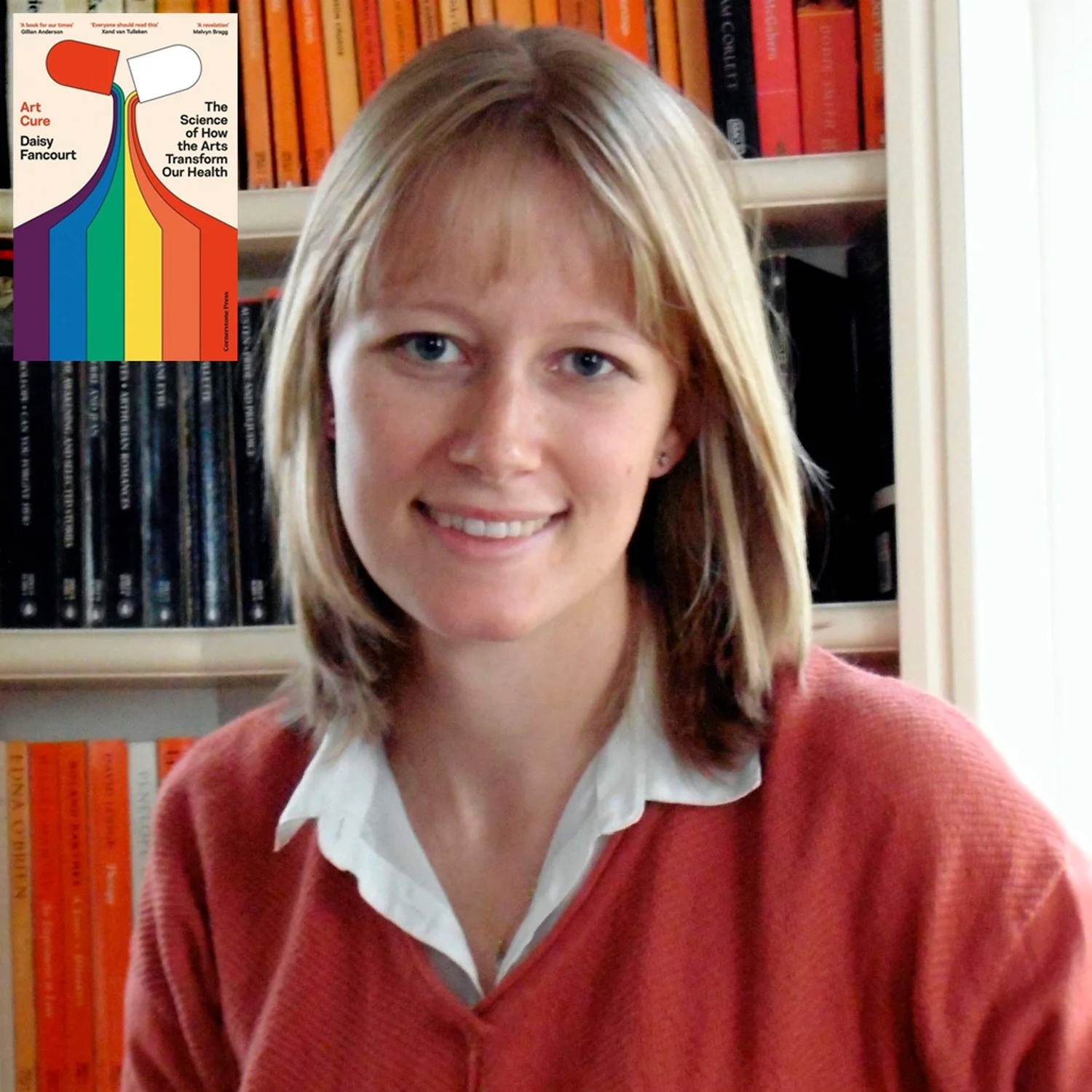
ART CURE: How the Arts Can Transform Our Health with DAISY FANCOURT
Feb 1101:03:00Tap to summarizeDid you know that visiting a museum can lower your cortisol levels? Or that singing can bond a group faster than almost any other activity? We tend to think of the arts as entertainment, but science tells a different story. Today, we explore why creativity is hardwired into our biology and how it can be used to treat everything from postnatal depression to stroke recovery.Daisy Fancourt is a Professor of Psychobiology & Epidemiology at UCL and the author of Art Cure: The Science of How the Arts Transform Our Health. A pioneer in the field of psychoneuroimmunology, she directs the WHO Collaborating Center on Arts and Health, where her research influences global health policy and the integration of the arts into medical care.(0:00) The Healing Power of the Arts: Longevity, Immunity & Wellbeing(4:14) The Story of Russell: How a stroke survivor used art classes to reclaim his life, health, and identity(9:01) A Planet of 8 Billion Artists: Tracing the evolutionary origins of creativity back 40,000 years(15:30) The Chemistry of Connection. Why singing evolved before language and how it accelerates group bonding(20:32) Psychoneuroimmunology. Defining the biological mechanisms: how art reduces inflammation and cortisol(25:57) The Professional Paradox: Balancing the wellbeing benefits of art with the pressures of a creative career(30:03) Predictive Coding & Play: Why the human brain needs improvisation and why we shouldn't outsource creativity to AI(33:26) Singing to Daphne: How Daisy usedsinging to comfort her premature daughter in the ICU(37:55) World Health Organization, Public Policy & Social Prescribing(46:04) Art & Longevity. How arts engagement can slow biological aging and alter gene expression(58:17) Finding Artistic Reverence in Nature Episode Websitewww.creativeprocess.info/podInstagram:@creativeprocesspodcast
Transcribe →
Muse Cells & The Future of Health: Why Stars like Chris Hemsworth & Tony Robbins Turn to Regenerative Medicine
Jan 2500:21:43Tap to summarize“They're kind of like a hidden superhero in your body and we just didn't know they existed. Muse cells eat the damaged cells, and they can actually turn into new cells using the cellular machinery.”Dr. Adeel Khan is a global thought leader in regenerative medicine. He is the CEO and Founder of and founder of Eterna Health, whose work with MUSE cell therapy—developed in collaboration with its discoverer, Professor Mari Dezawa—has made him the go-to expert for world leaders, athletes, and celebrities Chris Hemsworth, Kim Kardashian, and Tony Robbins. In this episode, we move beyond the hype of "anti-aging" to explore the hard science of Muse cells (Multilineage-differentiating Stress-Enduring cells). Dr. Khan breaks down how these unique cells differ from the "medicinal signaling cells" (MSCs) found in most clinics and how they act as a bridge to a future where tissue regeneration is standard care.(0:00) The "Repair Guys" & The Muse Difference Dr. Khan explains why traditional stem cells (MSCs) often disappoint and how Muse cells offer the "best of both worlds": safety and pluripotency.(2:19) Smart Cells: How They Find the Damage Understanding the "homing mechanism" that allows Muse cells to sense inflammation and instinctively travel to injured areas like the brain or heart.(3:11) Curing the Incurable: Diabetes & Alzheimer's The potential of the "cure triad"—stem cells, gene therapy, and FMT—to treat complex autoimmune diseases within the next decade.(4:40) Biological Noise & The Symphony of Health How "static" in our gene expression indicates aging, and how cellular therapy can reduce this noise to restore the body's harmony.(6:40) The Viral Monkey Study Dr. Khan discusses a recent study showing significant de-aging in monkeys through high-frequency cell dosing.(7:32) Unshakeable Foundations: Lifestyle as MedicineWhy advanced therapies must be paired with purpose, community, and mindfulness to create a "bulletproof" body.(8:44) From Sketchy to StandardizedNavigating the regulatory landscape: why Muse cells are being classified as a drug in regions like the UAE and the path toward FDA approval.(12:24) A Personal MissionDr. Khan shares the origin of his journey: trying to find solutions for his mother's chronic illness when traditional medicine failed.(14:16) The Cancer HunterUnlike other pluripotent cells that risk tumor growth, Muse cells have a unique mechanism that can detect cancer cells and trigger their death.(18:30)Future Outlook: AI, Nature & Blue Zones Reflections on the risks of AI, the importance of "Blue Zone" city design, and reconnecting with nature in a post-human world.Episode Websitewww.creativeprocess.info/podInstagram:@creativeprocesspodcast
Transcribe →
Reimagining Longevity: DR. ADEEL KHAN on Muse Cells & the Future of Regenerative Medicine
Jan 2300:48:12Tap to summarize"The repair mechanisms don't work as well as you get older... The whole idea was: if we can give you more of the 'repair guys,' maybe we can reverse disease."Dr. Adeel Khan is a global thought leader in regenerative medicine. He is the CEO and Founder of and founder of Eterna Health, whose work with MUSE cell therapy—developed in collaboration with its discoverer, Professor Mari Dezawa—has made him the go-to expert for world leaders, athletes, and celebrities Chris Hemsworth, Kim Kardashian, and Tony Robbins. In this episode, we move beyond the hype of "anti-aging" to explore the hard science of Muse cells (Multilineage-differentiating Stress-Enduring cells). Dr. Khan breaks down how these unique cells differ from the "medicinal signaling cells" (MSCs) found in most clinics and how they act as a bridge to a future where tissue regeneration is standard care.(0:00) The Future of Regenerative Medicine(6:13) The Muse Difference: Why these cells are "pluripotent" (able to become any tissue) without the cancer risks of Yamanaka factors.(10:29) Curing the Incurable: Diabetes & Alzheimer's (11:27) The Cure Triad: How combining stem cells, gene therapy, and Fecal Microbial Transplants (FMT) could cure complex autoimmune diseases within a decade.(12:56) Biological Noise: Measuring the "mistakes" in our gene expression to quantify aging.(16:42) Lifestyle as Medicine: Why Dr. Khan prescribes community, mindfulness, and nature immersion alongside advanced therapies.(18:13) From Sketchy to Standardized: The Regulatory Landscape(23:25) A Personal Mission: Trying to Save Mom(25:38) The Cancer Hunter: How Muse cells naturally detect and trigger cell death in tumors.(29:02) Quantum Biology & Healing Frequencies(41:13) The AI Pessimist: Planning for a Post-Human World(44:03) Reconnecting with NatureEpisode Websitewww.creativeprocess.info/podInstagram:@creativeprocesspodcast
Transcribe →
The Wisdom of Nature: Artists & Scientists on The Beauty & Fragility of Our Planet
Jan 900:17:56Tap to summarizeIn this special edition, we hear from our guests from across the arts and sciences. From composers and poets to forest ecologists and climate envoys, they tell the story of our planet. Moving beyond the data of destruction, we explore the intelligence of nature, the ethics of what we eat, and the empathy required to save our future.MAX RICHTER, Composer, Sleep, The Blue NotebooksCARL SAFINA, Author, Becoming WildADA LIMÓN, 24th US Poet LaureateCYNTHIA DANIELS, Grammy Award-winning Sound Eng.SUZANNE SIMARD, Finding the Mother TreeJOELLE GERGIS, Lead Author, IPCC 6th Assessment RptNOAH WILSON-RICH, CEO, Best Bees CompanyINGRID NEWKIRK, PETA FounderBERTRAND PICCARD, Solar Impulse FoundationDAVID FARRIER, Author, FootprintsKATHLEEN ROGERS, Pres, Earth Day NetworkODED GALOR, Unified Growth TheoryPETER SINGER, PhilosopherGEOFF MULGAN, Another World Is PossibleCLAIRE POTTER, Welcome to the Circular EconomyCHRIS FUNK, Dir. Climate Hazards Car.JENNIFER MORGAN, Special Envoy, International Climate ActionTo hear more from each guest, listen to their full interviews.Episode Website
Transcribe →
How AI is Shaping Perception, How Deception is Sculpting Our Reality with Artist TREVOR PAGLEN
Aug 2, 2025Tap to summarize“There's a word for this brain rot, right? I think that's very real. There are studies coming out now that are showing that the more and more of our cognitive labor we offload to AI systems, the less creative we become, the less critical we become, and the less of our human faculties for reason we use. There's something sad about that, but there’s also something dangerous about it because that leaves us very open to being manipulated. The surveillance capitalism kind of economy of extracting data from every possible moment of everyday life in order to extract value. The sensor systems that we're surrounded with are not simply passive devices that are recording us; they are increasingly becoming active sculptors of our experience of reality. Playing dirty.If we look at the entire history of the human experience, if you saw some text or you heard some spoken language, you could 100 percent reliably infer that there was a human who created that. Our experience of having that text or that image generated for us is very akin to the experience of a magic trick, and we sort of pre-subconsciously want to attribute some kind of intelligence to what's going on on the other side.I’m trying to think about these other media strategies, whether that's UFO photography, psychological operations, magic, or neuroscience, and take them seriously as contributing factors to the changing visual culture. With the collection at Pace Gallery, (New York, Jun 26–Aug 15) it was really just to put those images together and show them. They’re all photographed on film. A lot of them are photographed on instant film. They’re not images that are made with AI; they're not images that are photoshopped. What I really wanted to get at was thinking about the ways in which what we see in an image is very often what we're predisposed to see. I am playing with these mechanics of perception and proposing that as a way of thinking about images now.At the core of the work is that sense of curiosity, that sense of joy, that sense of beauty, and that sense of learning. I've been fortunate to have all kinds of strange and interesting experiences, whether that's seeing weird things in the sky over secret military bases in the middle of the Nevada desert, going scuba diving and finding internet cables on the bottom of the ocean, or tracking spy satellites in the sky and being able to predict when they'll appear in a flash against the backdrop of stars. The world around us is extraordinary and embodied, right? It is not on screens, and I’m very privileged to have that be so much a part of my process.”Trevor Paglen is an artist whose work makes the invisible visible, whether he's photographing secret government sites from miles away or revealing the hidden infrastructures of mass surveillance. He's a geographer by training, and he combines investigative journalism with his art practice to explore the hidden power structures of our time, including military technology and artificial intelligence. His work has been exhibited in major museums around the world, and he's also an award-winning author. His exhibitions, like 'The Black Sites' and 'Limit Tele-photography,’ have earned him critical acclaim, including a MacArthur Fellowship. He's recently opened a new exhibition at Pace Gallery in New York called Cardinals, which delves into the intriguing connections between UFO sightings, AI, and the spread of disinformation.Episode Websitewww.creativeprocess.info/podInstagram:@creativeprocesspodcast
Transcribe →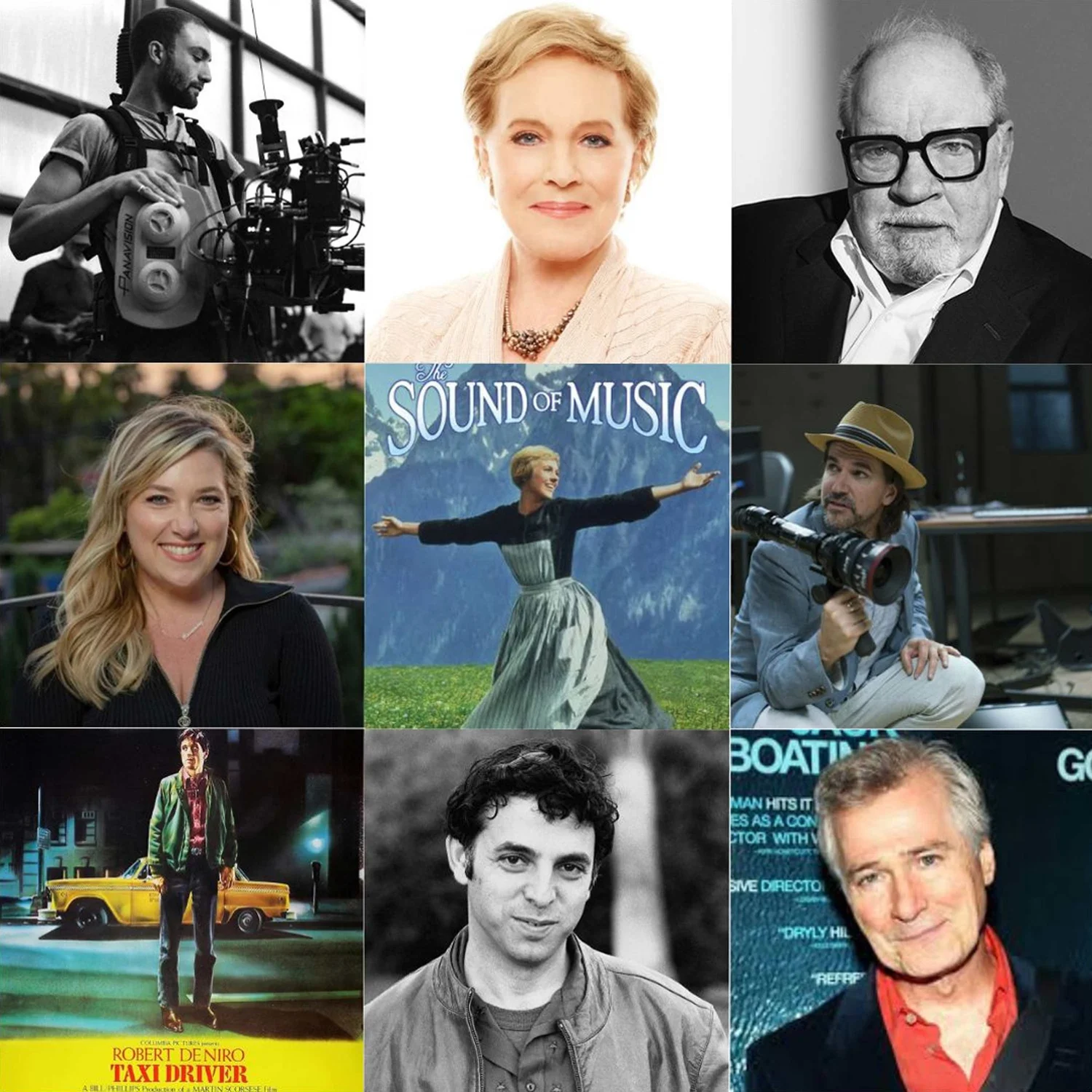
The Creative Process w/ JULIE ANDREWS, PAUL SCHRADER, JOHN PATRICK SHANLEY, ETGAR KERET, JOY GORMAN WETTELS, CHAYSE IRVIN, MANUEL BILLETER
Feb 14, 202500:14:06Tap to summarizeJULIE ANDREWS (Oscar, Tony & Pulitzer Prize-winning Actress & Singer · The Sound of Music, Mary Poppins) Andrews shares her experience working on Mary Poppins, revealing behind-the-scenes secrets about the character. She reminisces about her collaboration with Walt Disney and Tony Walton.ETGAR KERET (Cannes Film Festival Award-winning Director & Author) Keret discusses the profound impact of his parents' survival stories from the Holocaust on his work. He explores how extreme human experiences can lead to extraordinary resilience and creativity,JOHN PATRICK SHANLEY (Oscar, Tony & Pulitzer Prize-winning Writer/Director · Doubt, Moonstruck, Joe Versus the Volcano) Shanley highlights the invaluable lessons and life experiences gained from his time in the Marine Corps. He emphasizes the significance of diverse interactions and communal living, underscoring how these experiences shape both his artistic vision and societal views.JOY GORMAN WETTELS (Exec. Producer of 13 Reasons Why, UnPrisoned · Founder of Joy Coalition) Joy Gorman Wettels reflects on her theatrical upbringing and the influence of her mother’s passion for Sondheim and Neil Simon. She shares touching memories of the LGBTQ+ community in her life and how these early experiences cultivated her love for storytelling and community theater.PAUL SCHRADER (Screenwriter/Director · Taxi Driver, Raging Bull, First Reformed) Schrader analyzes the lasting impact of Taxi Driver on his work. He details his technique of immersing the audience into the protagonist’s perspective and psychology.CHAYSE IRVIN (Award-winning Cinematographer · Blonde starring Ana de Armas · Beyonce: Lemonade · Spike Lee’s BlacKkKlansman) Irvin discusses using mise-en-scène to represent characters’ psychological states.MANUEL BILLETER (Cinematographer · The Gilded Age · Inventing Anna · Jessica Jones · Luke Cage) Billeter recounts his early inspirations from masters like Fellini and Antonioni and his invaluable learning experiences while working alongside Alfonso Cuarón.To hear more from each guest, listen to their full interviews.Episode Websitewww.creativeprocess.info/podInsta:@creativeprocesspodcast
Transcribe →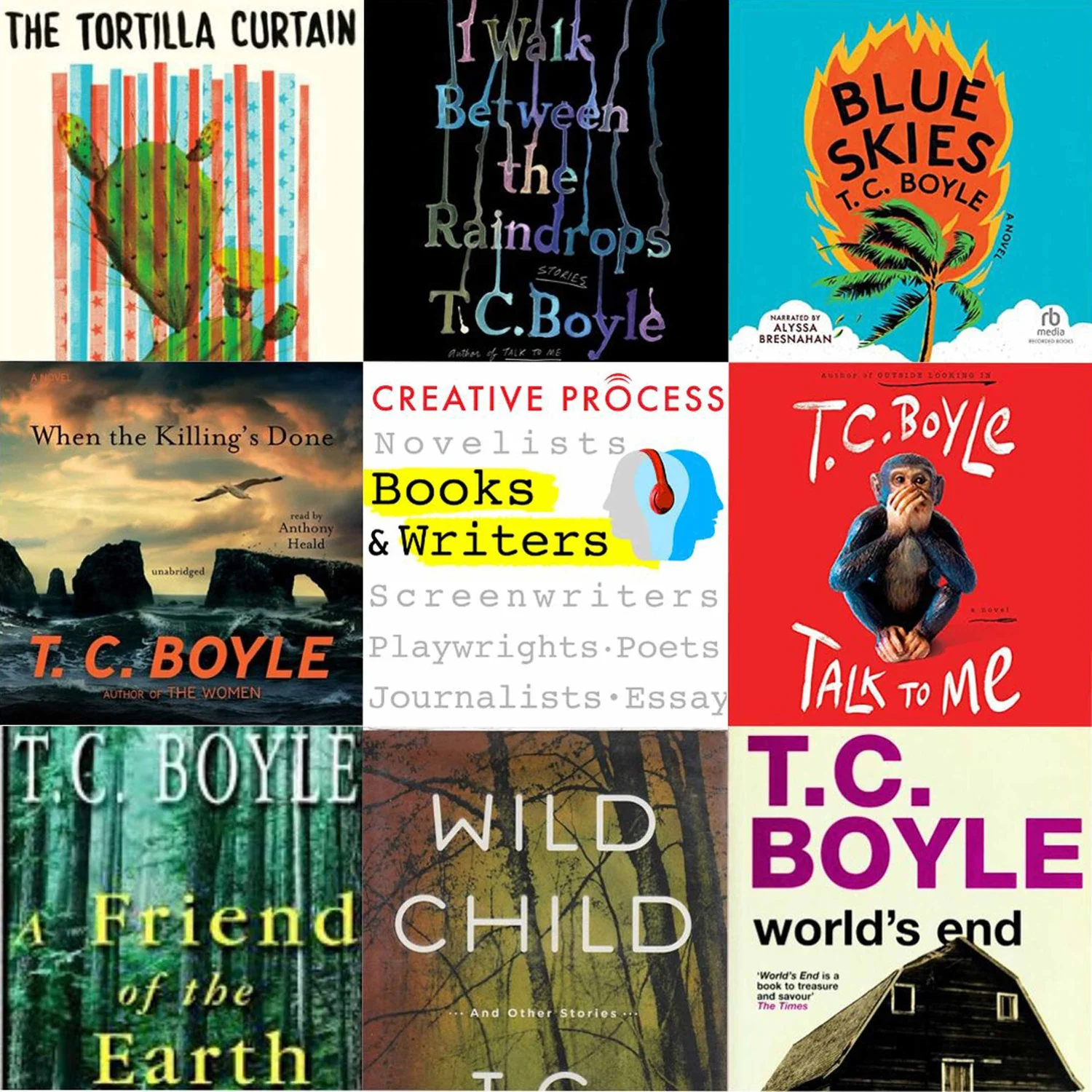
The Art of Fiction with Author, Musician, Satirist T.C. BOYLE - Highlights
Feb 13, 202500:11:35Tap to summarize“What I have done in my career is just try to assess who we are, what we are, why we are here, and how come we, as animals, are able to walk around and wear pants and dresses and talk on the internet, while the other animals are not. It's been my obsession since I was young. I think if I hadn't become a novelist, I might have been happy to be a naturalist or a field biologist.There is some kind of magic in the creative process. I am reaching for things in my unconscious that surprise me. I don't know what it's going to be. I'd like to do many, many things. It's all my life's work. I don't want to just write the same book over and over again as some other authors do. I don't want to become formulaic.”T.C. Boyle is a novelist and short story writer based out of Santa Barbara, California. He has published 19 novels, such as The Road to Wellville and more than 150 short stories for publications like The New Yorker, as well as his many short story collections. His latest novel Blue Skies is a companion piece to A Friend of the Earth. His writing has earned numerous awards, including winning the PEN/Faulkner Award for Best Novel of the Year for World's End.Episode Websitewww.creativeprocess.info/podInstagram:@creativeprocesspodcast
Transcribe →
A Life in Writing with T.C. BOYLE
Feb 13, 202500:53:01Tap to summarizeWhy are we filled with so many contradictions? How does writing help us make sense of the absurdity and of the absurdity and chaos of the world? T.C. Boyle is a novelist and short story writer based out of Santa Barbara, California. He has published 19 novels, such as The Road to Wellville and more than 150 short stories for publications like The New Yorker, as well as his many short story collections. His latest novel Blue Skies is a companion piece to A Friend of the Earth. His writing has earned numerous awards, including winning the PEN/Faulkner Award for Best Novel of the Year for World's End. “What I have done in my career is just try to assess who we are, what we are, why we are here, and how come we, as animals, are able to walk around and wear pants and dresses and talk on the internet, while the other animals are not. It's been my obsession since I was young. I think if I hadn't become a novelist, I might have been happy to be a naturalist or a field biologist.There is some kind of magic in the creative process. I am reaching for things in my unconscious that surprise me. I don't know what it's going to be. I'd like to do many, many things. It's all my life's work. I don't want to just write the same book over and over again as some other authors do. I don't want to become formulaic.”Episode Websitewww.creativeprocess.info/podInstagram:@creativeprocesspodcastPhoto credit: Spencer Boyle in Santa Barbara, CA
Transcribe →