Podcast
Education, The Creative Process: Educators, Writers, Artists, Activists Talk Teachers, Schools & Creativity
Hosted by Educators, Writers, Artists, Activists Talk Teaching & Learning: Creative Process Original Series · EN
Education episodes of the popular The Creative Process podcast. We speak to educators, writers, artists, activists, teachers, librarians in the arts, STEM & other disciplines. To listen to ALL arts & education episodes of “The Creative Process · Arts, Culture & Society”, you’ll find our main podcast on Apple: tinyurl.com/thecreativepod, Spotify: tinyurl.com/thecreativespotify, or wherever you get your podcasts!
Exploring the fascinating minds of creative people. Conversations with writers, artists & creative thinkers across the Arts & STEM. We discuss their life, work & artistic practice. Winners of Oscar, Emmy, Tony, Pulitzer, leaders & public figures share real experiences & offer valuable insights. Notable guests and participating museums and organizations include: Academy of Motion Picture Arts & Sciences, Neil Patrick Harris, Smithsonian, Roxane Gay, Musée Picasso, EARTHDAY.ORG, Neil Gaiman, UNESCO, Joyce Carol Oates, Mark Seliger, Acropolis Museum, Hilary Mantel, Songwriters Hall of Fame, George Saunders, The New Museum, Lemony Snicket, Pritzker Architecture Prize, Hans-Ulrich Obrist, Serpentine Galleries, Joe Mantegna, PETA, Greenpeace, EPA, Morgan Library & Museum, and many others.
The interviews are hosted by founder and creative educator Mia Funk with the participation of students, universities, and collaborators from around the world. These conversations are also part of our traveling exhibition. www.creativeprocess.info
For The Creative Process podcasts from Seasons 1 & 2, visit: tinyurl.com/creativepod or creativeprocess.info/interviews-page-1, which has our complete directory of interviews, transcripts, artworks, and details about ways to get involved.
INSTAGRAM @creativeprocesspodcast
38episodes
Episodes
Newest firstAll episodes

Language, Music, Memory with Writer, Philosopher PATRICK HEALY - Highlights
Feb 10, 202500:17:36Tap to summarize“You have all the different languages interplaying with each other. Little scraps of Irish languages and idioms have stories that have been told, but how Ireland actually comes about as an idea, as to where the Irish come from. A lot of these kinds of debates are just placed, you know, in day-to-day conversation, and then they trail off. People start something; they trail off and might come back to it later. That phenomenon of speaking over each other, tales that are known and not known, I always found very interesting. It was literally like a radio that was kept on all day in the kitchen.You would come in and out, and you would hear certain things, and you'd have to work out the context and the conversation and the speakers. In some way, one of the big personalities in the book is just a radio that’s playing, and some of these conversations are not actually taking place between characters in real-time. They're just snippets that have been overheard on radios.”Patrick Healy was born in Dublin in 1955. He studied philosophy and Semitic languages at St. Columbans Dalgan Park, Pontifical University Maynooth, and University College Dublin. He has published over 20 books on topics around artists, aesthetic theory, philosophy of science, architecture, art criticism and innumerable essays. He has been a Professor of Interdisciplinary Research at Free International University Amsterdam, 1997-present, and was a Senior Research Fellow at the Faculty of Architecture from 2020-2022. He is currently completing a new work of fiction entitled Fatal Fragments, a loose follow-up to his novel Beyond the Pale.Episode Websitewww.creativeprocess.info/podInstagram:@creativeprocesspodcast
Transcribe →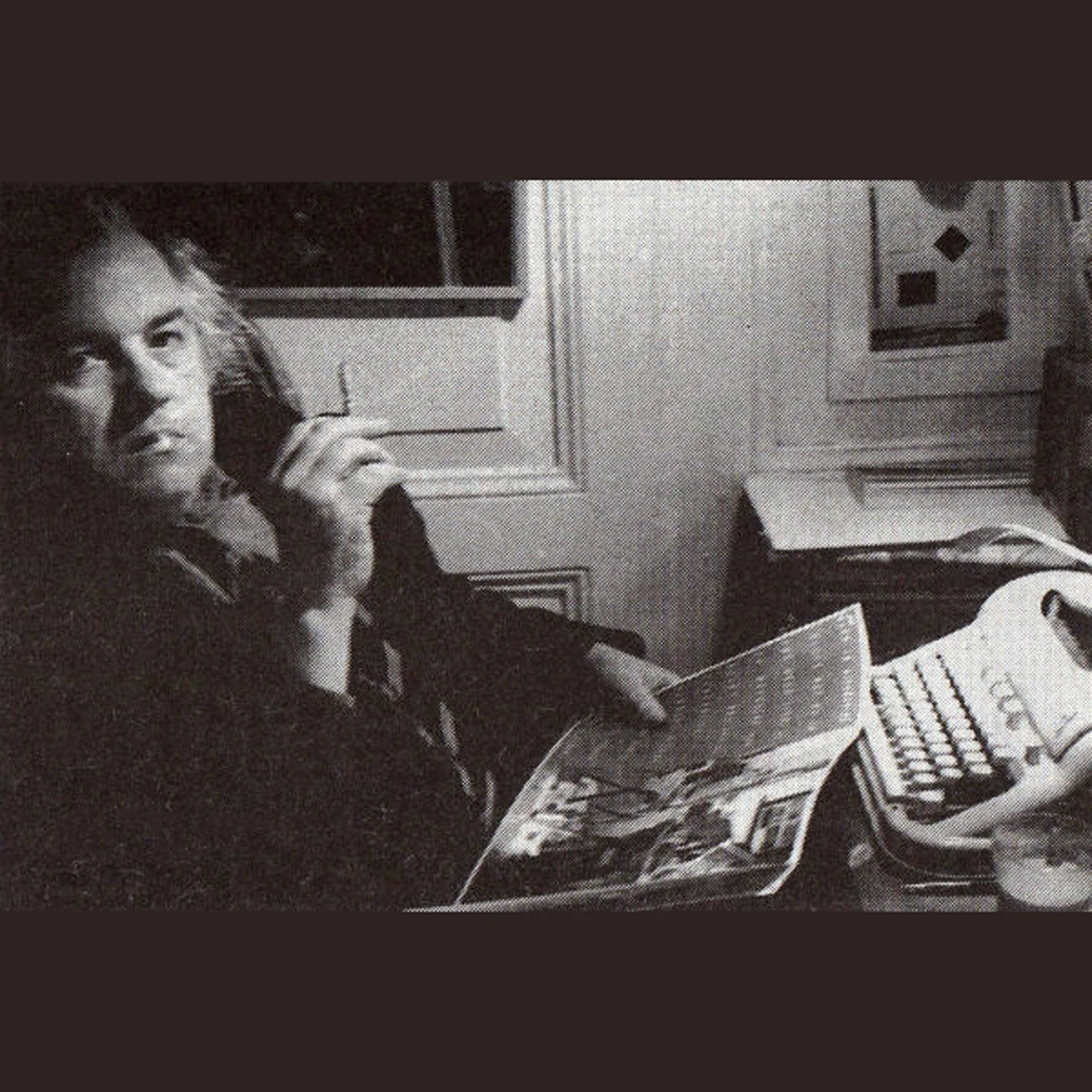
Beyond the Pale with Writer, Philosopher PATRCK HEALY
Feb 8, 202500:55:36Tap to summarizePatrick Healy’s novel Beyond the Pale explores memory, time, childhood, and how language shapes our world. Set in rural Ireland, starting in the 1950s, the book follows a young boy’s early memories through a series of expressionistic soundscapes. The expression from which the book takes its name has come to mean beyond what is considered acceptable behavior, but the origins of the phrase referred to land within Ireland that was “beyond the control of the English government.” Healy’s book examines social class, stigma, village, family life, identity, and the nature of consciousness. Rooted in the oral tradition, the book is a celebration of place, the Irish idiom, music, and memory.Patrick Healy was born in Dublin in 1955. He studied philosophy and Semitic languages at St. Columbans Dalgan Park, Pontifical University Maynooth, and University College Dublin. He has published over 20 books on topics around artists, aesthetic theory, philosophy of science, architecture, art criticism and innumerable essays. He has been a Professor of Interdisciplinary Research at Free International University Amsterdam, 1997-present, and was a Senior Research Fellow at the Faculty of Architecture from 2020-2022. He is currently completing a new work of fiction entitled Fatal Fragments, a loose follow-up to his novel Beyond the Pale.“You have all the different languages interplaying with each other. Little scraps of Irish languages and idioms have stories that have been told, but how Ireland actually comes about as an idea, as to where the Irish come from. A lot of these kinds of debates are just placed, you know, in day-to-day conversation, and then they trail off. People start something; they trail off and might come back to it later. That phenomenon of speaking over each other, tales that are known and not known, I always found very interesting. It was literally like a radio that was kept on all day in the kitchen.You would come in and out, and you would hear certain things, and you'd have to work out the context and the conversation and the speakers. In some way, one of the big personalities in the book is just a radio that’s playing, and some of these conversations are not actually taking place between characters in real-time. They're just snippets that have been overheard on radios.”Episode Websitewww.creativeprocess.info/podInstagram:@creativeprocesspodcastPhoto credit: Marc Damri
Transcribe →
On Regulating the Attention Market & Prevent Algorithmic Emotional Governance w/ FABIEN GANDON & FRANCK MICHEL
Feb 3, 202500:11:34Tap to summarize“The fact that technologies are being used and combined to capture our attention is concerning. This is currently being done with no limitations and no regulations. That's the main problem. Attention is a very private resource. No one should be allowed to extract it from us by exploiting what we know about the human mind and how it functions, including its weaknesses. We wrote this paper as a call to regulate the attention market and prevent algorithmic emotional governance.”Computer scientist Fabien Gandon and research engineer Franck Michel are experts in AI, the Web, and knowledge systems. Fabien is a senior researcher at Inria (Institut national de recherche en sciences et technologies du numérique), specializing in the Semantic Web, while Franck focuses on integrating and sharing data through Linked Open Data technologies.Together, they’ve written Pay Attention: A Call to Regulate the Attention Market and Prevent Algorithmic Emotional Governance. Their research unpacks how digital platforms are monetizing our attention at an unprecedented scale—fueling misinformation and division and even threatening democracy and affecting our emotions and well-being.Episode Websitewww.creativeprocess.info/podInstagram:@creativeprocesspodcast
Transcribe →
PAY ATTENTION: A Call to Regulate the Attention Market & Prevent Algorithmic Emotional Governance
Feb 3, 202501:00:38Tap to summarizeAI competes for our attention because our attention has been commodified. As our entire lives revolve more and more around the attention economy, what can we do to restore our autonomy, reclaim our privacy, and reconnect with the real world.Computer scientist Fabien Gandon and research engineer Franck Michel are experts in AI, the Web, and knowledge systems. Fabien is a senior researcher at Inria (Institut national de recherche en sciences et technologies du numérique), specializing in the Semantic Web, while Franck focuses on integrating and sharing data through Linked Open Data technologies.Together, they’ve written Pay Attention: A Call to Regulate the Attention Market and Prevent Algorithmic Emotional Governance. Their research unpacks how digital platforms are monetizing our attention at an unprecedented scale—fueling misinformation and division and even threatening democracy and affecting our emotions and well-being.“The fact that technologies are being used and combined to capture our attention is concerning. This is currently being done with no limitations and no regulations. That's the main problem. Attention is a very private resource. No one should be allowed to extract it from us by exploiting what we know about the human mind and how it functions, including its weaknesses. We wrote this paper as a call to regulate the attention market and prevent algorithmic emotional governance.”Episode Websitewww.creativeprocess.info/podInstagram:@creativeprocesspodcast
Transcribe →
Writing, Dyselxia, Relationships & The Creative Process w/ Director SOPHIE BROOKS
Jan 31, 202500:10:20Tap to summarize“In reality, we're all complex people with feelings and our own sets of baggage. I do think we are very good at self-sabotage, all of us. It's a very easy road to go down. It's safe because it's comfortable, and we know it. When you can find the ways you self-sabotage and try to stop that, it will hopefully lead to a happier life and things that are meaningful. When I was in my late twenties, I got out of a serious relationship and kind of reentered the dating scene. I was shocked by the simplification of a lot of complicated feelings around dating and how women are so easily labeled crazy, and men are so easily labeled assholes.”Sophie Brooks is a London-born, Brooklyn-based writer and director. Her sophomore feature Oh, Hi! premiered at the 2025 Sundance Film Festival. Her debut film, The Boy Downstairs, was acquired by Film Rise and HBO at the Tribeca Film Festival. It was produced by David Brooks, Paul Brooks, and Dan Clifton and stars Zosia Mamet, Matthew Shear, and Diana Irvine.Episode Websitewww.creativeprocess.info/podInstagram:@creativeprocesspodcast
Transcribe →
From Spy Thrillers to Police Dramas w/ Writer, Creator, Showrunner ALEXI HAWLEY
Jan 28, 202500:13:08Tap to summarize“I never went to school for writing. I was playing drums in a band in high school and college, trying to be a rockstar. I ultimately learned how to write first movies and then TV, mostly by watching them. And I'd put a movie on, and I would sit there with a notebook, and I'd sit there with a notebook, and I'd take notes, which I'd never look at again, by the way, but it was all for me.That was about structure. Because I think structures is the first thing and the most important thing a writer can learn, depending on the medium that they're in. It's less so in novels, but I think definitely in TV and movies, so I would write, like: three minutes this happened, eight minutes this happened, ten minutes this happened, so that you start to internalize what audiences expect and also where you need to turn the story.”Alexi Hawley is the creator of ABC’s The Rookie, starring Nathan Fillion, and Netflix's The Recruit, an espionage drama starring Noah Centineo that, in season two, explores the legal defense tactic 'graymail'. The Rookie, now in its seventh season, takes a look at aspects of policing often overlooked by TV procedurals. Hawley discusses the positive role police can play in communities and how he found his own autodidactic path to becoming a television showrunner. He was previously the executive producer and co-showrunner of Castle and The Following, and recently created the upcoming Hulu drama The Envoy which is inspired by journalist and producer Adam Ciralsky’s June 2024 Vanity Fair story about Roger Carstens and his team at the State Department who have brought home 70 American hostages during the past four years.Episode Websitewww.creativeprocess.info/podInstagram:@creativeprocesspodcast
Transcribe →
Behind the Scenes of The Rookie & The Recruit w/ Showrunner ALEXI HAWLEY
Jan 28, 202500:40:43Tap to summarizeHow can we improve the way we train and recruit police officers? Can TV dramas serve as positive models for policing and help foster community?Alexi Hawley is the creator of ABC’s The Rookie, starring Nathan Fillion, and Netflix's The Recruit, an espionage drama starring Noah Centineo that, in season two, explores the legal defense tactic 'graymail'. The Rookie, now in its seventh season, takes a look at aspects of policing often overlooked by TV procedurals. Hawley discusses the positive role police can play in communities and how he found his own autodidactic path to becoming a television showrunner. He was previously the executive producer and co-showrunner of Castle and The Following, and recently created the upcoming Hulu drama The Envoy which is inspired by journalist and producer Adam Ciralsky’s June 2024 Vanity Fair story about Roger Carstens and his team at the State Department who have brought home 70 American hostages during the past four years.“I never went to school for writing. I was playing drums in a band in high school and college, trying to be a rockstar. I ultimately learned how to write first movies and then TV, mostly by watching them. And I'd put a movie on, and I would sit there with a notebook, and I'd sit there with a notebook, and I'd take notes, which I'd never look at again, by the way, but it was all for me.That was about structure. Because I think structures is the first thing and the most important thing a writer can learn, depending on the medium that they're in. It's less so in novels, but I think definitely in TV and movies, so I would write, like: three minutes this happened, eight minutes this happened, ten minutes this happened, so that you start to internalize what audiences expect and also where you need to turn the story.”Episode Websitewww.creativeprocess.info/podInstagram:@creativeprocesspodcastPhoto credit: Jesse Grant/Getty for Netflix
Transcribe →
How Art Helps Us Understand the World - Filmmakers, Writers & Artists Share their Stories
Jan 23, 2025Tap to summarizeHow do our personal lives influence the art we make?JIM SHEPARD (Author of The Book of Aron, Project X, & The World to Come starring Casey Affleck, Vanessa Kirby, Katherine Waterston · Winner of the PEN New England Award, The Story Prize) explores historical human dilemmas, the emotional imagination and literature's role in extending empathetic understanding. He discusses the importance of self-education and curiosity.LAURA EASON (Emmy-nominated Producer, Screenwriter, Playwright · Three Women · House of Cards · The Loudest Voice) on how we can live multiple lives through the arts. She highlights the significant role the arts have played in her upbringing and daily life, emphasizing the value of listening to others. As a showrunner, Laura discusses how her work in the theater, where she often adapted literary classics, prepared her for working in the writers’ room of House of Cards, adapting the creator’s vision.BENOIT DELHOMME (Award-winning Cinematographer · Artist · Director · At Eternity’s Gate · The Theory of Everything ·The Scent of Green Papaya) talks about the intrinsic pleasure found in art and cinematography. He likens operating a handheld camera to playing an instrument and emphasizes the importance of personalizing one's craft to imbue it with soul and freedom.JOHN PATRICK SHANLEY (Academy Award, Tony & Pulitzer Prize-winning Writer/Director · Doubt · Moonstruck · Danny and the Deep Blue Sea · Joe Versus the Volcano) recounts his personal journey from The Bronx to becoming a writer. He emphasizes the importance of embracing one's life experiences, even the seemingly ordinary ones, as gold for storytelling. Shanley reflects on his collaborations with actors Philip Seymour Hoffman and Meryl Streep and their dedication to their craft.MARK GOTTLIEB (Vice President & Literary Agent at Trident Media Group) explores storytelling as a timeless art form, comparing books to the oil paintings of new media. He comments on the transformative power of stories, which he believes can manifest in various forms—from books to movies and TV shows.ANTHONY WHITE (Artist) reflects on the role of visual arts in democracy and civil disobedience. Historical events like the Eureka Stockade, with its spirit of rebellion, have inspired his art.MICHAEL BEGLER (Showrunner · Writer & Executive Producer of Perry Mason and The Knick) discusses the importance of storytelling in understanding our history and emotions. He stresses that the arts, drawing from personal experiences, help us connect on a deeper level beyond hard news.To hear more from each guest, listen to their full interviews.Episode Websitewww.creativeprocess.info/podInstagram:@creativeprocesspodcast
Transcribe →