Podcast
eMotors: Electric Revolution
Hosted by eMotors Electric Revolution · EN
Innovation, Technology, and Tomorrow's Driving
Welcome to the podcast that explores the electric mobility revolution. Each episode takes you on a journey to discover the latest innovations, cutting-edge technologies, and driving experiences that are shaping the future of automobiles. An electrifying journey into the future of sustainable mobility. If you enjoy these episodes or find them useful, you can buy me a coffee through this link: https://buymeacoffee.com/emotorselectricrevolution.
75episodes
Episodes
Newest firstAll episodes
EV Upgrade Cycle
1w ago00:09:36Tap to summarizeIn this episode, we explore the pivotal question many electric vehicle owners face: when is it actually time to trade in your current EV for the latest model? Using the dramatic evolution of the Renault Twingo E-Tech as our case study, we dive into the "Right-Size" philosophy, which suggests that the most sustainable and economical car is often the one you already own—provided it still meets your daily requirements.,We break down the "quantum leap" between generations, moving from adapted platforms (shared with internal combustion designs) to native electric architectures like the new AmpR Small platform., You will learn how "hidden" upgrades—such as the shift to ultra-durable LFP battery chemistry and the introduction of 50 kW DC fast charging—can transform a vehicle from a strictly urban specialist into a versatile car capable of regional travel.,,The key insight of this episode is that technology should serve your specific lifestyle. We provide a Decision Matrix to help you determine if your current 180 km range is sufficient or if the upgrade to 260 km and advanced safety systems is truly necessary for your path
Transcribe →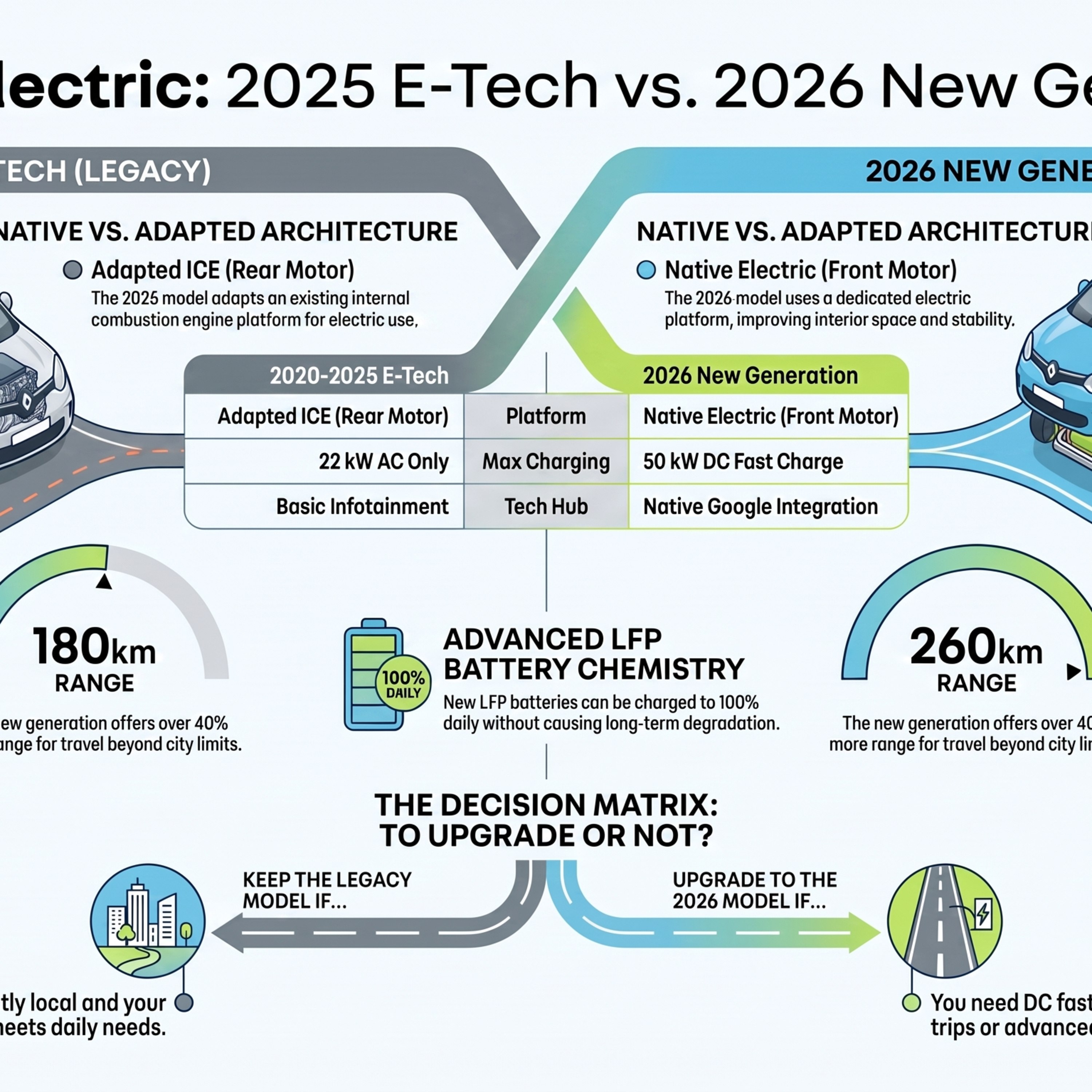
The Evolution of the Electric Renault Twingo
1w ago00:05:19Tap to summarizeThis episode provides a comprehensive comparison between the previous Renault Twingo E-Tech and its technologically advanced successor. The new generation marks a significant shift by utilizing a native electric platform that improves interior space and weight distribution compared to the older combustion-based architecture. Key improvements include the transition to long-lasting LFP battery chemistry, which offers enhanced durability and a notably extended driving range. Furthermore, the latest model introduces DC fast charging capabilities and sophisticated thermal management systems that were entirely absent in the previous version. The source concludes that the modern Twingo is a superior vehicle because it integrates Google-based software and advanced safety features, transforming it from a basic city car into a versatile electric vehicle.
Transcribe →Fiat 500e: Hidden Depths
1w ago00:06:35Tap to summarizeThis video overview offers an in-depth exploration of the sophisticated engineering that defines the Fiat 500e, moving beyond its iconic status as a symbol of Italian style to reveal why it stands apart from its rivals. While its aesthetic appeal is undeniable, the video focuses on the car's "hidden" technical excellence, such as its dedicated electric platform—a feature that distinguishes it from "microcars" or converted internal combustion models.The narrative highlights the advanced Total Thermal Management system, which uses multiple cooling loops to optimize the performance of the battery, motor, and cabin electronics, ensuring efficiency even in extreme weather. Viewers will also discover the car's impressive performance capabilities, including Level 2 autonomous driving and a powertrain capable of delivering 118 hp with a range of up to 320 km. Furthermore, the video showcases Fiat's commitment to sustainability, detailing the use of reclaimed ocean plastics in its interior design. Ultimately, "Hidden Depths" demonstrates that the 500e is not just a fashion statement, but a highly "engineered" vehicle designed for the future of urban mobility.
Transcribe →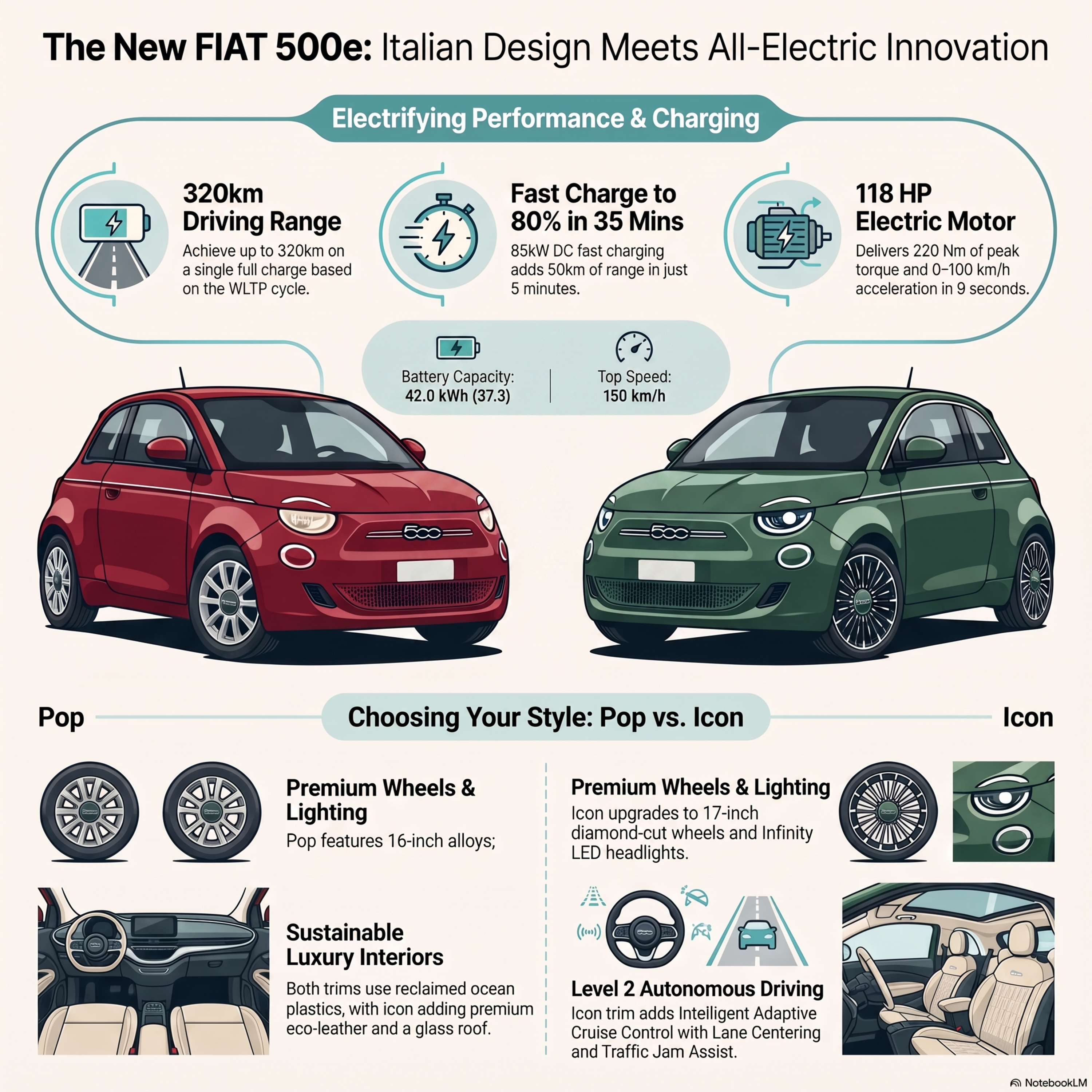
Engineering Excellence: The Technical Profile of Fiat 500e
1w ago00:05:52Tap to summarizeThe Fiat 500e is presented as a highly engineered vehicle that distinguishes itself from basic city cars through its advanced technical architecture. Built on a dedicated electric platform, the car features a sophisticated powertrain capable of delivering up to 118 kW of power. Unlike more economical alternatives, this model utilizes high-quality Stellantis electronic components and a refined thermal management system for its battery. Charging capabilities are equally robust, supporting fast DC charging up to 85 kW to ensure practical usability. Ultimately, the source highlights that the 500e is designed as a genuine automobile rather than a simple microcar, offering superior performance and cooling.
Transcribe →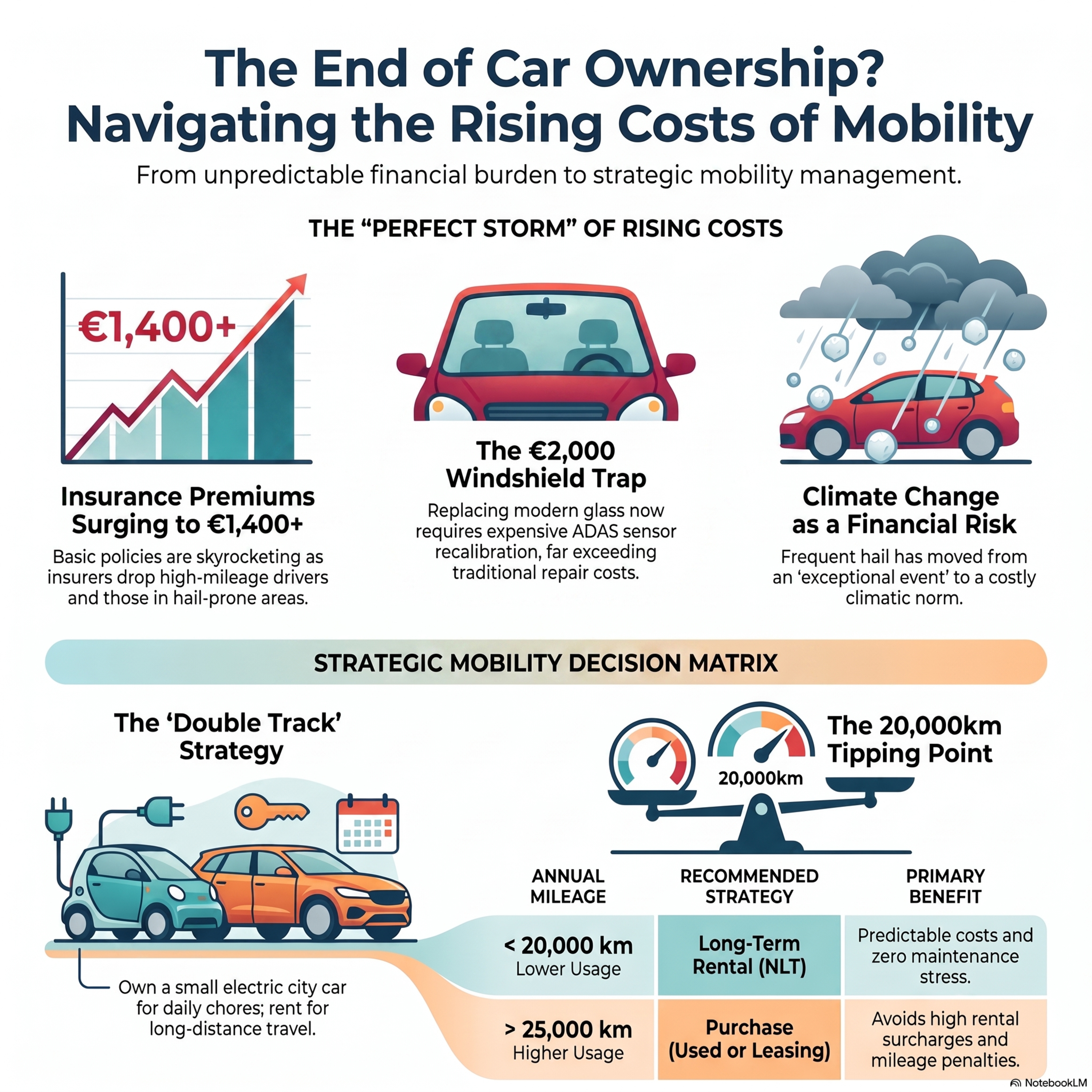
The Death of Ownership: Navigating the New Car Economy
1w ago00:05:17Tap to summarizeThe provided source outlines a shifting landscape in the automotive industry where traditional car ownership is becoming increasingly unsustainable due to rising insurance premiums and high repair costs. Modern vehicles equipped with advanced sensors have turned minor damages, such as windshield cracks or hail impact, into expensive financial burdens that traditional policies no longer easily cover. Consequently, consumers are moving toward a dual-strategy mobility model that favors small electric cars for urban use while utilizing rentals for long-distance travel. The analysis highlights that for those driving fewer than 20,000 kilometers annually, long-term leasing offers more financial predictability than purchasing. Ultimately, the source suggests that cars have transitioned from status symbols into unpredictable industrial costs, forcing a reevaluation of how we finance our personal transportation. This shift marks the potential end of individual ownership in favor of more flexible, service-based utility.
Transcribe →End of Car Ownership: Navigating the New Car Economy
1w ago00:06:41Tap to summarizeIs the dream of owning a car turning into a financial nightmare? This episode explores why the traditional model of car ownership is rapidly collapsing under the weight of soaring insurance premiums and high-tech repair costs.We dive into the "Insurance Chaos," where a single hail storm or a cracked windshield—now packed with expensive ADAS sensors and cameras—can cost thousands of euros, leading insurers to hike rates or even drop clients. As a result, owning a €40,000 vehicle is losing its economic logic for many private individuals.What you will learn in this episode:The Technology Trap: Why a simple stone chip in your windshield can now cost over €1,500 to fix.The "Two-Track" Strategy: How to balance daily commutes with an affordable city EV while using flexible rentals for long-distance trips.The Mileage Math: A breakdown of when Long-Term Rental (NLT) beats traditional ownership and why high-mileage drivers (over 30,000 km/year) face a unique financial crossroad.The era of the car as a status symbol or a safe asset is over; today, it is an unpredictable industrial cost. The real challenge isn't finding the perfect car anymore, but finding the right mobility formula to protect your finances from a summer storm or a technical glitch.
Transcribe →The New Mercedes-Benz GLA: A Masterpiece of Strategic Evolution
1w ago00:10:36Tap to summarizeThe "A-Class in SUV clothing" is officially a thing of the past. The new Mercedes-Benz GLA has undergone a radical transformation, emerging as a sophisticated, technology-led powerhouse that marks a pivotal strategic shift for the Stuttgart-based manufacturer. Built on the cutting-edge Mercedes Modular Architecture (MMA), this new generation boasts a "double soul," designed with an electric-first philosophy while remaining flexible enough to offer high-efficiency hybrid and internal combustion engines.Bold Design and Muscular PresenceVisually, the GLA demands attention with its new aerodynamic silhouette (drag coefficient of 0.27) and widened stance. It is now 31 mm wider and features a wheelbase lengthened by 61 mm, giving it a more athletic and sporty look compared to its predecessor. The most striking feature is the closed radiator grille illuminated by 600 LEDs, capable of performing welcoming and locking animations that bring the car to life as you approach.Performance Without CompromiseWhether you are ready for full electrification or prefer a gradual transition, the GLA delivers:The Electric Standard: The GLA 250 Plus offers a staggering range of up to 657 km (WLTP) thanks to its 85 kWh battery. With its advanced 800V architecture, you can banish "charging anxiety" by adding 160 miles of range in just 10 minutes at a 320 kW DC fast charger.Hybrid Versatility: For those not yet ready for the 100% electric leap, the range includes Mild Hybrids with 48V systems and the GLA 250 e Plug-in Hybrid, which offers an electric-only range of approximately 70 km for your daily urban commutes.A Tech-Forward SanctuaryStep inside to discover a cabin that feels like a private starry sky, especially with the electrochromatic Sky Control roof and ambient lighting. The centerpiece is the optional MBUX Superscreen, a massive three-display suite that includes a dedicated 14-inch screen for the front passenger to stream YouTube or Disney+. Interaction is more natural than ever with integrated generative AI; simply tell the car "I feel cold," and it will adjust the climate for you.Luxury Meets UtilityMercedes has directly addressed past criticisms by significantly increasing rear legroom and knee room. Practicality is further enhanced in the electric versions with a 107-liter "frunk" (front trunk), offering more storage than many larger competitors and making the GLA a true companion for long-distance travel.Aggressively positioned to compete at the top of the premium compact segment, the new GLA is more than just an update—it is the evolution of premium mobility.
Transcribe →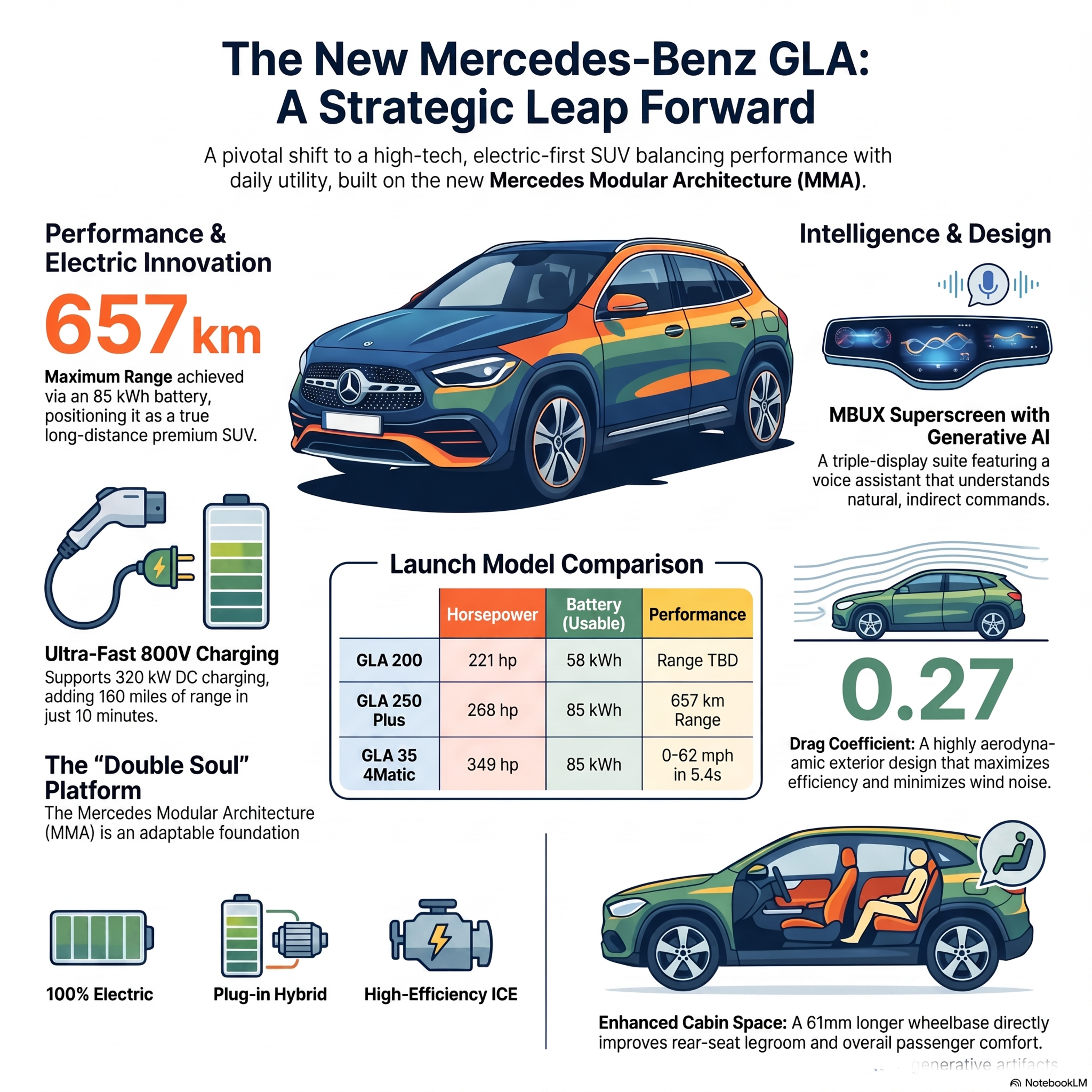
Mercedes-Benz GLA: The Evolution of Premium Mobility
1w ago00:06:39Tap to summarizeThe provided source details the strategic evolution of the new Mercedes-Benz GLA, a vehicle built on a versatile architecture that supports both electric and hybrid powertrains. This updated model addresses previous criticisms by increasing interior space and cargo capacity, notably including a large front storage compartment. High-tech features define the cabin, which boasts a sophisticated triple-screen infotainment system and integrated artificial intelligence for enhanced user interaction. Furthermore, the vehicle achieves a significant driving range of 657 km, aiming to eliminate consumer concerns regarding battery endurance for long-distance travel. Positioned competitively within the premium market segment, the GLA serves as a bridge for customers transitioning from traditional engines to sustainable mobility. Together, these updates represent a mature technological leap designed to maintain the brand's dominance against its primary European rivals.
Transcribe →Surviving 20 Years? Renault 5 vs ID. Polo vs BYD Dolphin
2w ago00:09:14Tap to summarizeIn this comprehensive evaluation, we move past the shiny showroom floors to put the Renault 5 E-Tech, Volkswagen ID. Polo, and BYD Dolphin through a theoretical "survival test" to see which one will still be on the road in 2046.While the Renault 5 wins hearts with its agile multilink suspension and the ID. Polo sets records with its 441-liter trunk, the real secret to longevity lies in the chemistry of their batteries. We dive deep into the technical battle between NMC and LFP "Blade" batteries, revealing why one of these cars is engineered to handle up to 5,000 charge cycles—equivalent to over 1 million kilometers—while others may face a significant "state of health" drop in just a decade.Beyond the batteries, we analyze mechanical simplicity versus driving pleasure. We explore why a simple rear-axle design might save you thousands in maintenance over twenty years, and why the "old-school" physical buttons in the VW might outlast the high-tech motorized screens of its rivals.Whether you are a pragmatic buyer looking for the lowest total cost of ownership or an enthusiast curious about the green transition, this "Survival Test" identifies which EV is a long-term companion and which is a temporary sprint.
Transcribe →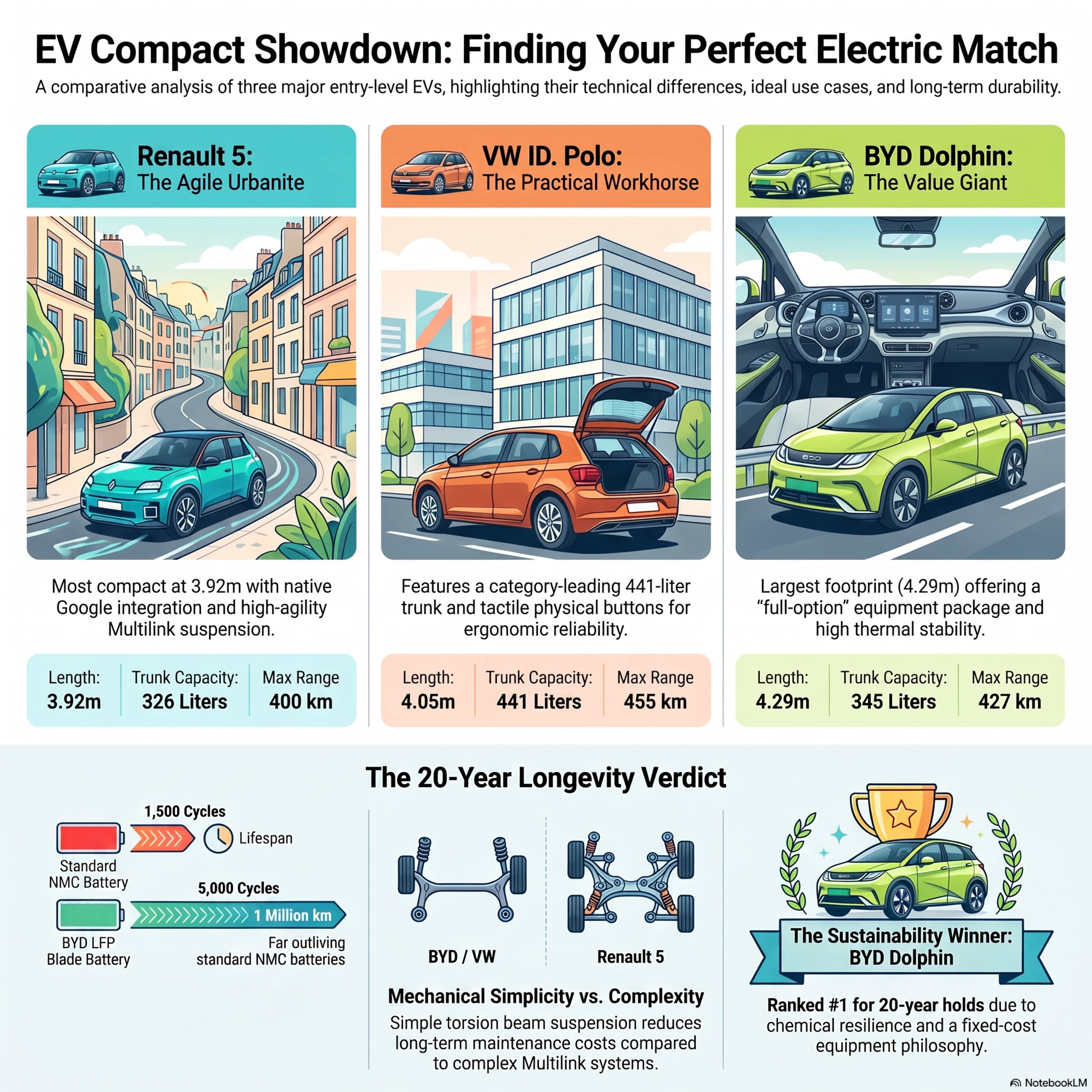
Electric Compact Showdown: Renault 5 vs. ID. Polo vs. Dolphin
2w ago00:06:01Tap to summarizeThis source provides a comparative analysis of three competitive electric vehicles: the Renault 5 E-Tech, the Volkswagen ID. Polo, and the BYD Dolphin. While all three models fall within a similar mid-range price bracket, the source highlights how they cater to vastly different consumer priorities. The Renault is framed as the tech-focused city car characterized by its compact size, agile handling, and integrated Google software. Conversely, the Volkswagen emphasizes practicality and storage, offering a class-leading trunk capacity and user-friendly physical controls for families. Finally, the BYD Dolphin is presented as the value-driven option, distinguished by its larger physical footprint, advanced battery safety, and a generous list of standard equipment.
Transcribe →