Podcast
eMotors: Electric Revolution
Hosted by eMotors Electric Revolution · EN
Innovation, Technology, and Tomorrow's Driving
Welcome to the podcast that explores the electric mobility revolution. Each episode takes you on a journey to discover the latest innovations, cutting-edge technologies, and driving experiences that are shaping the future of automobiles. An electrifying journey into the future of sustainable mobility. If you enjoy these episodes or find them useful, you can buy me a coffee through this link: https://buymeacoffee.com/emotorselectricrevolution.
75episodes
Episodes
Newest firstAll episodes
The New Empire on Wheels: Geotechnology and the Redefinition of Global Power
2w ago00:06:58Tap to summarizeAn analysis of how BYD’s rapid global expansion signals the end of Western automotive hegemony and the rise of China as a "technological sovereign." By transforming the "Global South" into a strategic industrial anchor, China is moving beyond low-cost manufacturing to dictate the new global standards of electric power and geoeconomic influence.Extended Synopsis: This article explores the fundamental shift in the global order, where industrial capacity has become the ultimate weapon of statecraft. Using BYD’s recent milestone in Brazil—producing 100,000 vehicles in just nine months—as a primary case study, the episode illustrates a "photograph of an epochal change" in the automotive sector.Key themes include:The "Triple Logic" of Expansion: How BYD bypasses Western tariffs, optimizes profit margins, and creates long-term technological lock-in in emerging markets like Brazil, Mexico, and India.New Quality Productive Forces: An examination of Beijing’s doctrine to move from "Made in China" to "Standard Setter," seizing the high ground in battery supply chains and digital protocols.The Multipolar Realignment: How the integration of the Global South into a Beijing-centric industrial web is redrawing the map of global power, leaving Western regulators to struggle with a transition that is already a fait accompli.
Transcribe →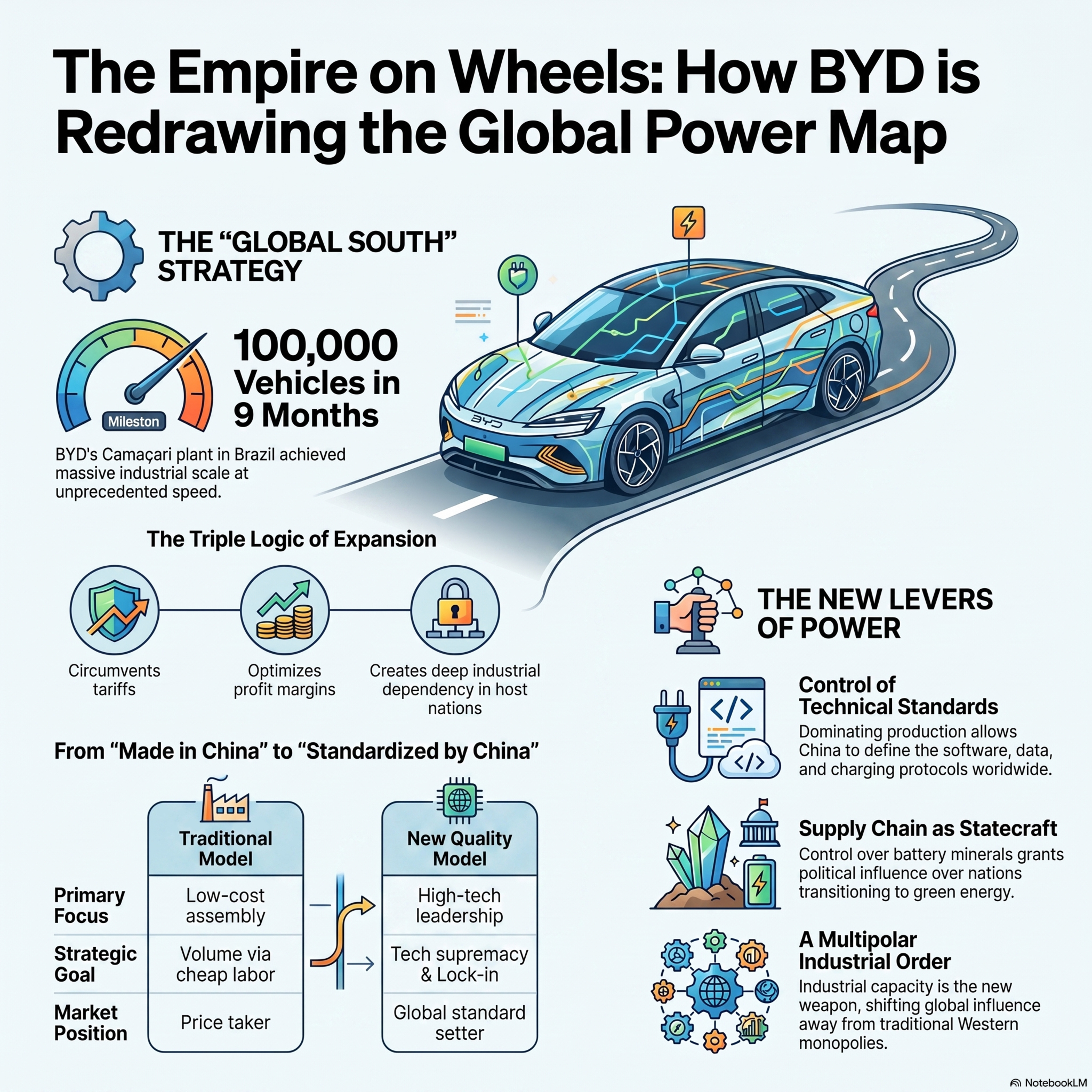
BYD and the New Global Order of Electric Power
2w ago00:05:08Tap to summarizeThese sources examine the global rise of the Chinese automaker BYD as a signal of a major shift in geopolitical power and industrial supremacy. By rapidly establishing manufacturing hubs in the Global South, particularly in Brazil, China is moving beyond low-cost exports to dominate the world's high-tech infrastructure and supply chains. This strategic expansion allows Chinese firms to bypass Western trade barriers while embedding their own technical standards and digital protocols into the economies of developing nations. While Western markets focus on regulatory protections, China is utilizing its technological sovereignty in the electric vehicle sector to create a new multipolar world order. Ultimately, the episode argue that industrial capacity has become a primary tool of statecraft, making technological leadership the new foundation for international influence.
Transcribe →Illusion of Ownership: Redefining Mobility for the 21st Century
2w ago00:07:48Tap to summarizeThe era of the car as a static asset and status symbol is coming to an end. This article explores the seismic shift from "automotive fetishism" to a new paradigm of radical efficiency and financial wisdom. While public debate often focuses solely on the switch from petrol to electricity, the true revolution lies in how we perceive and utilize mobility.The "Illusion of Ownership" exposes the private vehicle as one of the most inefficient assets in a modern portfolio. By examining the "Physics of Waste," the article illustrates how traditional ownership models mirror the mechanical inefficiencies of internal combustion—where 75% of energy is lost to heat—by creating a "capital leakage" through idle time and immediate depreciation.Key insights featured in the article include:The Productivity Gap: Discover why owning an asset that remains stationary 80–90% of its life is economically indefensible in an age of high-efficiency capital.The "Money Pit" Analysis: A breakdown of the "baked-in" costs—from the immediate 5% value loss upon purchase to the rising financial anxiety caused by environmental risks like extreme weather.The Rise of MaaS (Mobility as a Service): How the "Family of the Future" is pivoting from heavy capital expenditure (Capex) to flexible, service-based operating expenses (Opex), prioritizing liquidity and peace of mind over possession.Wealth Transformation: Why redirecting car-related expenses into productive, compounding investments is the ultimate "wisdom of investment" for younger generations."Illusion of Ownership" is a strategic roadmap for those ready to stop "parking" their wealth in the driveway and start investing in their future. It is a call to move beyond the burdens of 20th-century logic and embrace a streamlined, transparent, and service-oriented world of movement.
Transcribe →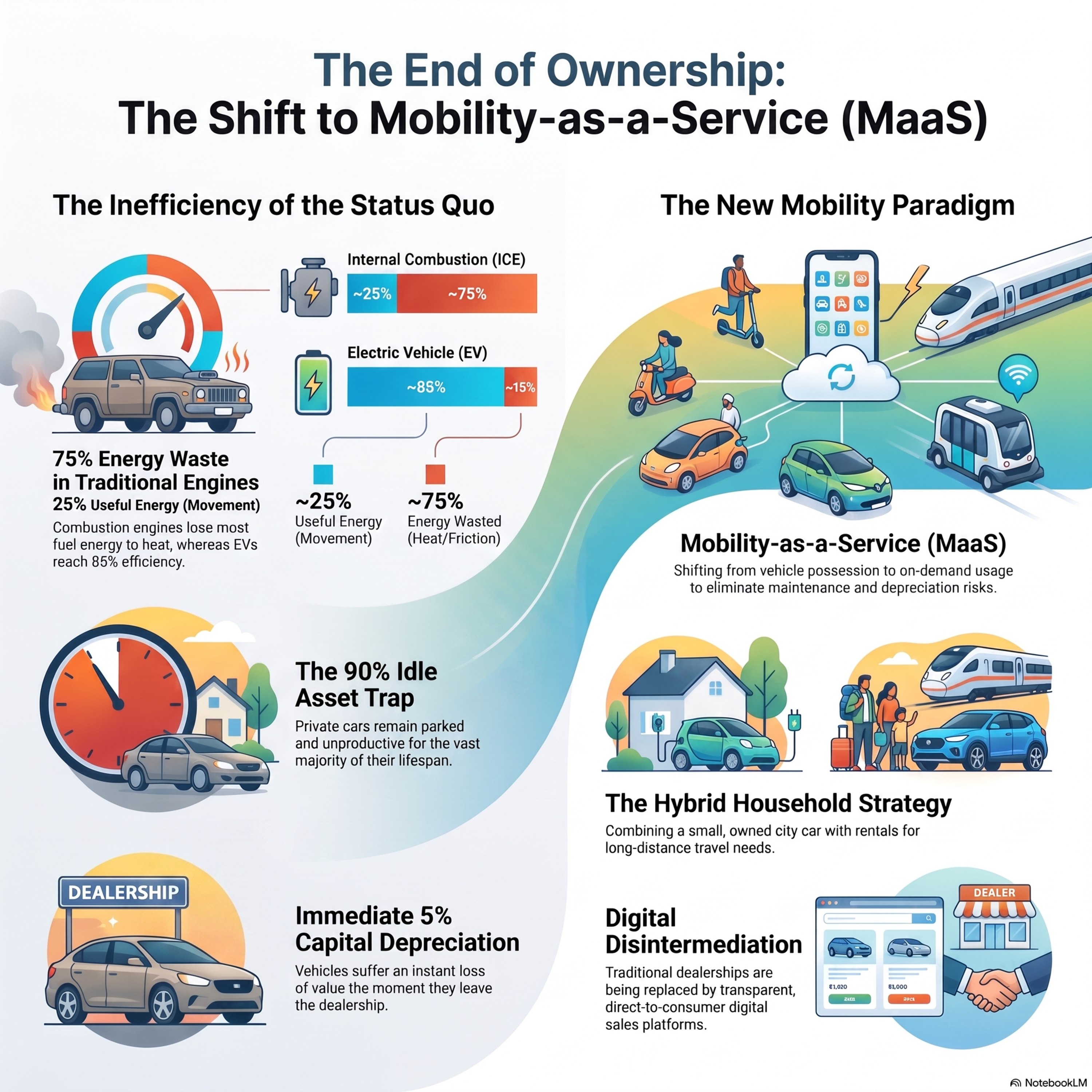
Beyond Ownership: The New Paradigm of Global Mobility
2w ago00:05:43Tap to summarizeThe provided episode outlines a paradigm shift in the automotive industry, moving away from traditional ownership toward a model defined by efficiency and utility. It highlights the superiority of electric propulsion over internal combustion, noting that physical energy waste and high maintenance costs make traditional engines obsolete. The author argues that private cars are unproductive financial assets that lose value rapidly while remaining idle for the majority of their lifespan. Consequently, a new lifestyle is emerging where families prioritize Mobility as a Service (MaaS), utilizing rentals for long trips rather than maintaining multiple personal vehicles. This transition is further supported by a digital transformation of the sales chain, favoring transparent online transactions over complex dealership structures. Ultimately, the source suggests that economic logic and sustainability are replacing the outdated emotional attachment to vehicle possession.
Transcribe →Driven to Last: Can Italy’s Aging Fleet Go Electric?
2w ago00:08:54Tap to summarizeItaly faces a massive structural challenge: nearly 16 million vehicles on the road are over 20 years old, representing a 'regulatory limbo' as urban emissions bans approach. In this episode, we explore whether the electric vehicle (EV) can evolve from a luxury novelty into a pragmatic, long-term utility for the millions of drivers currently operating the country’s oldest cars.We dive into the technical reality behind EV longevity, revealing how mechanical simplicity and LFP battery chemistry could actually make electric cars more durable than their internal combustion counterparts—retaining up to 70% of their capacity even after 20 years. However, the transition isn't just about physics; it’s about economics. We break down the 'friction points' stalling adoption, from the 'garage constraint' that penalizes those without private charging to the fear of 'catastrophic failure' costs in an underdeveloped repair market.Finally, we discuss the systemic shifts needed to unlock this market, including modular battery repairs, a transparent State of Health (SOH) certification, and the rise of an affordable 'third-hand' EV segment.
Transcribe →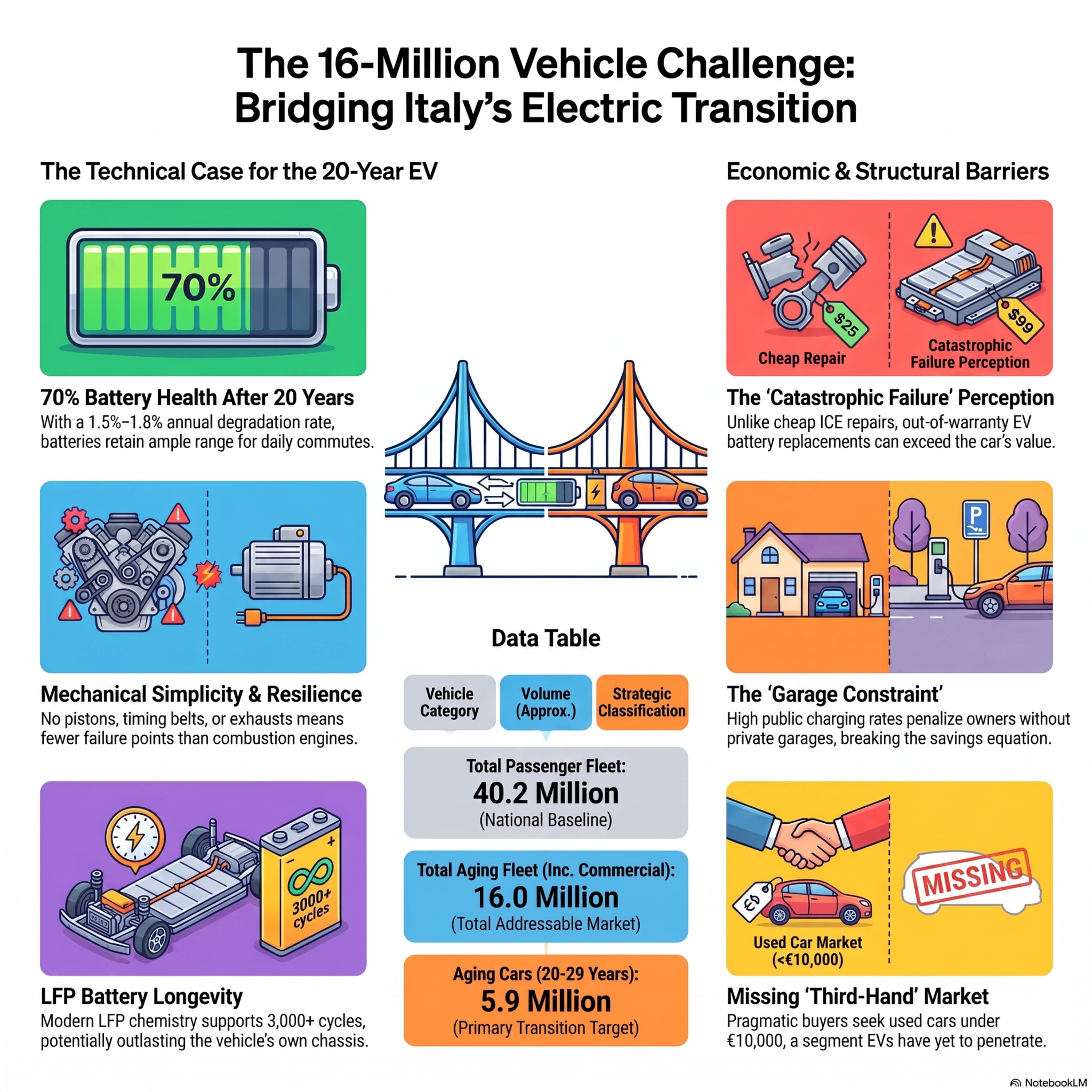
The Aging Fleet of Italian Automobiles
2w ago00:04:54Tap to summarizeRecent findings from the ACI and Fondazione Caracciolo indicate that approximately one-quarter of all passenger cars currently on Italian roads are at least twenty years old. Out of the roughly 40.2 million active vehicles, about 10 million fall into this aged category, with nearly 4 million of those exceeding three decades of use. It is important to distinguish these aging machines from true collector items, as the vast majority are simply outdated daily drivers rather than preserved classics. While legislation automatically classifies cars over thirty years old as historic, only a small fraction of younger vehicles are officially recognized for their mechanical or aesthetic significance. When including commercial transport alongside private automobiles, the total number of these elderly vehicles climbing toward 16 million units across Italy.
Transcribe →Tech Odyssey: A Long Weekend
2w ago00:08:40Tap to summarizeEver wondered how a ten-year epic struggle would look if it were condensed into a tranquil long weekend in the Mediterranean? This reimagining of Homer’s classic explores how Odysseus would navigate antiquity using the cutting-edge tools of today.Instead of battling Poseidon’s winds, the hero sets sail in a solar-powered electric boat, making the god of the sea’s tempests irrelevant as he glides silently across the water. There are no more decades of wandering; with GPS navigation software, Odysseus receives real-time alerts to "turn left after Scylla" to avoid sea monster traffic. The perilous song of the Sirens is easily neutralized by active noise-canceling headphones, turning their deadly charm into mere background hum.The journey continues with high-tech solutions for every mythic obstacle:LiDAR sensors detect giants like Polyphemus from hundreds of meters away, sending "XL obstacle" notifications straight to a smartphone.Security cameras and food-testing apps prevent Circe from turning the crew into pigs.For land expeditions, Odysseus chooses a Tesla Cybertruck, utilizing its "Powerbank on wheels" feature to distill water or power tools.The hero’s untrustworthy crew is kept in check by Sentry Mode, which sends an immediate smartwatch alert if anyone tries to tamper with the bags of wind.The epic conclusion sees Odysseus returning to Ithaca not as a beggar, but as a tech-savvy strategist using 4K drones for reconnaissance and arriving in a stealth-mode electric vehicle to take the suitors by surprise. Ultimately, this version of the Odyssey isn't a tragic drama, but a high-definition travel vlog.
Transcribe →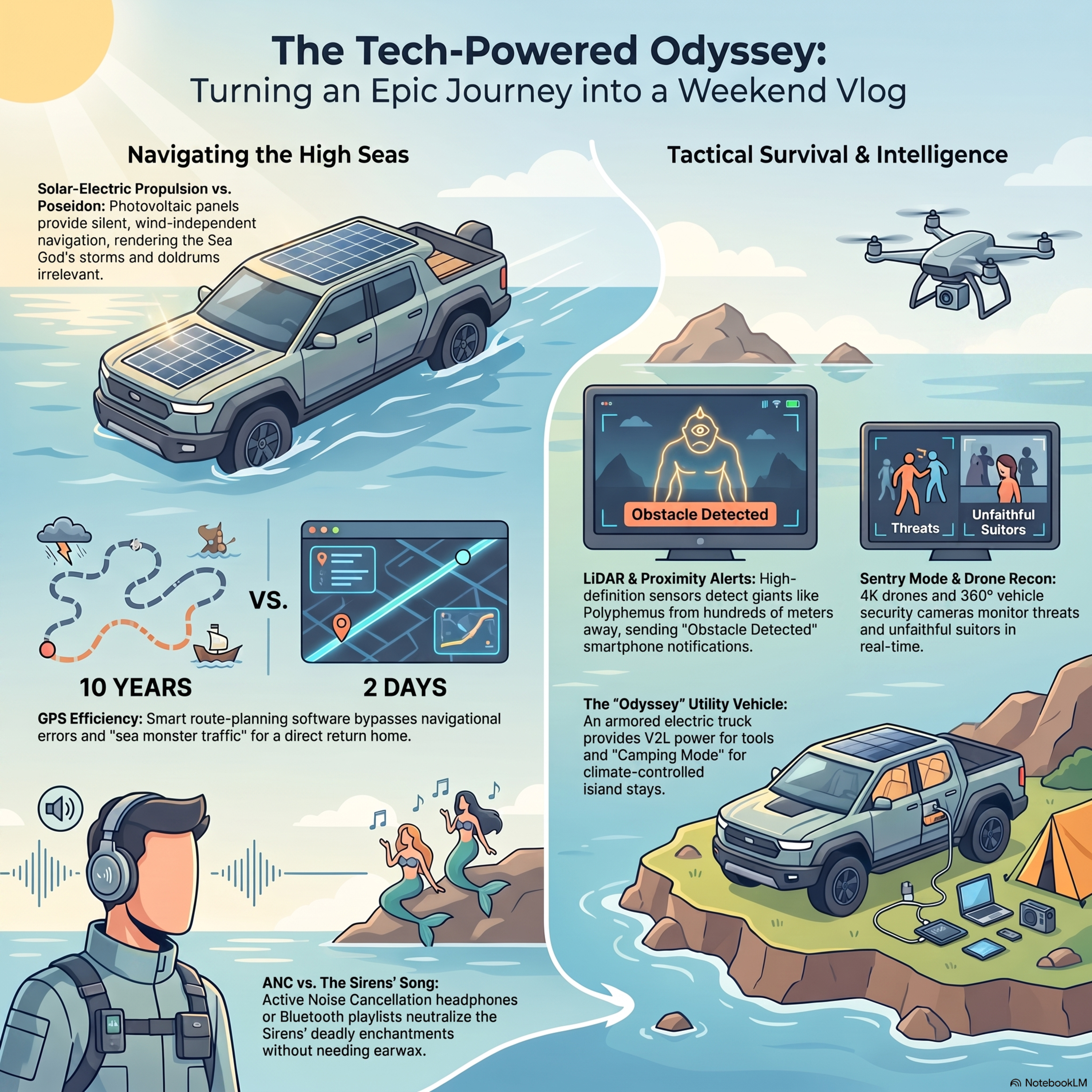
What if Odysseus had a Tesla
2w ago00:06:05Tap to summarizeThis episode presents a humorous reimagining of Homer’s Odyssey, exploring how modern technology would have trivialized Ulysses’ legendary ten-year struggle. The author suggests that renewable energy and GPS would have neutralized the gods' interference, allowing for a direct and efficient journey home. Dangerous encounters, such as those with the Sirens or the Cyclops, are cleverly recontextualized as problems easily solved by noise-canceling headphones and LiDAR sensors. Furthermore, the use of drones and stealth vehicles would have stripped the dramatic tension from the hero's homecoming to Ithaca. Ultimately, the source highlights that today’s digital and mechanical tools would have transformed an epic struggle for survival into a brief and uneventful travel vlog.
Transcribe →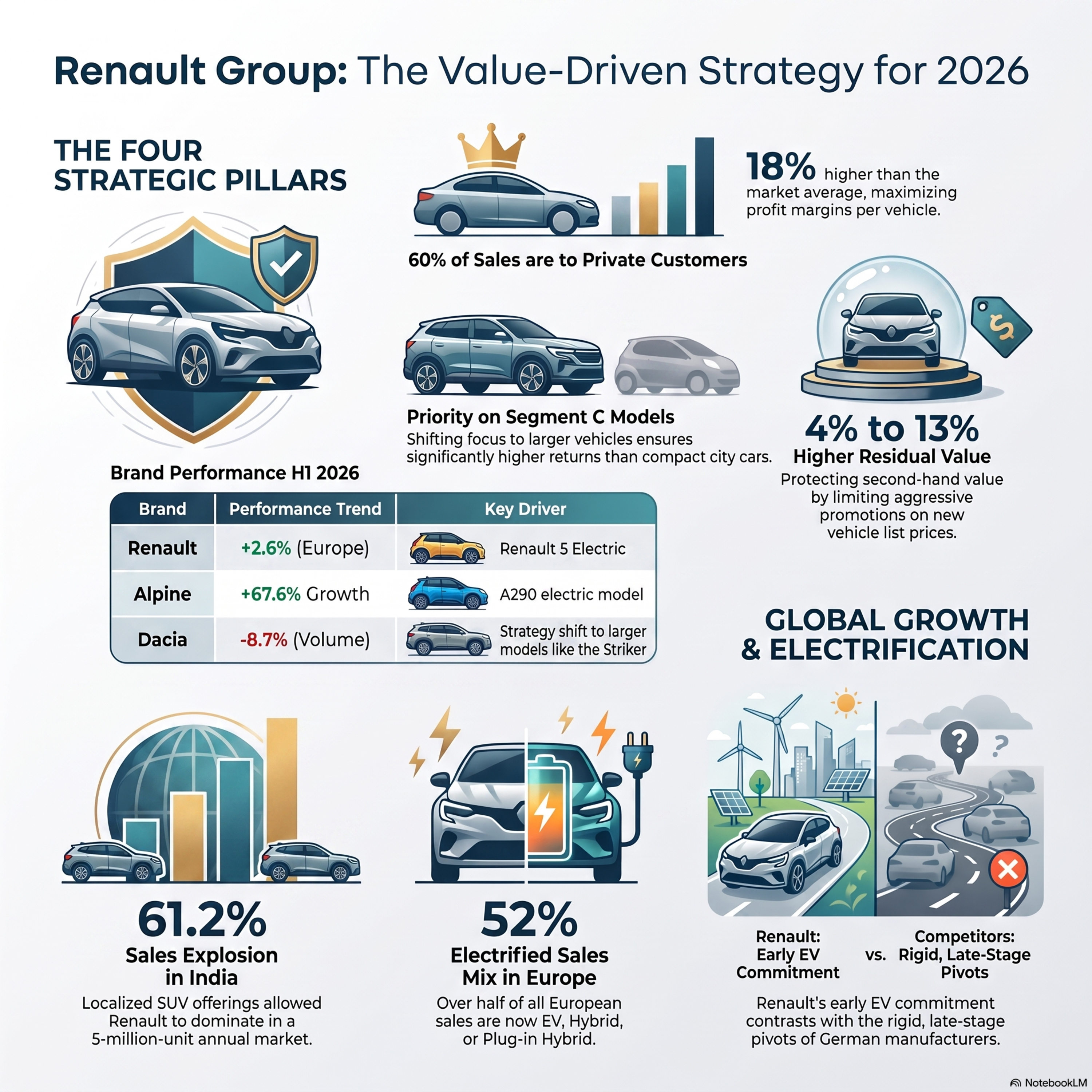
Renault Strategy 2026: Prioritizing Value and Premium Segments
2w ago00:05:50Tap to summarizeThe provided sources examine Renault’s strategic dominance in the global automotive market, highlighting its early and successful commitment to electric vehicle transition. While major German competitors are criticized for their slow response to market shifts, Renault has focused on high-margin private sales and the preservation of vehicle resale value rather than chasing raw volume. The company’s success is further bolstered by the strategic expansion of Dacia and significant sales growth in emerging markets like India, where localized offerings have outperformed local giants. Additionally, the episode contrast Renault's agility with the conservative approach of German manufacturers and the tactical acquisitions made by Stellantis to bridge the technological gap. Ultimately, the reports portray a manufacturer that has balanced technological innovation with disciplined financial management to secure a competitive edge.
Transcribe →Mastering the EV Shift
2w ago00:08:36Tap to summarizeThis video offers a comprehensive overview of Renault's proactive transition to electric mobility and its strategic shift toward higher-value market segments. The content explains how Renault anticipated the global market's direction earlier than many of its European rivals, positioning itself with a more decisive vision in the electric transition.A central theme is the "value over volume" strategy, where Renault prioritizes high-margin private sales and the C-segment over chasing pure sales figures at the expense of profitability. Viewers will learn about the group's impressive electrification milestones, with electrified vehicles (EVs and hybrids) now accounting for 52% of its total European sales. The video also highlights the successful performance of specific models, such as the Renault 5, which has become a leading B-segment EV, and Alpine’s rapid shift toward an all-battery lineup.Furthermore, the video delves into Renault's international expansion, specifically its remarkable 61.2% sales surge in the Indian market, driven by localized SUV offerings. By maintaining high residual values and exercising discipline in production and stock management, Renault is building a resilient brand for 2026 and beyond.
Transcribe →