Podcast
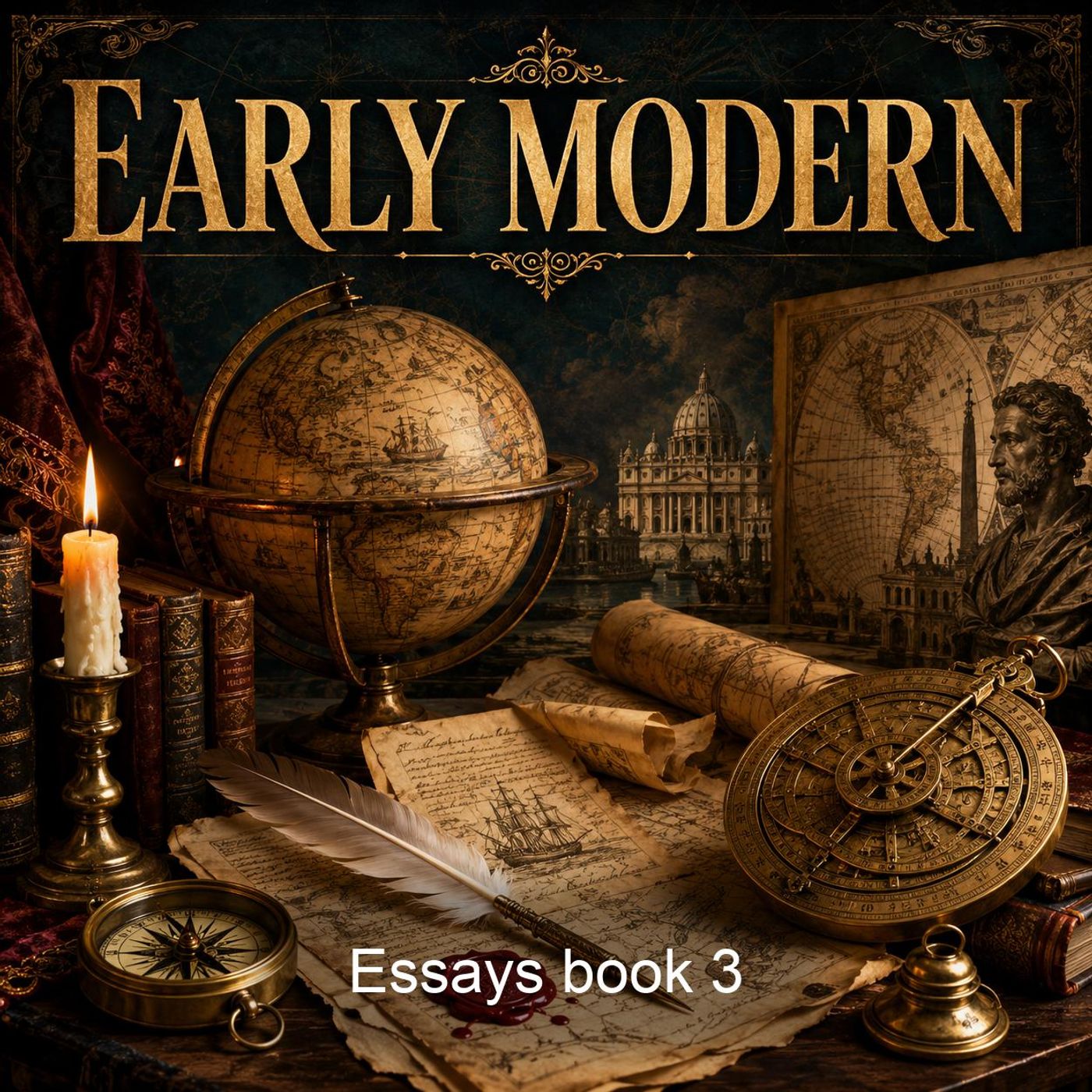
Essays book 3
Hosted by Michel Eyquem de Montaigne · EN
Michel Eyquem de Montaigne is one of the most influential writers of the French Renaissance, known for popularising the essay as a literary genre. He is also known as the father of Modern Skepticism. His pieces became famous for his apparent effortless ability to merge serious intellectual speculation with casual anecdotes and autobiography. His main work, Essais (translated literally as "Attempts" but traditionally as "Essays"), contains some of the still most widely influential essays ever written. This is the third volume of that important work. (Summary adapted from the Wikipedia by Leni)
4episodes
Episodes
Newest firstAll episodes
Anti-Dictator The Discours sur la servitude voluntaire - Étienne de La Boétie
4d ago02:08:27Tap to summarize"Anti-Dictator: The Discours sur la servitude voluntaire" by Étienne de La Boétie is a profound exploration of the nature of tyranny and the conditions that allow it to flourish. La Boétie argues that the power of dictators relies fundamentally on the voluntary compliance of the people, emphasizing the idea that freedom is within our grasp if we choose to reject servitude. This timeless discourse invites listeners to reflect on the dynamics of power and individual agency, making it especially relevant in today's world where questions of authority and personal autonomy persist. By examining the roots of oppression and the potential for resistance, La Boétie's work remains a powerful call for self-liberation and critical thought.
Transcribe →Essays book 3 - Michel Eyquem de Montaigne - Part 3
May 2201:13:57Tap to summarizeMichel Eyquem de Montaigne is one of the most influential writers of the French Renaissance, known for popularising the essay as a literary genre. He is also known as the father of Modern Skepticism. His pieces became famous for his apparent effortless ability to merge serious intellectual speculation with casual anecdotes and autobiography. His main work, Essais (translated literally as "Attempts" but traditionally as "Essays"), contains some of the still most widely influential essays ever written. This is the third volume of that important work. (Summary adapted from the Wikipedia by Leni)
Transcribe →Essays book 3 - Michel Eyquem de Montaigne - Part 2
May 2109:27:23Tap to summarizeMichel Eyquem de Montaigne is one of the most influential writers of the French Renaissance, known for popularising the essay as a literary genre. He is also known as the father of Modern Skepticism. His pieces became famous for his apparent effortless ability to merge serious intellectual speculation with casual anecdotes and autobiography. His main work, Essais (translated literally as "Attempts" but traditionally as "Essays"), contains some of the still most widely influential essays ever written. This is the third volume of that important work. (Summary adapted from the Wikipedia by Leni)
Transcribe →Essays book 3 - Michel Eyquem de Montaigne - Part 1
May 2009:49:45Tap to summarizeMichel Eyquem de Montaigne is one of the most influential writers of the French Renaissance, known for popularising the essay as a literary genre. He is also known as the father of Modern Skepticism. His pieces became famous for his apparent effortless ability to merge serious intellectual speculation with casual anecdotes and autobiography. His main work, Essais (translated literally as "Attempts" but traditionally as "Essays"), contains some of the still most widely influential essays ever written. This is the third volume of that important work. (Summary adapted from the Wikipedia by Leni)
Transcribe →