Podcast
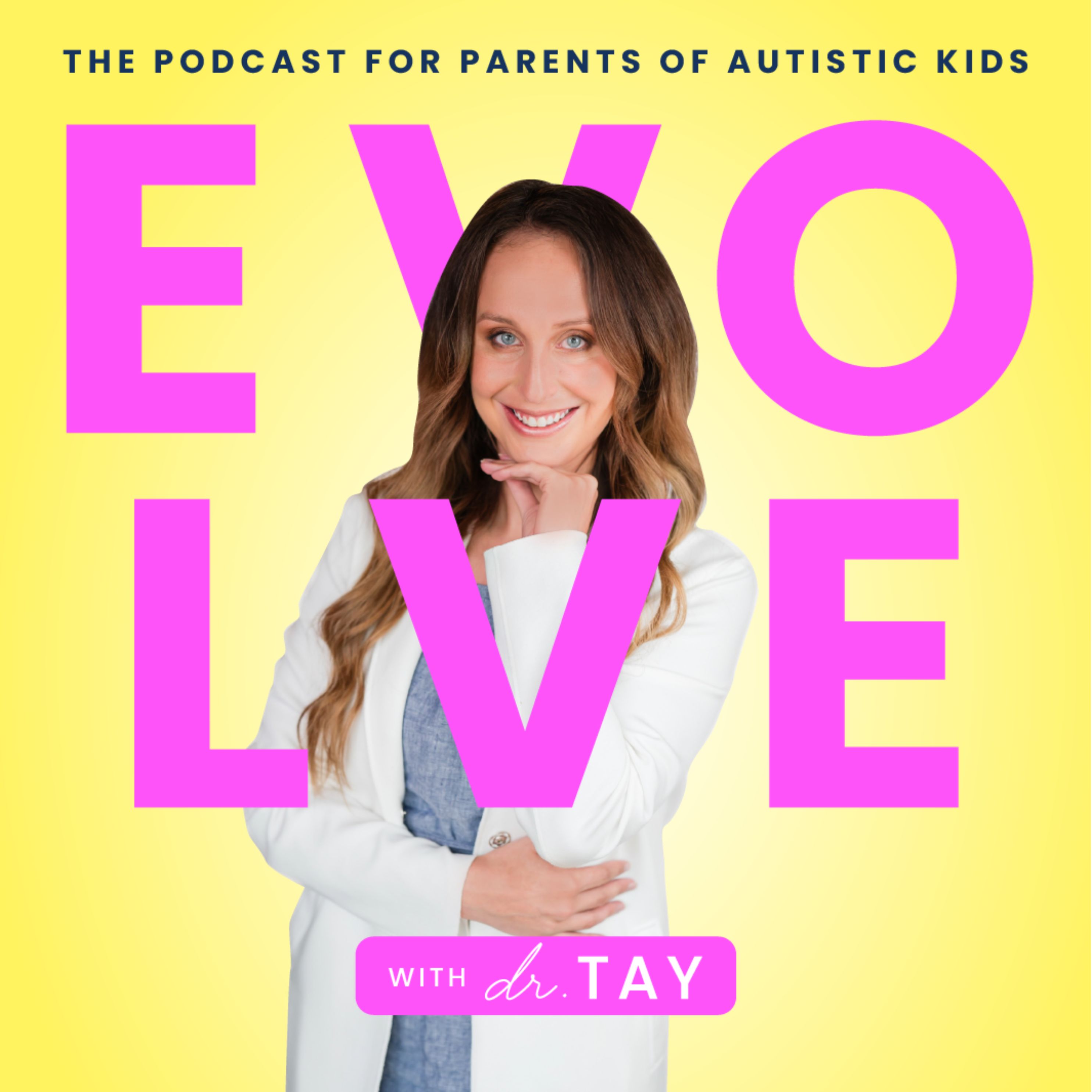
EVOLVE with Dr. Tay: the podcast for parents of autistic kids
Hosted by Dr. Taylor Day · EN
welcome to a parenting space actually designed for YOU! where you can get answers about navigating a life that includes autism.
I’m Dr. Tay, a licensed child psychologist specializing in autism and neuroaffirming care. I have supported 100s of autistic children and their families and have been in the autism field for over a decade.
on this podcast, we focus on supporting your autistic child AND your whole family, including you! every topic is on the table, and your questions (which you can submit through my social media) inspire the episodes created. I share some of my personal stories growing up with a brother who was diagnosed at 23 months of age as well as feature other families' stories so you know you are not navigating this journey alone. this is a space for you to be SEEN. HEARD. SUPPORTED. and get reputable and reliable information about autism instead of searching Google endlessly for hours. I am so dang grateful that you are here.
***disclaimer: not clinical advice, for educational purposes only***
subscribe to this podcast by hitting the plus or follow button so you don't miss an episode.
27episodes
Episodes
Newest firstAll episodes
223 | why getting started is the hardest part
5d ago00:18:36Tap to summarizeabout this episode (+ scroll for resources) 👇if you've ever found yourself researching, planning, making lists... but still feeling stuck, this episode is for you.whether it's making changes to screen time, starting therapy, sending the email you've been avoiding, or finally taking the first step toward a recommendation, the hardest part of behavior change is almost always getting started.in this episode, dr. tay shares a theme that unexpectedly emerged during a group therapy session: thinking isn't action. she explores why overthinking often keeps parents stuck, how to create momentum through small, meaningful steps, and why progress doesn't require the perfect plan... it simply requires getting started. in this episode, you'll hear:why getting started is often the hardest part of behavior changehow overthinking and over-researching can keep parents stuckpractical ways to decide what first step to takethe difference between researching and creating real changehow to build momentum through small, intentional actionsexamples of applying this mindset to screen time, therapy, school, and everyday parenting decisionstimestamps0:00 the hardest part is getting started1:34 overthinking vs. action2:37 example with overthinking screen time and over-accommodation7:22 three strategies for getting unstuck and creating momentum12:52 over-researching as a form of self-sabotage16:19 call-to-action to do one thing NOW!resources⚡️ listen to the screentime masterclass by joining EVOLVE the membership⚡️ explore dr. tay's clinical services and other resources at drtaylorday.com⚡️ follow dr. tay on instagram @the.dr.tay for practical autism education and parenting insights
Transcribe →222 | why more structure isn't fixing your summer
2w ago00:20:25Tap to summarizeabout this episode (+ scroll for resources) 👇if summer has already felt harder than you expected, you're not alone.many parents assume the solution is more structure, a better schedule, or keeping their child busier. but what if the real challenge isn't the schedule at all?in this episode, dr. tay explores why summer often feels so dysregulating for autistic kids and their families, how to identify what your child's nervous system is actually asking for, and why flexibility—not rigidity—is often the missing piece.you'll also learn about dr. tay's framework of the structure seeker, autonomy craver, and shape shifter, and how understanding your child's unique profile can help you create a summer rhythm that actually works.in this episode, you'll hear:why adding more structure isn't always the solutionhow to recognize your child's underlying nervous system needsthe difference between rigidity and flexibility in parentingintroduction dr. tay's three structure profiles: structure seeker, autonomy craver, and shape shifterwhy matching expectations to your child's capacity can change your entire summerhow to create a flexible summer rhythm that works for your familytimestamps00:00 why summer feels so hard for many families03:40 understanding your child's nervous system needs06:02 when more structure creates more rigidity09:02 introducing the summer rhythm framework12:33 looking beneath behavior to identify the real need16:21 letting go of the "perfect" summer17:46 matching your child's capacity throughout the summerresources⚡️ grab the Summer Rhythm Masterclass for only $17 — learn how to understand your child's nervous system, identify their unique structure profile, and create a flexible rhythm that works for your family (note: if you are part of EVOLVE the membership, you have access to this masterclass in your private podcast feed)⚡️ explore Dr. Tay's clinical services, parent resources, and support at drtaylorday.com⚡️ follow @the.dr.tay on Instagram for practical autism education and parenting insights
Transcribe →221 | why your hormonal health matters more than you think
3w ago00:22:36Tap to summarizeabout this episode (+ scroll for resources) 👇this episode is a little different... but if you're parenting an autistic child, it may be one of the more important conversations we can have.your health is part of the foundation that supports your family, and that includes your hormonal health.using her own health journey as a starting point, dr. tay explores why understanding your cycle, hormones, and overall health may be one of the most overlooked parts of supporting yourself as a parent. this episode is an invitation to get curious about your body, recognize patterns in your mood, energy, and regulation, and advocate for yourself when something feels off—because your health deserves the same attention and compassion you so often give everyone else.in this episode, you'll hear:why understanding your cycle can improve self-awareness and regulationhow hormonal health can influence mood, energy, and parenting capacitythe overlap between hormonal health and neurodivergencewhy tracking your cycle can help you recognize meaningful patternshow Dr. Tay's own health journey inspired her to better understand her bodywhy trusting your instincts and advocating for your own health matterstimestamps00:00 why hormonal health matters for parents of autistic kids03:05 advocating for yourself when something feels off06:18 understanding your cycle and recognizing your patterns10:00 why your health is part of your parenting foundation15:37 the overlap between hormones and neurodivergence18:03 trusting your instincts and getting curious about your body21:18 your health matters tooresources⚡️ explore Dr. Tay's clinical services, parent resources, and support at drtaylorday.com⚡️ follow me on Instagram and share your thoughts about this episode @the.dr.tay
Transcribe →220 | when therapy works in session but not at home
4w ago00:37:48Tap to summarizeabout this episode (+ scroll for resources) 👇your child is in therapy.you trust the therapist. you're showing up consistently. you're investing time, energy, and money.so why does it feel like nothing is changing at home?in this episode, dr. tay discusses one of the most common frustrations families experience: seeing progress in the therapy room but struggling to see those same skills transfer into everyday life.you'll learn why this happens, the role of generalization, how family dynamics and nervous systems impact change, and the one thing that can help therapists better support your family when things feel stuck.if you've ever found yourself wondering, "why isn't therapy working?" this episode is for you.in this episode, you'll hear:why therapy progress doesn't always transfer into daily lifethe difference between learning a skill and generalizing a skillhow the home environment differs from the therapy roomthe role of parent regulation and the family ecosystemcommon reasons families get stuck despite having a great therapistpractical ways to collaborate more effectively with your child's therapista behind-the-scenes look at a new intensive support model dr. tay is exploringtimestamps00:00 why therapy can feel stuck, even with a great therapist04:41 the hidden challenge: skills aren't transferring home08:40 nervous systems, co-regulation, and the realities of parenting12:33 why changing behavior is harder than most people realize13:39 identifying what's different between therapy and home14:50 the family ecosystem and why supporting parents matters18:34 radical honesty: the secret sauce for getting unstuck25:48 a new vision for in-home intensive support28:40 how clinical work creates more accessible resources for families33:32 who intensive support may be right forresources⚡️ want to learn more about this in-home intensive model? email me at taylor@drtaylorday.com with the word "Intensive" in the subject line⚡️ learn more about Dr. Tay's other clinical services offered as well as her educational membership EVOLVE at drtaylorday.com⚡️ miscellaneous resources referenced in this episode >>-episodes 189 and 215-couples masterclass (or included for free as part of the EVOLVE membership)-autism traits guide
Transcribe →219 | why pride month matters for parents of autistic kids: autism and LGBTQIA+ identities
Jun 1000:38:10Tap to summarizeabout this episode (+ scroll for resources) 👇it's pride month, and if you're parenting an autistic child, this conversation matters.whether your child has expressed anything about their identity or not, understanding the overlap between autism and LGBTQIA+ identities is important. it's about creating a home where your child knows they can come to you with questions, curiosity, and self-discovery.in this episode, Dr. Tay explores the research behind the overlap between autism and LGBTQIA+ identities, why this matters for mental health, and what parents can do to create a safe and affirming environment.in this episode, you'll hear:what the research says about the overlap between autism and LGBTQIA+ identitieswhy autistic individuals are more likely to question social norms around gender and sexualitywhy acceptance at home is one of the strongest protective factors for mental healthhow autistic people often approach identity differently than neurotypical peersthe role of authenticity, self-discovery, and questioning social normswhy affirming your full identity is just as important as affirming your child's neurotypepractical ways to create a safe space for conversations about identity and belongingtimestamps00:00 why this conversation matters for parents of autistic kids02:30 understanding the overlap between autism and LGBTQIA+ identities09:49 why younger generations are talking about identity differently16:30 creating a safe landing place for your child17:43 why autistic individuals may approach identity differently24:57 what happens when only certain parts of a child feel accepted27:23 the mental health impact of acceptance and belonging30:15 practical ways to support your child without having all the answers32:03 what it really means to be neurodiversity affirming35:15 the question every parent should ask themselvesresources⚡️ LGBTQIA+ resourcesTwainbow — an online community and information hub created to support autistic LGBTQIA+ individuals and provide identity-affirming resourcesAutistic LGBTQIA+ | I CAN Network — peer mentoring groups for autistic teens and young adults who identify as LGBTQIA+, including age-matched peer spaces and autistic mentorsAutistic Women & Nonbinary Network (AWN) — a nonprofit organization providing advocacy, community, and resources for autistic women, nonbinary individuals, and trans femmesThe Trevor Project — crisis support, education, and mental health resources for LGBTQIA+ youth and their familiesPFLAG — resources, education, and support for parents and families navigating conversations around sexual orientation and gender identity⚡️ listen to autistic LGBTQIA+ voices — seek out autistic self-advocates sharing their lived experiences with gender, sexuality, identity, and belonging⚡️ learn more about Dr. Tay's current clinical services offered as well as her educational membership at drtaylorday.com
Transcribe →218 | the brain-body disconnect: what Spelling to Communicate taught me about autism and communication
Jun 400:53:54Tap to summarizeabout this episode (+ scroll for resources) 👇communication is not only about spoken words.and for many autistic individuals, especially non-speaking or minimally speaking individuals, the challenge is not a lack of thoughts, understanding, or desire to communicate. it may be that their body does not reliably do what their brain wants it to do.in this episode, dr. tay shares reflections after observing several Spelling to Communicate (S2C) sessions, including sessions with open spellers who were able to describe their own experiences of motor planning, communication, and brain-body disconnect.this conversation is about more than one communication modality. it is an invitation to think differently about communication, apraxia, motor planning, autonomy, consent, and what it means to presume competence.even if your child uses complex spoken language, this episode offers powerful insight into why communication can still break down, why behavior may not always mean what we think it means, and why giving time, space, and access matters.a special shoutout to Olivia of Brain2Body Therapy (Instagram: @brain2bodytherapy) and the families who allowed me to observe sessions - I am SO grateful!in this episode, you’ll hear:why communication should not be defined only by spoken languagehow S2C supports communication through motor planningwhat apraxia and brain-body disconnect can look like in autistic individualswhy some autistic individuals may say one thing while their body or spelling communicates something differenthow autonomy, agency, and consent can show up in communication workwhat open spellers can teach us about presuming competencewhy time, regulation, and a trusted communication partner matterhow these lessons apply even when a child has spoken languagetimestamps00:00 introduction to Spelling to Communicate (S2C) and why this topic matters02:08 understanding communication beyond spoken language05:49 observations from S2C sessions12:00 autonomy, agency, and consent in communication work18:08 motor planning, apraxia, and communication challenges23:48 key insights from open spellers28:05 when communication does not match what the body is doing30:20 understanding how much effort communication can take34:29 the brain-body disconnect and what it can teach us39:10 navigating consent, autonomy, and “no”46:53 the importance of time, space, and regulation in learning51:51 reflections on communication, presuming competence, and learning differentlyresources⚡️ listen to episode 132 for more information on S2C and episode 159 to learn more about apraxia⚡️ learn more about Dr. Tay's current clinical services offered as well as her educational membership at drtaylorday.com
Transcribe →217 | can you travel with your autistic child?
May 2700:30:47Tap to summarizeabout this episode (+ scroll for resources) 👇traveling with an autistic child can feel overwhelming to even imagine.what if they struggle with the routine change? what if the flight is hard? what if the unpredictability feels too overwhelming for everyone?in this episode, dr. tay reflects on her recent european trip and her thoughts on traveling with autistic children. this episode is a conversation about fear, accommodations, and why having an autistic child does not automatically mean your family can't explore the world.dr. tay discusses how preparation, research, flexibility, and realistic expectations can help families feel more confident trying new experiences, while also honoring their child’s nervous system and support needs.in this episode, you’ll hear:how fear and uncertainty can quietly stop families from travelingwhy research and preparation can make travel feel more manageablepractical ways to build accommodations and predictability into tripswhy flexibility matters more than a perfectly structured itineraryhow vacations and novel experiences can sometimes support regulationpractical accommodations like TSA cares and sunflower lanyardswhy autistic children deserve opportunities to explore the world tootimestamps00:00 why traveling with your autistic child can feel overwhelming03:32 understanding fear, uncertainty, and routine changes06:58 travel, budgeting, and accessibility realities12:10 planning, prep, and reducing stress while traveling18:21 balancing flexibility with structure on vacation21:21 the mindset shift that changes everything25:46 how travel can support growth and regulation27:28 stories of autistic children thriving while traveling29:02 final reflections and encouragement for familiesresources⚡️ follow our travel account @explore.to.evolve if you want to learn more about travel and logistics⚡️ learn more about dr. tay’s whole family approach + clinical services
Transcribe →216 | can kids actually mask? understanding autism in high-masking children
May 2000:35:01Tap to summarizeabout this episode (+ scroll for resources) 👇one reason autism can be missed in children is the belief that kids “can’t mask.”but they absolutely can.in this episode, dr. tay breaks down what masking can look like in autistic children, including why a child may seem “fine” at school but completely fall apart at home.you’ll learn how masking can be conscious or unconscious, how culture and reinforcement shape behavior, and why subtle signs matter so much during autism evaluations.this episode is especially helpful if you’ve ever wondered why your child seems so different across environments, or if you’ve been told their challenges must be “just behavioral” because they are not showing up everywhere.in this episode, you’ll hear:why autistic children can mask, even at young ageshow masking can contribute to delayed or missed autism diagnoseswhy kids may hold it together all day and then melt down at homethe difference between conscious masking and subconscious maskinghow reinforcement, modeling, and culture, can shape masking behaviorswhy people pleasing and anxiety often plays a role in masking and self-advocacywhat evaluators need to understand when assessing high-masking childrenhow to create safer spaces for kids to unmask and build self-advocacy over timetimestamps00:00 understanding masking in children02:50 the cycle of masking and rebound effects05:49 the nuances of masking: conscious vs. unconscious09:05 cultural influences on masking behaviors11:52 modeling and reinforcement in masking15:01 people-pleasing traits and their impact17:57 the role of anxiety in masking20:47 evaluation challenges in high-masking individuals23:52 subtle indicators of autism in masking26:54 creating safe spaces for unmasking29:47 empowering self-advocacy in autistic childrenresources⚡️ autism traits guide — a $7 parent-friendly resource breaking down autism diagnostic criteria and sharing more in-depth traits, including those in high masking individuals⚡️ high masking continuing education (CE) training for clinicians⚡️ learn more about diagnostic evaluations through dr. tay concierge clinical care
Transcribe →215 | parent therapy beyond talking: EMDR, IFS, ketamine, and intensive therapy with Dr. Carolyn Solo
May 1400:39:50Tap to summarizeabout this episode (+ scroll for resources) 👇parents of autistic kids are often told, “you need your own support too.”but what happens when traditional talk therapy doesn’t feel like enough or a good fit? or hasn't historically worked?in this episode, dr. tay is joined by dr. carolyn solo, a therapist specializing in EMDR, IFS, ketamine-assisted psychotherapy, and intensive therapy models. together, they explore why parents of neurodivergent kids may carry more chronic stress and nervous system overwhelm than they realize, and why bottom-up therapy approaches can be so helpful.this conversation is not about “fixing” you as a parent. it’s about understanding how your nervous system has been carrying the weight of advocacy, hypervigilance, uncertainty, and caregiving, and what kinds of support may help you show up with more grounding, compassion, and capacity.in this episode, you’ll hear:why parents of neurodivergent kids may experience chronic stress and trauma symptomshow supporting the parent can support the entire family systemwhat IFS is and why “all parts are welcome” fits so naturally with neurodiversity-affirming carehow EMDR helps process experiences that continue to activate the nervous systemwhy bottom-up therapies can be helpful when insight alone is not creating changewhat ketamine-assisted psychotherapy is and how it may support deeper therapeutic workhow intensive therapy models can offer a different path for busy, overwhelmed parentswhy noticing your child’s progress, not just their next goal, can be part of your own healingtimestamps00:00 introduction to alternative therapies for parents of autistic kids02:54 the journey of a therapist and parent06:00 understanding trauma in parenting neurodivergent children09:01 the importance of parental self-care11:57 exploring internal family systems (IFS) therapy17:53 the benefits of bottom-up therapies22:50 understanding eye movement desensitization and reprocessing (EMDR) and its mechanism29:09 exploring the intensive model of therapy31:29 the role of ketamine in therapy39:22 mindset shifts for parents of neurodiverse childrenresources⚡️ connect with dr. carolyn solo + learn more about her therapy approach here plus follow on Instagram @integritas_wellness_recovery⚡️ learn more about dr. tay’s whole family approach + clinical services
Transcribe →214 | what autism looks like in toddlers (and why it’s often missed)
May 700:36:46Tap to summarizeabout this episode (+ scroll for resources) 👇one of the biggest misconceptions parents hear is:“they’re too young to diagnose autism.”but research tells us something very different.in this episode, dr. tay breaks down what we actually know about early autism diagnosis, including how autism can present in toddlers, why early signs are often missed or explained away, and what parents should be paying attention to when something feels different.you’ll also learn why the phrase “wait and see” can sometimes do more harm than good and how to think about timing, evaluations, and support through a neurodiversity-affirming lens.in this episode, you’ll hear:why autism can be reliably diagnosed much earlier than many parents are toldhow to recognize patterns that may point toward autism in toddlerswhy “wait and see” advice can sometimes delay meaningful supporthow an early diagnosis can shift understanding, accommodations, and access to serviceswhat it looks like to advocate for your child when something feels differenttimestamps00:00 what age can autism actually be diagnosed?07:22 why early diagnosis matters12:26 “mindful waiting” vs. “wait and see”20:03 access to supports and services24:02 early autism signs in toddlers34:10 trusting your instincts and advocating earlyresources⚡️ autism traits guide — a $7 parent-friendly resource breaking down autism diagnostic criteria and sharing more in-depth traits⚡️ nuanced discussions on ABA: episodes 26, 59, 128, and 131⚡️ learn more about diagnostic evaluations for young children through dr. tay concierge clinical care⚡️study referenced in today's episode (Pierce et al., 2019)
Transcribe →