
Podcast
Faithfully Creative
Hosted by Exploring the intersection of faith and creativity · EN
Conversations with writers, musicians, and other artists on the connections between faith and creativity.
mattbrough.substack.com
mattbrough.substack.com
15episodes
Episodes
Newest firstAll episodes
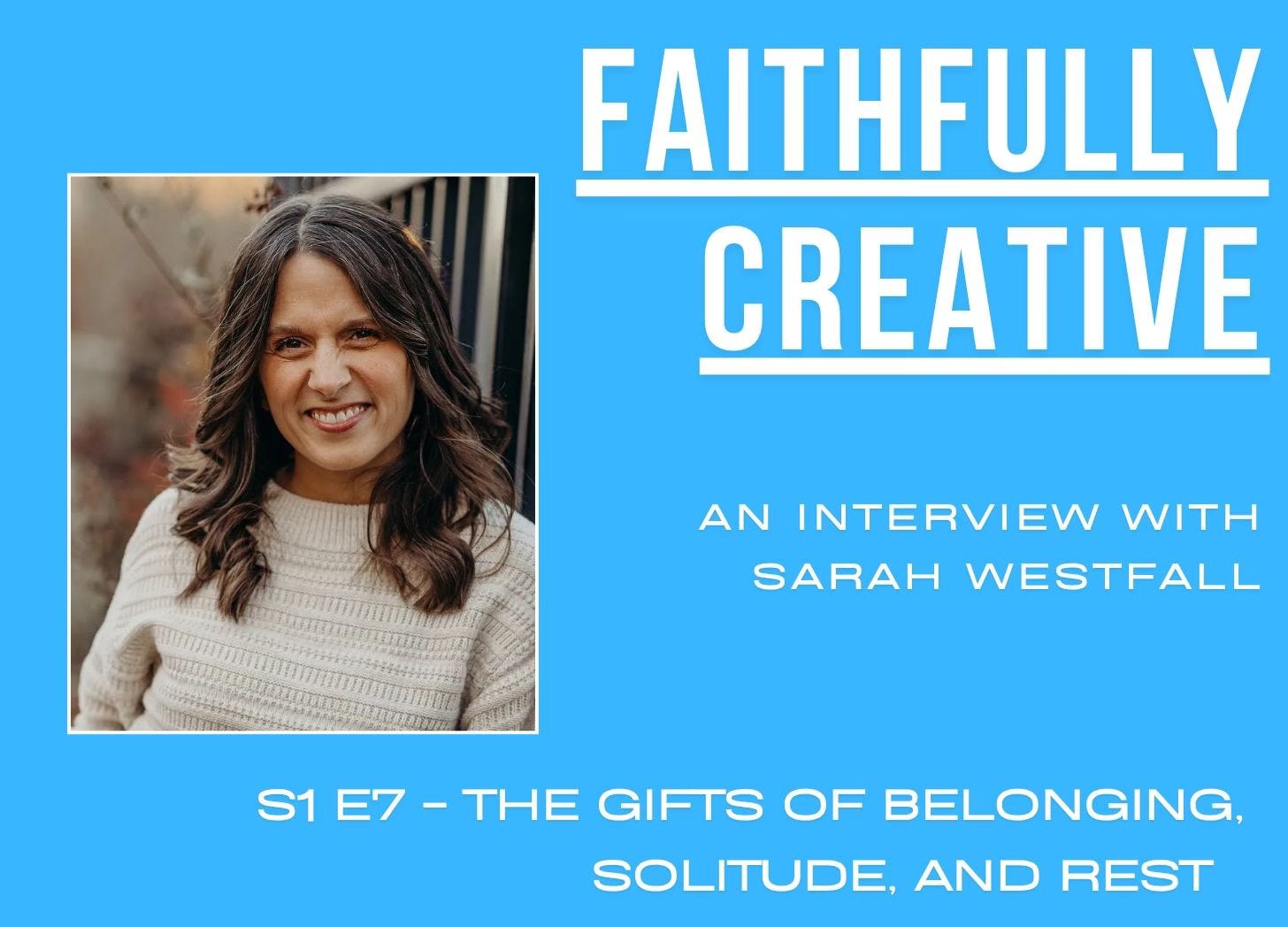
The Gifts of Belonging, Solitude, and Rest
Jun 26, 202501:10:26Tap to summarizeThe extending piece of being a person of welcome… offers a more substantial sense of belonging than if we were to only consume. - Sarah WestfallMy humanity needs space for nothingness. It needs to become settled once again… so that sometime in the future again, I can exhale and give again. - Sarah WestfallIn this episode, Matt has a conversation with Sarah Westfall. Sarah is a full-time writer, speaker, and podcast host whose work delves into the complexities of communal life. She is the author of The Way of Belonging: Reimagining Who You Are and How We Relate and writes regularly on her Substack, Human Together. Her podcast has the same name and the amazing tagline: a podcast for people who agree it is not good to be alone (but secretly wonder whether it might be easier).We have a great conversation about why humans long to belong, how helping others belong is a creative act, and also a great discussion about all things writing!Books & LinksSarah’s WebsiteOur Unforming: De-Westernizing Spiritual Formation by Cindy S. LeeThe Way of Belonging This is a public episode. If you would like to discuss this with other subscribers or get access to bonus episodes, visit mattbrough.substack.com
Transcribe →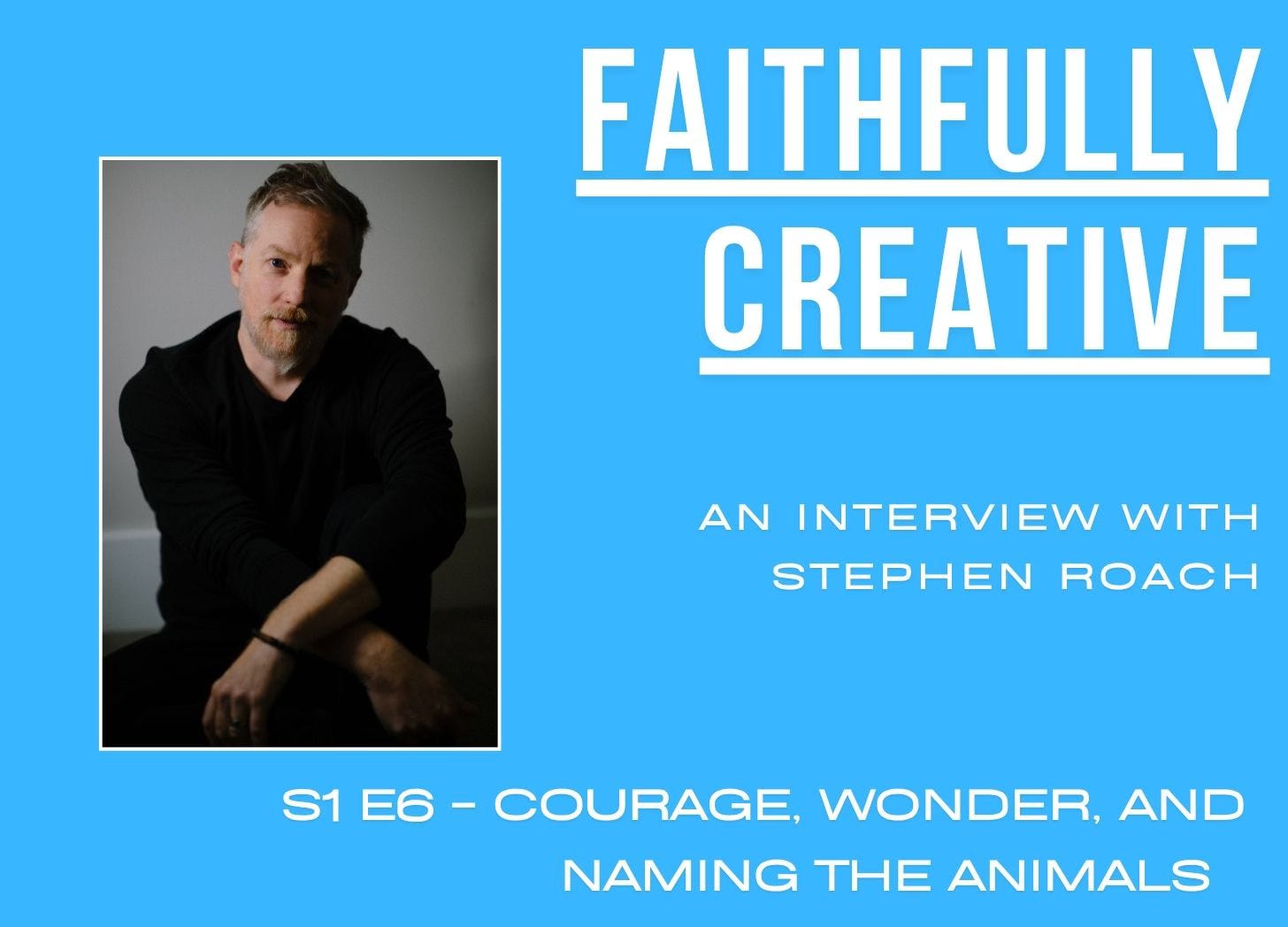
Courage, Wonder, and Naming the Animals
Jun 12, 202500:57:57Tap to summarize“To live a creative life, we do have to make a choice to live in courage, to be willing to be vulnerable and to put ourselves out there.”In this episode Matt has a conversation with Stephen Roach. Stephen is host of the Makers and Mystics podcast and founder of The Breath and The Clay creative arts organization. Stephen travels as a keynote speaker and event curator conducting workshops and events centred on the exploration of creativity and the spiritual life. He has penned five volumes of poetry, an illustrated children’s book, and 2 other books including Naming The Animals: An Invitation To Creativity.Stephen is a multi-instrumentalist with a background in ethnomusicology and film composition. His musical group, Songs of Water composes for film and television including the award-winning Australian animated short, Teacups. Stephen has contributed to the works of recording artists Ricky Skaggs, Josh Garrels, Jonathan and Melissa Helser, John Mark McMillan and others.Matt and Stephen talk about:* Courage and Vulnerability in the Creative Life* Co-creative partnership between God and humanity, where God leaves room for human contribution and delight.* The importance of sabbath, rest, and the place of contemplation and wonder.* Embracing the process rather than obsessing over outcomesSelected Links/Books* Makers & Mystic Podcast* Breath & the Clay* On Writing by Stephen King* The Sabbath by Abraham Joshua Heschel* Naming the Animals: An Invitation to Creativity by Stephen Roach This is a public episode. If you would like to discuss this with other subscribers or get access to bonus episodes, visit mattbrough.substack.com
Transcribe →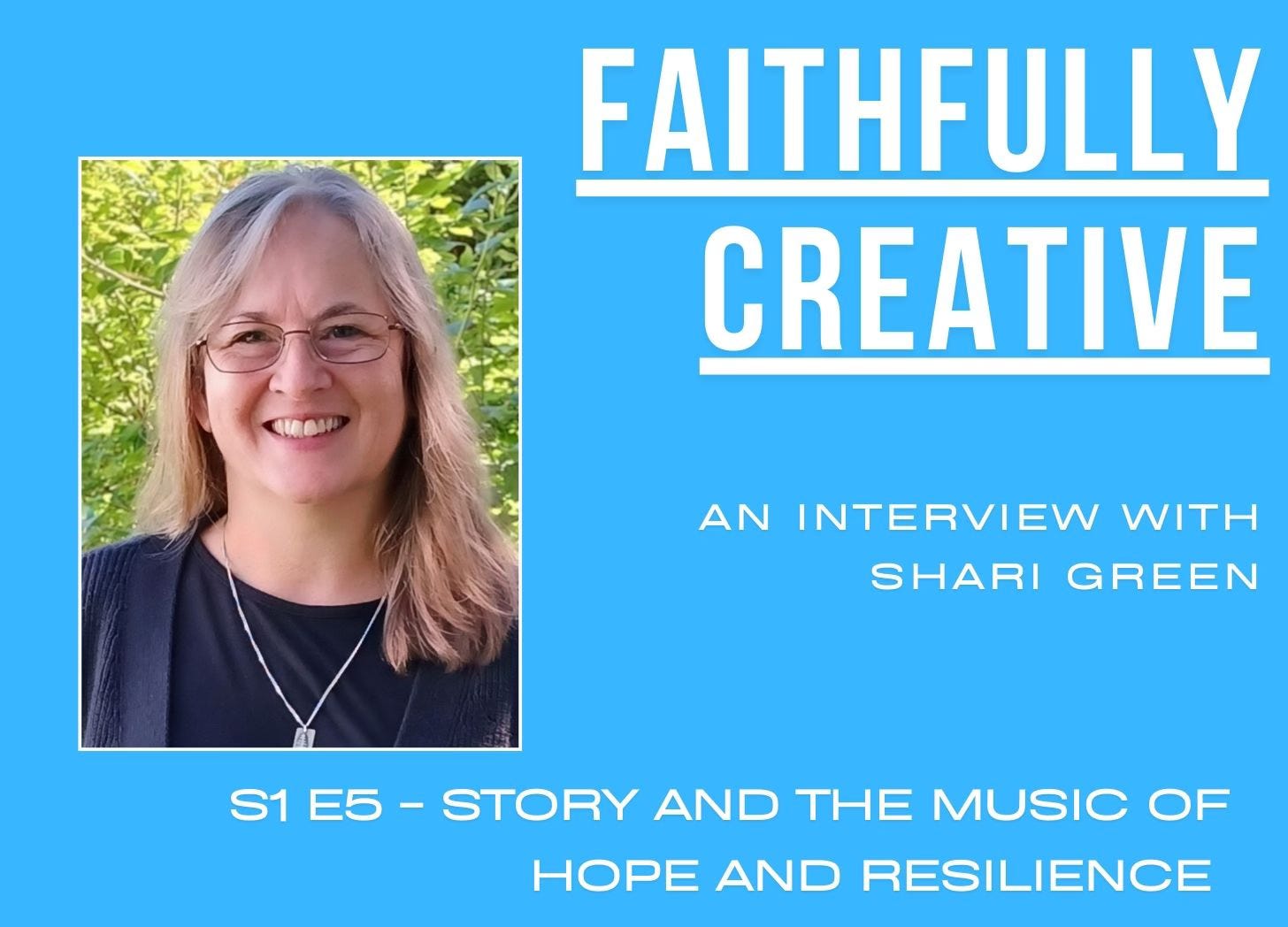
Story and the Music of Resilience and Hope
May 15, 202500:51:52Tap to summarize"If we believe we're made in the image of God, a creator God, then that image in us is creative. It's a way of engaging with that divine spark."In this episode, Matt has a conversation with Shari Green. Shari writes fiction and poetry for children and young adults. Her latest book, SONG OF FREEDOM, SONG OF DREAMS, is a 2024 Governor General’s Literary Award finalist. Her other novels in verse include GAME FACE, MISSING MIKE, Schneider Family Book Award winner MACY McMILLAN AND THE RAINBOW GODDESS, and ROOT BEER CANDY AND OTHER MIRACLES. Shari’s books have been included on international “best of” lists and selected for numerous provincial and state readers’-choice programs. Much of the conversation centres on Shari’s latest, Song of Freedom, Song of Dreams which has strong themes connected to music and faith and centres around a young pianist in East Germany trying to make sense of love, duty, and the pursuit of dreams during the unsettled months of protest that led to the fall of the Berlin Wall in 1989. Shari and Matt talk about:* Music/art as a way of processing difficult emotions, connecting with God, and also a vehicle and catalyst in supporting social change.* Art and faith as a means of finding normalcy, hope, and purpose in challenging times.* How both faith and creativity are about an openness to awe, wonder, and mystery.Links / Books* Shari Green’s Website* Song of Freedom, Song of Dreams This is a public episode. If you would like to discuss this with other subscribers or get access to bonus episodes, visit mattbrough.substack.com
Transcribe →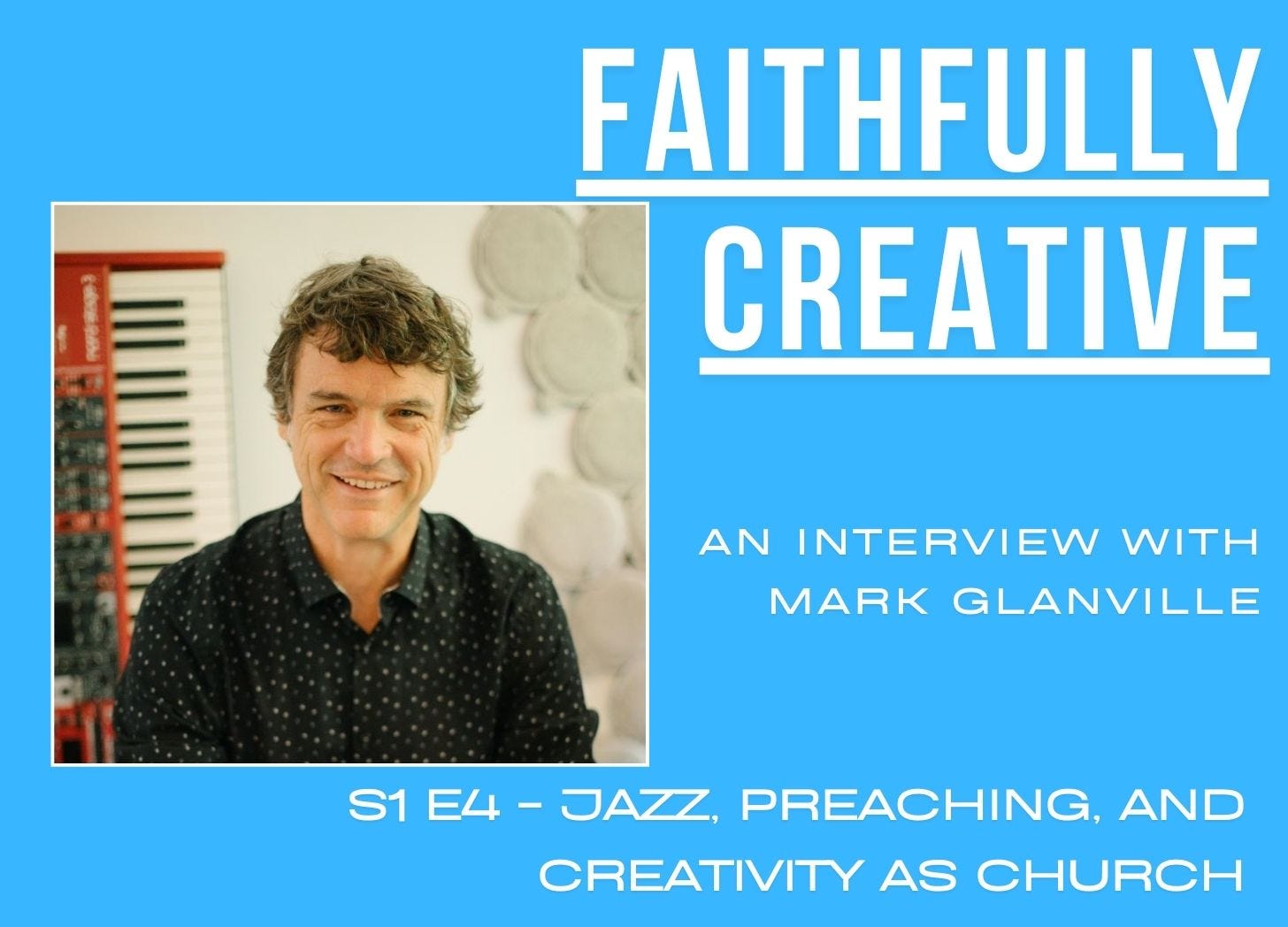
Jazz, Preaching, and Creativity as Church
Apr 24, 202501:20:21Tap to summarize"The church doesn’t need to be full of professional artists to be creative. Creativity is about engaging our neighbourhoods with imagination and love."In this episode, Matt has a conversation with Dr. Mark Glanville. He currently works as the Director of the Centre for Missional Leadership at St. Andrew’s Hall at the University of British Columbia, Vancouver, and is the author of 5 books. He has pastored in creative, justice-seeking churches for 14 years in both Canada and Australia and has played jazz piano professionally for 30 years. Through a variety of lenses, Mark shows how the Bible is forming churches that extend the tenderness of Jesus in their particular neighbourhood.Matt and Mark talk about:* The parallel between artists and Christ followers, seeing both as seekers of truth. * The role of beauty, creativity, experimentation, and discernment in the Church.* Preaching as an artistic craft.Links / Books* Mark Glanville’s website* Centre for Missional Leadership* Preaching in a New Key: Crafting Expository Sermons in Post-Christian Communities* Improvising Church: Scripture as the Source of Harmony, Rhythm, and Soul This is a public episode. If you would like to discuss this with other subscribers or get access to bonus episodes, visit mattbrough.substack.com
Transcribe →
Writing, Resistance, and Whole Self Creativity
Mar 13, 202501:02:52Tap to summarize“Creativity is a response to being loved. Whether through poetry, music, or even gardening, it’s how we express our connection to the sacred.”—Kaitlin CurticeIn this episode, Matt has a conversation with Kaitlin Curtice. Kaitlin is an award-winning author, poet-storyteller, and public speaker. As a citizen of the Potawatomi nation, Kaitlin writes on the intersections of spirituality and identity and how that shifts throughout our lives.Her books include, Native: Identity, Belonging and Rediscovering God and Living Resistance: An Indigenous Vision for Seeking Wholeness Every Day. She also has a series titled An Indigenous Celebration of Nature — four children’s books on the seasons, the latest, Spring’s Miracles, released on March 4, 2025.Besides her books, Kaitlin has written online for Sojourners, Religion News Service, On Being, SELF Magazine, Oprah Daily, and has been featured on CBS and in USA Today. She writes essays and poetry for The Liminality Journal found on Substack.Matt and Kaitlin talk about:* Creativity as an Act of Healing & Resistance* Embodiment as integral to both Spirituality and Creativity* The need for both decolonization (breaking away from colonial structures and mindsets) and Indigenization (infusing Indigenous wisdom and practices back into daily life).* The role of representation in art and how artists, particularly writers, might sensitively approach representing diverse cultures.Links/Books* Kaitlin’s Author Website, where you can find details about most of her writing, including Living Resistance and Native.* The Liminality Journal on Substack* Definitely, check out Kaitlin’s latest book, Spring’s Miracles! This is a public episode. If you would like to discuss this with other subscribers or get access to bonus episodes, visit mattbrough.substack.com
Transcribe →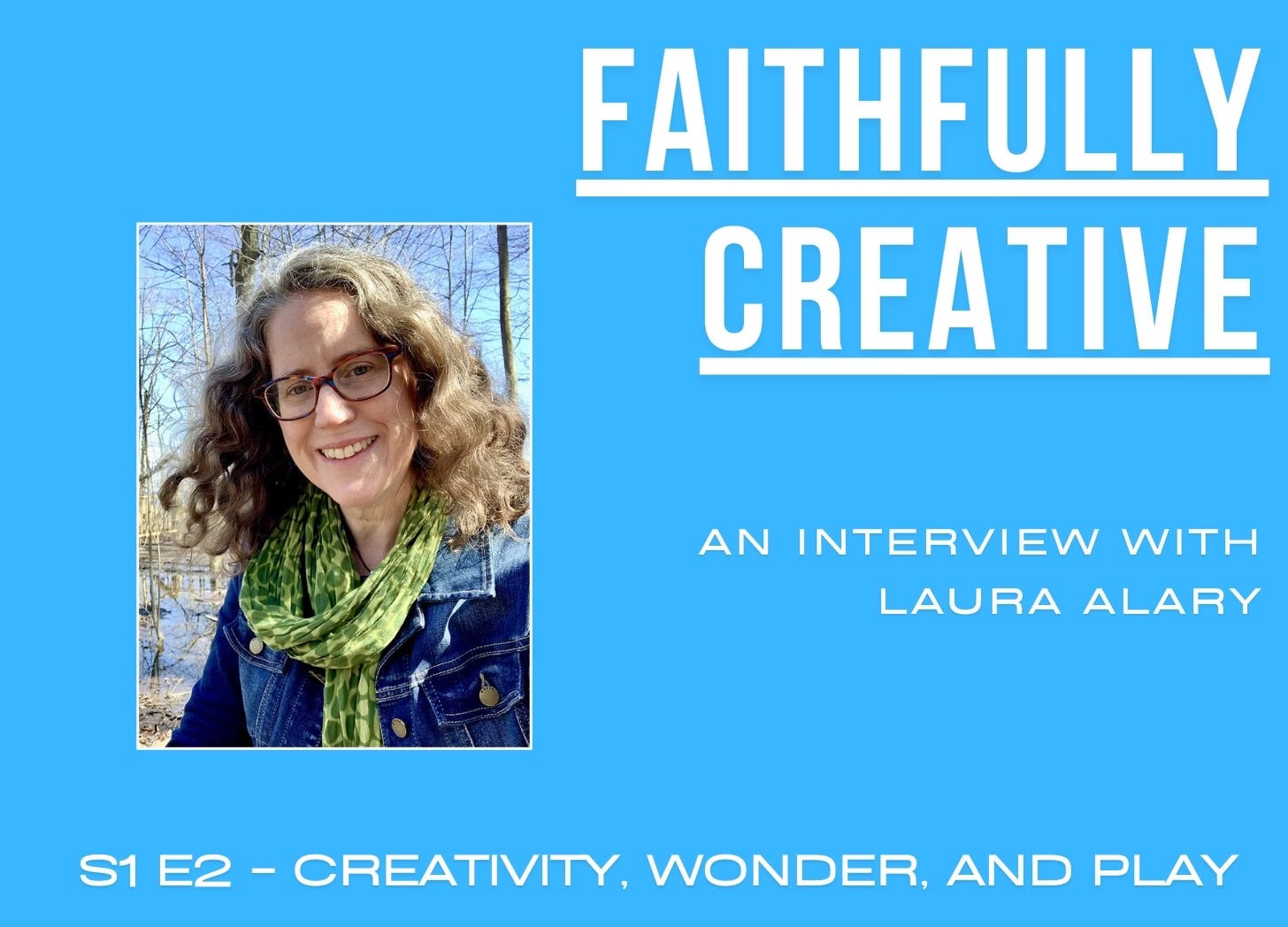
Creativity, Wonder, and Play
Mar 7, 202501:12:48Tap to summarizeIn this episode, Matt talks with Laura Alary. Laura is the author of over 20 books (a few are on their way to publication). On her website, she claims to “write stories that make us bigger on the inside” and explains that “…means my books make you think. Wonder. Ask big questions. Maybe understand other people a bit better. Some of them are serious. Some are funny. Most are a bit of both. But they all aim to stretch minds and hearts.”This conversation was so rich and full of wonder as we spoke about:* Creativity as intrinsic to being human, reflecting the image of the Creator. * The hopeful orientation of Christian artistic expression* Having a more broad view of vocation as not just an unexpected calling but as something that “lights you up” and aligns with natural gifts and passions.* The power of Children’s Books especially in rediscovering a sense of wonder and connection to faith* The role and importance of curiosity * Laura’s approach to writingLinks / Books* Laura Alary’s Website* Rise: A Child’s Guide to Eastertide* The Astronomer Who Questioned Everything This is a public episode. If you would like to discuss this with other subscribers or get access to bonus episodes, visit mattbrough.substack.com
Transcribe →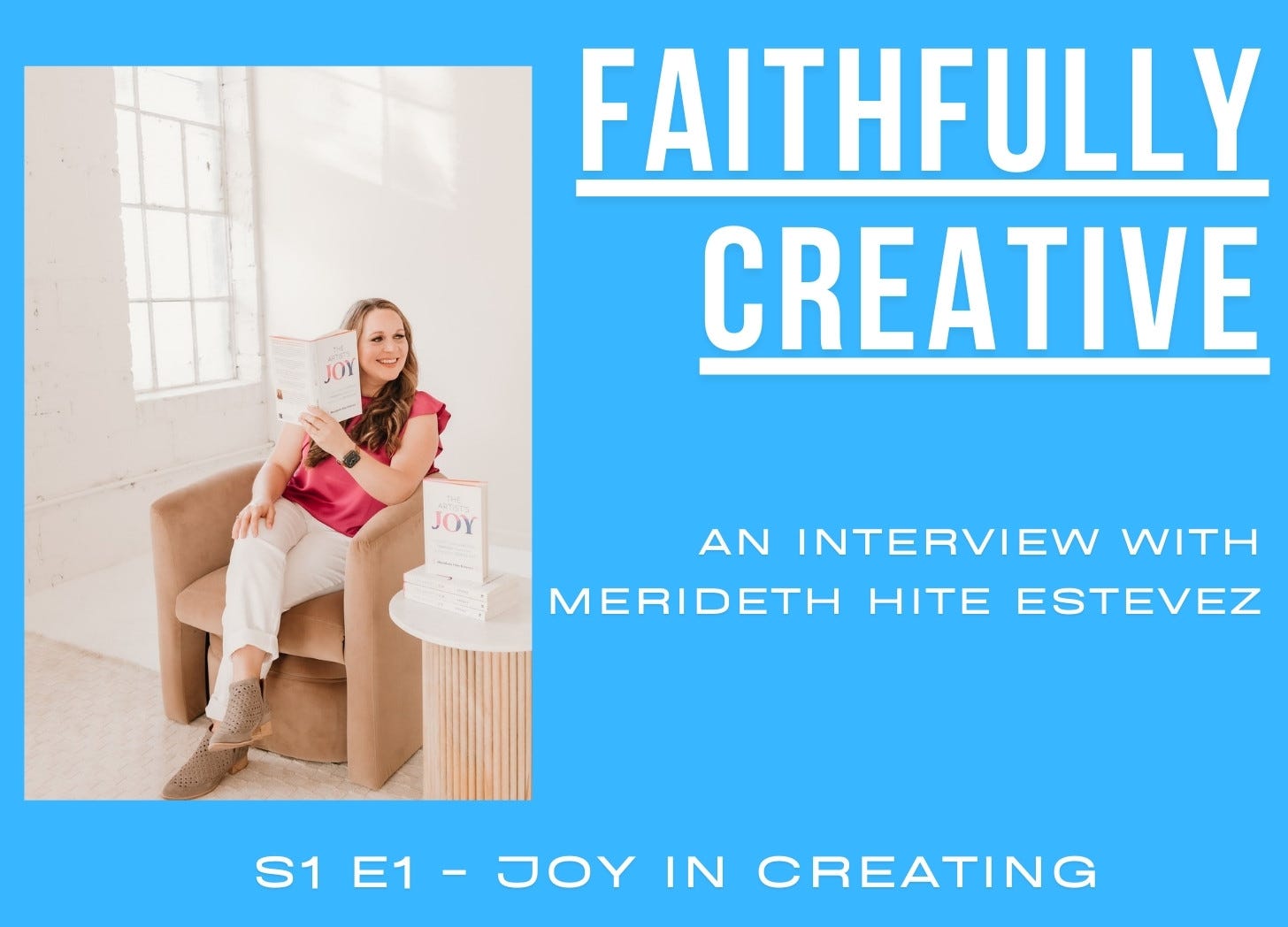
Joy in Creating
Feb 27, 202500:53:29Tap to summarizeIn this inaugural episode of the newly minted Faithfully Creative Podcast, Matt has a conversation with Merideth Hite Estevez. She is a Juilliard-trained oboist, Doctor of Musical Arts, author, coach, and speaker who helps self-identified artists and the creatively curious recover the joy of making. Merideth is host of the Artists for Joy podcast and author of The Artist’s Joy: a guide to Getting Unstuck, embracing imperfection, and loving your creative life.We talk about:* Her journey from experiencing burnout as a musician and academic to supporting artists in rediscovering joy in creativity.* Creativity as a spiritual practice, and what it might mean to reframe creative practice as “devotion.”* Having a portfolio life and making room for regular creativity even when you are busy.* What a writing coach or creative coach does.Resources / Books Mentioned* Merideth’s website, where you can find her podcast “Artists for Joy” and details about her excellent book.* Merideth’s Substack* Ann Kroeker’s website (Ann was Merideth’s writing coach)* The Artist’s Way by Julia Cameron* The War of Art by Steven PressfieldFaithfully Creative is a reader-supported publication. To receive new posts and support my work, consider becoming a free or paid subscriber. This is a public episode. If you would like to discuss this with other subscribers or get access to bonus episodes, visit mattbrough.substack.com
Transcribe →
From Reluctantly to Faithfully Creative
Nov 27, 202400:31:01Tap to summarizeNote: The personal essay below is most of this podcast episode. You may either listen or read. Your choice!As I’ve attempted to move toward a more regular pattern of writing, I’ve decided to change the name of this Substack newsletter and also change the name and essentially re-launch my podcast. Both will now be called “Faithfully Creative.”My aim is to stay on the same trajectory that I’ve been on—writing and speaking about creativity, imagination, faith, spirituality, theology, God. The banner of “Faithfully Creative” is broad enough to encompass all of this, but hopefully it will provide a bit of focus as well. Before I lay out some specifics, I have a small confession, and then a bit of a personal story.First, the confession… As I look back on my life, a lot of the time I have been reluctantly creative. It may not seem like that to the outsider looking in. But the outsider can’t really see fully in, can they? They can’t see my hesitancy, fear, my almost-devotion to second-guessing. I’ve been in this world long enough to know know that imposter syndrome is real and won’t ever fully go away. I also know that I do better when I lean into creativity. I am more fully alive when I engage in creative practice. I am most myself when I have regular occasions to explore something new.This confession is reason enough to call this newsletter and associated podcast “Faithfully Creative.” The name is aspirational for me. I want to be less reluctant and more faithful toward the creative call.I promised you a story…I was a very shy kid and teenager. I certainly never would have wanted to be on a stage and yet when I look back I am surprised by the stages I ended up on.My entire grade nine english class had to be in the play. Our teacher, Ms. Peterson, wrote it with some help from William Shakespeare. It was called “The Shakespearean Spell,” and it had two modern-day narrators who provided the thread that strung together scenes from various Bard plays that featured the supernatural. We, of course, had the witches from Macbeth and Hamlet’s ghost. A Midsummer Night’s Dream provided comic relief. I can still remember my friend having to play the part of Bottom and kind of loving it, especially the scene where he got affectionate attention from Titania. I ended up having two roles from different plays. Other than my horror at having to perform in front of actual people, I was basically okay being Hamlet. I wasn’t as thrilled to play Oberon who is dubbed “king of the fairies.” I was shocked that my fellow mid-1990s teen thespians didn’t make more innapropriate jokes than they did.After the rousing success of the grade nine play, a few of my friends got the acting bug. At least I think they did ,because in grade ten and eleven they went about pressuring the same english teacher to let us do more. We did a read through of “The Lady’s Not for Burning” by Tom Stoppard but I can’t remember putting it on. We did end up performing scenes from “The Princess Bride.” We chose the part where the man in black bests the swordsman, the giant, and the so-called smart one. I got to play the “smart one” who lost to the man in black in the battle of wits to the death, a role played in the movie by a short bald guy. Perfect for my lanky fifteen-year-old almost 6 foot 3 frame. Still, this one was fun.In grade eleven, we put on “As You like It.” More Shakespeare! Anyone in the school could audition for “As You like It,” but the cast was mostly my friends. I perhaps should mention here that I never saw myself as the centre of my friend group. I was by far the most reserved out of all of them. But, I was also the only one out of all of them who sang. I’d always been in the school choir, I had sung in church, and my family sang together, The Beatles and “The Sound of Music” on long road trips most memorable.I had sung some solos before with school choir and I hadn’t yet died on the spot, so I put my name in for the part of Amiens, the singer. He had barely any lines besides two songs. That suited me just fine. A very minor part was perfect for me. Two people who were not part of my friend group were cast as Orlando, the lead. They would act in the role on two nights each of a four night run. At least that was the plan. A number of weeks into rehearsals and the two male leads had only shown up a handful of times. Something about hockey practices and prior commitment to the team. Ms. Peterson (still the same teacher) came to me and asked if I would take on the role of Orlando. Every fibre of my being said no. But somehow my mouth didn’t translate what the fibre of my being was screaming. In fact, my mouth didn’t say much of anything while the gracious and ever-encouraging Ms. Peterson went on to tell me that she thought I would do an excellent job. Somehow, at the end of our conversation, I was the new lead, and with no understudy that I can remember. I would go on all four nights. I think I enjoyed it. Mostly, I remember being terrified.In grade 12, with all this acting experience under my belt, I was determined to be in the high school musical. Our school hadn’t done a full production musical in a few years, but there was finally going to be one. I had seen my older sisters be in them and for me they were on par with professional theatre. I was hoping for something really good like our family favourite, “The Sound of Music.” And then the word came that we’d be doing “Grease.” There were screams of delight mostly from the soprano section of choir. I was horrified. I hated that musical. I rationalized that I had some moral qualms about it, but I think I was really masking my fear. I could see myself as a good Captain von Trapp—refined, serious, basically having to just stand there most of the time while Maria and the kids did all the dancing. Sure, there was a bit of a romantic part, and then a little bit of child-like joy toward the end, but he wasn’t the real lead, and it was all very controlled, subtle. There was nothing subtle about being a greaser. That wasn’t me at all. I decided, though, that “I would always regret it” if I wasn’t in the musical in my grade 12 year. So I auditioned, hoping to get a small role just so I could always remember the experience of being in the high school musical. They got everyone to sing “Somewhere Over the Rainbow” rather than something from “Grease.” That was good, except maybe it wasn’t, because I could sing the “Wizard of Oz” song no problem and actually sound good. It never really occurred to me that I could turn down a role once offered. So, that was it. I was the lead again, but this time it was Danny Zuko. I had to grow my hair long for the role throughout the year, and I actually ended up letting it grow even longer after I graduated. In my first few years of University I had shoulder-length hair. I have friends who still comment on the time when I had long hair. Well, it was starring in Grease that started it all.I do remember having a ton of fun in “Grease.” I remember being pretty good too by the last of the five-night run in front of the hundreds that packed the school gym for each show. The drama teacher came to me on closing night and told me that he “really believed it” in the final song. That was high praise from him.When I look back on different parts and stages of my life, I see certain through-lines. Lately, I’ve been noticing the ones that are about creativity. I’ve also noticed an initial reluctance or resistance when it came to creative expression. Acting in plays in high school is a good example of this.The same English teacher that got me into acting for those few precious high school years also tried to encourage me to do more creative writing. I remember writing a piece for her class where we had to describe a house and then look out a window and describe what you saw. Her feedback was so positive, but I wasn’t interested in creative writing at all. I barely recognized that Ms. Peterson was trying to help me. I’m ashamed to say that it was easier to make fun of her a little bit behind her back for being “super artsy.” I guess I’m kind of one of those “artsy” people now! I probably was then too but didn’t really realize it.Mostly, I thought English class was lame. I ended up not doing more creative writing than was required of me in class and instead focussed on math and computer science. I think I was drawn to those classes partly because I was good at them, and also because I was very black and white in my thinking. I wanted there to be straightforward answers to problems. Perhaps this is, in a strange way, what drew me to church because, at least as it was presented to me as a teen, Christianity provided clear answers to life. As a pastor, and just as a human, I feel quite differently about things now. I know that life is nothing like finding a solution to a math problem.Ms. Peterson saw something in me that I didn’t recognize and I have barely ever given any credit. She persisted with me. In my grade 12 year she invited me to consider trying for valedictorian. In our school, valedictorian didn’t go to the person with the highest grades. My grades were good, but they weren’t the best in the school. No, for us, teachers invited students to try out. You wrote a speech and would deliver it to a small panel of teachers who would choose someone to be valedictorian. Then one or more of the teachers would help the selected student to polish their speech in time for the graduation ceremony.I was horrified by all of this. I had overcome some of my fears of being on stage from being in plays and the musical, but at least in those cases I was acting, pretending to be someone else, delivering l...
Transcribe →
The Deep Well of Art, Music, and Community
Jan 25, 202400:58:05Tap to summarizeThis amazing conversation with Juno-award winning musician, Steve Bell, was the 9th episode of the Spirituality for Ordinary People Podcast. I felt like it was worth re-sharing, and have also included the original “show notes” below. You can also get a transcript by reading this post in the substack app or on the substack website.This interview was such an amazing experience, recorded in Steve’s own studio in Winnipeg. Steve was incredibly gracious and generous with his time and his honest sharing. Steve shared a ton in this episode, and you can find all kinds of links below that reference just some of what Steve spoke about.Thanks for reading Noticing Delight! Subscribe for free to receive new posts and support my work.This podcast episode also features several of Steve’s songs, used with his permission.CONNECT WITH STEVE BELL* Steve’s Website – stevebell.com* Pilgrim Year * Steve’s AlbumsSOME OF WHAT WE COVERED IN THE INTERVIEW:* Following Jesus as a Pathway* Interactions with First Nations People and the effect on Spirituality* The unhelpfulness of some of Western Christianity’s theological assumptions for our spirituality.* Spirituality as relationality and grounded in the Trinity* Reading as Spiritual practice and way in to inner quiet* Scripture as art* The role of music and art in spiritual formation* Kindly guides for understanding art (and spirituality)* Being deliberate with your Spiritual “diet” to be spiritually healthy.QUOTES* “The Bible starts with the goodness of creation.”* “[You should] read 80% from people who are dead and 20% from people who are alive”* “If there is this deep relationality that goes beyond words and mere ideas, we need art to get there.”LINKS, RESOURCES, AND PEOPLE* Terry Leblanc, Ray Aldred, Cheryl Bear and North American Institute for Indigenous Theological Studies – http://www.naiits.com/* Richard Twiss – His books* Theresa of Avila – http://www.catholic.org/saints/saint.php?saint_id=208* John of the Cross – http://www.catholic.org/saints/saint.php?saint_id=65* Edith Stein – https://en.wikipedia.org/wiki/Edith_Stein* G.K. Chesterton – http://www.chesterton.org/who-is-this-guy/* C. S. Lewis – http://www.cslewis.com/* Charles Williams – http://www.charleswilliamssociety.org.uk/* Gerard Manly Hopkins – https://en.wikipedia.org/wiki/Gerard_Manley_Hopkins* Godric, a novel by Frederick BuechnerThanks for reading Noticing Delight! Subscribe for free to receive new posts and support my work. This is a public episode. If you would like to discuss this with other subscribers or get access to bonus episodes, visit mattbrough.substack.com
Transcribe →
Church, Listen to Women
Dec 14, 202300:09:47Tap to summarizeThere are certain Christian traditions that seem talk about how we need more “Bible-based teaching.” These same traditions that tend to indicate that they are elevating the Bible and take pride in “understanding the Bible literally” or, if they actually deign to admit that it is impossible to take the entire Bible literally because, well, least of all, there are poems in the Bible (even an entire book of poetry called the Psalms) and you can’t actually take a poem literally or you’ve totally missed the point, then they will instead declare that they, and maybe only they, are “taking the Bible seriously.”Some of these same traditions have churches and leaders who have done things like silence women, perpetuate abuse and discrimination, gather enormous wealth, or created their own kingdoms and then done what is “necessary” to protect them. (See the Secrets of Hillsong documentary, and the Rise and Fall of Mars Hill podcast)I’m not usually one to criticize other Christian traditions, but my aggravation at the way certain segments of the Christian Church are seen as representative of the entire Christian Tradition has grown in recent years. I usually want to try and just get along. Let’s just keep talking about grace and do our best to love one another. But still, I have become sick of a term like “Bible-believing” being far-too-often a code for a supposed God-sanctioned exclusion of anyone who is not a white man.How is it that “Bible-believing” has come to mean in some circles that because there are a few places in the New Testament that have references like “women be silent in church” or “wives submit to your husbands” that that gives “wise male leaders” the right to subjugate women and pretty much anyone else they deem “less than” by using an institution that is actually meant to represent a community that is also described in that same New Testament as one where “there is no longer male and female; for all of you are one in Christ Jesus?” (Galatians 3:28)If I’m a leader in a true “Bible-believing church,” shouldn’t I be shining a light on ALL the heroes of the faith, instead of just a select few? How about people like Sarah, Deborah, Hannah, Ruth, Naomi, or Elizabeth, just to name a few?And indeed what about Mary? Should we silence Jesus’ mother in the church? In some churches it seems so, because how can Mary’s song be heard as anything other than just a personal song of praise (I guess women are allowed to have those) in places that continue to perpetuate power for the few at the expense of others?Mary sings - and I’m just quoting the Bible here…He has brought down the powerful from their thrones and lifted up the lowly;he has filled the hungry with good things and sent the rich away empty. (Luke 1:52-53)Hmm. I’m thinking there words are a little hard to swallow while flying in your private jet to your next speaking gig at the Bible believing mega-church where your college buddy is the head pastor?I’m sick of seeing Christianity being portrayed as synonymous with corruption, abuse, discrimination, and the like. And I don’t want to defend the religion of Christianity. I want to instead point to the Bible, not as a proof-text about how to see things my way, but because it has a ton to say against the corruption of power, especially when that power is claimed as divine right.As a Christian, I am supposed to see things through the lens of Jesus Christ and Jesus didn’t do any of the manipulating, excluding, discriminating, or defending or bolstering of his power or authority that you see among church leadership in certain circles. Sure, we can say, that if Jesus is God incarnate, then he simply **has** all power and authority (no defending needed), and we ought to just be obedient subjects. But interestingly, Jesus himself didn’t even make that argument.He spoke of coming to serve and not be served. Instead of consolidating power and protecting his inner circle so that they would keep him in place so his religious movement would grow in numbers and also in political influence, Jesus was executed by a collusion of the state and religious powers of his day, and his inner circle was a scattered and broken mess (with one who denied he even knew Jesus, and another who betrayed him to the authorities).Of course we know the ones who did stay true to Jesus even after he was arrested and given the death penalty. They were the same ones who God chose as the first people to go and tell Jesus’ other followers about the incredible news of him being raised from the dead. The real way the Jesus movement continued actually started with these people bringing this good news (Gospel!) and speaking it to other disciples. If that isn’t speaking in church I don’t know what is! These are the models for who should speak and to whom we ought to listen!Matthew says it was “Mary Magdalene and the other Mary,” (Matthew 28:1) Mark says it was “, Mary Magdalene, and Mary the mother of James, and Salome,” (Mark 16:1), Luke says it was “Mary Magdalene, Joanna, and Mary the mother of James,” (Luke 24:10) and okay, John tells things a bit differently, but the key moment still involves Mary Magdalene as the central participant.All four sources agree that the most important message to convey to “the church” was first entrusted to women. So how about we listen! How about we also listen to Mary’s song of justice? How about we listen to any woman who stands up to speak?My own denomination has been ordaining women ministers since 1966, before I was born. I’ve never known a time when there weren’t women preachers. If you asked me to name you a few great pastors I know, the first few names out of my mouth would be Theresa, Heather, Jeya.I am flabbergasted that something like it being wrong to bar people from leadership based on their gender is still something we have to make a point of saying. It’s enough to make someone walk away from this whole thing called Christianity. And people have. And people are.Maybe you need to step away for a while. Or maybe you need to walk away from a segment of the Christian tradition where you have experienced hurt. I get it.I pray, though, that you might still look for or stay in and work for a community where Mary’s song is taken just as seriously as everything else in the Bible, where the reality of women pastors and preachers is just a given. I pray that together we can listen, speak, and help create communities actually centred on Christ who gave up power, who became human, whose love is without condition or bounds—the communities of grace, compassion, and care that people so desperately need. This is a public episode. If you would like to discuss this with other subscribers or get access to bonus episodes, visit mattbrough.substack.com
Transcribe →