
Podcast
FoundMyFitness
Hosted by Rhonda Patrick, Ph.D. · EN
A podcast about health, science, nutrition, aging, and fitness.
61episodes
Episodes
Newest firstAll episodes
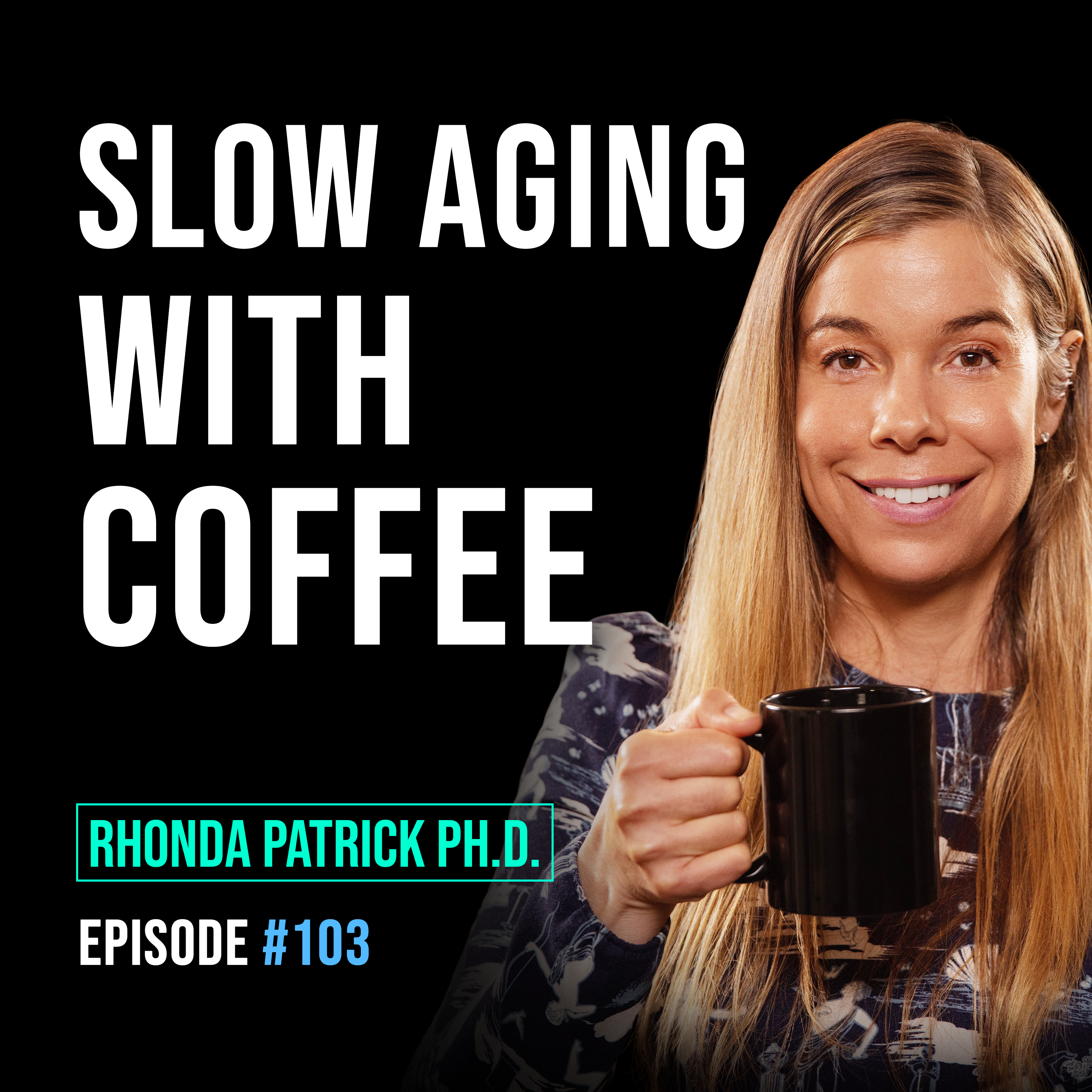
#103 A Deep Dive on Using Coffee For Health & Longevity (Full Guide & Research)
Jun 12, 202500:48:49Summary readyGet access to more than 120 episodes of my premium podcast, The Aliquot, as a FoundMyFitness Premium Member Coffee is one of the most powerful longevity tools we have, potentially reducing epigenetic age by up to one year in regular coffee drinkers, but its effectiveness hinges entirely on how you brew it. In this episode, I outline precisely how coffee reduces DNA damage, a key driver of cancer and cellular aging, and why choosing filtered coffee over methods like French press significantly lowers cholesterol risk. I'll discuss exactly which beans and roasts pack the highest antioxidant punch, plus a practical tip on a specific supplement that amplifies coffee's cognitive benefits. You'll also learn the truth about mycotoxins in coffee and why adding dairy can blunt coffee's immediate cognitive-boosting effects. Timestamps: (00:00) Introduction (01:24) Can coffee really slow biological aging? (04:42) Is coffee actually protective for your heart? (05:27) Why morning coffee is healthier than afternoon coffee (08:01) How coffee improves your metabolic health (09:52) Can coffee reduce cancer risk? (11:25) Does coffee protect DNA from damage? (13:38) Can coffee enhance your gut microbiome? (16:01) Can unfiltered coffee raise your cholesterol? (20:13) Which brewing method maximizes antioxidants? (20:40) Arabica or robusta—does bean type matter? (23:04) Dark vs. light roast—what's richer in antioxidants? (23:28) Is cold brew coffee as healthy as hot coffee? (23:51) Practical tips to maximize antioxidants (24:38) Filtered vs. French press—what's best for longevity? (26:48) Can espresso's antioxidants offset its cholesterol risk? (27:18) Instant coffee—an overlooked longevity booster? (27:40) Why filtered coffee is the clear winner (28:20) Caffeinated vs. decaf—what's better for your brain? (30:42) Can decaf coffee still enhance cognitive function? (33:38) How much caffeine is optimal for athletic performance? (36:31) How decaffeination methods affect coffee's benefits (39:02) Are mold toxins in coffee really a concern? (41:45) Is adding dairy a mistake? (43:15) Does MCT powder boost cognition—or just cholesterol? (44:59) Does adding L-theanine reduce caffeine-induced anxiety? (47:04) The science-backed coffee routine for longevity Show notes, transcript, and summary are available by clicking here Watch this episode on YouTube
Summary#102 Why Vitamin D Deficiency Accelerates Brain Aging
May 21, 202500:17:15Summary readyDiscover my premium podcast, The Aliquot Vitamin D is far more than just a vitamin—it's a potent steroid hormone regulating nearly 5% of our genome. Yet, remarkably, up to 70% of Americans aren't getting enough, placing them at increased risk for dementia and Alzheimer's disease. In this episode, I explore compelling new evidence from a study involving over 12,000 participants, demonstrating that vitamin D supplementation can reduce dementia risk by an impressive 40%, protecting even adults with genetic Alzheimer's risk (ApoE4 carriers). Timestamps: (00:00) Can vitamin D supplements reduce dementia risk? (00:46) How common is vitamin D deficiency? (03:31) What studies reveal about genes, vitamin D, and dementia (05:44) Does deficiency accelerate brain aging? (06:45) Can vitamin D supplementation enhance cognitive function? (08:15) Dementia risk reduction insights from 12,388 adults (09:58) Why women may benefit most (10:49) Normal vs. impaired cognition—who benefits more from vitamin D? (11:21) Do ApoE4 carriers get dementia protection from vitamin D? (13:00) How mild cognitive impairment affects dementia risk (13:41) Does the form of vitamin D matter? (14:11) What are the optimal vitamin D blood levels? (15:07) What dose corrects deficiency? (15:33) How vitamin D directly supports brain function Watch this episode on YouTube Show notes are available by clicking here The study discussed: Vitamin D supplementation and incident dementia: Effects of sex, APOE, and baseline cognitive status
Summary
#101 Dr. Andy Galpin: The Optimal Diet, Supplement, & Recovery Protocol for Peak Performance
Apr 22, 202503:51:28Summary readyDownload my "How to Train According to the Experts" guide Discover my premium podcast, The Aliquot Nutrition, supplementation, and recovery are foundational for enhancing exercise performance, but their full potential often remains untapped. In this episode, Dr. Andy Galpin, a renowned expert who has coached Olympians, world champions, and professional athletes across major sports, breaks down exactly how to leverage these critical elements to meaningfully enhance your results. Timestamps: (00:00) Introduction (05:01) Eating to perform vs. eating to live longer—do you have to choose? (08:20) Training fasted—are the mitochondrial benefits worth it? (14:53) What should you eat before early-morning strength training? (16:52) Why nutrient timing isn't critical for the average exerciser (18:44) Is intermittent fasting killing your gains? (29:24) Carbs before resistance training—fuel or fluff? (31:07) Endurance fueling strategies—what actually works? (36:02) When is post-exercise carb intake truly essential? (37:35) Game day fueling—how to get it right (40:25) Carb supplements vs. whole foods—what do elite athletes actually eat? (43:18) Rethinking fat intake for exercise performance (46:14) Metabolic flexibility—how the term got hijacked (50:39) The real test of metabolic health—why skipping a meal shouldn't break you (51:55) Are anaerobic and aerobic systems truly separate? (55:56) Does protein timing really matter? (58:27) Whole foods vs. protein powders (1:03:21) Fat timing—overlooked or irrelevant? (1:04:48) The truth about seed oils and saturated fat (1:09:43) Magnesium—who actually needs to supplement? (1:11:43) The problem with magnesium blood tests (1:13:01) Why the magnesium RDA might not be enough (1:13:54) Magnesium citrate, glycinate, or threonate—does it matter? (1:15:55) Do magnesium supplements really aid recovery? (1:18:35) Omega-3 supplementation—is the AFib risk real? (1:22:10) Can omega-3s prevent muscle loss during inactivity? (1:26:14) Why "performance anchors" matter more than supplements (1:30:47) Iron deficiency—the hidden performance killer? (1:33:42) Does caffeine before workouts increase fat burning? (1:35:29) Caffeine cycling—smart strategy or outdated myth? (1:38:45) Can music measurably enhance workout performance? (1:39:57) Rhodiola rosea—fatigue fighter or placebo? (1:44:38) Beetroot, citrulline, arginine—do nitric oxide boosters work? (1:55:07) Beta-alanine—why the tingles might be worth it (2:01:05) Is 5g of creatine really enough? (2:02:18) Sodium bicarbonate—effective fatigue buffer or GI nightmare? (2:04:36) Can you trust what's in your pre-workout supplement? (2:06:54) Is too much caffeine killing your performance gains? (2:07:41) Can antioxidants blunt exercise performance? (2:08:40) High-dose vitamin C—immune protection or adaptation killer? (2:15:12) Do anti-inflammatories sabotage your gains? (2:17:38) Tart cherry juice—recovery aid or overhyped? (2:21:04) Is glutamine the immune booster athletes need? (2:29:11) Can collagen actually strengthen tendons? (2:33:26) Does glucosamine chondroitin actually help joints? (2:34:28) What really happens during recovery—signaling vs. inflammation (2:37:25) The most important recovery metric (2:39:05) How increased blood flow accelerates muscle repair (2:43:55) Why persistent soreness might mean your fascia's at fault (2:47:02) Can compression boots genuinely speed recovery? (2:47:56) Can simply soaking in water accelerate recovery? (2:51:13) When is sauna a better choice than extra miles? (2:53:12) Can localized heat preserve muscle during downtime? (2:54:31) Cold immersion timing—muscle recovery vs. blunting gains (3:01:16) Why pre-bed cold exposure might improve sleep (3:04:31) Heart rate variability vs. resting heart rate (3:12:45) Why respiratory rate predicts stress better than resting heart rate (3:16:57) Are you overtrained—or just overreached? (3:21:41) Hormones and overtraining—what's the real link? (3:25:48) Does training harder mean you need more sleep? (3:27:54) How to know if you're getting enough sleep (3:31:17) Sleep trackers (3:33:10) Hydration timing—the key to uninterrupted sleep? (3:34:54) Why your wind-down index matters (3:36:02) Is your bedroom's CO₂ buildup sabotaging your sleep? (3:39:40) Are nasal allergies quietly wrecking your recovery? (3:41:23) Sleep hacks—what actually works? Watch this episode on YouTube Show notes are available by clicking here
Summary
#100 The Optimal Creatine Protocol for Strength, Brain, and Longevity | Darren Candow, PhD
Mar 31, 202501:54:26Summary readyDownload my "How to Train According to the Experts" guide Discover my premium podcast, The Aliquot Creatine is renowned for enhancing strength, but its benefits extend far beyond muscle power. In this episode, Dr. Darren Candow, a leading researcher with over 140 peer-reviewed publications, explores creatine's diverse physiological impacts, from bolstering cognitive resilience under stress to mitigating symptoms of depression and protecting against cognitive decline caused by sleep deprivation. He explains why the conventional dosage of 5 grams per day might be insufficient, and how higher doses (10–25 grams) could unlock additional therapeutic effects. Timestamps: (00:00) Introduction (04:34) What makes creatine effective for exercise performance? (08:01) The loss of explosive power with aging (09:36) How creatine speeds up recovery between sets (12:13) Two ways creatine boosts muscle strength (14:12) Why creatine might not speed typical weight-training recovery (16:38) Anti-catabolic effects (17:16) Why do men and women respond differently? (18:50) Dietary creatine vs. supplementation (19:36) Is creatine supplementation necessary—or optional? (21:05) Why plant-based may benefit most (22:15) Should creatine dosage change with age? (23:01) Loading vs. daily dosing (25:57) Why 5 grams might not be enough—other tissues (27:48) Can creatine prevent bone loss—even without weight training? (28:10) How creatine supports osteoblast activity (29:51) Preventing hip fractures with creatine (32:33) Creatine vs. bisphosphonates (36:21) Why creatine isn't just for weightlifters (38:52) Why stressed brains benefit most (40:57) Why brain aging accelerates demand (43:54) Why 10g per day might be the optimal dose (45:45) Why creatine counteracts sleep deprivation (48:53) Before vs. after concussion (51:17) Should dosage be adjusted by weight? (52:39) Does creatine improve sleep on training days? (55:34) Creatine for Alzheimer's and Parkinson's—does the science hold up? (57:08) Can creatine help with depression and anxiety? (1:00:24) The role of creatine and glutamine in preventing respiratory illness (1:02:40) Why creatine may enhance endothelial health and circulation (1:04:04) Creatine's role in cardiometabolic health (1:05:45) When does loading actually make sense? (1:06:51) Creatine's dual role—preserving muscle and enhancing recovery after injury (1:09:46) Is creatine effective without exercise? (1:12:01) Why creatine might improve male fertility (1:13:57) Is it safe for children? (1:17:21) Creatine supplementation during pregnancy (1:18:54) Could creatine boost motor skills in kids? (1:19:34) Creatine monohydrate vs. the rest (1:24:15) How to avoid digestive issues with creatine supplementation (1:26:56) Does timing matter—and should you cycle it? (1:28:32) Should you take creatine every day—or only workout days? (1:29:17) Why caffeine might blunt the effects (1:32:21) Does creatine increase body fat—or is that a myth? (1:33:08) Preventing cramps (the hydration myth) (1:34:33) Understanding the creatinine confusion—why creatine won't damage your kidneys (1:36:59) Why creatine is linked (wrongly?) to baldness (1:40:22) Debunking myths—sleep, cancer, urination (1:43:39) How creatine affects homocysteine levels (1:46:32) Creatine and protein—the ideal post-workout pair? (1:49:26) How to pick the best creatine supplement (1:51:46) What to know about micronized creatine Watch this episode on YouTube Show notes are available by clicking here
Summary
#097 The Science of Protein and Its Role in Longevity, Cancer, Aging, and Building Muscle
Nov 27, 202400:41:53Summary readyDiscover my premium podcast, The Aliquot Download my “How to Train According to the Experts” guide Protein is far more than a building block for muscle—it’s essential for metabolic health, insulin sensitivity, and preventing conditions like type 2 diabetes and sarcopenia. But how much do we truly need? And could too much protein, especially from meat, actually be harmful? This episode challenges the conventional RDA of 0.8 g/kg, presenting research that supports higher intakes of 1.2–2 g/kg for maintaining muscle, improving body composition, and promoting longevity. We also confront myths around protein timing and the so-called "anabolic window.” Lastly, we address concerns about protein’s links to cancer, heart disease, and kidney function, showing how exercise can redirect growth factors like IGF-1 to promote repair while mitigating risks. Timestamps: (00:00) Download my “How to Train” guide (00:51) Introduction (03:32) Why muscle matters (05:57) Why do we lose muscle? (07:31) How to negate anabolic resistance (08:24) Why it's never too late to build muscle (09:05) Requirements for overweight & obese individuals (09:52) Exposing the flaws of the RDA (11:12) Optimal intake when resistance training (11:55) What to do when losing weight (13:08) Does protein harm healthy kidneys? (14:59) How important is distribution? (17:11) Debunking the "anabolic window" (18:48) Benefits of pre-sleep intake (20:20) Timing & distribution takeaways (21:01) What are the best sources? (24:05) Animal vs. plant protein (26:27) Protein supplements (whey, casein, & collagen) (27:57) Does high intake accelerate aging? (31:32) Why exercise changes the story (34:02) What we can learn from athletes (34:36) Does high intake accelerate atherosclerosis? (36:51) 8 key takeaways Show notes and transcript are available by clicking here Watch this episode on YouTube
Summary
#096 How to Improve Metabolic Health with HIIT, Circadian-Timed Eating, & Sleep
Oct 8, 202400:52:53Summary readyDiscover my premium podcast, The Aliquot Learn how to choose the right omega-3 supplement in my free 13-page guide Exercise, meal timing, and sleep are three powerful tools for optimizing metabolic health, a key factor in healthy aging. Even slightly elevated blood glucose levels, but within the "normal" range, can contribute to brain atrophy in areas linked to aging and neurodegeneration. Long-term glucose elevations (high HbA1c) also promote harmful compounds that stiffen blood vessels, reduce heart flexibility, and raise cardiovascular risk. In this episode, recorded at the American Academy of Anti-Aging Medicine conference in Palm Beach, Florida, I provide practical, science-backed protocols on how to implement HIIT, circadian-timed eating, and optimized sleep strategies to dramatically improve metabolic health and protect against these harmful effects. Timestamps: (00:00) Introduction (04:25) Why HIIT outshines zone 2 for improving metabolic health (06:46) The signaling role of lactate production by muscle (09:33) Optimal HIIT conditions for improving body composition (10:36) How vigorous exercise repairs dysfunctional mitochondria (14:27) HIIT vs. zone 2 for mitochondrial biogenesis (16:09) Evidence-based HIIT protocols (17:46) Why "exercise snacks" are a crucial pre- and post-mealtime activity (19:50) The mortality benefits of short exercise bursts (23:08) Why late-night eating is detrimental (27:37) Can high glucose levels accelerate brain atrophy? (28:30) How circadian misalignment affects postprandial glucose (29:46) Metabolic health benefits of time-restricted eating (32:24) Why early eating is better for metabolic health (34:48) Why losing sleep for 3 nights mimics type 2 diabetes (36:58) Why less than 7 hours of sleep increases type 2 diabetes risk (37:44) Why chronically high blood glucose damages cardiovascular health (39:39) What 4 hours of sleep for 4 nights does to insulin signaling (40:44) Why short sleep facilitates obesity (42:03) The checklist for good sleep hygiene (45:37) Can 1 hour of extra sleep help you lose weight? (46:47) Cognitive behavioral therapy for insomnia (CBT-I) (48:22) How HIIT improves metabolic health when sleep-restricted (50:55) Can HIIT ameliorate the mortality risk from poor sleep? Show notes are available by clicking here Watch this episode on YouTube
Summary
#095 What Microplastics Are Doing to Your Brain, Body, and Reproductive Systems
Sep 19, 202401:14:31Summary readySweating helps enhance microplastic-associated chemical excretion. Get my free sauna report when you sign up here for my newsletter. Discover my premium podcast, The Aliquot Every week, the average person ingests the equivalent weight of a credit card in plastic.* While certain preventive measures can significantly reduce your intake of these harmful substances, it’s crucial to acknowledge a more daunting concern: the bioaccumulation of microplastics in the brain, potentially at ten times the rate of other organs. Microplastics and their associated chemicals are alarmingly ubiquitous — they permeate breast milk, sperm, the hippocampus, the prefrontal cortex, the air we breathe, medications, the water supply, and our bloodstream, accumulating in most major organ systems. During this episode, we’ll explore the unsettling realities of microplastics and their associated chemicals, diving into how they infiltrate nearly every facet of our environment and body, and discuss actionable strategies to reduce exposure. Timestamps: (00:00) The extent of the problem (02:12) Top sources of exposure (04:00) Contamination of our water (05:04) BPA, phthalates, & PFAS (forever chemicals) (07:06) How heating plastic affects BPA exposure (09:21) Our unfortunate habit of eating credit cards (11:33) Microplastics in major organs (14:05) Crossing the blood-brain barrier (15:01) How microplastics affect a developing fetus (15:55) The bloodstream is a highway for microplastics (18:12) Endocrine and hormonal effects (23:09) Consequences in pregnant women (25:35) How phthalates affect reproductive health (26:36) BPA's involvement in autism spectrum disorder (29:58) Side effects of prenatal BPA exposure (32:18) The brain may be a super-accumulator of plastic (34:50) Human brain microplastic levels are rising (36:06) Lost fertility in women (38:07) Changes in sperm quality (39:23) Microplastics in sperm (40:59) Why the heart suffers (42:51) Microplastics in arterial plaque (43:56) How BPA affects blood pressure (45:58) Risk of cancer (50:31) Topo Chico sparkling water (53:02) Reverse osmosis filtration (54:56) Food-based strategies for limiting microplastics (56:32) The "myth" of BPA-free plastics (58:14) Is salt a source of microplastics? (59:18) HEPA filters (1:00:52) Choose your clothing wisely (1:01:47) How to prevent release of microplastics (from laundry) (1:02:32) Receipts and thermal paper (1:04:17) Microplastic excretion and breakdown (1:06:28) Sulforaphane for detoxifying (1:08:38) Can dietary fiber increase microplastic excretion? (1:10:15) Are plastic chemicals excreted through sweat? (1:11:21) Do excretion strategies work for "forever chemicals"? Show notes are available by clicking here Watch this episode on YouTube * Some sources suggesting this figure may need to be revised downward as a result of some disagreement on the math used. However, in spite of this lack of consensus, the human and animal intake of microplastics is substantial and pervasive.
Summary
#094 Dr. Layne Norton on Building Muscle – Insights on Diet, Training, and Supplements
Aug 22, 202403:34:35Summary readyGet my exact protocols for boosting levels of brain-derived neurotrophic factor (BDNF) and enhancing cognition Discover my premium podcast, The Aliquot Dr. Layne Norton is a Ph.D. in Nutritional Sciences, a professional bodybuilder, and a champion powerlifter. We discuss why most people aren’t training too hard, when to go to failure, whether seed oils are “the” central cause of chronic disease, why having a slow metabolism isn’t a credible reason for being overweight (for most), and the sustaining power of good habits. We also get into controversies around the carnivore diet, diet sodas, artificial sweeteners, intermittent fasting, and much more. Timestamps: (00:00) Introduction (04:48) Layne's coaching philosophy (14:39) Why to start tracking calories (for at least 3 days) (17:41) Why people lie to themselves about food intake (23:06) The profound benefits of small exercise doses (26:53) Why you should treat exercise like brushing your teeth (30:11) Benefits of resistance training for older individuals (33:51) Should you train to failure? (47:07) Why hard training & consistency trump exercise selection (56:46) Is lifting heavy necessary for building muscle? (57:54) Barbell vs. hack squats for preventing falls (1:00:10) Can lifting weights decrease low-back pain? (1:01:43) Injury prevention when resistance training (1:11:16) How exposure therapy can help you with injuries (1:15:04) Why pain doesn't always indicate tissue injury (1:18:17) Should you resistance train after a poor night of sleep? (1:21:57) Why menopause can cause weight gain (1:29:36) Why it's never too late to start lifting weights (1:32:05) Resistance training tips for older individuals with joint pain (1:36:18) Why total protein intake matters more than distribution (1:44:19) Layne's daily protein distribution (1:46:44) The shortcomings of nutrition studies (1:54:06) Is consuming more than 1.6 g/kg of protein beneficial? (1:55:33) Should you eat more protein in a calorie deficit? (1:56:43) Protein intake for endurance athletes (1:58:07) How much protein does Layne eat? (1:59:11) Are seed oils a predominant cause of chronic disease? (2:08:45) Does the carnivore diet increase heart disease risk? (2:14:16) Are heated seed oils more inflammatory? (2:20:33) Is there a "big food" industry conspiracy? (2:26:17) Are sugar-sweetened beverages uniquely deleterious? (2:30:17) Can diet soda help you lose weight? (2:34:20) Microbiome & cancer risks of diet soda (2:42:02) Is drinking 1 Diet Coke per day unhealthy? (2:44:24) Why Layne rarely takes a strong position on early science (2:49:04) Carnivore diet (3:01:52) Time-restricted eating (3:12:38) Layne's daily routine (3:16:55) Layne's diet and supplements (3:19:49) Creatine and hair loss (3:22:49) Rhodiola rosea & ashwagandha (3:25:54) Layne's tier 2 supplements Show notes are available by clicking here Watch this episode on YouTube
Summary
#093 Dr. Luc van Loon: Optimizing Protein Intake & Distribution for Muscle Growth
Jul 30, 202402:17:13Summary readyMy free omega-3 guide (the ultimate blueprint for choosing a fish oil supplement) Discover my premium podcast, The Aliquot Dr. Luc van Loon is a renowned figure in the realm of exercise science, particularly celebrated for his deep understanding of protein metabolism, resistance training, and the nuanced role of collagen supplements in sports nutrition. Our conversation is an in-depth discussion on optimal protein intake & distribution strategies for stimulating muscle protein synthesis with delightful detours into insightful discussion of un ique topics like the timing of cold-water immersion. Timestamps: (00:00) Introduction (06:00) Why do we need protein? (07:04) How the protein RDA (0.8 g/kg) was established (11:34) Protein turnover in organs (brain, liver, etc.) (14:54) How much protein do you really need? (19:42) Recommended protein intake when dieting for weight loss (20:59) How the body adapts to higher protein (24:30) Anabolic resistance (27:29) Protein requirements for overweight & obese individuals (29:42) Gaining strength vs. muscle mass (34:04) Optimal protein distribution (37:49) 20g vs. 100g protein post-workout (Luc van Loon study) (40:45) Can evening protein consumption stimulate muscle protein synthesis overnight? (45:29) How does time-restricted feeding affect muscle protein synthesis? (51:51) Protein before vs. after exercising (53:41) How does spreading out protein intake affect hypertrophy? (56:39) Protein shakes vs. animal protein (59:42) Protein supplementation for weight loss & recomposition (1:00:58) Casein vs. whey protein for stimulating muscle protein synthesis (1:03:53) Factors that influence protein's anabolic potential (1:04:58) Raw eggs vs. cooked — what's better for hypertrophy? (1:08:51) Plant vs. animal protein (1:11:52) Plant-based protein powder (1:16:31) Whey protein isolate vs. concentrate (1:17:20) How resistance training changes the leucine threshold (1:20:31) Do high-protein diets cause atherosclerosis? (1:28:29) How muscle adapts to repeated bouts of resistance training (1:31:09) Optimal resistance training frequency (1:33:06) Advice for elderly who want to start resistance training (1:35:33) Hormonal changes & resistance training (1:40:53) Does cold water immersion blunt muscle protein synthesis? (1:50:03) Does collagen increase connective protein synthesis in muscle? (1:57:45) Signaling roles of collagen peptides (2:00:15) How hydrolyzed collagen powder affects pain perception (2:01:37) Benefits of smaller peptides in hydrolyzed collagen (2:03:41) Collagen's impact on skin health (2:07:30) Amino acids from hydrolyzed collagen powder (2:12:14) Luc's exercise routine & diet Show notes are available by clicking here Watch this episode on YouTube
Summary
#092 The Truth About Alcohol: Risks, Benefits, and Everything In-Between | Dr. Rhonda Patrick
Jul 1, 202403:24:18Summary readyMy omega-3 guide on concerns like a-fib, dosage, supplement quality, oxidation, and more Discover my premium podcast, The Aliquot Join over 300,000 people and sign up for my newsletter Become a FoundMyFitness premium member to get access to exclusive episodes, emails, live Q+A’s with Rhonda and more In this special solo episode of FoundMyFitness, we’re taking a deep dive into alcohol. We’ll explore the science, misconceptions, controversies, and health effects of this widely used drug. I believe that a nuanced, scientific discussion on alcohol is the best way to provide you with the information you need to make an informed decision about alcohol use. Timestamps (00:00) Introduction (08:03) What does it mean to "have a drink"? (09:39) Drinking frequency definitions (12:39) How alcohol is metabolized (18:25) Can alcoholism be inherited? (19:41) How food affects alcohol metabolism (21:40) Does age affect alcohol metabolism? (22:29) How alcohol affects nutrient absorption (27:04) How alcohol affects gut health (28:57) Alcohol elevates circulating LPS levels (31:51) Gut health & alcohol use disorders (36:30) Sick quitter & healthy user biases (39:38) How alcohol impacts the brain (43:34) Alcohol's effects on anxiety (49:56) Alcohol facilitates thiamine deficiency (51:39) Alcohol promotes brain inflammation (52:56) Dementia & Alzheimer's disease risk (1:06:50) Is resveratrol in red wine beneficial? (1:11:28) How alcohol impacts sleep (1:19:47) Mitigating alcohol's impact on sleep (1:22:13) Hangover symptoms & causes (1:26:33) How congeners affect hangover severity (1:27:58) Treating hangovers with fruit (1:30:40) Zinc, vitamin B3, & hangovers (1:31:41) Managing hangovers with NSAIDs (1:32:22) "Hair of the dog” for hangovers (1:32:40) Liposomal glutathione, NAC, & hangovers (1:35:56) Does ZBiotics prevent hangovers? (1:38:18) Dihydromyricetin (DHM) for hangovers (1:39:15) Exercise & sauna for treating hangovers (1:40:21) Alcohol's effect on mortality risk (1:44:28) Alcohol consumption in Blue Zones (1:49:07) Does alcohol increase cancer risk? (2:00:43) Can quitting alcohol lower cancer risk? (2:09:46) Alcohol & cardiovascular disease (CVD) (2:23:24) Alcohol and type 2 diabetes risk (2:28:28) Alcohol's impact on your waistline (2:31:33) Why alcohol facilitates weight gain (2:34:06) How alcohol impacts reproductive health (2:44:31) Preconception alcohol risks (2:47:12) How alcohol affects testosterone in men (2:48:55) Pre-pregnancy alcohol consumption risks (2:53:17) Is red wine the healthiest option? (2:57:47) Alcohol & post-exercise recovery (3:01:34) Does alcohol "blunt your gains"? (3:04:11) The BEER-HIIT study (3:05:03) Can exercise lessen alcohol cravings? (3:12:57) Alcohol damage control tactics Show notes are available by clicking here Watch this episode on YouTube
Summary