
Podcast
Frankenstein's Monster - Biography Flash
Hosted by Inception Point AI · EN
Dive deep into the tragic, complex world of Frankenstein's Monster, the iconic creation brought to life by Mary Shelley in her groundbreaking 1818 novel Frankenstein; or, The Modern Prometheus. This podcast delivers a comprehensive biography of one of literature's most misunderstood figures, from his terrifying awakening in Victor Frankenstein's Ingolstadt attic to his haunting self-imposed exile on an Arctic ice floe. Explore how an eight-foot-tall creature assembled from corpse parts taught himself language, philosophy, and human emotion by secretly observing a family and reading works like Paradise Lost, only to be met with violent rejection at every turn. Follow his journey across Europe as intellectual growth collides with devastating isolation, driving him from desperate pleas for companionship to acts of revenge against the creator who abandoned him. We unpack every pivotal moment, including the murders of William Frankenstein, Henry Clerval, and Elizabeth Lavenza, the demand for a female companion, Victor's fateful destruction of the unfinished bride, and the relentless Arctic pursuit that ends in grief, remorse, and a promised funeral pyre. Beyond the original novel, we trace the character's extraordinary cultural legacy, from Boris Karloff's iconic 1931 film portrayal with the flat-top head and neck bolts to modern reimaginings like Penny Dreadful, examining how adaptations have reshaped and expanded the Monster's story for new generations. Whether you are a longtime fan of Gothic literature, a student of Romantic-era fiction, or simply fascinated by one of horror's most enduring and sympathetic figures, this show offers rich biographical detail, thoughtful analysis of the character's blurred protagonist-antagonist identity, and regular updates covering the latest news, adaptations, scholarly discussions, and cultural events surrounding Frankenstein's Monster. Subscribe now to stay informed and discover why this creature, born from ambition and abandonment, continues to captivate audiences more than two centuries after Mary Shelley first gave him life.
For more content like this, visit QuietPlease.ai
This content was created in partnership and with the help of Artificial Intelligence AI.
26episodes
Episodes
Newest firstAll episodes
Biography Flash: Frankenstein's Monster Dominates Hollywood in Double Feature Frenzy
Sep 2800:03:58Tap to summarizeFrankenstein's Monster Biography Flash a weekly Biography.Alright folks, this is Marcus Ellery—host of "Biography Flash" and the man with a face for radio and a brain powered by coffee and too much Frankenstein trivia. You wanted an update on Frankenstein’s Monster, and let me tell you, it’s been a banner week for the old patchwork guy.First off, if you spent any time on the internet or anywhere near a cinema news feed lately, you couldn’t dodge the headlines screaming about Maggie Gyllenhaal’s new movie, "The Bride." Critics are already calling it one of the most stylish and radical Frankenstein revamps headed our way in 2026. Christian Bale, yes, Batman himself channeling his inner misunderstood monster, stars as Frankenstein’s Monster, and Jessie Buckley is his electrified Bride[7][5]. The teaser trailer dropped on Tuesday, unleashing a wave of social media reactions ranging from "OMG, Bale looks terrifying" to the classic "Wait, is this a Bonnie-and-Clyde thing with corpses?" Which—honestly—is a question I never thought I’d see trending.So here’s the twist: this isn’t just Frankenstein plodding around. In Gyllenhaal’s version, our Monster schleps to 1930s Chicago to commission a scientist, played by Annette Bening, to build him a friend, which instantly spirals into murder, romance, and, apparently, a wild cultural movement. Because nothing says Great Depression like the undead going punk. The movie managed to leapfrog its own release date, now set for March 6, 2026, after surviving the usual Hollywood drama—strikes, budget cuts, and Netflix ghosting the project harder than Victor ghosts his creation[9][1].But wait—the Monster is double booked on the pop culture calendar, because Guillermo del Toro is serving up his own visually lusty adaptation of Frankenstein. It premiered at the Venice Film Festival late last month and will hit Netflix in November. This time it’s a gothic fairy tale ruminating on ambition, tragedy, and, probably, more stitched abs than ever before. Oscar Isaac and Jacob Elordi headline, which means somewhere out there, the Monster is getting more press than half the presidential candidates combined[3][6].Social media, predictably, is awash in memes—Frankenstein’s Monster consoling Barbie, Frankenstein’s Monster explaining “it’s not a phase, Mom,” and mashups with Taylor Swift lyrics that cannot be unseen. If you saw #Frankenstein trending, it was probably for the Bale trailer—unless you got sidetracked by Guillermo del Toro’s delightfully morose interviews explaining his career arc and how this movie “closes the cycle.” (Guillermo, the Monster might not have a cycle, but my existential dread sure does.)[4]For sheer biographical significance: this week marks a bonanza, with two major films staking a claim to the Monster’s legacy, plus enough hot takes on Twitter to fill the creature’s boots thrice over. Long-term, this is one of those pivots in Frankenstein’s mythos—proving the Monster can never really die, he just needs a fresh coat of existential crisis.Thanks for listening! Don’t forget to subscribe so you never miss an update when Frankenstein’s Monster inevitably stumbles back into the spotlight—again. Search for "Biography Flash" wherever you get your podcasts. We cover great biographies, even for stitched-together icons who probably still can’t get a decent pair of jeans.Get the best deals https://amzn.to/45JRxcrThis content was created in partnership and with the help of Artificial Intelligence AI
Transcribe →Biography Flash: Frankenstein's Monster Stuns in Del Toro's Reboot, Twitter Swoons Over Elordi's Alabaster Scars
Sep 2100:04:27Tap to summarizeFrankenstein's Monster Biography Flash a weekly Biography.Alright listeners buckle up because your resident monster-ologist Marc Ellery is back with your “Frankenstein’s Monster Biography Flash,” where history’s most misunderstood, socially awkward giant gets his moment in the newsy sun. And let’s be clear he’s not a real dude, but try telling Twitter that when Guillermo del Toro drops a new promo shot.First, possibly the most important Monster news in years: Guillermo del Toro’s Frankenstein, starring Jacob Elordi as the creature—yes, the tall guy from Euphoria, so cue the memes—has been everywhere this week. After premiering at Venice to some pretty stunned reviews, word is that this version of Frankenstein’s Monster won’t be your classic patchwork abomination. According to Entertainment Weekly and about twenty billion reposted TikToks, this Monster is “staggeringly beautiful”—alabaster skin, scars that are “almost aerodynamic,” and a look more ‘mythic art project’ than ‘crime scene in a rainstorm.’Del Toro told the Busan International Film Festival that his Monster is about “forgiveness and imperfection” in a world addicted to labeling everything as all good or all bad. This creature exists squarely in the mess of the middle—which, let’s be honest, is where most of us find ourselves at 2 a.m. wrestling with Wi-Fi settings and existential dread.Major headline alert: The Santa Fe International Film Festival just announced it’s opening this October with Frankenstein, while IMAX CEO Rich Gelfond was out here joking that “Frankenstein and IMAX is great synergy. He’s big. IMAX is big, loud.” I can’t argue with that logic. If you want to see the Monster’s pores in 4K, this is your moment.On social media, everyone from horror podcasts to meme accounts has been freaking out over a new still released this week, featuring Elordi’s Monster from the back stalking toward Elizabeth Lavenza. Twitter’s been awash in posts dissecting everything from the scar placement to whether his jawline is too sharp to frighten anyone over the age of 12.Meanwhile, pop culture can’t let go of the classics. The podcasters at Halloweenies just wrapped up their epic triple-feature on “Bride of Frankenstein” and went heavy on revisiting what makes the Monster so relatable: endless existential dread, hot takes on dad issues, isolation, and apparently now, being too pretty.And in the ultimate sign of Frankenstein’s immortality, “Abbott and Costello Meet Frankenstein” is about to drop in 4K Blu-ray this November. I say let the Monster have his moment in ultra-high definition—it’s only taken him two centuries to land a proper skincare routine.Alright, that’s all I’ve got on Frankenstein’s Monster this week. Thank you for tuning in. Smash that subscribe button so you never miss an update from “Biography Flash,” and remember, if you ever get lost in the cultural wilderness, just search “Biography Flash” and let the monsters do the rest.Get the best deals https://amzn.to/45JRxcrThis content was created in partnership and with the help of Artificial Intelligence AI
Transcribe →Biography Flash: Frankenstein's Monster Crashes Venice, Sparks Empathy Debate
Sep 1400:04:09Tap to summarizeFrankenstein's Monster Biography Flash a weekly Biography.Alright folks, it’s Marcus Ellery here, your favorite rumpled podcast guide to everything powerful and peculiar—and today, I’m turning the spotlight on a guy who has absolutely zero political experience, but enough existential dread to make Kafka blush. Yes, we’re talking about Frankenstein’s Monster, a fictional character whose LinkedIn profile still lists “tormented soul” as a full-time gig.The big headline: Frankenstein’s Monster just crashed Venice. No, not the beach—Venice Film Festival, where Guillermo del Toro’s long-obsessed-over adaptation premiered a few days ago. Critics are calling it, and I quote, “the finest ever put to screen.” Jacob Elordi lumbers onto the international stage as The Creature, giving a performance so heartbreakingly human that he kind of makes Victor Frankenstein look like the real monster in this parent-child horror show. Apparently, Del Toro went full emotional depth, dialing down the jump scares and instead serving up a tragic Gothic tale that’s more about *feeling* than *flinching*. So if you were hoping for another clumsy brute with bolts in his head chasing teenagers—sorry, TikTok, maybe next year. According to Deadline, this film drew a standing ovation—13 minutes long. That’s right: longer than my last successful Tinder date, which, let’s be honest, might be the real tragedy here.What’s significant? Well, social media lit up over Del Toro’s declaration that Frankenstein is *not* a metaphor for AI—because Frankenstein’s Monster has enough identity issues without being dragged into this whole Skynet panic. Instead, Del Toro wants us to talk about empathy and what it means to be human—presumably after we stop arguing with strangers about robot overlords. Fans on X (formerly Twitter—because we apparently can’t stop rebranding things) have already crowned Elordi “King of Monsters” for his raw vulnerability, with memes flowing like angry villagers after pitchforks.Instagram and TikTok are awash with behind-the-scenes shots of those “majestic sets and melancholy performances”—and you have not lived until you’ve seen Frankenstein’s Monster in a sepia-toned filter, contemplating his existence in a moody corner. But with Netflix releasing the film worldwide on November 7, expect a surge in debates about which adaptation finally did Mary Shelley justice, and way too many think pieces about healthy boundaries, bad parenting, and—why not—a renewed interest in Victorian neck bolts.Frankenstein’s Monster: still fictional, suddenly newsworthy, and proof that the biggest “outcasts” can hijack the headlines when culture’s in need of a decent existential cry. This has been Marcus Ellery, telling you to subscribe so you never miss an update on the Monster himself—and don’t forget to search for “Biography Flash” if you want more mind-blowing biographies, delivered with slightly less brooding. Thanks for listening, and remember: if you ever feel misunderstood, at least your creator didn’t abandon you after three chapters.Get the best deals https://amzn.to/45JRxcrThis content was created in partnership and with the help of Artificial Intelligence AI
Transcribe →Biography Flash: Frankenstein's Monster Steals the Spotlight - From Venice to Veterans
Sep 700:03:12Tap to summarizeFrankenstein's Monster Biography Flash a weekly Biography.If you thought it was a slow news week, you clearly have not been keeping up with the reanimated social life of Frankenstein’s Monster. No, he’s not running for Congress—yet—or launching an energy drink, but as far as fictional characters go, this ungainly legend has been everywhere lately and not just at your local Halloween aisle.Let’s start with the big ticket item: Frankenstein’s Monster pretty much stole the show at the 2025 Venice Film Festival. Jacob Elordi, who plays the Monster in the big-budget Netflix film, threw shade during a panel, declaring, The real monsters are the men in suits. You can practically hear Mary Shelley cackling in her crypt. Apparently, even two-hundred-year-old monsters have publicists and symbolic beef with Wall Street now. The buzz from Venice has critics predicting awards-season glory for Elordi’s melancholy monster portrayal, so he may soon be adding Best Dressed (in stitched flesh, naturally) to his résumé, right alongside Best Metaphor for Man’s Hubris, According to Every High School English Teacher.Speaking of cinematic resurrection, Guillermo del Toro just unveiled a killer new look at his long-awaited Frankenstein adaptation on Netflix, shot in Toronto and already boasting a climbing Rotten Tomatoes score. Del Toro and his Canadian dream team are raking in praise from outlets like The Hollywood Reporter for giving the Monster a new lease on celluloid life. So if you see a seven-foot-tall dude picking up poutine in Toronto, maybe just ask for an autograph instead of the pitchfork routine.Meanwhile, Frankenstein’s Monster found his way into an unexpected corner of the internet: veterans’ forums and professional advice columns. The Disabled American Veterans’ national director dropped Mary Shelley quotes to explain organizational change, warning against abandoning your own creations—because apparently, it only takes one lonely, misunderstood monster for corporate morale to nosedive.On the social media beat, #FrankensteinSelfie is trending again (is it ever not?), raging with memes of the Monster side-eyeing everything from office air conditioning to pretentious latte art. You’d think after two centuries, the Monster would have figured out Instagram filters, but I guess some things never die.So, long story short, the Monster’s been everywhere—on red carpets, in Netflix queues, and sliding into your group chats with existential dread and a suspicious number of followers for a guy with zero documented birthdays.That’s it for today’s Frankenstein’s Monster Biography Flash. I’m Marc Ellery, reminding you that it’s OK to feel stitched together on Mondays. Hit subscribe to never miss an update on Frankenstein’s Monster and search Biography Flash for more tales of almost-greatness. Thanks for listening!Get the best deals https://amzn.to/45JRxcrThis content was created in partnership and with the help of Artificial Intelligence AI
Transcribe →Biography Flash: Frankenstein's Monster Electrifies Venice Film Festival with Jacob Elordi's Revelatory Performance
Sep 200:03:20Tap to summarizeFrankenstein's Monster Biography Flash a weekly Biography.Alright, so, in the past few days, you’d think Frankenstein’s Monster had launched a TikTok makeup line with how much buzz this big, lonely creation has gotten. And no, he hasn’t—though I suppose that’d be more lucrative than chasing Victor Frankenstein through Alpine caves. But here’s the scoop: the Monster is everywhere, thanks to Guillermo del Toro’s new Frankenstein adaptation making waves at the Venice Film Festival.First off, all major headlines are pointing at one guy: Jacob Elordi, who decided to swap his Euphoria hoodie for some bolts in the neck. Critics at Venice and across Rotten Tomatoes are practically falling over themselves, calling his take on Frankenstein’s Monster “revelatory” and loaded with “psychological complexity.” Imagine Boris Karloff’s classic Creature, throw in Gen Z angst, and sprinkle some serious emotional depth—Elordi’s got critics swooning from Vulture to IndieWire. One described him as “haunting” while another went with “quiet watchfulness”—I mean, those are compliments, right? At least nobody called him "awkwardly lumbering," which is the word my gym coach used for me in middle school.The film itself—Del Toro’s fever dream after almost two decades planning—dropped like a philosophical bomb. Some reviewers are loving the visuals and tragic vibes, calling it more poetry and heartbreak than horror. David Rooney of The Hollywood Reporter even waxed poetic about how this isn’t straight spooky stuff; it’s romance, it’s tragedy, it’s that weird moment on a dating app when you realize you’re definitely not the beautiful one. And if you were expecting stitched-up horror, think again: Del Toro envisioned the Monster as beautiful—an artistic masterpiece, not a hack job. Even the runtime is epic: 149 minutes. Somewhere, Victor Frankenstein is sighing in relief that his monster finally gets some nuance.Now, let’s talk social media. No, the Monster isn’t trending for eating villagers (maybe next week), but Twitter, Instagram, and TikTok are full of Frankenstein memes and Elordi thirst posts—because of course they are. Film fans are arguing about who rocked the role harder: Karloff or Elordi. And if you’re wondering, Del Toro made it clear: this movie is not—I repeat, not—a metaphor for AI gone rogue, although the internet’s already debating it anyway.Long-term significance? Elordi’s performance could redefine how pop culture sees Frankenstein’s Monster—less the shambling villain, more the tragic antihero with a Pinterest board of existential dread. The Venice premiere, headlines, and all the meme-ery suggest the Monster’s reputation is about to level up.That’s your flash biography update. If you never want to miss a twist in the wild life of Frankenstein’s Monster, hit subscribe and keep searching “Biography Flash” for more. I’m Marcus Ellery, trying to make the tragic look good since at least last Tuesday. Thanks for tuning in.Get the best deals https://amzn.to/45JRxcrThis content was created in partnership and with the help of Artificial Intelligence AI
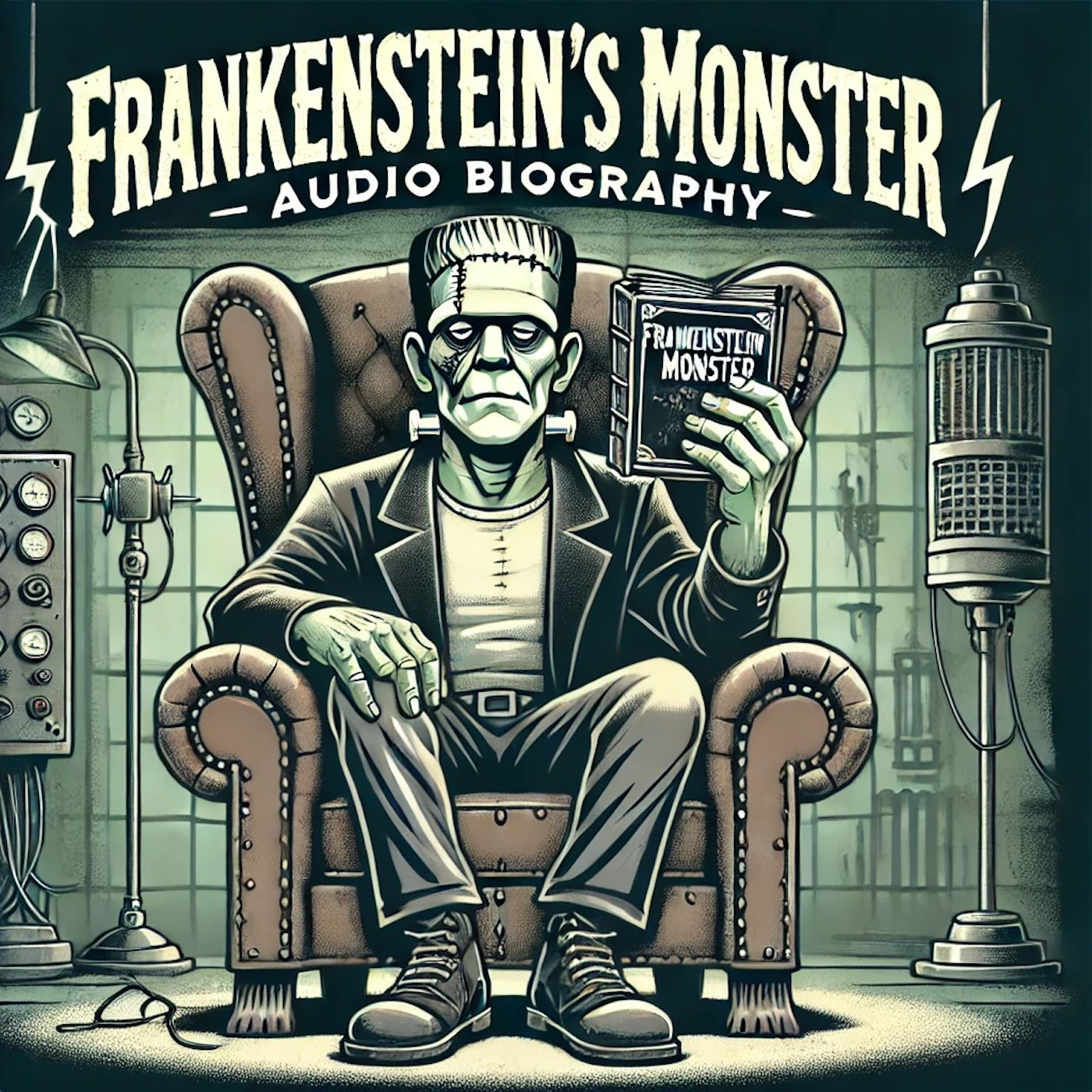
Transcribe →Frankenstein's Monster - Audio Biography
Oct 17, 202400:10:14Tap to summarizeGood evening, ladies and gentlemen, boys and ghouls! Welcome to another electrifying episode of our Monster Mash-terpiece Theatre. Tonight, we're going to piece together the life story of everyone's favorite reanimated ragdoll, the bolt-necked behemoth himself – Frankenstein's Monster! So strap yourself to the nearest operating table, keep your eye on that lightning rod, and for the love of all that's holy, don't pull that switch! ...Oh, you pulled the switch. Well, I guess the show must go on. IT'S ALIVE! IT'S ALIVE! Our tale begins not in a dark and stormy castle laboratory, but in the surprisingly sunny climes of Geneva, Switzerland, in the summer of 1816. A group of literary luminaries, including Lord Byron, Percy Shelley, and his soon-to-be wife Mary Wollstonecraft Godwin (later Mary Shelley), were vacationing near Lake Geneva. Thanks to the eruption of Mount Tambora the previous year, 1816 was known as the "Year Without a Summer," which sounds like a great name for an emo band but was actually a climate disaster that forced our literary heroes to stay indoors. Bored out of their minds (apparently, charades can only entertain for so long), Byron suggested they each write a ghost story. Mary, only 18 at the time, struggled with writer's block until she had a waking dream of a "hideous phantasm of a man stretched out, and then, on the working of some powerful engine, show signs of life, and stir with an uneasy, half vital motion." And thus, Frankenstein's Monster was born – metaphorically, at least. The actual birth would involve a lot more grave robbing and electricity. Mary expanded her idea into the novel "Frankenstein; or, The Modern Prometheus," published anonymously in 1818. The book tells the story of Victor Frankenstein, a scientist who decides playing God is a great career move, and creates a sapient creature in an unorthodox scientific experiment. Spoiler alert: it doesn't end well. It's like a cautionary tale about the dangers of science, or possibly about the importance of good parenting. Now, let's clear up a common misconception. "Frankenstein" is the name of the doctor, not the monster. The creature is never actually named in the book, which seems like a major oversight on Victor's part. You'd think after going through all the trouble of creating life, he'd at least grab a baby name book. Instead, the creature is referred to as "monster," "creature," "demon," "wretch," "abortion," "fiend," and "it." Talk about identity issues! In the novel, the monster is described as 8 feet tall, with yellowish skin that "barely disguised the workings of the arteries and muscles underneath," watery, glowing eyes, flowing black hair, and black lips. Essentially, he looked like a heavy metal rocker after a three-day bender. Despite his appearance, the monster was initially gentle and kind, with the mind of a newborn. It was only after being repeatedly rejected by humanity (and his deadbeat dad Victor) that he turned to violence. It's a tale as old as time – boy meets world, world rejects boy, boy swears vengeance on all of humanity. Tale as old as time, I tell you! The book was a hit, tapping into contemporary anxieties about scientific advancement and the Industrial Revolution. It's considered one of the earliest examples of science fiction, proving that even in the 1800s, people worried that technology would create monsters – although back then, the monster was made of corpse parts rather than ones and zeros. But it wasn't until the 20th century that our patchwork pal really shuffled into the spotlight. In 1931, Universal Pictures released "Frankenstein," directed by James Whale and starring Boris Karloff as the monster. This film gave us the iconic image of the monster we know today: tall, square-headed, with a flat-top hairdo, neck bolts, and a stylish dark suit. It was like Karloff raided Herman Munster's closet. Karloff's portrayal was a masterpiece of sympathetic monstrosity. Despite only grunting and groaning (the monster was mute in this version), Karloff managed to convey a range of emotions, from childlike innocence to rage and despair. It was like a really intense game of charades. The film was a massive success, spawning several sequels. In "Bride of Frankenstein" (1935), the monster even got a girlfriend, complete with a killer beehive hairdo that would make the B-52s jealous. Sadly, their relationship was short-lived. Apparently, "till death do us part" doesn't mean much when you're already made of dead parts. Over the years, Frankenstein's Monster has appeared in countless films, TV shows, comics, and even breakfast cereals (Franken Berry, anyone?). He's been portrayed as everything from a mindless killing machine to a misunderstood gentle giant to a suave ladies' man (I'm looking at you, Aaron Eckhart in "I, Frankenstein"). But no matter how he's portrayed, Frankenstein's Monster always maintains certain iconic traits. Let's break down the Franken-starter pack, shall we? The Flat Top: Because nothing says "pieced together from corpses" like a hairdo you could land a plane on. The Neck Bolts: For that extra spark in his love life. They're also great for hanging Christmas ornaments! The Grunting: Who needs witty dialogue when you can express a full range of emotions through various "Urghs" and "Arghs"? The Stomping Walk: Because when you're made of mismatched parts, every step is a miracle. The Green Skin: Not in the original book, but it's become standard. Apparently, death does not become him. The Aversion to Fire: You'd think someone brought to life by electricity would be less scared of a little flame. The Ongoing Identity Crisis: Is he Frankenstein? Frankenstein's Monster? Frank? Frankie? The eternal question. Now, let's address some of our favorite monster's... unique quirks. First off, there's his fashion sense. For someone cobbled together from corpse parts, he's surprisingly dapper. That suit? Timeless. Those boots? Made for stomping. The only question is, where does he shop? "Big and Tall and Previously Deceased"? Then there's his interesting relationship with electricity. You'd think after being jolted to life, he'd have developed a phobia of anything with a current. But nope, in many adaptations, he seems to get a power boost from lightning. It's like a macabre Red Bull. And let's not forget his tendency to make friends with the most unlikely characters. Blind hermits, little girls with flowers, Scooby-Doo – our boy isn't picky when it comes to companionship. It's heartwarming, really. Who says reanimated corpse monsters can't be social butterflies? But perhaps the monster's most endearing quality is his childlike nature. Despite his fearsome appearance, he often displays the innocence and wonder of a toddler. A very large, very strong toddler who could crush you like a grape, but a toddler nonetheless. It's a reminder that it's what's on the inside that counts – even if what's on the inside is a mishmash of organs from different corpses. Over the decades, we've seen all sorts of new interpretations of Frankenstein's Monster. There's the tragic antihero of Mary Shelley's original novel, the childlike brute of the Universal films, and the wise-cracking Adam of the "I, Frankenstein" film (because nothing says 'timeless gothic horror' like parkour and gargoyles). We've had Frankenstein's Monster as a hero ("Van Helsing"), as a father ("The Munsters"), and even as a hotel manager ("Hotel Transylvania"). He's been in love stories, comedies, and action films. He's fought Dracula, wolfmen, and in one memorable comic series, Batman. Talk about franchise mobility! In more recent years, we've seen attempts to bring the story back to its roots. Kenneth Branagh's "Mary Shelley's Frankenstein" in 1994 tried to be more faithful to the book, resulting in a shirtless, angst-ridden Robert De Niro running around and questioning his existence. It was like "Taxi Driver," but with more grave robbing. We've also seen the Frankenstein story reimagined in modern settings. The TV series "Penny Dreadful" gave us a monster with existential dread and a penchant for poetry. Victor Frankenstein has appeared as a character in "Once Upon a Time," because apparently fairy tale characters needed a mad scientist in their midst. And let's not forget the animated "Frankenweenie," which proved that the Frankenstein story works just as well with adorable undead dogs. So, why does Frankenstein's Monster continue to captivate us after all these years? Perhaps it's because he represents so many of our own fears and insecurities. He's an outsider, desperately seeking acceptance in a world that fears him. He's a creation abandoned by his creator, searching for meaning and purpose. He's a being grappling with his own existence, trying to understand his place in the world. Or maybe we just really like the idea of mix-and-match body parts. Who hasn't wanted to swap out an arm or a leg now and then? In all seriousness, Frankenstein's Monster endures because he's a complex character that can be interpreted in so many ways. He's a villain and a victim, a monster and a man. He represents the best and worst of humanity – our capacity for creation and destruction, for compassion and cruelty. He's also a walking (well, stomping) reminder of the potential dangers of scientific advancement unchecked by ethics. In our modern world of genetic engineering and artificial intelligence, the questions raised by Mary Shelley over 200 years ago are more relevant than ever. Should we do something just because we can? What responsibilities do we have to the things we create? Heavy stuff for a guy often portrayed with the vocabulary of a toaster. So, the next time you see a square-headed, bolt-necked figure shambling down the street, don't run away in terror. Offer him a kind word, or maybe a sandwich. Just make sure it's not a club sandwich – he might have some traumatic memories of angry villagers with clubs. And remember, dear listeners, beau...
Transcribe →