← Get Sleepy: Sleep meditation and stories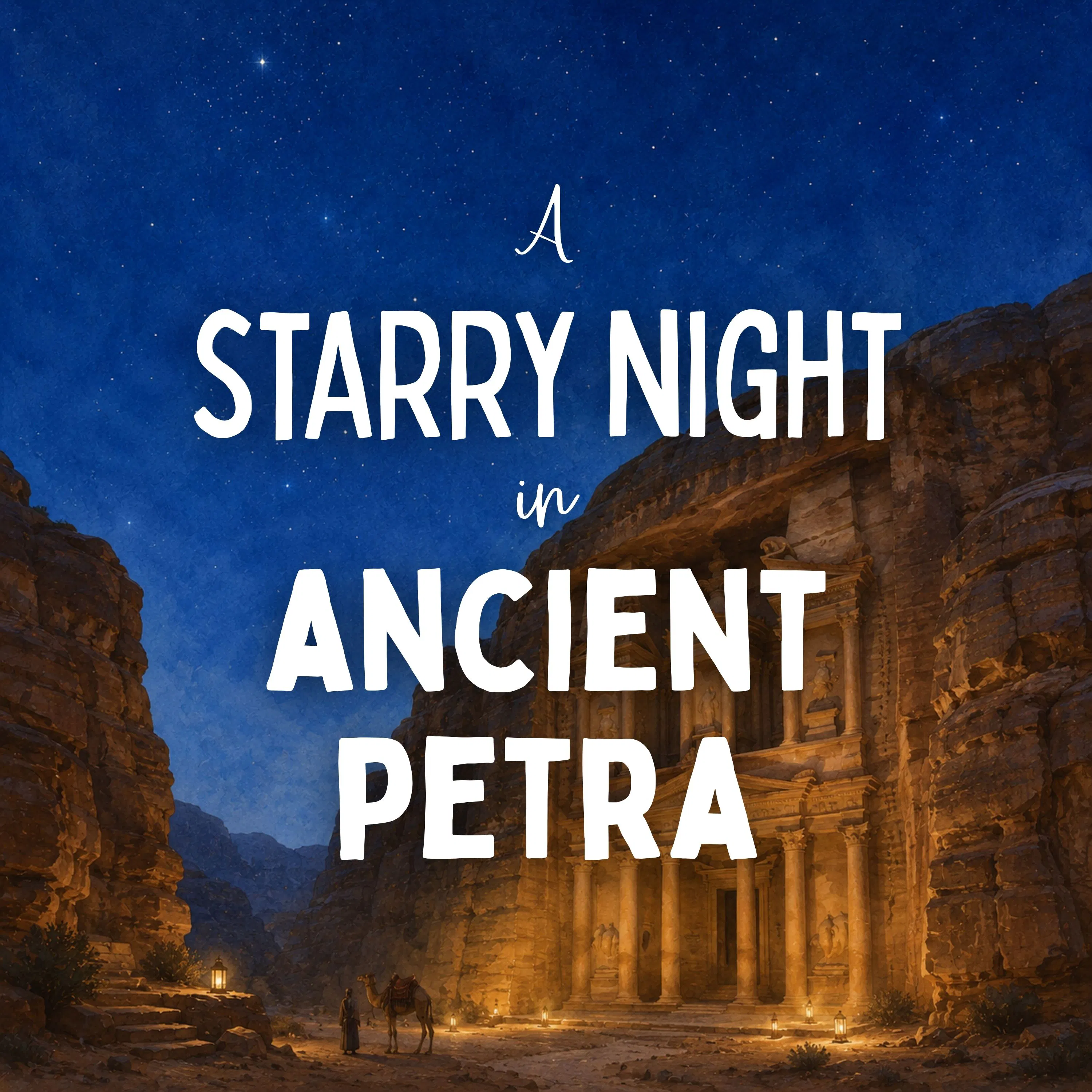
Loading summary
Transcript13 lines
- [00:01]
Thomas
This episode is sponsored by BetterHelp. It's wonderful that we talk about mental health more openly these days. However, for many people, asking for help can still feel difficult and intimidating. In fact, BetterHelp's 2026 State of Stigma report surveyed 2,000Americans and revealed that 85% of Americans believe getting support is wise, yet 74% say society discourages people from doing so. It's therefore glaringly obvious that we still have a lot of work to do to ensure everyone knows it's perfectly okay to seek help and try therapy. So maybe we can all encourage those around us that bit more to understand that being open and vulnerable really is a positive thing. BetterHelp is the world's largest online therapy platform, and it's a great place to kickstart your therapy journey. Don't let stigma stand in the way of support. Start therapy with BetterHelp. Sign up and get 10% off at betterhelp.com getsleepy that's betterhelp.com getsleepy
- [01:21]
Sponsor Voice
Altra running shoes are all about space. The space to go further, to feel better, to do something you never thought possible. And this space starts with Ultra Fit. Unlike traditional running shoes, Ultra Fit gives toes more room to move naturally. So every step is strong, balanced and comfortable. Whatever you're lacing up for, stay out there with Altra. Shop now@altrarunning.com that's a L T R a running dot com.
- [01:50]
Narrator
Hey, I just Venmoed you for rent.
- [01:52]
Sponsor Voice 2
Nice. Now I can instantly spend it, whether I'm checking out online with Venmo or using a Venmo debit card.
- [01:58]
Narrator
Say more.
- [01:59]
Sponsor Voice
More.
- [01:59]
Sponsor Voice 2
Exactly. Because the more you do with Venmo, the more you get. Like earning up to 5% cash. Back with Venmo Stash on a bundle of brands.
- [02:06]
Narrator
So order more pizza.
- [02:08]
Sponsor Voice 2
The meth demands it.
- [02:10]
Narrator
Get the Venmo debit card.
- [02:11]
Sponsor Voice 2
Venmo stash bundle terms and exclusions apply. See terms at Venmo Me Venmo checkout not available at all Merchants Venmo mastercard is issued by the Bancorp Bank NA
- [02:22]
Thomas
welcome to Get Sleepy, where we listen, we relax, and we get sleepy. As always, I'm your host, Thomas. Thanks so much for being here. Tonight's story was written by Angela and will be read by Jessica. We'll take a sleepy journey back in time to the ancient city of Rakmu. It's now known as Petra in the Middle Eastern country of Jordan. Over a thousand years ago, the Nabateans lived in the city. These nomadic people were skilled in architecture and stonemasonry, and they controlled all the trade that passed through the area. In this relaxing story, we'll discover the city as it was all those years ago. We'll learn about the architectural sites, the cuisine and the culture before settling down to sleep. So, my friends, give yourself a chance to wind down now by ensuring any physical distractions are put to one side. Perhaps the lamp by your bed is still on, and you may now wish to switch it off or dim it to a lower level. And as you begin to embrace the opportunity for rest, take a moment to remind yourself that you've made it through another day. You've done your best with whatever came your way and no doubt achieved numerous things, be it substantial or tiny achievements. And even if there were moments that felt challenging, or where perhaps you didn't feel great about the way you dealt with them, remember that you're only human. None of us nail it every time. So don't be hard on yourself. Just be proud of who you are and what you bring to the world. And now that the day is done, you are so deeply deserving of a good night's rest. So breathe in slowly and fully, allowing any tension within your body to rise to the surface. And as you gently, steadily exhale, you can release all of that tension as if it's evaporating into thin air. You may need a few rounds of these breaths to feel as though all attention has escaped. Just take your time. And meanwhile, simply listen to the soothing sound of Jessica's voice and be transported to a vast canyon known as the Siq. It's the main route into the city. And this is where our story begins.
- [06:55]
Narrator
You are standing at the entrance to the ancient city of Rkmu, a major trading hub for merchants traveling the Silk Road. Looking up at the sun's position in the sky, you deduce that it must be around mid afternoon. The entrance to the city is hidden. It's accessed via a narrow, dusty path that winds through a sandstone canyon for almost a mile. You begin to walk slowly, pausing to admire the sheer magnitude of the rocks. Some tower up to 600ft in height. The rocks on either side of you are grooved and ridged with undulating contours. Some higher up have deep, square, hollowed out sections. You find yourself wondering if there are any treasures tucked away inside. There is nobody else on the trail, and the soles of your sandals make a crunching sound on the small pieces of stone. As you walk halfway to your destination, you realize that you can hear the sound of water trickling on your right. At the foot of the rocks, a small channel or irrigation system has been created. It flows with pure, clean water. You crouch down, taking a small amount in the palm of your hand and slowly sip the cool, refreshing liquid. As you do so, you wonder about the local people and their engineering prowess. The people that live in Rukhmu are known as the Nabateans, and you have heard many stories about them. The Nabateans are said to be fiercely independent and forward thinking, implementing ideas that others could only dream of. Some of their skills, aside from engineering, include stone masonry and agriculture. They are said to harvest rainwater and grow their own crops. And they have built the most magnificent architecture. Structures carved into rocks and cliff faces. Buildings so inspiring and mathematically precise that they are almost impossible to comprehend. As you continue walking along the shaded canyon pathway, you find you are eager to see them for yourself. At the end of the canyon, there's a narrow opening. It cannot be more than a couple of meters wide, and through it stands the most impressive building that you have ever seen. The structure is rose gold in color, embedded into a cliff face. It is so intricately designed that you imagine it must have taken decades and hundreds of stonemasons to complete. In front of the building, date palm trees and lush gardens provide welcome shade. A serene place to rest and admire the view. This area at the entrance to the city is surprisingly lush and green, particularly considering the surrounding desert landscapes. A man wearing long white robes and a headscarf is looking up at the structure in awe. He is holding a length of frayed rope attached to a camel. The camel is draped in colorful hand woven blankets and his saddlebags are overflowing with luxurious silks. The man turns and smiles. During all his years of travel along the Silk Road, he has never seen a building quite like this. He introduces himself as Manu, a trader from the east, and says that his trusted companion, the camel, is called Kisma. You smile, remembering that the word Kisma means destiny or fate. You wonder if arriving in the city this afternoon is is also your destiny. The camel is chewing twigs and a bunch of herbs contentedly, his long black eyelashes batting drowsily. He looks as though he may fall asleep at any second. Manu tells you that they have traveled hundreds of miles over several weeks to be here. He has been told that Rkmu is the best place to sell his silks. He has also heard that the Nabatean people are great stonemasons and is eager to see if the rumours are true. As you both stand in front of the rock cut sandstone building. He tells you that it is known locally as Al Khazna, or the treasury of the Pharaoh. Some nomadic people believed that treasures belonging to the pharaohs were hidden inside. The treasury facade is elaborate in design, adorned with intricate carvings of mythical figures that are surrounded by multiple columns. The structure seamlessly blends into the rock face as if it may disappear in the blink of an eye. You make a mental note of the details and symbols. It looks as though the architects have taken elements from different cultures around the world and included them in the design. There are glazed pots moulded from clay at either side of the doorway and hieroglyphs depicting obelisks and elephants etched into the stone walls. If the goal was to make visitors from far off lands feel welcome in the city, it has certainly worked. Rukmu has a unique feeling, one of being at home. It's a bit like you have been here before, but perhaps in another time. Manu asks if you would like to take a stroll into the city together. You nod, glad that two newcomers have the opportunity to share in the experience. As Manu leads Kisma the camel to a cool spot beneath a date palm, you take a moment to look around without speaking with people en route, you would never have known that the city was even here, it is so well concealed by the canyon. Kisma has found a spot where he can feel comfortable and relax. The camel kneels to the ground before closing his eyes for a well earned afternoon snooze. You and Manu leave him to sleep, veering away from the treasury and gardens to enter the city. To your left and right, modest dwellings are cut from the rock. Manu says that they are the homes for the working people and consist of just one or two rooms at most. They are built into the rocks as it helps to keep the houses cool. At the end of the street, a huge marketplace comes into view. Manu leaves you to explore as he attempts to sell his elegant silk fabrics to willing customers. It's no ordinary open air market. The square is surrounded by tall fluted columns and trees and a public fountain sits in the center as the focal point. The stalls sell everything from fragrant spices, textiles and ceramics to various types of oils. Even at this hour, late in into the afternoon, it remains busy. The space is bustling with people from all across the Arabian peninsula and beyond. You can hear groups of men bartering animatedly to gain the fairest price for their wares. The aroma of flatbread spaking lingers in the air. Chickens wander the streets and donkeys and camels stand patiently in corners, waiting for the working day to end. On your right, you pass a man making sandals to order, and further along you notice a young woman leaning against one of the columns. She is holding a basket filled with freshly picked pomegranates and figs. She smiles as you approach and extends the basket, offering you fruit for your journey. You graciously accept. Taking a fig from the woven basket, she states in her language that you are a guest in her city and this is her gift to welcome you. Her kind words touch your soul and you thank her for her generosity. As you walk further away from the market to the far boundaries of the city, you take a bite into the fig. It has a sweetness about it, a flavor of honey, jam, nuts and dried fruits all in one. It is delicious. At the edge of the city, you notice that it feels quite different. Away from the vibrant buzz of the marketplace, there is an aura of peace and quiet. Grand standalone buildings are arranged in rows with generously sized gardens. They are the homes of wealthy merchants who have chosen to reside in the city. Most of the houses have been constructed from sandstone blocks, and they feature frescoes, stucco work, and rooftop terraces with uninterrupted views. Some houses even appear to have personal cisterns for rainwater collection. From inside one of the homes, you can hear the melodic sound of a stringed instrument, possibly an Ood, being played. It's a mesmerizing tune that invites you to stop and listen. The melody dances on on the warm breeze, a reflective piece typical of the era. Beyond the houses etched into rock faces, you discover further architectural marvels, a series of tombs, grand complexes and temples encircling the city. You continue walking until you turn a corner to reach the great amphitheatre. The amphitheater is semicircular in shape, like a half moon carved into the rocks. There are several rows of steps and you can imagine that the views from the top are spectacular. You begin to climb slowly up the steps, pausing at regular intervals to admire the scenery. At every level, the landscape looks different. Nearby there are rock cut temples that look like they are in the shape of a lion, and others showcasing elegant stucco work. Further away, you can see intricately designed water systems. Wild Arabian oryx roam the wadi, and on vast parcels of land, olive trees and vegetables grow. The perimeter of the amphitheater is shaded by pomegranate and juniper trees nestled in the branches. Sinai rose finches with distinctive pink heads and chests tweet happily to one another. When you reach the top, Tier. You sit on the stone steps, admiring the views to the east. You take in the magnificent vistas, allowing yourself to be in the present moment. Up here, there are no city sounds, just faint birdsong and the whisper of a gentle breeze caressing your skin. You take a deep breath in, enveloping your being in the tranquil ambience. The time for sunset is fast approaching, and you decide to climb higher for panoramic views. Behind you, a small set of steps reveal themselves, leading to the summit of the rocks. As you wait for the sun to set, you realize that you can see the colonnaded marketplace, the treasury, the Siik Canyon and even the local caravansary, an inn providing food and shelter for weary travellers. From this vantage point, you are also closer to the majestic eagles in flight. One soars above your head, its huge wings extended, eyes alert as it surveys the terrain below. You recall reading that in Rkmu the eagle was often linked with Dushara, a supreme God of the Nabatean people, who was said to bring justice when called. The sunset does not disappoint. As you stand on the rock high above the city, the sky is painted with brushstrokes of tangerine and pastel pink, casting a warm glow over the temples and land. When the sun has almost disappeared for the day, you head back down the steps of the amphitheatre. You wonder about the theatre, if there are shows or music performances. Perhaps travelers entertain locals with stories of their Silk Road escapades. Upon returning to ground level, you turn left, following a pathway back towards the heart of the city. Even at this late hour, you can still hear a faint sound of stonemasons hard at work, chipping away at the rocks. But the earlier noise of the market has disappeared and now the streets are quiet and peaceful. A Nabatean family invite you to walk with them. You are glad that you do, for at the end of the alleyway you reach a pretty area adorned with tented canopies and rugs. Huge rocks surround the space, providing shelter, and a fire pit roars in the center, wood crackling and yellow flames flickering beneath the canopies. Local people are eating food together. They are softly spoken, chatting among themselves in their chosen groups. Your new friend Manu is already here, and he waves you over to sit with him. As you do so, a kind, older woman appears, handing you a clay bowl of delicately spiced stew. She says that the vegetables are grown on the land just outside the city, and she hopes that you enjoy a taste of the Nabatean cuisine. You thank her and Tuck into the stew. Sitting cross legged on a hand woven blanket, the stew is warm, spicy and comforting, with hints of saffron and peppercorns. As you take one delicious bite after another, more families join the circle. Manu begins to regale you with stories of his eventful day. He has sold all of his silks and tomorrow morning he will return home to make more before returning to RKMU in several months time. You smile, wondering how enthusiastic Kisma the camel will be about the news of more long journeys ahead. You notice several lanterns illuminating the circle. Their warm glow reflects onto the rocks, casting shadows and patterns. Manu informs you that the olives grown outside the city are crushed and the oil is used to light the lanterns. He says that they do something similar in India, but instead they take the wax from boiled cinnamon sticks to create light. You find the idea quite ingenious, using naturally grown produce and spices to generate light and vow to yourself to look into this further. When you have both finished your hearty meal, you decide to take a leisurely stroll back to the Treasury. Everyone in the circle waves goodbye as you leave. The kindness of these strangers gives you a sense of enormous gratitude. The Nabataean people have treated you like family, giving you fruit to eat and an evening meal. And they know so much about harvesting rainwater, growing food and stone masonry that you are tempted to stay a while to learn from them. You and Manu walk side by side in comfortable silence as you navigate the narrow streets. The sky has transformed to a shade of midnight blue and there are thousands of stars twinkling above. You gaze upwards, trying to spot the different constellations. Back at the gardens in front of the Treasury, Kisma is on his feet. He stands huddled next to two camel companions as they munch grass in unison. In the lamplight, it looks as though they are deep in conversation, like a group of intellectuals discussing philosophy. You glance at Manu and you both begin to laugh. Indeed, he says, they look like they are discussing the meaning of life itself. The treasury is magical. At night, with the lanterns outside, the figures carved into the sandstone appear to dance as the light catches them. Manu decides to rest beneath the date palm, but you decide that you would like to see what lies within the building. You slowly climb the few steps to the entrance, observing the hieroglyphs and columns as you go. What greets you inside is completely unexpected. Instead of being adorned with treasures and artwork, you find that the first chamber is completely empty. Flickering lanterns guide your way towards the second room, where you can smell frankincense. Burning a scent of citrus and musty pine. Frankincense is a dried tree SAP often used in desserts or for religious rituals. But tonight nobody appears to be here at all. You continue your exploration, the sound of your footsteps echoing on the cold stone floor. All of the interior chambers are simple and plain in design, nothing like the grandeur of the exterior, and there are no traces of treasures, as the building's name suggests. You find yourself wondering if any treasures were moved to another location before the city became a trading hub. Or maybe it was built for something else completely, as a place of pilgrimage or as a mausoleum for a great leader. Whatever the purpose, you decide that the mystery will have to remain at least until morning, when you can ask the local people. As you exit the treasury, you can hear the sound of cicadas and Manu gently snoring. He is fast asleep, leaning against the trunk of a date palm. Watching him makes you sleepy too, and you begin to stretch your arms and yawn. Finding a clear patch of grass in the garden, you lie down and look up at the stars. They appear to move, pulsate, as if some energy from beyond this plane is guiding you, sending a signal. Perhaps it's trying to answer all your questions about the Treasury. The temperature has dropped considerably and it's now rather chilly. Manu has thoughtfully laid cozy blankets on the grass for you to snuggle beneath. It appears that Kisma is also tired as the camel settles down nearby and instantly closes his eyes. In this magical space. Space with the canyon behind you and one of the most beautiful pieces of architecture you have ever seen in front, you cover yourself with the soft blankets and slowly drift into a dreamy state of sleep. As you do so, you reminisce of about your day, remembering your first sip of water in the canyon. You recall your first glimpse of the treasury, the kindness of the Nabatean people, and the spectacular views from the amphitheater. It has been a day that you will never forget and you are excited for all of the joyful adventures that tomorrow will bring. Sam.