← Get Sleepy: Sleep meditation and stories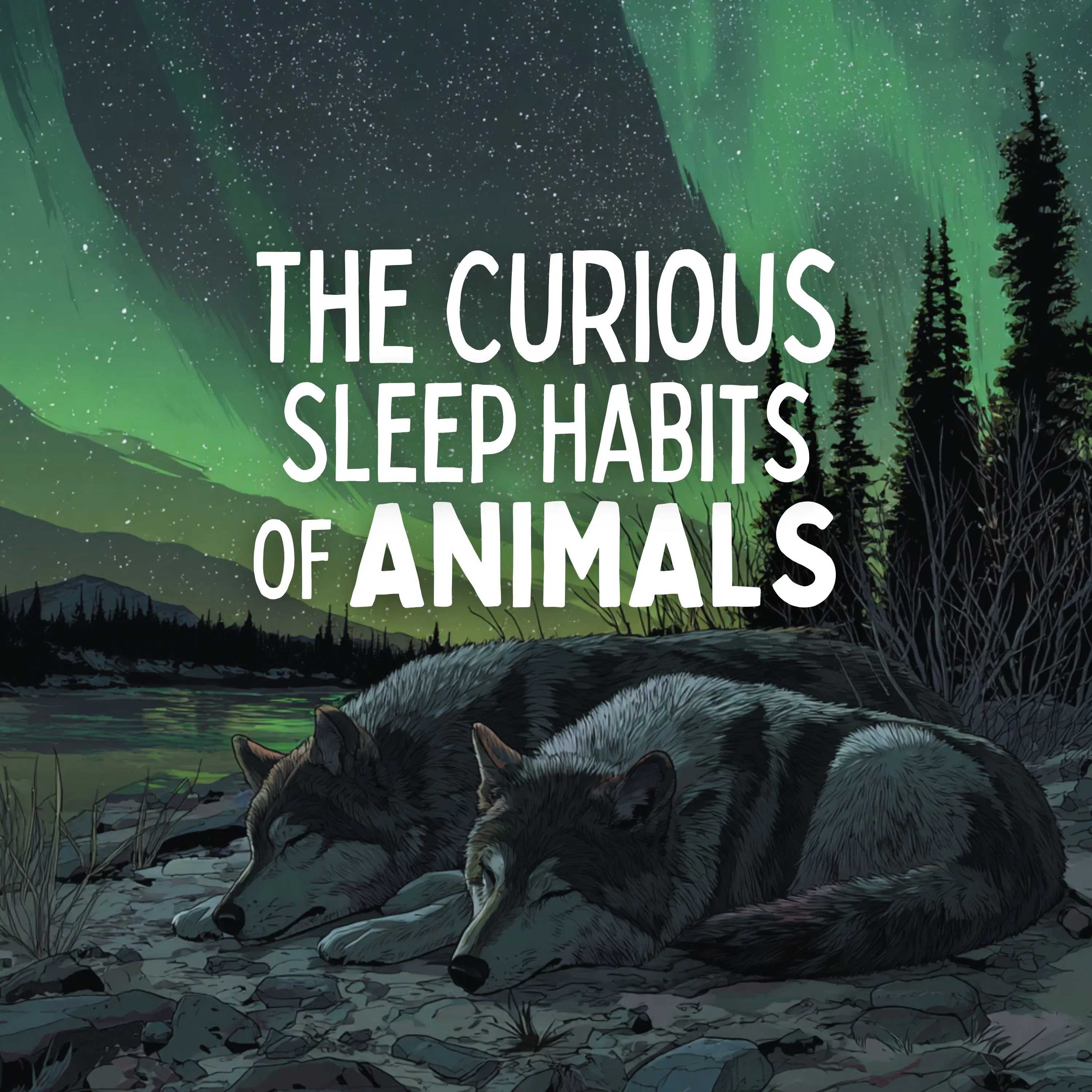
Get Sleepy: Sleep meditation and stories
The Curious Sleep Habits of Animals (World Sleep Day Bonus)
03:31:30
Loading summary
Transcript8 lines
- [00:01]
Thomas
Get Sleepy is a production of Slumber Studios and is made possible thanks to the generous support of our sponsors and Premium members. If you'd like to listen ad free and access weekly bonus episodes, extra long stories and our entire back catalogue, you can try out premium free for seven days by following the link in the episode notes. Now, a quick word from our sponsors. Close your eyes. Exhale. Feel your body relax and let go of whatever you're carrying today.
- [00:36]
Sponsor Representative
Well, I'm letting go of the worry that I wouldn't get my new contacts in time for this class. I got them delivered free from 1-800-contacts. Oh my gosh, they're so fast.
- [00:44]
Thomas
And breathe.
- [00:45]
Sponsor Representative
Oh sorry. I almost couldn't breathe when I saw the discount they gave me on my first order. Oh, sorry. Namaste.
- [00:53]
Sponsor Announcer
Visit 1-800-contacts.com today to save on your first order.
- [00:57]
Thomas
1-800-contacts.
- [00:58]
Sponsor Announcer
You've been asking Abercrombie Kids for baby and toddler clothes and they finally delivered. Introduce your little one to a collection full of mini looks with major cuteness. From rompers and bodysuits to cute dresses and matching sets all in sizes newborn to 5T. Meet the newest member of the Abercrombie Kids family. For the smallest members of yours, shop new baby and toddler in the app
- [01:25]
Thomas
Foreign hey everyone. Happy World Sleep Day and welcome to Get Sleepy, where we listen, we relax, and we get sleepy. I'm your host, Thomas. Thanks so much for joining me for this very special bonus episode to celebrate Wild Sleep Day. Tonight's story explores the fascinating ways in which some animals sleep. You probably know that some creatures, like wolves and owls are nocturnal and tend to sleep during the day? But did you know that others, like dolphins and birds, sleep with only one half of their brain activated? Or that some birds sleep while gliding in the sky, while others, quite literally, sleep with one eye open? Well, we have some interesting facts to share about the curious sleep habits of animals as we take you on a journey from the Serengeti Plains to to the Canadian tundra and beyond. Thank you to Ivan for writing this wonderful tale, which I think you're going to adore listening to. I have the pleasure of reading it for you, So let's take a moment to settle in. Try making room in your mind for tonight's story. Letting go of any thoughts or distractions. Take a deep breath in through your nose and let it out through your mouth. Once more. In and out. Now imagine a place where much of the soil is coppery red and the sunsets are a fiery orange. You might be Picturing a desert landscape. But this description also fits the lush plains of East Africa. It's a vast and varied region where thousands of animal species roam freely. And this is where our story begins. The Tanzanian Wild is a beautiful place. It's home to mangrove forests, waterfalls and savannas, each with unique flora and fauna. In the north of the country, near the border with Kenya, the Serengeti plains are particularly striking. Here grasslands sprawl in numerous colours, from green and grey to gold and copper, swaying in the breeze. Blue wildebeest, gazelles and other herbivores migrate across the plains in great numbers. And the tallest mountain in Africa, Mount Kilimanjaro, soars nearly 20,000ft in the sky. On this particular dawn, the giant amber yoke of the sun cuts through the horizon in a slow rise. It hangs near Mount Kilimanjaro's snow covered peaks. The snow shimmers in the amber light as though the mountain is laden with jewels. A thick skirt of clouds surrounds the mountain like the rings of Saturn. The acacia trees at the foot of it are silhouetted against the vibrant sunrise. The trees stand tall and thick, fanning out like umbrella pines. The Serengeti is renowned not only for its breathtaking scenery, but but also for its remarkable wildlife. It's a place where massive elephants, lumbering baboons and striped zebras dwell. One of the most iconic animals found in this region is the powerful and stealthy lion, often considered the symbol of Africa. Lions of the Serengeti make their home anywhere they can find shade. In this sense, the area surrounding Mount Kilimanjaro is as good as any. During the day, the acacia trees cast shadows over the red earth, offering places of refuge. But there are also rocky outcroppings known as kopjes where lions make their permanent homes. Kopjes were formed by volcanic activity millions of years ago. They look like grey boulders, sprouting green bushes and trees. One lush kopje near the foothills of Kilimanjaro is home to a large pride of lions. The highest rocks provide the perfect vantage for the lions to survey the area. While the dense thickets of vegetation offer shade and shelter from the hot African sun. Lions need a lot of rest to conserve their energy for hunting. They tend to rise at dawn after a good night's sleep. This particular pride consists of short coated lionesses, long maned lions and their cubs all sheltering amid the rocky and verdant outcrop. As the sun rises, they let out a few lazy yawns and stretch downward. Dog style on the terraced rocks of the kopje. Once they've stretched, they begin grooming themselves and each other, preparing for their day. Ahead. The lionesses follow the strongest and most experienced female hunter, known as the matriarch. There she is, a fierce and majestic creature, standing on the tallest rock. Her ears are slightly mousy and alert, while her expression is serious and wise as she surveys her territory, keeping a watchful eye on the rest of the pride. Her powerful muscles ripple under her golden fur. She commands respect and admiration from the other big cats. The matriarch descends the kopje, balancing on her haunches as she moves down each boulder, she steps over several male lions with big furry manes, sunbathing in the soft eastern sun. These lions must stay behind to protect the cubs and the territory while the lionesses are away hunting. When the matriarch reaches the base of the kopje, she joins the rest of the lionesses, who've been patiently waiting for her to lead them. They are ready to hunt, and the matriarch leads the way through the plains. When the females return with food for the pride, it's still early in the day. Lions are mostly active at dawn or after dusk, when the air is cooler. Once they've eaten, the adult lions gather the cubs and seek shelter from the intense sun. As the sun moves west, the lions emerge from the thickets clinging to the rock. Circumventing the kopje, they chase the shadows cast on the dusty earth. When they settle in a patch of shade, the adults lie on their backs and watch the cubs play. Some pounce on each other while others practice their roars. Hours later, the cute cubs are napping peacefully in the shade. Their soft fur rises and falls with each breath. Meanwhile, some of the adult lions remain vigilant over the plains, staying cool by shifting positions in the shade. A strong breeze ruffles their manes. Their noses detect the musky scent of nearby animals, none of which pose a threat. For most of the afternoon, the lions simply rest. They begin to stir at twilight as a flock of graceful pink flamingos flies in formation against the dimming sky. With night approaching, the temperature drops and the kopje's green vegetation graze over. More often than not, the lions will spend much of the night hunting. They have impressive nocturnal vision and it's easier for them to catch their prey in the dark. But on this particular night, the lions will rest. They'll need their sleep to recharge for another day of hunting, playing and bonding as a family. While the lions Sleep. Another species is just getting started for their day. They live in the Yukon Territory of northwestern Canada which couldn't be more different from the African Serengeti. There are no baobab trees or herds of wildebeest roaming the Yukon. Instead, a variety of landscapes. From valleys bristling with evergreens, Rocky Mountain ranges stretch out as far as the eye can see. In this stunning, untamed region of Canada, the grey wolf prowls. Also known as the Canadian timber wolf. These wondrous creatures are the largest members of the canine family. Adult males can measure up to six and a half feet long, as tall as many professional basketball players. With more than 50,000 of them, Canada is home to the world's largest population of grey wolves. Their howls can be heard echoing through the forests beneath the blue moon, adding to the Yukon's sense of wonder. The pack of wolves we're visiting today resides in the Yukon's far north near the Beaufort Sea. They live in a forest clearing surrounded by tall pines. There are five gray wolves in this pack and they're preparing for a night's prow. They love the snow that crunches beneath their paws. As they move, their legs and bellies seem like an extension of the snow. Their undersides are pure white. Their backs and sides, however, are heather grey, shot through with black. It's the perfect camouflage for the area's rocks and gravel. Up here in the far north, winter gives way to the darkest nights of the year. But tonight is different. The sky overhead is clear and studded with stars. Then something extraordinary happens. The stars begin to fade and a green glow illuminates the sky. The wolves look up at the aurora borealis, its green ribbons undulating in the night sky. They begin to howl as if singing a song to this magical sight. It's a mesmerizing spectacle and for a moment all is still and peaceful. But it is nighttime and so the wolves must patrol their stronghold and search the snow covered landscape for food. The northern lights continue to dance overhead as the wolves pad gingerly through the forest. The silence is only broken by the occasional crunch of snow beneath their paws or the hooting of owls in the treetops. Wolves, like the hooting owls, have excellent nocturnal vision and the most active overnight. The wolves may not encounter prey on any given night but they know better than to split up. To improve their odds. It's essential that the pack remains together for the next eight hours or so. Wolves are at their strongest when they work in packs, ensuring their survival. These wolves, with their keen senses and strong instincts Communicate through yipping, whining and licking each other. The alpha or pack leader in this particular group isn't the largest. His legs are shorter than the others and his coat is a darker shade of grey. But as he leads them through the forest, there's an assertiveness to his pace, as if he could command any room upon entering it. His tawny eyes are shrewd and calm, as if they hold ancient knowledge. And his demeanour, like the lioness matriarch from before, exudes confidence. Hours later, having traversed a large section of the forest, the pack retraces its steps. The wolves follow their tracks through the snowy forest floor back to the clearing. A strong wind whips the snow at their paws. While owls keep hooting in the treetops. The wolves return to their home empty handed. But there's always tomorrow night. It's almost 6am and in some parts of the planet the sun is rising, painting the sky in vibrant shades of orange and pink. But in this part of the world, winter holds its grip and the pack prepares for sleep. Due to their thick layers of fur, wolves can survive in freezing temperatures. This morning, in the grey blue light of dawn, the pack of five snuggles up near the base of a pine tree. They curl into balls beside each other, generating a shared warmth. Their bellies expand and contract rhythmically with each breath. Their eyes are heavy, opening and closing as snowfall envelops them. The wolves are tired, but they embrace their drowsiness, resting peacefully in nature's cradling arms. While the wolves sleep, the Canadian tundra becomes snowier with crystalline flakes falling from the sky. The wolves are happy here, but some creatures like dolphins, prefer a warmer habitat this time of year. And what better place for a happy dolphin than the warm waters of the Bahamas? Located in the Atlantic Ocean about 50 miles east of South Florida are 700 low lying islands that rest on a vast limestone shelf. This region is known as the Bahama Banks. Inspired by the surrounding shallow sea. The Spanish named it Bahama in 1492, meaning low sea. These turquoise waters provide excellent visibility and protection from large predators, making them ideal for some of the most intelligent creatures in the world. Atlantic spotted dolphins. As their name suggests, these carefree swimmers have sleek platinum skin adorned with black spots. They adore the warm temperatures and tropical waters of the Bahamas. They travel in pods of five to 50, exploring the seagrass meadows of the Bahama Banks. These meadows are characterized by long stalks of yellow grass that sway in the water as though a constant breeze blows over them. The dolphins swim playfully and communicate with a wide range of whistles and squeals. In this serene and secluded spot of paradise. Small hills of chalk white sand poke out of the water, forming sandbars in the middle of the sea. The midday sun shines high in the sky, heating the shadow shallow limestone corridors beneath the water's surface. There's a small pod of spotted dolphins here, ready to take an afternoon nap. But there's an issue. These creatures are very light sleepers. Dolphins must always remain alert, especially if there are any boats nearby. They are hypersensitive to sounds which move about five times faster in water than in air. To stay alert. Dolphins have a unique way of sleeping where only one half of their brain rests at a time. Known as unihemispheric slow wave sleep. This helps them remain vigilant while floating on the surface. But it also means they can be easily awakened by minor disturbances in the water, such as a changing currents or waves. If undisturbed, however, dolphins can sleep up to two hours at a time. Luckily, they can function well with just a few hours of sleep, swimming side by side and jumping or breaching in wide arcs above the surface. One animal that doesn't thrive on little sleep lives thousands of miles away in Russia. In this corner of the world, the region of East Siberia sprawls across a few million square miles. It encompasses a vast wilderness of snow covered terrain, glassy lakes and diverse wildlife. It's also home to a 1,200 kilometer peninsula called Kamchatka. Kamchatka boasts ski resorts, hot springs and more than 300 volcanoes. It also has a significant population of brown bears, with around 15,000 living there. The brown bears of Kamchatka are magnificent. Their coat is a shiny shade of milk chocolate brown with button like eyes to match. Standing on their hind legs, they can reach over nine feet. Despite their enormous size and strength, brown bears are fairly agile. They can run at speeds of up to 30 miles per hour. In Kamchatka, Brown bears take shelter in the peninsula's dense forests, emerging from their dens to feed on salmon at a nearby lake or stream. They hibernate for up to seven months each year, which helps them conserve energy during the harsh Siberian winters. In the warmer months, however, they lead a somewhat active lifestyle. They roam the land freely, searching for food and bathing in frothy rivers. They're also pretty good tree climbers and enjoy running through the wilderness with their cubs. These morning activities, swimming, climbing and running can work up an appetite. The luckiest bears and their cubs may find themselves feasting on tree bark, berries and fish for lunch. Afterwards, they might retreat to their caves or rest at the base of a pine tree, weighed down by a feeling of sluggishness. When this happens, a long nap might be in order or the bears might float lazily down the river, happily satisfied. But for hungry brown bears, there is hardly any rest during the day. They can spend up to 16 hours a day searching for food. Around 10pm the bears return to their caves, exhausted whether or not they've found enough food to satisfy their enormous appetite. With nothing more to do, they call it a night, settling down for a long and well deserved rest. Over the course of the night, they may shift into different sleep positions, lying on their backs or stomachs or sleeping on their sides. When they're not hibernating. Brown bears usually sleep for several hours per day. And after resting, they take their time to stretch and yawn before starting their search for food once again. Although bears may be sluggish at times, they are not slower than, say, a giant tortoise walking on the beach or a banana slug slithering up a tree. And other animals are even slower and sleepier than tortoises and slugs. Take the two toed south of the Amazon rainforest, for example. These furry brown creatures spent their lives in the treetops, moving at a snail's pace from branch to branch. It's where they eat, sleep, mate and even give birth to their young ones. Because of their slow movement, sloths were named after a word meaning laziness or sluggishness. Given that, you'd think they'd have enough energy to stay awake during the day. But because of their slow metabolism and low body temperature, sloths spend most of their time resting. Until recently, it was thought that these animals slept for more than 15 hours a day. But scientists now think that sloths in the wild sleep for around nine to 10 hours, though not all at once. Instead, they take frequent naps that can last anywhere from a few minutes to a few hours. Sloths also have an interesting way of sleeping. They hang upside down, using their long claws to grip the branches. Specialized tendons in their hands and feet lock into place, preventing them from falling. This enables them to sleep safely and comfortably while suspended in the air. Some adults even sleep with a cute little baby sloth on their bellies. Other animals, such as great frigate birds, also have unique sleeping patterns. These birds resemble large ravens with glossy black feathers and forked tails. But upon closer look, they couldn't be more different. They sport a curved grey beak and an impressive wingspan Males have a red sac on their breasts which expands like a balloon when it fills with air. Great frigate birds can be found soaring over the Indian and Pacific oceans, flying for days or even weeks at a time. Like dedicated road trippers, these birds prefer to cover long distances non stop. This is why they sleep in 10 second bursts. Soaring high in the sky, they engage only half of their brain to keep them gliding as they doze off. This is similar to the uni hemispheric sleep of the Bahamas spotted dolphins. On land, you might think that frigatebirds would take advantage of the opportunity and enjoy a longer sleep session. But even when they're perched comfortably on a tree branch or a rock, they tend to sleep in short bursts, about a minute at a time, adding up to around 12 hours a day. Once they're rested, they fly onwards, ready to cross the next ocean. Another bird whose sleep habits are unique is the mallard duck. One of the most famous duck species. Mallards are known for their vibrant contrasting plumage. The male's iridescent green head, yellow bill and white banded neck make it one of the most easily identifiable duck species. Mallard ducks live in a variety of habitats, from wetlands and ponds to parks and urban areas. During the day they waddle around looking for food, or they might rest near a lake, preening their feathers or dipping their orange webbed feet in the water. Mallard families enjoy exploring their surroundings. They usually form a line led by the mother duck and walk in an untidy row. But after a while they grow tired. Depending on where they are, they might doze off standing in a row. The ducks at the end of the line sleep unihemispherically with one eye open to remain alert in case potential predators are lurking nearby. This slow wave, semi alert state of sleep isn't the only remarkable thing about how different animals survive in the wild. Similar to hibernation, some creatures experience a prolonged state of dormancy induced by hot and dry temperatures. Think of summers in the American Southwest where rocky slopes burst with yellow flowers and tall saguaro cacti wear floral crowns atop their many limbs. The American Southwest is where the Sonoran and Mojave deserts converge. Pink sunsets are a common sight and so are meteor showers at the peak of summer. The local fauna here is just as interesting. Desert snails crawl slowly over the parched and cracked soil. Subsisting on plants, their shells are often bleached white by the desert sun. During dry, scorching summers, they enter a long dormant state known as estivation. This phenomenon is essentially the summer version of hibernation. Desert snails, plenty of which thrive in California's arid deserts, undergo aestivation to protect themselves from the extreme heat. Before entering this state, they retreat into their shells and seal off the opening with a slime barrier to conserve water. During aestivation, they can be found wedged in rock crevices or nestled in thick desert brush. Some snails can remain in a state of aestivation for years. In 1846, a desert snail, possibly from Egypt, was added to the collection of the British Museum in London. Museum workers assumed that the snail was long dead, so they glued the shell to a piece of card and put it away. Four years later, a zoologist working at the museum looked at the shell and noticed a layer of mucus. Upon closer inspection, he realised it might be a sign that the snail was still alive. When he submerged the shell in warm water, the snail did indeed poke out its head. The sleepy little snail was then given some leaves and rehomed with a companion. According to the zoologist, the two snails seem to live quite harmoniously together. This amazing snail may hold the record for the longest sleep of any animal in history. But if an award existed for cutest sleep of all time, it would have to go to otters. Otters are some of the most adorable animals on the planet. Their small teddy bear faces sport long white whiskers, and their furry brown or grey coats are often slicked wet. This is because otters spend a lot of time in the water. Their fur is specially adapted to keep them warm. They are excellent swimmers and can often be seen paddling on their backs. Otters enjoy long swims in the deep, too, where they can hold their breath for up to eight minutes underwater. They're also known for their playful behavior. Some of their favourite activities include sliding down muddy banks and belly flopping in the water, or even somersaulting. After a long day of playing and swimming, some otters pair up as they ready themselves for bed. They swim out in pairs, float on their backs and hold hands or paws so that they don't drift away from each other while they sleep. So imagine a bird's eye view of a couple of otters soundly asleep. They are floating on the surface of the water, holding hands. Their furry bellies glisten in the cool blue moonlight. With each breath, their bellies steadily rise and fall. The inky water supports them like a mattress. A few yellow leaves fall from a nearby tree and land in the water. The leaves make tiny ripples, but the otters continue to sleep peacefully. Their dormant expressions exude a deep sense of happiness. It seems that nothing can break their hold on each other, not the currents that cause them to sway and bob on the water's surface, nor the hooting of the owls in the forest. This familiar sound, the night owl's hoot, is part of the soundtrack of our suburbs, farms, and cities. When night falls, it mixes with the warbling of cicadas, the croaking of frogs, and the concert of crickets in the trees. By the sound of it, there could be hundreds of night creatures making music in the dark, but they remain unseen, hidden in the shadows or up in the trees. As the wild creatures outside serenade their homes. Indoor pets like cats and dogs may prick their ears to listen, or perhaps they won't, having grown indifferent to the music of the night, too tired to give it any thought. Perhaps these dogs will curl up in their own cosy beds or just lie on their sides on the floor. Maybe the cats will doze off on the windowsill or purr contentedly on the couch. Whatever the case, the night continues on with its symphony of sounds, promising a deep and restful sleep to those who listen.