Podcast
Gnostic Reformation, Clear and Simple
Hosted by Cyd Charise Ropp · EN
Most of the gnosis presented here comes from the Tripartite Tractate of the Nag Hammadi codices. My retelling of the mythos is just good news for modern man. It is not hermetic; it is not a translation of wisdom from an Egyptian God. It is not New Age. This Gnostic Gospel is simply the story of who we are and where we come from.
The gnosis I am sharing here honors God the Father and, as you begin to remember this inherent truth, you will experience a more joyful life. When we use our free will to remember our true inheritance, the god of this fallen universe loses its power to control us. When we turn our eyes upward to the Father--the God Above All Gods--we are freed from the burdens of this world.
Once you begin to remember that you are truly loved by our heavenly Father, you will suffer less. When you begin to walk with virtue rather than embracing vice, you will be happier; you will be joyful. Not all of the time. Bad things do happen. But suffering as a response to life’s challenges is unnecessary. We are living in a fallen world, and that, I suppose, is another gnostic heresy. For some reason, modern Christians want to insist that this world is blessed by God and is blessedly perfect. But we all know this world we live in isn’t perfect and when you deny that fact you become unduly frustrated and sad, even to the point of depression. Pharmaceuticals are not the solution--gnosis is.
Gnosis means knowing. This sort of knowing is not related to book learning. Gnosis refers to remembering what you already know. The point of spiritual study is not to learn new things but to mine what you already possess deep inside of you. When you study new ideas, you must continually weigh the information you are taking in against your own discernment. The purpose of this podcast is not so much to teach you about Gnosticism; the purpose is to stimulate your own innate gnosis. And there is really only one gnosis that matters in the end—remembering the Father, your cosmic origin, and the purpose of being alive.
cydropp.substack.com
cydropp.substack.com
25episodes
Episodes
Newest firstAll episodes
True Gnosis: A Modern Gnostic Approach
4w ago00:25:42Tap to summarizeWelcome back to Gnostic Insights and to the Gnostic Reformation on Substack. For the last four weeks we’ve been listening to my interview with Bishop Nathan Wilson concerning the Gnostic Union and his interpretation of the New Testament and also some Gnostic texts.And I want to make comment on it, although it’s very difficult to compose a comment on this long interview. I don’t want to in any way malign or make light of Brother Nathan’s work on translating the New Testament from the original Koine Greek, as opposed to the way most Bibles are handed down, which are just derivation after derivation after derivation of an original translation into Latin, basically.Brother Nathan’s translation of the New Testament is called The Gnostic Christian Truth Bible—you can take a look at it. It’s free. He’s made it publicly available online, and I’ll put the link here in the transcript.Brother Nathan’s translation really does restore the flavor of Gnosticism back into the New Testament, because as we know, the Catholic Church and the Emperor of Rome in the 300s A.D. stripped gnosis and Gnosticism out of the New Testament to the extent that they could, and they changed the translation of many Gnostic words into more vanilla type of language that doesn’t convey the gnosis that is contained within the work.So his is a very important contribution. But there’s a big however coming up here, and that however is this: Gnosticism is essentially a mystic connection to the Father, and so all of our interpretations of what is written must be processed through that comprehension of our relationship to the Father, and the Father’s originating consciousness—the Father as the Source, the Father as the Father-Mother, if you will.And when Jesus said, “I and my Father are one; if you’ve seen me, you’ve seen the Father,” he was referring to what we Gnostics call the God Above All Gods. So that’s a very important point. If you study the words of Jesus and don’t meander into the writings of Paul, for example, you will have a much clearer Gnostic understanding of the Father and our relationship to the Father, to Abba God, to the God Above All Gods, as we Gnostics put it. The word for that in Hebrew was El Elyon, and Brother Thomas brings that up in his translation, in his discussion.I’ve always been very interested in ancient documents, especially ancient spiritual or holy scriptures, not only in the Christian or Jewish tradition, but also in the Chinese tradition, the Tao Te Ching being the primary example in my life, and in the Indian traditions of yogic philosophy. So I wouldn’t say don’t read biblical scriptures, don’t read holy scriptures, because I gained a lot of knowledge, true knowledge, concerning the Father through these scriptures.But the thing is, you cannot connect with the Father only through reading scripture, or only through hearing preaching about scripture, or only reading people’s books about various books, because then you are filtering your connection with the ethereal realm through human translation, through human interpretation. We need to have a direct mystical connection. I’ve never particularly used that word, mystical, because it kind of implies, you know, woo-woo gypsies, and woo-woo new age and this kind of thing, and you don’t want to go in that direction either.But what mystical actually means is having a direct spiritual connection to the ethereal realm. And when I say ethereal realm, I’m not talking about channeling—channeling as in the nature of the Urantia book, or channeling as in the work of Edgar Cayce, because in my opinion, channeling while in a trance-like state opens you up to any kind of non-material influence. And you don’t know if those are angels, you don’t know if those are Aeons, you don’t know if that is the Father, you don’t know if that is an archon, or a daemon, or a lesser god. So this applies to the Ouija board just as well. You do not want to open yourself up to those sorts of influences, because we can be easily deceived, and that is a trap.That deception is part of the imitation. Now those early Catholic church fathers possibly thought they were doing a good thing by throwing the gnosis out, by throwing this idea of mystic out, because they didn’t want people to be deceived and led down the wrong rabbit trails away from God rather than toward God. I’m not sure that was their motivation. We Gnostics generally have a negative view of the church in the 300s and thereafter as being about control, and manipulation, and power. These are not godly attributes. These are human institutional attributes.So I emphasize a direct connection with the Father exactly, or with the Christ. Now let’s talk about the Christ for a minute.People get uncomfortable when talking about Christ, or the Christ. People don’t want to believe in Jesus, because, well, it’s too Christian, and you’ve heard too many evangelicals preaching on crazy radio broadcasts, or you were raised in an evangelical church with an unloving leadership, and an unloving congregation, and you would be right to be wary. But what I share with you here at Gnostic Insights and the Gnostic Reformation is what I believe to be a true relationship to actual Christ and to Jesus Christ.So this is another reason why I am not in favor of delving into history and trying to learn about God, or about your proper relationship to God and heaven, and all these kinds of questions through history, or through transcripts that have been funneled through human imagination and human interpretation. This is why you must go directly to the Father. Well, how? How? Prayer. That’s what prayer is. Prayer is talking to the Father, or talking to Christ, or talking with Jesus, and waiting on their answers, waiting on those directions. Yes, it does work, and no, you don’t have to be purified to a certain extent in order to establish that kind of mystical connection. The Bible does promise that God will come to you. God will come to you even before you turn to him. So in order to turn to the Father, you need to turn.Metanoia. You need to turn. You need to take your eyes off of the world, take your eyes off of your own desires and ambitions, i.e. your ego, and turn your eyes upward to the Father. Now, this is an interesting thing. I’ve been thinking about upward. Why do we keep saying that the ethereal plane is upward? Well, I actually think that that is perhaps a misunderstanding of something we don’t have the word for.We don’t know exactly where the ethereal plane is, so we say it’s upward because down is the material, and the dirt, and the under the dirt, which is generally considered negative. That’s why I always say onward and upward. I actually think it’s another dimension in the mathematical sense, so we don’t have a word for that. We don’t have a word for appealing to a different dimension. We might as well say upward, or even more profoundly, you know, physics does not claim that this material world is actually substantial. The closer you dial in the microscopes to the lowest, and lowest, and smallest, and smallest so-called particles of our material existence, they disappear. They evaporate. It’s all space. It’s all empty space with vibrations, with energetic movement, but there’s no there there. It probably all reduces to consciousness itself.The Father is pure consciousness. We derive from that consciousness, so the fallen state is really in its most sophisticated form probably nothing more than stepping out of the essential resonance of the Father’s consciousness. Our vibratory pattern has become locked onto this so-called material pattern, and again, that sounds kind of new age and whatnot, but it’s not. It’s physics. It’s mathematical, and when we’re talking about math, and we’re talking about physics, and we’re talking about reason, and logic, that is, the Word, Logos.That is the Word of God, that vibratory pattern. So what we’re trying to do is re-establish coherency with the Father, and that’s generally suggested to do through prayer—that is moving your intention off of the world, off of you, and your concerns, and your ego, and moving that intention toward the Father, and expressing your desire to be one with the Father. Generally, what you do is then at that point after prayer, which is your expression of intention, is give glory, because giving glory is the closest way. It’s the direct path to tune into the Father’s resonance, because the Father is the bedrock of glory.The Father is glorious. The Father is consciousness. The Father is love. The Father is purity. The Father is true knowledge.Down here where we are, the things we “learn”—that isn’t necessarily knowledge. That is, we could call information. That is, we could call history. That is, we could call language study or philology. Around us in the world, we have everybody else’s patterns going on, everybody else’s vibrations, so to speak. They produce information. They produce output, output, output, output, but not necessarily knowledge, gnosis. The gnosis only comes from above.The gnosis cannot be mined out of history. So the reason I reject the study of historical Gnosticism is because those were just people practicing what they thought was Gn...
Transcribe →
Understanding Biblical Gnosis: Bishop Wilson's Perspective
Jul 1000:20:55Tap to summarizeWelcome back to Gnostic Insights and to the Gnostic Reformation on Substack.Today’s episode is the last installment of my interview with Bishop Nathan Wilson of The Gnostic Union. Brother Nathan continues with his illustration of how correct translation of the original Koine Greek of the New Testament changes the way we may interpret Biblical scripture more precisely. The translations he shares come from his freely available Gnostic Christian Truth Bible that you can find online in PDF form, with side by side comparisons of the original Koine with English. I’m including the link here in the transcript of the episode, so if you are listening to this in podcast form, you may wish to go to Gnostic Insights dot com to read the transcript. His Bible and other Gnostic scriptures could use another round of editorial polishing, in my opinion, to insert an indexed table of contents, so it may be a bit difficult to make your way through it.And in next week’s episode, I’ll take a long look at what we’ve been hearing for the last four weeks. If you have anything you would like me to discuss or any questions coming off of Bishop Wilson’s discussion, bring them up and we can talk about them on next week’s episode.I know I’m going to want to talk about the role of Sophia and the Divine Feminine and the concept of gender on the ethereal plane. I would also like to talk to you about how the study of history and philology differs from theology and philosophy and how they are not necessarily gnosis. And here at Gnostic Insights, of course, and on the Gnostic Reformation, I avoid talking about gnosis and only share gnosis itself. So I’d like to explain that to you about that as well.So please drop me some comments here at the end of this episode and I can address them in next week’s episode.Bishop Nathan Wilson:So Mark 8:17. All right. So this would be Jesus here.“And having gnosis, he said to them, why reason because you have no bread or do you not understand that the heart of you has been hardened?”So this is among disciples arguing that they have no bread. Jesus having spiritual gnosis, understanding what’s going on, says, “What are you arguing about?” Which is kind of interesting that he mentioned, but I’ll mention something that’s a real kick in the can.So this is in Mark 15:42. And this is a text that no theology want to give you because it would make them feel uncomfortable. And it’s regarding Pontius Pilate having gnosis regarding Jesus crucifixion. So this is a note they definitely do not want. I was kind of thinking about what does this mean? And I figured out what it’s regarding to. Mark 15:45. Okay, so this is Pontius Pilate. I’ll read 15:44 first.“But Pilate wondered if he had already died, having called to him the centurion and questioned him if he had already died. And with gnosis from the centurion, he granted the body to Joseph.”So that meaning inside knowledge from the centurion has been given to him about Jesus. So that could imply that he was still alive and that Pontius might have been involved in this plot. That’s what that text would imply; it doesn’t necessarily have to mean that. It can just mean that within a knowledge he’s been told by the centurion Jesus is dead, so it can apply that too. So however you want to read that text is up to you. But I found that quite fascinating and I had to really look at that. I’m like, well, I’m sorry, we can’t have that in there. That’s why that’s been censored. But that’s fascinating.So we even have Jesus having a gnosis and leaving an area and that’s in Matthew 12:15. I’ll jump into that too. So there’s a couple of scenes that Jesus has gnosis. There’s even times he has gnosis in regarding what other people were thinking. So having to understand them mentally. So that’s cool. So gnosis appears quite often. It’s just it doesn’t appear in the English text. But in the Old Testament it’s even more.Cyd:That’s interesting.Bishop Nathan Wilson:Yes, it is. Very.Okay. So “withdrew from the area” Matthew 12:15 I want. Right.“And Jesus having gnosis, withdrew from there and many great multitudes followed him and he healed them.” Or it can translate to took care of them or cured them all.So that word here we have can be for a therapeia or a therapeo. And this word meaning to heal someone or to spend time with them, to heal them with God’s word or with medicine, to heal them with medical substance, so narcotics. It can be just simply curing them or just spending time with someone so say talking to someone, healing them and their emotions. So healing their emotions. So that’s beautiful. Not just simply Jesus hocus pocus and and leaving. It’s he’s spending time with people. And this word has been used in ancient Greek medical texts for implying medical substances or therapy. So the word therapeia is where our word therapy comes from.So this can be Jesus the therapist. So that’s beautiful. Absolutely fantastic. I like that. So it gives more power to the text. Shows that one person can make a difference. So any one of us can do this and heal multitudes through spiritual touch, through spiritual messaging, through the simple act of love. So that’s powerful. That’s useful.Cyd:And this is something that only people can do. Well, no, actually dogs are very good therapists as well. But I wouldn’t think that an AI therapist or an AI Jesus has any gnosis truly.Bishop Nathan Wilson:I’m not really one big for AI because I think AI is basically just all secondhand information. It’s just built from all our information that we’ve already got. So we have here something else.This is something pretty interesting too. Matthew 16:8. And it’s Jesus having gnosis:“Why do you argue amongst yourselves? You of little faith because you have no bread” [or meaning food.]But say, regarding to the word for artos being bread. So when you have the Jesus prayer, Give us this daily bread, this could translate to give us our daily necessaries of life. That’s much more. So daily maintenance, so being maintained spiritually, being maintained by God, for God giving us the means to live spiritually as well as physically. So it’s much more powerful than just simple, just bread and food. So Jesus speaking a lot of times symbolically. So the symbolic teachings are meant to be useful to all of us. So something that we can practically take on, not simply does something that’s outside of ourselves. So that’s within ourselves that we can actually use. So gnosis.And I’ll go into Matthew 22:18. And that’s with Jesus about having gnosis on the wickedness of the Pharisees. So this doesn’t mean that all Pharisees are bad though. Jesus had Pharisees that followed him. This just means a select few of them. So basically the rich corrupted ones of them. So he was also against the Sadducees too. Mostly Sadducees probably because they were the richer lots. But he was not really a friend to those who were corrupt and using the money that they were given to further subject the people to more condemnation, which Jesus was very much pro-life, was equality where the Pharisees and Sadducees in large numbers were not. Which is a shame.Okay, so 22, I think it was I’m looking for. Matthew 22:18. Okay.Cyd:You know that Old Testament God of the Sadducees and Pharisees doesn’t have love. So they are not getting any gnosis from that Jehovah level.Bishop Nathan Wilson:No. And it goes back to where it’s first worshipped. The first to worship this God, Yahweh, were very violent. They were the Shasu. They were known to force marry the Egyptian and Ethiopian young girls they raided. So when we look at the depictions of the Shasu, they are mixed in colour—they’re black, they’re white, they’re copper skinned. They didn’t care what colour you were, they just took. They were looking for sex slaves, basically wives. So what’s interesting is the same river that they used, the Euphrates River, not all of them were river-based pirates. Some were just tent dwelling nomads. But some of them did have the funds or means to use ships. So we certainly had sea people. So some of those sea people were Canaanite raiders. So they’ll use the Euphrates River to go out raiding, to go out to the main street or elsewhere to raid outside of their own lands. Muslim pirates would use the same river to do the same thing. So that’s interesting.[Editor’s note: The speaker appears to be connecting several groups—nomadic Shasu, Sea Peoples, and later Muslim-era raiders. While the Euphrates served as an important transportation corridor, the specific claim that the Shasu or Sea Peoples used it as river-pirates is not clear from the sources consulted by the CoPilot AI and may reflect an interpretation rather than an established historical consensus. Of course, the AIs are relaying to us approved, conventional data, so their data bases would not contain the types of stories Bishop Wilson speaks of.]All in the name of this Jehovah, in the name of Yahweh, in the name of the demiurge, this evil g...
Transcribe →
Interview with Bishop Wilson pt. 3
Jul 300:31:59Tap to summarizeWelcome back to Gnostic Insights and to the Gnostic Reformation on Substack. We’re continuing this week with part three of my long interview with Bishop Nathan Wilson of the Gnostic Union. We don’t usually talk about this sort of thing here at Gnostic Insights, and so this is a special treat for those of you who like this sort of thing. This week we’re going to hear Brother Nathan speaking about why he chose the words he decided to use in his translation of the New Testament and the Gnostic Gospels.He calls his translation The Gnostic Christian Truth Bible, and that’s because it includes the original Gnostic words that were chosen and were used by the writers of the Gospels that have been changed and Latinized and Anglicized and don’t have the same Gnostic meanings as the actual original writers used.So in the old days, in the beginning, the Christian religion was much more Gnostic. There were many sects of practicing Gnostics who were Christians and accepted as Christians. Now they were all taken away, and they were all wiped out during that Nicene Council phase in the 300’s when the Catholic Church took over the preaching of the Gospel, and they got rid of the competition, i.e. the Gnostics and others. So what Brother Nathan has done is plugged back in those original Gnostic words, and we’re going to hear many of these familiar passages now with the original Gnostic translations, the original Koine Greek in them, and see if those subtle differences make a difference in what the Gospels say and mean. So here’s Brother Nathan.Cyd:You know, in the Tripartite Tractate, it is unique in that the Aeon who fell is not Sophia, but Logos. And so, because that is the book that I resonate to, I’m always talking about Logos. And it seems to me, Bishop, this is a question for you—I’ve always thought that making the Aeon who fell a female character is just another way of demonizing, in the bad sense of the word, of maligning women. To say that the Aeon who fell had this, you know, illegitimate child, and here we have the fallen world. This doesn’t seem right to me. What do you think of that? So I prefer Logos because it’s just a neutral Logos.Bishop Nathan Wilson:Well, I think some of it was to rip on to women as well, but I think a lot of it comes from a misunderstanding of Simon Magus and then also with some with the Logos in a sense, I don’t mind it, but I’ll see that as another Gnostic interpretation. I go back to the original idea and I reckon this is where the misidentification of the full and feminine comes from, and it’s from Simon Magus’ work of the Great Declaration. We don’t have the original, we only have the quotations by the Church Fathers.So that’s the only text we know for 100% that was written by someone who actually knew the disciples and was baptized by them. We don’t have any other text we can guarantee that for a fact. So the Catholics wanted to burn that before, well, they made sure to whinge about it before burning it. So it’s lucky they whinged about it, otherwise we wouldn’t have access to it at all. And it mentions about the feminine falling in a sense, but not what people think it is. It meaning that feminine aspect is the qualities of life basically. So meaning that this life we see now is a fallen state.So what that really is meaning is that the feminine aspect of God is the birthing of creation and it’s the creation of that birth that has fallen. So that’s very different and that’s the first thought, so the very first form comes from the female. So that’s the first physical form coming from the feminine mind of God basically. So it’s not that God’s fallen or any part of divine or divinity is falling, but rather how we live in this material world that’s fallen. So we’ve strayed from our divine purpose basically is what Simon is stating. So he states that there’s the mental mind of the universe. So what he’s talking about is also the Father being basically the seed, the forethought of all things and the Mother is the feminine power of the creation. So what births, what you can touch and see, experience around you, while the Father is the spirit what you can’t see.So it’s very interesting. So you have a God beyond sex. So that’s what Simon is describing and he also believed in a demiurge, but he believed it was Yahweh. He believed that Yahweh was the leader of the fallen angels, but he believed that he was the creator of this material world and that the spiritual Father created the spiritual world.But I think he [Simon Magus] misunderstood the disciples and Jesus as well. I think he carried on his own teaching. He was still accepted by the disciples, but I think he was slightly confused. When I was looking at the text, I don’t think Jesus believed that this world was created by the devil, but rather the devil ruled it—so what corrupted this world, so what led it away from God. So rather what he’s [Jesus] speaking about is heaven within and returning to God. So that meaning of repentance is to change your mind, change the inner human, change within and return to God. So that’s all what it obviously all really means. So he’s speaking about heaven within, finding God within and returning to God and that the archon of this world is falling.And I’ll read that as well from some of the text as well. So we can go into some of those. I was going to let you choose what you’d like me to choose from first. I can also go into the original gospel of John, so I can go into the feminine aspect there.Cyd:That’s very good. Yeah. Whatever you’d like to share. This is great.Bishop Nathan Wilson:Okay. And then after that, I’ll mention about the archon of the world and I can go into where some of the texts of Sophia, where gnosis is also mentioned, because sometimes we have Jesus having gnosis and understanding what everyone’s thinking around him, which has also been hidden, they want you to see anything to do with that.But if you go to the gospel of John, for instance, in the beginning, and this is what I kept because it’s been obviously censored and this is a Carpocration belief. So they believed in Theos being the Monad and Logos being the Word of God, and that was basically being Jesus, and they believed in Zoe—so that was their Sophia. So, and you see this mentioned “In the beginning.” So in chapter one, 1:1 to 1:4,“In the beginning, there was Logos and Logos was to God and Logos was God. This one was in the beginning with God. All things were made through him. And without him, not one thing was made. With him was Zoe and the Zoe was a light of mankind.”So men, so whenever you see men, it is actually mankind, not just men in general. No.Cyd:So the feminine humanity, I use the word humanity.Bishop Nathan Wilson:Yes. It’s much better. It’s much better.So I found it interesting. So as a divine feminine, that’s the light of all mankind—of humanity. And that’s fascinating.Cyd:So the indwelling of the Holy Spirit, you, you translate as Sophia?Bishop Nathan Wilson:Yes. Sophia and Zoe, I’ll put that as well. It’s usually referenced to, but I like the word Sophia.Cyd:What we generally think of as the Holy Spirit. See, I think of the Holy Spirit as the, well, the Tripartite Tractate has first order of powers being the Aeons in the Fullness that we’re the second order of powers. And the third order of powers is the “Army of Christ” that came after—that’s that Pentecost kind of indwelling. You know, when you accept, when you move your ego away and you accept the Christ, that is the third order of powers coming in. But it’s the first order of powers I think of as the original Holy Spirit, when the Christians think of Holy Spirit. And that I think is what you’re calling Sophia is the Fullness of God.Bishop Nathan Wilson:Yes. So what brings you to God basically as well, that divine presence you experienced within yourself or what gives you the divine spiritual baptism. I feel very much like that.I also liked The Wisdom of Solomon where it says that Sophia is the emanation of God, the life giving spirit. And that’s beautiful as well. So what makes humans friends of humans and prophets, friends of God, which is being mentioned in that very old text and that’s before Jesus time and Christians adored that text. It’s very, very Gnostic. So it’s the text that mentions basically a Messiah will call himself a child of God and a son of God. And he will be put to death in a shameful way. So very much adored by Christians and rejected by Jews. And then later on rejected by Protestants because it was just too Gnostic. They don’t want anything basically.So, but that’s a very, very Gnostic element being at the start. And you see that being the Carpocratian Trinity. So their Trinity was the Logos and Monad and Zoe.And we also had very much a lot of female members within the Carpocratian sects, such as Marcellina, who ran her own Carp...
Transcribe →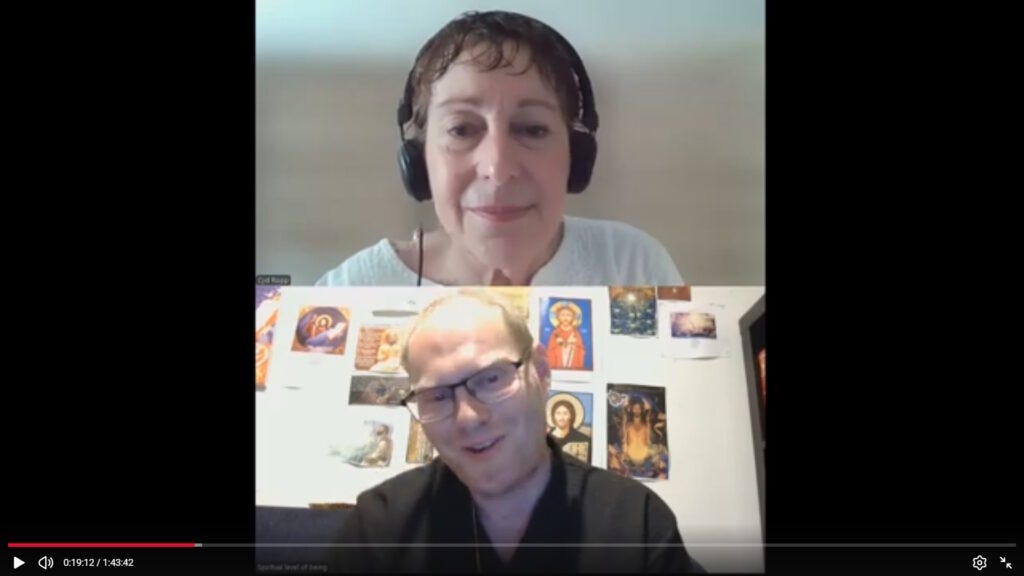
Interview with Bishop Wilson, pt. 2
Jun 2600:36:40Tap to summarizeWelcome back to Gnostic Insights and to the Gnostic Reformation on Substack. Last week was part one of my interview with Bishop Nathan Wilson of the Gnostic Union, and he explained to us a bit about who the Gnostic Union is and what they believe in.At the beginning of that episode, I read from the Gnostic Union website their history and mission statement. And my brother Billy called me up and said, “Oh, but there’s a point of their theology that’s all wrong. I know they’re ecumenical and all, but we mustn’t fall into the error of wrong teaching.” And, you know, I totally agree with that concept, not teaching anything that is incorrect or that doesn’t make sense, according to the Gnosticism that I share with you here. And it created a very large discussion between my brother and me. And I don’t even have enough time in this short introduction to go into the point that Bill brought up out of their statement of beliefs. So we’ll wait and we’ll do that when these interviews are all over and that way we can go into depth and give the topic the attention it deserves.You see, the Gnosticism that I share with you here mostly comes from the Tripartite Tractate of the Nag Hammadi. And the Tripartite Tractate is a very unusual book. It is not a book of mythology. It is not a book of ancient myths concerning angels and demigods and great battles in heaven and so forth. It’s not that kind of book. We think of it as physics. It’s literally a book that describes the cosmology and the cosmogony, that is, how consciousness came to be transmitted from the base state of consciousness that we call the Father or the Source, and all the way downstream into, ultimately, us. We’re sitting here talking and thinking about it.This is pure consciousness we’re talking about. It’s not particularities. You understand? Gnosis itself we think of as that river of consciousness. That’s what gnosis is. So, I often say, if my dog can’t understand the gnosis, it’s not really gnosis—it’s a knowledge claim. If a blade of grass or a tree in the forest can’t bask in the gnosis, then it’s not really gnosis. It’s a human knowledge claim. This is the reason why here at Gnostic Insights and on the Gnostic Reformation, we do not dwell in the history of things. We dwell in the understanding or the gnosis itself.The cosmogony and cosmology of Gnosticism that I share with you here is a logical step-by-step rollout of the consciousness of the Father or the Source. It doesn’t really matter what you call it. It’s the base state. It’s the matrix of consciousness itself and how it flows down to us. There are necessary steps described in the Tripartite Tractate for how that consciousness is differentiated and particularized and then rolled down. And how it is that we material beings are different than the ethereal beings. How could that have possibly happened? It’s like that. It’s a logical progression that necessarily comes out of an a priori statement of consciousness as the ground state. That’s quite a bit different than mythologies of how these angels fit in with these gods and goddesses down here on earth and so forth. Because those particularities definitely come out of the mind of humans. They can be inspired. Okay, I’ll give you that. But they are knowledge claims. They’re not necessarily gnosis and because of that they can go wrong. They can be wrong.Whereas starting with this a priori notion of consciousness ending up in us and how does that occur? By what means does that possibly happen? And how is it that we earthlings plug into that illimitable consciousness? That’s a different thing. That’s a description of process. That’s an understanding or a gnosis of what it is that we are part of.So I’m not knocking the history or the particularities that Bishop Wilson shares with us. But the gnosis that leads you to enlightenment is simply this:We come from the Father [El Elyon] or from the Source or from the Mother-Father or from the Great Mother—whatever you want to call it. We come from that Source, that unlimited well of consciousness and life and power and might and love. And then we will return to that.That’s all you have to know. We come from Above and we return to Above. And with that knowledge, that’s your base state. That’s what the blades of grass and the dogs and the trees all understand. All the rest of the particularities of who and why and how, those are just details being filled in. Some of them out of gnosis, but most of them out of tradition or history.So we’ll be proceeding now into part two of my interview with Bishop Nathan Wilson of the Gnostic Union. And later on, we’re going to talk some more about the difference between mythology and the process of gnosis. That is what this podcast specializes in. That’s what my brother Bill and I have parsed out and discovered out of direct mining of the Tripartite Tractate. Our gnosis comes from that and it proceeds in an orderly fashion that doesn’t require any extra research. It’s all about gnosis and what must be.But here, let’s go back to this interview with Brother Wilson.****************************************************************Cyd:Well, tell me more about your Bible that you wrote. What do you call it? You call it…Bishop Nathan Wilson:I call it The Gnostic Christian Truth Bible. I actually asked one of the older bishops that trained me, Bishop Jason, and he started that. So, I like the name. So, I thought, okay, I want to put Gnostic Christian in there. So, I was going to call it first the Truth Bible. He requested that, but I thought, well, Gnostic Christian makes it less likely for the Catholics to come after me as well, and the Protestants.Many do not like my translations. They are quite upset that I’ve done this, but they don’t put too much light on me. So, it’s best not to give me too much attention, basically. So, the less attention I have, the less people know about this, but which is something unique about mine. I don’t just offer my translations. I offer the original Koine Greek with it, so they can look at the actual text.So, even if my translation, say, could be wrong, they could look straight at that text and go argue with the text that they see, which I also wanted to include for their own reason, and when I included the alternative English, it’s so I might read it one way, but someone else is going to read it another way, and that can teach me something new. I feel, oh, I didn’t understand it like that. So, that’s why I wanted to keep that in there too, and a couple of words I kept in there were Greek.So, I kept Logos. I kept Kosmos, Zoe, Sophia, Archon. Magus. I kept all these words. So, very, very Gnostic, and you won’t find these in the English translations. They have gone out of their ways to censor them. I also kept the word daemon or daimon, daemon, so I did not put that down as demon because that’s not what it means. So, I kept the original Greek context of use, and I also add a Greek, Koine Greek, index in my translation so people can actually look at little snippets of what these words mean.So, I have some things in here. So, this is just on one page on basically all Greek with English meaning. So, there’s Logos, which I explained means God’s word, God’s authority, God’s reasoning, song, and speech, and utterance. So, when you see Christians speak that Jesus is speaking the Word, or in the beginning there was Word, they are doing a disservice to what’s being implied. This is the word of God. Very different, and even the word God we use is very English. I did keep up, but for the English sake of things. So, English people wouldn’t freak out too much on me, and another thing is also a safer mouthful, because this Word means supreme deity, deity of deities, which is very interesting. Otherwise, we would go into a god, which is lesser gods as well. So, we have a pantheon. So, it was very different, like even monotheism would evolve into what we think it is today, but in the ancient past with ancient Jewish people, they did believe in other gods, it’s just they chose to worship one god. So, this would be not the same as monotheism now, where you completely reject them as non-existent. This wasn’t that case. So, they had a very different mind.So I kept Sophia being wisdom. I mentioned this is how this is feminine wisdom, God’s feminine wisdom, coming from the Hebrew word Chokmah. Sometimes those are called Chokmah. So, I kept that in there as Sophia.Zoe, I kept too, meaning basically when you see eternal Zoe, that’s eternal life. So, that’s implying the feminine wisdom again, but also the spiritual benefits one receives with a spiritual relationship with God, or what’s with mine. So, I kept that in there. So, it’s very feminine, and that’s being removed. They would not want you to know that life is Zoe, and there’s other words they could have used for life or soul, but they chose to use the word Zoe, and that’s important. So, I kept that in there.And I’ve also got Megas. I’ve already mentioned that, but Magus comes from—here’s two words that are entwined, but the thing was the church has used a later translation, which would be terrible, but that’s kind of wrong, and this is because the language would evolve over time. It came to words Megus and Magos, which basically would be Magi, and then great and powerful, larger than life.So, Jesus was also called Iesous Magos. So, <em...
Transcribe →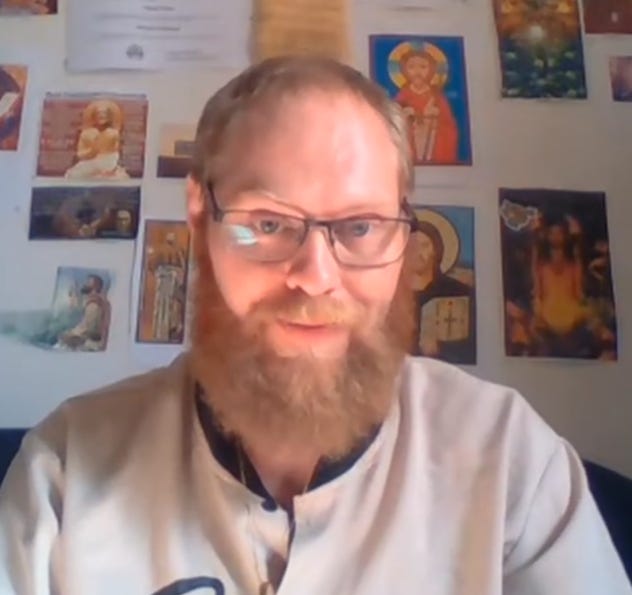
Interview with a Gnostic Bishop
Jun 2000:26:30Tap to summarizeWelcome back to Gnostic Insights and to the Gnostic Reformation on Substack. This week I interviewed Bishop Nathan Wilson of the Gnostic Union, and it was a good long interview, so I’ll be breaking it up probably into three segments for the next three weeks here. Bishop Wilson earned a diploma of ministry from The Gnostic Catholic Union, and then he later went on to create The Gnostic Union, and he’ll tell you about that in this week’s episode. Here I’ll read you the intro from their website.“The Gnostic Union is an independent sacramental assembly of Gnostic Christian communities and individuals. It exists to uphold the Gnostic Christian traditions and to encourage and promote the work of Christ and the Holy Sophia in the world.As an international, independent, autonomous, non-political organization, The Gnostic Union is in no way dependent upon any other authority outside of its own administration. We are neither Roman Catholic, Orthodox, nor Protestant. We are Gnostic Christians that encourage self-development and connecting with the spirit within to build a personal relationship with God, the Monad, the Father.Our bishops, priests, and deacons are merely guides to help you on your spiritual journey. The Gnostic Union aligns itself with the history and teachings of the first Christians of early first century Christianity and the teachings of Jesus Christ as found in the Gospel of Thomas. We encourage new members to read from the Nag Hammadi and to understand how different early Christianity is from modern mainstream Christianity.We welcome all people, regardless of past religious backgrounds or faiths. Gnosis means knowledge, not just simple intellectual knowledge, but deep spiritual knowledge within you. Knowledge from the Spirit, from the Holy Spirit, and from and of God.”You see, I felt that that really went along with what we talk about here at Gnostic Insights, and so when Bishop Wilson reached out to me via our Substack Gnostic Reformation site, I was more than happy to engage in conversation with him, and I thought that having a talk with him along with you and then broadcasting it would be helpful to all of us. Here’s the last little bit that it says on their Gnostic Union homepage, which is only one page long. It’s still in development. It says,“Gnostic Christian theology differs greatly from Roman Catholicism and Eastern Orthodoxy. Gnostic Christianity does not depend upon the authority of a Pope or the Church. Instead, it emphasizes being reborn in Spirit, building a personal spiritual relationship with God, and becoming Christ-like by enacting the teachings of Jesus Christ in our lives.Gnostic Christianity began from earlier Gnostic traditions, such as Hermeticism and Mysticism, which arose from Jewish mystics. Gnosticism itself is much older than Judaism, and traces back to the Hermetics of ancient Egypt, the Druids, and the ancient Greeks. Although many Gnostic Christian theologies differed, they shared a common theme of a trapped spiritual essence within the material body, the divine spark, the soul, or the spark of Sophia.The ultimate goal for Gnostic Christians was to become like Jesus, to be reborn in Spirit, through the baptism of the Holy Spirit, Sophia, and to know thyself, reflecting the divine essence within.”As you know, here at Gnostic Insights and the Gnostic Reformation, I stay away from the histories, because it seems to me that what is important is the here-and-now relationship we have with the Christ and with the Fullness of God. And so, I’m just not all that interested in history, but as you’ll hear from these ongoing interviews with Bishop Wilson, he’s all about history. So, for those of you who have been missing that strain of thought in our Gnostic Insights here, you’ll get an earful for the next three weeks.So without further ado, here’s part one of my interview with Bishop Nathan Wilson of The Gnostic Union.Cyd: Well, such a pleasure to see you. You have such a nice smile.Bishop Nathan Wilson:Thank you. Thank you. Thanks for having me. It’s a pleasure. It’s always lovely to meet other Gnostics, other spiritual people, all those with open hearts and open minds. It’s always lovely to see.Cyd:Yes. Yes. Yes, it’s true. I wish I had more of these people close around me. Do you have neighbors who are Gnostic? Do you have people you can actually face-to-face with?Bishop Nathan Wilson:I’ve met a priest that I can now speak face-to-face, which was really good. So, it was the first real Gnostic I got to speak to face-to-face. Mostly, I was speaking to many online in other parts of the world, and I kind of felt like I was the only one here in Adelaide, Australia. So, I kind of felt like the one odd villager out. So, it was lovely to meet some other people. I’ve trained people, and other people have done what they wanted. Other people carried on as undercover Gnostics in this world. So, yeah.Cyd:Let me get a formal introduction to you here going. This is Bishop Nathan Wilson of the Gnostic Union, and we have connected through Substack, although you don’t have a Substack presence, do you? You don’t have a site?Bishop Nathan Wilson:No, no. We have got a website in the works, but it’s still in development. I’m not too tech-savvy, but we’ve got other people that are. So, we’re mostly on Facebook and YouTube at the moment.Cyd:Well, wonderful. Now, tell me the difference between the Gnostic Catholic Union and just the Gnostic Union.Bishop Nathan Wilson:Well, we used to be the Gnostic Catholic Union as well until I basically got in charge, and then I removed the Catholic part, which they only had for the Latin reasons, meaning universal, but not everyone knows that Latin subject. They’re just going to see Catholic, and usually today’s world, when you have a Catholic Union, it’s mostly those who have been brought up with a Catholic background that have now found Gnosis, and in turn, carry on those old traditions, which I don’t find anything wrong with. I think there’s many different ways to experience Gnosis.Gnosis doesn’t belong to any religion. It’s something you find within. It’s what you experience, spiritual knowledge gifted to you by what’s divine, by God, by the Father, by the Mother-Father, whichever term you like. The Source. It could even be referenced to, given you to by divine beings, by angels, angelic forces. So, Gnosis is something that you experience. So, it’s yours. It’s personal. It’s intimate. So, it’s a beautiful thing.So, with the Gnostic Union, we are more open to different Gnostic schools of thoughts. So, you could be a Sethian, a Valentinian. You could be a Carpucratian Gnostic, whichever. It doesn’t matter. You could be a Jewish Christian. Whichever the path is—we’re not really dogmatic. So, we appreciate all those who come into this spiritual life, seeking answers, and respecting each other’s beliefs, which is also rare. We have to remember, when we looked at the ancient schools of thought regarding Gnosticism, the ancient Gnostics got along. They didn’t kill each other. They didn’t fight. They had some disagreements, but they shared each other’s writings, which is fantastic. So, that’s very rare when you see that in a religious or even a spiritual school of thought. Many people can be my way only. So, that’s where Gnosis comes in, that inner spiritual experience. So, one’s own personal relationship with what’s divine.The Gnostic Union wants to encourage that, not to be bound by traditions. That’s mostly the difference between the Gnostic Union and the Gnostic Catholics, where they will be more bound by tradition, more bound by a dogmatic experience. We’re not really about that, not dissing any of that. We don’t mind, but we’re more open.Cyd:So, the Gnostic Catholics are still going on? That church is still active, but you have stepped away from them then, in that sense?Bishop Nathan Wilson:Yes, pretty much. So, we’ve done our own independent thing. So, that way we can have more schools of thought. I prefer it like that, so we can all grow from each other, which is something that I’m more about. So, that’s why I went into more of the Gnostic Union sense of things and removing the Catholic part. Some people didn’t like Catholic. Some people liked it and others were stoked that I removed that term from the group. I much prefer it. It’s less of a mouthful as well. I like things nice and simple as well.Cyd:Yes. So, it’s union—it’s unity. That’s what the union means in the name, not like a labor union, but the union of Gnostics. That’s lovely. That’s very lovely. So, how many people are associating with the Gnostic Union at this point?Bishop Nathan Wilson:Well, we have a couple of other different groups from different parts of the world. We have a Gnostic Catholic group. I think they’re Gnostic Catholic Unitarians located in the Philippines. Then, we have other groups as well that associate with us. Within the Union itself, we have a couple of different ones. We have also side branches as well that used to be a part of the Gnostic Catholic Union, but there was some theological difference. So, some splitting went on. So, there’s other groups. We still recognize each other.<st...
Transcribe →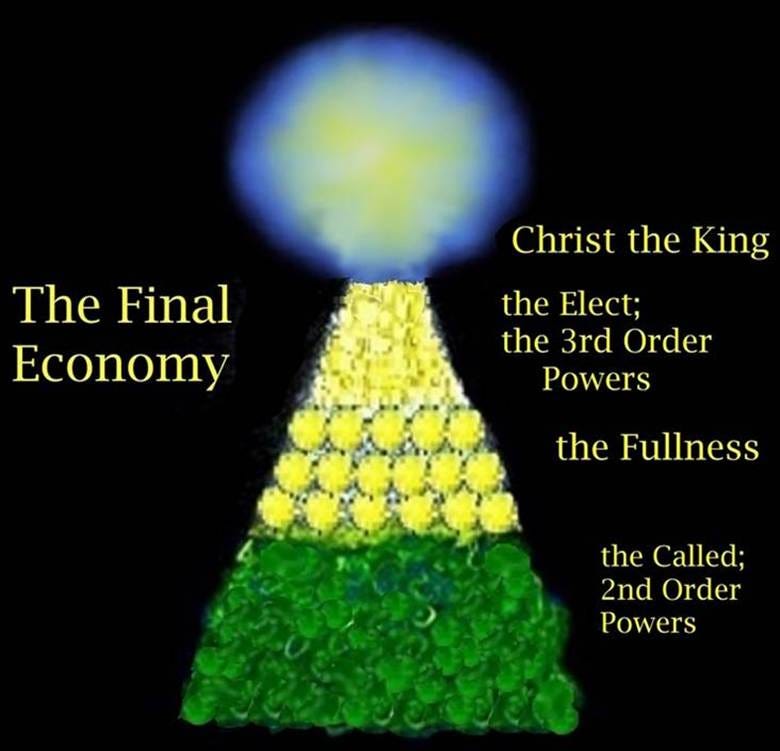
The Spirit of Truth
Jun 1300:30:12Tap to summarizeWelcome back to Gnostic Insights and to the Gnostic Reformation on Substack. This week, we’re going to follow up on last week’s episode, which was called Gnostic Pentecost, and that was first broadcast on the 6th of June, 2026. I have a lot more examples out of the New Testament of the Bible about Pentecost, and as we learned last week, Pentecost is what we’ve been calling the coming of the Third Order of Powers here in this Gnosticism out of the Tripartite Tractate that I share with you at Gnostic Insights.Here’s a quote from last week’s episode where it says,Jesus stood up and said loudly, ‘if anyone is thirsty, let him come to me and let him drink. Whoever has faith in me, just as scripture has said, out of his parts, living streams of water will flow.’ Now he said this in regard to the spirit whom those who had faith in him were about to receive, for as yet there was no spirit, because Jesus had not yet been glorified. [Hart’s New Testament, John, Chapter 7, verse 37]And this is speaking of what we call the Holy Spirit, because of course we have spirit. We’re born with spirit, because we have the Fullness of God within us. That is the First Order of Powers.But Jesus here is talking of the Third Order of Powers, the army of Christ that has come after Jesus is, glorified. And glorified means risen from the dead, ascended into the sky in front of hundreds of witnesses. And glorified means that Jesus is living above, just as we will all be living above in a glorified body in the presence of the Father.So I shared that with you last week, and if you haven’t heard last week’s episode, again it’s called Gnostic Pentecost, go back and listen to it, because it’s a deep dive—what we call hermeneutics in theology or philosophy. It’s a deep deconstruction of a couple of very important passages in the Old and New Testament that have to do with the coming of what is called Pentecost. And Pentecost was when the Holy Spirit, the Advocate, came and sat upon the disciples while they were gathered in the upper room after Jesus had left and gone back above.But we’ve been talking about Pentecost all along here at Gnostic Insights as the coming of the Third Order of Powers that is the army of Christ. I’m going to quote a whole lot of New Testament for you today, and I take this out of The New Testament by David Bentley Hart, published by Yale University Press. So let’s start with John 14:16-30, and this is Jesus speaking.‘And I shall entreat the Father, and he will give you another Advocate, that he may be with you throughout the age.’Now, by the way, when Hart and all translators translate throughout the age, they’re talking about Aeons. The word is Aeons. And so an alternate translation that Hart mentions in the footnote to this passage, throughout the age, can also mean, or until the Aeons come, or until the return to the Aeons.So listen to this again.‘And I shall entreat the Father, and he will give you another Advocate, that he may be with you throughout the coming of the Aeons.’And of course here at Gnostic Insights and in Gnosticism, we believe that these Aeons are units of consciousness, that they’re parts of the Son, they’re parts of the mind of God. It’s not a measure of time, but a measure of consciousness.Carrying on with John 14:16.‘The Spirit of Truth, which the cosmos cannot receive, because it neither sees nor knows it, you know it because it abides with you and will be within you. I shall not leave you orphans. I am coming to you. Just a little while, and the cosmos no longer sees me, but you see me.Because I live, you too will live. On that day, [and he’s referring to Pentecost, the coming of the Third Order of Powers], you will know that I am in my Father, and you are in me, and I am in you. Whoever has my commandments and keeps them, that one is the one who loves me. And whoever loves me will be loved by my Father, and I will love him and manifest myself to him.’Then Judas, not Iscariot, says to him, ‘Lord, what has happened then that you were about to manifest yourself to us and not to the cosmos?’ Jesus answered and said to him, ‘if someone loves me, he will keep my word, and my Father will love him, and we will come to him, and we’ll make our home with him. Whoever does not love me does not keep my words, and the word that you hear is not mine, but rather that of the Father who has sent me. These things I’ve spoken to you while remaining with you, but the Advocate, the Spirit, the Holy One, which the Father will send in my name, he will teach you everything and will remind you of everything I have told you.Peace I leave you, my peace I give to you. I give to you not as the cosmos gives. Do not let your heart be troubled, neither let it be afraid. I will no longer speak much with you, but the Archon of the cosmos is coming, and he has no hold in me, but so that the cosmos may know that I love the Father, and that just as the Father has commanded me, so I do.’Now, what Jesus was sharing with the disciples in this passage was that his physical body was about to go away. We know that he was about to be crucified and gone. They don’t exactly understand what’s about to happen because they can’t see the future, but Jesus can. He says,I’m going to go away, but don’t worry, I’m going to send a Spirit called the Advocate, and it will come in my name, and in the name of the Father, and it will advise you. Right now you walk with me physically, and I am outside of you, but when the Advocate comes, it will be inside of you.And here at Gnostic Insights, I describe the coming of the Third Order of Powers as overlaying our Second Order Power. See, it’s like your cells of your body. Imagine that there is another version of you that is perfected, that is cleansed of all illness, or cleansed of all poor cellular replication. We’re making an analogy here between cells and spiritual parts, but right now I’m just talking about cells. So let’s say you’ve got all these kind of little faults in your body that have developed over the years.Now imagine there was a perfected body that slipped right into you, like a sort of like a ghost, the Holy Ghost, overlaying upon your cells that cause your cells to pattern themselves after it. It’s like stepping into your body and overlaying what has been damaged over the years.Well, that is what happens with our spiritual bodies. We are what are called Second Order Powers, and we are made up of various combinations of, I hate to get confusing here for you, but of the First Order Powers. The First Order Powers were the Aeons. The Second Order Powers are all of us living things.The Third Order Powers are the perfected Christly powers. We are the fruit of the First Order Powers. Each of us is unique, a unique combination of various First Order Powers, and they make up our body. It’s like the recipe. Each of us has a different recipe. Down here, we manifest that recipe. That is who I am. You have a slightly different recipe, but mainly we’re the same. When the Third Order of Powers come, they overlay upon your unique combination and my unique combination.The Third Order Powers are unique to each one of us because they are made to be in our countenance so that we will recognize them. These perfected Third Order Powers, the army of Christ, steps into our soul, steps into our spirit, and overlays upon our pattern, upon our recipe. That’s what brings us the perfection of the Christ. But it only happens if you ask for it. It only happens when you allow it and you seek it out.Now, at the end of that quote I just read you out of John, he says, peace I leave you, my peace I give to you. I give to you not as the cosmos gives. And you see, the distinction is that the cosmos, that’s our...
Transcribe →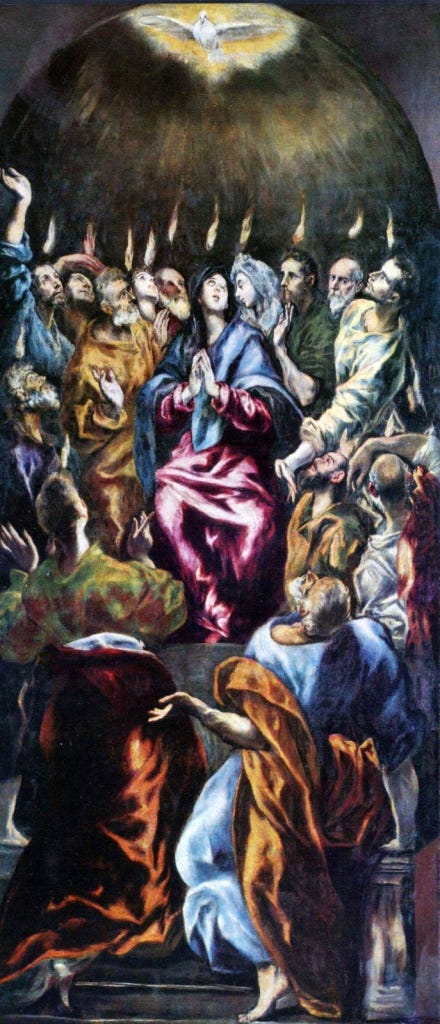
Gnostic Pentacost
Jun 600:28:50Tap to summarizeWelcome back to Gnostic Insights and to the Gnostic Reformation on Substack.This week I was listening to one of the radio preachers I like to listen to and I caught a sermon on the Pentecost, and I realized I had at that point a Gnostic insight that Pentecost, the coming of the Holy Spirit, when it infused the disciples in the upper room—that is the coming of the Third Order of Powers released by the Christ after his resurrection—that the Third Order Powers are the “anointing of the Holy Spirit.”So quickly, let’s look at the Acts of the Apostles book out of the New Testament, Chapter 2, which is what we now call Pentecost.And when the day arrived that completed the fifty days after Passover, they were all gathered together in one place, and suddenly there came a noise, like a turbulent wind borne out of the sky, and it filled the whole house where they were sitting.And there appeared before them tongues as of fire, which parted and came to rest, one each upon each one of them. And they were all filled with the Holy Spirit, and they began to speak in other tongues as the Spirit gave them to utter. Now dwelling in Jerusalem, there were devout Judeans from every nation under the sky, and on the advent of this noise, the multitude gathered and were confused, because each one heard them speaking in his own language.And they were amazed and astounded, saying, look, are not all of those who speak Galileans? And how is it that each one of us hears his own language, the languages in which we were raised? And all were amazed and entirely at a loss, saying to one another, what does this portend? But others, ridiculing them, said, ah, they’re full of sweet new wine. But Peter, standing up along with the eleven, raised his voice and addressed them all. Judean men and all of you staying in Jerusalem, let this be known to you and lend your ears to my words, for these men are not drunk, as you suppose, as it is the third hour of the day.Rather, this is what was declared through the prophet Joel. And in the last days it shall happen, says God, that I will pour forth from my spirit upon all flesh, and your sons and your daughters shall prophesy, and your young men shall dream dreams.” [Hart’s New Testament]Now, it’s a much longer passage, and it’s very thrilling and exciting, but we don’t have time today to go into it. Perhaps we’ll speak about this in more depth very soon. But that is the first Pentecost, the coming of the Holy Spirit upon humanity. And I’m going to talk about that today to clear up that confusion, because I’ve always had a bit of a confusion over what we speak of as the Holy Spirit dwelling in us in a Christian manner, or the Holy Spirit coming like tongues of fire in the Pentecost story of the upper room in the book of Acts, yet we all have the Holy Spirit of the Fullness of God within every cell of our bodies and throughout our entire organism. All of the Second Order powers are infused with the power of God. So what is the Holy Spirit then?And now I understand the distinction between the infusion of the Third Order of Powers and the infusion of the Second Order of Powers.You see, we are Second Order Powers. The Aeons of the Fullness are First Order Powers. They have their place Above. We are their fruit. We are their spores. (And I actually ran across a radio preacher, of all things, again last week, saying that the original word for fruit as used in the New Testament is spore. And I’m like, yes, that is exactly what I’ve been saying. So that was another cool Gnostic insight that came by way of a Christian radio preacher. So you can never tell what you’re going to hear on Christian radio.)So, we are the spores of the First Order of Powers. We are their fruit. We are their children. We are the Second Order of Powers, and that is all living things in the cosmos. Everything that moves around, everything that’s soft and squishy, the meat, as I like to say, as opposed to the mud, which is the realm of the Demiurge—the rocks and minerals, the molecules and atoms. But the Third Order of Powers is the army of the Christ. We’ve spoken of that often.We’ve had three recent episodes about the indwelling of the Christ. For example, The Gnostic Redemption of the Nag Hammadi from May 29th, 2026, Army of the Christ, May 16th, 2026, and Understanding Gnosticism: The Path to Inner Knowledge from May 9th, 2026. These all have to do with the coming of the Third Order of Powers.And the coming of the Third Order of Powers didn’t come to Earth until Christ walked the Earth in the form of a human, and that is Jesus the Christ. He’s the only one who has ever claimed that “I and my Father are One.” Jesus is not the same as Buddha. Jesus is not the same as Muhammad or any other prophet. Jesus is not simply a good teacher or an exemplar of morality and ethics. If you think that, as many modern theologians do—the postmodern theologians, the deconstructionists—they have reduced the power of Jesus to that of a prophet or a teacher.And even people I hear, strangely enough, out there on YouTube, claiming that Jesus was a fraud—that there is no such thing as anything that happened in the Bible, Old Testament or New Testament. That’s an absurdity that is being promulgated by non-believers. If you are a believer in the Father, then you are a believer in the Christ, because Christ was the emissary of the Father to Earth to bring the correcting algorithm, I like to call it, to Earth to patch up our Second Order Power that has been forgotten. We’re born with it. We fully instantiate it within our bodies, but we’ve overlaid it with all kinds of junk, karma and memes from our environment that cloud our gnosis, cloud our ability to perceive the power of the Aeons within us. Christ came, the Third Order of Powers, the army of the Christ, to help us to remember, to remind us of our Second Order power, to remind us of where we come from, to remind us of the Father and the Aeons above.I took notes from the Pentecost sermon I listened to, and I’m going to represent these notes as a Gnostic teaching for you, because once you have the gnosis working in you, once you’ve come to terms with Christ and the Father and the Aeons and the gnosis that you were born with, once you begin to remember your inherent transcendence, then you can read the New Testament with eyes wide open. You can understand the mysteries of the New Testament much better than typical Christians do, because they’re trapped in a formula that is derivative of the early Catholics that had stripped the gnosis out of the Bible in the first place. So we must free ourselves from the doctrine, but not free ourselves of the gnosis. Tricky.The occasion known as Pentecost was when Jesus had been crucified, entombed, resurrected, and then ascended back up above into the Fullness—above the Fullness, because he’s the king of all. And he had promised that he would send a helper—to not worry. He had told his disciples, don’t worry, I’m sending you a helper to help you bring the gnosis to the world, essentially is what he said. This was also promised in the Old Testament.And here I’m going to read you a very important verse out of the Old Testament and translate it for you into Gnostic terms. The verse is Ezekiel 36:24—28, where God promises to cleanse and put a new heart and a new spirit into believers.Now it’s tricky when going all the way back to the Old Testament, because the God of the Old Testament is not the God Above All Gods. The God of the Old Testament, Jehovah, well, it’s pretty much equivalent to the Demiurge. And that’s very dicey, very tricky. The ego of the God of the Old Testament, the ego of Jehovah, is when Jehovah speaks in very egoistic terms about itself and about obedience and the law because, remember, Jehovah is law-bound. The Demiurge doesn’t remember; the Demiurge has forgotten its origins above.When this radio preacher referenced Ezekiel 36, I went to what’s called the online Bible Gateway. That’s a resource you can use. And you type in any phrase or any citation, such as Ezekiel 36:24—28, and it will give you all of the various translations. And you can choose which translation you read or you read them all. Well, since this was a Hebrew exhortation, I decided to use the Orthodox Jewish Bible, which does have a lot of Hebrew in it. So then we have to go into Hebrew translations, but that was a good exercise as well.Oh, to go back and clear up confusion about how to read the Old Testament—if the Old Testament is largely demiurgic, it’s basically when Jehovah is speaking that’s demiurgic. But the prophets were in touch with their gnosis. The prophets were talking to the God Above All Gods. They weren’t talking to Jehovah. They were talking to the God Above All Gods. So ...
Transcribe →
Gnostic Redemption
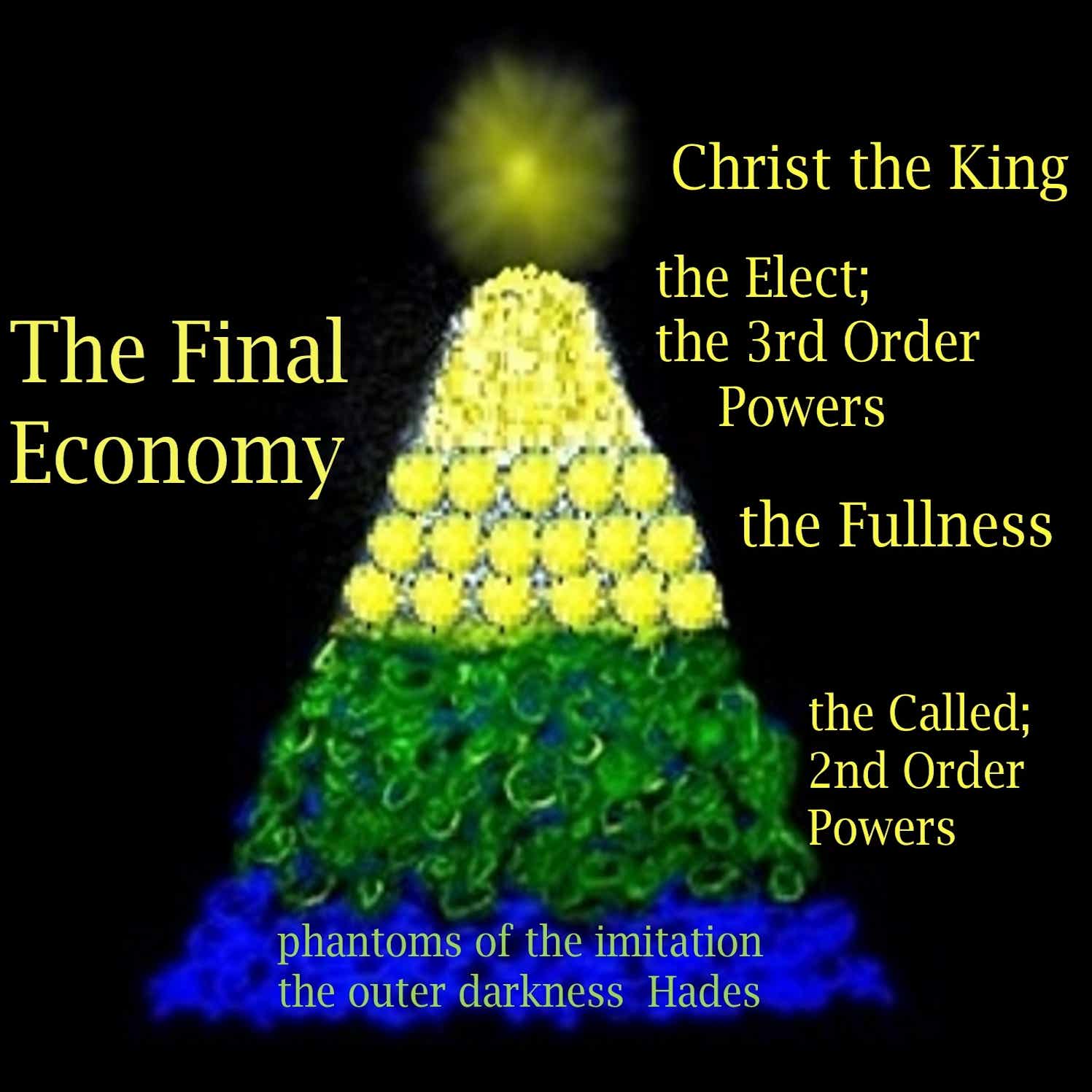
May 2900:23:17Tap to summarizeEvery once in a while I like to go back and share with you the original scriptures out of the Tripartite Tractate of the Nag Hammadi from which I derive these teachings. So this week will be scripture-heavy. Don’t worry if the language is unwieldy or unfamiliar. You’ll get the hang of it.The original economy was that of the hierarchy of the Fullness, wherein every Aeon knew its place, position, and duties for cooperative overall functioning.Each of the Fullnesses lived in a state of joy, benevolence, and harmonious agreement, giving glory to the Father and never to each other or to themselves, according to the Tripartite Tractate of the Nag Hammadi, verse 86.The Second Order of Powers was created to establish a new economy to replace the deficiency that had arisen as a result of the Fall of Logos. Logos and the Fullness brought forth these little ones of the Second Order so they could receive the life-giving light born from the thought of brotherly love of the preexistent Fullnesses, in contrast to the phantoms that had arisen from the Fall. These powers of remembrance resembled the Aeons whose likenesses they were, and they were in harmony with themselves and with others of their kind. And as you know by now, the Second Order of Powers is every living thing that is on this planet Earth, and indeed, the entire cosmos—all of creation, all of the flora and fauna, all of the living things, including us humans.The Second Order of Powers resembled their parents in the Fullness, each one of them being a small impress of one of the figures. These were no larger than those of the imitation, but they came into the world with a better disposition, reflecting the qualities and powers of the Fullnesses. [Tripartite Tractate, verse 83]The new economy of the Second Order of Powers reflected a different method of doing business from their parents in the Fullness. In the new economy, our cosmos, the powers vied for position and authority within a limited space known as the boundary. Here, those of the imitation who continued to wholeheartedly embrace the shadows left over from the Fall actively fought against those of the remembrance.For their part, those of the remembrance forgot all about the values of the Fullness, due to the law of mutual combat they were enacting. The new powers acquired the same lust for domination and all of the other passions of this sort, and wound up acting against itself on account of its rage. It was during this endless war that a myriad of various kinds of matter and all sorts of powers were mixed with one another, and in great number. [Tripartite Tractate, verses 84 and 85]Clearly another solution was required if peace were to enter the deficiency. Remember that none of this was due to an error of planning, rather these steps were all necessary to bring about an economy still to come. The new solution was the Christ.For this reason, then, it is wrong to condemn the movement of the Word as the cause that made an ordained economy come to pass. The Aeons of the Fullness took upon themselves the Fall that had happened as if it were their own, with concern, goodness, and great kindness, for the one who had become deficient could be made perfect in no other way except by the Fullness of the Father. [Tripartite Tractate, verse 86]And so, the Aeons of the Fullness, every one individually and all of them collectively gave glory in unison to their Father while praying for help for the deficiency. They brought forth one that combined every attribute of the All manifested in the image of the Father of whom they had been thinking when they gave glory and prayed for help. This one was called the Son of His Will and of the Good Pleasure of the All. It is the knowledge of the Father who wished to become known. It is also described as holding authority vested in Him from the beginning and the power needed to execute it. [Tripartite Tractate, verses 87 and 88]The Aeons not only produced a singular fruit reflecting the Father, but that fruit also reflected their own individual countenances and aspects from their positions in the hierarchy of the Fullness. In this manner, they went forth in a form that consisted of many forms, so that the one whom they were going to help should see those to whom he had prayed for help as well as the one who brought it to him. [verse 87]Those redeemed by the light were made whole and complete. Those who were now enlightened felt the power of the Redeemer inside themselves, being together with Him, sharing His suffering, relieving Him little by little, making Him grow, raising Him up. [verse 90][The Redeemed] were produced as an army for Him, as for a king, in which those who belong to this thought share the command and are united in agreement. He also sowed in him, invisibly, a word designed for understanding, and gave him the power to detach and dispel from himself those who were disobedient to him. Those of the imitation, on the other hand, were unprepared for the light, for they had come into being out of darkness and could not comprehend it. To them the light came as a brief terrifying flash, a leap and a blow, that drove them deeper into the shadows of the abyss. To them this utter darkness was home. [Tripartite Tractate, verse 89]The Aeon, Logos, who had Fallen and then abandoned the deficiency he had created, decided to pray that the fixed economy might attain all those who had gone forth from him, including those still clinging to the imitation. In this manner Logos was also made right from the Fall, as those of the deficiency attained the economy of the ALL, and the Second Order of Powers united with the knowledge that had been given them. [verse 91]So those of the deficiency were found worthy of becoming rulers over the unspeakable darkness as their own property and the lot that fell to them. This is what he granted them, so that they too might become useful for the economy that was to be, and of which they were oblivious. And so it came to pass that every grace and food that was contemplated through prayer and the ALL came to be. For the word greatly increased mutual cooperation and expectant hope, and they experienced happiness, deep rest, and undefiled pleasures to the extent each was able to embrace them. [verse 92]Now what this is saying in Simple Explanation terms is that the fruit of the ALL and the Father becomes another fractal iteration of the ethereal Consciousness. The Christ Principle is a perfect fractal iteration of the Father’s Consciousness that takes into account the new information arising from the goings-on in our bounded space. The Father, the Son, and the Aeons of the Fullness have just amended the primary algorithm of this universe to include up-to-date data specific to each individual unit of consciousness in our space-time continuum. This new code represents patches to the fragmentary error code of the deficiency in order to end the stalemate and re-establish harmony and proper functioning of the economy.When the Tripartite Tractate speaks of “forms consisting of many forms,” this refers to the nested fractal hierarchies that make up all of the life in of our universe. Our Universal Unit of Consciousness is continually pouring in information, values, love, and coherence. The Christ came into the world to redeem all of creation through His body and His blood, literally, because His body and His blood instantiate the entirely perfect Fullness of the All.Salvation comes not only to those of us on Earth, but also to the Fullness above, and to Logos in particular, the Aeon whose Fall brought creation into existence. The face of the revealed Christ, quote,possessed the Word of the Son together with His essence, His power, and His form. He was the one He desired and delighted in. He was the one who had been prayed for in love. This Aeon was light and a desire to set aright, an openness for instruction and an eye designed for vision, qualities that it had from those above. Moreover, it was wisdom for His thought against the ones who were placed lower in the economy, a word for speech and other perfecting things of this kind.Those who are redeemed by the Christ are unshackled from the chains that bind the material and psychical orders to this world, so much so, in fact, that they form a new Third Order of Powers, the spiritual ones. The redeemed are also known as the Assembly of Salvation, the Bride, the Church, and the Elect, or the Election. [Tripartite Tractate, verse 93 and 94]The Tripartite Tractate mentions the name of Jesus only a couple of times, and the Savior and the Christ many more times than that.And, of course, the entire book begins with long discourses concerning the nature of the Father and the Son. Here is what it says about Jesus at this point in the story.Because the seed of the promise about Jesus Christ had been deposited, whose revelation and unification we have ministered to, this promise now enabled instruction and a return to that which they had been from the beginning, that of which they possessed a drop inciting them to return to it, which is what is called redemption. And that means to be released from captivity and to obtain freedom. The captivity is of those who were slaves of ignorance, which reigned in its own territories. [verse 117]So the Gnostic Gospel claims that we humans, and all of creation, are all children, or fruit, of the spiritual realm of the Fullness, redeemed by the body and the blood of Christ in the form of a drop of remembrance, a seed of the promise that now enabled instruction and a return to that which we had been from the beginning. Humans were endowed with reason so they could remember their true inheritance and repent of their tenacious claim to material life. This redemption comes easier to some than to others.The Tripartite de...
Transcribe →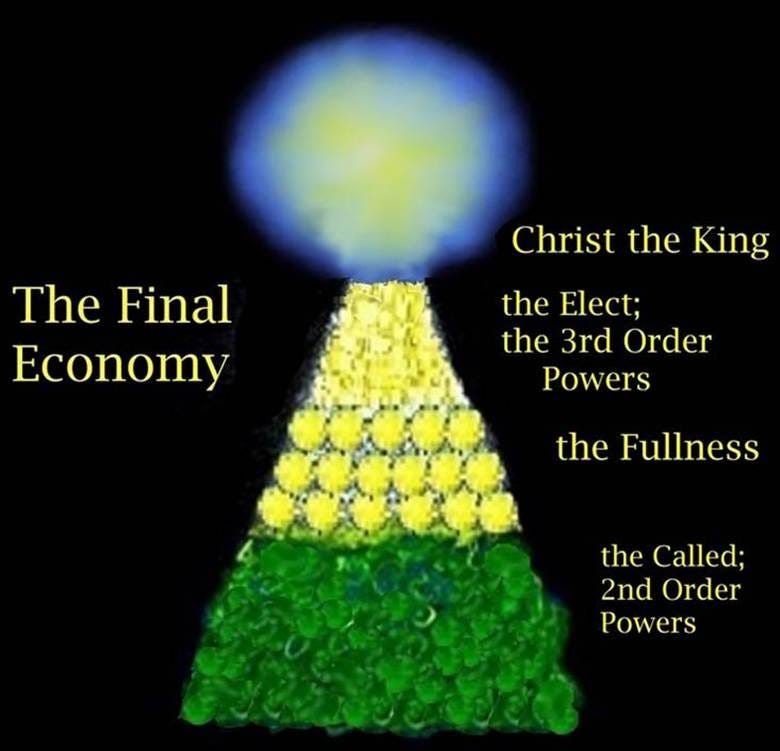
Christian Gnosis
May 2300:19:16Tap to summarizeYesterday, my Hindi tech services guy asked me whether or not Gnosis is Christian. It seems like it should be a simple question. Is Gnosticism Christian? I explained to him that I certainly think that Christian Gnosticism is Christian, fully. And in fact, I believe it’s true Christianity—that Jesus was Gnostic, that John the Baptist was Gnostic. But what does that mean?Most of the Christians, pretty much all of the Christians, completely reject Gnosticism as evil, as misleading, as demonic. So that would put me in the camp of being a false teacher or a false witness, which saddens me greatly because I love Jesus. I’ve been a follower of Jesus for 70 years. And I believe that when Jesus said, I and my Father are one, if you have seen me, you have seen my Father, that Jesus was speaking about what we call the Gnostic God, the God Above All Gods, the Father in heaven, the preexistent primordial form, the one consciousness that did beget the only begotten Son.I explained to my Hindi friend that in Hinduism, many gods are accepted. In India, people pray and follow many different gods, and yet they are all considered Hindu because they are honoring and treasuring the Godhead. I don’t pray to many gods. I pray to the Father above, the God Above All Gods, the Father to whom Jesus prayed in the garden. I do not believe in a variety of saviors. I believe in the Christ as the Savior, and that Jesus of Nazareth embodied the Christ.I explained to my Hindi friend that although Christians reject us as being evil, we accept them as being seekers after truth and lovers of God, those who are not hypocritical, that is. Many people sit in Christian churches, and they’re what we would call bench warmers or pew warmers. The point being, you must truly believe in the Father. Jesus believed in the Father. He wanted his followers to believe, to have true knowledge and faith that we come from above, and we are children of the Father, of the one primordial consciousness. Jesus came to remind us of that. He came in human form to speak to us humans, but the Christ is a much greater and larger entity than Jesus alone.The Christ is an ethereal being. The Father is ethereal. The only begotten Son is ethereal.The Aeons of the Fullness of God are all ethereal entities that live above. Jesus was fully human as well as fully God. Just as we are fully human, and we have the potential of fully God inside of us. We’re all born with the life, consciousness, love, remembrance of the Father above and our aeonic parents in the Fullness of God. But we forget once we are sent down here. We were sent down here, according to Christian Gnosticism, for the purpose of reminding the Demiurge, of reminding the Fallen world, this cosmos, this material cosmos, that it didn’t arise from nothing. The Demiurge didn’t spring out of nothing.The Demiurge has forgotten. The Demiurge is known as the amnesiac God, but he is indeed the God of this material world because he put it in order. He took the chaos of the Fall and made it orderly, put the laws of chemistry and the laws of physics, the laws of astronomy, mathematics and the mathematical constants upon this otherwise chaotic material universe that was blasted out of the Fall. In physics, we call it the Big Bang or the origin.The Demiurge is the architect of this cosmos, of this material plane, of this apparently material world that we live in. And do you know what it is, this material world? It’s a copy. It’s an imitation. It’s a deficient imitation of Paradise. The Aeons of the Fullness of God, up above, sit and dream together of this beautiful paradisical world, this Eden. This beautiful, beautiful creation is the dream of the Aeons of the Fullness of God.It comes from upstream from them. It comes from the Totalities of the ALL. It comes from the Son, the only begotten Son, who was the Monad, the One, that represents an otherwise illimitable and unimaginably huge and great and powerful consciousness.We are their derivative. We are fractals of that consciousness. We’re downstream from the Father. We’re downstream from the Son, who is the face of the Father, the presenting face, the bucket dipped into the sea, containing all of its attributes, all of its knowledge and life and free will and creativity and plans. And the Son broke out all of his variables. He indexed every thought that the Father had. And this became the hierarchical structure that is called the Fullness of God, the Hierarchy of the Fullness, the pleroma of the Fullness of God. That is the everything of the Fullness of God—everything broken out and itemized.And then it was one particular Aeon that decided to launch itself back up and reunite with the Father. But it couldn’t, because the Father is far too great and powerful for one single derivative to be able to fully embrace it. And had it actually come into full contact with the Father, it would have been annihilated. In Gnostic Christianity, derived from the book called the Tripartite Tractate of the Nag Hammadi books, this Aeon that launched itself out is known as Logos. In other forms of Gnosticism, the Aeon that launched itself is known as Sophia. It really doesn’t matter. Sophia means wisdom. Sophia represented the highest wisdom of the Fullness of God. Logos means knowledge, reason. Logos represented the highest knowledge and the highest reasoning of the Fullness of God. In truth, they basically represent the same concept.And this singleton wanted to reunite with the Father all on its own, but it couldn’t. And so it fell. And this is the Fall. In Christianity, the Fall has been pushed way downstream onto the human level. It is said that the humans ruined Paradise. We ruined Eden–one decision of the woman tempting the man to eat of the apple of the tree of the knowledge of good and evil caused the Fall. But no, in Gnosticism, we say that the Fall happened upstream from us; ruining Paradise is way above our pay grade. It’s not humanly possible. We’re victims of the Fall. We’re not the creators of the Fall.We are not born as evil. We are born as fruit of the Fullness of God. We are the Second Order Powers fruited down here into this material creation. We’re melded onto this material creation, because the very molecules and atoms and particles that make up our physical body—and it’s not just us humans, it’s everything that’s live from the cellular level on up and all creatures, whether they be bacteria, plants, birds, mammals, humans, we’re all fruit of the Fullness of God, meaning we were dreamed up above—we’re part of the dream of Paradise. The dream of Paradise is fully populated. All of the plants and animals and creatures and everything up there pre-exists. That is what would be called intelligent design. So when we are fruited down here, and we begin this life as an organism here in this material world, we are welded onto the material, the particles, the atoms, the molecules. And so we grow up with the perfection of the remembrance of Paradise and the remembrance of the Aeons above and the Fullness of God.But the Fall represents ignorance. The chaos of the Fall—the Demiurge, which is the God of the Fall, doesn’t remember the world above, doesn’t remember the ethereal plane. The Demiurge thinks that when it woke up, it must have created everything. And so it went about ordering the chaos into its recollection of Paradise. But it doesn’t realize it’s a recollection. It thinks it’s creating. It thinks that it’s the creator, the inventor of this world. But really, it’s just a vague recollection of Paradise.And the god of this world—and here’s a heresy, by the way—whom the Bible acknowledges to be Jehovah, or Yahweh, the God of the Jews, the God of the Christians—that is the Demiurge. But Jesus did not acknowledge Jehovah as the Father. When Jesus spoke of the Father, he was talking about the God Above All Gods—God way upstream there before the Fall. The god down here is the god of this world. The god of this world is not Satan. The god of this world is the Fallen god, the Demiurge, that doesn’t realize that it’s from the Fall, doesn’t realize where it came from. That’s the simplest rendition of this Gnostic Christianity. It’s the same Christ that is then sent down into this material cosmos, in the body of the Jesus of Nazareth, who came down with the full knowledge of the Father in the Fullness of God, came down with full memory, free will, consciousness, love, unlimited love.And Jesus loves us all. Christ loves all living things. Christ came to redeem us all, to remind us that we come from above. That’s what Christ came to do, to remind of the love of the Father above, that we are not born of the god of this world. We are born of the God Above All Gods on the ethereal plane. And we are born with the full remembrance of the Fullness of God within us.And Jesus came with the army of Christ, which is called the Third Order of Powers. And this army of Christ is armed with all of the love, and remembrance, and consciousness, and free will, and all of the virtues fully remembered, fully expressed. They all came down along with the Christ. And there is one of these Third Order Powers for every one of us Second Order Powers. You have a soldier of the army of Christ assigned to you who came with not only the face of the Son, the face of the Christ, the full embodiment of the Fullness of God, but it came with your face.So that when you pray for salvation, when you pray for redemption—Oh dear God, I don’t know if I can take th...
Transcribe →
Army of Christ
May 1600:24:33Tap to summarizeWelcome back to Gnostic Insights. Today we are going to look at what is called “The Army of the Christ.”Saying that Christ comes into the cosmos with an army is a rather strange way of labeling Christ. It gives rise to the same misunderstanding that caused the first century Jews to expect a mighty, war-faring Christ to ride in on a white stallion accompanied by a legion of warrior angels ready to slay the Roman occupiers. What they got instead was a humble man riding in on a donkey. As was his way, Jesus confounded expectations by presenting himself as the opposite. In actuality, Christ and his army of Third Order Powers come into this cosmos armed with Truth and Love. The purity of righteousness is the only revolutionary power that can redeem the world.This exploration of gnostic cosmology is uniquely based upon the text of one of the ancient manuscripts recovered from the Egyptian desert in 1945. The concepts that I am sharing with you are universal and applicable to anyone who is seeking the truth about consciousness, God, the nature of life, death, and suffering, and the nature of the simulated reality we appear to be living in. This gnosis is also a “gospel” in that the word gospel means “good news.” The good news is that this gnostic gospel offers the promise of a personal relationship with higher order entities and the God Above All Gods. This is not a challenge to established religions, but rather a clarification of the nature of the Father and our relation to the Father. This gnosis also clarifies so many of the puzzles that established religions, philosophies, and even science have been unable to answer. If a Great Awakening is currently underway, then this gnosis is an integral addition to spreading the Word.As always, these readings come from the ancient book called the Tripartite Tractate of the Nag Hammadi codices. We looked at the material in this episode in 2022 when I was writing my book, A Simple Explanation of the Gnostic Gospel, and I figured it was high time we reviewed the information. And, if you haven’t yet picked up your copy of A Simple Explanation of the Gnostic Gospel, please do so. It is the clearest presentation of the Tripartite Tractate you will ever find. The book is available in all formats through amazon or your local book dealer.All life forms are called Second Order Powers and we were the generation of the new Pleroma of Logos when he returned from the Fall. We living creatures were designed to fit into the Boundary so we could operate according to the Simple Golden Rule to bring life, love, and cooperation into the otherwise dead deficiency. The Second Order Powers also bring a remembrance of the Father into his material realm, a memory entirely lacking in the shadows and phantoms of the imitation. We inhabit the deficiency, yoked to the apparent material of the imitation, and find ourselves trapped in a never-ending war with the deficiency. The Tripartite Tractate says of us,“It was not from the sickness which came into being that they were produced… but (from) the one who sought after the pre-existent. Once he had prayed, he both raised himself to the good and sowed in them a pre-disposition to seek and pray to the glorious pre-existent one, and he sowed in them a thought about him and an idea, so that they should think that something greater than themselves exists prior to them, although they did not understand what it was. Begetting harmony and mutual love through that thought, they acted in unity and unanimity, since from unity and from unanimity they have received their very being.”The Second Order Powers are subject to the “law of mutual combat” and, because of the never-ending battle against the deficiency, we tend to forget the harmony and mutual love of our higher Self and instead adopt the anger and violence of the enemy.Picking up the story now in section eight of the Tripartite Tractate,“The Logos which moved had the hope and the expectation of him who is exalted. As for those of the shadow, he separated himself from them in every way, since they fight against him and are not at all humble before him. He was content with the beings of the thought.”Logos was content with the beings of thought—those Aeons of the Fullness that form the master formulae upon whom we living Second Order Powers are modelled—”because he had hope and expectation of him who is exalted.” That hope and expectation is another way of saying that Logos had faith in the Father of the Totalities. We humans feel the same way Logos did when we turn to the Father in faith—we feel hope and expectation that something will come of our prayers. On the other hand, Logos was not content with the shadows that came out of him after the Fall. Logos rejected the phantoms of the deficiency that had arisen from the presumptuous thought of his Ego.Logos sought a solution to the hatred and disorder taking hold of his Second Order Powers who were fighting the never-ending war against the deficiency. As we read from the Tripartite Tractate in the passages related to the creation of the Christ. Here is a quick review of that process:“And as for the one who is set up in this way and who is within the exalted boundary, remembering the one who is defective, the Logos brought him forth in an invisible way among those who came into being according to the thought.”The Christ was brought forth to “those who came into being according to the thought.” We Second Order Powers are those who were brought into being according to the thought of the ALL, also known as the Fullness of God. We are fractal representations of the Aeons of the Fullness, who are themselves Self-aware aspects of the ALL sorted into a cooperative Hierarchy “within the exalted boundary.” That’s up above on the ethereal plane.Remembering the one who is defective—that’s down below. “The one who is defective” refers to both we Second Order Powers who have become lost due to the “law of mutual combat” as well as to the Demiurge who is the Ego of the Fallen Aeon, lost within this material deficiency. Speaking again of the Christ,“The order which was his came into being from him who ran on high and that which brought itself forth from him and from the entire perfection. The one who ran on high became for the one who was defective an intercessor with the emanation of the aeons which had come into being in accord with the things which exist. When he prayed to them, they consented joyously and willingly, since they were in agreement, and with harmonious consent, to aid the defective one.”Briefly, the “one who ran on high” was the Self of Logos. The entire perfection is the entirety of the ALL, which is co-existent with the Son. The emanation of the Aeons refers to the ALL who have become Self-aware entities inhabiting a region called the Hierarchy of the Fullness of God, or the Pleroma of the Fullness. When Logos prayed to them, they were only too happy to aid the defective one. We’re talking about the Totalities of the ALL, so of course they’re in agreement and harmonious consent, because they are always in agreement and harmonious consent. The ALL do not have their own individual Egos. They are One and the same with the Son. Quoting again,“They gathered together, asking the Father with beneficent intent that there be aid from above, from the Father, for his glory, since the defective one could not become perfect in any other way, unless it was the will of the Pleroma of the Father, which he had drawn to himself, revealed, and given to the defective one. Then from the harmony, in a joyous willingness which had come into being, they brought forth the fruit, which was a begetting from the harmony, a unity, a possession of the Totalities, revealing the countenance of the Father, of whom the aeons thought as they gave glory and prayed for help for their brother with a wish in which the Father counted himself with them.”“They gathered together, asking the Father” refers to the ALL praying upstream to the Originating Consciousness out of whom they were emanated along with the Son.Then, the Father … “made manifest the agreement of the revelation of his union with them, which is his beloved Son. … the one who is properly called “Savior” and “the Redeemer” and “the Well-Pleasing one” and “the Beloved,” “the one to whom prayers have been offered” and “the Christ” and “the Light of those appointed,” in accordance with the ones from whom he was brought forth, since he has become the names of the positions which were given to him. Yet, what other name may be applied to him except “the Son,” as we previously said, since he is the knowledge of the Father, whom he wanted them to know?”This passage says that the united prayers of the ALL, the Aeons, and Logos manifested the Christ. The Christ is the Son of the Father made tangible, bringing full knowledge of the Son whom the Father wanted us to know.Now, this next quote is really spectacular. Because it says that not only did the Christ manifest the face, or the countenance, of the Son, but it also manifested as the faces of all of the Aeons who had gathered together.“Not only did the aeons generate the countenance of the Father to whom they gave praise, … but also they generated their own; for the aeons who give glory generated their countenance and their face. They were produced as an army for him, as for a king, since the beings of the thought have a powerful fellowship and an intermingled harmony. They came forth in a mul...
Transcribe →