
Podcast
Going Direct Conversations
Hosted by Jordan Wolfe · EN
Going Direct explores the decentralization of the real economy and how new technologies can bring us closer to the products we buy and the people who make them.
goingdirect.substack.com
goingdirect.substack.com
21episodes
Episodes
Newest firstAll episodes

#73 Inside Going Direct: Gen Z vs Millennial Debate On The Future Of Work
4d ago01:05:00Tap to summarizeI sit down with Duncan Young, founder of Saorsa Growth Partners and writer of the Substack Conduit of Value. We dig into why the future of work looks completely different for Gen-Z vs. Millennials. We discuss:* Door A vs. Door B — the exit door (leave and build your own) vs. the build-inside door.* Why demographics and the aging population is the real story, not AI.* What, “having a career” means to Gen-Z and Millennials.* The franchise industry as an unlikely case study in low-risk ownershipEnjoy.Recording date: July 20, 2026Chapters00:00 Introduction03:47 Door A vs Door B06:19 Door A - Build On Your Own06:42 Door B - Build Inside An Organization08:47 Career Ladder Is Being Pulled Up11:44 The Paper-Pusher Rebalancing13:47 Up-skilling For Mid-Career Professionals16:28 Affordability Crisis Is A System Failure18:32 Gen-Z vs Millennials: Career Choices24:50 Franchise Models Are Perfect For Low Risk Ownership30:07 New Ownership Structures In The Age Of AI37:02 Gen-Z vs Millennials: Definition Of A Career41:28 Talent Follows Economic Opportunity46:07 Everything Is Becoming Transactional50:31 Be an Owner in Something You Have A Connection With54:11 Education’s Upcoming Pivot59:08 Cross-Generational Company BuildingFollow Jordan on X:* https://x.com/jrwolfeConnect with Duncan Young:* LinkedIn: https://www.linkedin.com/in/duncanmayoung/* Substack: https://substack.com/@saorsapartnersRemember to go direct!JordanP.S. Build with loveP.P.S Be an owner This is a public episode. If you would like to discuss this with other subscribers or get access to bonus episodes, visit goingdirect.substack.com
Transcribe →
#72 Rajat Bhageria: The Only Thing Keeping American Food Onshore Is Robot Labor
3w ago00:58:56Tap to summarizeI sit down with Rajat Bhageria, founder and CEO of Chef Robotics, to discuss why he believes robot labor is the only way to keep American food supply chains onshore. There are 1.1 million food prep jobs unfilled in the US — the #1 labor shortage in the country. When companies can’t staff those lines, they offshore.We get into why traditional automation has never solved food prep, how Chef’s AI learns from 100+ robots deployed in real production environments, and why Rajat thinks the future of robotics looks like the LLM stack — shared intelligence on the bottom, vertical-specific embodiment on top.Enjoy.Recording date: June 18, 2026Chapters00:00 Introduction02:40 Millions Of Unfilled Jobs In Food06:46 Robotics Is Required To Keep Supply Chains Onshore09:58 Automation Challenges In Food Manufacturing14:50 Generalized vs Specialized Robotics Systems27:41 Training And Real-World Data In Robotics32:13 Rajat’s Journey Into Physical Robotics37:22 Vision For Chef Robotics38:38 Robots As A Service41:10 Chef’s Approach To System Integration44:44 The Future Of The Food System49:41 Vertical Integration vs Contract Manufacturing52:06 HPP Technology53:13 Rapid FireFollow Jordan on X:* https://x.com/jrwolfeConnect with Rajat Bhageria:* Chef Robotics: https://www.chefrobotics.ai/* Email: rajat@chefrobotics.com* LinkedIn: https://www.linkedin.com/in/rajatbhageria/Remember to go direct!JordanP.S. Be an ownerP.P.S Build with love This is a public episode. If you would like to discuss this with other subscribers or get access to bonus episodes, visit goingdirect.substack.com
Transcribe →
#71 Maria Intscher-Owrang: Pour It, Mold It, Wear It - A New Way To Make Clothing In America
4w ago00:58:31Tap to summarizeI sit down with Maria Intscher-Owrang, co-founder and CEO of Simplifyber, to discuss their completely new way to produce soft goods with natural fibers. Her invention collapses textile production down to a single 100-second molding step. No spinning, weaving, cutting, or sewing required.After 24 years designing for Vera Wang, Calvin Klein, and Alexander McQueen, Maria experienced how outdated soft goods manufacturing really is. We get into why cheap labor is the main blocker to reshoring textile production and why her real end game is selling the machine, not the product.Enjoy.Recording date: June 18, 2026Chapters00:00 Introduction07:16 Maria’s Background11:46 Simplifyber’s Production Process16:39 Creating New Design Spaces18:20 Reducing Labor Costs To Make Reshoring Possible22:11 Manufacturing As A Service25:15 Cost Efficient, Sustainable Production28:06 Simplifyber’s Business Model32:40 Transitioning To Commercial Production37:59 What About the Rest Of the Supply Chain?40:53 Using Market Constraints As A Force For Innovation43:42 D2C and Direct Distribution50:39 Will AI Centralize Or Decentralize The Real Economy?55:46 Rapid FireFollow Jordan on X:* https://x.com/jrwolfeConnect with Maria Intscher-Owrang:* Simplifyber: www.simplifyber.com* Instagram: https://www.instagram.com/simplifyber_inc/* LinkedIn: linkedin.com/in/maria-intscher-owrang-3278a07* Crush ‘n sniff: https://www.crushnsniff.com/Remember to go direct!JordanP.S. Be an ownerP.P.S Build with love This is a public episode. If you would like to discuss this with other subscribers or get access to bonus episodes, visit goingdirect.substack.com
Transcribe →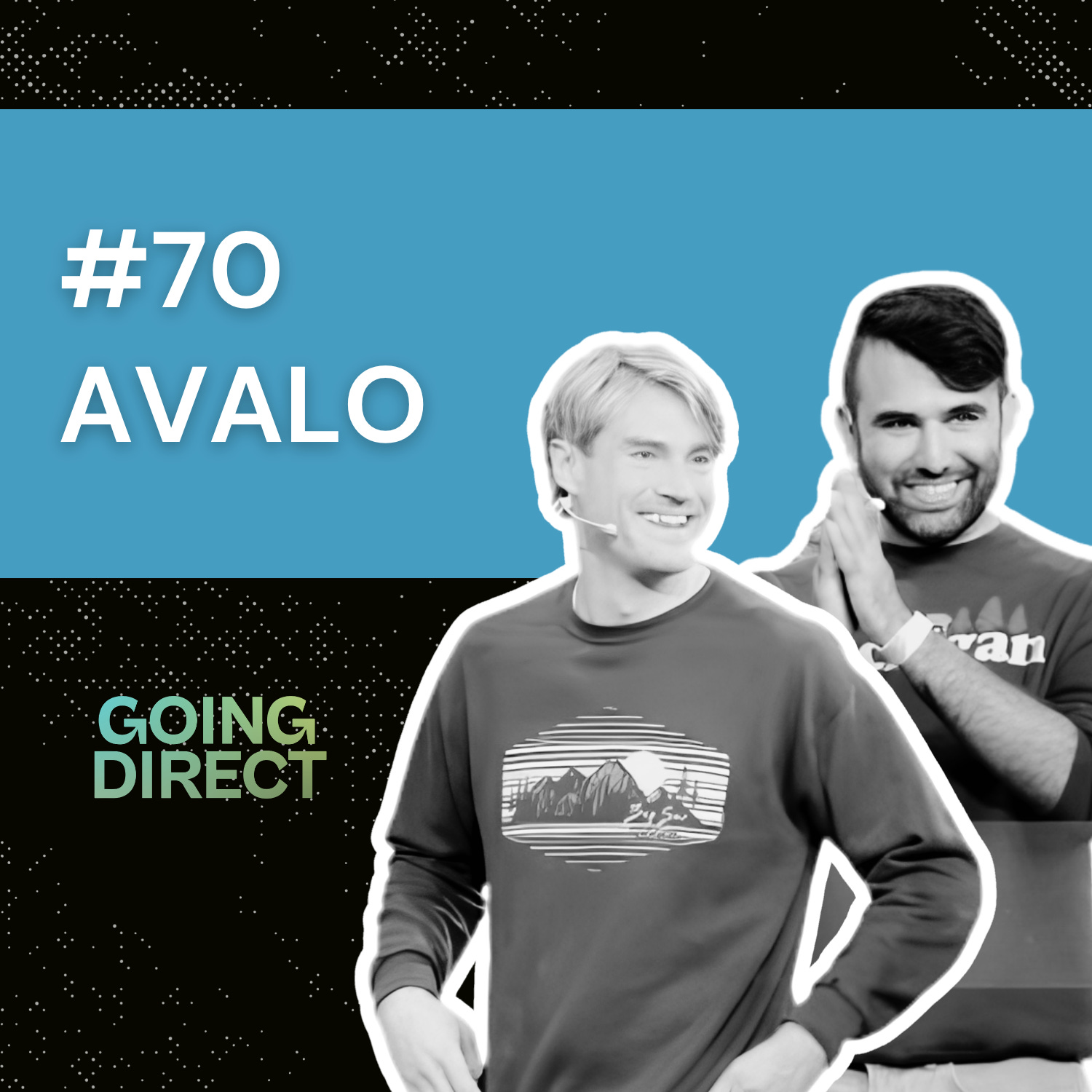
#70 Avalo: Using AI To Build A New Deal For American Farmers
Jul 701:09:44Tap to summarizeI sit down with Mariano Alvarez and Brendan Collins, co-founders of Avalo, to talk about how they are using their plant breeding technology to rebuild the US cotton supply chain from the seed up.We get into how they’re able to sell seeds to farmers at half the market price, why they contract with them to buy the cotton back before a single seed goes into the ground, and the long-term goal of bringing smaller farms back to America.Enjoy.Recording date: June 11, 2026Chapters00:00 Introduction05:09 What Plant Breeding Actually Is06:50 Current Cotton Supply Chain10:31 Avalo’s Rapid Evolution Process13:41 Texas Cotton Farm Pilot18:07 How Avalo Is Using AI23:06 Model & Open Source Used To Build Avalo24:27 Avalo's Founding Story28:29 Creating A New Cotton Supply Chain31:23 Agricultural Industry Challenges38:06 Why Start With Cotton41:38 Avalo’s Initial Results43:21 America's Biggest Little Cotton Patch46:49 Farmers’ Economics With Avalo50:46 Going Direct WIth Clothing Brands58:00 How To Make Avalo's Vision Become Reality01:01:25 Rapid FireFollow Jordan on X* https://x.com/jrwolfeConnect with Avalo* Website: https://www.avalo.ai/* Mariano Alvarez: m.alvarez@avalo.ai* Brendan Collins: b.collins@avalo.aiRemember to go direct!JordanP.S. Be an ownerP.P.S Build with love This is a public episode. If you would like to discuss this with other subscribers or get access to bonus episodes, visit goingdirect.substack.com
Transcribe →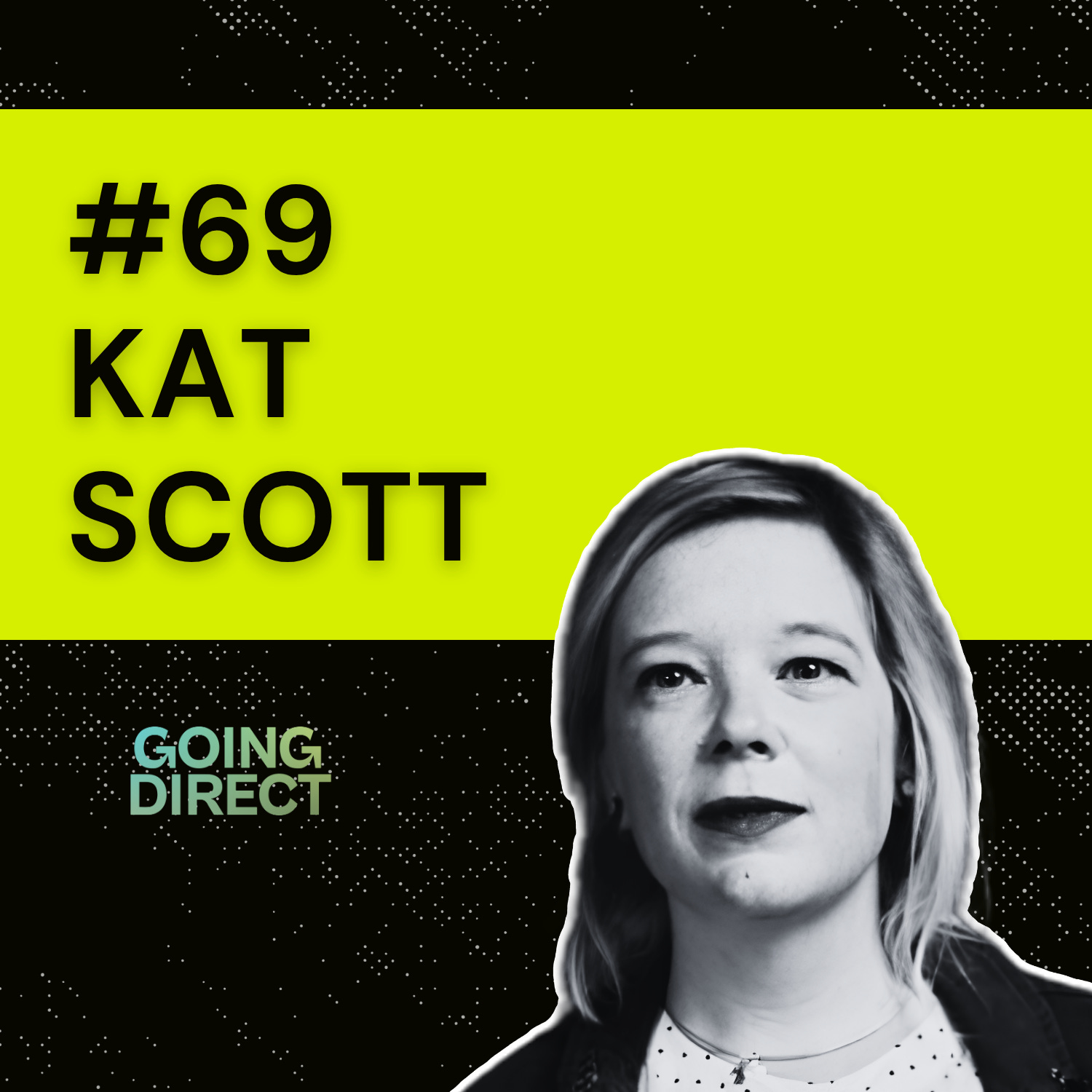
#69 Kat Scott: First They Laugh, Then They Fight, Then You Win, Open-Source Robotics
Jun 3001:05:17Tap to summarizeI sat down with Kat Scott, Developer Relations Engineer at Intrinsic AI (a Google company), who’s spent her entire 20+ year career in robotics. Kat is the developer advocate for the Robot Operating System (ROS), the open-source, “Linux for robots” that’s quietly been downloaded nearly a billion times. We get into why she believes open source has already won in robotics, the game theory behind why that happened, and why we can’t bring production back home until we bring back the boring stuff at the base of the pyramid.Enjoy.Recording date: June 10, 2026Chapters00:00 Introduction03:18 Rats And Plants07:30 ROS: The Robotics Operating System14:32 Intrinsic’s Role In Robotics16:17 Running The ROS Developer Community18:13 Open vs Closed-Source In Robotics21:13 Breakdown Of Robotics Stack24:39 Open Source And Incentive Structures28:13 State Of The Robotics Industry In 202632:26 Reindustrialization In The U.S.44:00 Distribution And System Integrators49:06 Robotics-As-A-Service54:07 Building Useful Robots59:11 Rapid Fire01:02:17 Open Source Calls CheckmateConnect with Kat Scott:* ROS: https://www.ros.org/* LinkedIn: https://www.linkedin.com/in/katherineascott/* GitHub: https://github.com/kscottz* X: https://x.com/kscottz?lang=esRemember to go direct!JordanP.S. Build with loveP.P.S Be an ownerThanks for reading Going Direct! This post is public so feel free to share it. This is a public episode. If you would like to discuss this with other subscribers or get access to bonus episodes, visit goingdirect.substack.com
Transcribe →
#68 Fabien Cros: Decentralized AI Is Winning Inside the Enterprise
Jun 2401:06:07Tap to summarizeI sit down with Fabien Cros, who runs the AI practice at Ducker Carlisle, to talk about how he is seeing decentralized AI models inside organizations work much better than a top-down, centralized approach. He has found the key is giving employees a platform to build their own agents, letting the best use cases bubble up, and using a central engineering team for creating resiliency and managing risk.We get into why companies keep confusing researchers with engineers, why cheap deterministic code often beats an expensive frontier-model call, and why 200 people experimenting daily will always out-build 5 experts.Enjoy.Recording date: June 9, 2026Chapters00:00 Introduction04:44 Who Is Ducker Carlisle?06:13 What Is Decentralized AI?09:58 Example Of Centralized vs Decentralized AI14:46 How The Model Works Across Multiple Clients17:18 The AI Talent Gap24:07 Infuse With AI or Start From Scratch?28:30 How Ducker Carlisle Works With Clients32:31 Hiring Interns to Build AI Systems Doesn’t Work38:58 Training Employees To Build With AI43:50 Fabien's Background45:54 Future Of Consulting49:31 Choosing The Best LLMs54:19 US vs European Market57:57 Decentralization Is Up To Us01:01:31 How Do You Incentivize Internal Builders?01:03:21 Rapid FireConnect with Jordan:* Follow Jordan on X: https://x.com/jrwolfeConnect with Fabien Cros:* Ducker Carlisle: https://www.duckercarlisle.com/* LinkedIn: https://www.linkedin.com/in/fabien-cros/Remember to go direct!JordanP.S. Build with loveP.P.S Be an owner This is a public episode. If you would like to discuss this with other subscribers or get access to bonus episodes, visit goingdirect.substack.com
Transcribe →
#67 Roya Amini-Naieni: Building the Self-Driving Biology Lab
Jun 1701:00:59Tap to summarizeI sit down with Roya Amini-Naieni, co-founder and CEO of Trilo Bio, to talk about why 77% of biologists fail to reproduce their own experiments — and why affordable lab automation is the unlock for everything we can build with biology. The Trilo team is fixing this by building modular robots, software, and tooling from the ground up. We get into the rise of self-driving biology labs and why automation has to be decentralized if we want to build anything with biology.Enjoy.Recording date: June 6, 2026Chapters00:00 Introduction03:38 What Biologists Actually Do05:04 What is Synthetic Biology?06:06 Understanding Bio-manufacturing09:53 Challenges In Biology Research16:56 Pharma And Automation In Biology24:11 Future Of Software in Biology30:50 AI And, "Self-Driving" Biology Labs36:27 Current Bottlenecks In Bio-manufacturing39:27 Trilo Bio’s Customers42:58 Public vs Private Biology Labs In The U.S.45:16 Decentralized Lab Automation52:30 Going Beyond R&D With Trilo56:48 Rapid FireFollow Jordan on X:* https://x.com/jrwolfeConnect with Roya Amini-Naieni:* Trilobio: https://www.trilo.bio/* Email: roya@trilo.bio* LinkedIn: https://www.linkedin.com/in/roya-amini-naieni/Remember to go direct!JordanP.S. be an ownerP.P.S build with love This is a public episode. If you would like to discuss this with other subscribers or get access to bonus episodes, visit goingdirect.substack.com
Transcribe →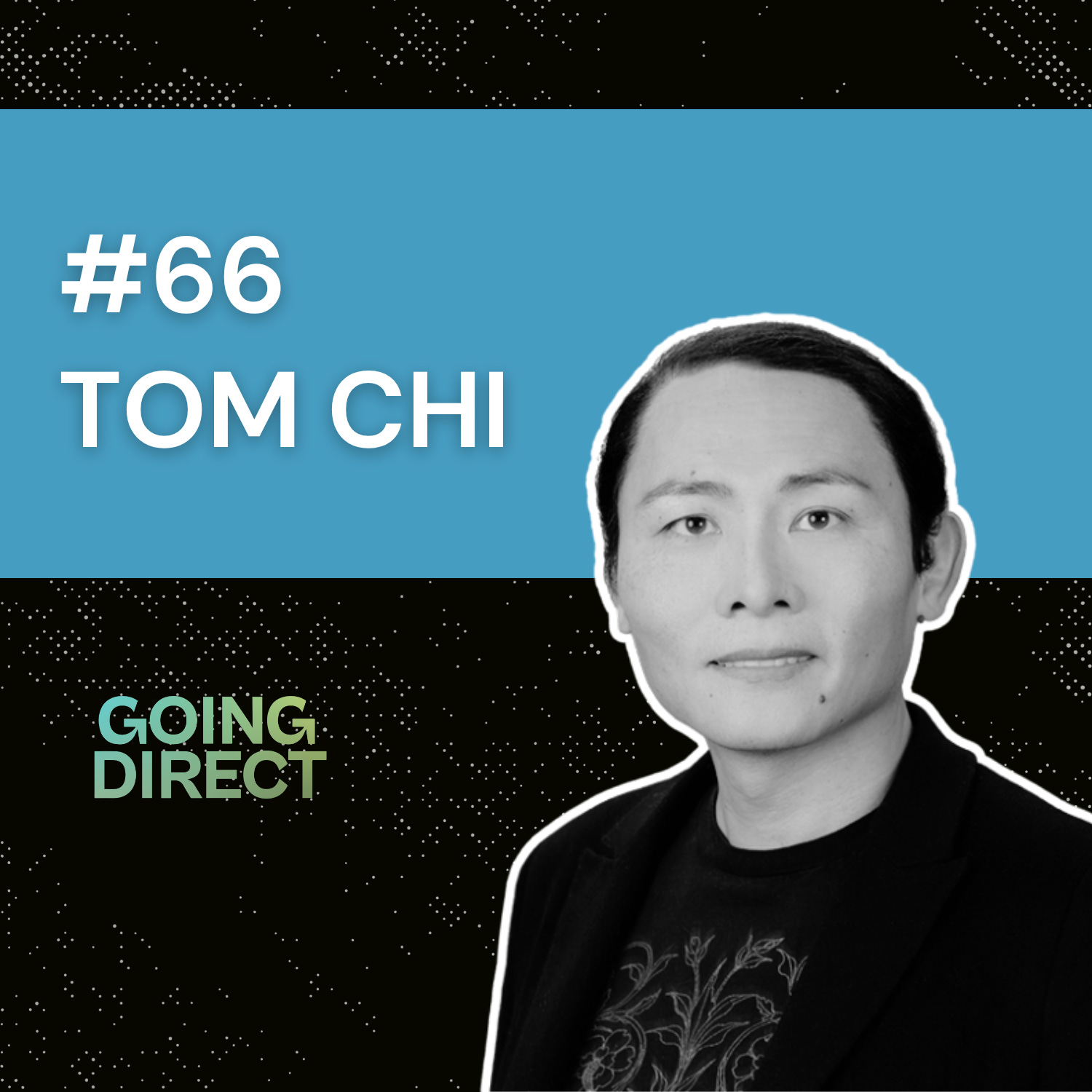
#66 Tom Chi: The Capitalist Case for Cleaning Up Industry
Jun 900:01:03Tap to summarizeI sit down with Tom Chi, founder and general partner of At One Ventures, a venture capital firm that invests in early-stage, deep tech companies focused on cleaning up industry. Tom is an engineer by training and was a founding member of Google X team, where he helped lead early work on self-driving cars and augmented reality.In this episode, we dig into why centralized production is so fragile, why climate solutions only scale when they deliver superior economics, how AI and robotics may decentralize production, and why the future depends on reconnecting wealth creation with real value creation.Enjoy.Recording date: May 27, 2026Chapters00:00 Introduction01:55 Concept Of Distributed Sophistication07:02 Fragility Of Centralized Production Systems13:19 Venture Capital’s Role In Deep Tech18:37 Deep Tech Unit Economics25:06 Deep Tech Investment Timelines31:03 Outdated Production Systems34:36 Investors Piling Into Industrial Tech41:38 Creating More Independent Business Ownership48:57 AI And Warfare52:55 Wealth Creation vs. Value Creation56:14 Story Behind AtOne Ventures01:00:31 Vertical Integration01:03:25 Middlemen’s Role In The Real Economy01:08:51 Tom’s Book: Climate Capital01:09:49 Rapid FireFollow Jordan on X:* https://x.com/jrwolfeConnect with Tom Chi:* At One Ventures: https://www.atoneventures.com/* LinkedIn: https://www.linkedin.com/in/thegoodtomchi/* Book - Climate Capital: https://www.atoneventures.com/insights/our-climate-playbook-is-broken--and-entrepreneurs-are-the-only-ones-who-can-fix-it* Buy The Book Here: https://www.amazon.com/Climate-Capital-Investing-Regenerative-Future/dp/1394351240Remember to go direct!JordanP.S. Build with love This is a public episode. If you would like to discuss this with other subscribers or get access to bonus episodes, visit goingdirect.substack.com
Transcribe →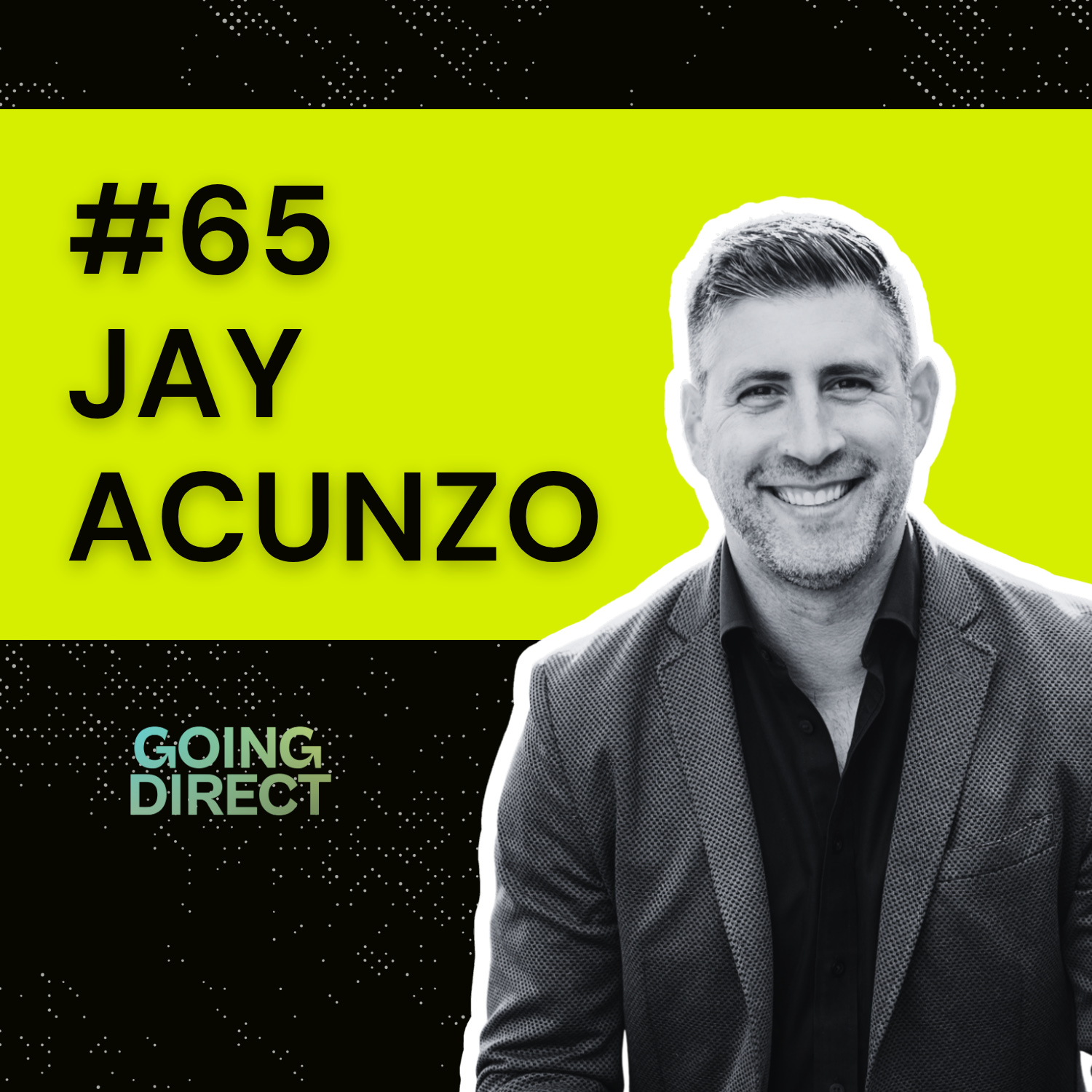
#65 Jay Acunzo: Storytelling & Becoming Irreplaceable in the Age of AI
May 2601:04:15Tap to summarizeI sat down with Jay Acunzo, author, speaker, and storytelling consultant, to discuss how to matter more and make people care in a world drowning in mediocre content.Jay shares his core philosophy of, “resonance over reach,” storytelling in the age of AI, how to escape the commodity trap, and how to become irreplaceable by developing a real point of view.This was one of my favorite episodes to date. There is a ton of invaluable information here.Enjoy.Recording date: May 7, 2026Chapters0:00 Introduction03:46 Jay’s Background08:03 The Broken Script Of Tech And Business11:20 Understanding Storytelling17:11 4-Step Framework To Make People Care20:36 Why Humans Are Drawn To Stories24:01 Balancing Data And Humanity28:05 Impact Of AI On Content Creation: Resonance Over Reach41:30 Why LinkedIn is Underrated (Despite Being Hated)45:08 "Sprezzatura": Making The Difficult Look Effortless48:16 Outside-In VS. Inside-Out Communication51:26 Becoming Irreplaceable: The Emotional Connection58:00 Escaping The Extractive Attention Economy01:02:07 Rapid FireFollow Jordan on X* https://x.com/jrwolfeConnect with Jay Acunzo* Website: https://jayacunzo.com/* LinkedIn: https://www.linkedin.com/in/jayacunzo/* Instagram: https://www.instagram.com/jacunzo/* Podcast Why They Resonate: https://open.spotify.com/show/2xMty2O4GBcG8F7ySudeXlRemember to go direct!JordanP.S. Build with love This is a public episode. If you would like to discuss this with other subscribers or get access to bonus episodes, visit goingdirect.substack.com
Transcribe →
#64 Simon Owens: Business Of Content, $100 Billion Middlemen, & Future of Media
May 1900:58:53Tap to summarizeI sit down with Simon Owens, an independent media industry journalist and specialist on the business of content.Simon breaks down the “Ozempic Effect” in AI-Generated content, why the “creator economy” is just the economy, middlemen in online advertising, and the future of monetizing content. If you want to understand how to build a media business today, you will enjoy this episode.Enjoy.Recording date: May 6th 2026Chapters00:00 Introduction03:43 The Business Of Content08:38 Misunderstanding The Creator Economy10:54 Depth Over Scale13:54 Changing Economics Of Media16:51 The Ozempic Effect With AI-Generated Content21:13 Scarcity In An AI-Driven World24:16 Simon's System for Writing 5 Days a Week27:56 Middleman Economy in Advertising37:28 Challenges With Gatekeepers In The Ad Model46:33 Creators As Infrastructure50:44 Legacy Media52:57 Rapid FireFollow Jordan on X:* https://x.com/jrwolfeConnect with Simon Owens:* Newsletter: https://simonowens.substack.com/* Website: https://www.simonowens.net/* LinkedIn: https://www.linkedin.com/in/simon-owens-77030514/* The Business of Content Podcast: https://podcasts.apple.com/us/podcast/the-business-of-content-with-simon-owens/id1339451218* YouTube Channel: https://www.youtube.com/user/nomissnewoRemember to go direct!JordanP.S. Build with love This is a public episode. If you would like to discuss this with other subscribers or get access to bonus episodes, visit goingdirect.substack.com
Transcribe →