
Podcast
Gospel Tech with Nathan Sutherland
Hosted by Purposely · EN
Gospel Tech is a resource for parents who are feeling outpaced and overwhelmed as they raise children in a tech world.
Our goal: Equip parents with the tools, resources, and confidence they need to raise kids who love God and use tech.
Gospel Tech’s mission is to equip families to love God and use tech. We want to empower parents to:
Introduction to Gospel Tech
Three years ago I (Nathan) started Gospel Tech as a ministry to help connect the Gospel to the daily tech lives of families in practical ways. As a middle school teacher I saw a need for intentional, Gospel-focused conversations about tech. Tech was creating more distraction than inspiration in the classroom, and I saw the need for more than just new habits—there was a desperate need for new hearts.
Gospel Tech bridges the gap between scary tech conversations and the hope of the Gospel. With engaging stories and practical applications I bring Gospel-centered tech solutions families can apply in everyday life.
Gospel Tech Resources Beyond The Podcast
At the end of the day our children aren't problems to fix, they're people to love. We need to point them to the purpose and hope available in Christ, in the work he's already done to make them new and to call them on to good works, and then use tech from that hope. This is why I love to say that in Christ we use tech on purpose, not for purpose.
That's the goal of Gospel Tech. Thanks for letting me be on this journey of parenting with you.
-Nathan Sutherland
Our goal: Equip parents with the tools, resources, and confidence they need to raise kids who love God and use tech.
Gospel Tech’s mission is to equip families to love God and use tech. We want to empower parents to:
- Talk about healthy tech
- Communicate the Gospel
- Connect the hope of the Gospel to their everyday tech lives
Introduction to Gospel Tech
Three years ago I (Nathan) started Gospel Tech as a ministry to help connect the Gospel to the daily tech lives of families in practical ways. As a middle school teacher I saw a need for intentional, Gospel-focused conversations about tech. Tech was creating more distraction than inspiration in the classroom, and I saw the need for more than just new habits—there was a desperate need for new hearts.
Gospel Tech bridges the gap between scary tech conversations and the hope of the Gospel. With engaging stories and practical applications I bring Gospel-centered tech solutions families can apply in everyday life.
Gospel Tech Resources Beyond The Podcast
- The Parent Tech Workshops: A two-part series addressing:
- How should we handle Tech’s Big 3 (smartphones, gaming, pornography)?
- How do we make tech safe at home? (two types of tech, tech health, and building tech trust)
- Youth Talks:
- The Tech Talk: Use the best tech on purpose, not for purpose.
- The Hope Talk: A conversation about our goals, purpose, and how making a mistake doesn’t make us a mistake.
- The Family Tech Framework: A two-hour workshop where families leave with the words to say and the plan in place for healthy tech at home and in daily life.
- Part 1: Talk It Out: Parents learn key points of discussing healthful tech.
- Part 2: Walk It Out: Families work together to create a Family Tech Framework customized to their needs, goals, and season of life.
At the end of the day our children aren't problems to fix, they're people to love. We need to point them to the purpose and hope available in Christ, in the work he's already done to make them new and to call them on to good works, and then use tech from that hope. This is why I love to say that in Christ we use tech on purpose, not for purpose.
That's the goal of Gospel Tech. Thanks for letting me be on this journey of parenting with you.
-Nathan Sutherland
33episodes
Episodes
Newest firstAll episodes
A Gospel Standard for Our Tech
6d ago00:27:31Tap to summarizeAnd now, dear brothers and sisters, one final thing. Fix your thoughts on what is true, and honorable, and right, and pure, and lovely, and admirable. Think about things that are excellent and worthy of praise. Philippians 4:8Philippians 4:8 is a gift to everyone living in this tech world. We can quickly reflect on the what, why, and where of tech quickly in order to use tech intentionally.Show Notes: https://bit.ly/3TwksNy
Transcribe →
How Do We Raise Up Our Kids?
2w ago00:25:47Tap to summarizeGod has given us our children as a mission field, and He's proclaimed His Good News that we aren't in charge of saving them; just loving them. It's not easy, but it is freeing, and it's exactly what our children need.Show Notes: https://bit.ly/4px0rSK
Transcribe →
The Gospel in a Tech World
3w ago00:27:41Tap to summarizeParenting is hard, and parenting in a tech world can be downright overwhelming. The good news is that we have a good God who calls us to faithfulness, not perfection. So today, rather than focusing on ourselves as parents, we're going to reflect on who God is, who we are, and what it means to be a child of God.Show Notes: https://bit.ly/4fxV1ma
Transcribe →
Talking About P*rn with Our Daughters, an Interview with Kristen Jenson - Part 2
4w ago00:22:55Tap to summarizeFor part two of our conversation as we dive back into the unexpected places our children may run into unsafe pictures, and how we can intentionally help them both before they find such content, and especially after they've come across it.Show Notes: https://bit.ly/4ffawQF
Transcribe →
Talking About P*rn with Our Daughters, an Interview with Kristen Jenson - Part 1
Jul 700:22:08Tap to summarizeToday we get to talk with Kristen Jenson, author of Good Pictures, Bad Pictures, a resource that has been an encouragement to Anna and I as we raise our humans in a tech world. It's also one of the resources we reference most when giving workshops for parents on how to engage this tough conversation. Today we discuss Kristen's new book: Good Pictures, Bad Pictures, A Guide for Girls.Show Notes: https://bit.ly/4ffzjTR
Transcribe →
Our Kids Need Healthy Boundaries (Lessons from Teaching, Part 3)
Jun 3000:27:48Tap to summarizeOur opportunity as parents is to set loving boundaries. This will involve saying "yes" whenever we can and "no" as often as we need to. When it comes to tech, it is unloving to give our children gifts we know will harm them or those around them. Instead we give them gifts that will produce good fruit, that are safe by design and, in the case they're not inherently safe, they are appropriate for this child in this season.Creating loving boundaries models the love God has for us, and the love He showed even to Adam and Eve (Genesis 3:22). We can extend this same mercy and love to our kids, and it starts by having healthy boundaries around our tech.Show Notes: https://bit.ly/4oQiaUQ
Transcribe →
Our Kids Love Real Life Adventures (Lessons from Teaching, Part 2)
Jun 2300:26:43Tap to summarizeOur kids are capable of having fun at the pace of real life. It's hardwired into them. Teaching sixth grade this year gave me a front row seat for just how much today's youth love having social, interactive, creative fun at the pace of real life.Show Notes: https://bit.ly/4xFUpmw
Transcribe →
Our Students Are More Capable Than They Think
Jun 1600:24:59Tap to summarizeThe last six months of consistent classroom teaching has reminded me of an important lesson: Students are more capable than they think. In reading, writing, and math, many times what our students need aren't intensive lessons covering specific steps for success, but rather repeated opportunities to achieve, to practice doing important skills even if they do it poorly early on, and a chance to see their own growth over time.It is a beautiful thing to see a student learn a new skill, and it is a satisfying moment for everyone when that student realizes he or she is capable of learning beyond what they expected for themselves.Show Notes: https://bit.ly/4aRIEzw
Transcribe →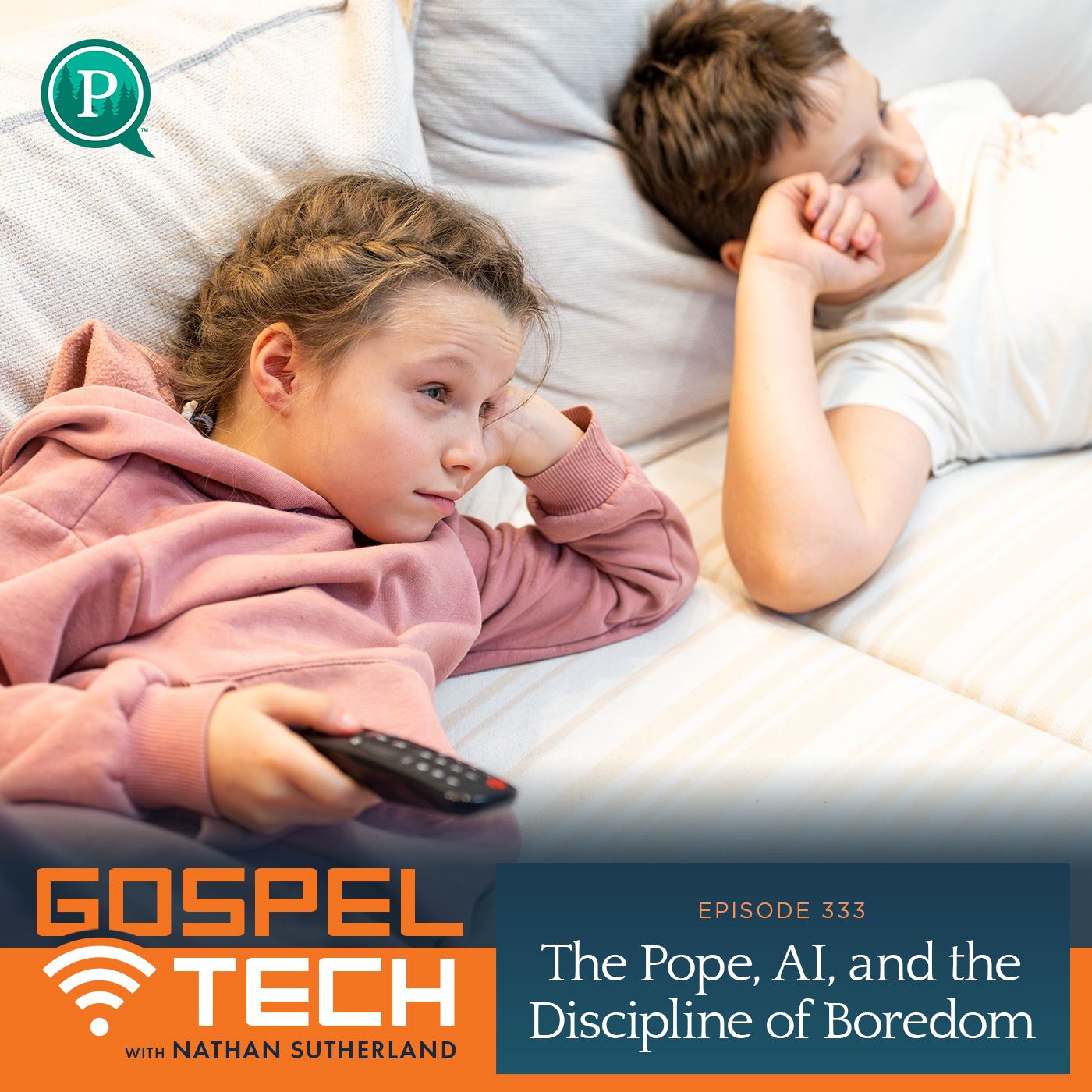
The Pope, AI, and the Discipline of Boredom
Jun 900:19:09Tap to summarizeMany of us feel the tension between wanting to use technology well and wondering if it’s quietly shaping us in ways we didn’t choose. This episode digs into that tension, from Pope Francis’s vision for Christian humanism in the age of AI to the surprisingly spiritual discipline of embracing boredom, and why both matter for families trying to follow Jesus in a noisy world. If you’ve ever caught yourself doom‑scrolling, multitasking your quiet time, or avoiding stillness, this conversation will feel uncomfortably familiar in the best way.Show Notes: https://bit.ly/4vF2iH3
Transcribe →
Stop the Summer Slip
Jun 200:27:56Tap to summarizeStudents risk losing up to 40% of their learning over summer break (Atteberry and McEachin). In 2020 two researched looked at 200 million test scores from 18 million students across all 50 states over an 8 year period (2008-2016).The take away: The Summer Slip is real, and it can be neutralized with just 15 minutes of reading and math each day. Parents, we don't have to run a boot camp, but we have the opportunity to keep learning engagement high. Let's make school as fun and accessible as possible for our children. Let's do it 15 minutes a day this summer and stop the Summer Slip.Show Notes: https://bit.ly/49wWoiF
Transcribe →