Podcast
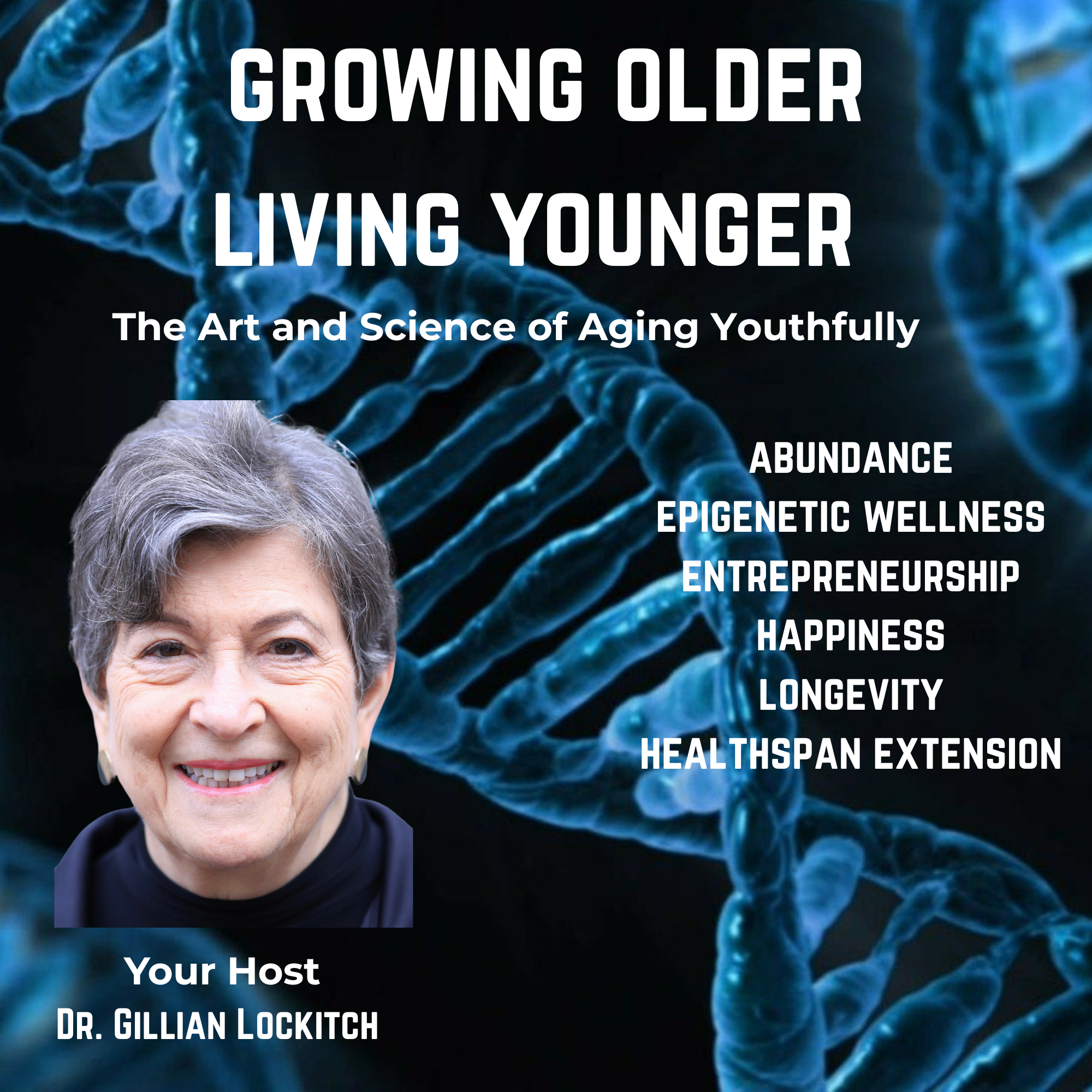
Growing Older Living Younger: About longevity, wellness, healthspan,
Hosted by Dr. Gillian Lockitch · EN
Welcome to Growing Older, Living Younger, the podcast where you will discover ways to boost your metabolism, enhance your mental and physical energy, and ward off disorders we wrongly think are inevitable as we age. Hosted by Dr. Gillian Lockitch, former specialist in Medical Biochemistry, professor, researcher and international speaker, the show airs weekly every Monday. Each episode is a 30 - 45 minutes, exploring ways in which genetic and epigenetic (gene expression) science and medicine may intersect with ancient, non-western wellness practices to help you extend your health span to live younger. The show features practitioners in mental and physical health, fitness, nutrition, personal care, community, networking and entrepreneurship, to help you create your personal roadmap to aging youthfully.
53episodes
Episodes
Newest firstAll episodes

279 The Aging Immune System: Vaccines, Healthy Longevity and What We Can Learn from Covid with Michael T. Myers JR MD
5d ago00:59:11Tap to summarizeHow does our immune system change as we age, and what role can vaccines play in supporting healthy longevity? In this informative episode of Growing Older Living Younger, Dr. Gillian Lockitch welcomes physician, healthcare executive, and medical writer Dr. Michael Myers for a thoughtful, evidence-based discussion about immunosenescence—the age-related decline of immune function—and its implications for healthy aging. Together they explore how vaccines work, why vaccine recommendations evolve throughout life, and the importance of understanding both the science and the uncertainties surrounding public health recommendations. Listeners will gain practical insights into immune health, healthspan optimization, brain health and aging, and informed healthcare decision-making. Dr. Michael Myers is a physician, healthcare executive, medical writer, and educator with more than 35 years of experience in clinical medicine, healthcare leadership, and public health. He trained at Johns Hopkins University and Harvard Medical School before pursuing a career in primary care medicine and physician leadership.He most recently served as Chief of Primary Care and Chief of Pediatrics for one of New Jersey's largest medical group practices. His work focuses on preventive medicine, vaccine education, public health communication, and helping patients understand complex medical science. He is the author of The Vaccine Bible: A Comprehensive, Commonsense Guide to What Keeps Us Safe from the Flu, Hepatitis Measles and More. In the Guide he explains how vaccines are developed, how they work, their safety, effectiveness, and the diseases they help prevent. Episode Timeline 00:00 – Welcome and why vaccines matter to healthy longevity 04:15 – Dr. Michael Myers' medical career and what inspired The Vaccine Bible 09:45 – Understanding the immune system: innate immunity, adaptive immunity, and immune memory 17:45 – Immunosenescence: how the immune system changes with age 23:30 – Individualizing vaccine recommendations throughout adulthood 30:25 – Vaccines most relevant for older adults, including influenza, pneumococcal disease, RSV, COVID-19, and shingles 32:30 – Emerging research linking shingles vaccination with reduced dementia risk 34:00 – COVID-19, children, public health messaging, and lessons learned from the pandemic 42:55 – Vaccine confidence, public trust, and addressing misinformation 52:20 – Autism research, vaccine myths, and current scientific understanding 55:35 – Dr. Myers' key message on vaccines, prevention, and healthy aging Connect with Dr. Michael Myers The Vaccine Bible—Amazon The Vaccine Bible—Bookshop.org The Vaccine Bible—Audiobook Dr. Myers' Website Connect with your host, Dr, Gillian Lockitch email: askdrgill@gmail.com For a personalized one on one conversation about health aging strategies Website: www.askdrgill.com https://www.facebook.com/gillian.lockitch/ https://www.linkedin.com/in/gillianlockitch/
Transcribe →
278 The Muscle-Longevity Connection: Strength Training Supports Metabolism, Bones, and Healthy Longevity with Jeanne Phares
2w ago00:39:27Tap to summarizeWhat role does muscle strength play in healthy aging, longevity, and independence? In this episode, Dr. Gillian Lockitch speaks with Jeanne Phares about why maintaining and building muscle becomes increasingly important for women during and after menopause. Drawing on her personal experience as a leukemia survivor and decades of strength training, Jeanne explains the connections between muscle mass, metabolism, bone health, resilience, and recovery. Listeners will learn practical strategies for strength training, nutrition, and lifestyle habits that support vitality and healthspan at every age. Jeanne Phares is Founder of Sage Lifestyle Collective and creator of the Sage Strength Transformation Program. She is a Certified Health & Wellness Coach, Strength Trainer, and author specializing in women's health after 50. Prior to entering the health field, she enjoyed a successful career as a Certified Public Accountant and executive mentor. Her work focuses on strength training, nutrition, menopause education, and healthy aging for women. She helps women build muscle, improve metabolic health, and maintain independence throughout midlife and beyond. A leukemia survivor, she credits decades of strength training with helping her withstand intensive treatment and recovery. Episode Timeline 00:00 – Welcome and introduction 03:00 – Why muscle strength predicts healthy aging and longevity 04:36 – Jeanne's journey from CPA to health and wellness coach 05:30 – Leukemia diagnosis and the role of physical resilience in recovery 09:30 – Stem cell transplant and rebuilding strength after illness 13:15 – Turning health challenges into opportunities for growth 15:46 – Common misconceptions about lifting weights after 50 18:35 – Why walking and yoga alone may not be enough 20:00 – Muscle health, bone strength, and menopause 23:53 – Strength training as the foundation of healthy aging 25:15 – Nutrition mistakes women commonly make after menopause 28:49 – Hydration, electrolytes, and healthy aging 30:23 – Whole foods nutrition and listening to your body 34:44 – The one simple change that supports lifelong health 36:23 – Final thoughts and key takeaways Connect with Jeanne Phares Sage Lifestyle Collective www.sagelifestylepress.com Free Gifts for Listeners: Each guest will receive all three: 1. Free Chapter Download: "Your Body Changed the Rules. Here's the New Playbook" from Eat for Strength for Women Over 50 2.Free Starter Guide: The Sage Strength Starter Guide 3.Lottery Entry: A chance to win one of 10 discount codes for the 8-Week Sage Strength Transformation Program or one of 10 free audiobooks of Eat for Strength for Women Over 50 Books: The Beginner's Guide to Strength Training for Women Over 50 Eat for Strength for Women Over 50 Sage Strength Transformation Program : Free strength training and healthy aging resources Connect with Your Host: Dr. Gillian Lockitch Email: Askdrgill@gmail.com website: https://askdrgill.com
Transcribe →
FB 109 Anne Mullens: Fueling with Fat: Demystifying the Ketogenic Lifestyle
2w ago00:44:49Tap to summarizeTHIS FLASHBACK FRIDAY EPISODE OF GROWING OLDER LIVING YOUNGER focuses on the impact of low carbohydrate and ketogenic nutrition on health and aging well. Today's Featured Expert is Anne Mullens, an award winning Canadian journalist and author specializing in Health and Science Writing, At a time when the twin hazards of diabetes and obesity are so prevalent in our society that we say that there is a diabesity epidemic, we are bombarded with discordant messages about what, when, and how to eat, to stay healthy and age gracefully. A goal of this podcast is to cut through the noise and provide you with evidence-based insights, thought-provoking discussions, and practical tips to empower you to change your aging trajectory and stay active and vibrant. In this episode we dive deep into the ketogenic diet, and explore the science behind ketosis, its potential benefits for weight management, brain health, and overall longevity. We'll also take a critical look at the narratives perpetuated by food corporations, examining their influence on our dietary choices and exploring how these messages shape our perceptions of what is really nourishing and beneficial for our bodies. Episode Timeline 0:11 Introduction to this episode 4.21 How Anne began in health journalism. 9:42 How low carb and keto helped her recover from pre diabetes.15:09 The impact of the corporate media narratives on healthy aging.22:21 Fasting and monitoring blood glucose26:53 What we can learn from animal genetics33:57 Nutrition is the foundation of our health41:34 Sustainable change comes from small incremental habits. Speaker Biography:Anne Mullens has a Bachelor of Science degree from the University of Guelph, and a Bachelor of Journalism degree from Carleton University. As a medical reporter at the Vancouver Sun in the 1980s and early 1990s, she has written for numerous Canadian and international newspapers and magazines, and authored two critically acclaimed books, Missed Conceptions: Overcoming Infertility and Timely Death: Considering our Last Rights, which won her the Edna Stabler award for creative nonfiction. Anne has been a health communications consultant to a wide variety of clients, and won more than a dozen national awards for her book. After reversing her own pre-diabetes through therapeutic carbohydrate restriction, she has written extensively on the role of personalized therapeutic nutrition to address chronic conditions. She has received her professional certification in low carb nutrition. After several years with Diet Doctor, she now is Director of Communications for the Institute for Personalized Therapeutic Nutrition To learn more about Anne Mullens' writing www.annemullens.com Twitter: @annemullens https://www.facebook.com/annemullensjournalist/ IPTN twitter: @IPTN_Canada For more information on Growing Older Living Younger Email Dr. Gillian Lockitch at askdrgill@gmail.com Join the Growing Older Living Younger Community and if you have not already done so, please follow, rate and review the show.
Transcribe →
277 Chronic Pain, Mobility and Healthy Aging: The Muscle-Longevity Connection with Stacey Roberts
3w ago00:35:30Tap to summarizeIs chronic pain really an inevitable part of aging—or could it be a warning sign that deeper imbalances are affecting your healthspan, mobility, and quality of life? In this episode of Growing Older Living Younger, Dr. Gillian Lockitch speaks with physical therapist, registered nurse, educator, and functional wellness expert,Stacey Roberts, about the root causes of chronic pain and why conventional treatments often focus on symptom relief instead of true healing. Stacey explains how chronic inflammation, food sensitivities, hormone imbalance, gut health issues, biomechanics, and lifestyle factors can all contribute to persistent pain and reduced function. Listeners will learn how a personalized, root-cause approach may help reduce pain naturally, restore mobility, improve resilience, and support healthy aging and longevity. Stacey Roberts is the Founder of New You Health and Wellness and creator of The Pain-Free Formula. She is a licensed Physical Therapist, Registered Nurse, educator, and functional wellness practitioner with more than 30 years of clinical experience. Her work spans orthopaedics, sports medicine, chronic pain, pelvic health, women's health, and functional wellness. Stacey specializes in uncovering the root causes of chronic pain through an integrative approach that includes biomechanics, nutrition, hormone balance, gut health, and lifestyle medicine. Her current mission is to help people reduce inflammation, improve mobility, and reclaim quality of life without relying solely on medications, injections, or surgery. She is also the host of The Pain-Free Formula Podcast and the author of multiple books on women's health and hormones. Episode Timeline 00:00 – Welcome and introduction 03:54 – Stacey's journey from physical therapy to functional medicine 05:00 – Discovering the connection between gluten sensitivity and chronic pain 10:27 – Why pain is a protective signal rather than the enemy 15:07 – Muscle cramps, nutrient deficiencies, hormones, and gut health 17:52 – Optimizing versus personalizing nutrition for pain relief 18:44 – Food sensitivity testing and unexpected inflammatory triggers 23:03 – The story behind The Pain-Free Formula 26:11 – Hidden risks of long-term NSAID and pain medication use 27:10 – The gut-joint connection and holistic pain management 30:46 – First steps for people who feel they have tried everything 32:57 – Key takeaways for reclaiming health, mobility, and independence Connect with Stacey Roberts New You Health and Wellness : https://www.linkedin.com/in/stacey-roberts-pt-rn-mba-msn-6a26997 https://www.youtube.com/@newyouhealthandwellness2178 The Pain-Free Formula (Book) The Pain-Free Formula Podcast Connect with Your Host, Dr. Gillian Lockitch Email: Askdrgill@gmail.com Email me for complimentary iintroduction to Growing Older Living Younger website: https://www.askdrgill.com/
Transcribe →Flashback Friday 005 Susan Bock Smith and Judy Bjornson: Becoming Fall-Proof
3w ago00:34:47Tap to summarize'You live as long as you dance'( Rudolph Nureyev) 'You got to just move. It doesn't matter how efficient your movements are, what matters is that you are moving.' (Susan Bock Smith) In this early Flashback Friday episode from Growing Older Living Younger 05, Susan Bock Smith and Judy Bjornson indicate that though balance, strength and flexibility may decline as we grow older, if you're willing to learn and adjust, you can protect your body from this risk of falling that increases with advancing age. Adversities may limit our abilities but if we're willing to learn and adjust we can continue to do what we love. So they suggest you constantly challenge yourself, and never tell yourself that you're too old to do anything Susan earned a Bachelor of Education with a Major in Physical Education from McGill University and taught Elementary Physical Education prior to raising her family. She is FallProof certified (California State Fullerton) as a Fall Prevention Balance & Mobility Specialist. Through Surefeet, founded to deliver Seniors' Balance & Mobility Training, she has instructed over 4300 Balance & Mobility classes to over 3900 registrants. She is a PWR!Moves (Parkinsons' Disease) Certified Instructor and a certified Urban Poling (Nordic Walking) Instructor. Susan combines cognitive activities with physical exercise as a staple of the Surefeet program. Her mission is to reduce the fall risk of Seniors and enhance well-being, quality of life and independent living ability Judy received her FallProof Balance & Mobility Specialist certification from California State University in 2010 and has been a Surefeet co-owner, trainer and educator since, She is a Certified PWR!Moves Instructor and an Aquatic Rehabilitation Specialist. Judy is a Certified Master Trainer for WaterART Fitness International, teachesl aquatic certifications and one of two WaterART specialists in Central/Western Canada qualified to administer WaterART Certification examinations. Judy was selected as Program Coordinator to head the Brain Gain program of the Vancouver Brain Injury Association. Judy strives to positively affect the lives of all those she encounters. Surefeet Website: http://www.surefeet.ca/ | https://www.facebook.com/pg/surefeet/ LinkedIn: https://www.linkedin.com/in/susan-bock-smith-51268737/ Reach out to Judy at: LinkedIn: https://www.linkedin.com/in/judy-bjornson-a877992a/ Contact Dr. Gillian Lockitch to learn how you can decelerate your aging trajectory, stay vibrant and vigorous, or start your own online business in wellness and anti-aging: Email: askdrgill@gmail.com to schedule a complimentary Living Younger Call Join the Growing Older Living Younger Community
Transcribe →
276 Why You Never Get Over Grief -and Why That's Good with Thomas Attig
4w ago00:36:29Tap to summarizeGrief is not a problem to be solved or something we simply "get over." In this profound conversation, Dr. Gillian Lockitch speaks with philosopher and grief expert Thomas Attig about mourning as a lifelong process of relearning how to live in a world forever changed by loss. Drawing on decades of scholarship and personal insight, Thomas explains how grief can deepen our love, strengthen resilience, and help us find wisdom and meaning in life's most difficult transitions. This episode offers compassionate guidance for anyone grieving a loved one or supporting someone through loss. Thomas Attig is an internationally recognized philosopher, educator, and authority on grief, death, and bereavement. He earned his BA and PhD in philosophy from Northwestern University and Washington University in St. Louis. During his career at Bowling Green State University, he helped establish the world's first PhD program in applied philosophy. He is a Fellow of the International Work Group on Death, Dying, and Bereavement. Dr. Attig is the author of several influential books, including How We Grieve and Seeking Wisdom in Death's Shadows. Episode Timeline 00:00 – Welcome and introduction 00:30 – Why grief is central to healthy aging and emotional well-being 04:06 – Tom Attig's early experiences with death and family loss 08:45 – Teaching the first university course on death and dying 11:30 – Grief as relearning how to live in the world 13:11 – Dr. Gillian shares the loss of her husband 15:44 – Grief reaction versus grief response 18:00 – Learning to love in separation 22:00 – Moving from sorrow to gratitude 24:52 – The purpose and structure of Seeking Wisdom in Death's Shadows 27:00 – Problems versus mysteries in life and grief 31:42 – One essential truth for anyone who is grieving Connect with Thomas Attig PhD Book: Seeking Wisdom in Death's Shadows: Collected Writings on How We Grieve Publisher: Oxford University Press Website: Thomas Attig Author Page 30% Discount Code: AUFLY30 Dr. Lockitch Call to Action Subscribe to Growing Older Living Younger on your favorite podcast platform and leave a review to help others discover the show. Join the Growing Older Living Younger Community Connect with Dr. Gillian Lockitch at https://www.askdrgill.com/ or email: askdrgill@gmail.com Download Guide to Nature's Colorful Antioxidants 2026
Transcribe →
FB 026 Brian Morgan: Think Deeply, Speak Clearly, Bridge the Divide
4w ago00:30:58Tap to summarizeAlbert Einstein wrote 'We cannot solve our problems with the same thinking we used when we created them.' This Flashback Friday episode from Nov 2021 reminds us that too often we may listen but what do we actually hear? The intent of the Growing Older Living Younger podcast is to introduce new ways of thinking about the problems of how we age, to help our listeners discover their personal roadmaps to aging well. As this episode kicked off Season 2, we reflect that we have listened to many experts, but what did we actually hear them say? I talk with Brian Morgan. President of Think Deeply, Write Clearly about bridging the many divides that are polarizing our society, by creative thinking and communication. We discuss the rampant proclamations of unsubstantiated information through myriad digital platform and social media, and the replacement of informed and constructive debate by 'cancel culture'. As communicators how can we best share valuable information or ideas, knowing that our listeners will interpret our words in the context of their unique lived experience? As listeners how do we find the underlying context of the facts or opinions that are being put forward in discussion, to have a civilised discussion even though we may disagree? Listening to our expert guests, how can we best hear what they say, and put it into the context of our lifestyles to make decisions that are appropriate for ourselves. The act of thinking deeply and creatively, being curious and laying down new neural pathways and connections, is one way to help our minds stay active, and our brains age youthfully. To connect with Brian Morgan https://www.thinkdeeplywriteclearly.com/ https://www.linkedin.com/in/brianmorganthinkdeeplywriteclearly To learn how you can decelerate your aging trajectory, stay vibrant and vigorous, or become an entrepreneur in wellness and healthy aging: Contact Dr. Gillian LockitchEmail: askdrgill@gmail.com to Schedule a complimentary Living Younger Call check out the GOLY website at https://www.askdrgill.com
Transcribe →
275 Reverse Diabetes and Restore Vitality Through Functional Nutrition with Lori Balue
Jul 600:40:01Tap to summarizeWhat if fatigue, weight gain, brain fog, and declining strength after 50 are not inevitable signs of aging, but signals of underlying metabolic dysfunction that can be corrected? In episode 275, Dr. Gillian Lockitch speaks with metabolic restoration practitioner, Lori Balue, about how women can restore energy, reduce inflammation, preserve muscle, and regain metabolic resilience through personalized nutrition and functional testing. Lori shares her remarkable journey of losing 100 pounds, reversing prediabetes and chronic inflammation, and transforming her health in midlife. Listeners will learn how to identify hidden barriers to wellness and take practical steps toward aging with strength, confidence, and vitality. Lori Balue specializes in helping women over 50 overcome fatigue, weight gain, and metabolic dysfunction. She combines functional diagnostic testing with personalized nutrition, targeted supplementation, and lifestyle strategies. Her work focuses on blood sugar regulation, inflammation, hormones, gut health, and mineral balance to help women rebuild resilience, restore metabolism, and age with strength and confidence. Episode Timeline 00:00 – Welcome and Introduction Dr. Gillian introduces Lori Balue and the concept of metabolic restoration for women over 50. 05:07 – Lori's Personal Transformation Story Lori shares how years of obesity, asthma, depression, and prediabetes led her to discover low-carb nutrition and keto. 12:10 – Why Women Feel Different After 50 The role of declining estrogen, protein deficiency, adrenal stress, and mineral imbalances in metabolic dysfunction. 15:58 – What Is Metabolic Restoration? Why Lori focuses on root causes rather than quick-fix weight loss. 22:54 – Identifying Inflammatory Foods How wheat, dairy, and food sensitivities can contribute to chronic inflammation. 28:22 – Functional Diagnostic Testing Explained The GI-MAP stool test, DUTCH hormone test, and MRT food sensitivity test. 33:27 – The Most Important First Step Why increasing protein and improving protein digestion can be transformative. 35:14 – Animal vs. Plant Protein Which protein sources are most bioavailable and effective for healthy aging. 36:51 – Final Words of Encouragement Metabolic dysfunction is fixable, and lasting change is possible at any age. Connect with Lori Balue Website: https://agingadventurously.com Free Recipes and Resources: Available on Lori's website https://contact.loribalue.com/recipebook Connect with your host, Dr. Gillian Lockitch https://www.askdrgill.com/ email: askdrgill@gmail.com Join the Growing Older Living Younger Community
Transcribe →
FB 118 Dr. Douglas Scharre: Alzheimer's ? or Simply Aging ?
Jul 300:40:19Tap to summarizeTHIS FLASHBACK FRIDAY EPISODE OF GROWING OLDER LIVING YOUNGER focuses on the effect of aging on brain functions, affecting many attributes of cognition, like memory and processing speed; and on the importance of recognizing the early warning signs of dementia for early treatment. Today's guest is neuropsychiatrist and creator of the SAGE test, Dr. Douglas Scharre. Dr. Scharre is board certified in neurology, behavioral neurology and neuropsychiatry with special interests in cognitive assessment, degenerative dementias and dementia-related behaviors. He joined The Ohio State University Wexner Medical Center faculty in the Department of Neurology in 1993. Dr. Scharre's publications cover a broad range within the area of cognitive neurology including dementia, Alzheimer's disease, Lewy body dementia, Parkinson's disease, Huntington's disease and much more. His research also covers neuropsychiatric aspects of disease, biomarkers, functional neuro-imaging and treatment of behavioral disturbances in dementia. Episode Timeline: 0:11 Intro to this episode 3:19 Aging and memory loss 6:33 Distinguishing between normal aging and dementia. 11:23 The SAGE Test (Self Administered Gerocognitive Examination) and its benefits 15:38 Why use the SAGE test? 19:36 Differentiation of forms of dementia 24:38 Lifestyle changes for healthy mind and healthy body 27:42 New biomarkers for Alzheimer's 32:17 The genetics of Alzheimer's 37:56 Best ways to challenge your brain Learn more about Dr. Scharre's work here: https://wexnermedical.osu.edu/neurological-institute/researchers/douglas-scharre-md Access the SAGE test to check yourself at home: https://wexnermedical.osu.edu/brain-spine-neuro/memory-disorders/sage Get to know Your Host: Dr. Gillian Lockitch website: https://www.askdrgill.com/ Facebook: https://www.facebook.com/gillian.lockitch/ LinkedIn: https://www.linkedin.com/in/gillianlockitch/ X: https://twitter.com/GilliansReviews To get your copy of Growing Older Living Younger: The Science of Aging Gracefully and The Art of Retiring Comfortably click here And if you have not already done so, I would love you to follow, rate and review the show.
Transcribe →
274 Can We Slow Aging? Perspectives from the Director of Forever Young- A Documentary - with David Donnelly
Jun 2900:44:04Tap to summarizeWhat if the future of aging is no longer defined simply by lifespan, but by how long we can remain mentally sharp, physically active, emotionally connected, and fully engaged with life? In this thought-provoking episode, Dr. Gillian Lockitch speaks with documentary filmmaker, David Donnelly, director of the acclaimed documentary, Forever Young, about the rapidly evolving science of longevity and the questions for humanity, emerging alongside the science. Together, they explore the difference between lifespan and healthspan, the growing role of biomarkers, wearables, epigenetics, and lifestyle medicine, and the ethical and emotional implications of extending human life. Listeners will gain insight into the science driving the longevity revolution while reflecting on what it truly means to age well in a technology-driven world. David Donnelly is an award-winning documentary filmmaker and director. His work focuses on science, human performance, creativity, technology, and the evolving human experience. His first internationally distributed documentary, Maestro, explored musical mastery and Estonia's Singing Revolution through the life of conductor Paavo Järvi. He later directed documentaries including Nordic Pulse, Forte, and The Cost of Convenience, examining culture, technology, and human autonomy. In Forever Young, Donnelly spent three years documenting leading longevity scientists and exploring the biological, ethical, and philosophical dimensions of extending human healthspan and lifespan. His work bridges scientific complexity with accessible storytelling that invites audiences to reflect on the future of aging and humanity itself. Episode Timeline 00:00 – Welcome and introduction 02:35 – The longevity revolution and redefining healthy aging 03:58 – David Donnelly's journey from pre-med student to filmmaker 05:30 – The documentary Maestro and Estonia's Singing Revolution 08:37 – Why longevity science became the focus of Forever Young 10:59 – Dr. Lockitch's personal journey into epigenetics and healthspan 13:17 – Healthspan versus lifespan and the science-fiction future of aging 15:06 – The "Death Doula" concept and the death-positive movement 17:46 – Death meditation, grief, and facing mortality consciously 19:43 – Longevity science, biomarkers, and rethinking how we spend our lives 22:15 – Wearables, biological age testing, and tracking healthspan 26:28 – Hallmarks of aging and emerging biomarkers of longevity 29:01 – Ethical questions around lifespan extension and "escape velocity" 31:13 – Human trials targeting aging itself and the future of longevity medicine 33:27 – Epigenetics, lifestyle medicine, and personal responsibility for health 35:47 – Environment, socioeconomic factors, and the cultural barriers to longevity 37:00 – Digital dementia, screen addiction, and modern threats to brain health 38:40 – The powerful message: Your genes are not your destiny 41:12 – Where to watch Forever Young and connect with David Donnelly Connect with the work of David Donnelly Forever Young Film Official Website Forever Young Substack Watch the documentaries Forever Young and Maestro Call to Action Subscribe to Growing Older Living Younger on your favorite podcast platform and leave a review to help others discover the show. Join the Growing Older Living Younger Community at Growing Older Living Younger Community Connect with Dr. Gillian Lockitch at Ask Dr. Gill Official Website or email: askdrgill@gmail.com Download Guide to Nature's Colorful Antioxidants 2026: Nature's Colorful Antioxidants Guide
Transcribe →