Podcast
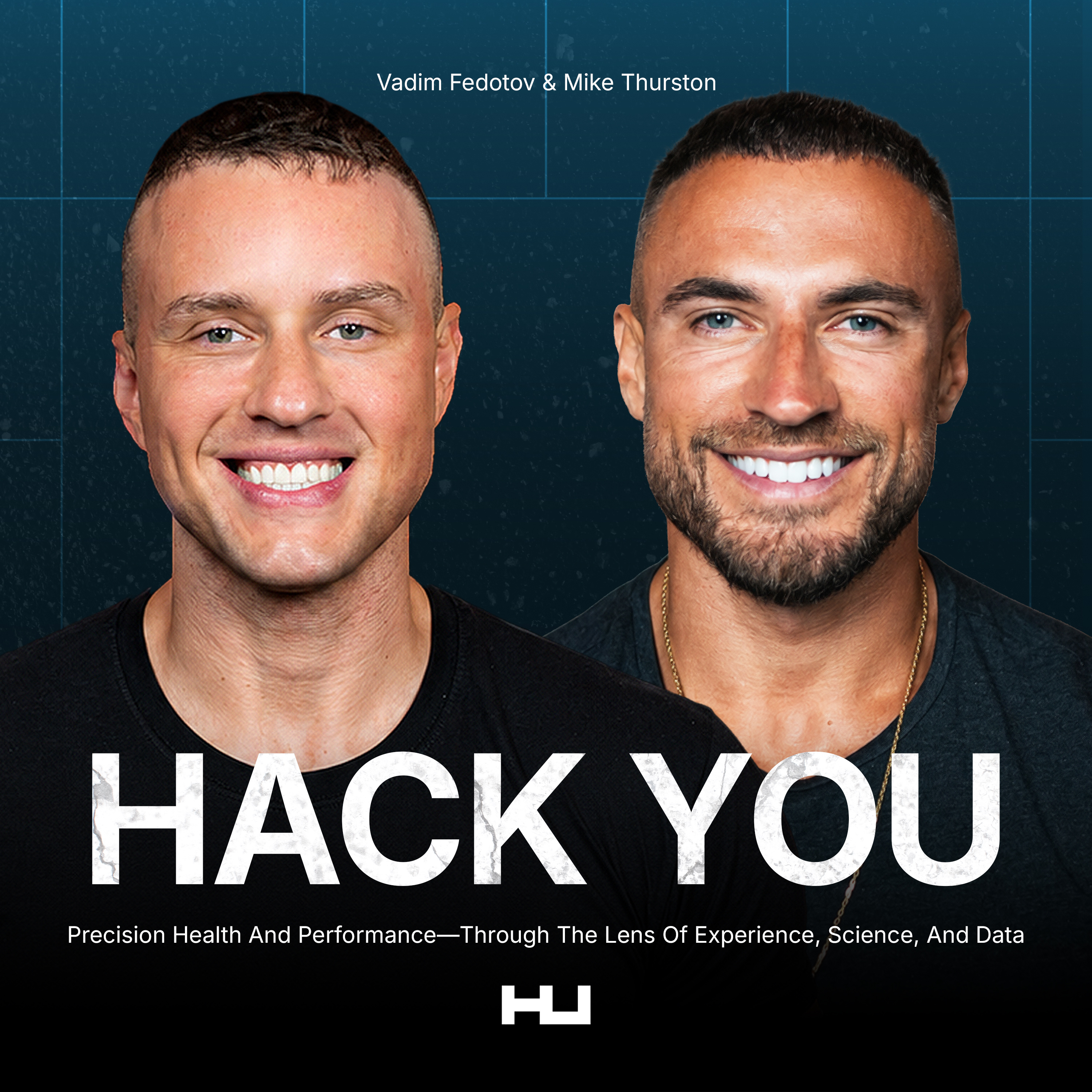
Hack You
Hosted by Vadim Fedotov, Mike Thurston · EN
Co-hosted by Mike Thurston and Vadim Fedotov, Hack You is a space for real conversations with world-class experts on what you can do to optimise your health and performance.
20episodes
Episodes
Newest firstAll episodes
Debunking The Biggest Fitness Industry Myths (and what actually works) Stan Efferding
4w ago01:12:38Tap to summarize» Produced by Hack You Media: pioneering a new category of content at the intersection of health performance, entrepreneurship & cognitive optimisation.Instagram: https://www.instagram.com/hackyoumedia/Website: https://hackyou.media/Stan Efferding spent decades coaching weight loss clients, and the science is clear: your body actively resists fat loss by increasing hunger hormones, making it a biological problem, not a willpower issue.The Vertical Diet is systematic, calorie deficit, adequate protein for hunger control, minimum healthy fats, and then carbs chosen for satiety. Boiled potatoes beat everything for keeping you full, especially if you cool them overnight to create resistant starch that feeds your gut. Training matters infinitely more than diet optimisation, and most people skip it entirely. Only creatine and caffeine are worth supplementing. Internet obsession with glucose spikes and CGM monitoring is noise, distracting from the actual problem: hyper-palatable, cheap foods engineered to make you overeat. Fix your environment and hunger first, not the details.00:00 Intro03:12 Stan's background as a skinny kid turned professional bodybuilder11:20 Deficiencies hidden in restrictive diets and the female athlete triad14:24 Red meat, dairy and the 1.6g protein consensus broken down19:30 White rice as an energy tool27:48 White rice vs brown rice33:48 Satiety index potato swaps and practical tools to beat hunger37:47 Pre-workout nutrition and why training intensity beats everything else43:00 Caffeine, perceived effort and the psychology of pushing past failure48:21 Overrated trends, seed oils and bro science debunked53:00 How misinformation spreads and the value of staying academically honest01:01:38 The Shark Tank experience01:08:53 Life in American Samoa and running an online business01:10:41 The one hack: sleep apnea resolutionDISCLAIMERNothing shared on this podcast is a substitute for professional medical guidance. Please consult a healthcare professional before making any health or lifestyle changes.Hack You Media→ Instagram: https://www.instagram.com/hackyoumedia/→ More from Hack You: https://hackyou.media/#aa19104a-abc1-4697-b0f5-0e81e47e60c5» Follow Vadim «Instagram: https://www.instagram.com/vadim_bioniq/Bioniq: https://bioniqlab.com/» Follow Mike«YouTube: YouTube.com/@mikethurstonInstagram: https://www.instagram.com/mikethurston/?hl=enFirst Things THRST: YouTube.com/@firstthingsthrst» Follow Stan«Instagram: https://www.instagram.com/stanefferding/?hl=enWebsite: https://stanefferding.com/
Transcribe →I've Discovered The Best Supplement Stack For Energy, Focus & Longevity
Jun 2301:22:51Tap to summarize» Produced by Hack You Media: pioneering a new category of content at the intersection of health performance, entrepreneurship & cognitive optimisation.Instagram: https://www.instagram.com/hackyoumedia/Website: https://hackyou.media/The mitochondrial stack that changed bodybuilding, and why brain damage from compounds can't be undone.Dean created a stack (Motzi, SLUPP, Methylene Blue) after fixing his gut issues and realising optimised metabolism meant he never needed to starve during prep, calories in/calories out ignores actual metabolic efficiency. Most people don't realise compounds that spike dopamine permanently fry your brain's reward system, leaving guys with normal testosterone but zero libido because their dopamine receptors are damaged. Teenagers now skip the basics and jump straight to peptides, thinking it shortens years of work, but that's where irreversible harm happens.00:00 Introduction01:28 Starting from scratch and moving to a new city04:00 Leaving a secure job for passion08:30 Personal health challenges and breakthroughs12:05 Creating an energy-boosting supplement stack17:20 Psychological impact of extreme dieting in bodybuilding22:30 Balancing nutrient intake for optimal brain function26:40 Addressing dopamine and libido post-steroid cycles31:00 The rise and influence of peptide use in fitness35:10 Impact of social media on health trends and youth40:10 Longevity vs muscle mass: navigating trade-offs45:20 The complex nature of obesity beyond diet48:50 Utilities and drawbacks of GLP-1 usage in weight loss54:30 Hair loss treatments: options and myths58:30 Testosterone replacement therapy: next steps and pitfalls1:04:00 The interplay of mental health and supplements1:08:45 Managing oxidative stress for better health1:13:20 Developing a balanced approach: gains vs health risksDISCLAIMERNothing shared on this podcast is a substitute for professional medical guidance. Please consult a healthcare professional before making any health or lifestyle changes.Hack You Media→ Instagram: https://www.instagram.com/hackyoumedia/→ More from Hack You: https://hackyou.media/#aa19104a-abc1-4697-b0f5-0e81e47e60c5» Follow Vadim «Instagram: https://www.instagram.com/vadim_bioniq/Bioniq: https://bioniqlab.com/» Follow Mike«YouTube: YouTube.com/MikeThurstonInstagram: https://www.instagram.com/mikethurston/?hl=enFirst Things THRST: YouTube.com/FirstThingsThrst» Follow Dean«Instagram: https://www.instagram.com/deanstm/?hl=enWebsite: https://linktr.ee/deanstm
Transcribe →Future-Proof Your Body: Supplements to Avoid, Health Symptons to Fix, & Diets to Rethink | Dr. Tyler
Jun 1601:08:54Tap to summarizeDr Tyler Panzner joins us for a discussion on genetic testing, why your supplements clash, and why diet trends are wrong for you.Genetic testing is accurate, but most panels are overhyped marketing, interpretation matters more than the test itself.Most people take multiple supplements without knowing they clash together and cancel each other out or cause side effects. Methylated vitamins don't work for everyone, and carnivore, keto, and vegan diets are short-term tools, not permanent solutions. What works depends on your genetics and your ancestry. Figure out your actual genes instead of following influencers selling the same diet to everyone.00:00 Introduction02:42 Personal journey into precision medicine and genetics05:46 Transition from academia to personalised medicine09:53 Reliability of genetic testing and its interpretation19:03 Genetic testing alongside regular blood panels26:30 Risks of supplements interacting negatively with genetics30:20 Permanent insights from genetic testing38:12 COMT gene's influence on stress and behaviour42:40 The complexity of diet, genetics, and health trends47:37 Genetics' role in diet and lifestyle choices57:41 Genetic insights for exercise recovery and performance01:02:47 Considering peptides and their genetic interactionsDISCLAIMERNothing shared on this podcast is a substitute for professional medical guidance. Please consult a healthcare professional before making any health or lifestyle changes.Hack You Media→ Instagram: https://www.instagram.com/hackyoumedia/→ More from Hack You: https://hackyou.media/#aa19104a-abc1-4697-b0f5-0e81e47e60c5» Follow Vadim «Instagram: https://www.instagram.com/vadim_bioniq/Bioniq: https://bioniqlab.com/» Follow Mike «YouTube: https://youtube.com/MikeThurstonInstagram: https://www.instagram.com/mikethurston/First Things THRST: https://youtube.com/FirstThingsThrst» Follow Tyler «Instagram: https://www.instagram.com/drtylerpanzner/1:1 Genetic Coaching: https://drtylerpanzner.com/startyourjourneyFree Guides: https://drtylerpanzner.com/free-guidesEmail Newsletter: https://drtylerpanzner.com/email-newsletter
Transcribe →How I Reversed My Biological Age By 6 Years (The Complete System)
Jun 900:52:45Tap to summarize» Produced by Hack You Media: pioneering a new category of content at the intersection of health performance, entrepreneurship & cognitive optimisation.Instagram: https://www.instagram.com/hackyoumedia/Website: https://hackyou.media/Kris Gethin built the DTP training program, a high-rep low-rep pyramid approach, after injuries forced him away from heavy lifting, it became massively successful because it worked for his body.His biggest discovery: reversing biological age came from removing things, not adding them—sleep matters infinitely more than expensive biohacks, and he gets better results going to bed early and waking early than from any supplement stack.He spent years chasing red light therapy, hydrogen water, EMF blocking, only to realise the basics like sunlight, grounding, and rest do the heavy lifting—most people are sympathetic dominant and need to calm their nervous system, not stimulate it more. The myth he breaks: keto works until it doesn't, and when clients add carbs back, they actually build better physiques because training volume requires glycogen, not just fat burning.00:00 Introduction02:12 The Origins and Success of the DTP Program06:53 Lowering Biological Age Through Lifestyle Changes10:25 Dealing with Health Challenges14:39 High vs Low-Volume Training Opinions19:26 Understanding and Increasing Natural Testosterone21:02 Misconceptions in Health and Fitness Approaches26:13 Impact of EMFs and Environmental Toxins on Health30:08 Exploring Uncommon Health Devices and Practices32:49 Kris's Supplementation Strategy and Daily Routine40:10 Cardio's Role in Recovery and Performance45:07 Maintaining Health During Travel47:10 Using Mortality Awareness for Focus and Purpose52:08 Finding Balance Between Biohacking and Real LifeDISCLAIMERNothing shared on this podcast is a substitute for professional medical guidance. Please consult a healthcare professional before making any health or lifestyle changes.Hack You Media→ Instagram: https://www.instagram.com/hackyoumedia/→ More from Hack You: https://hackyou.media/#aa19104a-abc1-4697-b0f5-0e81e47e60c5» Follow Vadim «Instagram: https://www.instagram.com/vadim_bioniq/Bioniq: https://bioniqlab.com/» Follow Mike«YouTube: Youtube.com/MikeThurstonInstagram: https://www.instagram.com/mikethurston/?hl=enFirst Things THRST: YouTube.com/FirstThingsThrst» Follow Kris«Instagram: https://www.instagram.com/krisgethin/?hl=enWebsite: https://www.krisgethin.com/
Transcribe →Common Nutrition Lies Killing Your Muscle Growth & Fat Loss (Fix These Now)
Jun 201:27:43Tap to summarizeThe narrative telling you to lower protein for longevity is backwards. Alan explains why protein is the strongest macronutrient for appetite control, how higher protein wins in every controlled study for body composition and metabolic health, and why food selection matters more than hitting arbitrary numbers.Alan breaks down why this is just water retention and your body's survival response, how diet breaks every 4-8 weeks make cutting sustainable, and why waiting until your fifties to increase protein makes no sense when you should have built muscle your whole life.The bottom line: don't follow theory, look at who's actually strongest at their oldest.00:00 Introduction07:01 Journey of Alan Aragon's career in nutrition10:44 Protein intake debate and addressing misconceptions18:09 Discussing upper limits of protein consumption24:30 Ability to build muscle while in a calorie deficit30:49 Effective strategies for quick fat loss38:48 Psychological breaks during long-term dieting45:25 Transitioning from a fat loss phase to maintenance51:24 Perspectives on fasting and its benefits01:00:02 Importance of tracking and understanding nutritional intake01:05:56 Modern debates around GLP-1 medications for weight loss01:17:19 Addressing misinformation in the health optimisation spaceDISCLAIMERNothing shared on this podcast is a substitute for professional medical guidance. Please consult a healthcare professional before making any health or lifestyle changes.Hack You Media→ Instagram: https://www.instagram.com/hackyoumedia/→ More from Hack You: https://hackyou.media/#aa19104a-abc1-4697-b0f5-0e81e47e60c5» Follow Vadim«Instagram: https://www.instagram.com/vadim_bioniq/?hl=enBioniq: https://www.bioniq.com/» Follow Mike«YouTube: Youtube.com/MikeThurstonInstagram: https://www.instagram.com/mikethurston/?hl=enFirst Things THRST: Youtube.com/FirstThingsThrst» Follow Alan«Instagram: https://www.instagram.com/thealanaragon/?hl=enWebsite: https://alanaragon.com/
Transcribe →The *NEW* Peptide Stack for Brain, Longevity & Performance | Dean Henry
May 2601:24:28Tap to summarizeDean Henry returns to break down the peptide landscape after FDA changes, share his personal stack, and explain why biological individuality matters more than cookie-cutter protocols.Learn why insulin has been around for 100 years as a peptide, but people don't realise the connection, how KPV and BPC work orally for gut health because they don't need to break through the bloodstream, and why stacking 18 peptides simultaneously makes no sense.This covers Mike's first injection experience and why he wants to try retatrutide on micro-dosing, how BPC makes receptors more sensitive when stacked, why most people think retatrutide isn't working because they're still hungry instead of realising they get fuller quicker, and Dean's current five-peptide stack for body composition while travelling.00:00 Introduction01:03 Introduction to Dean Henry and peptide discussion07:26 Basics of what peptides are18:53 Immediate effects of peptides versus supplements23:31 Starting peptide recommendations and initial effects28:24 Personal experiences and favourite peptides35:29 Forms of peptides: injectables, pills, and sprays41:17 Who should consider peptides and how to start55:01 Common peptides and their potential side effects1:11:22 Peptides specific to women1:14:51 Can peptides help with specific health issues?1:19:08 Future of peptides and upcoming innovationsDISCLAIMERNothing shared on this podcast is a substitute for professional medical guidance. Please consult a healthcare professional before making any health or lifestyle changes.Hack You Media→ Instagram: https://www.instagram.com/hackyoumedia/→ More from Hack You: https://hackyou.media/#aa19104a-abc1-4697-b0f5-0e81e47e60c5» Follow Vadim«Instagram: https://www.instagram.com/vadim_bioniq/?hl=enBioniq: https://www.bioniq.com/» Follow Mike«YouTube: youtube.com/MikeThurstonInstagram: https://www.instagram.com/mikethurston/?hl=enFirst Things THRST: Youtube.com/FirstThingsThrst» Follow Dean«Instagram: https://www.instagram.com/dean.e.henry/Website: https://uaepeptides.com/author/deanuaepeptides-com/
Transcribe →Common Mistakes Killing Your Muscle Growth & Testosterone (Fix These Now)
May 1201:16:32Tap to summarizeBen Pakulski is a former IFBB Pro Bodybuilder and founder of Muscle Intelligence, and this conversation reveals why most lifters plateau because they never learn to direct tension to the right muscle, how true resilience means switching between warrior and monk states instantly, and why fixing digestion matters more than chasing hormones.Ben explains why his MI40 program became a phenomenon—he pioneered intelligent execution and individualised mechanics before anyone else talked about the scientific approach to training. Learn why activation sets before maximum effort work better than mindless volume, how the final reps where speed slows down are what actually recruit growth fibres, and why earning your sets through recovery capacity beats arbitrary set schemes.0:00 Introduction to Ben Pakulski and his fitness philosophy03:18 The evolution of Ben's MI-40 training program09:43 Framework for setting fitness goals: mission, map, mentor15:51 Managing stress and emotional resilience in training21:31 Diagnostic approach to customised fitness programs28:23 Evaluating sleep quality and its impact on fitness32:30 Deciding when to consider testosterone therapy37:03 Training intensity and the concept of failure42:31 Structuring workouts for optimal muscle activation53:59 Precision in movement for experienced vs. novice athletes58:52 The reality of achieving an elite physique healthily1:03:32 Optimal body fat percentage for health and longevity1:11:06 Views on GLP-1s and appetite control in fitness programs1:15:22 Current peptide experiments and their effectsDISCLAIMERNothing shared on this podcast is a substitute for professional medical guidance. Please consult a healthcare professional before making any health or lifestyle changes.Hack You Media→ Instagram: https://www.instagram.com/hackyoumedia/→ More from Hack You: https://hackyou.media/#aa19104a-abc1-4697-b0f5-0e81e47e60c5» Follow Vadim«Instagram: https://www.instagram.com/vadim_bioniq/?hl=enBioniq: https://www.bioniq.com/» Follow Mike«YouTube: YouTube.com/MikeThurstonInstagram: https://www.instagram.com/mikethurston/?hl=enFirst Things THRST: YouTube.com/FirstThingsThrst» Follow Ben«Instagram: https://www.instagram.com/bpakfitness/Website: https://www.benpakulski.com/
Transcribe →Longevity Doctor: Easy Fixes To Slow Aging & Live Healthier (Works For Everyone)
Apr 2801:14:31Tap to summarizeDr Joel Fuhrman has practised nutritional medicine for over 35 years, and this conversation reveals why most protein and performance advice is wrong, how slowing your metabolism extends lifespan, and why eating more vegetables matters more than exercise for longevity.Joel explains why he became a nutritional specialist after being a professional figure skater—he's reviewed tens of thousands of studies showing the evidence is overwhelming and not controversial among longevity researchers. Learn why you cannot be healthy and overweight even at moderate body fat percentages, how nuts and seeds reduce cardiovascular death by 40% compared to oils, and why most people should cut animal products from 35% down to below 10% of their diet.00:00 Introduction04:20 Common misconceptions about nutrition and longevity08:35 Importance of nutrient density and healthy fats17:11 Muscle mass vs. body fat in longevity24:28 Ideal body composition and diet composition31:19 Blue Zones and dietary patterns for long life40:47 Implementing dietary changes and food intolerances47:45 Comparing Mediterranean diet to Nutritarian diet58:04 Potential risks of excessive supplementation1:02:01 Summary of dietary strategies for longevity1:08:59 Summary of insights from various health experts1:10:46 Closing remarks and final thoughts on dietary impactDISCLAIMERNothing shared on this podcast is a substitute for professional medical guidance. Please consult a healthcare professional before making any health or lifestyle changes.Hack You Media→ Instagram: https://www.instagram.com/hackyoumedia/→ More from Hack You: https://hackyou.media/#aa19104a-abc1-4697-b0f5-0e81e47e60c5» Follow Vadim«Instagram: https://www.instagram.com/vadim_bioniq/?hl=enBioniq: https://www.bioniq.com/» Follow Mike«YouTube: YouTube.com/MikeThurstonInstagram: https://www.instagram.com/mikethurston/?hl=enFirst Things THRST: YouTube.com/FirstThingsThrst» Follow Joel«YouTube: YouTube.com/drfuhrmanWebsite: https://www.drfuhrman.com/
Transcribe →The "Health" Advice Slowly Destroying Your Hormones, Youth & Longevity | Valter Longo
Apr 1500:58:37Tap to summarizeDr Valter Longo is a longevity researcher who developed the fasting-mimicking diet, and this conversation reveals why 16-hour fasting increases mortality risk, how true autophagy takes five full days to activate, and why high protein might be accelerating ageing.Valter explains why skipping breakfast and 16-hour fasting correlates with higher cardiovascular disease, despite faster results, 12-hour eating windows show zero negatives in studies. Learn why the five-day FMD uses low protein and high fat to trigger fasting while feeding gut bacteria, how less than 10% of people reach age 70 disease-free, and why blocking growth hormone pathways makes organisms live dramatically longer.00:00 Daily fasting duration recommendations04:02 Development of the fasting-mimicking diet (FMD)10:30 Concerns about water-only fasting effects14:07 Application of FMD for disease prevention and longevity21:51 Completing the fasting cycle with proper refeeding25:09 The debate on protein sources and intake32:48 Protein intake for muscle growth and longevity38:16 The relationship between strength training and longevity50:20 Stress and its interaction with food and health54:35 Key lifestyle factors influencing longevityDISCLAIMERNothing shared on this podcast is a substitute for professional medical guidance. Please consult a healthcare professional before making any health or lifestyle changes.Hack You Media→ Instagram: https://www.instagram.com/hackyoumedia/→ TikTok: https://www.tiktok.com/@hack.you.media?lang=en→ More from Hack You: https://hackyou.media/#aa19104a-abc1-4697-b0f5-0e81e47e60c5» Follow Vadim«Instagram: https://www.instagram.com/vadim_bioniq/?hl=enBioniq: https://www.bioniq.com/» Follow Mike«YouTube: youtube.com/MikeThurstonInstagram: https://www.instagram.com/mikethurston/?hl=enFirst Things THRST: YouTube.com/FirstThingsThrst» Follow Valter«Instagram: https://www.instagram.com/prof_valterlongo/?__d=1%252FWebsite: https://valterlongo.com/
Transcribe →Why Your Food Is Destroying Your Body (and how to fix it) | Jen Smiley
Mar 3100:55:57Tap to summarizeJen Smiley is a nutrition educator and founder of Wake Up and Read the Labels, who transformed her health after discovering she couldn't pronounce the ingredients in everyday foods, and this conversation reveals why reading labels matters more than counting calories.Learn the simple five-second rule for reading labels, why enriched flour and synthetic vitamins create inflammation even in "healthy" products, and how most alternative milks use fillers to fake texture while hiding what's actually inside. This covers why convenience drives food choices more than health, which brands make clean alternatives without additives, and why her father's cancer diagnosis proved the approach worked beyond just weight loss.00:00 Introduction02:26 Jen's personal journey and wake-up moment with nutrition06:10 Realising food's impact on health and preventing diseases12:14 Deceptive food packaging and misleading labels17:31 Convenience and brand awareness driving processed food choices21:01 How to properly read and understand food labels25:31 Organic vs. natural labels and their meanings33:10 Why alternative milks gained popularity and their issues37:20 European vs. American bread-making processes41:00 Gluten-free alternatives and their real impact on health45:23 Protein bars, shakes, and finding cleaner options48:56 Significant food swaps for better well-being52:57 Quick meal ideas and clean eating essentials55:28 Closing thoughts on dietary changes and impactDISCLAIMERNothing shared on this podcast is a substitute for professional medical guidance. Please consult a healthcare professional before making any health or lifestyle changes.Hack You Media→ Instagram: https://www.instagram.com/hackyoumedia/→ TikTok: https://www.tiktok.com/@hack.you.media?lang=en→ More from Hack You: https://hackyou.media/#aa19104a-abc1-4697-b0f5-0e81e47e60c5» Follow Vadim«Instagram: https://www.instagram.com/vadim_bioniq/?hl=enBioniq: https://www.bioniq.com/» Follow Jen«Instagram: https://www.instagram.com/wakeupandreadthelabels/Website: https://jensmiley.com/
Transcribe →