← Harold's Old Time Radio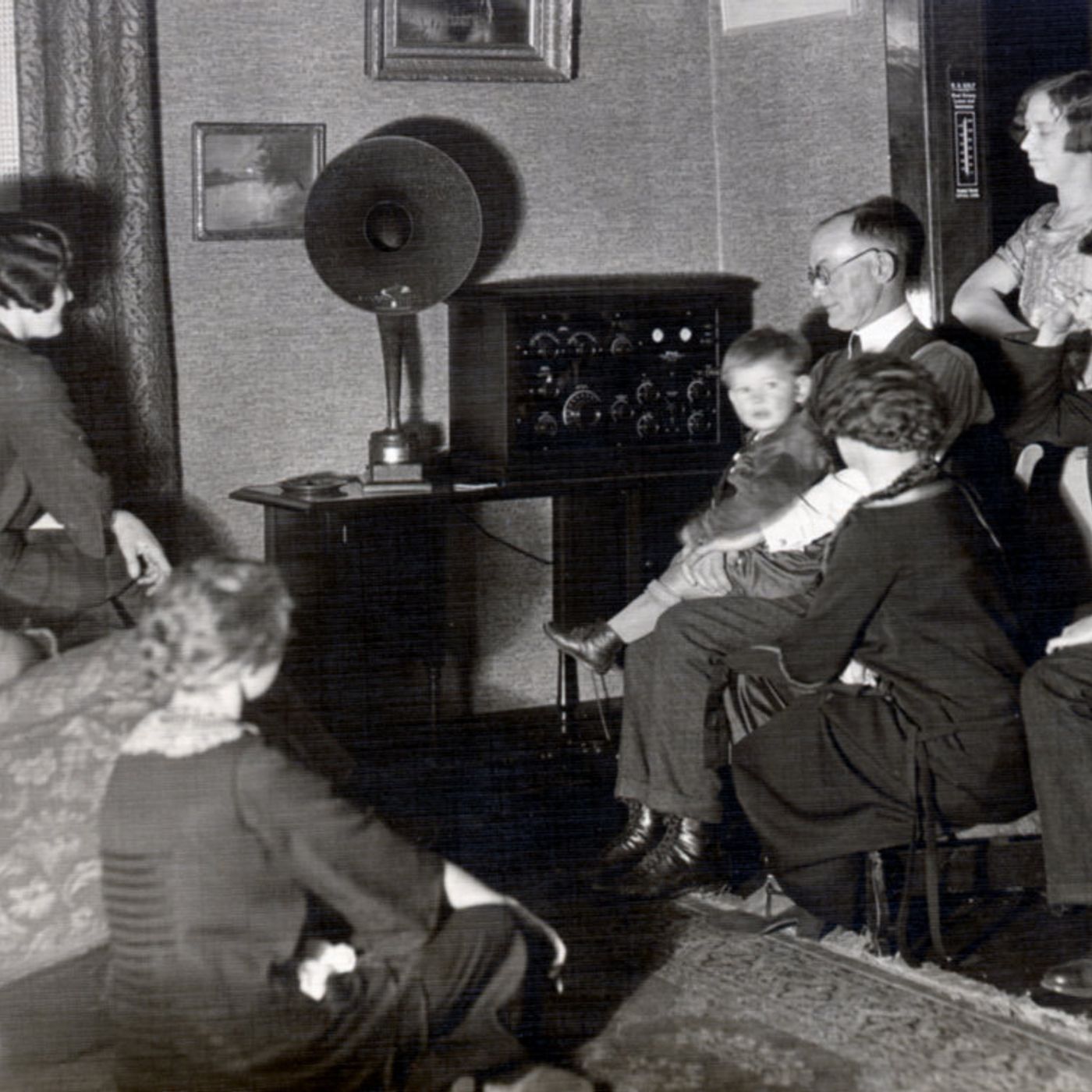
Harold's Old Time Radio
Golden Memories of Radio xx-xx-xx (01 of 10)
00:14:59
Golden Memories of Radio xx-xx-xx (01 of 10)
Loading summary
Transcript1 lines
- [00:00]
A
Geico's motorcycle expertise means I'm covered by people who know bikes like I do. I'm happy as a clam. No conclusive scientific research has shown clams can experience happiness. I just meant that I feel really good about my coverage. I mean, even if you took the clam out for the best day ever, visiting the zoo, taking a scenic ride, knowing you're insured by specialists, and sharing a strawberry ice cream cone together, the clam would not feel happy and your strawberry cone would taste sort of clammy. Ew. Geico's motorcycle specialists who know bikes like you do, assume no liability for clammy ice cream cones. GEICO expertise for your motorcycle it's hello again, this is Jack Benny welcoming you on behalf of the Longines Symphoniet for a warm visit to a magic world and to a golden treasure chest of memory, entertainment, excitement, drama and world history. Yep, we are going to explore the world of golden radio. I was part of radio as it developed, just as I am part of television. I share with Bing Crosby, Bob Hope, Red Skelton, George Burns, Lucille Ball, Arthur Godfrey and many others a common heritage in radio. I'd like to help you enjoy again those nostalgic moments when the family gathered together in the living room to share the make believe world of radio. We will look in on comedy, drama, suspense news and the people who made it all possible. By the nature of radio, we as performers shared with you, our listeners, the creative best in our lives. We worked together and for that reason, radio became part of our growing up together. Before we get started though, I'd like to tell those of you who are just discovering the golden days of radio how it differs from today's television. Radio was really do it yourself television. Instead of a big ugly glass picture tube, you saw the performers in your own mind. You were not restricted by the boundaries of a 21 inch tube, but instead painted your own biggest life version of each moment with that loving creative brush we call imagination. Now, just in case you're out of practice, here's a little test to demonstrate the power of your imagination. Now, don't Open that door, McGee. Didn't you see that fabulous closet just as clearly as though it was on the largest full color television screen imaginable? Why, every time McGee opened that door, a million Americans saw a closet in their own homes. Now let's try a more ambitious test of your imaginative power. And as we do, we'll start our sentimental journey back to the golden years of radio when that instrument was a golden cornucopia from which poured the wealth of the greatest entertainers in history. Here is Bing Crosby on his Filco Radio Time show the night he entertained two guests. Let me alone. I'll get it. I'll get it. Just a minute. Hey, say, you, have you ever played this number before, Bub? Played it. I made it. Well, I should have known. Jack Finney. Well, I certainly expected you tonight, Jack. I expected you over, but I didn't expect to find you in the orchestra. I can't understand it. I've, I've never played so poorly. Oh, cheer up, Jack. Sure you have. Thanks, kid, but I, I, I practiced all morning to limber up. I even washed my fingers. And does. Does. Doesn't do it. I'm dead. But I switched to Wheaties, kid. But Jack, I thought Mary was going to come with you. Where is she? Oh, she stopped by the Musicians Union to pay my dues. Do you belong? You belong to the Musicians Union? Don't act so shy. Well, they never heard of that. Like that. Of course, I belong to Musician Junior. And I'm one of the charter members. You see, years ago I had a little band. We all joined together. Oh, I know the group well. A drum and a guy with a bandage around his head. So far I've had nothing. Look, I don't mean the spirit of 76. My band was called Jack Benny and His Sizzling Gobblers. Sizzling Gobblers? That's the line they gave me. Yeah, we specialized in turkey. Tr. That's the L. And I bet your drummer had drumsticks that were really. Drumsticks. Yeah. He used to drive me crazy with that munching during my solo. Can't understand it. Bill Morrow used to write for me. Anyway, Bing, Bing, what I wanted to see you about is a business proposition. What are you going to do this summer? I'm going to take a vacation. Well, I've got an idea where you and I could combine business with pleasure. I'm afraid not, Jack. But Bing, I mean, this is a chance to pick up some extra money and that never hurts. Oh, no, it's spending that hurts, isn't it? That's ridiculous. It doesn't bother me. Don't knock it till you've tried it. Well, Mary Livingston, get a load of her. All decked out like Mrs. Astor's horse. Listen, Mary, you never get all dressed up like that on my program. Well, how often do I sit on Bing Crosby's lap? Well, you're not on Crosby's lap. Wait till I get rolling. Mary. Just kidding, Bing. Nothing will happen. You keep out of this. Listen, I've been thinking of this for years, and I might as well come right out and say it. What do all the women see in Bing Crosby? Look at him. Hey, you know, he's got blue eyes like mine. Blue eyes like mine. Stop there, brother. Mary, all I want to know is did you go to the Musicians Union and pay my dues? Yes. All right, Mary, where's my card? Here. Just a minute. This isn't a musician's card. Oh, I forgot to tell you. They transferred you to the Plumbers Union. The Plumbers Union? Your plunger arrives tomorrow. What? I can't wait to hear your first solo. Be asleep on the beat, huh? Is your imagination getting tuned up? Good. Now, radio pioneered most of the kind of shows you see on television today. Humor, for example, breaks down into two basic formats. The variety show and the situation comedy. Both forms reached a peak in radio. I asked George Burns to select a favorite episode of the George Burns and Gracie Allen show from his own personal collection. As the new half century gets underway, the favorite pastime seems to be choosing the outstanding men of the last half century. Magazines and newspapers have published their selections, but Gracie seems to think one important name has been omitted. Thomas Edison, Winston Churchill. How can they pick men like that to head the list? I'm interested to know, Gracie. Who's your choice? Need you ask, George? I'm thinking of a man whose glorious romantic voice has thrilled millions. The birds are sweetly singing in perfume Flowers are bringing in the wind Tonight, a man of charm and talent are world famous Bracey, this is getting embarrassing. Only one man should top this list. Charles Boyer. Charles Boyer? You put him ahead of Edison. Yep. Edison invented electric lights with Boyer. Who needs them? Boise. There are. There are some pretty great men on this list. Not as great as Boyer, but look at these names. Arturo Toscanini, conductor. How do you like that? A man who punches transfers. He happens to be a musical conductor. All right, so he hums while he punches tramps. Dardanella. Yeah. Here's another one. Einstein. Now, what did he do? Einstein? What did he do? He's the father of relativity. Oh. What does she do? Relativity. Einstein. Yeah. She's with Warner Brothers. You know, Gracie, for a minute there, instead of Boy A, I thought that you thought that I belonged on that list of great men. Oh, well, you see, George, you're my husband, and I don't think of you as a man. Oh, thanks. I mean, I. I don't think of you as a man who does Anything. Thanks again. I mean, I don't think of you as a man who does anything romantic. A triple thanks. And stop thinking about it. Now I've hurt your feelings and I didn't mean to judge. You know I'd rather be married to you than any man on this list. Churchill, Edison, Stalin, Hitler. You have just earned my fourth thank you. When you think of the golden age of radio, you're bound to remember the performer whose hold on the heartstrings of America spanned almost three generations. Vaudeville to radio and then to television. When he died, a whole nation mourned his loss. I love to spend each Sunday with you as friend of friend. I'm sorry it through. I'm telling you just how I feel. I hope you feel that way too, Eddie Kanter. Of course. Now, very early in the development of radio came two characters called Sam and Henry. Once the name was changed to Amos and Andy, a new national pastime was invented. Why, I can remember walking past motion picture theaters in the 30s and seeing the signs that promised to stop the movie and turn on the radio when it came. Amos and Andy time. You know, Andy, it's a great thing for us this job with the construction company. Oh yeah, and I like that Mr. Carter, the head of the company. He sure was nice to us when he gave us the tools this morning. Oh yeah, he is a real gentleman. I tell you. I never met. I'll get him. Hello, George Kingfield, Steven speaking. Hello, this is Mr. Carter of the Carter Construction Company. Oh yes, Mr. Carter. How's you this evening? Pierre? What are you and Brown trying to pull? Why didn't you show up on that porch wrecking job this morning? Well, you see me, I think we've seen. Excuse me. You say something about slowing up on that? Why didn't you and Brown show up on that pork threatening job? Well, I. Miss Carter. Excuse me, we got a bad disconnection here. Can't you hear what I'm saying? Yeah, I can hear what you were saying, but I know you ain't saying what I was hearing. Hello? Hello? Look, Ms. Carter, the phones all mess up here. I tell you what, I'll hang up and you call me right back. Very well. What's the trouble, Kingsley? Oh, I don't know, Andy. The phone is messed up or my ears done jammed up on me. You take the call when the man calls back. Okay, I'll wait. Hello, Andy Brown speaking. Oh, it's you, Brown. Can you hear what I'm saying? Oh, yes sir. Yes sir. You coming through fine. Good. Now what is it you want to tell me? I want to know why you and Stevens didn't show up direct that porch this morning. I hold the phone. Kingfish, get back on here. This man is all confused. Hello, Ms. Carter. Stevens back on here. Look, Stevens, what's going on? You and Brown are completely confused. We are confused. You is the one that's confused. We spent the whole day today wrecking the porch over at 4565Amsterdam Avenue. 4565Amsterdam Avenue. That's fine. Well, thank you, sir. That's just great. We thought it was a nice job. The porch you were supposed to wreck was a 666 Riverside Slide. Ms. Carter, is you there? Yes. Well, Ms. Carter, this time let's bull hang up. And don't nobody call nobody.