← Harold's Old Time Radio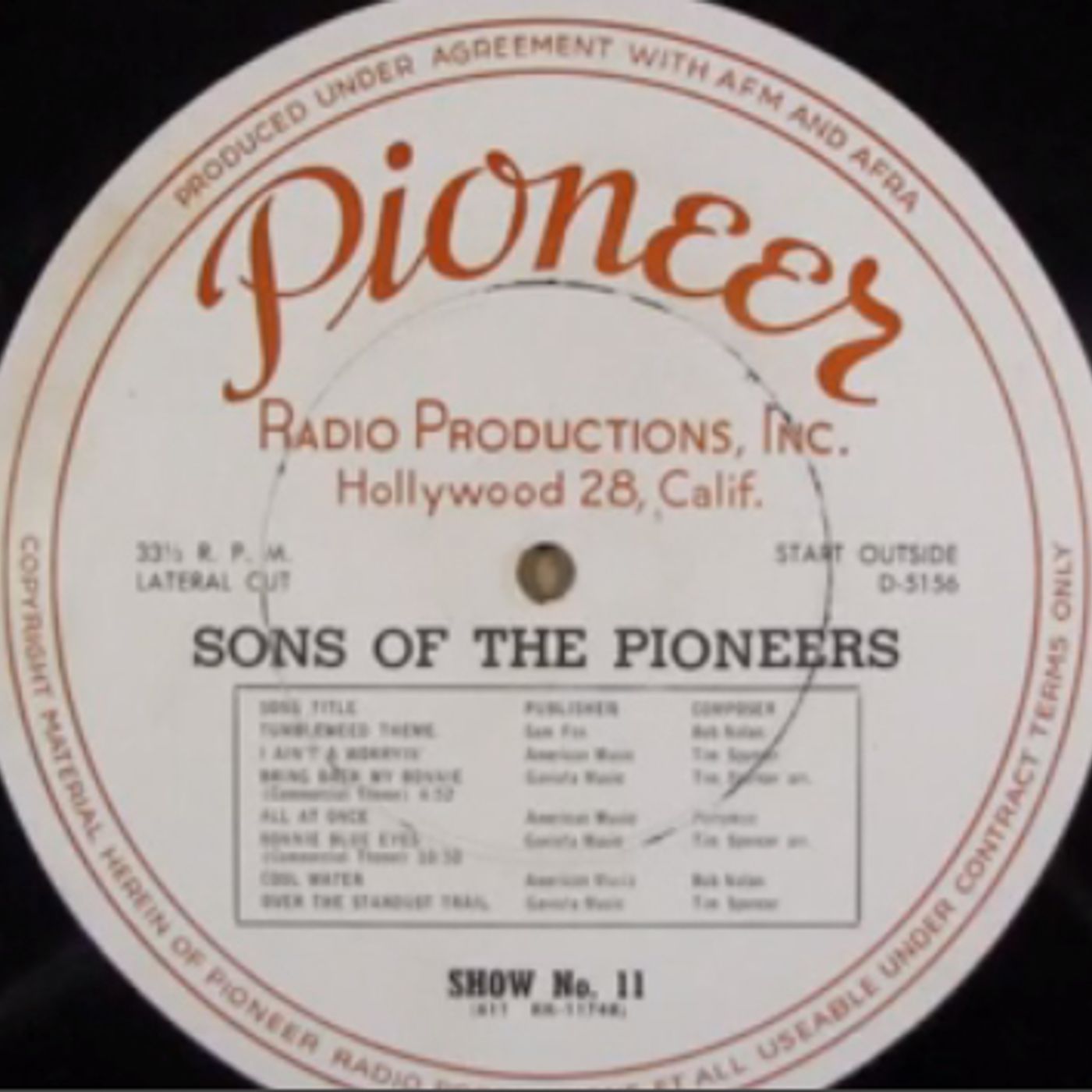
Harold's Old Time Radio
Sons of the Pioneers 46-xx-xx (11) First Song - I Ain't A'Worrin'
00:14:35
Sons of the Pioneers 46-xx-xx (11) First Song - I Ain't A'Worrin'
Loading summary
Transcript62 lines
- [00:00]
Expedia
Trip Planner by Expedia. You were made to have strong opinions about sand. We were made to help you and your friends find a place on the beach with a pool and a marina and a waterfall and a soaking tub. Expedia made to travel.
- [00:19]
Bob Nolan
See.
- [00:21]
Tim Spencer
Them tumbling down. Ado. This is Bob Nolan and all the sons of the pioneers. You know, two kinds of music, at least, were born in America. Western songs and spirituals. Now, Tim Spencer happens to be a writer of both. His Western songs are known the world over. And he also has the rare knack of being able to interpret the spirit of a spiritual. So here's all the pioneers to sing. Timmy's I Ain't a Worryin' I ain't a worryin' Caud.
- [01:08]
Lloyd Perryman
The Lord am a comin to take all my troubles away.
- [01:14]
Bob Nolan
I ain't a.
- [01:15]
Lloyd Perryman
Worryin called the Lord am a comin to take all my troubles away There.
- [01:21]
Foghorn
Was hongry people and they weren't no.
- [01:24]
Lloyd Perryman
Bread that's bad the wine it done.
- [01:27]
Tim Spencer
All run down that's very, very bad.
- [01:29]
Foghorn
But the presto change of the Lord My Savior fed the hungry people that.
- [01:36]
Tim Spencer
Shouted Goliath thought he was the giant of giants and my little David he.
- [01:43]
Foghorn
Was small but the right proof and.
- [01:47]
Tim Spencer
He won the fighting when he slew dad, I'm so tall oh, I ain't.
- [01:54]
Lloyd Perryman
A worrying called the Lord Am a comin to take all my troubles away.
- [02:01]
Bob Nolan
I ain't a worryin Cause the Lord.
- [02:04]
Lloyd Perryman
Am I coming to take all my.
- [02:06]
Tim Spencer
Troubles away There were crippled chilling and they could won't der hearts were heavy and blue but de Lord he taught and de cripple wal and de blind folks they told to Lord I ain't.
- [02:26]
Lloyd Perryman
A word called de Lord am a comin to take all my troubles away I ain't a word called the Lord Am I coming to take all my.
- [02:38]
Foghorn
Troubles away oh, yes, the Lord's gonna take all my troubles away oh, hell.
- [02:49]
Tim Spencer
Spiritual life. That's quite a song, Tim.
- [02:52]
Bob Nolan
Well, thank you, Bob. I tried to say something there that I figure needs to be said in this day and time.
- [02:57]
Tim Spencer
Well, that makes you a philosopher. Hey, fellas, don't start calling each other names.
- [03:02]
Bob Nolan
Foghorn, when Bob and I start calling each other names, you can pull out my tongue and use it for a saddle gird.
- [03:09]
Tim Spencer
That's right. Tim and I have worked together, fought together, and written songs together. Yep.
- [03:14]
Bob Nolan
And my only regret is that we didn't tumble tumbling tumbleweeds. And I wouldn't have minded sharing a small pitcher of cool water with this songwriting Bob. Nolan?
- [03:25]
Tim Spencer
Well, yes, I wouldn't have minded cutting a little timber with you either, Tim.
- [03:29]
Bob Nolan
Okay, but while I've got the floor. Bob, I know you wouldn't say it yourself, but in just about 10 minutes we're going to sing Cool Water. I think the listeners will be interested to know that this song has been especially selected by the Congressional Library in Washington D.C. for its historical archives. Yes siree, and the pioneers are almighty proud of Bob Nolan for this special honor.
- [03:52]
Tim Spencer
Thank you, Timmy. I I Foghorn, let's do that instrumental number here.
- [03:56]
Expedia
Okay, Bo.
- [05:10]
Tim Spencer
And now a message from our sponsor. Lloyd Perryman here writes a song just about as well as he sings it, and that's pretty good. So any day that Tim Spencer and I start talking about the songs that we write, Lloyd needs to be included in too. So here he is, Lloyd Perryman. And. And his own number. All at once.
- [06:55]
Foghorn
Night seemed so endless Days were too long Life seemed so friendless no thrill, no song A storm on an ocean the wind in the.
- [07:15]
Bob Nolan
Trees.
- [07:18]
Foghorn
Brought no emotion to this stubborn heart in me Then all at once I felt your spell All I know is how I fell Stars that shine in heaven above Seem to form the words I love you I believe they.
- [08:07]
Bob Nolan
Understand.
- [08:11]
Foghorn
This yearning burning soul of mine and if they do they surely know it's you for all at once I felt in love.
- [08:38]
Tim Spencer
Oh, thank you, Lord. And now, boys, let's switch over now to a little old fashioned harmony. The Pioneers Quartet and an old old favorite, Bonnie Eloise.
- [08:58]
Bob Nolan
But sweeter, dearer yes, dearer far than these who charms where others won Morning, morning, Yellow hill of the Mo O.
- [09:34]
Foghorn
Sweet is the vale where the Mohawk gently glides on its clear, winding way through the se. And dearer than all storied streams on the earth besides Is this bright rolling river to me.
- [10:08]
Bob Nolan
But sweeter, dearest, nearer far than these who charms where others. Morning is blue eyes, the bell of the Mo.
- [10:45]
Tim Spencer
Time now for our Song of the West. And in answer to your many requests. It'll be Cool Water, but first let's all listen to a message from our sponsor. The desert is the man killer of the West. Its weapons are sand and sun and heat and thirst. It's a devil in disguise. The disguise of a mirage that tempts and teases and tantalizes with a promise that is always just ahead. The promise of water.
- [12:34]
Lloyd Perryman
Keep a movin.
- [12:35]
Tim Spencer
Dan.
- [12:36]
Lloyd Perryman
Don't you listen to him, Dan. He's the devil, not a man. And he spreads the burning sand with water.
- [12:44]
Tim Spencer
Dan, can you see that big green.
- [12:47]
Lloyd Perryman
Tree where the water's running free and.
- [12:49]
Tim Spencer
It'S waiting there for me and you with water all day I paced a barren waste without the taste of water.
- [13:01]
Bob Nolan
Cool water Water O Dan and I.
- [13:08]
Foghorn
With throat burn dry and foes that.
- [13:11]
Bob Nolan
Cry for water Water cool water clear water Water water water keep a movin.
- [13:24]
And don't you listen to him then.
- [13:26]
Lloyd Perryman
He'S the devil, not a man and.
- [13:28]
Tim Spencer
He spreads a burning sand with water.
- [13:33]
Lloyd Perryman
Then can you see that big green.
- [13:35]
Tim Spencer
Tree where the water's running free and.
- [13:37]
Lloyd Perryman
It'S waiting there for me and you.
- [13:42]
Tim Spencer
Dan's feet are sore he's yearning for just one thing more than water cool.
- [13:50]
Bob Nolan
Water.
- [13:53]
Foghorn
Like me I guess he'd like to rest where there's no quest or.
- [14:00]
Bob Nolan
Water Water cool water clear water Water.
- [14:09]
Foghorn
Clear water.
- [14:13]
Tim Spencer
This is Bob Nolan signing off for all the Sons of the Pioneers. Play with us again, won't you? Our song of the west will be home on the Range. So.
- [14:32]
Bob Nolan
Naming.