Podcast Summary: "Yesterday Brings You Tomorrow 35-04-05 (Synd-1934) Ep003 The Story Of Saturday"
Podcast Information:
- Title: Harold's Old Time Radio
- Host/Author: Harolds Old Time Radio
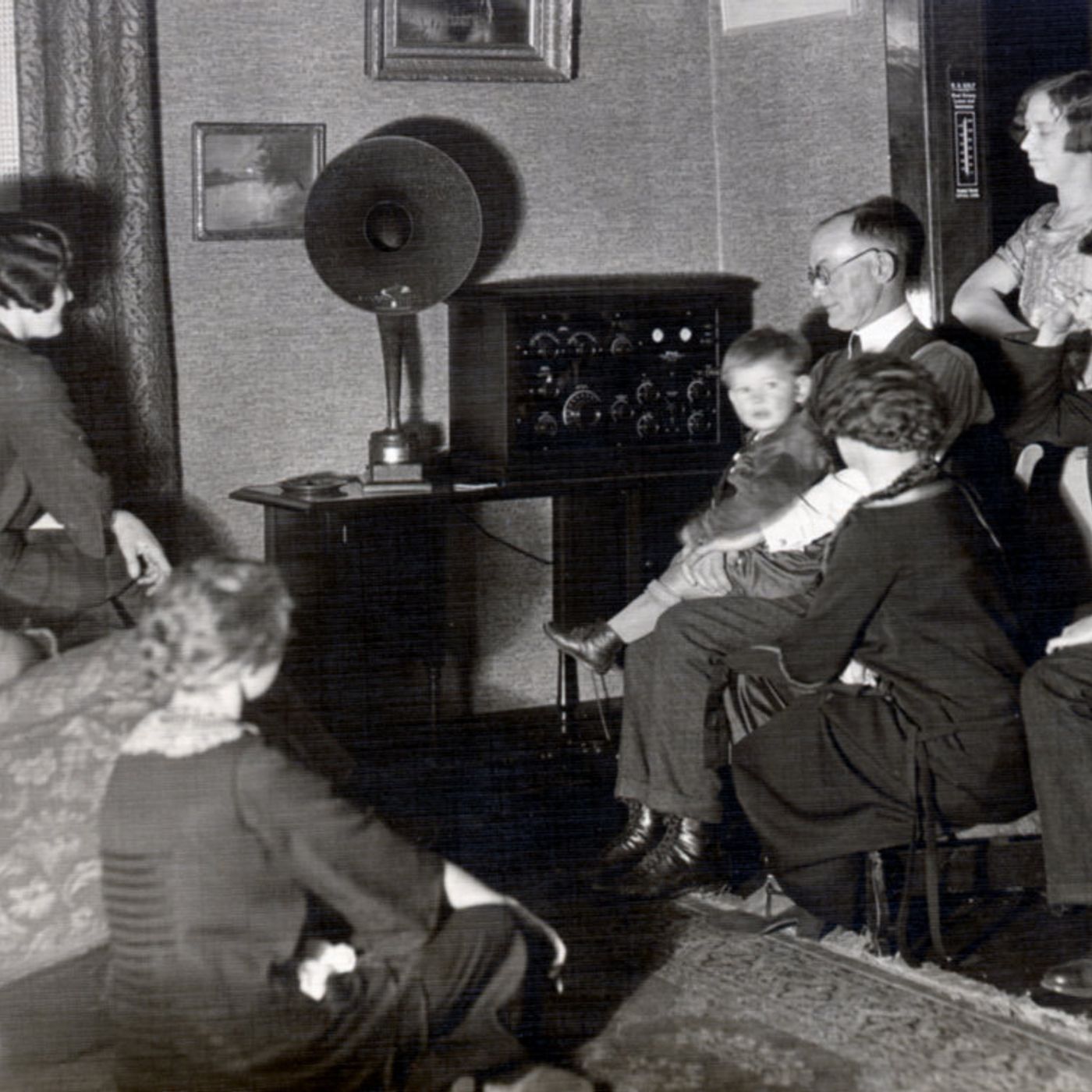
- Description: Radio shows from the Golden Age of Radio. The time before television and the family all sat around the radio and listened to the shows of the time like The Shadow, Abbott & Costello, Amos & Andy, Dragnet, and many more.
- Episode: Yesterday Brings You Tomorrow 35-04-05 (Synd-1934) Ep003 The Story Of Saturday
- Release Date: February 3, 2025
Introduction: The Significance of Saturday in History
The episode begins with an evocative reflection on the role of Saturdays throughout history. The narrator, referred to as Speaker A, sets the stage by contemplating how each Saturday has carried a "cargo of events" that have shaped nations and individuals alike.
"Yesterday brings you tomorrow. From the pages of the past comes the story of Saturday." [00:00]
This introduction serves to frame the episode's exploration of significant historical events that occurred on Saturdays, suggesting a cyclical nature of time and the enduring impact of past events on the present and future.
Military Endeavors and Wars
American Independence:
Speaker A recounts a pivotal moment during the American Revolutionary War.
"A war-weakened colonial army of independence, decimated in ranks, exhausted of provisions and supplies, was driving blindly into North Carolina on this day in 1781..." [00:45]
The narrative highlights the relentless struggle of the colonial forces against British troops, culminating in the surrender of Cornwallis, a turning point that signified the waning of British power in America.
European Conflicts:
The discussion transitions to conflicts in Europe, particularly between Austria and Sardinia.
"While war thundered over Europe with Austria and Sardinia at each other's throats..." [03:15]
These ongoing European wars are juxtaposed against American advancements, underscoring different trajectories of progress and conflict across continents.
American Innovation and Governance
Foundations of American Infrastructure:
Speaker A delves into America's burgeoning infrastructure in the early 19th century.
"In New York, the first post office opened its doors. In Philadelphia, a newspaper, the advertiser, rolled from a hand-operated press..." [01:30]
The establishment of essential services like the post office and the press are highlighted as foundational elements for national communication and information dissemination.
Economic and Judicial Systems:
The creation of the mint and the establishment of a local currency signify economic growth.
"A mint was set up and locally bonded money went into rapid circulation." [02:10]
Additionally, the formation of the Supreme Court is noted as a cornerstone for ensuring justice and safeguarding citizens' rights.
"While the ancient nation of France was gutted by revolution and stained with murder, America established a supreme court to assure justice to her citizens." [02:50]
Technological Advancements:
Technological milestones are celebrated, including Fulton’s first steamboat and the construction of the Erie Canal.
"Fulton's first steamboat on this day in 1807 began its cruise across the history of transportation." [03:00]
The Erie Canal's nearing completion is presented as a triumph of engineering, enhancing transportation and commerce.
Industrial Progress and Innovation
Petroleum and Railroads:
The episode highlights Edward Drake's pioneering efforts in petroleum extraction.
"Edward Drake at Titusville, Pennsylvania was spudding in the world's first petroleum well." [04:20]
This innovation paved the way for the oil industry, revolutionizing energy consumption. Similarly, the success of the railroad in 1859 is portrayed as a monumental achievement in transportation and economic development.
"Even as other pioneers risked their fortunes in the gamble that resulted in the triumph of the railroad in 1859." [04:50]
Notorious Figures and Civil Unrest
Outlaws and Bandits:
The narrative introduces infamous figures like Jesse James, whose swashbuckling career symbolizes the tumultuous spirit of the 1880s.
"Bob Ford ended with a bullet. The swashbuckling career of America's number one bandit of the adventurous 80s, Jesse James at St. Joseph, Missouri..." [05:30]
These stories reflect the era's lawlessness and the dramatic clashes between outlaws and law enforcement.
Labor Conflicts:
The episode also touches upon armed conflicts between Pinkerton Guards and steel mill strikers.
"Pinkerton Guards and steel mill strikers tangled in armed conflict incited by professional anarchists and scores died in the shambles." [06:10]
This segment underscores the intense labor struggles and the influence of anarchist movements in destabilizing industrial communities.
Disasters and Tragedies
Natural and Man-Made Disasters:
Speaker A recounts several catastrophic events that occurred on Saturdays, emphasizing their profound impact on communities.
Mine Explosion:
A devastating mine explosion in Turtle Mountain, British Columbia, obliterated the town of Frank.
"A mine explosion at Turtle Mountain, British Columbia, destroyed the town of Frank and killed 100 residents." [07:00]
St. Francis Dam Failure:
One of the most harrowing accounts is the catastrophic failure of the St. Francis Dam in California.
"At 1am the St. Francis Dam, 40 miles north of Los Angeles, suddenly and without warning gave way, flooding San Francisquito Canyon with 12 billion gallons of water which devastated the valley of Santa Clara, killed 450 sleeping victims, destroying property and lives in 30 cities..." [08:45]
This tragedy highlights the vulnerabilities of early 20th-century infrastructure and the far-reaching consequences of engineering failures.
Later Historical Events
Aviation Accident:
The episode touches on a midair collision involving a U.S. Marine plane and a vulture in Nicaragua.
"A collision in midair between a U. S. Marine plane and a vulture over Nicaragua. The plane crashed and pilot and co-pilot were killed. The Vulture continued its flight." [09:30]
This event illustrates the unpredictable nature of aviation and animal interactions in early flight history.
Political Upheavals:
Revolutions in Paraguay on this day in 1912 are briefly mentioned.
"In Paraguay, this day in 1912, revolutionists overthrew the government by murdering most of the office holders." [07:45]
Such political upheavals emphasize the fragility of governments and the potential for swift, violent change.
Conclusion: Reflecting on the Legacy of Saturdays
The episode concludes by pondering the significance of Saturdays in shaping history and contemplating what future Saturdays may hold.
"We have seen what it has brought in other years. What will it bring tomorrow?" [10:15]
This closing thought invites listeners to reflect on the cyclical nature of time and the enduring influence of past events on future generations.
Key Takeaways:
-
Historical Reflection: Saturdays have been witness to a multitude of significant events that have shaped various aspects of society, including war, innovation, governance, and tragedy.
-
American Resilience and Innovation: The narrative underscores America's ability to overcome adversity through innovation, governance structures, and infrastructural development.
-
Human Struggles and Triumphs: From outlaws and labor conflicts to technological breakthroughs and catastrophic disasters, the stories highlight the complex interplay of human endeavor and vulnerability.
-
Continuity and Change: The episode emphasizes the continuous impact of past events on the present and future, suggesting that understanding history is crucial for anticipating what lies ahead.
Notable Quotes:
- "Yesterday brings you tomorrow. From the pages of the past comes the story of Saturday." [00:00]
- "While the ancient nation of France was gutted by revolution and stained with murder, America established a supreme court to assure justice to her citizens." [02:50]
- "At 1am the St. Francis Dam, 40 miles north of Los Angeles, suddenly and without warning gave way..." [08:45]
- "We have seen what it has brought in other years. What will it bring tomorrow?" [10:15]
This episode of "Harold's Old Time Radio" effectively weaves a tapestry of historical events tied to Saturdays, offering listeners a rich, engaging exploration of the past's influence on the present and future.