← Harold's Old Time Radio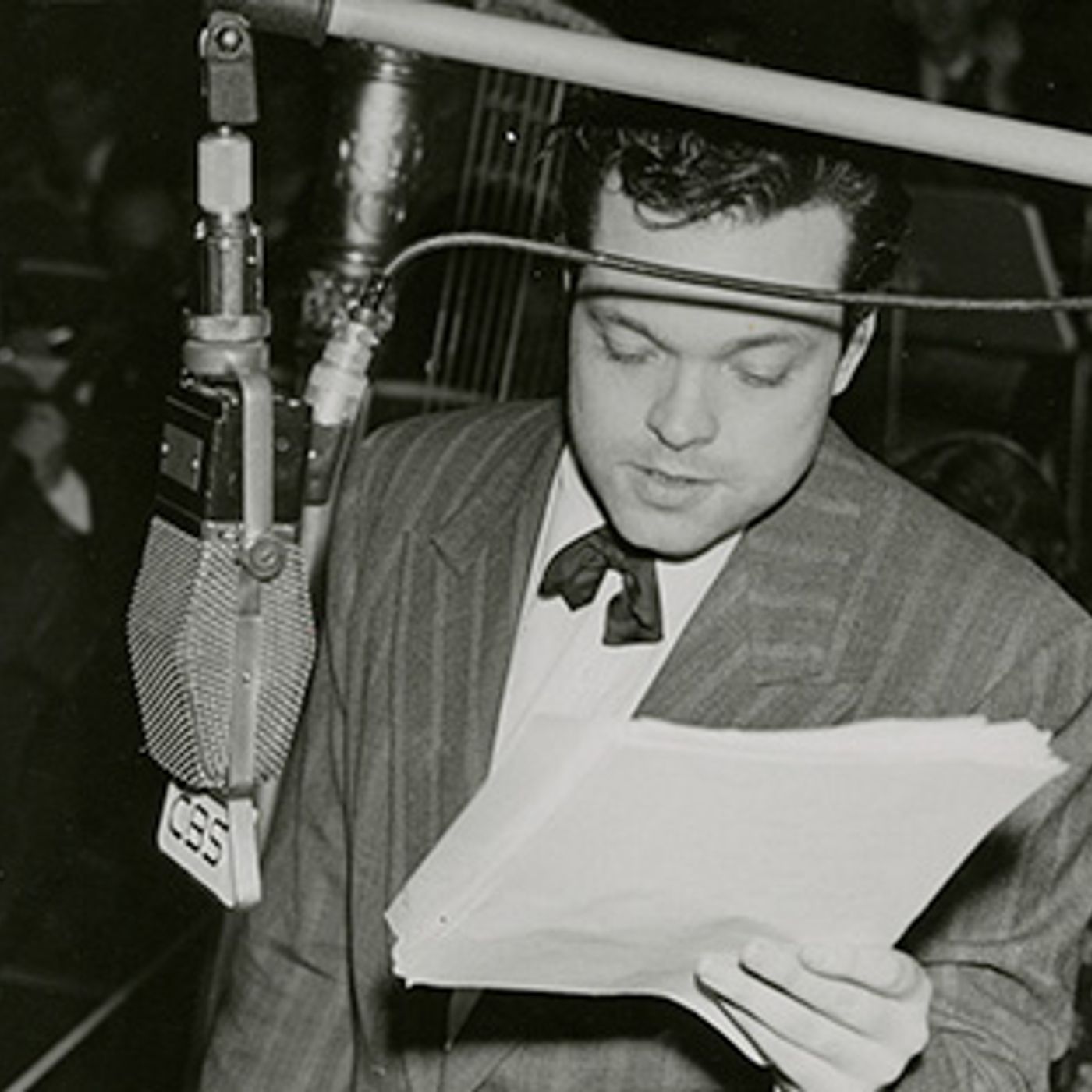
Harold's Old Time Radio
Your Radio Almanac - 1944-02-02 - #2 - guest Lionel Barrymore
00:29:37
Your Radio Almanac - 1944-02-02 - #2 - guest Lionel Barrymore
Loading summary
Transcript131 lines
- [00:00]
American Giant
Here in America, work is in trouble. We've offshored our manufacturing, sent away good jobs and lost so much ability to make things. American Giant is a company that's pushing back against this tide. They make high quality clothing. Sweatshirts, jeans, dresses, jackets and so much more right here in the USA. Visit american-giant.com and get 20% off your first order. When you use code STAPLE20 at checkout, that's 20% off your first order at american-giant.com promo code STABLE20.
- [00:33]
Orson Welles
Good evening. This is Orson Welles just saying hello before the show starts. This is your radio almanac for the first week of February. It's a bad time for garden is February. By day it wheedles the buds out of the bushes and by night it blisters them. God only knows why. This aborted Adelaide among the month. This wayward leap cataral fly and stunted altogether unreliable month should get another day on. Leap year doesn't deserve it. February 2nd is Candlemas and a very good day for beautiful music. Two of the greatest violinists the world has ever known, Fritz Kreisler and Yasha Heifetz, were born today. Jack Benny was born in the groundhog. Came out this morning and looked around for his shadow. If he didn't see it, he didn't want to. The moon is in the second quarter for just about another hour tonight. I beg pardon? Strolling down the avenue. Excuse me, sir. You look just like a groundhog. I am? Well, you saw your shadow, groundhog. Why aren't you back in your hole? Well, you know, the housing problem. I just looked out for a minute.
- [01:42]
Jack Benny
And some other people moved in.
- [01:45]
Orson Welles
What's that, lady? I beg your pardon. First time you ever heard a talking groundhog. I bid you welcome to the sign of the flying red horse.
- [02:03]
Jack Benny
Tonight and every week at the same time over these same stations, the makers of Mobile Gas and Mobil Oil bring you Horse and Wells.
- [02:18]
Orson Welles
Ladies and gentlemen, our distance. This distinguished guest department brings you now one of the stars of Metro Goldwyn Mayer's new production, a guy named Joe. He's a good friend of ours in the Mercury and an old friend of yours and a great actor, Lionel Barrymore. Well, well, Lionel. Or perhaps I should say Dr. Gillespie.
- [02:45]
Lionel Barrymore
Perhaps you shouldn't say Dr. Gillespie. You know, I'm not really a doctor. I merely act the part of a doctor, just like you. Orson can play a part too. You're not really a comedian.
- [02:57]
Orson Welles
Oh, you've been reading Heather Hopper, Hugh. Lionel, how can you say I'm not a comedian? Haven't you seen those big ads in the paper? They say Orson Welles, comedian.
- [03:08]
Lionel Barrymore
Ah, you read it wrong. It said Orson Welles, comedian. Also, I've seen the newspaper criticism of your opening program last week.
- [03:19]
Orson Welles
Oh, the notices. The newspaper. What did they say?
- [03:21]
Lionel Barrymore
Are you still looking for a place to live in Los Angeles?
- [03:23]
Orson Welles
Yes.
- [03:24]
Lionel Barrymore
Well, don't do it. Here's a review from the Los Angeles examiner.
- [03:29]
Orson Welles
Let me see. Amusements. Hmm. Page five. Here we are, page five. Amusement radio. That's not under amusement. Thank you, gentlemen. Page 8. Here's page 8. Radio. For review of Orson Welles show, see page 12. Uh huh. 10, 11, 12. Here it is, page 12. Obituaries. Well, here's a paper that's always been very nice to me. The Tijuana stable news. Listen to this. La semana pesada principio nueva programa con orte bajolo especio di mobil gas. Itambendi mobil oil. The flying red horse paid $423.60. And 280. Oh, who cares about reviews when it comes to newspaper notices? I don't give up. I said I don't give. Uh. Oh, it's one of the boys from upstairs. Lionel, this is Mr. Mr. P.E.
- [04:34]
Lionel Barrymore
Bristle.
- [04:35]
Pete Bristol
I'm the censor.
- [04:37]
Orson Welles
Sensor.
- [04:38]
Pete Bristol
Sensor.
- [04:39]
Lionel Barrymore
Sensor. Oh yes, censor. Better known as vice president of. You can't say that people are having dinner.
- [04:47]
Orson Welles
Well, Mr. Peabrista, what's on your evil little mind today?
- [04:51]
Pete Bristol
You know very well what's on my mind, Mr. Wells. It's those love scenes of yours. You've been breathing heavy again.
- [05:00]
Orson Welles
What if I do breathe heavy? What harm does it do?
- [05:02]
Pete Bristol
What harm? Last week 6,000 Sinatra fans who were just recovering swooned all over again. It's very disheartening.
- [05:11]
Orson Welles
Well, now, look here, Pete Bristol.
- [05:13]
Lionel Barrymore
Look here, Mr. Wells. Can't help the way he breathes. What would you do if you had to play a love scene with Eddie Lamar? Happy little monster, isn't he?
- [05:32]
Pete Bristol
Now really, Mr. Wells, you're going to have to cut down on the way you heaven your chest around.
- [05:37]
Orson Welles
I'm gonna have to stop reading Lionel's lines too. Just how am I going to accomplish that? How am I going to accomplish the feat of stopping to heave my chest around?
- [05:48]
Pete Bristol
Well, try breathing with just one nostril.
- [05:51]
Orson Welles
One nostril?
- [05:52]
Pete Bristol
Yeah, let's hear it. Say something romantic with one nostril.
- [05:55]
Orson Welles
Like this? Like this, please. Ah, Katye, for years I have adored you with a white hot passion. With a white hot passion that is slowly but Surely consuming my very vitals.
- [06:19]
Lionel Barrymore
No.
- [06:20]
Pete Bristol
Even on one nostril, you're out blasting Sinatra.
- [06:24]
Orson Welles
Well, how do you like it, Lionel? With me holding one nostril?
- [06:28]
Lionel Barrymore
Okay, I was holding both nostrils.
- [06:35]
Pete Bristol
Mr. Wells, I'm afraid you'll have to stop breathing altogether now.
- [06:38]
Lionel Barrymore
Whatever gave you the idea there was too much romance in his voice?
- [06:42]
Pete Bristol
Oh, I can tell just by watching my wife. The first time she listened to Mr. Wells, she just sort of glowed a little bit.
- [06:48]
Orson Welles
Glowed?
- [06:49]
Uncle
Yes.
- [06:49]
Pete Bristol
But lately you got her lighting up like a pinball machine. There's tilt too.
- [06:57]
Orson Welles
Hey, Bristol, I'm afraid I can't be held responsible for the voltage of your wife. Any other complaints?
- [07:02]
Pete Bristol
Yes. Well, this scene here, this has got to come out.
- [07:04]
Orson Welles
What scene?
- [07:05]
Pete Bristol
You know, where you show the girl your stamp collection.
- [07:07]
Orson Welles
Yes.
- [07:07]
Pete Bristol
Then you start to play gin rummy.
- [07:09]
Orson Welles
Yes.
- [07:09]
Pete Bristol
Then you ask her if she'd care for a glass of ginger ale.
- [07:11]
Orson Welles
Yes. What about it?
- [07:12]
Pete Bristol
Just what are you leading up to? No, I'm afraid I'll have to cut the whole thing.
- [08:48]
Orson Welles
Ladies and gentlemen, we on this program have a friend, a real peach of a fellow who always picks up the check. The sponsor. Now, this sponsor of ours has been so very nice to us in the Mercury. We took a vote earlier this evening. We members of the cats. And we voted unanimously in favor of allowing a commercial to be heard on this program. There are, of course, many types of commercial announcers. There's the friendly type. You've heard him. Friends. Friends, do you see spots before your eyes? Do your tonsils backfire on hills? Well, pal, light up a midgee. Midges come in a choice of three distinctive tips, plain cork and sandpaper. Smoke a midgy and file your nails at the same time. You see, friends, midges are a rare blend of the finest aromatic Turkish towels. The makers of Midges found that most smokers throw away the last half inch of cigarette. I should throw away this script. Throw away the last half inch of cigarette and this is a waste of tobacco. That's why midges are made three quarters of an inch shorter. And here's the midges are 6 inches in diameter. And remember, friends, midges come scented, not like other faintly scented cigarettes. Midges really smell. Now, ladies and gentlemen, we don't have that sort of announcer. We have. Well, we have Jack NASA. And here he is. Hello. You see, he's almost sulky. Come on, Jack, tell us what the mobile gas you buy today is packed with. And try to be nice about it.
- [10:25]
Jack Benny
Well, everybody knows that mobile gas is packed with miles.
- [10:28]
Orson Welles
You mean the 1944. Mobile gas gives you all the mileage that you got from peacetime mobile gas.
- [10:32]
Jack Benny
That's right. Mobile gas today is still the uncontested champ. It's still America's favorite gasoline. Now, mobile gas would like to help you smooth the bumps of wartime driving. So take these tips, folks. One, when your engine's cold, warm it up for 30 seconds before you drive away. Two, don't tramp on your accelerator. That wastes gas. Press down easy. Three, drive a pace that's neither middle road nor speed nor crawl. You'll get more mileage. Four, don't leave your motor idling. That can eat up gas. Five, this is mine, folks. Switch to mobile gas and get your coupons worth. Get every wartime mile it's possible to give you. Drive in at the sign of the flying red horse. Drive out with mobile gas.
- [11:23]
Orson Welles
Don't go, lady. There's another commercial later in the evening. Thanks, Jack. There's one thing I'd like to add. We don't make any wild claims for our products. We realize our listeners appreciate honest advertising. However, mobile gas does contain sulfanilamide. Ah, quiet pea Bristol. Your motor will never catch pneumonia. You know, a commercial didn't rate that applause. Our listeners realized that there was a big man beating his hands together and urging you onto that. Ladies and gentlemen, I appreciate your cooperation. And I think you ought to know right at this point that a little old lady from little rock writes me she thinks we ought to have something in our almanac for the young folks. Now, we aim to please. And so with our hand firmly on the pulse of young America, we bring you now a treat for the tiny tot the kiddies corner, conducted by your uncle Lionel.
- [12:39]
Lionel Barrymore
Good evening, Kitty. You know how uncle lion loves you, little Kitty. Oh, by the way, Jackie Cribbletaver of 134 South Flores Street. He has a fifth birthday today. Congratulations, Jackie. Now, if you just run down to the cellar and shovel all the coal out of the bin, There's a surprise for you near the wall. Now, go ahead, Jackie. When he gets the coal all shoveled out of the bin, will he be surprised? There ain't no present there at all. And now for our bedtime story. Now, hang on to your seats, my little darling. Your uncle Lionel is going to scare you, greedy.
- [13:27]
Orson Welles
Here it is. Your uncle Lionel is turned aside to make his lightning transformation into the character of a roof tootin old horse and buggy doctor. So we'll start without him. Our story opens in a dentist's office. A young man Our hero enters and seats himself in the chair. Rip em out.
- [13:50]
Lionel Barrymore
What?
- [13:51]
Jack Benny
Rip em out. But your teeth seem perfectly good.
- [13:55]
Uncle
So is my money.
- [13:56]
Orson Welles
Pull em out. But it wouldn't be ethical to pull out healthy teeth unless there's a reason for it. Pull them out. And so the dentist pulls them all out. And the young man is equipped with his temporary grinders which he sucks at and gnashes and pays for with almost his last dollar. He goes out, gets into his roadster and drives out of town as if pursued by the finance company. As he certainly would be if they caught sight of him at nightfall. I'll say that again. As he certainly would be if they caught sight of him. Thank you, mother. At nightfall he arrives at that part of the country where old miserly uncles live in remote, dilapidated farmhouses. Our young man is fortunate in possessing one of the oldest and richest of these uncles, whose house is the remotest and most dilapidated of all. Arriving at this secluded dwelling, our hero drives up before a porch upon which no money has been squandered for years.
- [14:52]
Uncle
So much the more in the old sark.
- [14:56]
Orson Welles
What do you want? The young man is horrified to see a plump blonde whose mouth is white and red as a slice of watermelon. She is dressed in what might be called a nurse's uniform, but the fact that her garters are bright puce and magenta causes him to wonder if his dear uncle is getting the very best professional care.
- [15:15]
Uncle
Good evening. I have driven all the way from the big city to see my poor dear bedridden old uncle. I did not expect expect to see so charming a nurse.
- [15:24]
Orson Welles
Oh yeah. At this moment a peculiar sound, like the croaking of giant bullfrogs arises in the dim depths of the house. This is the good old uncle himself, vociferating toothlessly. The old boy knows very well that his relative is after money and he is eager for the pleasure of turning him down.
- [15:47]
Uncle
My dear uncle, what a pleasure it is to see you again. But why are you so thin and pale?
- [15:53]
Pete Bristol
You're not so rosy yourself.
- [15:56]
Uncle
Hard work, uncle. It isn't easy to make good these days without any capital.
- [16:00]
Pete Bristol
Don't you drink anymore?
- [16:02]
Uncle
No, uncle, I never drink now.
- [16:04]
Pete Bristol
Well, that's tough. In that case I can't ask you to join me. I have, thank heaven, a good doctor. A typical tough fluff, hard hitting, straight shooting, country doc of the old school. We call him the Horse and Buggy Doc. He recommends me this as medicine. I suppose you still have your frolic with the girls. Girls.
- [16:31]
Uncle
What an Odious suggestion. It's years since I've even looked at a girl.
- [16:35]
Pete Bristol
That's too bad. The old horse and buggy dock has up to date view. It was he who sent me, Birdie.
- [16:42]
Orson Welles
And turning to the nurse who happens to be arranging the old man's pillows, he gives her a certain sort of caress such as is far better imagined than described.
- [16:54]
Pete Bristol
Don't go away, Birdie.
- [16:57]
Orson Welles
I'm coming back. Honey boy.
- [17:01]
Uncle
No wonder, no wonder. My poor old uncle. You are so thin and pale.
- [17:05]
Pete Bristol
No pain in you. And you're half my age.
- [17:08]
Uncle
Well, perhaps your doctor is right. His system is costly. I suppose, dear uncle, you would not care to give me a little money?
- [17:15]
Pete Bristol
No, I would not.
- [17:16]
Uncle
I thought as much.
- [17:18]
Pete Bristol
If you really want to know, I've lifted all to the old horse and buggy duck. A true downright straight living, hard faced, crusty, soft hearted, cozy sawbones of the old school. And you cannot imagine how agreeable his.
- [17:32]
Lionel Barrymore
Treatment is to me.
- [17:35]
Uncle
Is that really so? Fortunately, I have made my plans against just such a contingency. Allow me, my dear uncle.
- [17:42]
Orson Welles
Here. The young man twitches the pillow from his uncle's head and presses it over his face. The old uncle gives a kick or two, but what with one thing and another, there's very little life left in him. And soon that little is gone. The nephew undresses, borrows his uncle's night shirt. Then, stowing the shrunken body under the bed, he climbs into uncle's place between the sheets. Finally placing his false piece into a clean pocket handkerchief which he has brought especially for that purpose. Our hero leans back upon the pillows, the very spit and image of the old man. Why, honey boy, where's your worthless nephew gone? Well, he just slipped out for a stroll. I've misjudged that young man.
- [18:26]
Pete Bristol
I want you to send for the.
- [18:27]
Orson Welles
Lawyer so that I can do him.
- [18:29]
Lionel Barrymore
Justice in my will.
- [18:30]
Orson Welles
Why, daddy, what's made this change in you?
- [18:33]
Lionel Barrymore
Change?
- [18:34]
Pete Bristol
Well, there's no change in me, my dear.
- [18:35]
Orson Welles
Except perhaps I feel my latter end approaching.
- [18:39]
Pete Bristol
Otherwise I'm just the same.
- [18:42]
Orson Welles
And to reassure her on this point, he gives her a friendly little caress, exactly as his uncle had done. Where's Mr. Peever? At home. The nephew lies at his ease, waiting only for the arrival of the lawyer.
- [19:02]
Uncle
I shall dictate a new will and sign it before the eyes of the lawyer in the old man's crabbed hand. I shall replace my poor uncle in the bed, put on my clothes, put back my teeth.
- [19:13]
Orson Welles
What's that? Here? A large rough hewn individual strides in.
- [19:17]
Lionel Barrymore
Hello, Hello, Hello.
- [19:20]
Pete Bristol
I'm glad you've come.
- [19:22]
Uncle
I am eager to make out a new will. I wish to leave everything to my nephew.
- [19:27]
Lionel Barrymore
My dear old friend, I fear your malady has reached the brain. Who would have thought my old pal could have mistaken me for the lawyer? You must let me make a brief examination.
- [19:41]
Orson Welles
With that he pulls down the sheet and begins to probe his nephew. Or rather the nephew with a hard. It isn't that funny. Everybody makes mistakes. I see. You don't want jokes, you want mistakes. With that, the old rootin tootin horse and buggy doctor pulls down the sheets. We'll get back to the script if it takes three hours. And begins to probe the nephew with a hard and horny finger. The nephew realizes too late that this is no lawyer but the horse and buggy doctor himself.
- [20:18]
Lionel Barrymore
I fear too much. There's something very wrong somewhere in here. I must act at once.
- [20:24]
Orson Welles
And as he speaks, he turns the nephew over in his bed and whisks out from his black bag a monster hypodermic.
- [20:32]
Lionel Barrymore
Fortunately, I am always prepared for emergencies.
- [20:36]
Orson Welles
The young man hardly knows what to say. Fearing that his uncle will be found under the bed and circumstances would tend to his prejudice. The doctor, all in a moment ejects a pint of icy fluid into the small of his back which numbs his whole middle and paralyzes all his faculties except that of rolling the eyes which he indulges to to the point of excess.
- [21:00]
Lionel Barrymore
I'm only an old rough tough gull darn horse and boogie duck, but I keep abreast of the time. Mental derangement is often caused by abdominal derangement. If you'll get out my instruments, nurse, I think we'll soon find the source of the trouble.
- [21:17]
Orson Welles
In a moment the unfortunate nephew is laid open under his own eyes which. Which he never ceases to roll. The doctor unpacks him like a Gladstone bag.
- [21:33]
Lionel Barrymore
Misting feather.
- [21:34]
Pete Bristol
Yeah.
- [21:36]
Lionel Barrymore
Hot water. Cold water. Cold water. Then take this and put it on the washstand.
- [21:45]
Pete Bristol
Yeah.
- [21:45]
Lionel Barrymore
Put these on the chair.
- [21:47]
Pete Bristol
Now don't get them mixed up or.
- [21:49]
Lionel Barrymore
I'll have the devil of a job getting them back together again. It's a pity that Neville back. It's more ethical to have the consent of a relative before operating. I see nothing wrong with this kidney, considering the age of the patient. Here, put it on that chest of drawer. Hang these over the bed rail. Hold the candle a little closer. I still haven't found the cause of his madness. Look. Don't let it drip all over the Place hardly hygienic. Anyway, he certainly is crazy. He wouldn't think of leaving his money to that scalawag of a nebula. It's just as well you let me know, my dear, instead of bothering the lawyer. When this is all over, we'll take a little trip together.
- [22:46]
Orson Welles
Saying this, he gives the nurse a caress similar to that which both uncle and nephew had bestowed on her. The sight of this causes our hero to roll his eyes for the last time and next moment he is a goner.
- [22:58]
Lionel Barrymore
Ah, dear me. I fear we've lost our patience. Well, after all, I did my best for the old boy and he remembered me in his will. Just think, had he lived, he might have altered it. Hand me over those things, will you, dear? Thanks. I'll put them back roughly into position. Nebby will be back shortly, I reckon. He'd hate to see him lying around, I'm sure. Thank you, my dear. Thank you.
- [23:27]
Orson Welles
And so the rough old typical tough bluff, hard hitting, straight shooting, rootin tootin, rusty crusty, rip snortin gol darn horse and buggy, dock and birdie the nursey lived happily ever afterwards. Good night, kiddies.
- [23:49]
Jack Benny
Look fol 4000 cars are being scrapped each day in many cases. This is why their owners neglected to change oil regularly. So keep your precious buggy rolling. Change oil often and change for good to good. Fresh mobile oil.
- [24:04]
Orson Welles
It's tough.
- [24:05]
Jack Benny
It's made especially to fight impurities and guard your engines vital parts from wear. You see, you're driving slower these days and you're making shorter trips. Well, with that kind of driving, your oil gets watery and dirtier quicker. You can waste power, waste your gasoline and run up big repair bills. Now I'll let you in on something. We surveyed 10,000 cars not long ago and 6 out of every 10 needed fresh oil. So have your crankcase filled up frequently with mobil oil, the largest selling motor oil on earth. You'll find it at the sign of the flying red horse.
- [24:41]
Orson Welles
And that was split second. Lud Gluskin and his merry melodeans, ladies and gentlemen. And our astrology department by the way, says tomorrow is a good day to set eggs. That that's really what they asked me to tell you. And here's a fine old recipe for clearing the skin. Rub it with a tomato twice a day. That's really an old recipe. This being an almanac, Lud Gluskin, if he can pull his little scripts together, is celebrating with a Victor Herbert song the anniversary of Victor Herbert's birthday.
- [26:13]
Lionel Barrymore
Sa.
- [26:50]
Orson Welles
You know, Andrew Carnegie once said that his idea of heaven would be to hear. Thank you, Mrs. Glutzkin. Andrew Carnegie once said that his. Stick around. We'll think of something funny yet. Andrew Carnegie. This was supposed to be a touching moment, too. Andrew Carnegie once said that his idea of heaven would be to hear Victor Herbert twice a day. And let's hope it turned out just the way he wanted it. Right here is where you're supposed to applaud, Mr. Gluskin. Please do so.
- [27:34]
Lionel Barrymore
I guess I was one of the first people ever to hear that song. You know, Victor Herbert played it for me himself.
- [27:41]
Orson Welles
Well, while we're on the subject of music, Lionel, I'd like to invite you to come around next week and hear a new composition we're playing on this program. The music was written by somebody called Lionel Barrymore. Really was. Come around next week, Lionel. Hear what we do with it.
- [27:53]
Lionel Barrymore
I'll be here, Orson. I'll be here. Now go on with your own way.
- [27:57]
Orson Welles
Well, Friday, I think, is a better anniversary for national celebration than George Washington's birthday. 155 years ago Friday, George Washington was unanimously elected our first president. There's some words Washington spoke, words I'd like spoken again on this program. I'm going to ask Lionel Barrymore to read them to us.
- [28:17]
Lionel Barrymore
Citizens. By birth or choice of a common country, the name of American belongs to you. The unity of government which constitutes you one people is a main pillar in the edifice of your real independence of that very liberty which you so highly prize. It's easy to foresee that from different quarters and from different quarters much pains will be taken, many artifices employed to weaken in your minds the conviction of this truth. This is the point in your political fortress against which the batteries of internal and external external enemies which will be most constantly and actively, although often covertly and insidiously directed. It is a moment that you should properly estimate the immense value of your national union to your collective and individual happiness. That you should watch for its preservation with jealous anxiety, indignantly frowning upon the first dawning of every attempt to alienate any portion of our country from the rest.
- [29:29]
Orson Welles
Thanks, Lionel. It's time to say good night now, everybody. The makers of mobile oil and mobile gas and all of us in the Mercury Theater remain, as always, obediently yours.
- [29:46]
Jack Benny
This is the Columbia Broadcasting System.