← Harold's Old Time Radio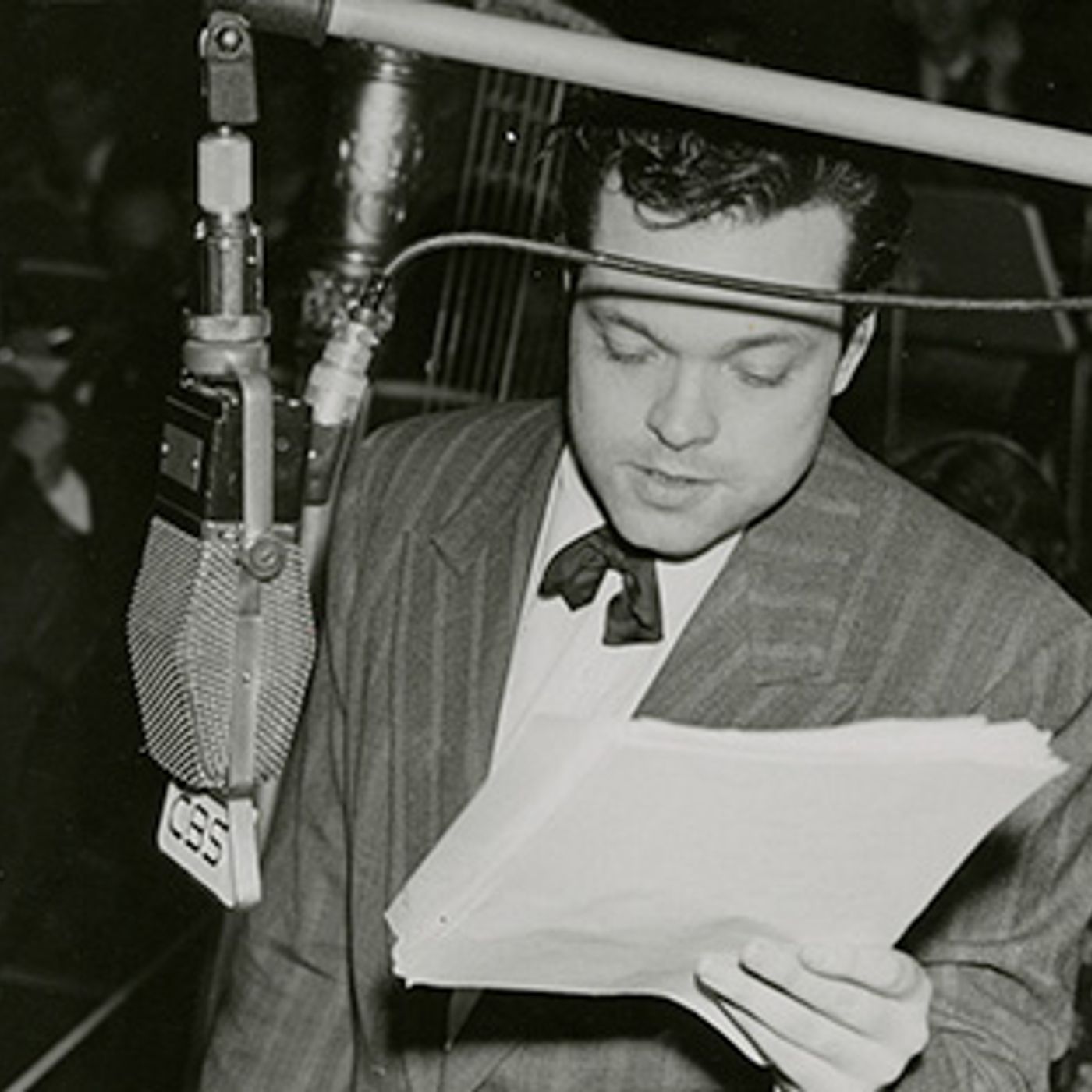
Harold's Old Time Radio
Your Radio Almanac - 1944-02-16 - #4 - guest Robert Benchley
00:29:36
Your Radio Almanac - 1944-02-16 - #4 - guest Robert Benchley
Loading summary
Transcript197 lines
- [00:00]
A
Every now and then I rinse it out and I need downy rinse tonight and I need it more My kid wet the bed and the smell never leaves I don't know what to do I'm always in the dark the sweat and dance sure smells like a dark.
- [00:21]
B
I'm downy rinsing tonight Downy rinse fights stubborn odors in just one wash when impossible odors get stuck in Rinse it out. Our astrology department says this is the dark of the moon.
- [00:35]
C
What?
- [00:35]
B
Says our astrology department?
- [00:36]
D
If you were born this week, your ruling planets are Saturn and Uranus.
- [00:41]
C
Uranus stands for liberty and equality.
- [00:45]
E
Congratulations.
- [00:48]
B
And now, our authority on Interesting facts, Mr. Frugelheiser.
- [00:52]
D
Thank you, Herr Dr. Wells. There is no soda in soda water. There is no buffalo on the buffalo niggle. The Klondike is not in Alaska. Bees do not get honey from flowers.
- [01:10]
B
And now, a helpful hint for the housewife.
- [01:12]
F
Boiling vinegar will remove the odor of cigar smoke. There is nothing that will remove the.
- [01:18]
G
Odor of boiling vinegar.
- [01:25]
B
Thank you, Prudence kraft. And now, Dr. Cruett.
- [01:29]
H
Historical note. Silk stockings were first worn by Henry II of France in 1547.
- [01:35]
B
Nylon stockings were last seen on a lady in Toledo in 1943. We bid you welcome, ladies and gentlemen.
- [01:48]
E
To the sign of the flying red horse. Tonight and every week at this same time over these same stations, the makers of mob gas and mobile oil bring you Orson Welles.
- [02:09]
B
Ladies and gentlemen, February 15th was the anniversary of the birthday of Galileo, who introduced the law of the pendulum and who also introduced the telescope and many of the principles of astronomy. February 18th is the birthday of Jimmy Durante, who introduced umbriago. The tango is not the national dance of Argentina. And here's a curious coincidence. Mr. Robert Benchley.
- [02:29]
H
So it is.
- [02:37]
B
That's you.
- [02:38]
C
And you say thank you, ladies and gentlemen.
- [02:39]
H
I did say thank you. You did? Really?
- [02:41]
B
I beg your pardon. That's me then. And it isn't funny either. I understand you've just complete. Hello, Bob. You better start it again.
- [02:51]
H
Thank you, ladies and gentlemen.
- [02:52]
B
Pass. I understand you've just completed a new short in your how to series. Yes.
- [02:57]
H
This one is called how to open a horse's mouth with your right hand and count his teeth in such a way he doesn't close his mouth and count your fingers.
- [03:05]
B
Uh, sounds interesting. How did it turn out, Bob?
- [03:08]
H
Oh, well, just call me Lefty.
- [03:13]
B
I must. I must remember to see that. Bob, you know, there's been a lot of good entertainment lately.
- [03:19]
H
Have you seen.
- [03:19]
B
Seen lady in the Dark?
- [03:21]
H
No. Lately, I haven't been doing. Oh, the picture.
- [03:27]
E
No, I haven't.
- [03:28]
B
There's a great picture that's around with Joan Fontaine in it. It's called something air.
- [03:34]
E
Oh, air mail.
- [03:36]
B
No, Jane Eyre.
- [03:38]
H
Oh, that's it. That's it. I saw you.
- [03:40]
B
That was me.
- [03:41]
E
How'd you like the picture?
- [03:44]
B
Well, I. Say, how did you like the picture, Bob? Mr. Benchley, I don't like the tone of what you're not saying.
- [03:56]
H
Well, to begin with, as I was coming into the theater, I almost tripped over three girls who had just swooned.
- [04:01]
B
Oh, that happens all the time.
- [04:04]
H
They shouldn't bring those pictures of Frank Sinatra into the lobby.
- [04:08]
B
Oh, now, wait. Wait till you see my next picture.
- [04:10]
H
Bob.
- [04:10]
B
Imagine, if you will, a boy and a girl on a terrace. Her lustrous eyes shining with unwanted brilliancy. Her pearly teeth. This is a scene.
- [04:16]
E
Really?
- [04:16]
C
Really.
- [04:16]
B
Listen to this. Her pearly teeth glistening in the moonlight and her heaving chest rising and falling to the sensuous tones of Merzy Doates.
- [04:26]
H
Well, I don't want to brag, Austin, but I'm probably as romantic as you are. You don't laugh at my jokes too much. People will say we're in love.
- [04:45]
B
Well, I. I've lost my place. Bob, what's the next line you broke me up on? Excuse me, Bob.
- [04:53]
H
Yes?
- [04:53]
E
I hate to interrupt.
- [04:54]
B
What did I interrupt? I promised an interview.
- [04:57]
H
A laugh you didn't expect.
- [04:59]
B
I promised an interview to the Orson Welles Swoon Club. Come on in, girls.
- [05:04]
A
Oh, Wellsie, we just saw Jane Eyre.
- [05:08]
F
Oh, Wellsie. Say it again. Say what you said to Joan Fontaine.
- [05:16]
B
Well, you mean.
- [05:17]
C
Darling, I dare not hope for your love.
- [05:22]
H
I don't understand this swooning. A guy says, darling, I dare not hope for your love.
- [05:30]
B
Bob, what are you shrieking about?
- [05:32]
H
You're standing on my foot.
- [05:35]
F
Oh, we forgot to tell you. Wealthy. We got three new members from Glendale.
- [05:39]
B
Oh, now, look, girls, let's not allow this thing to get out of control. It'll be very embarrassing if the lipstick campaign got started. You know those hearts drawn on the sides of buildings that say, frankie loves Fanny Spiewak?
- [05:51]
H
You know, I'm afraid it started already. There's a big heart drawn on the side of this building. It says, orson Welles, I love you. Sign Orson Welles.
- [06:04]
B
Girls, where are you going?
- [06:05]
F
Oh, we gotta rush. We just got time to catch the late show up.
- [06:08]
B
Jane Eyre, save my seat. And now, now it's time. Now it's time for Mr. Benchley's lecture. Ladies and gentlemen, it's My pleasure to present. Mr.
- [06:23]
F
Pardon.
- [06:24]
B
Mr. Wells, I give you at this.
- [06:25]
F
Forgive this unseemly intrusion, but earlier this evening did you make the statement that Galileo was famous for having discovered many of the principles of astronomy?
- [06:33]
B
Yes.
- [06:34]
F
You wish to retract it?
- [06:36]
B
Well, no, I don't think so either, Mr. Wells.
- [06:39]
F
It's almost as ludicrous as the error made by Archimedes when he said the locus of all points equidistant from a system of transcendental curves is to be found in the confluence of their respective vortices.
- [06:58]
B
How old are you, my boy?
- [07:00]
F
9.
- [07:01]
B
Getting late for little fellow son. Ladies and gentlemen, at this point, in.
- [07:05]
F
The words of the sage, as 10 millions of circles can never make a square, so the united voice of myriads cannot lend the smallest foundation to falsehood.
- [07:13]
B
Oh, yes, that was Copernicus on prevarication.
- [07:16]
F
No, Kupperman on the Quiz Kids. But that isn't what I came here for. I've been listening to you on the air.
- [07:24]
E
Thank you.
- [07:25]
F
You know, Mr. Wells, I've been dabbling in psychology and I think I can help you. Is something troubling you? Girls, perhaps?
- [07:34]
H
Well.
- [07:35]
F
Oh, I see. Fair. Complex. Your particular concern is what girls say about you.
- [07:40]
B
Oh, just what one girl says.
- [07:42]
F
Aha. Who is she?
- [07:44]
E
Hedda hopper.
- [07:49]
F
Come, come, Mr. Wells. I'm trying to give you a little guidance. Tell me something about your childhood.
- [07:54]
H
My childhood?
- [07:54]
B
Oh, I don't wanna.
- [07:55]
F
Come. Come, come.
- [07:56]
B
No, I don't wanna. Well, there's nothing to tell. I was a perfectly normal baby. At 4 months of age, I started to walk.
- [08:09]
F
You walked at four months of age? How did you do it?
- [08:12]
B
A pretty nurse strolled past my crib.
- [08:14]
C
And I followed her.
- [08:16]
F
Hmm. Hyperactivity. The pituitary?
- [08:18]
B
No, she had an average build.
- [08:22]
F
Please. Now, one more thing. Have you ever been in love?
- [08:25]
C
Have I ever been in love? My boy, you have inadvertently touched upon the great tragedy of my life.
- [08:32]
B
It all began in the little hospital where I was born. In the next crib, to me was a little baby girl. A little girl who was to change.
- [08:40]
C
The whole course of my life.
- [08:43]
B
She looked over at me through the bars of a crib, and in her eyes there was an inexpressible something. Something she was trying to say to me.
- [08:49]
C
And then she did say it to me.
- [08:52]
B
She looked at me and said, goo. She was the intellectual type. It was madness. I wanted to give her my fraternity pin, but I didn't have a fraternity pin. So I gave her the only pin I had.
- [09:02]
H
After that.
- [09:05]
B
After that, I remained undercover. I can't continue.
- [09:11]
F
Oh, please don't try. Mr. Wells, did you ever see her again?
- [09:15]
B
Many times.
- [09:15]
C
But I never dared speak, never dared to tell of my love.
- [09:19]
F
Why not?
- [09:19]
B
The vagaries of chance, the cruelties of fate.
- [09:22]
C
An error made by a careless intern and poof.
- [09:25]
B
Your dreams turn to ashes.
- [09:27]
F
What do you mean, son?
- [09:29]
B
That little girl grew up to be Slapsy Maxi Rosenblum.
- [09:47]
C
Sam.
- [10:45]
E
That was Lud Gluskin's version of Cole Porter's new song, I love you. And this is Old Dr. Wells Almanac and joke book. Ladies and gentlemen, any more curious items? Professor Frugelheiser?
- [10:55]
D
Oh, yes, Mr. Martha. At the sign of the flying red horse, you will find the larger selling motor oil on earth.
- [11:04]
H
Mobil oil.
- [11:05]
E
Mobil oil, that's right. And here's the thing about Mobil oil. No oil can guard your engine better against sludge and harmful deposits.
- [11:13]
C
Go right.
- [11:14]
E
No oil will battle more to keep your engine clean.
- [11:17]
D
Absolutely. Please go on, Mr. Maza.
- [11:20]
E
Well, I'm steering you straight, folks. Change oil frequently and change to good, fresh, mobile oil. You see, you're driving at slower speed today. You're making shorter trips.
- [11:29]
D
And what is the result?
- [11:31]
E
Your oil dilutes and dirties faster. And you know that can waste gasoline. And it'll mean a sluggish motor and big repair bills. 70% of all the cars on the road today are from 5 to 10 years old. And new buggies will be scarce till long after peace is here. So take care of your car. Have your crankcase filled up full and frequently with world famous Mobil oil. Your friendly mobile gas dealer wants to see your car run better, longer.
- [12:11]
B
And now, ladies and gentlemen, I'm sure you'll be very interested in our next speaker, the eminent authority E.N.E.K.I.M.O. love, Mr. Robert Benchley.
- [12:26]
H
Thank you, Eskimo lovers. My subject tonight is the Eskimo. I say tonight inadvisedly because to some Eskimos, the night will last six months. I sincerely hope to finish my lecture before then. The Eskimo or Eskimarcs, which is the plural spelled P L U R A L, is seldom found around the equator. My authority for this statement is J.C. funk, who says, quote, plural is spelled P L U R a L. The typical Eskimo has good teeth, but owing to the character of his diet, worn down to the gums, which he massages vigorously three times a day, the Eskimo suit, or outer garment, consists of two layers of skins, one with the hair outside and one with the hair inside. The Eskimo Consists of one layer of skin with the hair outside. The skin of the Eskimo's face has a bacony feel. My authority for this statement is c. T. Coutts, who has spent a great many years feeling Eskimo faces. The Eskimo is a sharp trader, often getting as much as a can of Sterno and two bottles of Pepsi Cola for one of his wives. The Eskimo subsists mostly on fish and a native drink known as ookla. Ookla is two parts whale blubber, one part fermented wolf livers, a jigger of dried walrus tusk, a dash of Uncle Jed's horse liniment, a pony of Uncle Jed's horse, and and a teaspoonful of vanilla. Ookla, scientists believe, is what accounts for the aurora boreal. When the Eskimo is ready to hunt, he takes his kayak or canoe, his parka or hunting spear, and his lakdwat, which is a sort of small puna. The Eskimo uses small sharp spear to catch seal, which they call ungoc. It's not known what the seal call the Eskimo. The Eskimo has a primitive way of fishing. Standing on the ice, he inserts a hacksaw and proceeds to saw a circle around him. When the circle is completed, he climbs out and retires to his igloo to dry off. He soon returns and lowers a hook through the hole in the ice. Then he sits on the ice for three or four hours to await development. After cooling his heels sufficiently, he pulls up the string and decides to bait the hook. By this time, the hole is frozen over. He walks to the nearest A and P and ponies up 12 points for a can of salmon. Contrary to popular belief, the Eskimo is quite literate. One of the many books published is entitled Etoi go l' etique n' a guine mar mique tout sar univac. This, of course, is some of the lighter reading. There is also a sequel to Akwa gogituik nalle gun marmik tusa un de kaak, which is called oompk. On leaving an igloo, An Eskimo may remark univar geek. And to an American, laktuat no puna, which translated means, you know that big.
- [16:04]
I
Bargain detergent jug is 80% water, right? It doesn't clean as well.
- [16:08]
F
80% water. I thought I was getting a better.
- [16:11]
I
Deal because it's so big. If you want a better clean, Tide pods are only 12% water. The rest is pure Concentrated cleaning ingredients.
- [16:19]
F
Oh, let me make an announcement. Attention, shoppers, if you want a real.
- [16:23]
B
Deal, try Tide Pods.
- [16:25]
I
Stop paying for watered down detergents. Pay for clean. If it's gotta be clean, it's gotta be Tide pods. Water content based on the leading bargain.
- [16:32]
H
Liquid detergent, Lak wat no puna. This, of course, is a liberal translation.
- [16:38]
F
Let's retract that statement.
- [16:40]
H
Well, hello, little man. Lost your mother, have you?
- [16:43]
F
You realize, of course, that you've made an error. In fact, do you wish to retract it?
- [16:47]
H
Well, I'd be glad to if I can remember what I said.
- [16:49]
F
You said, I'm leaving an igloo and eskimore. Me mark Ungivar kik. Now, actually, ungivarikkik is an archaic form used only by the Abnaki, Eshamik, or Takunakalpapunuk tribes.
- [17:02]
C
Mm. That's my boy. Who said that?
- [17:07]
F
Really, sir, you mustn't be so uncertain of yourself. You seem to be a bundle of inhibitions and complexes. Perhaps I can help you. What is your name, please?
- [17:15]
H
My name is Robert Benchley. I'm 54 years old, and I'm a student at the Bamboo Room of the Brown Derby.
- [17:29]
F
Mr. Benchley, I may be of assistance to you. I've dabbled in psychology. Now, tell me about your childhood.
- [17:38]
H
What do you want to know?
- [17:39]
F
Oh, just start talking. I'll take notes.
- [17:42]
H
Well, I was born in Worcester, Massachusetts. I weighed three and a half pounds.
- [17:45]
B
I'm surprised the game warden let him keep you.
- [17:49]
H
But I grew rapidly, and at the age of three months.
- [17:52]
F
Yes? What happened?
- [17:53]
H
Oh, nothing. I was too young. Well, the next thing I remember, I was left on somebody's doorstep.
- [18:04]
F
Oh, that's unfortunate. How old were you at the time?
- [18:07]
E
Mm, 28.
- [18:10]
B
It was a very large basket.
- [18:13]
F
Oh, an abstrums. Please.
- [18:14]
B
As indeed it still is.
- [18:17]
F
Spenceley. Spenchley. Do you ever worry?
- [18:20]
E
Only about girls?
- [18:21]
F
Worries about girls? Fear complex.
- [18:24]
H
Well, but before I meet them, I usually say to myself, what have you got to worry about, Benchley? You've got everything. Brains, talent, looks.
- [18:30]
F
Hmm. Hallucinations. Well, I think I have enough data to make a diagnosis. Mr. Benchley, you are suffering from schizophrenia.
- [18:40]
B
Oh, he's definitely a skeeze.
- [18:43]
H
Austin, do you. Does he mean that I have a split personality?
- [18:45]
B
Yes. You're really two persons in one.
- [18:47]
H
Well, that settles it. You'll have to pay me as a team.
- [18:50]
G
Yeah, but.
- [19:02]
B
Ladies. Ladies and gentlemen, we have such authorities as Mr. Irving Berlin, Mr. Jerome Kern, Mr. Cole Porter, and, yes, Mr. Orson Welles to Attest to the fact that the real, genuine, number one stylist of them all still is and remains the.
- [19:16]
C
Lady who confronts you.
- [19:17]
B
Now, Ms. Kay Thompson.
- [19:22]
G
Are you a shout when it hits you. Yes, indeed. You will shout when it hits you. Yes indeed. When the spirit moves you and when it behooves you to shout Shout hallelujah. Yes, indeed. When the spirit moves you and when it behooves you to shout Shout hallelujah. Yes, indeed. When the spirit moves ya and when it behooves you to shout Shout hallelujah. Yes, indeed. The Lord once said there was a great day coming and there's no doubt about it that the Lord the Lord once said you gotta climb the mountain stairs on the judgment day and there's no doubt about it that the Lord was right the judgment day the judgment.
- [20:07]
C
Day.
- [20:10]
G
There'S gonna be a lot of people talking about an awful lot of angels flying there's gonna be a lot of people shouting, shouting, shouting bout the judgment day. So put on your Sunday suit with a big brass buttons Put on your Sunday suit with the big brass buttons It's a big dress up affair Better put a ribbon in your hair.
- [20:35]
C
For.
- [20:35]
G
The great day show is coming, coming Hallelujah. Hallelujah.
- [20:44]
A
Hallelujah. Hallelujah.
- [20:45]
G
Hallelujah. Hallelujah. Yes indeed, yes indeed when you get that feeling you're gonna shout yes indeed. When the spirit moves you and it behooves you to shout Shout hallelujah. Yes indeed. Oh, you will shout when it hits you yes, indeed. Shout when it hits you yes, indeed when the spirit moves you and it behooves you to shout Shout hallelujah. Shout hallelujah.
- [21:39]
C
Yes.
- [21:58]
E
Folks, before rationing, you bought gasoline not just for mileage, but for quick response and smooth riding on the open highway and over the highest hill. Today, well, times have changed. What you pay for, what you pray for are the miles alone. Gotta get mileage, that's your motto and you'll get it in the gasoline called mobile gas. Mobile gas is packed with every wartime mile it's possible to give you. It makes your coupons really count. There's no mystery to mobile gas. Its qualities are blended with a Master Touch that's all 1944 mobile gas gives you all the mileage that you got from peacetime mobile gas. Do you drive to the plant every morning? Do you drive to town for necessary shopping? Do you drive a truck then drive with mobile gas? Every gallon is war engineered for distance, made to give you mile after mile after mile. Prove it in traffic Prove it on the highway and come in and get it at the sign of the flying red horse. America's favorite gasoline Mobile gas.
- [23:17]
B
And now I'm going to read you.
- [23:20]
C
A poem by Archibald McLeish. There's talk, says Illinois. Is there, says Iowa. There's talk on the east wind, says Illinois. Talk about what? Says Dakota, Says Kansas, Says Arkansas. Can't make out too far east, says Michigan. East of the roosters, says Indiana. East of the morning crows, says Ohio. East, says York. State east still says Connecticut on east. It's down east from here, says Massachusetts. It's east of the quad, says Maine. But I hear it. Hear what? Says Texas. What can you hear? Says Virginia. Can't be sure, says Maine. Surf on the reefs, Ice pounding away on the pans and penobscot. Listen, says Oregon. Scoop your ears, says Kentucky. Can't tell, says Maine. Too much fog. Bells on the old orchard horns at a gunquet. Blessing, says Mississippi. Try to, says Texas. It's tall talk, says Maine. It's tall talking. Call it, says Arkansas. It's mean talk, says Maine. Mean about what? Says Nebraska.
- [24:27]
B
Mean about us.
- [24:29]
C
What about us? Says Kentucky, says Texas, says Idaho. Gather they don't like us, says Maine. Do tell, says Connecticut. I vum, says New Hampshire. I gather we've low ways, says Maine. That so, says Kansas. Take my seat, says Michigan. It's how we marry, says Maine. We ain't choosers. Seems we scrabble em up and we mingle em in. We marry the Irish girls with the shoes and the quick come after. We marry the Spaniards with the evening eyes. We marry the English with the tiptoe faces. We marry the golden Swedes, the black Italians, the German girls, the Mexicans, the Chileanas for luck, the Jews for remembrance, the Scots girls, the French for the skillful fingers, the long loves. I gather we marry too many, says Maine. Too various. I gather we're bad blood. We're mixed people and what they say says Texas. That's what they're saying. What's in their soup, Says Arkansas. What they been eating? What's in their hair, says Marilyn. Aren't they men? Can't they make it with a stranger? Says Alabama. Are they shy? Says Missouri, or what? Says Montana. I gather they're bred pure, says Maine.
- [25:51]
B
They're superior people.
- [25:54]
C
Have they seen our kids?
- [25:55]
H
Says York State.
- [25:56]
C
The tall girls, the way they walk on the world with their narrow heels, you can tell them anywhere. Tell them in any country. The height of their heads, the tilt of their heels when they walk. Have they raced our Boys, says Michigan. Fast as black snakes. Have they beaten them? I gather they haven't, says Maine. I gather we're mixed bloods. They don't take to us, don't they? Says Kansas. Have they seen our town, says Kansas. Seen our wheat? Seen our flat cars and the rocky Mountain?
- [26:30]
B
Seen our four lane highways?
- [26:32]
C
Seen our plains, the big timber, the tall corn, the horses?
- [26:37]
B
Have they seen our farms?
- [26:38]
C
Says Kansas. And who plowed them? Have they seen our towns? Says Kansas. And who planned them? Have they seen our men, says Kansas. Gather. Not gather, we're bad blood.
- [26:54]
B
This is Maine.
- [26:57]
C
Who says Missouri. Who's this saying where from? Says Montana. Where's he from? Where from? Who says? Can't make out way east. East of the Rhine. It might be the wind veers, says Maine. I don't make out east of the Rhine. So that's it, says Montana. The pure blood's by the Rhine, says Carolina. The blood we left behind us, says Wisconsin. The blood we left behind us when we left. The blood afraid of travel, says Nevada. The blood afraid of changes, says Kentucky. The blood afraid is stranger, says Vermont. Strange stars and strange women, the two of them. The blood that never hankered for a strange one, a dark one, says Dakota with strange hair Stayed home and married their kin, says Missouri. Married their cousins who look like their mothers, says Michigan. So that's all east of the Rhine, says Wisconsin so that's all, says Arkansas all for that, all for the purebred boys afraid of strangers. Surf on the reef, this is main Ice on Penobscot and there's talk, says Iowa Talk says Illinois Bells on the old orchard bells at Ogunkwit Clash of corn in the wind, says Illinois.
- [28:39]
B
Now, ladies and gentlemen, it's time to say good night now. Please join us next week. Till then, all of us in the Mercury Theater remain, as always, obediently yours.
- [29:17]
E
The makers of mobile Gas and Mobile oil invite you to listen in next week, same time, same station, to your radio almanac. Mr. Wells guest is Betty Hutton.
- [29:27]
B
That's right. That's right. And I know you all like her. Ladies and gentlemen, our time's about up, but if any of you ever happen to be a little low in cash, here's a word of comfort from Joe Jefferson, the actor who made Rip Van Winkle famous on the stage and was born 115 years ago Sunday. Like most of us actors, he was often flat broke. And here's what he said about it. I've lost everything. And he said, I'm so poor now that I really can't afford to let anything worry me. Now just remember that with which poor Orson's Almanac says good night to you again.
- [29:57]
E
Robert Bensley appeared tonight for the courtesy of Paramount Pictures, whose current release is lady in the Dark. And Kate Thompson appeared to the courtesy of Mr. Golden Mayer, producers of Madame Curie Colloquial Estates published the Atlantic Continent. Matthew speaking. This is cbs, the Columbia broadcasting System.