
Podcast
Healthcare for Humans
Hosted by Kumara Raja Sundar · EN
This show provides actionable skills in cultural humility, culturally responsive care, and health equity so clinicians, leaders, and neighbors can serve every community better.
Hosted by family physician and healthcare leader Dr. Raj Sundar, each episode explores cultural humility, culturally responsive care, and health equity through the voices of patients, clinicians, and system designers who live the work every day.
WHAT YOU’LL HEAR
Practical ways to deliver culturally competent & culturally responsive care, language-concordant, and trauma-informed care.
Strategies for tackling social determinants of health at both the clinic and policy levels.
Real stories showing how culture, history, and environment shape health outcomes—and how clinicians can respond.
Design ideas for health-care leaders building inclusive, patient-centered systems.
Community insights that help all of us become better neighbors and advocates.
WHO IT’S FOR
Frontline clinicians, public-health and hospital leaders, medical educators, and anyone curious about making cross-cultural care the norm.
WHEN
. Follow now to keep cultural humility—and culturally responsive care—at the center of your practice and healthcare system
24episodes
Episodes
Newest firstAll episodes
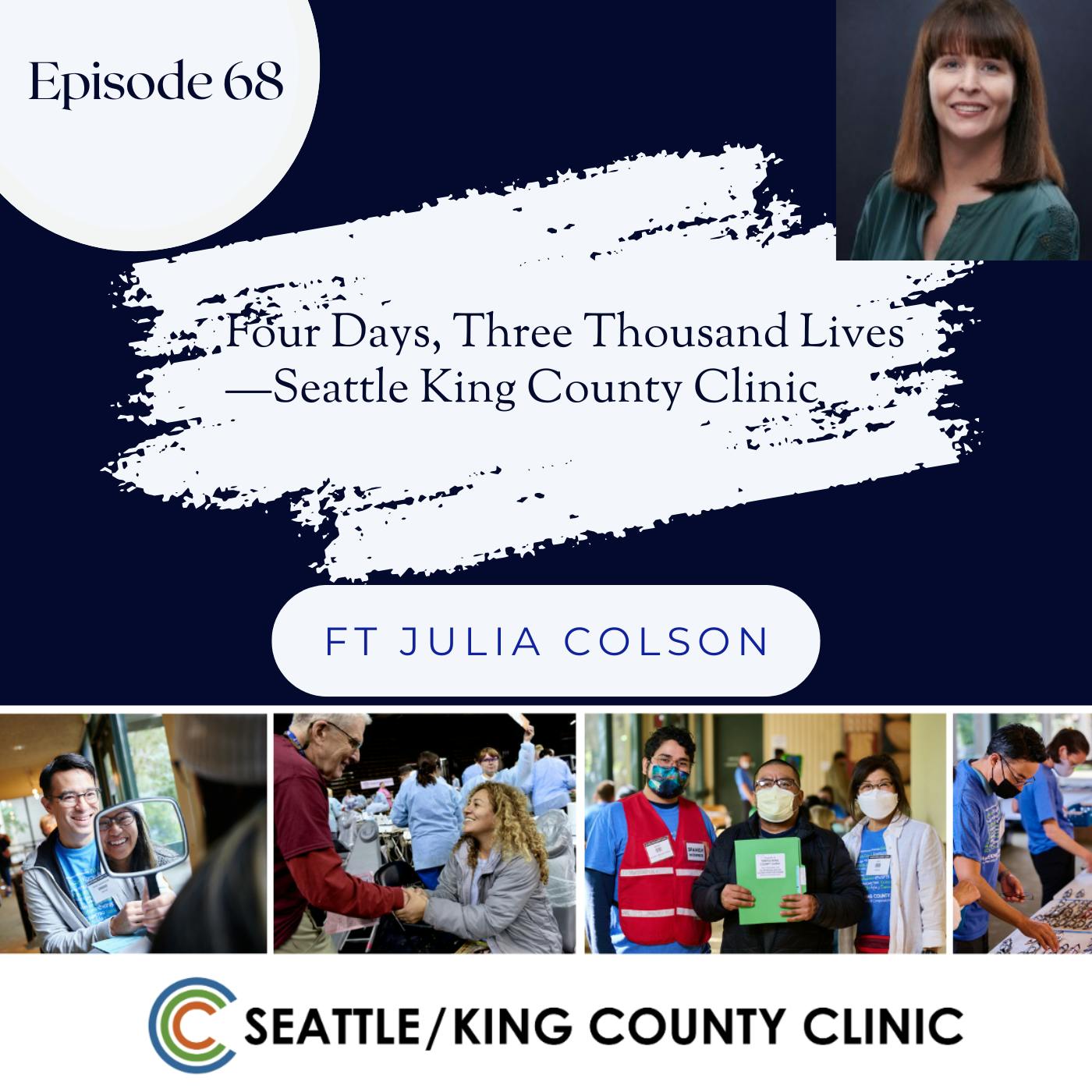
68 I Four Days, Three Thousand Lives—Seattle King County Clinic w/ Julia Colson
Apr 8, 202500:41:45Tap to summarizeWe sit down with Julia Colson, the founder and executive director of the Seattle King County Clinic, to discuss the incredible journey of establishing a large-scale, volunteer-driven pop-up clinic providing free dental, vision, and medical services to thousands each year. She shares the clinic's origin story, spurred by a 60-minute episode that highlighted the healthcare struggles of everyday people and her realization of the parallels within her own life. Julia delves into the challenges of building such a unique healthcare initiative from scratch, emphasizing the essential role of openness, humility, and collaboration in shaping the clinic's success. Through heartfelt anecdotes and insights, we explore the powerful impact of the clinic in transforming both patient experiences and volunteer perspectives while also addressing how the initiative calls attention to the broader issues plaguing our healthcare system.To Volunteer: Seattle/King County Clinic - Seattle Center FoundationOverview: Transformed from watching "60 Minutes" to founding a clinic that serves 3,000 patients in four days Used event planning background rather than healthcare expertise to approach problems differently Created a collaborative model where diverse skills complemented each other's gaps Challenged stereotypes by showing diverse patients - teachers, tech workers with insurance, not just unhoused individuals Built community between patients and volunteers by midday of each clinic Used the clinic as both immediate intervention and platform for advocacy Incorporated storytelling through comics and patient narratives to humanize statistics Balanced meeting urgent needs while pushing for systemic reform Demonstrated how naivete and humility can be assets when creating innovative solutions Prioritized listening and supporting patients over rushing through care Helped providers reconnect with the human aspects of medicine, free from business metrics Next Step: Visit our website, Healthcare for Humans, and join our community to enjoy exclusive benefits at https://www.healthcareforhumans.org/support/ Support Our Mission: Non-clinicians, explore exclusive content and contribute to our collective journey. Be an Active Participant: Go beyond listening. Shape our narrative by co-creating episodes with us. Be part of our community by visiting https://www.healthcareforhumans.org/support/. Follow us on Instagram @healthcareforhumanspodcast
Transcribe →
67 I From Local Voice to Call Center: Healthcare's Cultural Crossroads w/ Patty Hayward (Talkdesk)
Mar 17, 202500:35:05Tap to summarizeWe explore the potential of centralized contact centers in healthcare with Patty Hayward, the general manager of healthcare and life sciences at Talkdesk. Drawing from her extensive experience and personal stories, such as her mother's medical journey, Patty illustrates the critical need for better communication and coordination within healthcare systems. We delve into how centralization, aided by AI and modern technology, could improve patient care by offering timely, personalized interactions and addressing unmet needs in diverse communities. We also tackle how a centralized approach can respect cultural nuances and enhance health education, breaking down barriers to access and understanding. Overview: Streamlining Contact Center Efficiency Automated CRM Conversation Enhancement Culturally Aligned Contact Centers Streamlining Healthcare Access Challenges Reaching Unreached Populations Effectively Proactive Outreach with Real-Time Translation Next Step: Visit our website, Healthcare for Humans, and join our community to enjoy exclusive benefits at https://www.healthcareforhumans.org/support/ Support Our Mission: Non-clinicians, explore exclusive content and contribute to our collective journey. Be an Active Participant: Go beyond listening. Shape our narrative by co-creating episodes with us. Be part of our community by visiting https://www.healthcareforhumans.org/support/. Follow us on Instagram @healthcareforhumanspodcast
Transcribe →
66 I Japan — Between Authority and Rice: Cross-Cultural Healthcare with Japanese Americans
Mar 4, 202500:27:41Tap to summarizeWe explore the complexities of Japanese food culture and its impact on health, addressing how American influences have altered traditional diets. Jeff discusses the importance of rice in Japanese meals and his personal transition to healthier rice options. We delve into portion control within Japanese dining customs and the concept of intuitive eating. The conversation shifts to Japanese cultural nuances, including language, religion, and familial expectations, emphasizing the importance of acknowledging expertise both in healthcare and family matters. Additionally, we discuss the role of social support systems, religious influences, and the cultural dynamics surrounding aging and caregiving in Japanese American communities.Overview: Transition from Short to Long Grain Rice Exploring Cultural Elements Patterns and Power in Interactions Japanese American Religious Identity Japanese American Family Care Traditions Keirog Japanese Nursing Home Closur Navigating Uncertainty in Medical Decisions "Evaluating Two Treatment Choices" Next Step: Visit our website, Healthcare for Humans, and join our community to enjoy exclusive benefits at https://www.healthcareforhumans.org/support/ Support Our Mission: Non-clinicians, explore exclusive content and contribute to our collective journey. Be an Active Participant: Go beyond listening. Shape our narrative by co-creating episodes with us. Be part of our community by visiting https://www.healthcareforhumans.org/support/. Follow us on Instagram @healthcareforhumanspodcast
Transcribe →
61 I The Hidden Equity Gap: How Outdated Tech Hurts Healthcare Access with Bevey Miner
Dec 30, 2024Tap to summarizeWe delve into the critical topic of fax machines and their surprising impact on health equity with Bevey Miner, a seasoned expert in healthcare technology. Drawing from over two decades of experience, Bevey illuminates the complexities of healthcare data sharing and the disparities marginalized communities face due to outdated technologies like fax machines. We explore the challenges of interoperability, the necessity of structured data for meaningful analytics, and the importance of tech equity in bridging the gaps in healthcare access and outcomes. From discussing digital cloud faxing solutions to advocating for policy changes, we highlight the intersection of technology and health equity, urging for a unified approach to data sharing that includes all healthcare providers and patients.Overview: 00:00 EHR incentives neglected behavioral health and upgrades. 05:07 Implement translation technologies, output as FHIR resource. 09:00 Structured data enables effective health outcome analysis. 12:06 Tech equity funding needed for healthcare databases. Resources:Consensus SolutionsNext Step: Visit our website, Healthcare for Humans, and join our community to enjoy exclusive benefits at https://www.healthcareforhumans.org/support/ Support Our Mission: Non-clinicians, explore exclusive content and contribute to our collective journey. Be an Active Participant: Go beyond listening. Shape our narrative by co-creating episodes with us. Be part of our community by visiting https://www.healthcareforhumans.org/support/. Follow us on Instagram @healthcareforhumanspodcast
Transcribe →