← The Preamble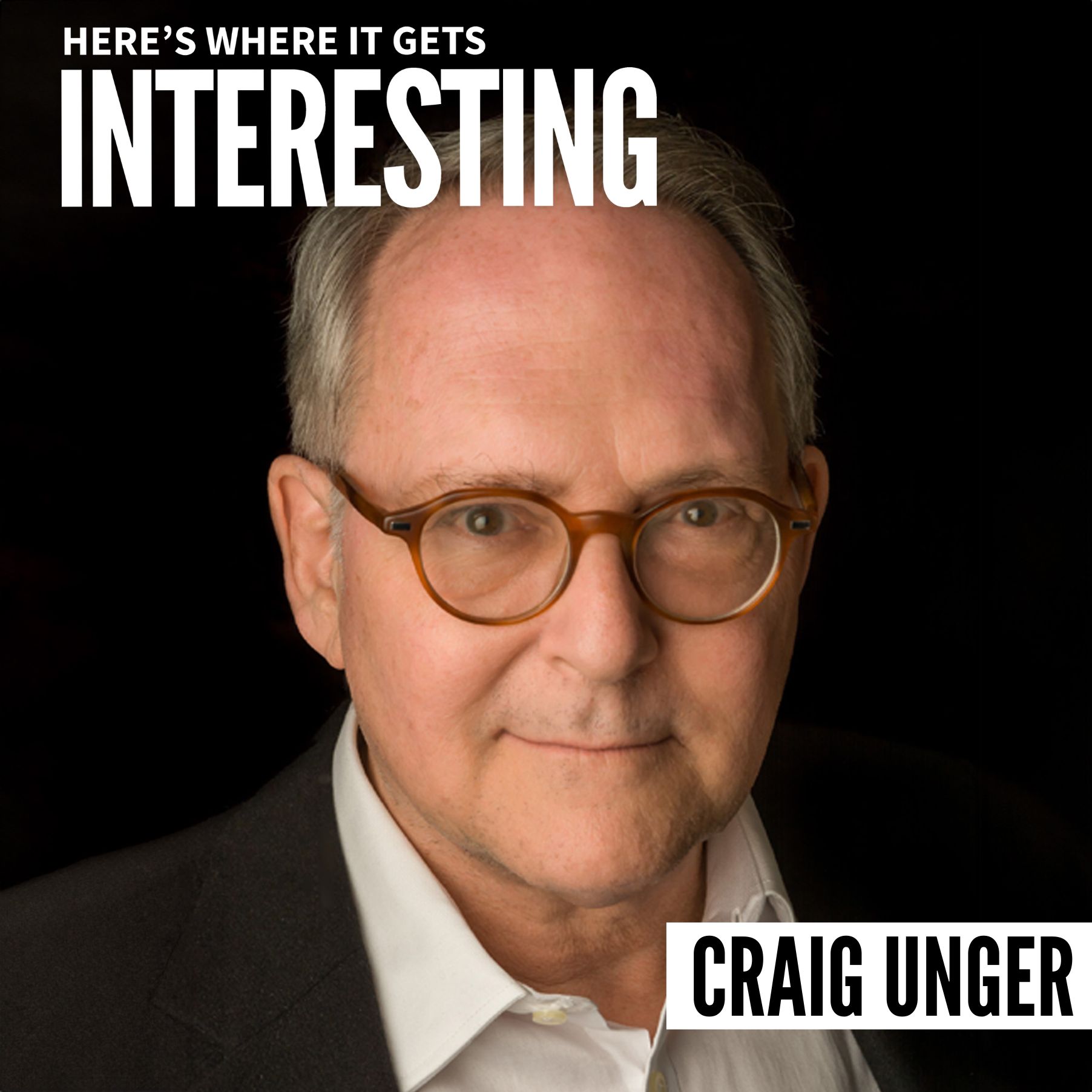
The Preamble
Den of Spies with Craig Unger
00:41:13
Was there a secret conspiracy between Ronald Reagan’s campaign and Iran to help him win the 1980 election? NYT bestselling author Craig Unger uncovers the shocking plot in this real-life political thriller.
Loading summary
Transcript64 lines
- [00:00]
Sharon McMahon
For a gift that is always on time and lasts a lifetime, you can't do better than Masterclass if you are struggling with what to get. For somebody who has everything, a Masterclass subscription is a perfect gift. Don't just give your loved ones something they want, give them something they want to be with Master Quest. Your loved ones can learn from the best to become their best. I really enjoy listening to it on podcast mode so that I can go about my day or listen in my car. But you can also watch all of the very high quality video productions. Everyone from Malcolm Gladwell talking about how to be a better writer to some of your favorite chefs teaching you how to make cultural dishes at home. I know I personally have been a Masterclass subscriber for years and I have given Masterclass subscriptions to many people as gifts and Masterclass always has great offers during the holidays, sometimes up to as much as 50% off. Head over to masterclass.com Sharon for the current offer that's up to 50% off@masterclass.com Sharon masterclass.com Sharon one of the great pleasures of the holidays is being able to put a smile on one of your loved ones faces with the perfect gift. And it's great when you can get someone a gift they they wouldn't necessarily get for themselves. Like a little bit of luxury. Something they don't know that they really wanted, but in fact they do. And for quality gifts at an affordable price, my go to is Quince. I have multiple quince pieces in my closet. And listen, as a connoisseur of sweaters, if you've been around here for any period of time, you know that I live where it's cold and I wear sweaters nine, ten months a year. And quince's quality is exactly like what you would expect from a much higher priced store. So gift luxury this holiday season without the luxury price tag. Go to quince.com Interesting for 365 day returns plus free shipping on your order. That's Q U I n c e.com/interest in to get free shipping and 365 day returns. Quint.com Interesting if you have health insurance.
- [02:26]
Nourish Ad
You might be able to see a personal dietitian for $0. Out of pocket Nourish connects you with a dietitian that fits your needs covered by your insurance. Nourish accepts hundreds of insurance plans and 94% of patients pay $0 out of pocket. Meet with your dietitian online and message them anytime through the Nourish app with hundreds of five Star reviews from real patients. You know you're in good hands. Find your dietitian@usenourish.com that's usenourish.com.
- [02:59]
Sharon McMahon
Hey, friends, welcome. Delighted that you're with me today. You are going to need to buckle up for this episode. My guest is Craig Unger, who has written a book called Den of Spies, Reagan, Carter, and the Secret History of the Treason that Stole the White House. Now, this is not about election conspiracy theories, but it is about the secret effort to undermine the release of the American hostages being held in the Iranian embassy, something that ultimately cost Jimmy Carter the election. You are going to want to stick around for this conversation, so let's dive in. I'm Sharon McMahon, and here's where it gets interesting. Thank you so much for being here.
- [03:47]
Craig Unger
Well, thanks for having me.
- [03:49]
Sharon McMahon
First of all, let's set the stage for what the Den of Spies actually is.
- [03:55]
Craig Unger
It's a spy thriller, but it's a real life spy thriller. And it's about a covert operation that took place in 1980 during the presidential election. And it's been controversial for many, many years. I've been on and off the story for more than three decades, and I believe I finally really put together a spy story of how it happened. This is a secret, treasonous, covert operation that sabotaged an American presidential election. And it was the foundation of the birth of modern conservatism. This is the birth of the Reagan era in 1980, just after Iran had seized 52American hostages.
- [04:36]
Sharon McMahon
Okay, so to give the listeners a little bit more context, we have the Iranian hostage crisis at the tail end of the Jimmy Carter presidency. And this occupies all of Jimmy Carter's time. He's obviously, like, so focused on trying to get these hostages released that he doesn't even feel good about going out and hitting the campaign trail, right? He's like, I gotta stay here. I gotta focus on getting these people out. Doesn't matter if I win again, if they're still being held hostage in Iran. Tell us a little bit more. Just because not everybody is super up on their 20th century history. Tell us a little bit more. Like, set the stage. What is the context for this spy story? And then I want to get into it a little bit more. But what is the backdrop against which all of this is happening?
- [05:26]
Craig Unger
Well, this is the elemental issue in the 1980 presidential campaign. If Carter can bring the hostage his home, he'll be seen as a hero just before the election, and presumably that would push him over the top. And the Republicans know, know that they're going to do everything they can to stop it, but they can't appear to stop it. And what I report is what was really going on behind the scenes. And that the campaign manager for Ronald Reagan and George H.W. bush was running as Vice president. The campaign manager was Bill Casey. To my mind, he's one of the greatest master spies in American history. He's dazzlingly brilliant. He's a fabulous character. I describe him as sort of a cross between James Bond and Mr. Magoo. He is known for mumbling. The joke was when he became head of the CIA that all the other top guys had to have scramblers on their phone. But not Bill Casey. No one could understand what he said anyway. His table manners were embarrassing. He'd spill food all over himself. He'd spit on people. When he talked, it seemed to be going a dozen different directions at once. And yet secretly, he was incredibly effective and had a real secret intelligence team that could sell west weapons to Iran, a hostile foreign power that was embargoed, while on the other hand, he was running a winning presidential campaign.
- [06:50]
Sharon McMahon
So the thrust of a den of spies is this secret plan to make sure that the hostages would not get released during the Carter presidency. Right. And the motivation is to get Ronald Reagan elected. Am I understanding that correctly?
- [07:12]
Craig Unger
Absolutely. And I want you to think about it. One is Iran has just had the Iranian revolution. Before that, the Shah was in control and he was basically an American puppet. And thanks to the Shah, who had been installed by the CIA, we had powerful allies in the Middle East. And even more important, we had access to lots of cheap oil from 1953-79. Suddenly the Shah is toppled and you have these theocratic Islamic fundamentalists who are taking charge and the whole world is agog. In Iran, they're chanting, death to America. They refer to America as the Great Satan and Israel as the Little Satan. And on the same time, the Republicans are making jokes about how when Reagan gets elected, they will burn Iran to the ground. And those are the jokes during the campaign. What's red and clad and glows in the dark? Tehran after Reagan is elected. So the idea that this was going on behind the scenes is just unimaginable. And yet what William Casey is doing is he is allying with the hardline theocracy, not the moderate secular democrats in Iran, but he's allying with them. He's giving them weapons even though they're holding American hostages. And in return for giving those weapons, what does he want? He wants Iran not to release the hostages. At least not before the election. And that's exactly what happens.
- [08:41]
Sharon McMahon
How does a political operative who's running a campaign, how does he traffic weapons to a foreign country?
- [08:49]
Craig Unger
Well, that's a wonderful question and speaks to who Bill Casey is. And it's quite extraordinary. During World War II, he was a key member of the OSS, the Office of Strategic Services, which was the precursor of the CIA. And he did brilliant work against the Nazis and more power to him for that. But he also did it against the Democrats nearly 40 years later. And even though he was not officially in the CIA during this period, later during Reagan, he became head of the CIA, but not at this time. And what I discovered was, even though he was a private citizen, he'd had private meetings with the head of Israeli military intelligence on a regular basis. He had meetings with South African arms dealers who sold weapons to Iran. And he had this secret team of cutouts and operatives who were able to set up meetings with Iranian officials in Madrid, Paris and elsewhere. And it took me more than three decades, but I finally got into Iran. I went to Israel, I went to Paris to find research to support all these allegations.
- [09:56]
Sharon McMahon
It's really quite extraordinary, Craig, what you have managed to not just hint at this is something that's been hinted at or gossiped about for a very long time, but to actually do the work to definitively prove it, including all of this big international travel. It's quite remarkable. Talk a little bit more about what it took to gather the evidence, the hard evidence, where you feel like I can now say without question that this is what happened.
- [10:26]
Craig Unger
Well, this book was very different for me. And I've done six books about major malfeasance in one way or another during elections. And this book was very different from me because it was personal. And when you start investigative reporting, one of the things they say is, it's not about you. Don't write about yourself. And I kind of followed that credo for more than 50 years. This time I decided to make a break and make a much more personal book because it was a real journey for me. And I started out in 1991. I first started investigating this. I did a big 10,000 word piece for Esquire magazine in which I sort of laid out the narrative. And then Newsweek magazine, I mean, the media was very, very different back 30 years ago, too. And Newsweek was a very powerful organ that played a major role in shaping the national conversation. It's not like it is now, but it had over 3 million subscribers, and it was the kind of publication that could break major stories and do major investigations. But when I went to Newsweek, something extraordinary happened. All the material I'd been collecting and the whole narrative surrounding the October Surprise took a 180. And I saw it suddenly became gosp that anyone who is stupid enough to investigate this was gullible and was being taken in by frauds and phony arms dealers and people like that. And it was all a big hoax. And people like me had been taken, and the whole issue was sort of whitewashed, really. The congressional investigation came up with nothing. And the conventional wisdom became that the October Surprise was a hoax. But for me, who had actually been investigating it, I had sources on and off the record who were giving me very explosive information, and I kept following it for decades afterwards.
- [12:25]
Sharon McMahon
So you felt like this was just like a story you could not let go. You know, like there was like, a personal element of, like, man, I need to button this up. I need to write a book about it. People need to know the truth. This was one of those things that you just felt like there's an element here that, like, my personal reputation or my personal feelings about this have to play a part in writing this story. Is that true?
- [12:47]
Craig Unger
Well, one of my major sources was Elliot Richardson, who was the former Attorney general. And he, to me, was sort of the hero of Watergate because he refused to fire the special prosecutor. And he was sort of a man of great moral courage. And he was one of my sources on this, and he said, look, Watergate was nothing compared to what really went on here. And he had a lot of information that he gave me. So I kept following for many reasons. And over the years, you know, I got to Israel, where the head of military intelligence told me that he had been talking to Casey on a regular basis. He also verified that some of the arms dealers I've been talking to had been trading arms to Iran on behalf of the Republicans. And this material is really explosive if you think about it. Israel was an active partner in a covert operation that sabotaged an American presidential election. America is Israel's biggest supporter. They're not supposed to be doing that to us. This is our sovereignty.
- [13:48]
Sharon McMahon
I know you were talked about in the Atlantic, and basically in the Atlantic, they say something like the obsession that would overtake Craig Unger's life, get him labeled a member of the tinfoil hat brigade, and nearly destroy his career as an investigative reporter took root on an april morning in 1991. And he talks about how you were just drinking your coffee, reading the New York Times, and you came across this piece of information about this plot that had sabotaged Jimmy Carter's reelection efforts. Tell us a little bit more about that moment when you were drinking your coffee and you came across this piece of information. What was that moment like for you?
- [14:30]
Craig Unger
Well, it was sort of staggering because this was an op ed piece in the New York Times by a man named Gary Sick. And Gary had been on the National Security Council under Jimmy Carter and before him on President Gerald Ford. So he was the Iran specialist. And he was really very much of an intelligence analyst. He's been a scholar at Columbia University, a very sober minded, just the fact fan kind of guy. The farthest from a conspiracy nutcase that you can imagine. And I remember meeting with him just after he printed that. And I took his piece and for me it was very much a roadmap because I saw it. Even though it's supposedly an opinion piece. His opinions come from facts. He was an intelligence analyst. And I used it very much as a roadmap for my first piece in Esquire. It was very well received when I was published in Esquire and Newsweek immediately hired me to pursue the investigation. But a few weeks into that things took a 180 and it was sort of horrifying what I saw. And I think it's very much a precursor of what we're going through now that is today. It's as if you have two Americas who don't share the same set of facts at all. And there's a chasm between them. And back then it was starting to happen, but in a much more discreet sort of undercover kind of way. And this is where I saw it start to happen. I had a front row sheet at Newsweek when I could see the forces that were changing the reporting and that reporters are sort of addicted to their sources and almost a prisoner of them. And I think one of the banes of American journalism is what is called access journalism. That is back in the 90s, if Henry Kissinger was a big source of yours, well, wow, your career was golden. You could get story after story and your career was made, but you would have to carry water for him. You'd have to do as he said and that would change the narrative entirely. And to my mind, it often resulted in inaccurate reporting.
- [16:37]
Nourish Ad
Do you know the number one thing that surprises engaged couples? Take a guess. The sheer amount of decisions they have to make while planning the wedding. Indoors or outdoors? How many guests are kids invited? Controversial. Which cake? Flavor. Seriously, how do you even begin to figure out what's right for you. That's where Zola comes in. Zola has everything you need to make every wedding decision a piece of cake. From choosing your dream wedding venue and vendors to deciding how to best spend your budget with tons of customizable wedding websites. Save the dates and invites. Every detail will feel like you. Zolo will even help you choose the gifts, experiences and cash funds you really want. The next thing you know, you've planned your whole wedding all in one place. From getting engaged to getting married. Zola has everything you need to plan your wedding in one place. Start planning@zola.com that's z o l a.com.
- [17:38]
Sharon McMahon
Hey friends, I'm excited to share a podcast with you that I think you're going to love. I recently joined Elisa Lunan on her podcast Pulling the Thread to chat about historical secrets and my approach to judging people from the past and my perspective on our current moment in time. I also tell a story that may convince you to work with instead of against your enemies. Each week, Elise sits down with today's leading thinkers, authors, experts, doctors, healers, scientists to trust try to answer life's big questions why we do what we do, how we can know and love each other better, and how we can heal ourselves and our world. You can find my episode and all of Elyse's incredible conversations on Pulling the Thread with Elise Lunan on the free Odyssey app and everywhere you get your podcasts.
- [18:33]
Rosetta Stone Ad
This Christmas, give the gift that truly keeps on giving. A Lifetime Membership to Rosetta Stone. It's perfect for anyone looking to learn or improve their language skills and deepen their conn connections and open a world of experiences. Imagine being able to converse with family members in their native language or making the most of that dream international holiday trip. With that in mind, there's no better tool than Rosetta Stone, the most trusted language learning program available on desktop and mobile. Rosetta Stone immerses you in the language so you truly learn to think, speak and understand it naturally. With Rosetta Stone's intuitive approach. There are no English translations, you're fully immersed and the built in Truaccent feature acts like a personal accent coach, giving you real time feedback to make sure you sound just right. Don't put off learning that language. There's no better time than right now to get started. Today, listeners can get Rosetta Stone's lifetime membership for 50% off, visit RosettaStone.com RS10. That's 50% off unlimited access to 25 language courses for the rest of your Life. Redeem your 50% off at rosettastone.com RS10today for yourself or as a gift that keeps giving.
- [19:46]
Sharon McMahon
There was a personal cost for you, too, to pursue this story. You were sued over investigating this, right?
- [19:53]
Craig Unger
I was sued. I won the lawsuit. But even that means you're tied up in court for, I guess it was about five years, and it puts a question mark over your reputation. I did win the lawsuit, and I got back on my feet. I came back to New York and was with vanity fair for 15 years. And I've written this is my eighth book. But I never wanted to let go of this. To me, this was a story, as Elliot Richardson said, that was bigger than Watergate. An October Surprise is an explosive development that changes the course of the election. And that worked out two ways. In 1980, the Republicans were trying to say that Jimmy Carter was going to stage an October Surprise by bringing home the hostages secretly. They were manipulating it so he couldn't.
- [20:39]
Sharon McMahon
Whose idea was it to begin negotiating with Tehran and saying, you know what? No matter what they do, don't release the hostages? Who came up with this plan?
- [20:53]
Craig Unger
Well, Casey was the master spy. And it's really interesting. What I accomplished most was showing that he'd been putting together a network for many years, even before the Iran hostage crisis. So his best friend was a guy named John Shaheen, who was an oil millionaire in New York. Shaheen was Casey's best friend going back to the days of World War II. And he was a cutout. That is, he was the middleman in covert operations. So Casey would talk to Shaheen, and then Shaheen would do the dirty work. And one of the ways I found a lot of information is the FBI had wiretaps on Iranian arms dealers. Two brothers named Cyrus and Jamshid Hashemi. And during the wiretaps, it was clear they were talking regularly to John Shaheen, and Shaheen was Casey's friend. So that's how the communications went, at least for a major part of this. And the Hashemis went to the Carter administration and said, oh, we'd love to help you release the hostages, but secretly, they were double agents working for Bill Casey.
- [22:01]
Sharon McMahon
So in your mind, Bill Casey is the mastermind behind this plan, which he believes is like sort of the golden ticket to ousting Carter and getting Reagan elected was that his main motivation was partisan politics.
- [22:17]
Craig Unger
It was party over country, party over country. And that's what you see in these October surprises. And there have been different versions of these. In 1968, even earlier, during the Vietnam War, Nixon was running against Hubert Humphrey and the Nixon administration sent an intermediary to make sure the Paris peace talks were disrupted, which embarrassed the Democrats enormously and helped put Nixon over the top. So this has happened in several elections. And in 1980, you know, it was sort of extraordinary because the hostages were released literally minutes after Reagan took the oath of office when he was inaugurated. And it was almost comical. And if you just had logically put two and two together, you knew there had to be a fishy deal somewhere.
- [23:08]
Sharon McMahon
That's part of what has always interested me. It's reported that Jimmy Carter, even though he knew he lost the election, spends the morning of Inauguration Day kind of like sleepless in his office. And his wife comes downstairs and is like, you have got to get ready, like shave and brush your teeth and put on your clothes because we gotta go do the inauguration. And of course he's gonna give up power. He knows he's not staying in office. But he wanted it for his legacy that he had been able to help release the hostages. He didn't want to leave on that moment. But then when the very first thing Ronald Reagan talks about during his post inauguration is the fact that these hostages have been released, how could that not be suspicious? How did he manage to get them released in the five minutes since he's been president? You know what I mean? Like, that's weird. That's a strange situation. Who planned that?
- [24:05]
Craig Unger
I think that goes back to Casey. I mean, even, you know, the Onion, the satirical magazine, had an end of the century book for the 20th century. And for that day, they had a fake headline saying, Reagan Inaugurated Urges America not to Put two and two together.
- [24:25]
Sharon McMahon
Well, he certainly kicked off his presidency on an upward trajectory. Certainly was like, wow, we really did the right thing by electing him. It certainly set the stage for American opinion of him, Right?
- [24:40]
Craig Unger
Absolutely. But I mean, that's why I think it's so important for people to understand the truth. I mean, imagine bribing a hostile foreign power not to release American hostages.
- [24:53]
Sharon McMahon
Okay, how much was Reagan involved in this? How much did he know? How much did he approve of it? Because you know that there's going to be people who talk about the negative legacy of Bill Casey, but who feel like this wasn't Reagan's idea, it wasn't his doing, it wasn't on him. How much did Reagan know and how involved was he in this?
- [25:14]
Craig Unger
Truman's slogan, of course, was the buck stops here. Reagan's slogan was, I didn't hear that. And Casey was renowned for mumbling. And Reagan famously said, you Know, I can never understand a word Bill Casey says. And I can ask him to repeat himself once, I can ask him a second time, but you can't ask a third time. It's just rude. And so I just nod my head. And so it's very hard to prove exactly what Reagan knew. He was asked by reporters and once on the tarmac as he was about to board a plane, he looked back at a reporter and said, oh, we were doing something the other way, whatever that means. And there was some evidence though, there was a letter to Nancy Reagan from the former governor of Texas, John Conlight. And John Connally had taken a trip. He was another operative of Bill Casey and he had a disastrous run for the Republican presidential nomination. But he wanted a cabinet post and he wanted to stay close to Reagan and Casey. So on behalf of Casey, he took a trip to the Middle east and he visited various foreign leaders. I have a photo of him in my book with Anwar Sadat of Egypt. And he was telling all of them, look, Iran shouldn't release the hostages. They should keep them till after the election. It's very important that Iran's leadership know that and do that. And Conley later wrote a letter to Nancy Reagan. So it's certainly suggestive that Ronald Reagan may well have known about it. And he certainly knew about it in broad terms.
- [26:48]
Sharon McMahon
He had to have known something was going on because it's not like, you know, his speech moments into his presidency where he's announcing the release. Wouldn't it have occurred to him like, how did we do that? How did this happen?
- [27:01]
Craig Unger
Yeah, I mean, I think he was smart enough not to show his hand like that. And when it came to the debate between Reagan and Jimmy Carter, Casey had orchestrated the theft of Jimmy Carter's briefing papers and he put them on the desk of James Baker, who is a Reagan aide. So Reagan had the advantage of preparing with Carter's briefing papers. And that's firmly established by the Congressional investig. They also had a sub part of the campaign called the October Surprise Committee. And they were on the lookout. They were hoping, you know, would the Carter administration try and rescue operation, what would they do? Any troop movements might tip off that the hostages were being released early. So they had a very sophisticated intelligence operation going.
- [27:49]
Sharon McMahon
Why is Bill Casey willing to sacrifice the well being of Americans? Because for every day that they were in captivity, their lives were at risk. Ask why is he willing to allow them to stay in, you know, a prison setting? Essentially, why is he willing to allow them to remain imprisoned in the Embassy in an effort to get Ronald Reagan elected. Yes, we all know that there's people who, you know, would do nearly anything to get their favorite person elected. But it seems like there needs to be some bigger driving force behind this long term sort of operation where you're talking about how he has a den of spies. It's not just like one phone call. It takes effort to be able to, you know, work with a foreign government and to make all these back room deals and traffic in arms. And if you do this, we'll do that. This is not a like overnight emergency development. This was planned for and worked for. What is his motivation? What is he going to get out of it other than getting Ronald Reagan elected? Why would he be willing to sacrifice Americans to get his preferred candidate elected?
- [28:59]
Craig Unger
I mean, one is they weren't sacrificed permanently just for a few hundred extra days.
- [29:03]
Sharon McMahon
Yes, but you're.
- [29:04]
Craig Unger
No but, but it's a wonderful question. And if you look at American foreign policy between the end of World War II and 1975, the CIA was just ruthless. I mean, in terms of doing coup d'etats all over the world. They overthrew the government in Syria, in Guatemala in 1954. In Iran in 1950, they installed the Shah of Iran. They later did it in Vietnam and Dominican Republic. They were running a foreign policy by themselves in a way. And there was a big crackdown in the mid-70s from Congress. The Church Committee investigated for the first time. There was real oversight. And when Jimmy Carter became President, his head of the CIA, Stansfield Turner, immediately fired 800 agents who were part of the Operations Directorate. These are hardcore CIA operatives. When they saw that we had lost Iran, that Jimmy Carter is being a weak president who had lost one of the most powerful countries, that was an American proxy. We got huge amounts of oil from Iran and it had enormous strategic importance in the Middle East. So they were furious. And Casey loved those guys. They were all part of his network. He was very much a Manichean man when it came to the Cold War. He didn't want to just contain the Russians. He wanted to roll back all their gains. He loved these coup d'etats that the CIA had been doing. So he got to work and it was essential for the campaign, but I suspect he would rationalize it. That was really important for American interests to have power in the Middle East. At the same time, when you look at what he actually did, he installed the same repressive theocracy that's in Iran today. And they are not friends of the United States. They're not friends of Israel, so I think what he did was horrible.
- [30:57]
Rosetta Stone Ad
Holiday magic is in the air and DSW's got all the shoes to make.
- [31:01]
Craig Unger
Your season extra merry.
- [31:03]
Rosetta Stone Ad
Believe you've got parties to attend and.
- [31:05]
Sharon McMahon
Lists to check twice. So DSW is taking care of the.
- [31:09]
Rosetta Stone Ad
Details like gifts to make their eyes.
- [31:11]
Sharon McMahon
All aglow styles that bring joy to.
- [31:14]
Craig Unger
Your world, brands everyone wants like Ugg.
- [31:17]
Rosetta Stone Ad
Nike, Birkenstock and more and deals to.
- [31:20]
Sharon McMahon
Make your budget bright.
- [31:21]
Rosetta Stone Ad
Find the perfect shoes for you and.
- [31:23]
Sharon McMahon
Yours at a DSW store near you.
- [31:25]
Craig Unger
Or dsw.com the holidays are all about sharing with family meals, couches, stories, Grandma's secret pecan pie recipe, and now you can also share a cart. With Instacart's family carts, everyone can add what they want to one group cart from wherever they are. So you don't have to go from room to room to find out who wants cranberry sauce or who should get mini marshmallows for the yams or collecting votes for sugar cookies versus shortbread. Just share a cart and then share the meals and the moments. Download the Instacart app and get delivery in as fast as 30 minutes plus enjoy free delivery on your first three orders. Service fees and terms apply. This episode is brought to you by Lifelock. The holidays mean more travel, more shopping, more time online and more personal info in places that could expose you to identity theft. That's why LifeLock monitors millions of data points every second. If your identity is stolen, their US based restoration specialist will fix it, guaranteed or your money back. Get more holiday fun and less holiday worry with LifeLock. Save up to 40% your first year. Visit LifeLock.com podcast terms apply.
- [32:30]
Sharon McMahon
You bring up a really good point that the United States, covertly via the CIA, had a vested interest in maintaining our control, so to speak, over a Middle Eastern power. And that they viewed Jimmy Carter as a threat to the operations that they had been running around the world for decades and they felt like Ronald Reagan would help them restore this idea of like yes, this is an appropriate use of CIA power to have these coups that install leaders that are friendly to the United States and that is in the United States best interest. That was their belief at the time. And of course today we might think that seems ridiculous, but in post World War II, Cold War America where many of these men like Bill Casey were coming up, that was not the belief system that they had.
- [33:25]
Craig Unger
Casey's belief system was forged by the Nazis, really, and one could see it that way. But he turned the same tactics on the Democrats. So that, to me, is what is sort of shocking. Yeah.
- [33:36]
Sharon McMahon
He then begins not just wielding this power in foreign countries, he begins wielding it against other Americans in America. And that's like an interesting part of this entire story to me.
- [33:50]
Craig Unger
Right. Well, this is, to me, an act of treason and is the sabotage of an American presidential election.
- [33:55]
Sharon McMahon
This covert operation is about far more than just getting one president elected. Right. Because the election of Ronald Reagan, who becomes the standard bearer for the American conservative movement. He is the archetype of conservatism. He is the peace through strength guy. He's the we're not afraid of using US Military power. He's the trickle down economics guy. He is the modern archetype for American conservatism in many of the same ways that LBJ is the modern archetype for, you know, the American liberal movement. And the election of Ronald Reagan to eight years in the White House, it's difficult to overstate how much that changed the course of United States history and consequently changed the course of world history. This is not just like a couple of dudes in a back room, like, no, Release them on January 20th and not a day before, and then, you know, he'll be elected in. Yay. The outcome of this covert operation massively affects the history of the world.
- [35:03]
Craig Unger
Absolutely. And it's not just two terms of Ronald Reagan after that. You had George H.W. bush, and then you had his son for two terms. So that's five administrations. And off the top of my head, I don't know how many Supreme Court justices they appointed, but it's part of the reason we have this Republican majority in the Supreme Court today. I mean, it has really changed the nation.
- [35:26]
Sharon McMahon
What is it that you hope people take away? What do you want them to have learned from having read this? What are we supposed to do with this information, Craig? You know, like, now that we know it, what are we supposed to do? So what are the takeaways, and what do you hope people do with this?
- [35:40]
Craig Unger
The bottom line to me is that we have to come terms with our history, and we have to accept that even the dark parts of our history, and it's the oldest cliche in the book, that those who don't remember the history are doomed to repeat it. But this became very personal for me. I started thinking about it in terms of how I'd grown up thinking about history. And when I was just a kid, I think I was 13 years old, my father took me on my first trip to Europe, and I happened to be Jewish. But we were in Germany. And he took me to the concentration camps, to Dachau. And going there, I realized that it was a monument honoring the victims and that Germany was saying, we did this. We committed these horrible atrocities. And Germans, I have German friends. And they grow up learning that the Germans were Nazis and they had the death camps and they killed 6 million Jews. And the president of Germany said a few years ago, to truly love Germany, you have to love it with a broken heart. After I was in Germany, I went back to Dallas, where I grew up, and I was in eighth grade, and we went on a Texas history trip, which, of course, took us to the Alamo. And in America, people know about the Alamo. Everyone does. Don't they remember the Alamo? And I grew up with Davy Crockett and Akroom's kid Hap and all that kind of stuff. And I went to that and paid homage to the heroes of the Alamo. It wasn't until decades later till I learned the whole story, which is, at the time, Texas was a province in Mexico. Mexico had just abolished slavery, so we were rooting for the slave owners. And that turns everything on its head.
- [37:20]
Sharon McMahon
Why is it important that we know the truth? I mean, I totally agree with you that we cannot build pride on a lie, that we have to know the truth in order to truly love something. So I agree with you about the only way you can love Germany is with the broken heart. And that's in many ways true of America, too. You know, like, we can think of a million reasons why it's important that we understand our very dark past when it comes to enslaving other human beings. And that we can't just sweep it under the rug and be like, oh, the War of Northern Aggression, States rights, blah, blah, blah. Like, that's silly. That's silly to do that. It's important to know exactly what we did. And when you love something, you want to make it better, right? You want it to be the best it can be. It's like your own children. When you have children, you don't want them to be lazy slobs who get Fs in school and who never make their bed. You want them to be the best they can be in part because you love them, right? You want what's best for them. So I would love to hear you talk a little bit more before we sign off. Why is it important that America grapple with the sort of more dark aspects of our past? Why is that something that's incumbent upon us to do?
- [38:21]
Craig Unger
Now, Right. Well, like I say, you know, it is the oldest cliche, if you will. Those who don't remember the past are doomed to repeat it. And you see it again and again with the October Surprise, that it happened in 1980, it happened before that. We never acknowledge it. It was swept under the rug when I was investigating it for Newsweek. It was quashed, and it never became part of our shared history. And we don't really acknowledge these things. When I started out in journalism, for better or worse, when you watch CBS News, Walter Cronkite was talking to all Americans, or so it seemed. Today, that's not the case. We're captives of Twitter or X, and we're all in our little silos and no one talks to each other. The Internet doesn't connect us. I think it divides us quite a lot. And there is such a thing as factual realities. Things happen. And when I was reporting this for Newsweek, I knew they happened. I saw Americans being lied to. One of the shocking things about that experience back then was Newsweek not only said it didn't happen, it ran three stories in a row in sequencing the October Surprise didn't happen. It didn't happen. It didn't happen. And if you're a journalist, you know that news is when something does happen, when something doesn't happen, you don't have to tell people that again and again. And what I saw was just information happening. You see it, enormous amounts of it now. And I think that's why the book is so relevant today, is that we've got to learn from the past, and if we don't, we're going to be in real trouble.
- [39:59]
Sharon McMahon
Well, you have written a very, very compelling book, Den of Spies. Thank you so much for being here. Thanks for your decades of work chasing down this story. I really enjoyed reading it. I'm not happy about all the facts in the book, Craig, but I'm glad to know them. Some things, I like to say that some things are difficult to hear but important to know. And I think this is one of those stories that falls in that category. So I appreciate your time today.
- [40:26]
Craig Unger
Well, thank you very much. I enjoyed it.
- [40:29]
Sharon McMahon
You can buy Craig's Den of Spies wherever you get your books. If you want to support a local bookshop, head to yours or you can go to bookshop.org thanks for being here today. Thank you so much for listening to. Here's where it gets interesting. If you enjoyed today's episode, would you consider sharing or subscribing to this show that helps podcasters out so much. I'm your host and.