← The Preamble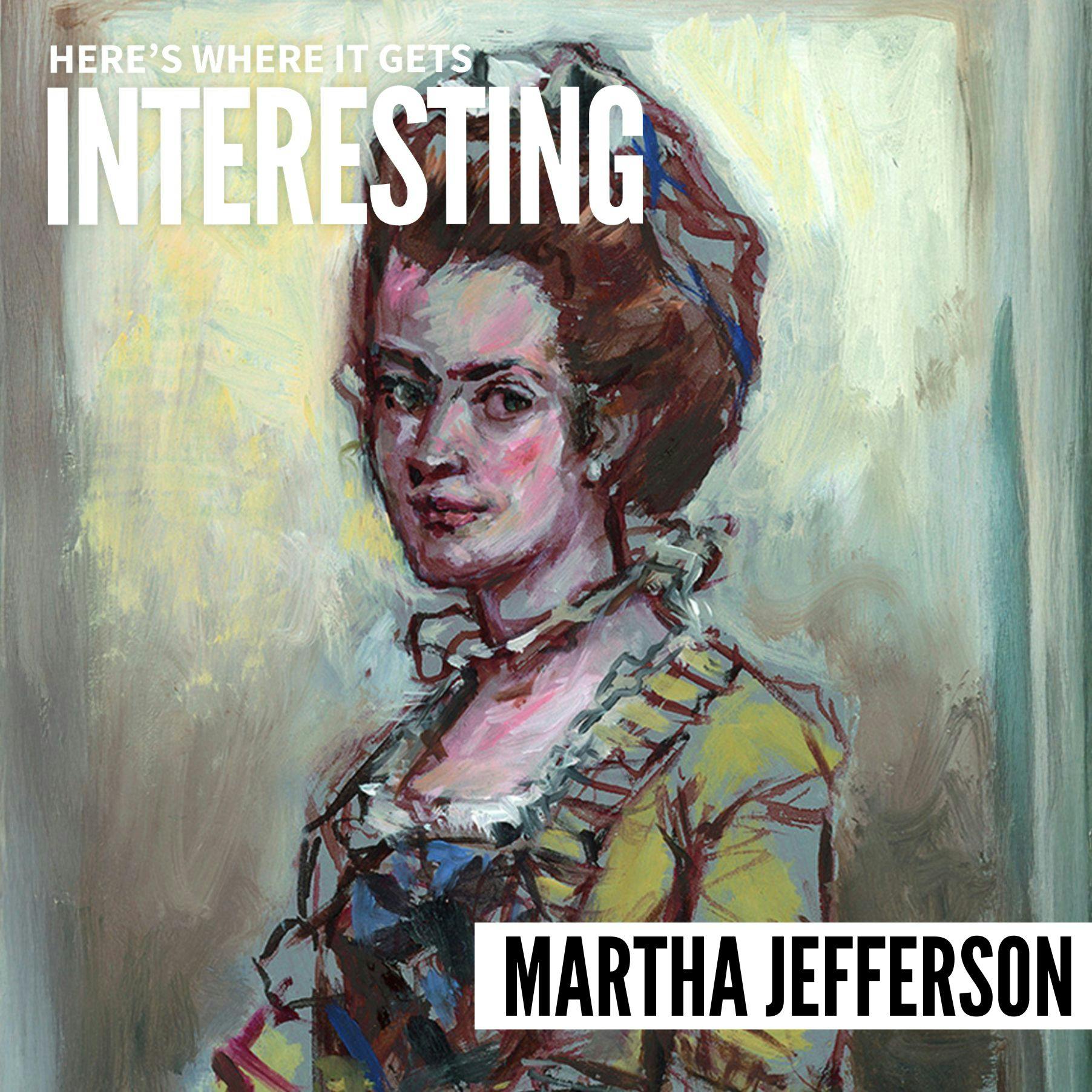
The Preamble
Martha Jefferson and the Women of Monticello
00:28:04
Though Thomas Jefferson’s wife Martha died nearly twenty years before his presidency, her absence opened the way for the women who would step in to shape the life of America’s third president.
Loading summary
Transcript37 lines
- [00:01]
Sharon McMahon
As a busy working mom, updating my.
- [00:03]
Ad Voice / Narrator
Wardrobe can fall to the bottom of the list.
- [00:06]
Sharon McMahon
And denim shopping? Forget it. That's where Daily look comes in. Dailylook is a premium personal styling service and dailylook is the number one highest rated premium personal styling service for women. With dailylook you get your own dedicated stylist, an actual person, not just an algorithm, who curates a box of clothes based on your body shape, preferences and lifestyle. You can get up to 12 premium pieces per box, including the perfect denim styles, all delivered right to your door. You get the same stylist every time who really learns your style and will help you find jeans that actually fit. It saves you so much time and effort and you can try everything on at home stress free. Plus you can choose how often you want a box every 30, 60 or 90 days. Keep what you love and return the rest. And shipping is free both ways. Elevate your style by signing up@dailylook.com today. Take your style quiz@dailylook.com and get 50% off your first styling fee with the code Interesting. That's DailyLook.com code Interesting.
- [01:13]
Ad Voice / Narrator
August 2025 marks.
- [01:15]
Sharon McMahon
20 years since Hurricane Katrina, one of the most devastating natural disasters in U.S.
- [01:19]
Ad Voice / Narrator
History, changed New Orleans forever.
- [01:23]
Sharon McMahon
There have been countless stories about the storm and their recovery, but there's another story, one that shaped the lives of thousands of children. Where the Schools Went is a new five part podcast series that digs into what happened to New Orleans public schools after the levees broke, ushering in the most radical education experiment in American history. Hosted by Ravi Gupta, a former school principal, where the Schools Went looks back at decades of dysfunction before Katrina and unpacks the high stakes decisions made in the storm's wake. You'll hear from veteran teachers who lost everything, the outsiders who came to rebuild, and the students and families who lived through it all. Whether you're a parent, an educator, or someone who cares about how public systems and communities evolve after crisis, this is a story worth your time from the branch in partnership with the 74 and Midas touch. Where the Schools Went is out now. Find it wherever you get your podcasts and start listening today.
- [02:27]
Ad Voice / Narrator
Hello friends. Welcome. We've been talking about America's first Ladies.
- [02:31]
Sharon McMahon
And the people and events that defied their times. Today we're going to learn just a.
- [02:37]
Ad Voice / Narrator
Little about the women who were an indispensable part of of Thomas Jefferson's life, his political career and eventually his Presidency. I'm Sharon McMahon and here's where it gets interesting the first part of today's story may feel eerily familiar if you've already listened to my episode on Martha Washington, because not so surprisingly, the lives and customs of young women from wealthy families in colonial America didn't differ all that much from each other. Nor did their names. Just to make sure things stay extra super confusing for another couple of podcast episodes, because Thomas Jefferson's wife was also named Martha in 1720, Martha Wales Skelton was 22 years old, though no portraits of her were painted during her lifetime. She was said by acquaintances to be a natural beauty with large hazel eyes, a slender build, and rich auburn hair. She was a widow. Four years earlier, at age 18, she had married another man. Another man who was a young and promising lawyer, but he died after an accident when he was only 24. Martha was a mother at the time of her husband's death, Martha had given birth to a son who she named John. But sadly, the boy died a few years after his father, around the age of three. She was also a very wealthy woman. Martha was born into wealth. She was born at the Forest, which was a large plantation near Williamsburg, Virginia in 1748. Her parents were John Wales and his first of three wives, also named, you guessed it, Martha, although she wasn't called Patsy. Patsy's mother was from an extremely prominent family in Virginia at the time, but she died when Martha was only three weeks old. Martha's father, John remarried two more times though, and in the end he outlived all of his wives and eventually took on a mistress, an enslaved woman in the household whose name was Elizabeth Hemings, with whom he fathered six more children. Because Martha grew up with wealth and prominence, she was likely educated at home by traveling tutors in literature, poetry, French and religion. It's also probable that she received training in music, because we know that she was an accomplished pianist. When she was old enough, Martha probably took on a managerial role at the Forest. She was the oldest of her siblings and she outlived her stepmothers. She would have been entrusted with learning how to run a plantation and its many enslaved workers, making household staples like soap and candles and butter, and overseeing social events at the main house. Which means that by the time Martha was a 22 year old widow, beautiful fellow, fabulously wealthy from birth and also from inheriting her husband's plantation and land, she would have been a total catch for anyone who came courting. Enter Thomas Jefferson. Jefferson was Martha's third cousin, and the two may have bonded over their shared love of music and literature. They were married on New Year's Day in 1772 at the Forest Plantation, and Jefferson took Martha straight away to his new home in Charlottesville, Virginia, some 130 miles away. The home was called Monticello, which means little mountain in Italian. Jefferson would spend most of his adult life designing, changing and working on Monticello, his grand home that sat at the top of a little Virginia mountain. He was quoted as saying, architecture is my delight, and putting up and pulling down one of my favorite amusements. When he and Martha reached Monticello in a January snowstorm, the house was silent. There was no fire in the hearth, no food prepared, and everyone was asleep. At the late hour, they toasted to their new, only partially furnished home with a bit of wine they had left from their journey and had song and merriment and laughter. At Monticello in the couple's early years, they would often make music together. Jefferson played the violin, and Martha accompanied him on a beautiful pianoforte that her husband had ordered for her. An officer who visited the Jeffersons at Monticello noted, you will find in the house an elegant harpsichord, pianoforte and some violence. The latter he performs well upon himself. The former his lady touches very skillfully and who is in all respects a very agreeable, sensible and accomplished lady. As part of Martha's dowry, Thomas received much of her inherited property, including the Elk Hill plantation that she had lived at when she was previously married, plus the estate's enslaved people, many of whom moved to Monticello to complete the construction of their residence, landscaping the estate's several thousand acres. They would also go on to cultivate Thomas Jefferson's land into a successful tobacco and wheat plantation. When Martha's father died, Martha and Thomas Jefferson also inherited the Wales land and enslaved people. Betty Hemings, John Wales's mistress and the mother of Martha Jefferson's half siblings, was moved to Monticello with her children. So Martha had inherited land from her previous husband, and now she had inherited land from her father, and she also was part of the Monticello estate. This is a very, very wealthy family. Not only did they inherit land, they also inherited many, many enslaved people to work the land. One biographer described Thomas Jefferson's marriage to Martha as the happiest time of his life. Over their 10 years of marriage, Martha gave birth to six children. Of the six that were born, only two daughters, Patsy and Polly, lived past their early years. Two more daughters, Jane and Lucy, as well as an unnamed son, died as babies. And her last child, another daughter named Lucy, died at the age of two. From whooping cough. I mentioned her death in my episode about Abigail Adams. And yes, Thomas Jefferson and Martha Jefferson had two daughters named Lucy Elizabeth. It wasn't that uncommon of a practice. Martha had very difficult pregnancies, though each one left her in poorer health, as did about with smallpox and untreated diabetes. The physical strain of being pregnant weakened Martha so much. The Thomas Jefferson put a hold on many of his political aspirations while he served in the Virginia House of Delegates and then as the Governor of Virginia, he traveled to and from Philadelphia to help draft the Declaration of Independence. He declined an appointment by the Continental Congress as a commissioner to France. Shortly before her death In September of 1782, Martha copied the following lines from a novel writing Time weighs too fast. Every letter I trace tells me with what rapidity Life follows my pen. The days and hours of it are flying over our heads like clouds of windy day, never to return. More Everything presses on.
- [11:18]
Sharon McMahon
You know therapy can be life changing. But honestly, finding the right therapist has.
- [11:22]
Ad Voice / Narrator
Always felt like a full time job.
- [11:24]
Sharon McMahon
Scheduling, insurance availability. It can be exhausting. But not with Rula. Rula makes mental health care easy, affordable and genuinely supportive. They Partner with over 10,000 licensed therapists and psychiatrists across the country, helping you find someone who really fits your needs. And the best part? They stick with you every step of the way. Helping you schedule appointments, track your progress, and make sure you're actually moving forward in therapy. Enrolla isn't just convenient, it's affordable. They take most major insurance plans and the average copay is just $15 a session. That means getting quality care that doesn't have to break the bank. Starting is simple.
- [12:05]
Ad Voice / Narrator
Rula asks a few questions about what.
- [12:06]
Sharon McMahon
Matters to you, then shows you licensed in network providers who match your preferences. You could even have your first session as soon as tomorrow. Thousands have already trusted Rula to support them on their journey toward improved mental health and overall well being. Head on over to rula.com Interesting to get started today. After you sign up they ask where you heard about them. Please support our show and tell them our show sent you go to r u l a.com Interesting and take the first steps toward better mental health. Today you deserve quality care from someone who cares.
- [12:41]
Judge Dan Mentzer
Three judges, one bench, zero room for nonsense. I'm Judge Dan Mentzer. Joining me are Judge Rachel Juarez and Judge Yodit Towelde. And on Hotbench we don't just hear cases, we debate. What she's asking for is for the payments that you she made on his car.
- [12:56]
Ad Voice / Narrator
But there's still payments to be made.
- [12:58]
Judge Dan Mentzer
Correct and we deliver justice that is.
- [13:01]
Ad Voice / Narrator
The verdict of the court.
- [13:02]
Judge Dan Mentzer
Follow and listen to the Hot Bench podcast on the free Odyssey app or wherever you get your podcasts.
- [13:12]
Sharon McMahon
Uncertain times call for fresh perspectives and Masterclass brings them directly from the world's most accomplished Experts. With over 200 classes across 13 categories, it's a resource for building skills, expanding knowledge, and staying ahead in a fast changing world. Don't fall behind on the latest in science and tech. Learn from experts on emerging technologies such as generative AI and advanced behavioral science techniques used by criminal profilers and the CIA. Every class is broken into short, easy to digest lessons, so it's simple to fit learning into even the busiest schedule. Plans start at just $10 a month, billed annually and memberships include unlimited access, downloadable class guides, and the option to watch offline. 88% of members say Masterclass has made a positive impact on their lives and 83% have applied something they learned. Right now, our listeners get an additional 15% off any annual membership at Masterclass.com that's 15% off at Masterclass.com Sharon Masterclass.com Sharon.
- [14:26]
Ad Voice / Narrator
This transcribed verse is one of just four documents in Martha's own handwriting that we have today. After her death, Jefferson burned all of the correspondence he had between himself and Martha. The incomplete quotation on Martha's paper was finished by Jefferson himself. Transforming the page into a bittersweet love letter between husband and wife, he added, and every time I kiss thy hand to bid adieu, Every absence which follows it are preludes to that eternal separation which we are shortly to make. The exact cause of Martha's death is not recorded, but Jefferson wrote a letter to his friend and mentioned that she had never recovered from the birth of her last child. Lucy Elizabeth was born on May 8, and Martha died in September. Jefferson wrote about his grief and said, a single event wiped away all my plans and left me a blank which I have not the spirits to fill up. While she was alive, Martha, perhaps remembering her own childhood with stepmothers, asked Jefferson to never remarry because she could not bear the thought of someone else raising her children. It was a wish he would honor. Shortly after Martha's death, the Continental Congress again asked Jefferson to go to France to assist the work being done by John Adams and Ben Franklin. This time, Jefferson agreed. He set sail in the summer of 1784, and I referenced Thomas Jefferson's voyage to France in my previous episode about Abigail Adams. But while he was in Paris, Jefferson met a woman named Maria Cosway. Maria was an accomplished Italian English musician and she was also married. They spent time in each other's company every day over a period of six weeks. And Jefferson was in love. We're not sure just how romantic their relationship got. Jefferson was a fair bit more discreet than Benjamin Franklin was. But eventually Maria returned to London with her husband and after that back to Italy. The pair exchanged letters for the rest of their lives. It was to Maria that Jefferson wrote one of his most famous letters, a 4,000 word love letter called the dialogue of the head versus the heart. It was mailed off to Maria in October of 1786. In it, Jefferson describes his head, the practical struggling with his heart, the romantic. For reference, the Declaration of Independence, of which Jefferson was the primary writer, is under 1500 words. That is how much he enjoyed the company of married Maria. Fun fact though, it was through Maria Cosway that Thomas Jefferson met Angelica Schuyler while she was in Paris. Of course, Angelica Schuyler married. Her married last name was Church. And while Thomas Jefferson and Alexander Hamilton were rivals, Thomas Jefferson took a liking to Angelica and they remained friends, also writing letters to each other for many years. Thomas Jefferson often signed them, your affectionate friend, Thomas Jefferson. When Jefferson had set sail for Paris, he brought his oldest daughter Patsy with him. And then, as I mentioned in my previous episode, he left his two remaining daughters, Paulie and Lucy, back with family. And it was during that time that his second daughter Lucy passed away. And while Jefferson was pining after Maria, he decided to send for his younger daughter, Polly. And accompanying Polly on the voyage across the sea was Sally Hemings, the enslaved maid, who was the youngest half sister of his late wife, Martha. Like Martha, Sally spent her childhood at her father's estate, the Forest. She was born in 1773. The youngest child of John Wales was Martha's father and Elizabeth Hemings, the woman he enslaved. She, like her mother and siblings before her, was born into enslavement. And so of course, while Martha and Sally were raised in the same homestead, their upbringings were completely different. Sally was not educated by European tutors. She was doing domestic work in the home even as a child. Sally's mother, Elizabeth, who went by Betty, was the daughter of an African born enslaved woman and a British sea captain, which made Betty half African and half white. And Sally, who had a white father, was a quarter African. But regardless of their white paternity, children who were born to enslaved women inherited their mother's status as slaves. By the time Jefferson sent for his daughter Polly, Sally Hemings was a teenager. She was somewhere between the ages of 14 and 16 years old. Letters between Jefferson and Abigail Adams show that Jefferson originally arranged for Polly to be accompanied by her nurse who was an older enslaved woman. But Adams wrote to Jefferson saying the old nurse whom you expected to have attended her was sick and unable to come. Sally Heming spent two years in Paris with the Jefferson family. In France, she was a free person because slavery was illegal. She earned a wage for her services to the family. Jefferson paid her $2 a month. In contrast, his French servants were paid a wage of around 8 to $12 a month. Most historians agree that it was while in France that Jefferson and Sally Hemings began a sexual relationship. But sexual relationship is a tricky term to use when we're talking about consent between a 44 year old white master and a 15 year old enslaved girl. Even if Sally did consent to the relationship, their age difference and the power dynamics between them would have influenced that consent. Sally didn't have the liberty to assert or vocalize her non consent and in 1789, Sally agreed to return to enslavement at Monticello only after negotiating with Jefferson. Her son, Madison Hemings later said this in France, she was free. Well, if she returned to Virginia, she would be re enslaved. So she refused to return with him. To induce her to do so, he promised her extraordinary privileges and made a solemn pledge that her children should be freed. At the age of 21 years. In consequence of his promises, on which she implicitly relied, she returned with him to Virginia.
- [22:16]
Sharon McMahon
The beauty industry can feel very overwhelming. Walk into a makeup store and you already know what I'm talking about. 50 shade eyeshadow palettes, 300 different colors of pink lipstick and products that require like graduate school to master. Merit is the antidote to the overwhelming world of beauty. It is a minimalist beauty brand with a mission to simplify what it takes to feel beautiful. It's makeup you can live in. They focus on high performing, clean and effortless products. Their formulas are skin loving and designed to enhance your natural beauty rather than cover it up. I love their lipstick, the signature lip. It doesn't taste bad, it doesn't have a weird smell, it doesn't dry out your lips. It gives you the perfect wash of color and your lips still feel hydrated and not caked in product. It's time to simplify your morning. Head to meritbeauty.com and get their signature makeup bag free with your first order. I've always wanted to make sure my dog lives the happiest, healthiest life possible.
- [23:26]
Ad Voice / Narrator
But honestly, it's Tough to know what's best.
- [23:29]
Sharon McMahon
That's why I'm so glad I found Ollie. The difference at mealtime was instant. My dog does this little happy dance the second I pull out an Ollie meal. That is the Ollie effect. Ollie is made with real human grade ingredients. No fillers, no preservatives, just fresh food crafted in U.S. kitchens and flavors dogs can't resist. But here's what really gave me peace of mind. Ollie's free on demand health screenings. In their app, I've been able to track their digestion, weight, even their skin and coat health and get feedback from real experts. Within a month I could see and feel the difference and it's comforting knowing I'm supporting their long term health, not.
- [24:08]
Ad Voice / Narrator
Just filling their bowl.
- [24:10]
Sharon McMahon
Getting started was simple. Just take Ollie's 30 second quiz and they create a personalized meal plan. Your welcome kit comes with two weeks of food, a free storage container and a transition guide to make the switch easy. Dogs deserve the best and that means fresh, healthy food. Head to ollie.com Sharon tell them all about your dog and use Code Sharon to get 60% off your welcome kit when you subscribe today. Plus they offer a happiness guarantee on the first box so if you're not completely satisfied, you'll get your money back. That's O l l I e.com Sharon and enter code Sharon to get 60% off your first box. You know how every home has that one spot you think about all day.
- [24:52]
Ad Voice / Narrator
The place where you can finally exhale.
- [24:55]
Sharon McMahon
For me, it's my bed. Honestly, it's so comfortable that sometimes I have to fight my dogs slash husband for it. And on those mornings when I just cannot get out of bed, it's often because of my Cozy Earth bamboo sheets and the Bubble Cuddle blanket.
- [25:12]
Ad Voice / Narrator
The sheets are a total game changer.
- [25:13]
Sharon McMahon
Made from viscose from bamboo, they naturally wick away heat and moisture so you can sleep several degrees cooler. Then there's this Bubble Cuddle blanket. It's this ultra soft textured faux fur blanket that somehow manages to be cozy and stylish at the same time. It's the perfect finishing touch for my retreat space. And here's the best part. You can try them risk free. Cozy Earth gives you a 100 night sleep trial. So if you don't love them, send them back hassle free plus a 10 year warranty. Because once you feel this level of comfort, you're going to want it to last. Head to cozyearth.com and use code Sharon for up to 40% off. And if you Get a post purchase survey. Make sure to let them know you heard about Cozy Earth right here. Because your bed should be more than a place to sleep. It should be your happy place. Cozy Earth makes that possible.
- [26:10]
Ad Voice / Narrator
So Sally Hemings had her freedom in France, and Thomas Jefferson made her extraordinary promises in an effort to get her to be re enslaved in Virginia. Over the next 32 years, Sally had six children, raising four of them to adulthood. A son named Beverly, a daughter named Harriet, a son named Madison, and a son named Eston, all believed to have been fathered by Thomas Jefferson. And while Sally never accompanied Jefferson to the White House, three of their children were born during his eight years as president. At that time, it was accepted that wealthy plantation owners often had sexual relationships with their enslaved women, although white society expected that these relationships would be kept discreet. So in 1802, when a newspaper ran a story about President Jefferson's relationship with Sally and the fact that he had children out of wedlock, it was up to his daughter Patsy to take charge of her father's image. While in Paris with her father and Sally, Patsy had grown tall and slim, with red hair and freckles. She was a cultured woman, well educated and experienced in the arts. And in 1789, she was brought out into Paris society at the court of Louis xiv. Like her mother before her, Patsy was an accomplished dancer, harpsichord player and horsewoman. In February of 1790, Patsy returned to Virginia and married Thomas Randolph. Thomas was her second cousin and he had recently graduated from the University of Edinburgh. She moved into Randolph's Virginia plantation, Edge Hill, which was near Monticello, where she spent her childhood. The couple had 12 children together, with only one daughter dying in infancy. That was very unusual. Patsy, unlike her mother, did not have trouble with her pregnancies and remained healthy after each one. Patsy took the education of her children very seriously, establishing a school at Edgehill to educate them. She was also very devoted to her father and would make frequent visits to Monticello with her children. By the time Jefferson was elected President of the United States in 1801, he had been a widower for for almost 20 years. For a while, he often invited Dolley Madison, Secretary of State James Madison's young wife, to serve as his escort. Officially, Martha Jefferson's name is on the White House's list of first ladies, but it was Patsy who supported her father in many official and unofficial ways during his eight years in office. She was not present for either of his inaugurations in the new capital city of Washington, D.C. in 1801 and 1805. But she made two lengthy visits, one in the winter of 1802 and the second in the winter of 1806. During her second visit to the White House, she gave birth on January 17, 1806, to her eighth child, James Madison Randolph. James was the first baby to be born in the White House. And now it seems a little absurd that we would have babies born in the White House, but that was very much the case during this time in history. Patsy didn't live continuously at the White House while her father was president. Her husband did, though. Thomas Randolph and her sister Polly's husband Jack lived with Thomas Jefferson in the White House while they both served their terms as congressmen from Virginia. During her father's presidency and throughout his retirement, Patsy acted as his hostess when the newspaper scandal about his illegitimate children broke. Patsy's presence and the presence of her young children helped to reinforce Jefferson's image as a devoted family man with a stage stable domestic life. They went out together to be seen often to religious services held in the hall of Congress. And it worked. Jefferson held on to his popularity and was elected to a second term. After her father retired from public life in 1809, Patsy and her family moved to Monticello. She stayed on as mistress of Monticello even while her husband Thomas served in Richmond as governor of Virginia. The two Thomases, Thomas Randolph and Thomas Jefferson, kept up a friendly, close relationship during the early years of Randolph's marriage to Patsy. But Randolph's behaviors became erratic after he served in the War of 1812, and he became withdrawn from Patsy, his children and his father in law. Both of the Thomases, Jefferson and Randolph, began to have financial difficulties too, and it was a strain on Patsy, who was trying to manage both Edge Hill and Monticello. Thomas Jefferson died on July 4, 1826, with Patsy at his side. Shortly before his death, he remarked that his last pang of life was parting with her. And of course, John Adams famously died on the same day. Due to all the debt that her father left behind, Patsy was forced to sell Monticello in 1831, including the enslaved people she inherited from her father. She lived with her children for the rest of her life, estranged from her husband, who had become prone to violent outbursts when he drank. Four years before Jefferson died, Sally Hemings, two oldest children, Beverly and Harriet, were allowed to leave Monticello without being legally freed. It was reported later that they both passed into white society and were not discovered to have been enslaved at Monticello or even suspected to have African blood. Sally Hemings was unofficially freed or given her time by Patsy when her father passed away and Jefferson's will freed her younger children, Madison and Eston. Sally Madison and Eston were listed as free people in both the 1830 and the 1833 censuses. In 1834, Patsy dictated an informal addendum to her will. It instructed her children to officially give her half Aunt Sally Hemings her freedom. In the end, the addendum was moot. Sally died in 1835, a year before Patsy's unexpected death at age 64. Ah, what tangled webs we weave, right? There is so much more to the story, though. I need to tell you way more about the Hemings family, so join me in the next episode. I have some very fascinating details to share. I'll see you next time. Thank you so much for listening to.
- [33:51]
Sharon McMahon
Here'S where it gets interesting. If you enjoyed today's episode, would you consider sharing or subscribing to this show that helps podcasters out so much? I'm just your host and executive producer, Sharon McMahon. Our supervising producer is Melanie Buck Parks and our audio producer is Craig Thompson. We'll see you soon.
- [34:14]
Ad Voice / Narrator
And Doug Limu and I always tell.
- [34:16]
Judge Dan Mentzer
You to customize your car insurance and.
- [34:17]
Ad Voice / Narrator
Save hundreds with Liberty Mutual, but now we want you to feel it. Cue the emu music. Limu Save yourself money today. Increase your wealth. Customize and save. We say that may have been too much feeling.
- [34:34]
Judge Dan Mentzer
Only pay for what you need@libertymutual.com Liberty Liberty Liberty Liberty Savings Very unwritten by Liberty Mutual Insurance Company and affiliates. Excludes Massachusetts.