← HISTORY This Week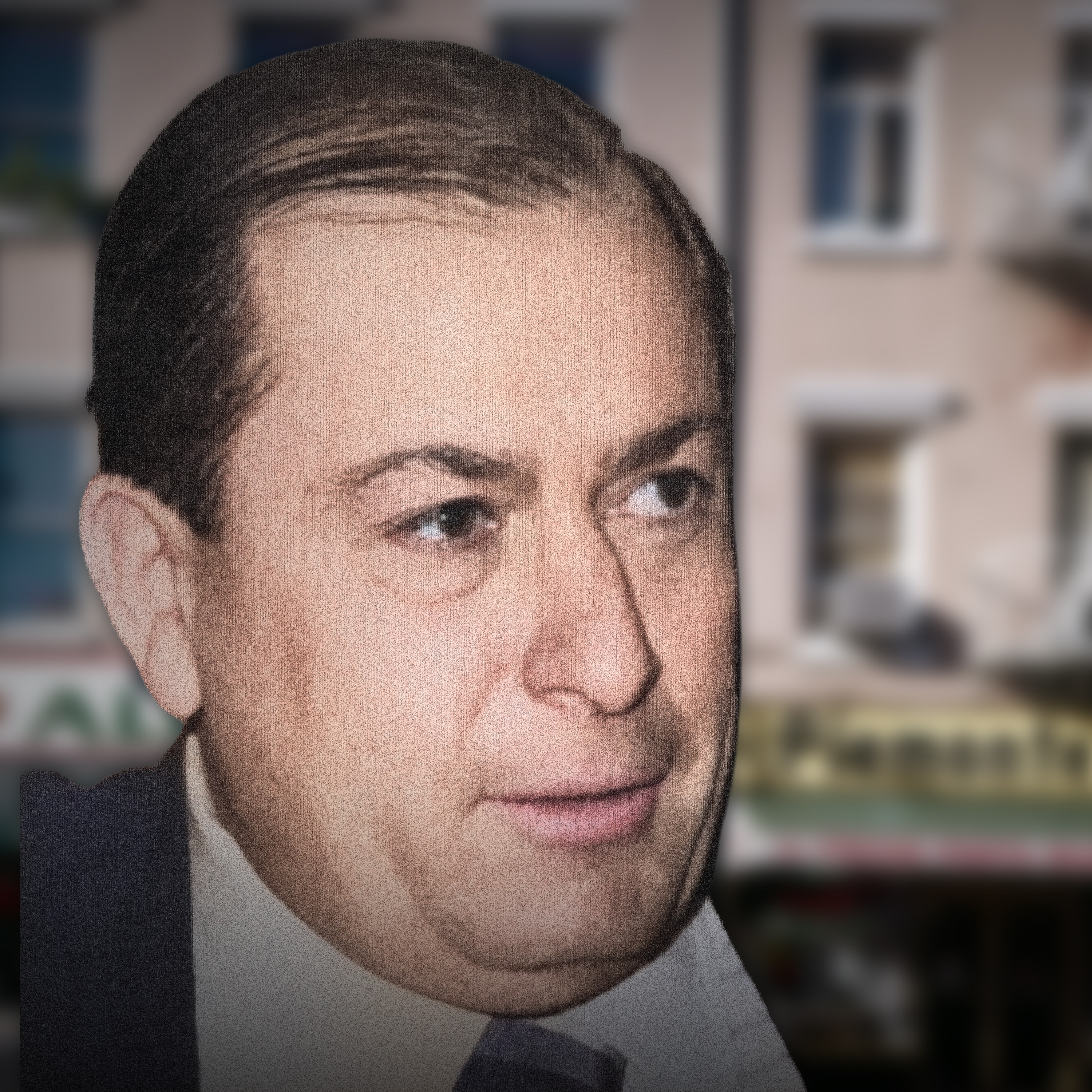
HISTORY This Week
A Mob Boss Starts A Movement
00:29:44
How Joe Colombo turned the Mafia’s image problem into an Italian American civil rights crusade.
Loading summary
Transcript118 lines
- [00:01]
Narrator/Advertiser
If you could travel back through history, there are a few luxuries you'd probably miss. Electric light, indoor plumbing, air conditioning, and somewhere on that list, the ability to control the temperature of your bed. Because for most of human history, if it was too hot to sleep, too bad. Today we have a different problem. The stress, the screen time, the just one more headline spiral. It all raises your core body temperature, and a body that's too warm cannot get into a deep sleep. You're not just tired because the news is exhausting. You're tired because your body never actually recovered. The good news, and yes, there always is some, is that science has a real answer. And it's simpler than you'd think. Your Bed temperature Enter Chilipad 2.0 by SleepMe, the water based mattress topper that actively controls your bed temperature from 55 to 115 degrees all night long. No new mattress, no renovation. It's it fits over what you already have. And water is the key. Fans just move hot air around. Chilipad uses actively chilled water to cool the bed, actually pulling heat away from your body. It's the difference between standing in front of a fan and jumping into a cold pool. If you told someone a hundred years ago or 1,000 years ago that one day you'd be able to dial in the exact temperature of your bed every night, it would have sounded like science fiction. The new Chilipad 2.0 comes with a redesigned dock that's quieter than ever, a washable performance grade cover with waterproof protection, and my favorite feature, the nightstand remote. It detects when you get into bed and automatically starts your sleep schedule. You get in, it kicks on. Visit www.sleep.mehistory to get up to $255 off your Chilipad 2.0 with code HISTORY HISTORY. That's www.sleep s l e e p.mehistory. free shipping, free returns and a 30 night trial so you can test it out. Dream big and wake up better. The headlines will still be there in the morning. You might as well wake up ready for them.
- [02:11]
Bombas Comfort Representative
Thank you for calling the Bombas Comfort line. Bombas make socks, slippers, tees and underwear made with the Highest quality materials. Press 1 for comfort 2 for style 3 for don chose style. Bombas is Styles for whatever you enjoy. You can run in Bombas Lounge in Bombas, dress them up, dress them down. But always give back in Bombas because with every item purchased, another is donated Bombas Comfort. Worth calling for. Go to bombas.com audio and use code audio for 20 off your first purchase. That's B O-M-B-A-.com and use code Audio
- [02:41]
Sally Helm
the History Channel Original Podcast history this week, June 28, 1971 hi, I'm Sally Helm. It's hot and humid in New York City. A festive summer morning at Columbus Circle on the southwestern corner of Central Park. Vendors are hawking sandwiches and gelato and cold orange sodas to the gathering crowd. 40 foot plastic banners in red, green and white flutter beneath a statue of Christopher Columbus. In fact, the colors of the Italian American flag are everywhere. On pennants, on hats, on buttons that read Kiss me, I'm Italian. The rally will begin at noon. It's the second annual Unity Day celebration sponsored by the Italian American Civil Rights League. They're concerned with fighting discrimination against Italian Americans and combating stereotypes. They say not all Italian Americans are Mafiososos. For most of us, the Godfather isn't real life and the thousands of people at this rally are here to make their voices heard as hardworking, law abiding citizens. Discrimination against Italian Americans is a real problem and has long roots in the United States. But it's nevertheless ironic that the head of the Italian American Civil Rights League, the guy who really is the league, the is a reputed mob boss himself, Joe Colombo. Colombo is there at the rally on this summer morning, greeting his supporters, taking photos with politicians. People call out to him as he weaves through the crowd. Joe. Hi Joe. At around 11.45am Colombo approaches the podium to speak and then three shots ring out from the press area near the stage. There's a moment of eerie silence and then chaos. Columbo has been shot in the head. He's alive but in critical shape. His horn rimmed glasses lie a few feet from his body near a growing pool of blood. Today, the rise and fall of Joe Colombo. How did this reputed Mafioso become a noted civil rights activist? And why aren't there any more mobster celebrities today? In early 1970s New York City when Joe Colombo was shot, the Mafia was everywhere. Mafia meaning a network of organized crime groups that carried out all kinds of illegal money making schemes and had a ton of influence, whether it was the
- [05:50]
Selwyn Raab
Board of Education, construction programs, the refuse industry. Every stone you turned over there was a Mafia connection.
- [05:59]
Sally Helm
That's Selwyn Raab, a former reporter for the New York Times. He covered organized crime for more than 50 years, including Joe Colombo, who comes on the scene at a pivotal moment in the history of the Mob.
- [06:13]
Selwyn Raab
Joe Colombo was a forerunner of a new era for the American Mafia.
- [06:19]
Sally Helm
Rob told us in the early days, the 1920s and 30s.
- [06:24]
Selwyn Raab
Most of the families were run by immigrants, mainly Sicilians, some from southern Italy. You can credit Benito Mussolini, who was a fascist dictator of Italy. He launched the first crackdown against the Sicilian mafia in the 20s.
- [06:41]
Sally Helm
That led to an exodus of mobsters
- [06:44]
Selwyn Raab
who had to get out of Italy because there was no real future for them there. And they came to the US and they were part of the nucleus of the American Mafia.
- [06:53]
Sally Helm
Of course the vast majority of the people who immigrated to the US from Sicily and southern Italy weren't mobsters fleeing a legal crackdown. They were just regular people looking for a better life. In fact, this era is the origin of some of the Italian American stereotypes that the Italian American Civil Rights League will later fight against, including the stereotype that Italians are all mafiosos and criminals. Many Italian immigrants faced discrimination in the us they had to live in cramped tenements and they couldn't get hired for high paying jobs. To make ends meet. Some again, a small number got caught up in the worlds of racketeering and organized crime, including Joe Colombo's father.
- [07:41]
Don Capria
His father got involved in the rackets. He was the nickname Two Gun Tony for the two pistols that he carried in his vest all the time.
- [07:48]
Sally Helm
That's Don Capria. He co wrote a book about Joe Colombo with Colombo's son Anthony. And he told us when Joe was about 14, his father was killed, allegedly as retribution for his involvement in a decade old murder.
- [08:05]
Don Capria
So at 14 years old on the streets of Brooklyn, Joe's dad is gone and the mother is petrified. She sends the kids to go live with her mother in Bensonhurst. And Joe changed high schools and that was kind of the start of his life, I would say. Going towards the dark side.
- [08:25]
Sally Helm
Colombo ends up living around the corner from a friend of his dad's, Carlo Gambino, who is one of the most ruthless mobsters in history. But to Colombo he's a mentor, a father figure.
- [08:39]
Don Capria
Gambino helped him get odd jobs. You know, he worked for a butcher, he worked as a shop steward, then he worked for a pocketbook company.
- [08:49]
Sally Helm
Then World War II breaks out and Colombo joins the Coast Guard. This is era sees a renewed surge of discrimination against Italian Americans as the US is fighting against the Axis powers, which included Italy.
- [09:06]
Don Capria
So Italian Americans were all caught up in this, this whole wave of racism. The FBI was literally banging down people's doors, pulling people out of their homes and, and giving people curfew and seizing their money, freezing assets.
- [09:22]
Sally Helm
Some hundreds of Italian Americans were even sent to internment camps. During this period. So young Italian American soldiers like Joe
- [09:31]
Don Capria
Colombo, they're seeing their family members, their grandfathers, their parents go through this discrimination here during World War II. So there was a disdain for the FBI, I think for a lot of Italian Americans from World War II.
- [09:46]
Sally Helm
The FBI will soon become quite a large part of of Joe Colombo's life. After the war, he moves to upstate New York.
- [09:54]
Don Capria
He married his wife that he was with until he passed away. Jojo.
- [09:59]
Sally Helm
Joe and Jojo.
- [10:00]
Don Capria
Joe and Jojo, yeah.
- [10:01]
Sally Helm
And at some point, Selwyn Rob told us, Joe Colombo gets caught up in the same organized crime world that got his dad killed. The 1950s and 60s are the beginning of a generational shift for the mob. It's still run in a highly organized way by the same five families, many of whom have their roots in Sicily. But a lot of the new mob guys had grown up in the United States.
- [10:29]
Selwyn Raab
Unlike the old fashioned guys who were known as mustache peeps, the newcomers like Joe Colombo spoke good English. They were born in America. They understood the culture better and the changing culture. And Colombo's opportunity came from the death of one of the original founders of the American Mafia, Joe Profaci, who died in 1962.
- [10:57]
Sally Helm
Joe Profaci was the head of the Profaci crime family. The five big Mafia families worked together in something called the Commission, which helped oversee their activities and mediate any conflicts that came up. After Profaci's death, a guy named Joe Magliocco takes over the family. And about a year later, he begins conspiring with another mob boss, another Joe, Joe Bonanno, who was also one of
- [11:25]
Selwyn Raab
the old fashioned mustache Petes who had been around in 1931.
- [11:30]
Sally Helm
Bonanno's worried that Profaci's death is going to end up decreasing Bonanno's power on the Commission. And so he decides to team up with the new guy Magliocco to take down some of their biggest enemies.
- [11:44]
Selwyn Raab
What he wanted to do was he wanted to bump off, kill, hit what he considered essential rivals, old fashioned rivals like Carlo Gambino, who was running the Gambino family.
- [11:56]
Sally Helm
And Magliocco says, I know who we should hire to do it. Joe Colombo.
- [12:07]
Narrator/Advertiser
Living in a big city, grocery shopping can turn into a whole production. You realize halfway through that you've bought way more than you can actually carry home. And suddenly you're hauling heavy bags down the street onto the subway or up apartment stairs, wondering why you thought this was a good idea. That's one of the reasons I use Instacart all the time. I can open the app, order from stores I already know and like, choose the exact brands and groceries I want, and get delivery through Instacart in as fast as 30 minutes. And I really appreciate the quality side of it too. You can set preferences for produce, for placements, all those little details that actually matter when someone's selecting your groceries, especially in the summer, it just gives you time back. Instead of losing half a Saturday running errands, I can focus on work, seeing friends, getting outside, whatever I actually want to be doing. And from a historical perspective, that's kind of crazy. For most of human history, getting food and household essentials consumed a huge part of everyday life. Entire routines revolved around carrying, transporting, preserving, or preparing. Just basic necessities. Anything that makes modern life a little easier, especially in a city I'm grateful for. Instacart brings convenience, quality and ease right to your door. So you can focus on what matters most. Download the Instacart app now and get groceries just how you like.
- [13:29]
Professor Greg Jackson
History that Doesn't Suck is a legit, hard hitting American history podcast told through entertaining stories. As we approach America's 250th anniversary, now might be the time to go back and learn how we got here. With more than 200 episodes, you can binge your way decade by decade, defining event to defining event from the founding into the 20th century. Join me, Professor Greg Jackson, for History that Doesn't Suck. An Odyssey Podcast available on Apple Podcasts, Spotify or wherever you get your podcasts.
- [13:59]
Carvana User
Hey, sweetie. Your mother showed me this Carvana thing for selling the car. I'm gonna give it a try. Wish me luck. Me again. I put in the license plate. It gave me an offer. Unbelievable. Okay, I accepted the offer. They're picking it up Tuesday from the driveway. I haven't even left my chair.
- [14:16]
Selwyn Raab
It's done.
- [14:17]
Carvana User
The car is gone. I'm holding a check Anyway. Carvana, give it a whirl. Love ya.
- [14:22]
Sally Helm
So good you'll want to leave a voicemail about it. Sell your car today on Carvana. Pickup fees may apply by this point. Rob told us Columbo has started to make a name for himself as a hitman like his dad. He's allegedly been working with the Profaci family, and Magliocco thinks he's the perfect guy for the job.
- [14:45]
Don Capria
Little did he know his mentor is Carl Gambino.
- [14:48]
Sally Helm
Don Capria again.
- [14:50]
Don Capria
So what Joe did was instead of carrying out the hit, he delivered the order and said to Carl Gambino, this is for you. They're gonna try to take you out.
- [14:58]
Selwyn Raab
He went to Carlo and he told Carlo what was up. And Carlo, Gambino and the other remaining bosses cracked down on Bonanno to make sure they control the Commission and therefore almost control the entire American Mafia. As a reward to Joe Colombo, who was a nobody practically at the time,
- [15:18]
Don Capria
they renamed the family the Colombo crime family. And they made Joe the patriarch of that family.
- [15:23]
Selwyn Raab
So he came out of the forest virtually. And suddenly, at the age of 42, was reing one of the top five mafia families in the country.
- [15:33]
Sally Helm
Columbo himself would have denied up and down that he was the head of one of the top five Mafia families in the country. Don Caprio told us, as far as his kids knew, he worked in real estate.
- [15:44]
Don Capria
When I worked the book with Anthony, one of the first things that he told me, he says, look, I really don't have the stories of what my father did every day. He didn't come home from work and put a gun on the table and say, you know, today as a Mob boss, I did such and such. He actually denied everything.
- [16:03]
Sally Helm
But meanwhile, the 1960s are the mafia's golden age. That's when Sell Robb was covering them as a journalist in New York and seeing their fingerprints everywhere. Rob told us, in some ways, the mob was sort of a shadow city government and they were making lots of money. They had influence in a bunch of unions, and that was lucrative. They also had a hand in gambling, loan sharking.
- [16:29]
Selwyn Raab
If you wanted sometimes a loan you couldn't get, you were a small business or a business that was in trouble and couldn't get a bank loan, you'd go to a loan shark shark. So they were providing a service. And at most times, except for the occasional killings, they were part of the fabric of the New York civilization. And as long as they didn't really threaten anybody, they profited.
- [16:56]
Sally Helm
If the Mob did want to threaten somebody, the guy to do it would be low level.
- [17:01]
Selwyn Raab
So if they got busted, it was nothing. A Mafia boss didn't have to pull a trigger, didn't have to extort personally from anybody else. So he didn't commit anything. All he did was get the wealth.
- [17:13]
Sally Helm
We also talked about Colombo with Jeff Schumacher, who runs the exhibits and programs at the Mob Museum in Las Vegas. He told us Colombo really cared about the Mafia's image and he was a shrewd, effective leader.
- [17:29]
Jeff Schumacher
Colombo was really a very smart boss, and that's not always true in the Mafia. Sometimes a person becomes the boss because they're the toughest or, you know, because of Just a logical ascension. They're the next in line. In the case of Columbo, his success was largely created because there was a facade of respectability for a lot of his people because they worked in other legitimate jobs.
- [17:53]
Sally Helm
Colombo did, too. He was a salesman for a real estate company, a partner in a funeral home and a florist shop.
- [18:01]
Jeff Schumacher
These were legit things that he was doing. And they also kept a very low profile, which is always important. And so they got away with a lot, at least until Colombo changed his mind later.
- [18:13]
Sally Helm
Yes, becoming the head of a major Italian American civil rights organization is not consistent with keeping a low profile. But as the 1960s progress and Joe Colombo becomes a more and more important, important Mafia figure, a spirit of activism is sweeping the country.
- [18:32]
Jeff Schumacher
Mass protests occurring over civil rights, Vietnam War, women's rights. You know, it was. It was probably only logical that Italian Americans who had been discriminated against for decades would join this movement. It was just particularly odd that the person who led it was someone who was involved with the Mafia.
- [18:53]
Sally Helm
Colombo had witnessed discrimination in his community, and he'd seen law enforcement overreach during the World War II era. Now, of course, the FBI is his major adversary for other reasons. The agency had recently begun to take the Mob much more seriously.
- [19:11]
Jeff Schumacher
It decided to go all out and dedicate, you know, hundreds and hundreds of agents to focus on this. So Colombo is seeing this, and he's saying that the FBI is targeting it, Italian Americans. And so his ethnic awareness really becomes evident. And, you know, while some Mafia bosses may have said, let's just lay low, let's not, you know, raise our head above the ground so that they'll see what we're doing and put us in prison. Colombo decided to fight back in public.
- [19:41]
Sally Helm
This is part of the reason that Cell Robb calls Colombo the beginning of a new era for the Mob. He turns that traditional script of secrecy upside down. Things come to a head in 1971 when Colombo's son, Joe Jr is arrested. The government accuses him of being part of a scheme to melt down US Coins into silver. But Joe Colombo thinks it's all part of a plan to put pressure on him. Here's Don Caprio.
- [20:14]
Don Capria
The attack Joe felt was personal, and he also felt it didn't belong within the government to penalize these people that don't have anything to do with organized crime. So at that moment, he started the Italian American Civil Rights League. I think this becomes the midpoint in his life. You know, that point in the film where there's no turning back.
- [20:33]
Bob's Discount Furniture Spokesperson
Happy 250th birthday America I've decided to spend this semiquincentennial as our founding Fathers would have wanted me to, checking out the furniture America's waited 250 years for at Bob's Discount Furniture. At Bob's I know I can find everything from ultra comfy power reclining sofas with genuine leather seats and stylish dining sets with convenient lift top storage to best selling bedrooms with over 700 five star reviews and a feature packed pop up sleeper sofa with built in shelving, charging storage and those signature Bob O pedic seats. Because nothing is more American than a sofa that's a bed and a library and a closet. So if you want to join me in decking out your house with the finest affordable furniture this 4th of July, why not stop in or shop online at Bob's Discount Furniture where America shops for furniture.
- [21:22]
Sally Helm
Parle tu francais habla sepanol Parle italiano.
- [21:25]
Babbel Advertiser
If you've used Babbel, you would Babbel's conversation based technique teaches you useful words and phrases to get you speaking quickly about the things you actually talk about in the real world. With lessons handcrafted by over 200 language experts and voiced by real native speakers, Babbel is like having a private tutor in your pocket. Start speaking with Babbel today. Get up to 55% off your Babbel subscription right now at babbel.com listen spell b a B-B-E-L.com listen rules and restrictions may apply.
- [21:52]
Dermalogica Advertiser
Real skin Results Start with one daily ritual Meet daily Microfoliant from Dermalogica. This iconic exfoliating powder activates with water to gently polish away dullness and uneven texture. It leaves skin instantly smoother and more luminous while supporting your skin barrier. Formulated with professional expertise to deliver visible results daily, even on sensitive skin. Discover your healthiest skin today. Visit dermalogica.com and use code Smooth at checkout for an exclusive Gift with your $65 purchase.
- [22:24]
Sally Helm
Less than two months after Joe Colombo's son is arrested, the New Italian American Civil Rights League holds a major public event, the first annual Unity Day rally at Columbus Circle, June 29, 1970. Colombo is the league's leader and he has a lot of pull.
- [22:44]
Jeff Schumacher
People in New York knew who Joe Colombo was, right? And so you know, the idea that you would that you would fight him or that you would oppose him or that you would ignore him. If you were a politician or a shopkeeper or, you know, the governor of New York, you needed to keep Joe Colombo on the right Side.
- [23:06]
Sally Helm
When the day of the rally arrives, the city is ready. In fact, the area around Columbus Circle is partially shut down.
- [23:14]
Jeff Schumacher
Not everybody came willingly. Goons visited many of the merchants to insist that they shut down for the day.
- [23:23]
Sally Helm
But a lot of people do show up willingly. As many as 200,000 people come out to Columbus Circle. Don Capria told us, Joe tapped into
- [23:33]
Don Capria
this vein that was explosive. You know, it was just. It was just this moment was waiting to happen.
- [23:39]
Selwyn Raab
I thank God that I was born of Italian birch. But today, this day belongs to you, the people. You are organized. You are one. Nobody could take you apart anymore.
- [24:04]
Sally Helm
After the rally, the crowd marches down to protest in front of the FBI's office, led personally by Joe Colombo, a man the FBI was pretty familiar with because they were currently tapping his phones. All that summer, the League's profile continues to rise.
- [24:24]
Don Capria
The word on the street was like, if you hadn't a problem and you were an Italian American, you go to a League meeting at the Park Sheridan Hotel on a Wednesday night, and you get to stand and you get to say your problem to them and they will help you. So a young lawyer in 1970 goes and he tells about the City Planning Commission who wanted to bulldoze homes to put an athletic field and an athletic building.
- [24:45]
Sally Helm
These homes were in Corona, Queens, a neighborhood where many Italian Americans lived. And the Italian American Civil Rights League starts protesting the demolition. People gather in massive numbers at City hall, and they're ultimately successful. That young lawyer who showed up at the meeting became a hero. His name was Mario Cuomo. He turned out to be the future governor of New York. Colombo and the league also start a somewhat ironic campaign to get important people to stop using the word Mafia. They also want to stamp out the use of the phrase La Cosa Nostra, translated to our thing, which was a Sicilian term for Mafia. They said this language was helping to perpetuate the stereotype that Italian Americans were criminals and made it seem like all organized crime in the US was organized by Italians. And later that year, 1970, Nixon's attorney general, John Mitchell, did ban those words from Justice Department communications. There is nothing to be gained by using these terms, Mitchell said, except to give gratuitous offense to many good Americans of Italian American descent. Here's Jeff Schumacher.
- [26:03]
Jeff Schumacher
Mitchell saw that politically, it would be wise to make a gesture to win over Italian Americans. Everything in the Nixon administration was politically oriented. Nixon believed that the mob had helped John F. Kennedy win election back in 1960. So I'm sure Nixon wanting to, you know, be reelected Certainly didn't want the Italian Americans on the other side.
- [26:26]
Sally Helm
This is a pretty big victory in the war on words. But a perhaps even more important battle would soon be fought in Hollywood. In 1970, production began on what would become one of the most famous, famous films of all time, the Godfather. It was based on a book of the same name that had become a massive bestseller. Columbo was very invested in the film and how it would portray the Mafia. What was his role on the Godfather like? How did he get involved with that
- [26:57]
Don Capria
movie and why he wrote the script? As you guys know, I'm just kidding. He wanted to meet with the film producers, and they didn't want to meet with him.
- [27:06]
Sally Helm
But Colombo knew how to apply pressure. He used his clout with the unions to help get the producers attention. And also the movie's director, Francis Ford Coppola, wanted to film on location in New York, in Little Italy.
- [27:19]
Don Capria
So one day, when they went down to Little Italy to look at locations, they brought this brand new cinemobile truck that had all these brand new lenses and whatnot in it.
- [27:30]
Sally Helm
Coppola and his team go have lunch at UT Umberto's Clam House, a famous spot in the neighborhood. And after they finished, they walk back
- [27:37]
Don Capria
up to Hester street and the truck is gone.
- [27:40]
Carvana User
Wait, wait.
- [27:40]
Sally Helm
What happened to the truck?
- [27:41]
Don Capria
It was stolen.
- [27:42]
Sally Helm
By who?
- [27:44]
Don Capria
I don't know. I really don't.
- [27:47]
Sally Helm
But whoever stole the truck, I think
- [27:50]
Don Capria
that was like the final straw of like, hey, you're gonna. You're gonna talk to us.
- [27:54]
Sally Helm
One of the film's producers ends up meeting with Columbo and members of the League to hear their concerns. Then he meets with Columbo again and agrees to remove the one appearance of the word Mafia from the script. And Columbo's even able to get some of his associates cast as extras. The Italian American Civil Rights League brings its war on words to the press, too. One time, they even blockade the New York Times building in protest and won't let the delivery trucks leave. Selwyn Robb remembers what this era was like.
- [28:27]
Selwyn Raab
Every newspaper in New York had a Mafia element, either in the printers or in the deliverers, especially in the deliverers. So they had that weapon that sometimes stories were rewritten. No question about it. I had difficulties when I worked for the New York Times. They would want to alter lines because the deliverers or somebody else complained.
- [28:49]
Sally Helm
Colombo was personally able to use the media to his advantage in other ways, too.
- [28:56]
Selwyn Raab
Do you like the attention? I mean, he was the first Mafia boss probably since Al Capone in more innocent days who cultivated the media.
- [29:06]
Sally Helm
Colombo sat down for interviews, went on talk shows. Here he is speaking to reporters.
- [29:12]
Joe Colombo (Interview Excerpts)
Is this happening because you are Joe
- [29:14]
Sally Helm
Colombo or because you're a tiny American?
- [29:16]
Joe Colombo (Interview Excerpts)
Defense I say there's a conspiracy in this country against all of Americans.
- [29:21]
Sally Helm
Here's an excerpt from an interview with CBS News.
- [29:24]
Joe Colombo (Interview Excerpts)
I have always maintained and said there is no Mafia, there is no buzz in Austria. And I said that this was only a harassment of the Justice Department, of the administration and the law enforcement agencies for no other reason than to hurt people, to hurt children, and to brainwash and use the Italian people as the scapegoat for each and every crime that's committed in this country.
- [29:46]
Sally Helm
Putting his face out there like this was a huge change from the previous secretive eras of organized crime. And it came at a cost.
- [29:57]
Selwyn Raab
He became too conspicuous.
- [30:01]
Sally Helm
The FBI starts ramping up its efforts against Colombo. They're able to charge him with a number of small crimes, but none of the charges stick. And Colombo's rivals also don't like to see how public facing he's become. They think this could be bad for all of them. So as Colombo is planning the second annual Unity Day rally, he's feeling the pressure from all sides. Finally, Don Capria says Colombo tells his
- [30:30]
Don Capria
family, look, I'm going to do the event. I'm going to show up and I'm going to support and I'm going to step down and I'm going to disappear from this for a while to make a lot of you happy.
- [30:42]
Sally Helm
On June 28, 1971, a crowd once again gathers at Columbus Circle. The weather is perfect. Columbo's there checking on things. Before the program begins, Joe had just
- [30:55]
Don Capria
finished talking to someone, put a little fire out about someone that was selling some kind of ice cream without having the permit.
- [31:02]
Sally Helm
Then he walks over to the press area to greet some reporters. A man named Jerome Johnson is there with press credentials. And at about 11:45, as Columbo is moving towards the the stage, Jerome Johnson
- [31:15]
Don Capria
shoots him in the back of the head. When his head is turned three times,
- [31:20]
Sally Helm
Columbo falls to the ground. Some officers tackle the shooter, but then there's another shot. Somehow, someone manages to shoot Columbo's assassin. And then that second shooter slips out of the crowd. Both men are rushed to the hospital. The shooter, Johnson, dies, and Columbo goes into surgery. The rally at Columbus Circle does proceed, but listlessly. The crowd gets periodic updates on Columbo's condition. And after six hours of surgery, Columbo does Survive.
- [32:02]
Selwyn Raab
He lasted, I think, seven years, but he was paralyzed. He was a living corpse.
- [32:11]
Sally Helm
The Italian American Civil Rights League never recovered either.
- [32:15]
Don Capria
It couldn't last without Joe Colombo. He was the guy to keep it alive and running. It was his connections. It was his forceful, never take no for an answer attitude towards it. So everything changed after those three bullets.
- [32:29]
Sally Helm
There are many different theories out there about who shot Joe Colombo and why. A lot of people, including Selwyn Robb, say it's most likely this grew out of Colombo's life in organized crime. Rival mobster Joey Gallo had recently gotten out of prison and had a long standing feud with Colombo. About seven months after Colombo was shot, Gallo went out to a restaurant.
- [32:53]
Selwyn Raab
It was on his birthday party at a restaurant in Little Italy. Early in the morning, 2 or 3am he was having dinner with friends and his bodyguard and they spotted him there and they bumped off. They took care of Joey Gallo.
- [33:08]
Sally Helm
A lot of people, both within law enforcement and the Mafia itself, believe that the they here is Colombo loyalists taking revenge. But there are other theories out there. Don Capria thinks the FBI themselves might have had something to do with Colombo's death. The FBI declined to comment for this story. But no matter who shot Joe Colombo, we can say that the era he represented for the Mafia is now over. Organized crime has gone back underground.
- [33:38]
Selwyn Raab
You won't find any mob boss anybody knows of. They're so inconspicuous that even law enforcement is often unsure who's running each family. They've withdrawn. The new Mafia has also recruited because they consider them more are loyal and steadfast and will never rat a lot of Sicilians. So some of the families today are actually run by Sicilian immigrants, just as
- [34:04]
Sally Helm
they were in the pre Columbo era. Jeff Schumacher also told us that movies like the Godfather, which Columbo tried so hard to influence, ended up having an impact not just on how the public saw the mob, but also on how the mob saw themselves. He said, if you listen to FBI Wiretaps from the 1970s, this weird thing
- [34:29]
Jeff Schumacher
kind of developed with the younger Mafia guys where they, they, they weren't natural anymore. They were acting as if they were in the movie. Right? The movie was more real than the actual life.
- [34:42]
Sally Helm
Joe Colombo may not have predicted this, but he knew the influence movies and pop culture could have on the public image of Italian Americans. And he tried to make that image as favorable as he possibly could. But the mob movies and TV shows didn't stop. The Sopranos is one of the most popular series of all time, and it's a show about the Mafia in the Sopranos fourth season, Joe Colombo himself actually comes up in conversation when Tony Soprano's associate explains why he supports Columbo's cause.
- [35:17]
Joe Colombo (Interview Excerpts)
I'm an Italian American and I pay money to the Italian Anti Defamation Coordination Council and basta. We're the victims here. Oh, you write a check too. Don't let's not forget it was a friend of ours, Joe Colombo, who founded the first Italian American anti defamation organization.
- [35:36]
Sally Helm
Colombo might have been glad that this show was focusing on his civil rights work, but they also call him a friend of ours, meaning a fellow member of the Mafia, even though Columbo went to his grave claiming to be just a regular guy who wanted to take care of his own. Thanks for listening to History this Week. For more moments throughout history that are also worth watching, check your local TV listings to find out what's the on the History Channel today. This episode was produced by Ben Dickstein. History this Week is also produced by Julie Magruder, Julia Press and me, Sally Helm. McCamey Lynn is our senior producer and our editor and sound designer is Jonathan Siri. Our researcher is Emma Fredericks. Our executive producers are Jesse Katz and Ted Butler. Don't forget to subscribe, rate and review History this Week wherever you get your podcasts and we will see you next week.