← HISTORY This Week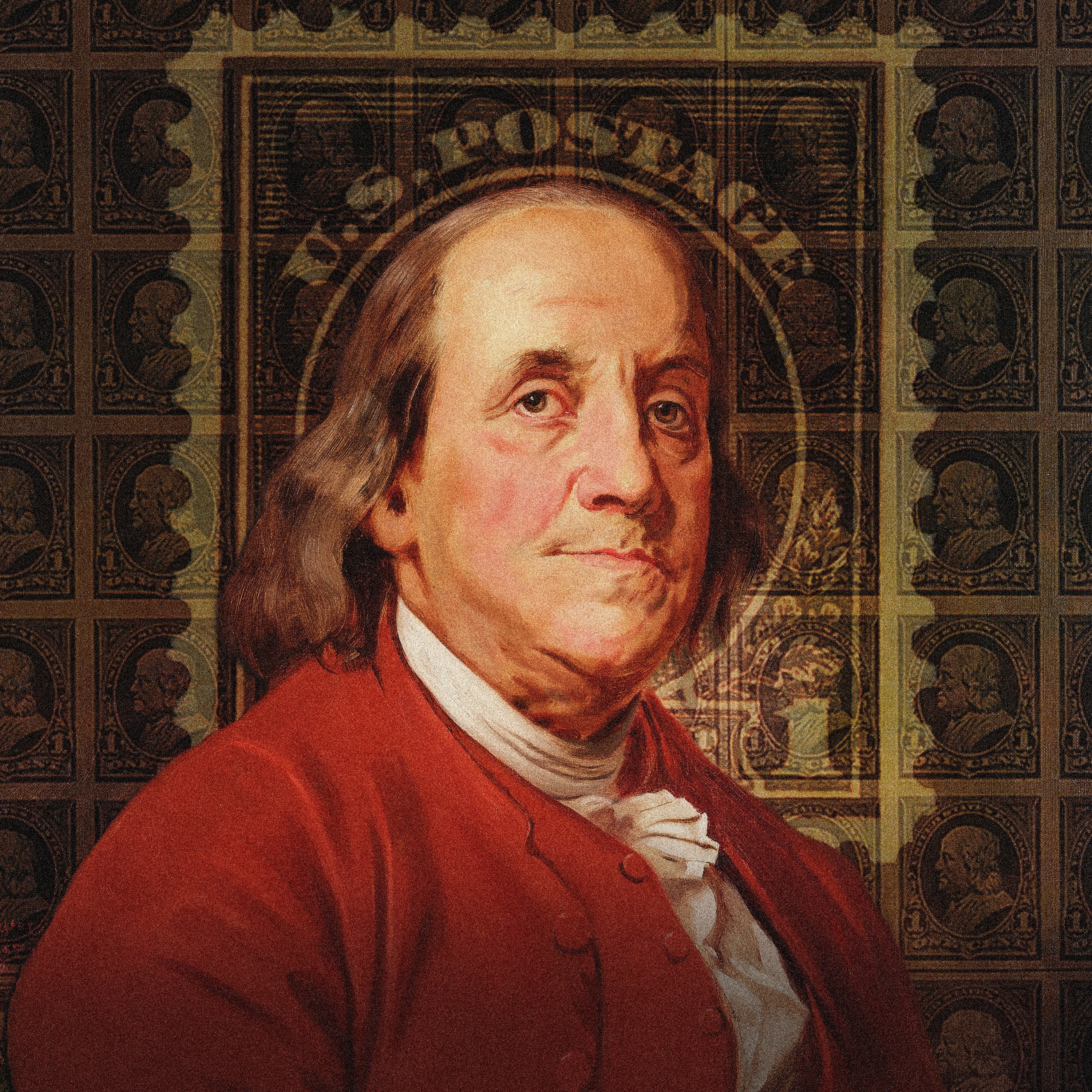
HISTORY This Week
Ben Franklin Gets Fired
00:32:23
How losing his job as postmaster helped win the Revolution.
Loading summary
Transcript116 lines
- [00:01]
Sally Helm
America just turned 250 years old. But you know what just turned 251 years old? The post office. But before I take you into that story, I just want to remind you about history this week. Plus no ads, bonus content, including the full interviews with our guests that you cannot hear anywhere else. Next week we will be dropping our full interview from a few years back with Doris Kearns Goodwin, where she talks about her firsthand experience with President Lyndon Johnson in the White House. Sign up@historythisweekpodcast.com subscribe that's historythisweekpodcast.com subscribe now. Here is this week's episode.
- [00:42]
Sponsor/Advertiser Voice
A little look behind the scenes producing history this week. Some weeks eats my whole schedule and Instacart is how I survive it. It connects you with thousands of stores and as fast as 30 minutes you can have quality groceries delivered right to your door. Last week is a perfect example. I was locked in on sound design, headphones on, mixing some music under a scene, finally in the zone when everything clicks that flow state and the last thing you want to do is break the spell. Problem was my fridge was basically empty and I hadn't eaten all day. But instead of stopping to run to the store, I opened Instacart, picked out fresh produce, cold brew, real dinner for the night, kept working, never took the headphones off, and a little while later it was all at my door.
- [01:24]
Narrator/Host
Quality.
- [01:25]
Sponsor/Advertiser Voice
I'd have picked myself, no hours lost if I can get time back to focus on what matters. Working on a show like this, that's a game changer. Instacart brings convenience, quality and ease right to your door so you can focus on what matters most. Download the Instacart app now and get groceries just how you like.
- [01:47]
Sally Helm
If you listen to history this week, you know that we are always asking how did we get here? And there is another show that does that just through the lens of the economy, NPR's Planet Money. You might have actually heard my voice over there too. What I love about Planet Money and their sister show, the indicator from Planet Money is that every episode starts with a question and then follows it somewhere really unexpected. Like I was just listening recently to a story about why Pokemon cards are suddenly exploding in value like a outpacing some retirement accounts. And it turns into this surprisingly clear window into speculation, scarcity and human behavior. And that is what the show does so well. From the job market to the stock market to the price of groceries, it takes these big abstract forces and makes them make sense through real stories. They've asked how Russia's economy has held up after years of sanctions, what a 750 pound walk robot means for the future of restaurant work. And they have even launched a satellite to understand the economics of space. It's the kind of show where you learn something, maybe laugh and walk away seeing the world a little differently. Follow NPR's Planet Money podcast and understand how money shapes the world.
- [03:15]
Narrator/Host
The History Channel Original Podcast
- [03:20]
Sally Helm
history this week, July 26th, 1775. I'm Sally Helm. The rebel headquarters in Cambridge, Massachusetts. Inside this stately Georgian mansion, major generals hold up in makeshift bedrooms and cooks claying pots and pans, trying to feed an army. The dining room, meanwhile, has been converted into a war room. And in it, a 43 year old George Washington is set to conduct a very unassuming act of war. He pulls out a chair, sits down at a table, takes out a piece of paper and starts to write. Washington has just arrived in Massachusetts, the brand new commander in chief of a rebel army, which at this moment in July of 1775 is losing. They're fresh off a defeat at Bunker Hill. The redcoats now control the city of Boston just across the river. But the colonists are actually feeling optimistic. Bunker Hill was a loss, but a close one. They are outfunded, outmanned, outgunned, but maybe they can win this thing. And what Washington doesn't know is that he's about to get a brand new military advantage. As he sits at that dining room table, he scratches down his orders for the day. In this case, instructions to build barracks that will keep people warm when winter eventually comes and he sends them off to his troops. And this simple act, communicating by letter, it is actually an important unheralded part of warfare. If you can't communicate, you just can't win. And luckily for George Washington, on this very day, the the rebel Congress in Philadelphia is appointing a different general, a new postmaster general, Benjamin Franklin. Today, Benjamin Franklin revolutionizes the postal system. How did this founding father shape America's postal service? And how did that effort help the rebels win the war. More than 50 years earlier? 1723, a small boat rose into Pennsylvania's Market street wharf. The rowers look a little worse for wear, kind of rumpled, like they've slept on a riverbank, which in fact, they did. At the oars is a teenage boy.
- [06:16]
Guest Expert (Historians: Steve Kokersberger, Dan Piazza, Lynn Heidelbaugh)
He's 17 years old, really hadn't ever been out of Boston his entire life.
- [06:22]
Sally Helm
Steve Kokerberger is the historian for the United States Postal Service and former postmaster general for Philadelphia this teenager disembarks and gives the owners of the boat a copper shilling. At first, they refuse his money, but he insists, even though this means he now has just one Dutch dollar to his name. He walks down the street in dirty clothes, pockets stuffed with his extra shirts and stockings, in search of something to eat and a place to stay. His name, Benjamin Franklin. Franklin has risked everything to get to Philly. He's run away from Boston, his hometown, where he was indentured to an abusive half brother. He catches a boat to New York that's 20 torn to pieces in a squall. He almost drowns, then gets a fever, then walks 50 miles in the rain to catch a boat from Delaware, which gets lost and which he has to help row. But he has finally made it to Philadelphia. He is here because he has a very specific career. He wants to become a printer. He learned the trade from his half brother, the one he's run away from, and he loves the work. As a printer, you're in charge of a printing press, setting type and putting ink on paper. Books, newspapers, government documents, you name it. But you can also publish your own work. And Franklin has things to say, things to tell the world. His bet on Philadelphia pays off.
- [07:58]
Guest Expert (Historians: Steve Kokersberger, Dan Piazza, Lynn Heidelbaugh)
He finds work as a printer in Philadelphia, and he makes friends with some of the political leaders in the city. He buys his own printing press in Philadelphia, starts his own newspaper, and he publishes a book called Poor Richard's Almanac. This really makes his fortune, and it makes him sort of a celebrity, too.
- [08:19]
Sally Helm
His newspaper is called the Pennsylvania Gazette, and his almanac contains weather forecasts and such, like any good almanac. But it also contains some of the witty sayings you may associate with Franklin. Like early to bed and early to rise makes a man healthy, wealthy, and wise. So maybe it's the early rising. Who knows? But less than a decade after he arrives, bedraggled and penniless at Philadelphia's Wharf, Ben Franklin is well on his way to becoming a wealthy and famous man. But there is one little fly in the ointment.
- [08:53]
Narrator/Host
The newspaper business in colonial America was really cutthroat.
- [08:57]
Sally Helm
Dan Piazza is the chief curator at the Postal Museum. And Ben Franklin's problem is, in fact, a postal problem.
- [09:07]
Narrator/Host
So you had newspapers constantly trying to undermine one another to prevent their newspapers from circulating through the mail.
- [09:16]
Sally Helm
And the best way to do that is to just run the mail yourself to become the city postmaster. Today, it is hard to imagine having your life ruined by a postmaster, but at the time, it was almost like running the Internet. You were in charge of the world's communications. Now, officially, postmasters at this time work for the crown. But local post offices are like their own little fiefdoms. Postmasters can send their own mail or even newspapers for free. And they can also refuse to distribute items like, for example, pesky rival newspapers. And unfortunately for Franklin, Philadelphia's postmaster has a newspaper of his own. And he decides he doesn't want any competition. He will not circulate. Franklin's gazette.
- [10:10]
Guest Expert (Historians: Steve Kokersberger, Dan Piazza, Lynn Heidelbaugh)
Franklin, that didn't sit well with him.
- [10:13]
Sally Helm
Koker's burger again. He tells us that Franklin, by this point, has friends in high places, and he leans on them to have the Philadelphia postmaster investigated.
- [10:24]
Guest Expert (Historians: Steve Kokersberger, Dan Piazza, Lynn Heidelbaugh)
And they found some irregularities in the other postmaster's accounting.
- [10:29]
Sally Helm
Apparently, he had been pocketing some of the postal fees instead of turning them over to the crown. And while this happened pretty much all the time, it was best not to get caught at it. So the postmaster is let go, and who should take his place but the man who went after him to begin with.
- [10:45]
Guest Expert (Historians: Steve Kokersberger, Dan Piazza, Lynn Heidelbaugh)
And Franklin is promoted to become Philadelphia's postmaster.
- [10:52]
Sally Helm
Franklin may have risen to this job as part of a printer's vendetta, but he really takes to it. Dan piazza told us Franklin sees all these ways that the postal system could be improved.
- [11:06]
Narrator/Host
Franklin immediately does a few things as postmaster of Philadelphia.
- [11:10]
Sally Helm
He has ideas about how to make the system more efficient and more profitable. In the 1730s, the Postal Service in the colonies is run by the crown, and it's sorta a money pit. There is a main post road that runs from South Carolina to Boston that allows the colonies to communicate. But it's rocky, rough and tumble. There are rivers to cross disputes with the French, the Dutch, and the native Americans. And that is just within the colonies. Plenty of mail has to make it across the ocean.
- [11:42]
Narrator/Host
First ships are captured by privateers, they're sunk, they're lost in storms, all the mail goes down with the ship and so forth.
- [11:50]
Sally Helm
And all this means that if you send a letter in the 1730s, you don't have a lot of confidence that it'll actually arrive. So you don't want to pay up front to send a letter. It's actually the recipient who pays the fee if the thing arrives. But that system can cause problems.
- [12:09]
Narrator/Host
Too many recipients either don't want to pay or they can't pay, or they don't want letters from that guy who they don't like, or they simply don't know that there's mail waiting for them at the post office. Many post offices had stacks of what are known as dead letters.
- [12:28]
Sally Helm
Dead letters. Undelivered mail just sitting there. And Franklin has the idea of advertising these dead letters in his newspaper so that people can come get them. That raises revenue. He's also very conscious of the fact that his predecessor was skimming money off the top. So he invents some new accounting forms that people have to fill out, and that catches the eye of the postmaster general of all of North America, who starts having everyone use these forms.
- [12:57]
Narrator/Host
So Franklin's also got a side job now printing accounting forms for the post office.
- [13:02]
Sally Helm
Franklin is eventually promoted to run the post not just for Philadelphia, but for Pennsylvania and then for all of the colonies. And there, Steve Kochersberger told us he continues his efficiency campaign.
- [13:16]
Guest Expert (Historians: Steve Kokersberger, Dan Piazza, Lynn Heidelbaugh)
He did a survey of all the postal routes to make sure that they were laid out most efficiently. So going out in a wagon with an odometer to measure the distances, because the contractors were paid by the mile. And so if you're not going by the most efficient route, you're wasting money. And Ben was not big on wasting money.
- [13:37]
Sally Helm
He has post riders travel day and night, making the service faster.
- [13:41]
Guest Expert (Historians: Steve Kokersberger, Dan Piazza, Lynn Heidelbaugh)
You were able to send a letter to New York and have it there the next day. Incredible. Because can we do that today even? Right.
- [13:49]
Sally Helm
He also instructs postmasters to mail all newspapers, not just their own, for a small fee. It's an early win for freedom of speech. The colonies are now able to communicate with each other quickly, share news, and that has a political impact. Over the course of many years, this helps them slowly build a mutual identity, not just as Virginians or New Yorkers, but as colonists. From the crown's perspective, though, the most important thing is the money.
- [14:23]
Guest Expert (Historians: Steve Kokersberger, Dan Piazza, Lynn Heidelbaugh)
He made it profitable. He started having a surplus and sending that money back to Britain.
- [14:30]
Sally Helm
That puts Ben Franklin very much in the king's good books. Today, Franklin has a reputation as one of America's first foremost revolutionaries. But that was not always the case.
- [14:42]
Narrator/Host
We think of Franklin as a patriot and a revolutionary. He comes to this much, much later in life. He is a royal official holding a commission from the crown in British North America.
- [14:54]
Sally Helm
He builds such a good reputation in England that he actually moves there. He's lobbying on behalf of various colonies, but also the elite in England are asking him for information about what's going on over on the other side of the Atlantic. He has kind of a cushy life.
- [15:12]
Guest Expert (Historians: Steve Kokersberger, Dan Piazza, Lynn Heidelbaugh)
He's living in London, and he's loving it. He's meeting with some of the greatest scientific minds, philosophers, and he's respected.
- [15:21]
Sally Helm
And all the while, he is still running the colonial postal system.
- [15:25]
Guest Expert (Historians: Steve Kokersberger, Dan Piazza, Lynn Heidelbaugh)
You know, that's another one of his inventions. Telework. He's still doing the postmaster job general job in America, but he's doing it remotely.
- [15:33]
Sally Helm
But while Franklin is working remotely to improve the post and advocate for the colony's interests in England, something is happening on the ground at home. A vibe shift. Frustrations with the British government are rising quickly, and Ben Franklin, the colony's man in London, will be forced to choose a side.
- [16:04]
Sponsor/Advertiser Voice
If you could travel back through history, there are a few luxuries you'd probably miss. Electric light, indoor plumbing, air conditioning. And somewhere on that list, the ability to control the temperature of your bed. Because for most of human history, if it was too hot to sleep, too bad. Today we have a different problem. The stress, the screen time, the just one more headline spiral. It all raises your core body temperature and a body that's too warm cannot get into a deep sleep. You're not just tired because the news is exhausting. You're tired because your body never actually recovered. The good news, and yes, there always is some, is that science has a real answer. And it's simpler than you'd think. Your Bed temperature Enter Chilipad 2.0 by Sleep Me, the water based mattress topper that actively controls your bed temperature from 55 to 115 degrees all night long. No new mattress, no renovation. It fits over what you already have. And water is the key. Fans just move hot air around. Chillipad uses actively chilled water to cool the bed, actually pulling heat away from your body. It's the difference between standing in front of a fan and jumping into a cold pool.
- [17:15]
Narrator/Host
Cool.
- [17:16]
Sponsor/Advertiser Voice
If you told someone a hundred years ago or a thousand years ago that one day you'd be able to dial in the exact temperature of your bed every night, it would have sounded like science fiction. The new Chillipad 2.0 comes with a redesigned dock that's quieter than ever, a washable performance grade cover with waterproof protection, and my favorite feature, the nightstand remote. It detects when you get into bed and automatically starts your sleep schedule. You get in, it kicks on. Visit www.sleep.mehistory to get up to $255 off your Chilipad 2.0 with code HISTORY. That's www.sleep s l e e p me history, free shipping, free returns, and a 30 night trial so you can test it out. Dream big and wake up better. The headlines will still be there in the morning. You might as well wake up ready for them.
- [18:13]
Sally Helm
Hey, it's Jen Hatmaker here's what I've learned in midlife Joy isn't the reward you earn after all the work is done. Joy is the work. That's what this new series on for the Love is all about. The sacred yes. It's choosing delight, rest and pleasure on purpose. Because saying yes to yourself, that's the thing that finally lets you fill your table with everybody else. Come find your sacred yes with me. Follow and listen to for the Love wherever you get your Podcasts Every week
- [18:44]
Sponsor/Advertiser Voice
on this show we dig into moments when sometimes the right person wasn't in place at the right time. Armies without the general they needed, expeditions without the right navigator. Entire plans that fell apart because nobody had the one person who could actually do the job History is full of workplace chaos. If I had to hire someone tomorrow, say a new researcher, I wouldn't just post must like history. I'd want someone who could chase down a primary source, knows how to fact check a centuries old claim. Someone who can jump in and handle the chaos of an actual production week. This is a job for Sponsored Jobs and the numbers back it up. In the time I've been talking to you, companies made 27 hires on Indeed according to Indeed Data worldwide. That's the kind of speed that would have saved more than a few historical disasters. Reach candidates with the exact skills, certifications or locations you actually need. No more sorting through a stack of close enough. Honestly, half of history could have gone differently with a decent shortlist. Spend less time searching and more time actually interviewing candidates who check all your boxes. Less stress, less time, more results when you need the right person to cut through the chaos. This is a job for Indeed Sponsored Jobs and listeners of this show will get a $75 sponsored job credit to help get your job the premium status it deserves@ Indeed.com podcast. Just go to Indeed.com podcast right now and support our show by saying you heard about Indeed on this podcast. Indeed.com podcast need to Hire. This is a job for Indeed. Sponsored Job.
- [20:27]
Sally Helm
August 26, 1765 Boston's North End Governor Thomas Hutchinson is sitting down to dinner in his three story mansion along with his children, when his front door swings open and a man stumbles into the room. Out of breath, he tells Hutchinson a mob is coming. Hutchinson has been waiting for this. He knows that Bostonians are increasingly angry at the colonial government. Just days ago, a mob threw stones through the windows at the home of Hutchinson's brother in law who collects taxes for the crown, and now they're coming for him. He Tells his children to run and hide. Then he shuts up the house and runs out through the evening across yes and gardens to a neighbor's place. He watches as the mob breaks down his door with axes. They raid his cellars, get drunk on his wine. They tear up the books, break the furniture. By 4 o' clock in the morning, the house has been destroyed. The immediate impetus for this violence is a new British law that actually has to do with the mail, the Stamp Act.
- [21:45]
Guest Expert (Historians: Steve Kokersberger, Dan Piazza, Lynn Heidelbaugh)
The Stamp act actually had nothing to do with postage stamps, which didn't exist yet.
- [21:51]
Sally Helm
No, but it relates to the mail because it is essentially a tax on paper. An official stamp appears on that paper to show that the tax has been paid. And this affects basically anything printed newspapers,
- [22:05]
Guest Expert (Historians: Steve Kokersberger, Dan Piazza, Lynn Heidelbaugh)
magazines, calendars, legal documents would have used as stamped paper. Even playing cards would have stamped. So you can imagine what would happen if your industry was especially hit hard. The printers revolted.
- [22:21]
Sally Helm
The printers, Ben Franklin's people, they are some of the most affected by the Stamp Act. And the thing about printers is that they control the newspapers and other information channels, too.
- [22:34]
Guest Expert (Historians: Steve Kokersberger, Dan Piazza, Lynn Heidelbaugh)
They have a soapbox, you know, they can spread their displeasure about this act. So the backlash against the Stamp act was pretty swift and pretty severe. And it was not just rhetorical.
- [22:45]
Narrator/Host
The ships carrying the stamped paper are attacked in the harbor. The agents who've been appointed in all the colonies to sell the paper are attacked. Their homes are attacked, their families are attacked. Some of them are tarred and feathered.
- [23:03]
Sally Helm
The British government is shocked by this response. They've gone deep into debt to secure control of America. They've fought the Spanish and the French and the Native Americans. And they'd expected, ah, we levy a little tax on paper, get a little extra money from our colonies, no big deal. They should be grateful to us. We've kept them safe. They can pay a little for that protection. But that is not how it goes down. Ben Franklin is surprised by the backlash at first, too. But remember, he is a former printer. The more he hears about this, the more he understands why people are angry. The tax affects a lot of people, and they had no say in the matter. This is the first big instance of taxation without representation.
- [23:48]
Narrator/Host
And Franklin just happens to arrive back in London at the height of the Stamp act crisis and is called before Parliament and examined on what is the nature of this reaction? Why is there such a violent response to the Stamp act in America?
- [24:04]
Sally Helm
And before Parliament, Ben Franklin calls for a repeal of the Stamp Act. He points out that it touches every corner of life in the colonies. Quote, we shall neither marry nor make our wills unless we pay such and such sums. And thus it is intended to extort our money from us.
- [24:22]
Narrator/Host
He defends the colonies to the hilt.
- [24:25]
Sally Helm
Behind the scenes, he's a little more moderate. He tries to smooth things over, broker some kind of peace. He is a diplomat, after all, and Parliament does actually listen to him. They repeal the Stamp act, but something has changed. From now on, whenever the British try to impose new taxes, the colonies resist. The Crown floods American cities with troops. Violence breaks out more and more frequently. And everything comes to a head when British soldiers kill five colonists at the Boston Massacre. Ben Franklin is still in London, but he is increasingly unable to keep a foot in both worlds. The colonists he represents are angrier and angrier at the British elite that he's surrounded by every day. He's still the Postmaster General, still working for the Crown. But then something happens that will force him to pick a. Someone we actually still don't know, who slips Franklin a cache of letters.
- [25:33]
Narrator/Host
Franklin gets a hold of these letters. We don't really know how, except that he doesn't get a hold of them through the postal system.
- [25:40]
Sally Helm
Yeah, he doesn't, like, steal them from the letter pile, even though he runs the post. It's more like someone leaks them to him. And these letters were written by Governor Thomas Hutchinson, the same one whose mansion had been destroyed by that mob. They are addressed to his friends back in England, and they are incendiary.
- [26:01]
Guest Expert (Historians: Steve Kokersberger, Dan Piazza, Lynn Heidelbaugh)
The Hutcheson letters showed what the British Crown really thought about the colonies, that they don't really deserve the same level of autonomy or respect that the people living in America think they should have. It was quite a bombshell, I guess is a good way to put it.
- [26:17]
Sally Helm
So now Franklin has to decide what to do. Should he ignore the letters, cover them up, or should he show them to the revolutionaries in the colonies? He decides to kinda try and have it both ways. He shares the letters with some of the revolutionaries back in Boston. He feels they have a right to know that Britain is thinking of sending more troops, of cracking down in this repressive way. But he tells the patriots not to print them or make copies now, perhaps unsubscribe. Surprisingly, that little idea of Franklin's does not work out. The Patriots decide, yeah, people need to see this. And In June of 1773, John Adams publishes the letters in the Boston Gazette. The scandal catches fire on both sides of the Atlantic. The colonists are furious that Hutchinson is talking about them this way. He actually flees the colonies. And the Brits are furious. That the letters were leaked, though they are not sure precisely who to be angry at.
- [27:29]
Guest Expert (Historians: Steve Kokersberger, Dan Piazza, Lynn Heidelbaugh)
No one knew that Franklin was responsible for those letters.
- [27:33]
Sally Helm
The accusations are flying. One guy accuses another guy of being the leaker and they're on the point of a duel.
- [27:41]
Guest Expert (Historians: Steve Kokersberger, Dan Piazza, Lynn Heidelbaugh)
Franklin didn't want bloodshed on his hands, so he came forward and said, these were not private letters. These were written by the Governor to another government official. These were part of the public record.
- [27:53]
Sally Helm
The Crown does not buy it and Franklin is called before the Privy Council, a powerful group of advisors to the King.
- [28:05]
Guest Expert (Historians: Steve Kokersberger, Dan Piazza, Lynn Heidelbaugh)
He stood there for over an hour as they just insulted him and berated him.
- [28:09]
Narrator/Host
Then this is followed very shortly thereafter by his being unceremoniously fired from his job as Postmaster General, which he's held for decades.
- [28:18]
Sally Helm
Franklin has poured 40 years of his life into the postal service. He's transformed it. He's used it to make money for the King. And just like that, he's out.
- [28:29]
Narrator/Host
And so this public humiliation of him before the Privy Council, this firing of him, all combine really to turn his politics and radicalize him.
- [28:40]
Sally Helm
The Crown fires Benjamin Franklin mere weeks after the Boston Tea Party. And by the time he arrives back in America in 1775, he is on
- [28:50]
Narrator/Host
the road to being a revolutionary.
- [28:56]
Sally Helm
The GLP1 pill you've been waiting for is now on row. Yep, it's finally here with the same clinically proven ingredient now in a pill. And now on Roe. It's the first FDA approved GLP1 pill for weight loss at the lowest price available. That's one daily GLP1 pill for big results now on RO. Go to RO. Listen to see if you qualify. RX only, go to Roe Co Safety for serious side effects and boxed warning associated with GLP1s evening.
- [29:28]
Sponsor/Advertiser Voice
Buyer's remorse.
- [29:30]
Narrator/Host
Buy a new car. I'll be moving in.
- [29:33]
Sally Helm
Let's get started. Sorry, I think there's been a mistake. I bought it from Carvana.
- [29:37]
Narrator/Host
You what?
- [29:38]
Sally Helm
Yeah, Great price. I even have seven days to love it or return it. So there's no, no, no buyer's remorse. More like buyers rejoice.
- [29:46]
Narrator/Host
I guess I'll let myself out.
- [29:49]
Sally Helm
Congratulations.
- [29:50]
Narrator/Host
I mean it.
- [29:51]
Sally Helm
Buyers rejoice. Buy your car today on Carvana. Limitations and exclusions may apply. See our seven day return policy at Carvana.com 1775. More than 50 years after Franklin first arrived in Philadel, he is back at that same wharf, stepping off a ship and into a new chapter.
- [30:10]
Guest Expert (Historians: Steve Kokersberger, Dan Piazza, Lynn Heidelbaugh)
So the first thing he finds out when he gets off the ship in Philadelphia is that war has broken Out Lexington and Concord happened just two weeks before. So somewhere while he was in the middle of the ocean, the war broke out. That's the first news he gets. The second news he gets is, by the way, there's going to be a rebel Congress meeting here in Philadelphia next week. And you've already been elected to it.
- [30:34]
Sally Helm
This rebel Congress wants to draw from Franklin's experience as an international diplomat, politico and statesman. And he is in. In June, the Congress establishes an army and puts George Washington in charge.
- [30:49]
Guest Expert (Historians: Steve Kokersberger, Dan Piazza, Lynn Heidelbaugh)
And so that's all good. They have a general, but now how to communicate with the general? Their congress is in Philadelphia, the army's in Boston or in Cambridge, right outside of Boston. You can't run a war if you can't communicate.
- [31:03]
Sally Helm
Communication had already been a major issue for the revolutionaries for years. That your mail may be opened is a well known fact. That is Lynn Heidelbaugh, curator at the National Postal Museum. She said, remember, the crown runs the mail. Ben Franklin was in charge, but he answered to them. And all this time, officials have also been reading that mail if they want to, which makes plotting a revolution that much more difficult. Some people do ciphers to code their letters and so forth. But since surveillance is baked into the postal systems of these imperial governments, it's something that a revolutionary is going to have to find their way around. So starting around 1772, extralegal communication networks started popping up. Sam Adams and the Sons of Liberty formed Committees of correspondence. That's local networks of folks who are exchanging information outside the post, informing each other of news and really trying to become organized. But these networks were mostly small and local. At first, things really kicked off when a man named William Goddard entered the picture.
- [32:29]
Guest Expert (Historians: Steve Kokersberger, Dan Piazza, Lynn Heidelbaugh)
Goddard was a radical.
- [32:30]
Sally Helm
He was a newspaper man. But the loyalists running the post didn't like his politics, so they suppressed his paper. William Goddard was not going to take this lying down.
- [32:41]
Guest Expert (Historians: Steve Kokersberger, Dan Piazza, Lynn Heidelbaugh)
He had a short fuse.
- [32:43]
Sally Helm
He decided to hire his own riders to carry his paper. A postal system just for him.
- [32:48]
Guest Expert (Historians: Steve Kokersberger, Dan Piazza, Lynn Heidelbaugh)
And then he thinks some more. He says, well, you know, what if they carried more than just the newspapers? What if they actually carry the letters?
- [32:55]
Sally Helm
The more Goddard thought about it, the better this idea seemed. The rebels needed a communication network of their own. One where the postage didn't go to the king, where anti crown viewpoints wouldn't be suppressed, and even more importantly, one where you could be sure your letters wouldn't be opened by some snooping official. So he got to work.
- [33:16]
Guest Expert (Historians: Steve Kokersberger, Dan Piazza, Lynn Heidelbaugh)
He taps into his network of other printers and radicals in the Committees of Correspondence and the Sons of Liberty and says, I'm going to start this postal service outside the Crown's control. It'll be completely safe and secure. And he starts building up support for that idea.
- [33:34]
Sally Helm
He hired post riders, often disgruntled former employees of the Crown. He made them swear an oath to keep the mail secure. And inside 1774, his network took off. He called it the constitutional post.
- [33:51]
Guest Expert (Historians: Steve Kokersberger, Dan Piazza, Lynn Heidelbaugh)
It's kind of a swipe at the Crown. He says their post is unconstitutional because it's illegal taxation.
- [33:58]
Sally Helm
Goddard's constitutional post became the rebels go to the Crown's postal system. It was compromised. And all of a sudden, the rebels had a new tactical advantage, private communication. And the Brits were not happy about it.
- [34:16]
Guest Expert (Historians: Steve Kokersberger, Dan Piazza, Lynn Heidelbaugh)
The Crown is taking notice. They're talking about, how can we put a stop to this? Goddard and his friends.
- [34:22]
Sally Helm
Now war has actually broken out, and the post is increasingly drawn into the fray.
- [34:30]
Guest Expert (Historians: Steve Kokersberger, Dan Piazza, Lynn Heidelbaugh)
What easier way to get intelligence on your enemy than stealing a sack of their mail?
- [34:35]
Sally Helm
Both sides surveil letters and publish embarrassing ones in newspapers as propaganda. And postwriters are attacked.
- [34:44]
Guest Expert (Historians: Steve Kokersberger, Dan Piazza, Lynn Heidelbaugh)
The post writers could be arrested, held in jail, and worst case, they could be hanged as spies.
- [34:51]
Sally Helm
So the new rebel Congress sees just how critical this communication system is to their cause, and they want to formalize it.
- [35:02]
Guest Expert (Historians: Steve Kokersberger, Dan Piazza, Lynn Heidelbaugh)
On the 26th of July, they agree to this proposal to create a network of posts from Savannah to Maine. They said there should be a Postmaster General in charge of it. And they elect Benjamin Franklin unanimously, because who else is more qualified? 40 years in the postal service, I guess he knows how to do it.
- [35:23]
Sally Helm
Ben Franklin has his job back, except he is running a postal service for the rebels. Now. Goddard is appointed his number three, which he is a little miffed about. After all, this was his idea. But together, they create a postal network for a new nation. It will eventually become the United States Postal Service. But for now, there is still a war to win. And running the post in wartime is no easy job. The few existing post roads are hot commodities, ones that the Brits and the colonists both try to control.
- [36:05]
Guest Expert (Historians: Steve Kokersberger, Dan Piazza, Lynn Heidelbaugh)
The British take most of New Jersey, and those post offices are put out of commission. The post road that went from Philadelphia to New York through New Jersey, no longer viable. You can't send post riders through there.
- [36:18]
Sally Helm
Franklin's new post has to adapt, create new routes.
- [36:22]
Guest Expert (Historians: Steve Kokersberger, Dan Piazza, Lynn Heidelbaugh)
So, yeah, it's a struggle. It's very much a struggle. And paying the post riders is a real struggle because Congress has no money, inflation's out of control.
- [36:32]
Sally Helm
But all of this has been a Problem for the Crown's postal service, too. They've been bleeding money. Plus, their postal writers keep getting ambushed by rebels, Danes, or really at a boiling point for the post office. In May of 1775, the British postmaster in New York closes the office because there had been so many interceptions of the mail that had stopped post riders between Boston and New York, that main artery, that he said, it's just untenable to run this anymore. And so when the Constitutional Post becomes official and popular, things only get worse. Patriots abandon the Crown post in droves. The Brits lose an important source of intel and a whole lot of money. And then finally, on Christmas Day, 1775, it happens.
- [37:23]
Guest Expert (Historians: Steve Kokersberger, Dan Piazza, Lynn Heidelbaugh)
There's an announcement that the inland post is discontinued.
- [37:29]
Sally Helm
The Crown post shudders, but the Constitutional post lives on, carrying military messages and administrative messages between government officials and carrying letters from, say, a colonist in Georgia to a colonist in Maine. They are not yet members of the same nation, but they soon will be. Benjamin Franklin only remains rebel postmaster for a year or so.
- [37:56]
Guest Expert (Historians: Steve Kokersberger, Dan Piazza, Lynn Heidelbaugh)
Franklin is asked by Congress to go on this secret mission. Said, the only way we're going to have any chance of winning this war is to get the French to help us. We need our best guy over there. So send Franklin. So he's no longer running the post office.
- [38:15]
Sally Helm
No teleworking this time, then. It's in Europe that Franklin really secures his reputation as one of the founding Fathers. He helps convince the French to support the revolution, which helps turn the tide of the war. And his legacy as postmaster falls into obscurity. But in that role, Frank, he also helped win the war. The post stays central to the action.
- [38:38]
Guest Expert (Historians: Steve Kokersberger, Dan Piazza, Lynn Heidelbaugh)
It's a struggle for the duration of the war, really. It's, you know, the British attack here. But the network that Franklin and Goddard had built was so resilient that you could lose one node in that network and you could just work around it. You know, losing one Post office did not cripple the the network. And I have to contrast that with what the British were dealing with. Their communications were nowhere near as efficient as ours.
- [39:11]
Sally Helm
This communication advantage really does help the Patriots win. And as the fledgling nation begins to establish itself, the Postal service remains a vital part of it. Leaders like George Washington and James Madison see the Post Office as essential to democracy itself. This is how voters would stay informed and how the new country would continue to develop a sense of shared identity. The post is even codified in the Constitution, Article 1, Section 8. And in 1847, when the US makes its very first postal stamps. They pay tribute to two men on one stamp, George Washington and the other.
- [39:52]
Guest Expert (Historians: Steve Kokersberger, Dan Piazza, Lynn Heidelbaugh)
The other one had Benjamin Franklin on it.
- [40:01]
Sally Helm
Thanks for listening to History this Week, a Back Pocket Studios production in partnership with the History Channel. To stay updated on all things history this week, sign up@historythisweekpodcast.com and if you have any thoughts or questions, send us an an email@historythisweekistory.com Special thanks to our guests, USPS historians Steve Kokersberger and Postal Museum curators Dan Piazza and Lynn Heidelbaugh. Dan and Lynn's new book for the Postal Museum, Routes to a New Nation will be out in October and is currently available for pre order. This episode was produced by Katherine Isaac. It was sound, designed and mixed by Tyler Morissette and was also produced by by me, Sally Helm for Back Pocket Studios. Our executive producer is Ben Dickstein from the History Channel. Our executive producers are Eli Lehrer and Liv Fiddler. Don't forget to follow rate and review History this week, wherever you get your podcasts and we'll see you next week. Looking for a simpler way to explore medical weight loss options? Orderly Meds connects you online with licensed healthcare providers. You can learn about GLP1 treatment options from home. It's convenient, straightforward and designed to fit your lifestyle. Get started today@earlymeds.com podcasts that's orderlymeds.com podcasts again. Orderlymeds.com podcasts compounded medications are not FDA approved. Results may vary. Consult a licensed healthcare provider to determine if treatment is appropriate for you. Restrictions apply.