← HISTORY This Week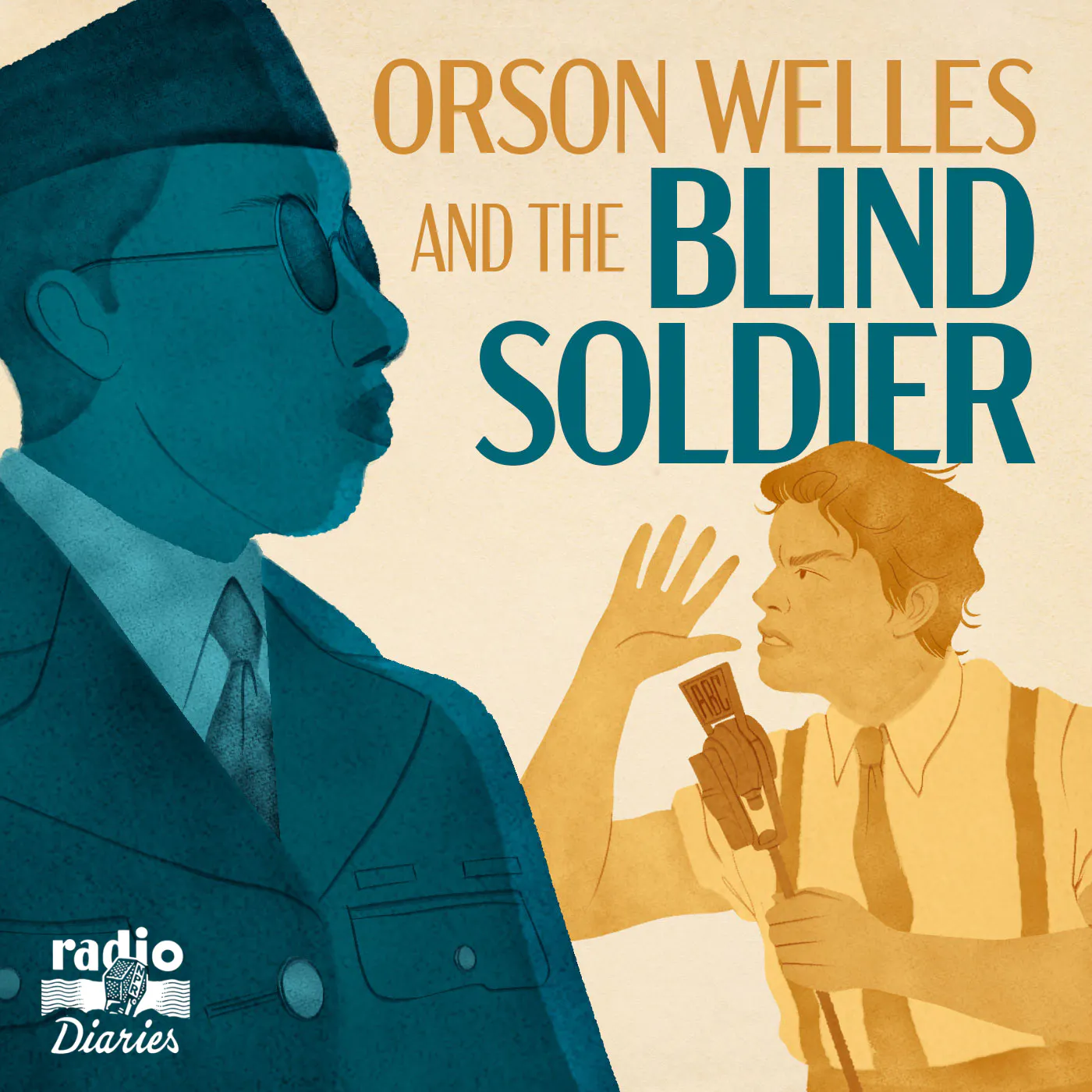
Loading summary
Transcript44 lines
- [00:02]
History This Week Host
One thing you learn pretty quickly making history this week is that the quality of work lives or dies with the people behind it. Research, editing, sound design. Every role matters, and hiring the wrong person slows everything down. If I had to hire someone for the show tomorrow, I wouldn't want to dig through a pile of resumes that sort of fit. I'd want someone with the right experience who actually understands what we do and can jump in right away. That's why I'd use Indeed Sponsored Jobs Hiring Indeed is all you need. Sponsored Jobs help your posts get seen by quality candidates who meet your specific criteria skills, certifications, location so you're matching with people who can actually drive results. And here's a stat worth paying attention to. Sponsored Jobs posted directly on indeed are 95% more likely to report a hire than non sponsored jobs. Plus, with Indeed Sponsored Jobs, you only pay for results. It's a smart boost. Wherever you need to find quality talent, spend less time researching and more time actually interviewing candidates who check all your boxes. Less stress, less less time, more results now with Indeed Sponsored Jobs and listeners of this show will get a $75 sponsored job credit to help get your job the premium status it deserves@indoubtedly.com htw just go to indeed.com htw right now and support our show by saying you heard about Indeed on this podcast. Indeed.com HTW terms and conditions apply. Hiring do it the Right Way with Indeed. If you've ever wondered what it takes to make History this week happen, it's basically like running a small business. You're building something from scratch, trying to make it feel real, professional, and memorable without losing what makes history this week special. And that's why, as a producer, Vistaprint is one of those tools I keep coming back to. Because once you start imagining the world around your show, Vistaprint is where the ideas get dangerously easy to picture. Embroidered hats, stickers, mugs, clean printed materials. All the stuff that makes a podcast feel like a brand you can actually hold. And lately we've been thinking about what it might look like to do our first live event. Should have more info on that soon, and I'm already imagining Vistaprint being the place where we can go for the whole setup. Signage, banners, posters, table cards, even little giveaways people actually want to keep. Because when you're building a show like History this week, the little details matter. And Vistaprint makes it feel possible to turn those details into something real. Vistaprint Print your possible Right now, new customers get 20% off with code NEW20@vistaprint.com.
- [02:45]
Orson Welles
Hello, this is Orson Welles. I've come to visit with you for a few minutes, and with your permission, every week at this time, we'll have a little conversation about people and the things they're doing all over the world.
- [02:56]
Narrator
In 1946, Orson Welles, the director of Citizen Kane, was at the height of his fame. At the time, he had a national radio show called Orson Welles Commentaries on abc.
- [03:08]
Orson Welles
I'll try to have a story for you each time, and I'm going to speak my mind about the news. You know, we don't have to agree on everything to be friends.
- [03:16]
Narrator
After a year on the radio discussing politics and Hollywood, Wells heard of a shocking crime. It was the end of World War II. A black soldier heading home was brutally beaten by a white police officer in South Carolina. No one knew the identity of the police officer. No one even knew the town where it had happened. And Wells pledged to solve the mystery. On air. Today, we're bringing you a special episode from the Radio Diaries podcast and their new series, Orson Welles and the Blind Soldier. It's the story of a crime in a small Southern town that became a spark for the budding civil rights movement. And we begin at the scene of the crime.
- [04:08]
Eyewitness / Family Members (Corrine Johnson, Laura Williams, Beatrice Wells)
I'm right here at the spot where the theater was, right across the street here. But all these trees weren't there then. My name is Corrine Johnson. I'm 98 years old. When I was 18 years old, I had just got out of high school. I was working at the theater. One of the fellows that worked at the theater came over and he said, corey, some police over there beating up a man. I left the ticket box. I said, what I want to see. You see that space right over there? That's when it happened. And I stood on the railroad track and I saw a man by the drugstore. He was down on the street there being beat up by the police. I didn't know who it was. Well, that's what I saw. I'm the only witness living that can tell it, and I ain't never forgot it.
- [05:21]
Expert / Historian (James L. Felder Sr.)
On February 12th of 1946, an African American soldier in uniform on the day he is discharged is brutally beaten in South Carolina.
- [05:32]
Eyewitness / Family Members (Corrine Johnson, Laura Williams, Beatrice Wells)
This horrific event happened to this young soldier, but we didn't know how and we didn't know who was responsible.
- [05:43]
Expert / Historian (James L. Felder Sr.)
This story could have easily have been just a footnote if you did not have Orson Welles lifting it up to public attention.
- [05:56]
Author / Commentator (Richard Gerkel)
Orson Welles immediately recognized that this was a story. It was a great whodunit.
- [06:04]
Orson Welles
This is abc, the American Broadcasting Company. Good morning. This is Orson Welles speaking. I'd like to read you an affidavit. I, Isaac Woodward, Jr. Being duly sworn to depose and state as follows that I'm 27 years old and a veteran of the United States army, having served for 15 months in the South Pacific and earned one battle star while I was in uniform.
- [06:27]
Author / Commentator (Richard Gerkel)
I'm Richard Gerkel. I'm the author of Unexampled Courage, about the blinding of Isaac Woodard. Here is the story. Isaac Woodard and a group of soldiers, black and white, who had been that day discharged from Fort Gordon, were heading home on a bus. They were sharing a bottle and talking and laughing. I'm sure they were a bit loud and a little rabunctious, and some of the white folks on the bus didn't like it. The bus driver didn't like it.
- [07:01]
Orson Welles
About one hour out of Atlanta, the bus driver stopped at a small drugstore. As he stopped, I asked him if he had time to wait for me until I had a chance to go to the restroom. He cursed and said no.
- [07:10]
Author / Commentator (Richard Gerkel)
The bus driver cursed him.
- [07:11]
Orson Welles
When he cursed me and Isaac Woodard, I cursed him back.
- [07:14]
Author / Commentator (Richard Gerkel)
Cursed him back. He is in the first hours of his return to America. This is a man with battlefield medals on his chest, sergeant stripes on his shoulders, and he is treated like he's nothing. And he spoke up. The bus driver was now seething with the impudence of this black man, and he left his bus in search of a police officer. And Woodard tried to explain that all I was trying to do was go to the bathroom. And the response to that was to be hit over the head with a blackjack.
- [07:47]
Orson Welles
They didn't give me a chance to explain. The policeman struck me with a belly across my head and told me to shut up. After that, the policeman grabbed me by my left arm and twisted it behind my back.
- [07:55]
Author / Commentator (Richard Gerkel)
And a moment later, he was being led away and the bus left without him. And on the way to the town jail where he was being arrested, he was beaten repeatedly by a police officer, eventually driving the end of the baton into both of Woodard's eyes.
- [08:16]
Orson Welles
He started punching me in my eyes with the end of the Billy. He pushed me inside the jailhouse and locked me up. I woke up next morning and could not see. I was blind.
- [08:29]
Eyewitness / Family Members (Corrine Johnson, Laura Williams, Beatrice Wells)
Sergeant Woodard survived, but he was blinded permanently. My name is Laura Williams, and Isaac Woodard was my uncle. Immediately after the attack, there was so much confusion because my family didn't know where he was. Isaac didn't even Know where he was?
- [08:48]
Author / Commentator (Richard Gerkel)
A reporter, a guy by the name of John McCrae who was also very active in the NAACP, heard the story that there was a black man at the VA South Carolina hospital who had been beaten by a white police officer and was now blind.
- [09:06]
Expert / Historian (James L. Felder Sr.)
The brutality of beating a veteran like that, still in uniform, coming home from fighting a war, that was enough to really galvanize the support of the naacp. My name is James L. Felder Sr. I was executive director of the NAACP from South Carolina.
- [09:24]
Author / Commentator (Richard Gerkel)
The NAACP is looking for a way to reach a larger audience. And they knew that Orson Welles was a friend of the civil rights movement. They believed it would capture his imagination. And they were right. He heard about it, I think on a weekday. And that Sunday he was on the national radio.
- [09:44]
Orson Welles
There's a price for everything. There's nothing that does not have its cost. What does it cost to be a Negro in South Carolina? It cost a man his eyes.
- [09:53]
Eyewitness / Family Members (Corrine Johnson, Laura Williams, Beatrice Wells)
My name is Beatrice Wells and I'm Orson Welles daughter. Nobody talked about this kind of stuff in 1946 on the radio about a
- [10:04]
Narrator
black man being beat by a white man.
- [10:07]
Orson Welles
The blind soldier fought for me in this war. The least I can do now is fight for him. I have eyes he hasn't. I have a voice on the radio he hasn't.
- [10:17]
Eyewitness / Family Members (Corrine Johnson, Laura Williams, Beatrice Wells)
He wanted America to know who the culprit was.
- [10:22]
Author / Commentator (Richard Gerkel)
Nobody knew who had beaten Isaac Woodard at the time. And no one knew what town it had actually happened in.
- [10:29]
Orson Welles
Not seems the officer of the law who blinded the young Negro boy of the affidavit has not been named till we know more about him. For just now, we'll call the policeman. Officer X. He might be listening to this. I hope so. Officer X, I'm talking to you. Wash your hands, Officer X. Wash them well. Scrub and scour. You won't blot out the blood of a blinded war veteran.
- [10:51]
Expert / Historian (James L. Felder Sr.)
Even his tone caught your attention.
- [10:54]
Orson Welles
Wash a lifetime, you'll never wash away that leprous lack of pigment. The guilty pallor of the white man.
- [11:01]
Expert / Historian (James L. Felder Sr.)
It's not something that just hits you and bounce off. It just kind of sears itself into your brain.
- [11:07]
Author / Commentator (Richard Gerkel)
He was demanding accountability for white people for inflicting violence against black people.
- [11:12]
Expert / Historian (James L. Felder Sr.)
He was right on the case. That was the beginning. That was the beginning.
- [11:18]
Orson Welles
You're going to be uncovered. We will blast out your name. I will find means to remove from you all refuge. Officer X. You can't get rid of me.
- [11:32]
Narrator
This was episode one of Orson Welles and the Blind Soldier. You can find the rest of the series on The Radio Diaries Podcast this story was produced by Micah Hay Hazel, Nellie Gillis and Joe Richmond of Radio Diaries, with help from Elisa Escarce. It was edited by Deborah George and Ben Shapiro and mixed by Ben Shapiro. Music from Stellwagen Symphonet. To find out more, go to RadioDiaries.org. Oh, could this vintage store be any cuter?
- [12:06]
Author / Commentator (Richard Gerkel)
Right?
- [12:06]
Eyewitness / Family Members (Corrine Johnson, Laura Williams, Beatrice Wells)
And the best part? They accept. Discover.
- [12:08]
Narrator
Accept Discovery in a little place like this? I don't think so.
- [12:12]
Eyewitness / Family Members (Corrine Johnson, Laura Williams, Beatrice Wells)
Jennifer oh yeah, huh? Discovers accepted where I like to shop. Come on, baby, get with the times.
- [12:18]
Narrator
Right. So we shouldn't get the parachute pants.
- [12:22]
Eyewitness / Family Members (Corrine Johnson, Laura Williams, Beatrice Wells)
These are making a comeback, I think.
- [12:26]
History This Week Host
Discover is accepted at 99 of places that take credit cards nationwide. Based on the February 2025 Nielsen report.