← HISTORY This Week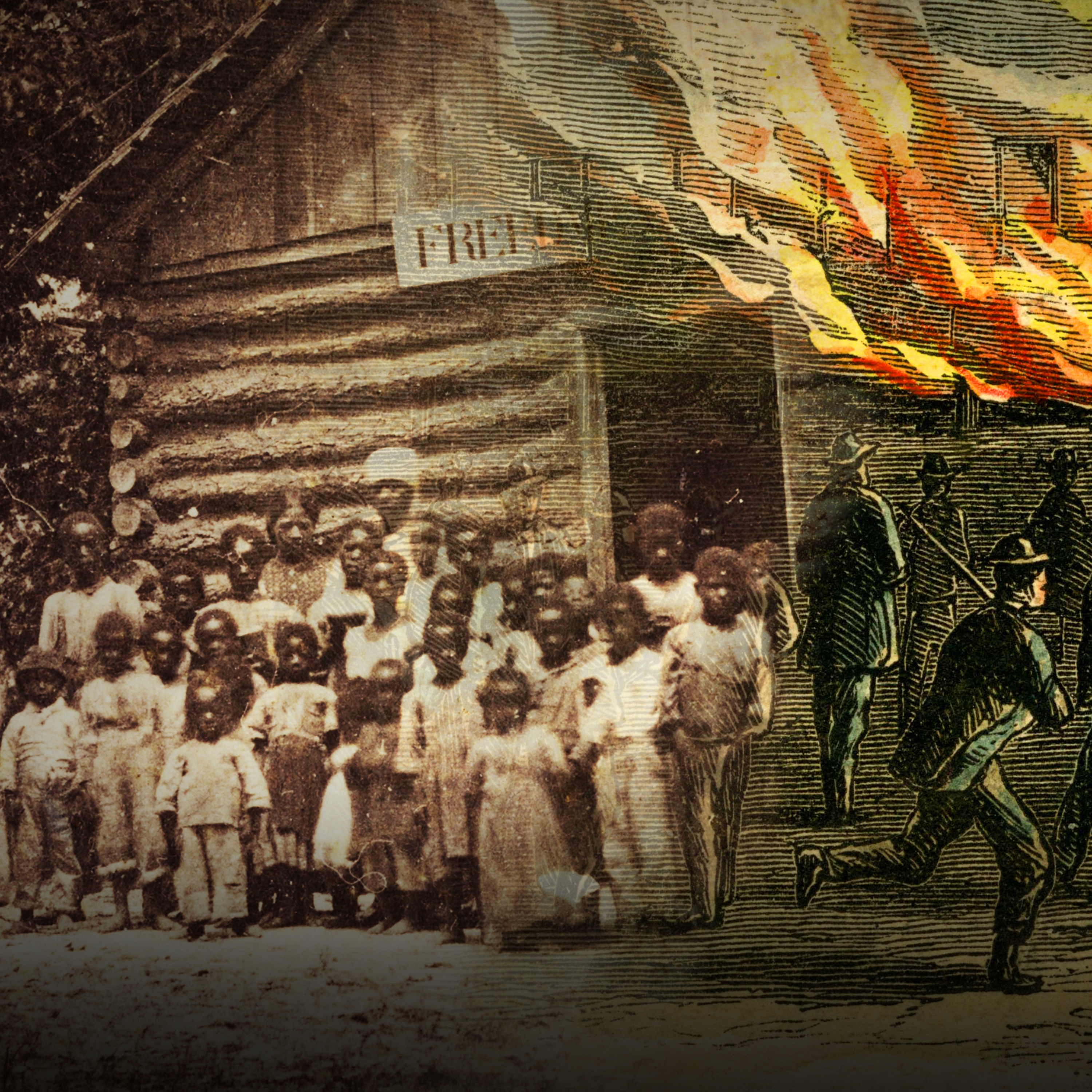
HISTORY This Week
Malcolm Gladwell on Reconstruction’s Unfinished Questions
00:35:29
Sally interviews Malcolm Gladwell to revisit the violence, backlash, and unfinished promise of Reconstruction, and asks why America is still struggling with its legacy.
Loading summary
Transcript85 lines
- [00:01]
Podcast Advertiser/Host
If you could travel back through history, there are a few luxuries you'd probably miss. Electric light, indoor plumbing, air conditioning. And somewhere on that list, the ability to control the temperature of your bed. Because for most of human history, if it was too hot to sleep, too bad. Today we have a different problem. The stress, the screen time, the just one more headline spiral. It all raises your core body temperature, and a body that's too warm cannot get into a deep sleep. You're not just tired because the news is exhausting. You're tired because your body never actually recovered. The good news, and yes, there always is some, is that science has a real answer. And it's simpler than you'd think. Your Bed temperature Enter Chilipad 2.0 by SleepMe, the water based mattress topper that actively controls your bed temperature from 55 to 115 degrees all night long. No new mattress, no renovation. It's it fits over what you already have. And water is the key. Fans just move hot air around. Chilipad uses actively chilled water to cool the bed, actually pulling heat away from your body. It's the difference between standing in front of a fan and jumping into a cold pool. If you told someone a hundred years ago or 1,000 years ago that one day you'd be able to dial in the exact temperature of your bed every night, it would have sounded like science fiction. The new Chilipad 2.0 comes with a redesigned dock that's quieter than ever, a washable performance grade cover with waterproof protection, and my favorite feature, the nightstand remote. It detects when you get into bed and automatically starts your sleep schedule. You get in, it kicks on. Visit www.sleep.mehistory to get up to $255 off your Chilipad 2.0 with code HISTORY. HISTORY. That's www.sleep s l e e p.mehistory. free shipping, free returns and a 30 night trial so you can test it out. Dream big and wake up better. The headlines will still be there in the morning. You might as well wake up ready for them.
- [02:11]
Sally Helm
If you listen to History this week, you know that we are always asking how did we get here? And there is another show that does that just through the lens of the economy, NPR's Planet Money. You might have actually heard my voice over there too. What I love about Planet Money and their sister show the indicator from Planet Money is that every episode starts with a question and then follows it somewhere really unexpected. Like I was just listening recently to a story about why Pokemon cards are suddenly exploding in value. Like outpacing some retirement accounts. And it turns into this surprisingly clear window into speculation, scarcity and human behavior. And that is what the show does so well. From the job market to the stock market to the price of groceries, it takes these big abstract forces and makes them make sense through real stories. They've asked how Russia's economy has held up after years of sanctions, What a 750 pound walk robot means for the future of restaurant work, and they have even launched a satellite to understand the economics of space.
- [03:22]
Interviewer/Host
It's the kind of show where you
- [03:24]
Sally Helm
learn something, maybe laugh and walk away, seeing the world a little differently. Follow NPR's Planet Money podcast and understand how money shapes the world.
- [03:39]
Eric Foner
The History Channel Original Podcast
- [03:44]
Sally Helm
history this week, June 15th, 1865. I'm Sally Helm. Carl Schurz writes a letter to his friend to share a piece of news. He's been summoned to the White House. Shirts is a prominent political figure, a German immigrant who had been a close ally of President Lincoln. But Lincoln has now been assassinated. So the telegram is from the new president, Andrew Johnson. Shirts and Johnson are not politically aligned, especially when it comes to the fate of the South. The Civil War has just ended and Shirts wrote to Johnson, worried that the president's latest plans would undermine black voting rights. Johnson has now responded, why don't you come down here to talk? So Carl Schurz departs Bethlehem, Pennsylvania, probably wishing it was Lincoln he was going to see, not John. On the way, he decides to stop in Philadelphia to visit an old friend, Dr. Henry Tiedemann. And that night at the Tiedemann's house, Schurz has the chance to speak in a strange way with the dead president himself. The Tiedemanns had lost two sons in the Civil War, Union soldiers, and Charlotte Tiedemann, like other grieving parents during this period, has turned to spiritualism. That night, while Schwertz is in town, the Tiedemanns hold a seance. Their 15 year old daughter is serving as the medium. The attendees form a circle around a table, their hands touching, and the girl starts to tremble. Her hand jerks out. Someone hands her a pencil and she starts to scrawl on a piece of paper, transcribing messages from the beyond. Schurz, recounting this later, doesn't seem too impressed. Everyone she channels just says they're happy or they're living in a higher sphere. But then one of the people gathered there turns to Schurtz and asks if there's anyone he'd like to speak to. He says, sure, give me a message from the dead German Writer Friedrich Schiller. The girl pauses for a few minutes, and then her hand begins to move. She writes that the spirit of Schiller is here and he wants to know, what does Schurtz want from him. Schurtz is like, I want you to say some lines of your own poetry so that I can be sure it's really you. The girl's hand begins to move again, and she writes out a few lines in German. Schurz has to pull a book off the shelf to confirm, but yes, they're fairly obscure lines from a work by Friedrich Schiller. The girl later claims she's never read it. Now Schurz is interested, and he asks to speak with someone else. His fallen friend, Abraham Lincoln. Several minutes go by. Then the girl says, lincoln's spirit is in the room. What would you like to know? Schurz asks, why has President Johnson summoned me to Washington? Lincoln's spirit replies, he wants you to make an important journey for him. Shirts asks, should I undertake this journey? And Lincoln, channeled through the Tiedemann girl, answers, yes, do not fail.
- [07:31]
Interviewer/Host
Did this really happen? It's not 100% clear.
- [07:34]
Sally Helm
Carl Schurz wrote about this moment much later on, when the prophecy foretold by Abraham Lincoln's spirit had already come to pass. Because Andrew Johnson does send Shirts on an important journey down to the south to document what is happening there, this helps kick off an entire era of American history, Reconstruction. Shirts is one of the first people to try to document what was really happening in the country as reconstruction began. And he was not the last. This is one of the most debated periods in American history. We have attempted many times and in many ways to describe what really happened as the nation tried to rebuild itself after it had been torn apart. The latest attempt comes from author Malcolm Gladwell in partnership with former President Barack Obama, in their new podcast, the Unfinished Promise. Today Reconsidering Reconstruction with Malcolm Gladwell. How did Carl Schurz's journey set the stage for an entire era of American history? And why do we keep changing the way we look at that era, even today? For this new series on Reconstruction, Malcolm Gladwell did a long interview with former President Obama. I started by asking him about that.
- [09:03]
Interviewer/Host
What was that like for you? Anything strike you about the way that he approached this material or answered your questions?
- [09:09]
Malcolm Gladwell
He. I brought my kids and I was. And I. But I checked with his people first and I said, is it okay? And they said, it's more than okay. This is gonna make his day. He loves children. I thought it was just A line. And then he comes around the corner and you see I have a two year old and a four year old. He sees them and like basically gets down on his knees and hangs out with them and forgets everyone else in the room. So that was crucial point number one. The President really does love small children in a kind of can confirm, beautiful way. And no, he. I was incredibly impressed by. He clearly knew this history, the constitutional history, the history history really, really well. He taught it. And when he was a law school professor, I think he taught courses on Reconstruction. So it wasn't a kind of amateur interest, it was a specialist's interest. There was a depth and a kind of sophistication to the way he talked about Reconstruction that we had a wonderful conversation. And I was just. It's always a, you know, a thrill to be in the presence of a former president.
- [10:17]
Interviewer/Host
Yeah, I mean, he does. It comes across in the series that he knows this really well, as you say. I mean, he was a constitutional law professor. That was much discussed. He does, though, tell a personal story in the very first episode of your series, the Prologue, about encountering this material as a kid. Could you tell us that story?
- [10:33]
Malcolm Gladwell
Well, as a kid growing up in Hawaii. Yeah. He's. He has a class assignment to write a. Something. I, I don't know whether it was about Reconstruction or about the Civil War or something. And he writes this thing about Robert E. Lee. And what he's using is all of the kind of hagiographical, you know, stuff that was written in that era, you know, 50s. If you read the history books of the 50s and 60s, there is this kind of romanticization of the Civil War and of people like Lee in particular. And here he is a black kid writing this like kind of, you know, the age of 11, regurgitating all of this ridiculously kind of one sided positive stuff about a general in the Confederate Army.
- [11:18]
Interviewer/Host
Yeah. And it captures something about the way that the history echoes through the ages. When you watch him encounter that and sort of not be able to see the broader context. I mean, why did you guys decide to include that in the first episode? What do you think it shows?
- [11:33]
Malcolm Gladwell
You know, one of the things we talk about in this series is the extent to which our understanding of Reconstruction has evolved. And that there, you know, there was a kind of interpretation of those events which held sway for a very long time, which tried to kind of normalize the experience with Reconstruction, that it was a kind of this sort of productive step towards creating a better union. We made a lot of progress we moved on kind of thing. And it wasn't until much later that people began to go back and understand that the history was much more complicated and in many ways problematic. And that the kind of. That what this really was was a story of a. About America's ongoing inability to resolve its racial past, not an example of a kind of linear reconciliation with the period of slavery.
- [12:30]
Interviewer/Host
Yeah, I really actually want to drill down on that with you throughout this conversation, sort of the various attempts to go back and look at it again. And we opened our episode with a scene that you have in your series, this scene of Carl Schurz attending a seance, which, to hear him tell it, the Sands was also attended by the ghost of Abraham Lincoln, who sort of sends him off with a mission to go down to the south and see what's really happening, to see where we start with the project of reconstruction. President Andrew Johnson, of course, doesn't want this to happen. Schurz is an interesting character. It seems like he had a big impact, but a lot of people haven't really heard of him. How'd you hear of him? It sounds like you, like, encountered him walking around New York.
- [13:09]
Malcolm Gladwell
If you're a New Yorker, you know the name Carl Schurz because there are several monuments to him. There's Carl Schurz park, which is on the Upper east side, which is right next to Gracie Mansion, the mayor's residence. And then there's a statue of him right near Columbia University in Morningside Heights. I mean, he was a big enough deal in his day to merit not one, but two kind of historical monuments in New York City.
- [13:32]
Interviewer/Host
Sure. Not everyone gets that.
- [13:33]
Malcolm Gladwell
Not everyone gets that. He was a German immigrant who had fought in Germany, comes to America and has this kind of extraordinary life. He's one of those. He's like a Zelig like figure. He pops up all over the place and ends up making a lot of money and starts a newspaper, and it gets into other business ventures. But in the aftermath of the Civil War, he is asked by Andrew Johnson to go on a kind of fact finding mission of the south and come back with the story of what was going on after the war in the South. And. And Johnson, who is himself a Southerner, is interested in creating a kind of COVID story of saying, okay, this is over. We can move on. Let's inch our way back to the status quo as much as we can. And what he wants Schurz to do is to provide a report that Johnson can use to kind of, like I say, a cover story for his attempt to return things to the way they were. And. And shirts doesn't go along with that. And the reason is that Schurz is a kind of. He's like a weird, strong willed, cantankerous, Just an oddball.
- [14:43]
Interviewer/Host
Wow, Andrew Johnson really miscalculated on that one.
- [14:45]
Malcolm Gladwell
Well, Johnson, you know, that's not surprising because Johnson miscalculates on a lot of things. Not our most capable president drunk half the time, you know, ends up getting impeached. Yep. First one regularly comes up at the rear of any ranking of the best American presidents. And there is some competition in the bottom half of the distribution. And yeah, he miscalculates. And what Schurz comes back with is this incredibly honest and unflinching portrait of just how. What chaos is in place in the old Southern states and the amount of violence that persists against black people. I mean, his journey as a kind of. We have to understand that the south has been leveled. And, you know, he goes down to South Carolina, starts in South Carolina and kind of works his way to New Orleans. And so he goes through the worst of the kind of war damage. And it's. It really is. It's dystopian. I mean, nothing is working. Everything is in ruins. This incredible amount of violence. And he's traveling through all of this under the most extraordinary. I mean, there's barely any place to stay. You can imagine this is the most malarial part of the United States. The heat, it's the middle of the summer. The heat is overwhelming. He's in New Orleans in the sweltering New Orleans summer. I mean, it's just like his Heart of darkness experience. And he sticks with it. And he comes back and he writes this report which he attempts to present to Andrew Johnson, which sort of tells the truth. Look, Mr. President, I know you wanted some rosy story about how things were getting back to normal. It's not true. That's not what's going on down there. And he has a kind of a radical agenda, which is that Scherz's conclusion is the only way we're going to get out of this is if we grant full citizenship to formerly enslaved people. We use the army to enforce all of the new rules. The north remains a constant presence until the south is kind of brought up to speed on the revolution that's happened. And Johnson wants none of it.
- [16:55]
Interviewer/Host
I mean, what do you think we learn from him about what the actual barriers to Reconstruction are at that moment? It's just after the Civil War, it's 1865 and he, I mean, one thing that's striking me is that there is the literal reconstruction. Like one of the first things he sees is everything is destroyed. There's a literal reconstruction that has to happen. But, but it's really more than that. I mean, it seems like he sees some of the percolating cultural forces that are also going to really come to bear here. What do you think those are? What are the big obstacles as he sees them in those early days?
- [17:25]
Malcolm Gladwell
Yeah, I mean, I think he understands the extent to which, I mean, Frederick Douglass would famously say of this era that in this era that America had a choice and that if you wanted democracy, you had to have some degree of racial equality. And if you weren't going to grant racial equality, you couldn't have a democracy. Right. That was the choice. How much do you want your democracy? That's the way. And I think what shirt is seeing is the same thing that we have embarked on this project to kind of restore America to its ideals. And there's a long road ahead of us. And if we fail at that, we fail at democracy. This thing that we hold dear, that we, this grand experiment that we started back in the, after the American Revolution. So I think what he's seeing is the, the, he's seeing something that is as true today as it was back then and that we periodically lose sight of, which is, you cannot heal America without dealing with its, the, the stain on the American conscience, which is, it's America's racial legacy that's at the center of everything. And like that. I think that's really what he's saying. Like, you can't brush this under the rug. This is who we are at the moment. And that's exactly the thing that Johnson doesn't want to hear.
- [18:47]
Sally Helm
Johnson doesn't want anyone else to hear it either. He tries to bury Carl Schurz's report,
- [18:53]
Interviewer/Host
but it doesn't work.
- [18:55]
Sally Helm
A hundred thousand copies are printed and sent around the country. It shows up in almost every newspaper and it helps generate momentum for passing the 13th, 14th and 15th amendments. These are at the center of what Reconstruction accomplished. They abolished slavery, granted citizenship and equal protection for formerly enslaved people, and guaranteed voting rights for black men. But the process of Reconstruction kept playing out on the ground in violent ways. When we return, we talk to Malcolm Gladwell about another time the nation attempted to grapple with the reality of what that looked like. The only time the federal government officially reckoned with the post Civil war violence unfolding in the South.
- [19:46]
Podcast Advertiser/Host
Living in a big city, grocery shopping can turn into a whole production. You realize halfway through that you've bought way more than you can actually carry home, and suddenly you're hauling heavy bags down the street onto the subway or up apartment stairs, wondering why you thought this was a good idea. That's one of the reasons I use Instacart all the time. I can open the app, order from stores I already know and like, choose the exact brands and groceries I want and get delivery through Instacart in as fast as 30 minutes. And I really appreciate the quality software of it too. You can set preferences for produce, for placements, all those little details that actually matter when someone's selecting your groceries, especially in the summer. It just gives you time back. Instead of losing half a Saturday running errands, I can focus on work, seeing friends, getting outside, whatever I actually want to be doing. And from a historical perspective, that's kind of crazy. For most of human history, getting food and household essentials consumed a huge part of everyday life. Entire routines revolved around carrying, transporting, preserving, or preparing just basic necessities. Anything that makes modern life a little easier, especially in a city I'm grateful for. Instacart brings convenience, quality and ease right to your door. So you can focus on what matters most. Download the Instacart app now and get groceries just how you like. History that Doesn't Suck is a legit, hard hitting American history podcast told through entertaining stories.
- [21:13]
Malcolm Gladwell
As we approach America's 250th anniversary, now might be the time to go back and learn how we got here.
- [21:19]
Podcast Advertiser/Host
With more than 200 episodes, you can binge your way decade by decade, defining
- [21:24]
Malcolm Gladwell
event to defining event from the founding into the 20th century.
- [21:28]
Podcast Advertiser/Host
Join me, Professor Greg Jackson for History that Doesn't Suck. An Odyssey Podcast, available on Apple Podcasts, Spotify or wherever you get your podcasts. If you could travel back through history, there are a few luxuries you'd probably miss. Electric light, indoor plumbing, air conditioning. And somewhere on that list, the ability to control the temperature of your bed. Because for most of human history, if it was too hot to sleep, too bad. Today we have a different problem. The stress, the screen time, the D. Just one more headline spiral. It all raises your core body temperature and a body that's too warm cannot get into a deep sleep. You're not just tired because the news is exhausting, you're tired because your body never actually recovered. The good news, and yes, there always is some, is that science has a real answer and it's simpler than you'd think. Your bed temperature. Enter Chilipad 2.0 by SleepMe, the water based mattress topper that actively controls your bed temperature from 55 to 115 degrees all night long. No new mattress, no renovation. It fits over what you already have. And water is the key. Fans just move hot air around. Chillipad uses actively chilled water to cool the bed, actually pulling heat away from your body. It's the difference between standing in front of a fan and jumping into a cold pool. If you told someone a hundred years ago or a thousand years ago that one day you'd be able to die, dial in the exact temperature of your bed every night, it would have sounded like science fiction. The new Chilipad 2.0 comes with a redesigned dock that's quieter than ever, a washable performance grade cover with waterproof protection, and my favorite feature, the nightstand remote. It detects when you get into bed and automatically starts your sleep schedule. You get in, it kicks on. Visit www.sleepmehistory to get up to $255 off your Chilipad 2.0 with code HISTORY. That's www.sleeps l e e p.me history. Free shipping, free returns, and a 30 night trial so you can test it out. Dream big and wake up better. The headlines will still be there in the morning. You might as well wake up ready for them.
- [23:52]
Sally Helm
About five years after Carl Schurz's report, there's another attempt to document what's going on in the South. It's become known as the Klan hearings of 1871 and 1872.
- [24:06]
Interviewer/Host
What was the government's goal with those hearings? What were they trying to do five years after the fact?
- [24:11]
Malcolm Gladwell
Well, they're taking up the kind of the challenge that was laid down by shirts, which is to look honestly at the state of the south in the aftermath of the war. And we had decided that slavery was over. We had decided that we were going to try and figure out a new America. But the reality of what was going on in the south was that there was a backlash, as much mild a term for it, but basically that the war wasn't over. And that, you know, for example, there was something called the Homestead act, which created a pathway for former slave people to own the land that they were working. And there was a systematic project among whites in the south to basically uproot former slaves from the land.
- [24:57]
Interviewer/Host
Right.
- [24:58]
Sally Helm
Cause it's part of the law. You have to stay on the land
- [25:00]
Malcolm Gladwell
if you want to stay on the land.
- [25:01]
Interviewer/Host
So the violence to try to take people from their homes is extremely Targeted and economic in nature. They're trying to sort of literally steal the land, because if you. If you get off the land, you can take it.
- [25:10]
Malcolm Gladwell
And so there is a kind of terrorist campaign. They're called the Ku Klux Klan hearings because this is the beginning of the Klan. And the kind of the function of the Klan. It is this kind of private militia that is dispatched to separate black people from, in this case, many things. But in this case, their land forced them off, terrorize them. And at the hearing, we have this really, really powerful episode where we kind of recreate the testimony. People come to Washington from the South. Black people come to Washington from South and talk about what's happened to them, about being raped and husband tied to a tree and somebody lynched and being chased from their land. I mean, these kind of horrific stories of what's going on. And it's clear from those hearings that, like I said before, the war hasn't ended. It's just taken. It's just moved into a new phase. It's moved into a phase of domestic
- [26:06]
Interviewer/Host
terrorism, but still very much like an armed conflict. It feels like war in that era. That's one thing you pull out in that episode of the series. And also this sense that, like.
- [26:15]
Sally Helm
Yeah. That it's not this kind of fog
- [26:17]
Interviewer/Host
of hatred and terror.
- [26:18]
Sally Helm
It does have these real political aims.
- [26:21]
Interviewer/Host
Tell us a little bit about that. What was kind of the political purpose of this violence that was happening?
- [26:26]
Malcolm Gladwell
The political purpose of the violence is to restore the political supremacy of white people in the South. You know, you have to understand that in states like South Carolina, for example, and in other states in the south, the former slave populations represent a very significant proportion of the overpopulation. So to grant political freedom to black people in that era dramatically alters the political power structure of those states. You have in the early days of Reconstruction, you have black people in the Senate, you got black people in Congress. If you can imagine, in a span of like 10 years, if you're a Southern plantation owner, you go from owning someone to have someone representing you in Washington. They cannot wrap their minds around this transformation. And so this is the backlash. This is really the beginnings of what would become Jim Crow. Jim Crow is the kind of rational, bureaucratized version of what begins as a kind of, like I said, domestic terrorism. It gets enshrined into law, particularly in the early part of the 20th century. But in the beginning, it's just a kind of we're going to terrorize as many people as they can and force them off their land and essentially terrorize them into silence. Right. So they can no longer be kind of active participants in the political life of the former slave states.
- [27:45]
Sally Helm
The hearings ultimately don't bear as much fruit as we might hope. A lot of people who are convicted are pardoned. But these hearings do bring this information to light and really preserve it. Like obviously we are still reading this testimony today. Was that intentional that these hearings would serve as a historical document of a certain kind?
- [28:05]
Malcolm Gladwell
There is a very sophisticated undercurrent in the progressive movement of that era. Those who are seeking to kind of create this new America, they understood that they were not just fighting a political battle, they were also engage in a war over American history. Right. About who gets to write history. And what was going on in the south was an active attempt to erase the history of Southern racism. They realized, I think they. With things like the Scherz report and also the Klan hearings that like, no, if we get this down on paper, if we have real people come to Washington and testify as to what is happening to them in the south, we at least have a chance to have our story, our version of American history be told at some point. It's the same thing that compels people who were in concentration camps in the second World War to document what was happening to them because they know if they don't and they're simply exterminated, then their stories would die with them. Right. It's that same. You're quite, you, you become very clear eyed about posterity when you're in that kind of extreme peril.
- [29:22]
Interviewer/Host
The end of Reconstruction. I feel you feeling this in the series, that the end of reconstruction in 1877 is like, it's just, it's a moment of despair when you think back on it. Now tell us that story. What is the Compromise of 1877 and how does it end? Reconstruction.
- [29:38]
Malcolm Gladwell
So we have in 1876 a deadlocked presidential election. Samuel Tilden and Rutherford Hayes. Tilton is the Democrat and Hayes is a Republican. And the election, because of various complex irregularities in the voting and the Electoral college and such, to this day, no one really knows who won that election. And this drags on for months. The uncertainty about who exactly is our President drags on for months. And in the end there's a compromise. And it's one of those stereotypical smoke filled room in Washington.
- [30:11]
Interviewer/Host
Literally like this is where the stereotype's from.
- [30:12]
Malcolm Gladwell
Yeah. Yes. In the Wormley hotel in downtown D.C. a bunch of guys smoking cigars get together from both parties and say, okay, we just Gotta make a deal here. And the deal is that the Republicans get to win the presidency.
- [30:28]
Interviewer/Host
So that's the party of Lincoln. To remind people, that's the party of
- [30:31]
Malcolm Gladwell
Lincoln, the party that has been agitating for racial equality. Okay? You guys get to occupy the White House. Your person, your man, Rutherford Hayes is the president. However, as compensation for us conceding defeat, we, the Southern Democrats, get basically to return to the status quo, all Northern troops out of the South. Let's wind down this crazy reconstruction experiment. Let's go back essentially to home rule among the former slave states. So leave us alone. Let us go and mind our own business, do our own thing. You, you get the White House. That's the deal. And that deal signals the end of the formal process of Reconstruction. That compromise of 1877 paves the way for 75 years of Jim Crow.
- [31:23]
Interviewer/Host
You ask President Obama about this in the series, and again, I feel so with you in that moment.
- [31:28]
Sally Helm
It's like, how could they do this?
- [31:30]
Interviewer/Host
What is the psychology?
- [31:31]
Sally Helm
What are they thinking?
- [31:32]
Interviewer/Host
That this is the party that's fought for 12 brutal bloody years to try to get Reconstruction to happen. And they're kind of just like, it feels like they're just like, ah, okay, whatever, moving on. And you two have a really interesting exchange about that. What did he say to you about that? The psychology of that moment and how did it change your thinking, if at all?
- [31:52]
Malcolm Gladwell
I mean, he is, he's someone who, by nature, I think he is an optimist, a historical optimist. And the way he interpreted this is, look, this doesn't mean that Reconstruction is over. This is just a kind of inevitable correction that happens whenever you undertake some radical transformative agenda. And the big point in our conversation that Obama kept returning to was that Reconstruction goes on for the next 100 years. In fact, in many ways, it's still not over. If you want to kind of right the wrong of slavery, you can't do it in a generation. And we're still in the thick of it in many ways. And so he would say that, you know, having achieved a certain set of real victories, 13th, 14th and 15th amendment right, at least establish a template for what freedom looks like.
- [32:53]
Sally Helm
Next up, a little meta. We talk about the history of the history of Reconstruction and how it shapes the way we talk about all of these issues today.
- [33:10]
Podcast Advertiser/Host
Living in a big city, grocery shopping can turn into a whole production. You realize halfway through that you've bought way more than you can actually carry home.
- [33:17]
Interviewer/Host
And.
- [33:18]
Podcast Advertiser/Host
And suddenly you're hauling heavy bags down the street. Onto the subway or up apartment stairs, wondering why you thought this was a good idea. That's one of the reasons I use Instacart all the time. I can open the app, order from stores I already know and like, choose the exact brands and groceries I want, and get delivery through Instacart in as fast as 30 minutes. And I really appreciate the quality side of it too. You can set preferences for produce, replacements, all those little, little details that actually matter when someone's selecting your groceries, especially in the summer. It just gives you time back. Instead of losing half a Saturday running errands, I can focus on work, seeing friends, getting outside, whatever I actually want to be doing. And from a historical perspective, that's kind of crazy. For most of human history, getting food and household essentials consumed a huge part of everyday life. Entire routines revolved around carrying, transporting, preserving, or preparing. Just basic necessities. Anything that makes modern life a little easier, especially in a city I'm grateful for. Instacart brings convenience, quality and ease right to your door. So you can focus on what matters most. Download the Instacart app now and get groceries just how you like. If you could travel back through history, there are a few luxuries you'd probably miss immediately. Electric light, indoor plumbing, air conditioning, and somewhere on that list, the ability to control the temperature of your bed. Because for most of human history, if it was too hot to sleep, too bad. Today we have a different problem. The stress, the screen time, the just one more headline spiral. It all raises your core body temperature. And a body that's too warm cannot get into a deep sleep. You're not just tired because the news is exhausting. You're tired because your body never actually recovered. The good news, and yes, there always is some, is that science has a real answer. And it's simpler than you'd think. Your bed temperature. Enter Chilipad 2.0 by SleepMe, the water based mattress topper that actively controls your bed temperature from 55 to 115 degrees all night long. No new mattress, no renovation. It fits over what you already have. And water is the key. Fans just move hot air around. Chillipad uses actively chilled water to cool the bed, actually pulling heat away from your body. It's the difference between standing in front of a fan and jumping into a cold pool. If you told someone a hundred years ago or a thousand years ago that one day you'd be able to dial in the exact temperature of your bed every night, it would have sounded like science fiction. The new Chillipad 2.0 comes with a redesigned dock that's quieter than ever, a washable performance grade cover with waterproof protection, and my favorite feature, the Nightstand remote. It detects when you get into bed and automatically starts your sleep schedule. You get in, it kicks on. Visit www.sleep.mehistory to get up to $255 off your Chilipad 2.0 with code HISTORY. That's www.sleep s p me history. Free shipping, free returns and a 30 night trial so you can test it out. Dream big and wake up better. The headlines will still be there in the morning. You might as well wake up ready for them.
- [36:43]
Sally Helm
If you listen to History this week, you know that we are always asking how did we get here? And there is another show that does that just through the lens of of the economy, NPR's Planet Money. You might have actually heard my voice over there too. What I love about Planet Money and their sister show, the indicator from Planet Money is that every episode starts with a question and then follows it somewhere really unexpected. Like I was just listening recently to a story about why Pokemon cards are suddenly exploding in value, like outpacing some retirement accounts. And it turns into this surprisingly clear window into speculation, scarcity and human behavior. And that is what the show does so well. From the job market to the stock market to the price of groceries, it takes these big abstract forces and makes them make sense through real stories. They've asked how Russia's economy has held up after years of sanctions, what a sand 750 pound walk robot means for the future of restaurant work, and they have even launched a satellite to understand the economics of space.
- [37:54]
Interviewer/Host
It's the kind of show where you
- [37:55]
Sally Helm
learn something, maybe laugh and walk away seeing the world a little differently. Follow NPR's Planet Money podcast and understand how money shapes the world. Back in 2022, our show history this week also took on Reconstruction. As part of that, we wanted to learn more about how Reconstruction had been remembered. One key phase of that was a story told by the Columbia University professor William Dunning about how Reconstruction was a failure. He was basically like giving black men the vote led to all this corruption and mismanagement. But in the 1930s, along came the Black Scholar W.E.B. du Bois, who published a crucial book called Black Reconstruction that took another look at this period. We talked about this with another Columbia University professor, Eric Foner, who is also featured in Malcolm Gladwell's podcast. This is from my interview with him in 2022.
- [39:02]
Eric Foner
Du Bois was not the only one, but certainly one of the most important in refuting the Dunning interpretation and putting forward a different interpretation. It's one thing to say, well, these guys are wrong, but that doesn't tell you what really happened.
- [39:17]
Sally Helm
Du Bois brings in sources that Dunning ignored and puts forward the idea that Reconstruction was actually a success, but then it was defeated. He writes these famous lines, the slave went free, stood a brief moment in the sun, then moved back again toward slavery. And the time he is writing in the 1930s also makes DU Bois really conscious that this is a story about labor. Here's Eric Foner again from my 2022 interview with him.
- [39:50]
Eric Foner
The very first chapter, in fact, the title of the very first chapter, the Black Worker. Du Bois is saying Reconstruction is a matter of labor as well as politics and citizenship. The labor of black people growing cotton had fueled the growth of the American economy. What was going to happen now that slavery was gone? And by the end of the book, he says, you know, one of the reasons for the failure of Reconstruction is that white labor, both north and south, did not see that they had the same community of interests with the former slaves in most sectors. The, you know, better paying jobs were restricted to white people and they didn't want to lose that privilege.
- [40:35]
Sally Helm
It's a key example of how the way we tell a historical story really determines how we see our present and also of how we can look again and again at the same couple of years and still see new, important things. Malcolm Gladwell covers the back and forth between Dunning and Du Bois in his new podcast too, also with the help of Eric Foner.
- [40:58]
Malcolm Gladwell
It's a really interesting model of how history is written because, you know, I'm reminded of a friend of mine is a crisis manager, and one of his dictums is first facts are always wrong. And he's talking about, he advises companies that are having crises. You'll go in, you know, something dramatic will happen, they'll have some scandal, and he'll arrive on day two, meet with the board. And the board has like, you know, five things on their plate. We got to do this. This is happening. And my friend's response is, always remember, first facts are always wrong. I think history is the same way that I do think that first facts are always wrong. That you, when you try and draw a conclusion too quickly, you miss much of the kind of deeper truth of what's happening. I mean, the Dunning school is the, it is this kind of normalization of the process. It's a kind of this feeling that Reconstruction was a kind of a tidy and appropriate and effective response to the war. And what W.E.B. du Bois does is part of a kind of counter movement which inspires a whole other series of historians that just starts to pick apart all of the embedded mythologies in that view and to restore some degree of complexity and nuance. And I also think moral outrage to our understanding of what happened.
- [42:28]
Interviewer/Host
You know, one thing that I kind of couldn't help thinking about, listening to your series and listening to President Obama talk about it is just, of course, the Obama era itself. The fact that we had this moment where the country elected a black president. Then, of course, there was a huge backlash to that. Did working on this material make you rethink the Obama era and what came after in any way? How'd your thinking change as you thought about this history?
- [42:54]
Malcolm Gladwell
Only in a general sense that this is further proof of the enduring American phenomenon of backlash. This is the backlash country, right? I mean, there is nothing linear about the way Americans proceed. It's two steps forward, and then it's one or two steps back. That's American history. And what you hope for is that critical elements of your initial victory remain in place. So the next time there's a process of forward progress and backlash, you're a little bit further along than you were before. And that's sort of the story of reconstruction, right? We have the amendments, we have institutions like the Justice Department, and we lose a lot, but those come back to be really useful down the line, and they can't get rid of them. Right? When the south wants to return to the status quo, it's not a return to the status quo. And that's why we consider the process of reconstruction ultimately to be a success.
- [43:52]
Interviewer/Host
I'm curious how you think about where. Where we've landed right now. Like, you're releasing this reconstruction series at this moment. What kind of world do you think you're releasing it into in terms of how people think about reconstruction? Like, where are we? What do people think about when they think about this era?
- [44:08]
Malcolm Gladwell
I mean, I think that particularly when it comes to race, but I think it's true of many issues is a kind of fatigue sets in among the majority class when it comes to the discussion of this kind of thing. You're allowed to complain a little. You're not allowed to complain a lot. You see this with women in the workplace. There's a certain amount of eye rolling that takes place among dominant males when they hear that complaint. The dominant class has a limited amount of patience for hearing complaints from those who are subordinate. We are now, in a period of extreme political fatigue with discussions of race and gender equality, you see this in the Trump administration's kind of war on DEI and the general antipathy of many Americans towards that term. These kinds of conscious efforts to address racial disparities have never been less popular. And I think that what happens with The Compromise of 1877 is a version of that. Okay, we've done this. It's time for the former slaves of the south to kind of shut up and get on with their life. That's the kind of psychological thing that's at the heart of it. It's just. It is dominant class fatigue, complaint fatigue, whatever you want to call it. Right. And that's the same moment we're in now.
- [45:26]
Interviewer/Host
Okay, so if that's the moment, sort of fatigue and people not wanting to hear it, I mean, you're about to release an eight part series about reconstruction into that context. How does your series kind of speak to that moment or speak against it?
- [45:37]
Malcolm Gladwell
I mean, I think that the antidote to that kind of fatigue is to tell someone a story that they haven't heard before. Right, that's. And this is a story we haven't heard before. The whole thing that got us started on this is that this is this forgotten era in American history, glossed over, misunderstood, neglected, and that we could shine a light on it and that would be a new way to kind of activate people's concern over these questions.
- [46:07]
Interviewer/Host
In the very first episode, in the prologue, President Obama uses the word perfecting. He says, this is a moment when the country is really trying to do the project of perfecting the union. And that really made me pause for a minute. I was like, right, form a more perfect union.
- [46:21]
Sally Helm
Like, that's what it says.
- [46:22]
Interviewer/Host
It's like a process statement. And so is the word reconstruction. It's a process word. And I don't know, I feel like this is the theme of the series, that it's really easy to feel like a contradiction means a failure. Like, because the nation has never lived up to the ideals, it's just been a failure the whole time because that contradiction is baked in. There are a few moments where you're kind of bringing a more a sense of despair or how can you not be cynical when you look at this history? And President Obama is offering something more like hope or optimism. Where'd you land on the hope, despair question?
- [46:57]
Malcolm Gladwell
Yeah, he has a. By virtue of being who he is, I think he has a kind of broader perspective on American history. I tend to be a little bit more granular in my approach to things. I don't think he moved in my direction, but I think I probably moved a little bit in his direction.
- [47:13]
Interviewer/Host
A little bit.
- [47:14]
Malcolm Gladwell
A little bit.
- [47:18]
Interviewer/Host
Malcolm Gladwell, thank you so much for coming on History this Week.
- [47:21]
Malcolm Gladwell
Thank you, Sally. This is lovely.
- [47:23]
Sally Helm
You can listen to Reconstruction, the Unfinished Promise ad free on Audible or starting on June 18th anywhere you get your podcasts. Thank you for listening to our podcast History this Week, a Back Pocket Studios production in partnership with the History Channel. To stay updated on all things History this Week, sign up@historythisweekpodcast.com and if you have any thoughts or questions, send us an email@historythisweekhistory.com this episode was produced by me, Sally Helm, and produced and sound designed by Ben Dickstein for Back Pocket Studios. Ben is also our executive producer from the History Channel. Our executive producers are Eli Lehrer and Liv Fiddler. Don't forget to follow, rate and review History this Week, wherever you get your podcasts, and we'll see you next week.