← HISTORY This Week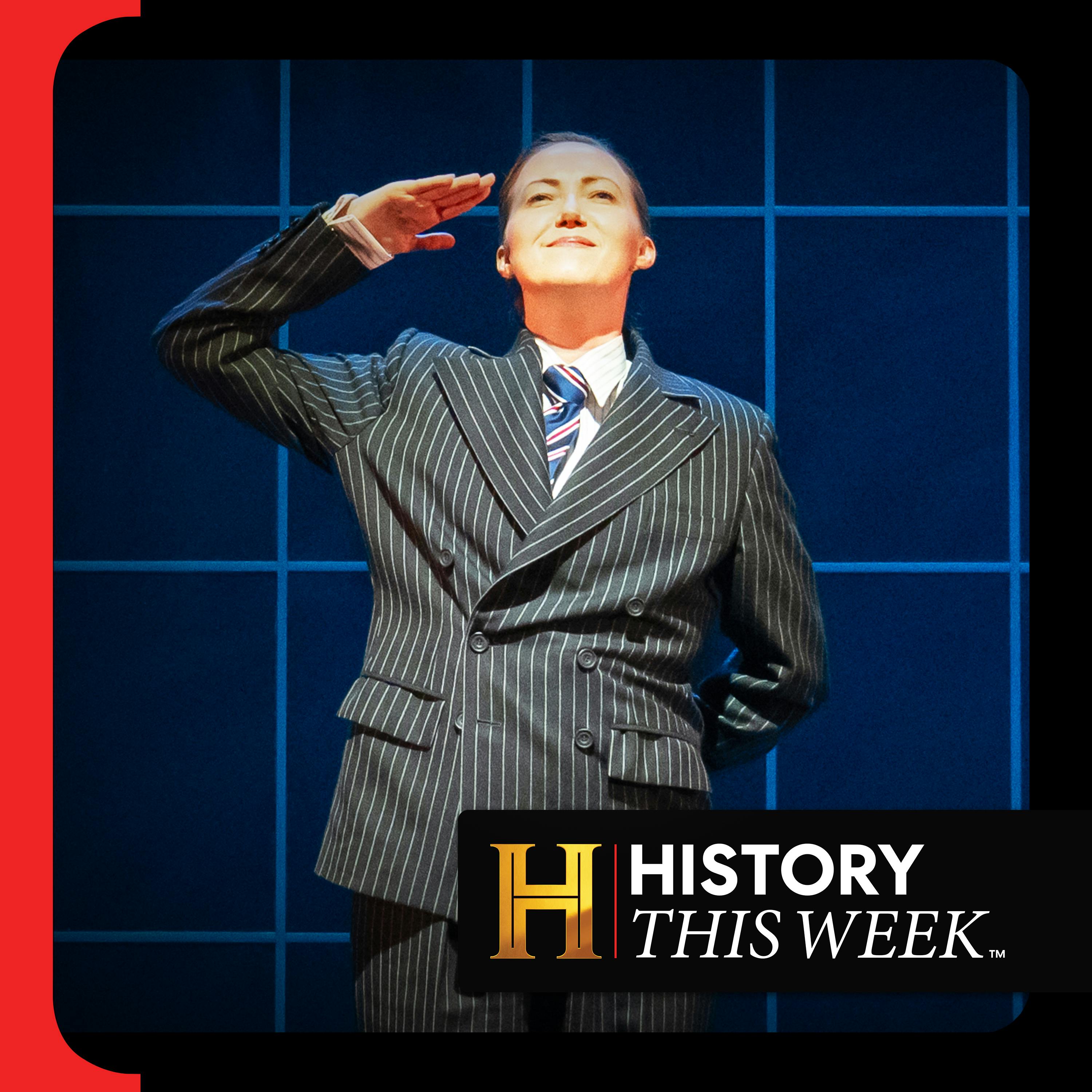
HISTORY This Week
Operation Mincemeat Revisited | Episode + Bonus Interview with Natasha Hodgson
00:54:46
Loading summary
Transcript130 lines
- [00:03]
Sally Helm
Out here, it's not only the amazing views, but the way time stretches out a little longer, how laughter bellows louder among friends, and how the breeze hits just right at the summit. With Alltrails, you can discover and experience the best of nature. With over 450,000 trails worldwide and navigation right at your fingertips, find your outside with Alltrails. Download the free app today and find your next outdoor adventure.
- [00:30]
Kristen Bell
Hi, I'm Kristen Bell, and if you know my husband Dax, then you also.
- [00:33]
Sally Helm
Know he loves shopping for a car.
- [00:35]
Kristen Bell
Selling a car, not so much.
- [00:37]
Sally Helm
We're really doing this, huh? Thankfully, Carvana makes it easy. Answer a few questions, put in your.
- [00:42]
Kristen Bell
Van or license and done.
- [00:44]
Sally Helm
We sold ours in minutes this morning and they'll come pick it up and pay us this afternoon. Goodbye, Truckee. Of course, we kept the favorite. Hello, other truckee. Sell your car with Carvana today. Terms and conditions apply. The History Channel Original Podcast Hey, History. This week, listeners, Sally here. Today we are bringing back an episode we covered in 2020, but with something new. We are not the only ones who loved this story. And in spring of this year, Operation Mincemeat hit the Broadway stage. It brings to life the strange but true story of a World War II spy mission that helped the Allied forces gain a crucial foothold in Nazi occupied Europe. I am actually joined in the studio today by the show's co creator and star, Natasha Hodgson. Natasha, welcome to history this week.
- [01:36]
Kristen Bell
Oh my gosh, I'm so happy to be here. Thanks for having me.
- [01:39]
Sally Helm
We're so happy to have you. I hear that you actually got the idea for this musical from a podcast, is that right?
- [01:46]
Kristen Bell
Yes, I did. That's true. Podcast rule, you know. That's the source of all information. A podcast. Yes. I was in Norway on a holiday with my family. We had this really long train journey from Bergen to Oslo. It's this beautiful train journey and I needed something to listen to as I was watching the mountains go by and my brother suggested I listen to a stuff you should know podcast about Operation Mincemeat.
- [02:07]
Sally Helm
It wasn't ours.
- [02:08]
Kristen Bell
I'm so sorry. Was out yet, so. It was a long time ago. Yeah. You know, guys, I would never cheat on you. It's just. It's just a little thing on the side. Don't even worry about it.
- [02:16]
Sally Helm
It's a chronology thing.
- [02:17]
Kristen Bell
Yeah, exactly. In a different universe. And with every new fact that I learned about this story, it just became crazier and crazier. And I think for me, particularly for theater, I always look for stories that it's just surprising all the way through and that every new thing that happens feels like a crazy twist in the tale. But also had this amazing heart and had these sort of five central characters that really just captured my imagination and captured my heart. And so, yeah, I literally couldn't get off that beautiful train fast enough. I was like, I need to have a conversation. I've just found this amazing story and I really think it would make an amazing musical. And so, yeah, I texted my, my collaborators, my dear friends and said, guys, I know we don't necessarily want to do a World War II story, but I really think this is an amazing World War II story. And thank God they agreed with me.
- [03:04]
Sally Helm
All right, well, we're going to play the episode and afterwards you and I will be back to talk about what it was like to bring this historical story to life and to music.
- [03:12]
Kristen Bell
Let's do it.
- [03:14]
Sally Helm
History this week, July 10th, 1943. Sally I'm Sally Helm. It's a few hours before dawn on Sicily's southern coast. The Italian island sits between the toe of the boot on Italy's mainland and the northeast tip of Africa. There's no moon tonight. And on the Mediterranean Sea, a storm is raging in the dark waters. There is a fleet of about 2,500 allied ships speeding towards Sicily, armed to attack. It's World War II. Sicily is Axis territory because Italy is fighting alongside Germany in the war. And this will be the first Allied invasion into German controlled Europe. If the American and British troops can pull it off, Sicily will become a vital stepping stone for them to enter mainland Italy and then the rest of the continent. Italian and German troops man the island, but the Allies think maybe they won't expect us to attack in the middle of this huge storm. And they're right. The Axis powers are not ready for the assault. When the attack begins, 150,000 men storm the beaches. Paratroopers, ground troops, airmen, 600 tanks, hundreds of planes raining down air support. And they meet little resistance. The Italian forces start retreating and everyone's thinking, where are the Germans? By the end of the day, British troops have taken the shoreline and they're pushing inland. Over the next two months, the Allies led by US General George Patton and British Field Marshal Bernard Montgomery, push the Axis forces back and back up the island towards the Italian mainland. On August 17, General Patton and his troops were reach Messina in northern Sicily. They're expecting a final showdown. But the Axis troops are gone. They'd evacuated at the last minute. The invasion is officially a success. Sicily, the gateway to Europe is now firmly in the hands of the Allied forces. For such a pivotal battle In World War II, Sicily went down pretty easy.
- [06:09]
Nicholas Reed
They expected 10,000 casualties in the first week, and 300 of the Allied ships would be sunk in the first two days. In fact, the casualties was just a tenth of that number, and they lost 12 ships.
- [06:27]
Sally Helm
All those lives and ships were saved for for one simple most of the Germans had already left just a few weeks before the Allies attacked. And it wasn't luck that drew them away from the island. It was a planned deception pulled off by a small group of British intelligence agents, including a man who would become best known for creating the most famous British spy in history today, Operation Mincemeat. How did a deception involving a corpse, a false identity and a single eyelash save thousands of lives and change the course of World War II? I've never felt like this before.
- [07:21]
Kristen Bell
It's like you just get me. I feel like my true self with you. Does that sound crazy? And it doesn't hurt that you're gorgeous? Okay, that's it. I'm taking you home with me. I mean, you can't find shoes this good just anywhere.
- [07:40]
Sally Helm
Find a shoe for every you from brands you love like Birkenstock, Nike, Adidas.
- [07:45]
Kristen Bell
And more at your DSW store or.
- [07:47]
Sally Helm
Dsw.Com hey, I'm Ben Stiller. And I'm Adam Scott and we host a podcast called the Severance Podcast, where we used to break down every episode of the TV show Severance. Severance isn't back just yet, but the podcast is. Each week we'll discuss the movies, TV shows and ideas that influence the making of Severance.
- [08:06]
Kristen Bell
We're going to talk to the incredible.
- [08:08]
Sally Helm
Artists who inspire us to do what we do. The Severance podcast returns Thursday, June 26th. Follow and listen everywhere you get your podcasts. This summer, Instacart is bringing back your favorites from 1999 with prices from 1999. That means 90s prices on juice pouches that ought to be respected, 90s prices on box Mac and cheese, and 90s prices on ham, cheese and cracker lunches. Enjoy all those throwbacks and more at throwback prices only through Instacart. $4.72.
- [08:41]
Kristen Bell
Maximum discount per $10 of eligible items.
- [08:44]
Sally Helm
Limit one offer per order expires 95 while supplies last. Discount based on CPI comparison. We heard the story of Operation Mincemeat from Nicholas Reed. He's a historian and the author of the book Spy Runner, which is about deception during World War II. He said it's a Little bit of a departure for him.
- [09:04]
Nicholas Reed
I'm mainly an art historian and have written 10 books now about art history.
- [09:10]
Sally Helm
But he wrote about Operation Mincemeat for a very personal reason.
- [09:14]
Nicholas Reed
Where my father came involved was a bit later.
- [09:18]
Sally Helm
That story starts in 1943, about three years into World War II. Germany controls Poland, Denmark, Belgium, Luxembourg, the Netherlands, France, Yugoslavia and Greece. Basically almost all of Western Europe and Italy has joined the Axis powers. Great Britain though, has sided with the Allies. They're essentially surrounded by German occupied Europe, separated from their nearest allies, Russia by almost 1,000 miles of Nazi occupied territory. German forces are in control just across the English Channel in France, less than 50 miles away. So the British are thinking, so at.
- [10:02]
Nicholas Reed
Some point we'd have to invade Europe. But the Germans had really built up enormous fortresses with guns inside to fight off any possible attacks. If we try landing on the beaches, the army is likely to be slaughtered.
- [10:19]
Sally Helm
German forces are making it tough for the British to attack Europe via France. And the Axis powers are using their submarines, the German U boats, to take down any help coming across the Atlantic. The so called Battle of the Atlantic has been slowly draining Allied supplies and forces since 1939.
- [10:40]
Nicholas Reed
We were doing pretty badly in the Atlantic. German navy was sinking a lot of the ships which were bringing us supplies, troops, everything else from America to England.
- [10:53]
Sally Helm
But early in 1943, another option opens up. The Allies successfully defeat Axis forces in Northern Africa.
- [11:02]
Nicholas Reed
Which means we could have invaded at what they call the soft underbelly of the Mediterranean.
- [11:10]
Sally Helm
The soft underbelly, that's the term British and American forces are using to describe the islands of the Mediterranean Sea. Those islands are another way to get into Nazi controlled continental Europe. So American president Franklin Delano Roosevelt and British Prime Minister Winston Churchill have a decision to make. They're in charge of the Allied front in Western Europe, while Russia is busy fighting the Germans in Eastern Europe. And Churchill and FDR have to decide whether to invade via France across the Channel, taking on the full strength of the German army, or if it's better to go through Italy in the south, where a mix of German and Italian troops occupy the Mediterranean.
- [11:55]
Nicholas Reed
And far at sea, the work of fighting a war goes on. With weighty decisions to be wireless to far flung fronts.
- [12:05]
Sally Helm
Anchors drop off the North American coast and two nations leaders prepare to shake.
- [12:10]
Nicholas Reed
Hands with each other.
- [12:11]
Sally Helm
And with history, the decision is pretty fraught. Some of the Allied generals think, well, maybe we should just full on invade France, face the Germans outright. But Churchill eventually convinces them that the islands of the Mediterranean, the soft Underbelly are the better way to go. But where exactly?
- [12:34]
Nicholas Reed
We could have invaded Greece in the east, and then Corsica and Sardinia, two islands in the west, and then there was Sicily. And the interesting point about Sicily was that it was occupied by the Germans, fine. But it was quite close to where our army was in Africa.
- [12:56]
Sally Helm
Sicily is just 60 miles from a British controlled air base, so the island becomes the obvious choice. The problem is, it's obvious to the Axis powers too, meaning they're prepared to put up a fight. So a few members of British Intelligence.
- [13:15]
Nicholas Reed
Start thinking, is there some way in which we can mislead the Germans to get them to think, not that we're going to invade Sicily, which seems the obvious point, but to invent a story saying, why? Well, we don't really want to invade Sicily and instead we're going to invade Greece and also Sardinia.
- [13:39]
Sally Helm
British intelligence officers Charles Cholmondeley and Ewan Montague are working on a plan. Cholmondeley has been reading something called the Trout Memoir. It's a military document that had circulated a few years back in 1939. It basically lists ways to trick an enemy army, like catching a trout with a worm on a hook. In just a few years, the memo's co author will become famous in his own right as a spy novelist. He's a young officer in the Royal Navy named ian Fleming. In 1953, he'll write his first novel about James bond. Item number 28 in the Trout memo bears this a suggestion, not a very nice one. The suggestion is a corpse dressed as an airman with dispatches in his pockets could be dropped on the coast. And Cholmondeley thinks, yes, we could plant a body in the sea for the Germans to find, make it look like a British officer who died in a plane crash. And on the body we could plant false dispatches about the war. A letter detailing a fake plan of attack.
- [15:01]
Nicholas Reed
The letter was going to say, we felt we should explain what we're actually going to do in the Mediterranean. We're going to invade half in Greece and half in Sardinia, but we've got a cover plan which we want to mislead the Germans with. And so we'll try and make it look as if we're going to invade in Sicily.
- [15:25]
Sally Helm
The Germans are expecting the Allies to invade Sicily and the idea is to convince them that they're being played, that the real invasion won't be in Sicily after all. Cholmondeley and Montague decide this is worth a shot and they start putting together one of the most Bizarre deception plans in Operation Mincemeat. First they need a dead body. Finding the right one is a grim task. They need an unclaimed body that looks like a drowning victim. They start contacting local morgues in London and they find someone.
- [16:08]
Nicholas Reed
The body was actually found in a warehouse, found dead. And in fact they think he probably ate some bread, which he found in the warehouse where he was sleeping for the night, I suppose, and the bread had been poisoned to get rid of rats. And that's thought that that's probably what killed him.
- [16:29]
Sally Helm
This was likely the body of Glyndwr Michael, a Welsh man who'd been living on the streets. He had no known relations and was in about his early 40s when he died. Montague talks to a pathologist who says this could work. The poisoning probably won't show up on an autopsy. It could look like this man drowned. So they've completed grim task number one. Now it is up to Montague and Cholmondeley to create a full false identity for the corpse. German intelligence is pretty wily, so the story has to be airtight. They decide the fictional officer will be named Captain William Martin of the Royal Marines. There are a bunch of real William Martins in the British military, so if the Germans go looking, they won't get suspicious. Then British Intelligence has to invent the last two weeks of Martin's life, all on paper to be stuffed into his pockets.
- [17:30]
Nicholas Reed
They decided to make him more human. They would invent a girlfriend for him. They would write two letters to him from a fictitious girlfriend. One of the clues she gives in her letters is, I hear rumors that you might be sent off somewhere. I do hope that's not true. We've only just found each other. We don't want to lose each other. Now, in addition to that, they then got a photograph of one of the women in the MI5 office. And as they had just got engaged, they then had a bill from the jewelers for the engagement ring, cost several hundred pounds, and details of the inscription on the ring which made it cost even more.
- [18:15]
Sally Helm
In espionage circles, this stuff is called pocket litter. And Captain Martin is loaded with theater ticket stubs, bank statements, a receipt for clothing he supposedly bought, a book of stamps, pencil stubs, cigarettes, keys. They also plant a silver cross and a medallion of St Christopher on the body to signal that Martin is Roman Catholic, a faith that doesn't believe in tampering with corpses, AKA autopsies. And of course, they plant false letters saying that the Allied attack is coming for Sardinia and Greece, not Sicily. The Final piece of the puzzle is an ID card. If the Germans are going to recognize Martin as a high ranking British officer who would have this information about the attack, they need the ID card to confirm it. This turns out to be very difficult.
- [19:12]
Nicholas Reed
I had the body, but there was no known photograph of him. And you've got to have a photograph of somebody if you, if you're going to produce an identity card. So for some time, Montagu was absolutely stumped. He really couldn't find anyone who looked anything like the body that they'd got. They tried taking a photograph of the dead man and he really did look very dead.
- [19:34]
Sally Helm
This roadblock is holding up the operation. And there's a clock ticking. After all, they're dealing with a corpse. Wait too long and it'll decompose. They think maybe we can just blur the photo. But that might tip off the Germans that something isn't quite right. And then something sort of miraculous happens.
- [19:58]
Nicholas Reed
Montagu was at a meeting to discuss a double agent called Agent Zigzag. And my father was in charge of agent zigzag for 18 months.
- [20:09]
Sally Helm
Reid's father worked at MI5, managing German double agents. And so he's in this totally unrelated meeting with Montague.
- [20:16]
Nicholas Reed
And as soon as Montague saw my father, well, I can quote exactly what he said, as he said. And then we had a stroke of luck sitting opposite me at a meeting to deal with quite a different matter. I saw someone who might have been the twin brother of the corpse. He was readily persuaded to let us photograph him, and that dealt with that difficulty. And that's why my father's photo appears on the identity card. And that's how my father became involved in the whole. The whole plot.
- [20:46]
Sally Helm
Reid wouldn't find out his father had been involved until he just randomly stumbled across the ID photo in a book about Operation Mincemeat.
- [20:54]
Nicholas Reed
So when I was about 20, I'd been reading it, and when I saw that photo, I could easily recognize my father in it and said, that's you, isn't it? And he hummed and hard and wouldn't quite say yes and wouldn't quite say no. But I may say, since then, there've been a couple of books published on this, and they all say very clearly that he was the man in the photo.
- [21:15]
Sally Helm
The ID problem is finally solved. The last hurdle is convincing the British military to go forward with the plan. Montague makes the proposal.
- [21:26]
Nicholas Reed
The high ups were really quite divided on this. Some of them thought a very good idea, we might as well try it out. And the other half thought, no, it's far too dangerous to try anything like that.
- [21:37]
Sally Helm
Eventually, the question goes to Churchill. He'll make the final call.
- [21:42]
Nicholas Reed
And Churchill is supposed to have said, well, anybody but a damn fool would know we're invading Sicily anyway. In other words, the Germans expected us to invade in Sicily and we knew there was going to be a bloodbath. But if this deception plan worked, if we could get the Germans to distract their forces, then we'll have far smaller casualties.
- [22:06]
Sally Helm
It's decided. Operation Mincemeat is a go. When you hear Lululemon, you probably think of Align yoga pants. Weightlessly soft, like you're wearing next to nothing. That's why you see them in class, at the grocery store and in the park. But did you know about skirts with built in liner shorts so you can still jump for the Frisbee and tanks? And bodysuits with Align's iconic stretch, you won't want to take it off. And with endless style options, you don't have to shop in store or online@lululemon.com on WhatsApp, no one can see or hear your personal messages. Whether it's a voice call message or sending a password to WhatsApp, it's all just this. So whether you're sharing the streaming password in the family chat, or trading those late night voice messages that could basically become a podcast, your personal messages stay between you, your friends and your family. No one else, not even us. WhatsApp message privately with everyone. Jack Daniels is proudly served in fine establishments, questionable joints, and everywhere in between. So no matter where you go in.
- [23:25]
Kristen Bell
Every bar, you'll always know someone by name. Jack Jack and Coke shot Jack. Jack Daniels, please.
- [23:32]
Sally Helm
Right away.
- [23:33]
Kristen Bell
That's what makes Jack Jack.
- [23:36]
Sally Helm
Please drink responsibly. Responsibility.org Jack Daniels and old number seven are registered trademarks. Copyright 2025 Jack Daniels Tennessee Whiskey. 40% alcohol by volume 80 proof. In the early hours of April 17th, this complicated operation begins. The agents dress the body as Captain William Martin, plant the two weeks worth of pocket litter on him, and chain a briefcase to his wrist. Inside the briefcase are top secret documents about the plans for Sardinia and Greece. As a final touch, the agents place a single eyelash among the documents so that if they're returned to British authorities, they'll know right away whether the envelope has been opened and the documents read. With that, Captain Martin is ready to go. He's packed in dry ice and they.
- [24:30]
Nicholas Reed
Put it in a large metal container which they marked medical instruments and then loaded aboard a submarine.
- [24:37]
Sally Helm
The submarine, the HMS Seraph is bound for Spanish waters. Spain is officially neutral In World War II, but unofficially, a lot of Spanish authorities are Nazi sympathizers.
- [24:51]
Nicholas Reed
They were just as fascist as the Nazis and the Germans were. And therefore we knew that if a body with secret British plans landed in Spain, there was a very good chance the Spaniards in charge would let the Germans have all those details as soon as they could. Their fellow fascists at work.
- [25:14]
Sally Helm
On April 30, the HMS Seraph surfaces just off the southwest coast of Spain. The commander opens the canister and pushes the top secret cargo into the waves. Almost two weeks later, British intelligence hears that a Spanish fishing boat has picked up the body and delivered it to the authorities.
- [25:37]
Nicholas Reed
They hoped and waited and then eventually, within a couple of weeks, or perhaps it was three weeks, they got the briefcase and the letters back.
- [25:46]
Sally Helm
Spain is maintaining its official neutrality and so under the unwritten rules of sportsmanlike warfare, be expected to turn something like this over to the British. And they do. But the EyeLash is missing. Six days after the briefcase is returned, a German communication is decrypted by ally codebreakers. It's a warning that the Allied invasion is coming for Greece. That is the confirmation they've been waiting for. British Brigadier Leslie Hollis sends a message to Churchill.
- [26:23]
Nicholas Reed
Mince, neat, swallowed, hook, line and sinker.
- [26:27]
Sally Helm
The cryptic message is a reference to the Trout memo, that list of deceptions co authored by Ian Fleming. Germany thinks they have this secret communication, the real ally plan. And so they start quietly moving troops off of Sicily, clearing the way for an invasion that comes just a few weeks later. When the Allied troops land on Sicily, the Italian forces surrender pretty quickly. Though Prime Minister Benito Mussolini is a strong Nazi ally, many regular Italian soldiers have reservations, so they don't put up a super strong fight. That leaves just two German divisions to try and fend off 150,000 advancing men. The Allied invasion of Sicily is the largest invasion in the war to date. It'll be eclipsed only by the invasion of Normandy a year later. Even before Sicily is securely in the hands of the Allies, Mussolini is voted out and arrested by his own Grand Council. Many of the German troops manage to evacuate before they can be captured. Still, the victory in Sicily opens up Italy and the rest of Nazi occupied Europe to later invasions.
- [27:47]
Nicholas Reed
From Sicily, it then meant we could cross the mile wide channel between Sicily and Italy. And then there was a whole series of landings in Italy and the Allied army sort of moved up on the coast.
- [28:04]
Sally Helm
The Allied invasion of Italy won't be easy. It's a long struggle, but it does, in the end, knock Italy out of World War II. Losing Italy is a huge hit to Axis morale and to Axis military might. One year later, the invasion of Normandy on D Day is a success, ushering in the end of the war and the Allied victory. D Day itself is a success in part because the Allies deceive the Germans again, convincing them to send tanks to a dummy location north of Normandy. Reid told us the importance of Operation Mincemeat is in part the lives and resources that it saved. Those troops, ships, planes and tanks, they went on to fight in Italy and beyond. But another part of the operation's legacy is how we think about deception in warfare.
- [29:03]
Nicholas Reed
A hundred years ago, if you tried to deceive the enemy, the enemy would say, well, that's not cricket. You know, we're an army. We're here to fight. We want the fight. It's the only way to win.
- [29:15]
Sally Helm
Spying has been around forever, but even that was supposed to be sort of sportsmanlike, gentlemanly.
- [29:23]
Nicholas Reed
Deception is really rather sneaky. If you're going to deceive, you're going to be telling lies to people. That's not a very good example to set to anyone.
- [29:32]
Sally Helm
But Operation Mincemeat and dozens of other World War II deception plans proved that deception could save thousands of lives in battle.
- [29:43]
Nicholas Reed
And deception can work in deceiving the enemy and defeating a much bigger enemy.
- [29:49]
Sally Helm
It might not have been sportsmanlike, but it worked so well that trickery is now a regular part of military operations. Operation Mincemeat changed geopolitical history and heralded a major change in warfare. The most important soldier in the operation was already dead, a man from Wales who had accidentally eaten a poisoned piece of bread. It's a surreal turn of events, one you'd only expect from, well, a James Bond movie. Okay, that was our episode from 2020. We hope you enjoyed it. When we come back, we'll have our full interview with Natasha Hodgson, who turned the story that you just heard into a musical. Member week is here at Lowe's. Don't miss your chance to get up to 40% off hundreds of items like paint, faucets, vanities, doors and more. Shop our exclusive deals happening in store and Online now through July 18th. Not a member. Join my Lowes Pro Rewards for free today and get ready to save more Lowes. We help you save loyalty programs subject to terms and conditions. Details@lowes.com Terms subject to change. This episode is brought to you by Polestar. There's only one true way to experience the all electric luxury SUV Polestar 3. And that's to take a test drive. It can go from 0 to 60 in as little as 4.8 seconds with the dynamic handling of a sports car. But to truly understand how it commands the road, you need to be behind the wheel. Up to 350 miles of range. The 3D surround sound system by Bowers and Wilkins. It's all something you have to experience to believe. So book your Test drive for Polestar 3 today@Polestar.com.
- [31:48]
Nicholas Reed
Have you ever spotted McDonald's hot crispy.
- [31:51]
Sally Helm
Fries right as they're being scooped into the carton and time just stands still? Bada ba ba ba. I am back in the studio with Natasha Hodgson, the co creator and star of the Broadway musical Operation Mincemeat. So, Natasha, can you tell us a little bit about your research process? I know that many of the details in the show are totally true, things that we covered in our version of the story too. How did you go about turning this historical narrative into a musical narrative with songs?
- [32:27]
Kristen Bell
I started off obviously listening to the podcast that I mentioned earlier. And then I dove straight into Ewan Montagu's book, the man that Never Was. And this is where my obsession with Ewan Montagu began and continues to this day. He's obviously the character that I play in the Broadway version of Operation Mincemeat. And I was really struck by his mix of obvious cleverness, amazing wit, and also overwhelming arrogance that comes through as.
- [32:53]
Sally Helm
You'Re reading his book about his sort of captaining this mission, just despair and.
- [32:57]
Kristen Bell
Like abysmalness about his, the collaborators around him. He hated John Bevan so much. He thought he was such a sort of ordinary man. And I think, you know, I don't want to say this to my darling Ewan, but I think your privilege is showing, Ewan. But he has such love for the people that were around him. You know, Charles Chamley and Gene Leslie. He dedicates a book to the team. That's what it says at the front. It says to the team. And I think that really stayed, continues to stay with me that like, even Ewan, even the guy at the top of the tree realizes that no one does anything alone. And even for him, the man who believes himself to be the greatest mind who ever lived, he has to acknowledge that this is a mission that was done by many people. And I think that is really the heart of our show as well as hopefully the heart of the mission at large. So, yes, we read his book and we also watched the movie. It was sort of inspired by his book. The man who Never Was. Ewan Montague features in that movie. I don't know if you. Great.
- [33:45]
Sally Helm
He's in it.
- [33:46]
Kristen Bell
Oh, yes. He insisted on having a part in the movie because of course he did. Of course he did. It's not a big part. He plays one of the generals who, at the very start of the adventure, go, this will never work. This is crazy. It was like, such a thing that he would do. I love him. Whereas Charles Cholmondeley, the retiring type, never even wanted to be named. He's named in the book as George because he was so insistent that his name be kept out of it. So, yeah, you couldn't get more different guys, which is one of the things we love so much about it. And then, yeah, we just sort of did deep dives into anything we could read online. We read Ben McEntire's book Operation Mincemeat, and then it was a case of just going through the story as a team of the four of us who wrote it and pinpointing out every single moment that we were just like, oh, my God. And can you believe. And beginning to kind of take that string of little pearls and try and turn them into a musical necklace.
- [34:32]
Sally Helm
Do you remember any particular detail that you came across as you were researching that made you go, ah, this should be a song? Something that really struck me.
- [34:41]
Kristen Bell
Oh, my gosh, so many things. The very first song we ever wrote for the musical is a song called God, that's Brilliant.
- [34:46]
Sally Helm
We'll trade them for Poland. God, that's brilliant.
- [34:49]
Kristen Bell
But listen to this about a fact that we came across really early on and all screamed about, which was, there was an operation in MI5 which was explicitly about, how could we murder Hitler? Could we just solve the war by murdering Hitler? They sat in a room and brainstormed ideas to kill him as he was on his train journey. There was something about that that was just like, oh, my God. Like, we have these grand ideals of what the men in charge of war sit in their rooms and do. And yet what they're actually doing is having cups of coffee and going, could we just knife him? If we knifed him, would this all go away?
- [35:23]
Sally Helm
We'll shoot him en route.
- [35:24]
Kristen Bell
Our pursuit will be fruitful. And the Fuhrer is out cold. And the fact that Ian Fleming, of obviously James Bond fame, the James Bond author, was in these rooms, which is what we found out during the. Trying to brainstorm these ideas.
- [35:35]
Sally Helm
If this is a man in a fancy suit, all that we need is.
- [35:39]
Kristen Bell
A swanky, tuxedo I think that was the very first little scene that we came across that was real, that really just lit a fire and we're like, God, this is a sketch. This can't be real. But to be honest, I would say take any song in this musical and it has been inspired by something that's real. Bernard Spilsbury, celebrity, sort of pathologist to.
- [35:58]
Sally Helm
The stars, who helps them find the body for the mission.
- [36:00]
Kristen Bell
Indeed, yes. He helps them find the body. So you say you want the perfect body. There was so much about this one particular character that we dedicated an entire song to him, because we fell in love with this character who was essentially a man who believed he could smell murder. That was his big thing. He believed that he had the capacity to sniff a dead body and tell you how that person had died. I mean, obviously you're going to write a song about that. That's the best thing you've ever heard in your entire life. He did help the Operation Mismatch team find the body, but unfortunately, his murder sniffing abilities were not really relevant in this particular scenario. But we had to. We put it in and our producers were like, listen, we love the murder sniffing guy song, but it's nothing to do with this story to the other side. It's simply nothing to do. So we were like, but. HE SNIFFS murder. Please.
- [36:51]
Sally Helm
That's real.
- [36:52]
Kristen Bell
That's real. It happened. And so, no, we had to take. We unfortunately had to take that out. So this is the thing. It's, you know, the facts were so crazy that we couldn't even put them all in. So, yeah, and then the American pilot crashing in.
- [37:03]
Sally Helm
I was gonna say, that's actually something that we didn't put in our initial episode and it's a key incident in your musical. So tell me, this is a incident with an American pilot, Willie Watkins. He gets his own song introduction.
- [37:15]
Kristen Bell
Oh, yes.
- [37:16]
Sally Helm
Yeah. Tell us that story. How does it fit in?
- [37:18]
Kristen Bell
I would say learning about Willie Watkins was the moment I knew this had to be a musical for me. It was such a key. So, yes, I'll take you through it. So. So the body is out in the sea. It's in Spain. They're waiting for it to wash up. Everyone back home. Cholmondeley and Montague Bevan are on tenterhooks the whole time. They're waiting for the phone call to come in. Either the body's washed up or it hasn't. And then they do get a call, but it is not the call that they're hoping for. They get a call and the embassy in Spain says, well, a body's arrived. And they're like, oh, my God, thank goodness it's a Allied soldier. Oh, fantastic. His name is William. The name they gave him couldn't be better. He's an American pilot and he's still alive. And the whole team just goes, what are you talking about? And it just happens to be that in the same week, an American pilot crashes into Spain and somehow survives the plane crash, is in Huelva with the rest of our team, and he is there for when our body. Will Martin washes up. And not only that, and this is one of those crazy things that we couldn't put in, he goes to. To the autopsy with Haselden.
- [38:19]
Sally Helm
What?
- [38:19]
Kristen Bell
This is absolutely true. He goes to the autopsy of the body that is used in Operation Minspeak, because he's just kicking around. His plane's crashed, he has nothing else to do. So he's like, sure, I've just survived a plane crash. Oh, yeah, the autopsy. That sounds really fun. So this pain in the ass, this man who could derail the whole thing, comes to the autopsy. So whilst poor old Hazeldon is there going, listen, we need to make sure they keep the briefcase. It's really important. But he can't say why. Willie Watkins, a cheerful American pilot, is saying to Hazeldon, it seems like you really guys should take this briefcase back. Like, why don't you just take it? It's British property. And Haselden's like, please, you don't. I can't, I can't. We need the Germans to take it. Yeah. As with all these sort of things that we wanted to take the inspiration of the style of music from the event that was happening. So this Woody Watkins song is a very, like, croonery, sort of fun US vibe.
- [39:08]
Sally Helm
So I was up there flying high in style right over Spain, but then I feel something.
- [39:15]
Nicholas Reed
There's a thudding and then suddenly.
- [39:18]
Kristen Bell
And he's just having the time of life, as all of our heroes wish he had never existed, which is the perfect thing for comedy.
- [39:25]
Sally Helm
One thing that's so fun about your musical is that you really make us feel the lives and personalities of people who are side characters in the history. These people who have as much historical record. I mean, even Willie Watkins, or like the Navy men who dropped the body. You zero in on Glyndwr Michael, who is the Welsh man whose body was key to pulling this off.
- [39:49]
Kristen Bell
Yes.
- [39:49]
Sally Helm
I guess one of the reasons I'm curious to ask you about that is because when we're making historical Narratives on this show, obviously we don't get to use imagination. We have to go with the historical record. So I, I'm like a little jealous, I guess, that you sort of get to read between the lines and then bring those things to life.
- [40:08]
Kristen Bell
Yeah, it's the privilege of our lives. Honestly, like, it's so magical to me that we got to do that. And I think the most resonant example of that is the character of Hester Leggett. She is the assistant to Colonel Bevan. She was known as the spin the spinster of MI5 because she was just an older middle aged woman, she wasn't married and she was known as the dragon of the typing pool. She was frightening to the girls who worked at MI5 and all we knew about her from historic record because obviously there really wasn't much because no one wanted to talk about her. She was not interesting to the men giving this history voice, but we really found her fascinating because she was the one who wrote the letter.
- [40:46]
Sally Helm
The fiance letter, that.
- [40:48]
Kristen Bell
The fiance letter. Exactly. So Bill Martin, to make this corpse for fantasy into reality. They wanted to give him a fiance and they wanted him to have on his person a letter from his fiance. And from the research we did, we found out that a few girls from the typing pool had attempted this letter, but they'd been rejected. They were too fanciful or they didn't feel like they had enough resonance. And then Hester Leggett, this sort of, you know, we're not sure what her actual age was, but certainly older than the girls that she would have been around, said that she would give it a go. And the letter that she produced was the letter that was used in the body. And you can read the letter, it's really beautiful. But the one line that stood out to us, we read it together as the writers, was the line, oh, darling, why did we go and meet in the middle of a war? What a silly thing for anyone to do. And we were so moved, so moved by that line because it just, it felt like it summed up so perfectly, like both the lightness of like wanting something lovely, you know, it's a joke. Well, why do we go meet in the middle of a war? What a silly thing for anyone to do. And yet at the same time so perfectly captures the sort of tumultuousness of no one being able to pick their present, no one being able to have what they wanted or no power over their decisions right now or their future. Everyone is trapped in this war and their loved ones are far away. And anyway, so, yeah, we really loved that sentence. And so we started thinking about, like, you know, it was a mystery to us, how come this woman who was not a young woman in this war, how could she write this in such a beautiful way? You know, was she a natural author? And then we started talking about the fact that actually if she was a middle aged woman, she had already lived through one war. She had probably lived, she was young, during World War I. And then the idea that war was finished and everyone believing that, you know, maybe they'd have some time of peace. And then the second World War coming crashing in and it was just so obviously that's just a hideous fact and tragic. And so we, as you say, sort of invented whether or not it's true, we'll never know. But the idea that maybe she did have this experience already in World War I, maybe someone that she loved went far away from her and never came home. And we like the idea that she was able to pour this grief and this tragedy into making this fiction of this new soldier, this Bill Martin. Because we're writers, that's what we do. We take our lived experience, we take our pain and we take our happiness and we put it into writing and we transform those feelings into something that is tangible for other people and gives other people either joy or catharsis or whatever it is. And so, yeah, that sort of experiment became the song Dear Bill and why.
- [43:12]
Nicholas Reed
Did we meet in the middle of a war?
- [43:15]
Kristen Bell
What a silly thing for anyone to do.
- [43:19]
Sally Helm
Did you hear from descendants of Hester of people who knew her? Like, were you able to kind of like learn any more about the real Hester as this all went on?
- [43:29]
Kristen Bell
Yeah, actually, it's kind of an amazing story. We put this show on and it went to the West End and the community that got built around the show. The fans of the show really obviously fell in love with Hester, which obviously is so wonderful. And as you say, the privilege that we get to do, which is soften the edges of and make it into something more sort of emotional and more fantasy. And when they would ask us, so who is she? Where is she now? Like, who were her descendants? We had to say, we don't know. She drops out of history. In the research that we'd read, no one could find her. Where she grew up, where she was born, what she went on to do. And there was no particular effort to try and do that. And our fans said that that's not good enough. They went on a mission to try and figure out who Hester actually was. And they went to British Archives, they did the research, they dove deep into, like, the Deep Files book, My Five, and they managed to find her, which is crazy. So, you know, this is historians in action. This is how past, speech, present. And it transpired that the reason no one could find her is because when Ewan Montague, God love him, was writing this story, he spelled her name wrong.
- [44:31]
Sally Helm
Oh, no.
- [44:32]
Kristen Bell
I mean, isn't that a symbol of the whole Blumen thing? He spelled it Leggett. And in fact, it is Legatt. So once the guys kind of figured that out, they wrote to MI5 and said, we have a feeling that this woman. Because they found there was a different. Yeah, Hester Leggatt, who had worked in MI5 at around the right time, but there was no confirmation that she'd worked on Operation Mincemeat, because obviously it was a secret mission. And so the fans of the show wrote to MI5 and said, Please, could you confirm we've done all this research. We love this person. Could you confirm that this Hester Legat is the actual woman who helped Operation Minsme? And MI5 wrote them an official letter back and said, yes, we can confirm this is her actual identity. And so now we have, as a result of those people, the facts of where she was born, where she went to school, where she grew up, and we were able to get in touch with her descendants and they came and saw the show. And on the night they came to see the show, a plaque was put up at the Fortune Theatre in London in our West End venue that is dedicated to her and her service to Operation Minsmith. So she will never, ever be forgotten now. She will live on in history, even if, when this show fades away, she has a plaque because of brilliant historical work that those people did. So, you know, as you say, like, it's the wonderful thing about, like, fiction and historical. Fiction and historical research is that when they all work together, you don't just get the facts, you get, like, the passion to go and find out more and more and more, and so that these people that are forgotten in history get lifted up. Honestly, I cry every time I think about it. I think I'm doing very well right now, but, like, it's just such a miracle to me that they went and they did that. They're such a. Such heroes. It's amazing.
- [46:00]
Sally Helm
Yeah. And what an amazing concrete legacy of the show. It sounds like modern audiences have really, really responded. I mean, going and doing all of this historical legwork on behalf of this character that they met through your show. What else do you think this incident has to say to audiences of 2025? What. What should they take away from this moment in these characters?
- [46:23]
Kristen Bell
That's such a good question. So there's a couple of things, I think, in the midst of writing this show, the pandemic happened. Before that time, we were sort of going round and round about how to unlock the kind of emotional heart of this story. We were comedy writers, it was a comedy musical, and so we were very comfortable with the kind of funny, amazing adventure of it all. But we were struggling because we were so worried that we didn't have the lived experience, obviously, of a world war, to feel like we were allowed to put these emotions into this show. And then I think we all went through what that pandemic was and suddenly all of us were confronted with that, that horrible thing of being away from our loved ones, feeling so powerless and feeling like nothing that we did could make any sort of difference at all, and that we were completely at the behest of the people, the men in charge, who were, I mean, certainly in our country, and I'm sure here too, by all accounts, having the time of their lives. They were partying while people were dying. And it really lit an anger in us and a desire in us to tell a story where a small group of people can and do make a difference. And even though it's a story that's a lot about still those men at the top of power doing these things, the fact remains that it is a group of people using nothing but their imaginations and their love for each other and their dedication to a real cause, which is trying to beat fascism or whatever the cause is, that you can move the needle of history without being at the top of the ladder. And I feel like that message feels galvanizing to audiences right now, particularly with the rise of fascism and the rise of the alt right. I think it's very easy and understandable that people feel totally powerless to do anything about these huge things. And we really wanted to. And we hope that this story goes some way to saying, like, the weapons that you have of being brave and smart and kind and working as a team are weapons that can change. And obviously, you know, we're dramatic, we're theatre makers, that's our remit, and it's not as easy as that. But I think it being a true story and being like these events happened and these people change things, I hope does go some way to making that reality.
- [48:27]
Sally Helm
Natasha Hodgson, thank you for coming on History this week.
- [48:30]
Kristen Bell
Thank you.
- [48:33]
Sally Helm
Operation Mincemeat is on Broadway right now and it won't be there forever. So if you can, I highly recommend you take a trip to the John Golden Theatre in New York City to see how Natasha and her crew set this odd piece of history to song. The music you heard in our interview was written by Split Lip, which is made up of Natasha Hodgson, David Cumming, Felix Hagan, and Zoe Roberts. The songs we played were performed by Natasha Hodgson, David Cumming, Zoe Roberts, Jack Malone, and Claire Marie Hall. The revisited version of of this episode was produced by Phoebe Lett. It was mixed by Ben Dickstein and also produced by me, Sally Helm. Okay. La la la.
- [49:12]
Kristen Bell
Episode plays La la la la la la la la la. Defeat the Nazis. Good, good, good.
- [49:19]
Sally Helm
The original episode was produced by McCamey Lynn. Emma Fredericks was our researcher, and our sound designer was Chris Boniello. Executive producers were Jesse Katz and Ted Butler. History this Week is a Back Pocket Studios production in partnership with the History Channel. To stay updated on all things History this week, sign up@historythisweekpodcast.com and if you have any thoughts or questions, send us an email@historythisweekistory.com for back pocket Studios. Our executive producer is Ben Dickstein from the History Channel. Our executive producers are Eli Lehrer and Liv Fiddler. Don't forget to follow, rate and review History this Week, wherever you get your podcasts, and we'll see you next week.