← HISTORY This Week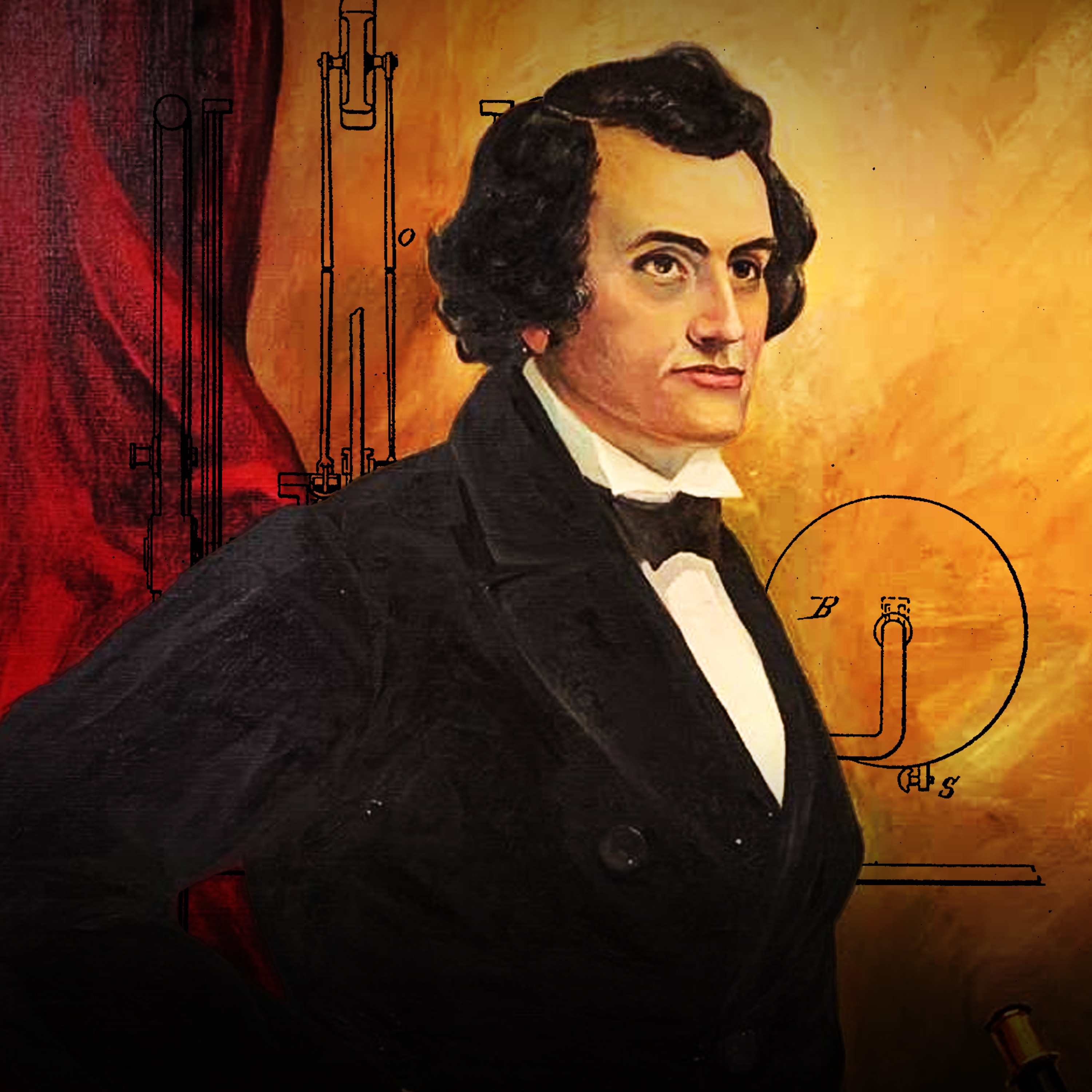
HISTORY This Week
The Forgotten Father of Air Conditioning
00:27:54
He made ice out of thin air. So why have you never heard of him?
Loading summary
Transcript90 lines
- [00:00]
Host
It has been hot outside and Today's History this Week is all about a guy who tried to keep people cool. Maybe before they were ready for it. But before John brings you that story, I have a reminder for you. We just launched History this Week plus if you are looking for an excuse to stay inside today, we have got one even more History this Week. History this Week plus gets you ad free listening and extended interviews. All the tape from our experts that ended up on the cutting room floor, which is a lot and a lot of interesting stuff. Plus you will be supporting the work that we do here. Sign up@historythisweekpodcast.com subscribe now. Think cool thoughts and enjoy the story of the man who Wanted to Chill
- [00:41]
Sponsor Voice
the World if you could travel back through history, there are a few luxuries you'd probably miss. Electric light, indoor plumbing, air conditioning, and somewhere on that list, the ability to control the temperature of your bed. Because for most of human history, if it was too hot to sleep, too bad. Today we have a different the stress, the screen time, the Just one more headline spiral. It all raises your core body temperature and a body that's too warm cannot get into a deep sleep. You're not just tired because the news is exhausting, you're tired because your body never actually recovered. The good news, and yes, there always is some, is that science has a real answer. And it's simpler than you'd think. Your Bed temperature Enter Chilipad 2.0 by SleepMe, the water based mattress topper that actively controls your bed temperature from 55 to 115 degrees all night long. No new mattress, no renovation. It fits over what you already have, and water is the key. Fans just move hot air around. Chillipad uses actively chilled water to cool the bed, actually pulling heat away from your body. It's the difference between standing in front of a fan and jumping into a cold pool. If you told someone a hundred years ago or 1,000 years ago that one day you'd be able to dial in the exact temperature of your bed every night, it would have sounded like science fiction. The new Chillipad 2.0 comes with a redesigned dock that's quieter than ever, a washable performance grade cover with waterproof protection, and my favorite feature, the nightstand remote. It detects when you get into bed and automatically starts your sleep schedule. You get in, it kicks on. Visit www.sleepmehistory to get up to $255 off your Chilipad 2.0 with code HISTORY. That's www.sleeps l e e p.me history, free shipping, free returns and a 30 night trial so you can test it out. Dream big and wake up better. The headlines will still be there in the morning. You might as well wake up ready for them.
- [02:52]
Summer break is here. I want my kids to have fun, but I also want them to keep their skills sharp between vacations and sports. I need something that fits our busy schedule without adding stress. That's why we use ixl. IXL is an award winning online platform that helps kids truly understand what they're learning. Whether they're building math confidence, strengthening reading and writing skills skills or reviewing science concepts from Pre K through 12th grade, IXL offers personalized interactive learning that adapts to each child's level and pace. It's proven to improve grades and one subscription covers every child in the home, saving us time and money. It's trusted nationwide and in fact, IXL is used in 96 of the top 100 school districts in the U.S. make an impact on your child's learning. Get IXL now and listeners can get an exclusive 20% off IXL membership when they sign up today at ixllearning.com audio Visit ixllearning.com audio to get the most effective learning program out there at the best price.
- [03:58]
Narrator/Commentator
The History Channel Original Podcast
- [04:02]
John Earle
history this week, July 14, 1850. I'm John Earl. It's a summer day in Apalachicola, a port town in the Florida Panhandle. Inside the town's premier hotel, a celebration is underway. Long tables are festooned with red, white and blue flags, but they are not American flags. Apalachicola is thousands of miles from Paris, but today the French consul is throwing a party in honor of Bastille Day, France's Fourth of July, roughly. And what better way to celebrate than by raising a glass of ice cold champagne? The only thing that's missing is ice. The town's ice shipment has been delayed yet again. The consul's elite guests all know it. And yet they also know that there is no other way to get ice. Florida in July is hot, and in the mid-1800s, you can't just make ice. There's no machine that does that. It has to be shipped in from the northern states. And yet the French consul is insistent there will be ice. Monsieur Rouzanne tells his guests, he'll bet you on it. The room falls silent as Rossan rises to speak. On Bastille Day, he says, france gave her citizens what they wanted. Rohsan, talking in the third person, gives his guests what they cool Wines, even if it demands a miracle. A guest rises. Let us drink to the man who made the ice, an American Dr. Gorey. Roseanne waves his hand and the doors swing open. Waiters rush in carrying bottles of champagne on silver platters, bottles nestled in blocks of ice. Today, how did a country doctor become the father of artificial cooling? And how did his futuristic visions shape our chilled modern world? When you picture the American frontier, you probably don't picture the Florida panhandle. But in 1833, for white settlers, this is the American frontier. And Apalachicola is a frontier town teeming with newcomers and possibilities. Florida is still a territory, not a state, and plenty of people are willing to sail as long as three weeks around the peninsula to get here. Think deadwood, but swampier. Apalachicola sits on the Gulf coast, surrounded on three sides by swamp. It's a rough climate, warm, yes, but the real kicker is the humidity.
- [07:04]
Linda Thompson
It's sometimes almost a smothering kind of. I don't know exactly how to explain it, but the air is. Just feels damp in you, and it just kind of soaks you down. My name is Linda. Johnson is my maiden name. And I'm Linda Thompson, born and raised in the area of Franklin County, Apalachicola, Florida.
- [07:25]
John Earle
Linda is also a docent at a local history museum. And she says that with the humidity and the swamps comes really nasty bugs. Entire seasons of them. The run up to Bastille Day, that's yellowfly season.
- [07:40]
Linda Thompson
They look like a regular housefly, but they're yellow and their bite is very ferocious.
- [07:46]
John Earle
The holiday itself is in deer fly season. They have mouths like tiny scissors. On the barrier islands off the coast, you get swarms of no see ums.
- [07:57]
Linda Thompson
They're like a gnat that you really cannot see, but they have the teeth of a shark. They are ferocious little animals.
- [08:05]
John Earle
And lastly, the granddaddy of biting insects.
- [08:09]
Linda Thompson
And then we also, of course, all the time have the mosquitoes.
- [08:14]
John Earle
You might wonder why anybody would build a town here. The answer is cotton. Apalachicola sits at the mouth of a river basin that extends deep into Georgia and Alabama. All the cotton grown there, primarily by enslaved people, is sent down the river to Apalachicola. From there, it's shipped to mills in New England and Europe.
- [08:37]
Linda Thompson
We had a French and a Belgian consulate here in Apalachicola, wheeling and dealing the price of cotton, getting it over to the European market.
- [08:47]
John Earle
Apalachicola may be the frontier, but it's no backwater. It's one of America's largest seaports on The Gulf Coast. Tall ships from around the world stop here, and the town gets rich around the time that our story begins. It has elegant homes, two newspapers, and even a racetrack. But like in the Old west, boomtowns attract characters, adventurers, hustlers, people without a past. Dr. John Gorey is no exception. He was born on two different dates and died on three different dates. One observer writes, we don't even really know where he came from. His mother may have fled Spain and given birth to John out of wedlock. Or maybe not. His father was a Spanish royal or a Scottish captain. Or neither. What we do know is that in 1833, when he arrives in Apalachicola, Gorey is in his early 30s. He's just a few years out of medical school, handsome in a way they used to call Spanish looking. And in addition to being hot, he's probably also very warm, in his usual velvet trousers and snug Parisian coat. And he's drawn to Apalachicola, we think, because he's heard that this thriving town is, in a very real sense, cursed. The curse goes by many names. Some are complaint, some are sickness. As the names suggest, it strikes during the hottest months of the year, when the temperatures spike. The rich cotton merchants, bankers and brokers flee the town in terror. Newspapers close. Even the church pulpits stand empty. Apalachicola becomes a ghost town. Those left behind cover their mouths with handkerchiefs soaked in vinegar. They put garlic in their shoes and burn sulfur outside their homes. But these measures don't do much for the truly unlucky ones. The sickness begins with a chill so violent their teeth chatter. They pile on blankets, even in summer. Then the chill gives way to a burning, sweaty fever. The cycle repeats like a metronome, roughly every third day, cycle by cycle, the victim is worn down. Bern Nagengast is a technology historian who studied John Gorey. He says that Gorey, as a medical doctor, tries to help these patients, but often all he can do is watch.
- [11:16]
Narrator/Commentator
What he saw was that people would suffer. They would show all kinds of horrible symptoms, and they would ultimately, in many cases, die.
- [11:28]
John Earle
Like most people at the time, Gorey believes that the disease is caused by bad air. Mala aria in Italian. Bad air generated by decaying swamp matter, like soggy plants boiling in the sun, which is a big problem if your town is surrounded by swamps. But Gorey is committed to doing something about it. He writes, man must conquer these morbid woes. And so, year after year, he goes to the city council and tries to convince them to drain the marshes he even serves as the town's mayor. But the problem doesn't go away every summer. Malaria. To make matters so much worse, the area also suffers epidemics of of another, even deadlier disease. In the summer of 1841, yellow fever decimates the neighboring town of St. Joseph. John Gorey is there too. He looks into the ominous yellow eyes of the dying. 20 die in just eight days. Those who can flee. Of its 4,000 inhabitants, less than 400 remain. After the epidemic, the town is nearly wiped off the map. To Goree, yellow fever is another swamp gas disease, just like malaria. And he thinks they're both made worse by the heat and the humidity.
- [12:50]
Narrator/Commentator
What they thought was that this obviously came from the high heat, the high humidity, and the fact that this caused a lot of vegetation to deteriorate, to emit all these horrible odors, to, you know, just rotation. And of course, people then were breathing all of this. And so John Gorey felt that we need to somehow figure out how we can control the high temperature and the high humidity.
- [13:19]
John Earle
So Gorey changes course to his already long physician mayor. He adds one more title. Inventor. An inventor at war with heat itself.
- [13:42]
Sponsor Voice
We all belong outside. We are drawn to nature. It calls to us. Whether it's the recorded sounds of the ocean we doze off to or the succulents that adorn our homes. Nature makes all of our lives richer, calmer, and frankly, better. Despite all this, we often go about our busy lives removed from it. But the outdoors is closer than we realize. With Alltrails, you can discover trails nearby or trails worth traveling to and explore confidently with offline maps and on trail navigation. Whether you're looking for a laid back walk with family or something more adventurous to get your heart pumping, Alltrails gives you the tools you need to get out there and find your outside. Download the free app today and make the most of your summer with Alltrails.
- [14:40]
Linda Thompson
Hey there, it's Jill Schlesinger. I'm launching a new show. It's called Money Moves and your money is going to move. We're going to help you make this better financial decisions. We're going to call out the B.S. you're finding all over social media. We're going to give you actionable guidance to make your financial life clearer, less stressful. We're going to answer your financial questions and take the mystery out of your financial life. Follow and listen to Money Moves with Jill Schlesinger. Wherever you get your podcasts,
- [15:10]
John Earle
the GLP1
- [15:11]
Sponsor Voice
pill you've been waiting for is now on row.
- [15:14]
John Earle
Yep, it's finally here with the same clinically proven ingredient now in a pill.
- [15:20]
Sponsor Voice
And now on roe.
- [15:21]
John Earle
It's the first FDA approved GLP1 pill
- [15:24]
Sponsor Voice
for weight loss at the lowest price available.
- [15:26]
John Earle
That's one daily GLP1 pill for big results now on RO, go to ROE Co.
- [15:32]
Sponsor Voice
Listen to see if you qualify RX
- [15:35]
John Earle
only, go to Roe Co Safety for serious side effects and boxed warning associated with GLP1s. If you want to keep your house cool in the 1840s, your options are limited. Option one is to build it nice and open so the breeze blows through it. Option two, plant a shady tree. Option three, well, there really is no option three. People have been trying to cool the air for a very, very long time. The ancient Persians built wind towers that funneled breezes into their palaces. Leonardo da Vinci designed a machine that pumped water chilled air into into the bedroom of an Italian duchess. Now it's John Gorey's turn. He's gone to medical school. He reads the scientific literature and he's intrigued by the work of this English scientist named Sir John Herschel. Now, Herschel says if you compress air, cool it and then decompress it, the resulting air will be colder than it was at the beginning. Gorey reads this and he has an idea. It's so out there that he publishes it under a pseudonymous. His idea is to turn Herschel's theory into a real machine. A machine powerful enough to cool an entire city.
- [16:51]
Narrator/Commentator
And I'm sure that people at the time probably thought the man was out of his mind. How could we possibly control the atmosphere in an entire city?
- [17:01]
John Earle
It's not just the scale that invites skepticism. It's the very idea of comfort cooling. A hundred years before AC becomes common in American homes, the idea of cooling your house with a machine is bonkers.
- [17:15]
Narrator/Commentator
People felt that it's nature's way to have these periods of heat and cold. And yeah, we try to protect ourselves against it to a reasonable degree, but if we become too radical with this, maybe it's not such a good idea.
- [17:30]
John Earle
Sit in the shade, fan yourself, all fine. Anything more than that, it's just not right.
- [17:37]
Narrator/Commentator
And those ideas range from people who felt that, well, because it's nature's way, it's really against nature, you know, to try to do this type of a thing. Other people felt that, well, if you start changing the temperature around you to any kind of an extreme, it's probably going to cause you to become ill.
- [17:57]
John Earle
Gorey doesn't buy any of this. To him, comfort Cooling is a public health measure. It's necessary to fight malaria and yellow fever. So he throws himself into developing his cooling machine. He works, you might say, feverishly.
- [18:12]
Narrator/Commentator
Gorey at the time became almost obsessed, I think, with this idea to the point where he was spending apparently as much time as he could with his experiments.
- [18:25]
John Earle
Before long, he's got a prototype. It's pretty rudimentary, just buckets of ice suspended from the ceiling with air flowing over them, but it works. Supposedly he uses it to cool the sick rooms for malaria patients in his own home. Gorey then publishes a series of articles about his experiments, also under a pen name, which it's actually worth pausing on this. Nagengast says that it was once common to publish radical ideas under a pseudonym.
- [18:56]
Narrator/Commentator
You didn't want people who knew you to recognize that you had proposed this radical idea, and then they would come at you telling you things like, you're out of your mind. You can't possibly do that. Or even to the extent of thinking you're just plumb crazy.
- [19:12]
John Earle
But Gorey seems to have been particularly sensitive to ridicule. Linda Thompson says that he was kind of a sensitive guy in a brilliant
- [19:22]
Linda Thompson
man who had a lot of insight to do things, but he was a very quiet man, not a big promoter, and that might have cost him.
- [19:32]
John Earle
For the moment, though, Gorey is flying high. These articles he writes, they're incredible. He drops the idea of cooling entire cities. It's too impractical. Instead, he does something more amazing. He predicts the future. He's like cooling machines and insulation should be standard in all new buildings. And we can power these machines with wind power. Gori pictures horizontal sails like on a sailing ship. Imagine entire cities of billowing sails. It's also a rare moment when I feel like I can see Gory. Not the statue, the actual person. Because his personal papers have been lost. Gory's articles and patents are all we have. And here he comes through. Passionate, doesn't even capture it. He's a fiery humanitarian. High temperatures, Gorey writes, prevent a large portion of the human family from sharing the natural advantages they possess. It is a source of evil. Gori keeps tinkering, designing a steam powered motor that actively compresses and cools hot air. And four years later, he has a vastly improved prototype. But he's running into a problem.
- [20:45]
Narrator/Commentator
By 1848 or so, Gorey had started to realize that his idea for comfort cooling wasn't an idea that people very much were interested in from a standpoint of developing and paying for its development or even paying for such a service.
- [21:04]
John Earle
People don't seem to want AC again. They think nature's way is good enough. And Gorey's would be. Investors won't back a device that nobody wants. They have a better idea. Something there is a market for a big market. Ice. Ice is a delicacy. To plop a cube into your drink on a hot summer day is the height of luxury. At up to 10 times the price of beefsteak, ice lives up to its nickname, white gold. The reason it's so expensive is that there's no way to manufacture it. Ice has to be harvested during wintertime from frozen lakes. Then it's stored and shipped around the world. The ice trade is big business and it's controlled by one guy, a man they call the Ice King. Frederick Tudor looks the part. A photo of him shows an older man with pursed lips and a furrowed brown framed by thick white mutton chops. Tudor is born into a wealthy Boston family. And in the early 1800s, before anybody outside of cold climates was plopping ice into their drinks. He sees an opportunity.
- [22:15]
Narrator/Commentator
Hey, I can make money by organizing an industry to harvest ice, to store ice, to ship ice, to sell ice.
- [22:24]
John Earle
Beginning with one tiny ship, he builds an empire.
- [22:29]
Narrator/Commentator
He succeeded to such an extent that he not only controlled much of that business in the United States, but he also controlled much of that business worldwide.
- [22:40]
John Earle
Tudor ships New England ice as far away as India. He relishes his hard won success. And he crushes potential rivals by slashing prices and waiting for their supply to just melt away. His personal motto projects the confidence of a powerful man. I have so willed it. John Gorey isn't the smiling type either. But he can't contain his excitement. Ahead of the Bastille Day celebration, he has a secret, which he confides to his closest friend. He's done it. He's created ice to hell. You have, the friend says, to which Gorey replies, this has nothing to do with hell. Without all the costs of harvesting, storing and shipping ice, a machine that can produce ice would undercut Tudor empire. But before Gorey can become the new king of cool, he needs money to perfect and mass produce his machine. And what better way to attract investors than with an old fashioned publicity stunt for Bastille Day. Apalachicola's French consul wants to have a big celebration. As you'll recall, the town's shipment of ice has been delayed. The planners are worried that it will be a huge buzzkill to go without ice.
- [23:57]
Narrator/Commentator
But John Gorey ended up Telling the people of Apalachicola, you don't have anything to worry about. I can provide the ice. And you can imagine that they're thinking, where's he going to get this ice?
- [24:09]
John Earle
Gorey's ice making machine is still very much under wraps. But now he's brought it to the Mansion House, the swanky hotel where the celebration is being held.
- [24:18]
Narrator/Commentator
When Bastille Day came here, all of a sudden, this guy who isn't an ice merchant or anything of the sort, he comes up with all of this ice. People right away are going to be asking, wow, where did you get this ice?
- [24:31]
John Earle
And Gory probably says, I made it.
- [24:35]
Narrator/Commentator
And then I can just see the people of Apalachicola saying, what? You made it? That's impossible. How could you possibly make ice without it being cold? How could you possibly make ice essentially out of thin air? Which is really what he did.
- [24:50]
John Earle
July 14, 1850, is John Gorey's great public triumph. It gets him a place in the history books. He'll later receive the first U.S. patent for mechanical refrigeration. It's why there's a statue of him in the U.S. capitol's National Statuary Hall, a John Gorey Memorial Bridge, and a little John Gorey Museum in Apalachicola, where he's still a household name.
- [25:12]
Linda Thompson
Here, everybody knows John Gorey and we love John Gorey. We talk about, you know, we're glad y' all came down here to the south, but if y' all get hot now, remember, we got air conditioned. I can give you a nice cold drink out of ice because John Gorey really did all that for us, you know.
- [25:27]
John Earle
John Gorey comes out of Bastille Day with a head of steam, ready to raise money for his invention, ready to take on the world, ready perhaps to slay the ice king. Little does he know that he's about to run headlong into a wall. Harder and colder than ice. There's a reason you've probably never heard his name.
- [25:53]
Sponsor Voice
A little look behind the scenes. Producing history this week some weeks eats my whole schedule. And Instacart is how I survive it. It connects you with thousands of stores, and as fast as 30 minutes, you can have quality groceries delivered right to your door. Last week is a perfect example. I was locked in on sound design, headphones on, mixing some music under a single scene. Finally in the zone when everything clicks that flow state and the last thing you want to do is break the spell. Problem was, my fridge was basically empty and I hadn't eaten all day. But instead of stopping to run to the store. I opened. Instacart. Picked out fresh produce, cold brew, real dinner for the night. Kept working, never took the headphones off, and a little while later, it was all at my door. Quality. I'd have picked myself. No hours lost. If I can get time back to focus on what matters. Working on a show like this, that's a game changer. Instacart brings convenience, quality, and ease right to your door so you can focus on what matters most. Download the Instacart app now and get groceries just how you like.
- [26:58]
Narrator/Commentator
Best thing that's ever happened to you.
- [26:59]
Sponsor Voice
Financially.
- [27:00]
Go easy. Sold by car on Carvana Amazing offer, really. I hit 200 on a scratcher.
- [27:06]
Narrator/Commentator
Did the scratcher come to your house
- [27:07]
John Earle
and hand you a check?
- [27:09]
Narrator/Commentator
No.
- [27:09]
John Earle
How many scratchers did you hit to get that?
- [27:11]
Narrator/Commentator
I hit a button on Carvana.com once.
- [27:14]
John Earle
Okay, that's fair. It's like the lottery, except you always win. Not like the lottery at all, actually.
- [27:21]
Narrator/Commentator
Exactly.
- [27:21]
Sponsor Voice
Inexplicably good offers worth bragging about. Sell your car today on Carvana.
- [27:26]
Narrator/Commentator
Pick up.
- [27:27]
Sponsor Voice
Fees may apply.
- [27:29]
Millions of Americans are looking for effective ways to manage their weight, but finding the right support can feel confusing and time consuming. Orderly Meds offers a convenient online experience that connects you with licensed medical providers to explore GLP1 treatment options from home. The process is simple. Complete your information online, connect with a provider, and learn what options may be right for you. No waiting rooms, no complicated scheduling. Just a modern, streamlined experience designed around convenience. Visit orderlymeds.com podcasts to learn more today. That's orderlymeds.com podcasts again. Orderlymeds.com podcasts one more time orderlymeds.com podcasts compounded medications are not FDA approved. Results may vary. Consult a licensed healthcare provider to determine if treatment is appropriate for you. Restrictions apply.
- [28:32]
John Earle
In an eerie harbinger of things to come, the Mansion House, the site of the Bastille Day celebration, burns down. The following year, the site of Gorey's triumph is reduced to ashes. Worse news follows. Gori's main financial backer is dead. Gori had sold 3/4 of his patent to this guy, and the man's will made no provisions for future support. Gorey is now in business with a corpse. With only a minority stake in his own patent, he hits the road in search of more capital. Still, it seems like it would be a slam dunk. A machine that makes ice. Who wouldn't want to invest in that?
- [29:09]
Narrator/Commentator
He was very, very persistent in trying to promote his idea and seemingly Exhausted almost everything you might think of to be able to do this.
- [29:20]
John Earle
He pitches investors in New Orleans, Charleston, Richmond, Boston. And in the winter of 1852, he goes to New York. He has all these pamphlets printed and trudges through the slush to distribute them to potential investors. But New Yorker's attention is elsewhere. They are enthralled by the new practice of bump fingering, better known as the now dispute credited pseudoscience of phrenology. They're packing lecture halls to hear about the evils of slavery and fawning over the Swedish nightingale soprano sensation Jenny Lind on her first and only US tour. Nobody seems interested in a little pamphlet entitled Dr. Gorey's Apparatus for the Artificial Production of Ice in Tropical Climates. But Gorey suspects that something else might be at work. The press coverage of his invention is just so weirdly bad.
- [30:11]
Narrator/Commentator
Supposedly was said in one newspaper article that he was a crank in the southern US proposing this outrageous, crazy idea. And that one of the sayings supposedly was that, you know, no one can make ice as well as God Almighty.
- [30:26]
John Earle
Even the Bombay Times and Journal of Commerce in faraway India calls Ghori's invention a cock and bull story. Are people really that set in their ways, or is Frederick Tudor conspiring to crush a potential rival? We don't have any evidence of a coordinated smear campaign, but Bern Nagengast says the theory is at least plausible to
- [30:49]
Narrator/Commentator
somebody in the ice industry who is unscrupulous. They could protect themselves by spreading false stories or impugning the reputation of the person who came up with this idea. And of course, the easiest way to do that was simply to say, this man is out of his mind.
- [31:07]
John Earle
But there's a more likely explanation, he
- [31:10]
Narrator/Commentator
says, whether you look at his idea of first comfort cooling, or if you look at his idea of prusing ice artificially. His ideas were so far advanced, so perhaps fantastic to people, that only a small number of people would see in that something that actually could be done could become successful.
- [31:35]
John Earle
Maybe Gorey just never found those people. And even though he really tried, he just didn't have the flair or the panache of a great salesman.
- [31:42]
Narrator/Commentator
He wasn't a flamboyant person, apparently. It almost seems like he could be subject to bouts of depression and anxiety. And as a result, after all these efforts he made to try to promote his idea, apparently depression and anxiety really caught up with him. And so he started to become despondent.
- [32:05]
John Earle
Gorrie has a sort of nervous collapse. He returns home to Apalachicola and broods over what happened.
- [32:13]
Narrator/Commentator
According to the stories about him, he became more reclusive. He kind of withdrew from everything, and apparently this caused him even to become physically ill. What went wrong?
- [32:27]
John Earle
Toward the end of his life, Gorey settles on an explanation. His machine, he writes, has been found in advance of the wants of the country. In other words, the United States isn't ready for artificial ice or artificial cold. For most Americans, God Almighty is still good enough. Gorey never recovers from his disappointment. And in 1855, still in his early 50s, he dies. But just before he dies, he publishes one last article. It's clear that his attention has turned away from ice back to comfort cooling. He's once again trying to relieve the suffering of his patients in Apalachicola. On the nature of malaria and prevention of its morbid agency is half swan song, half utopian prophecy. Not only will comfort cooling help the sick, he writes, it will also produce mental and physical energy, the foundation for ingenuity, labor, perseverance and nice economy. It will help countries in warmer climates grow their economies, and it will lead to architectural styles that are better designed for human comfort. All of this will be possible when the world embraces comfort cooling, he writes. And the thing is, he was right.
- [33:44]
Narrator/Commentator
John Gorey's ideas actually transformed the world.
- [33:49]
John Earle
An early observer of Gorey's cooling machines sums it up best.
- [33:53]
Narrator/Commentator
He said, we know no want more urgent than a cheap means of producing artificial cold. The inventions which John Gorey proposes are calculated, if true, to alter and extend the the face of civilization.
- [34:11]
John Earle
Gorey was correct about the relationship between malaria, yellow fever and the climate, but not exactly in the way he thought. It's not hot temperatures and muggy air that directly cause harm, but that kind of climate is the perfect habitat for mosquitoes and they are the ones that transmit these diseases. The cooler the climate, the lower the burden of mosquito borne illnesses. And beyond the medical realm, comfort cooling and artificial ice eventually become common in many places. Refrigeration makes it possible to transport food and medicine around the world. And on a planet with ever more intense heat waves, his vision of a chilled world is more urgent than ever, especially for the more than 1 billion people at risk today from lack of access to cooling.
- [35:00]
Narrator/Commentator
If they have air conditioning, access to refrigeration and so on, they can live better lives. As a result, they are more comfortable, they are more productive, they are more healthy. All of this the result of what was considered to be an insane, crazy idea in 1842.
- [35:29]
John Earle
Thanks for listening to history this week. A Back Pocket Studios production in partnership with the History Channel. To stay updated on all things history this week, sign up@historythisweekpodcast.com and if you have any thoughts or questions, send us an email historythisweekistory.com Special thanks to our guests, Bern Nagengast, technology historian and author, and Linda Thompson, docent at the Rainey House Museum in Apalachicola, Florida. We also used the books the Fever man by Vivian Sherlock and How Air Conditioning Changed Everything by Salvador Basel, among other sources. This episode was produced by me, John Earle, and sound designed by Ben Dickstein for Back Pocket Studios. Our executive producer is Ben Dickstein for the History Channel. Our executive producers are Eli Lehrer and Liv Fiddler. Don't forget to follow, rate and review History this week, wherever you get your podcasts, and we'll see you next week.