← HISTORY This Week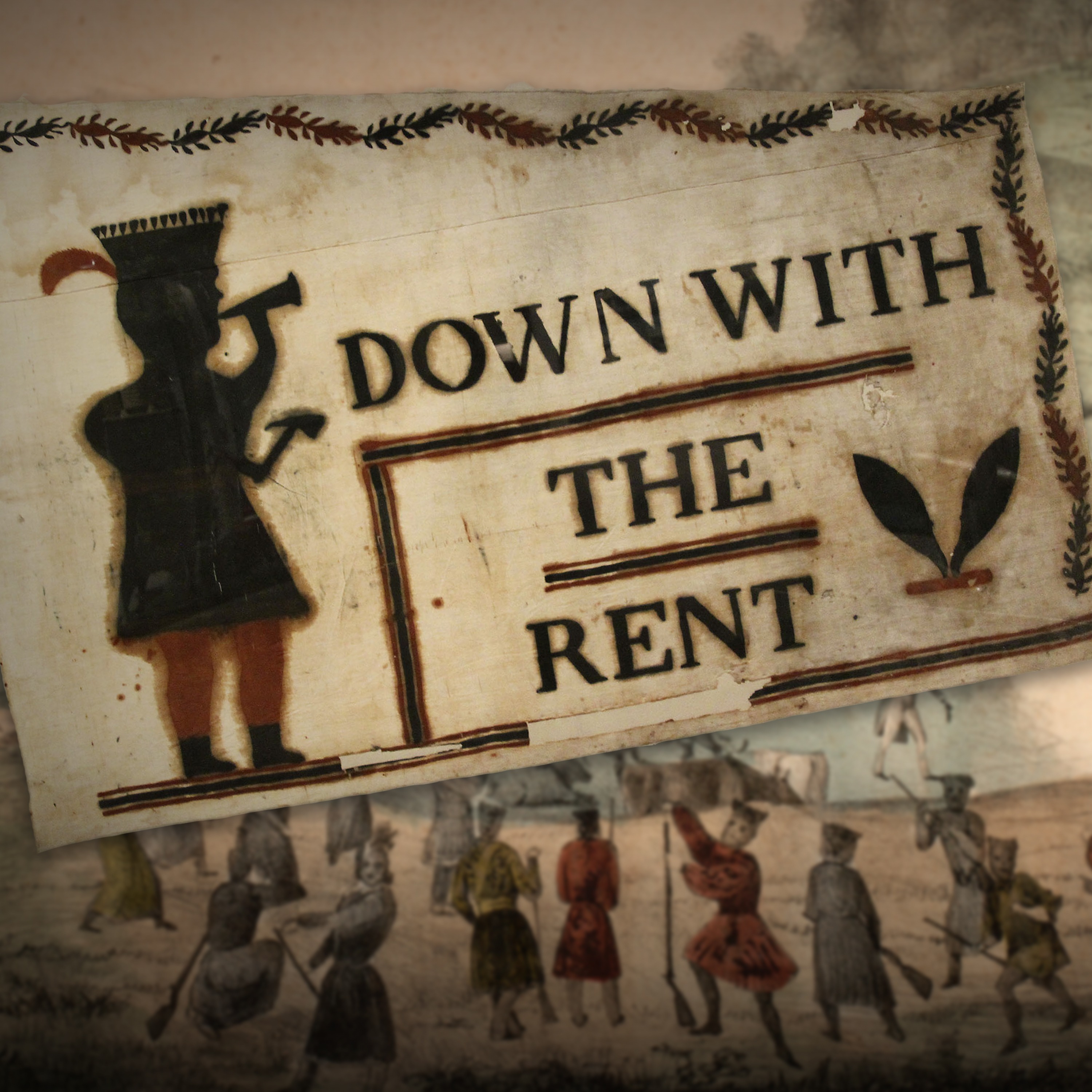
HISTORY This Week
The *Other* Declaration of Independence (Part I)
00:30:08
On July 4, 1839, a second battle for freedom begins in upstate NY.
Loading summary
Transcript97 lines
- [00:01]
Sally Helm
Imagine a time when the United States was split in two and then had to put itself back together. It was a time of chaos and sometimes violence, as millions of people fought for the right to become citizens. Americans struggled over questions like who gets to be a citizen? Who has the right to vote, to own property? In short, who belongs? This was Reconstruction, the era following the Civil War when Americans ended slavery and expanded voting rights. But none of this was easy. Many people consider the promise of reconstruction unfulfilled. Why the Unfinished Promise is a podcast hosted by Malcolm Gladwell and featuring Barack Obama that tells the story of this era. Listen now, wherever you get your podcasts or ad free on Audible.
- [00:58]
Podcast Advertiser/Host
If you could travel back through history, there are a few luxuries you'd probably miss. Electric light, indoor plumbing, air conditioning, and somewhere on that list, the ability to control the temperature of your bed. Because for most of human history, if it was too hot to sleep, too bad. Today we have a different problem. The stress, the screen time, the just one more headline spiral. It all raises your core body temperature and a body that's too warm cannot get into a deep sleep. You're not just tired because the news is exhausting, you're tired because your body never actually recovered. The good news, and yes, there always is some, is that science has a real answer. And it's simpler than you'd think. Your Bed temperature Enter Chilipad 2.0 by Sleep Me, the water based mattress topper that actively controls your bed temperature from 55 to 115 degrees all night long. No new mattress, no renovation. It fits over what you already have, and water is the key. Fans just move hot air around. Chillipad uses actively chilled water to cool the bed, actually pulling heat away from your body. It's the difference between standing in front of a fan and jumping into a cold pool. If you told someone a hundred years ago or 1,000 years ago that one day you'd be able to dial in the exact temperature of your bed every night, it would have sounded like science fiction. The new Chilipad 2.0 comes with a redesigned dock that's quieter than ever, a washable performance grade cover with waterproof protection, and my favorite feature, the nightstand remote. It detects when you get into bed and automatically starts your sleep schedule. You get in, it kicks on. Visit www.sleep.mehistory to get up to $255 off your Chilipad 2.0 with code HAND HISTORY. That's www.sleep s l e e p.mehistory, free shipping, free returns and a 30 night trial so you can test it out. Dream big and wake up better. The headlines will still be there in the morning. You might as well wake up ready for them. Hey, before we jump back into the show, let's take a quick break. But not just any break. This is a refreshing break with Snapple. We all know about Snapple's iconic real facts, so let's take a minute to go over some of my faves. Snapple RealFact 2002 On May 1, 1931, the Empire State Building officially opened in New York City. Snapple RealFact 1916 the first Nobel prizes were awarded on December 10, 1901. Snapple Real Fact 1361 A nun held one of the first PhDs in computer science. Snapple Real Fact 2043 On August 6, 1762, the first ever sandwich was created when someone requested a dish with meat between two pieces of bread. So grab a Snapple, take a second and enjoy the moment. Because let's be honest, this might be the most refreshing part of your day. Snapple, make your break more interesting. All right, now let's get back to the show.
- [04:06]
Narrator/History Expert
The History Channel original podcast
- [04:11]
Sally Helm
history this week, July 4th, 1839. I'm Sally Helm. In the small community of Bern in upstate New York, a group of neighbors has gathered to celebrate Independence Day. They're on a high rocky bluff surrounded by forests, ravines, mountains, peaks like Irish Hill and Grippy Hill. It is the 63rd anniversary of America's freedom from England. Some of the people gathered here still remember that war against the crown. But today the townspeople are not here to celebrate their grandparents victory against oppression. They're dreaming of their own. Back in the 1800s, the Fourth of July was not about fireworks and barbecues. It was a much more political hierarchy holiday. Fledgling reform movements around the country use the opportunity to rile people up in the spirit of civic engagement. And the neighbors gathered on this bluff are mostly tenant farmers working on large tracts of land owned by one family, the Van. Rensselaers. These farmers are essentially living in feudalism. And times have been tough. There have been agricultural disasters, a recent nationwide financial crisis. And when their landlords demand the rent, these neighbor decide to band together to fight back. Some of them have already been refusing to pay rent for years. But now more are agitating for a collective rent strike. And this meeting on the bluff in Bern is one of the first signs that they are truly organized. Hundreds of people gather here on Independence Day. And seizing on the spirit of the holiday, one of them gets up to make a speech. He says, we will take up the ball of the revolution where our fathers stopped it and roll it to the final consummation of freedom and independence of the masses. Today, the other declaration of independence, we start our two part July 4th series on the anti rent wars of New York. How did a system of feudalism persist in one corner of the early American republic? And how did tenants across eastern New York band together to fight back? To really understand this story, we have to start a long time ago, 1629. That is when the van Rensselaer family first took control of their estate, Rensselaerwyck. By the way, you can also say Rensselaer. Anyways, the Dutch have just started building a colony in North America, what they call New Netherland. Following the Hudson river north, they're buying up land from the local tribesthe Lenape, the Mohicans, the Mohawks, who do not necessarily see these transactions as permanent land sales. But the Dutch believe themselves to be the new owners of this vast tract of real estate. They have a problem, though. No Dutch people seem to want to live there. So the Dutch West India Company comes up with a program. The patroon ship.
- [07:34]
Narrator/History Expert
That was an old, old 16th century or maybe earlier Dutch institution that was based on the old feudal system.
- [07:42]
Sally Helm
Reeve Houston is an associate professor of history at Duke University. And here's how the patroonship worked. If you can bring 50, 50 settlers to New Netherland, you get a piece of land, a big one. Killian Van Rensselaer says that sounds good. He's a diamond and pearl merchant, also one of the founders of the Dutch West India Company. He sends his agents to New Netherland to claim a 24 mile stretch of land along the Hudson River. Then he and other landlords say to the Dutch, people, come settle our land. They offer incentives, sometimes even a couple of years of free rent. Sometimes they'll cover the cost of tools, seeds, cattle. People take these deals and then soon enough, the patroon comes knocking. They want their rent.
- [08:33]
Narrator/History Expert
This was still an economy that didn't have a lot of cash in it. So they paid in barley, they paid in rye, they paid in whatever they
- [08:41]
Sally Helm
had, which a lot of times is not much. The tenant farmers had been promised favorable terms and productive land, but that is not what they found when they arrived.
- [08:53]
David Fleming
I can tell you, I don't know how my ancestors ever survived. The topsoil is about a half an inch thick.
- [08:58]
Sally Helm
That's David Fleming, the town supervisor of Nassau, New York, which used to be part of Rensselaer Wyck and He can see how hard it would have been to farm here.
- [09:07]
David Fleming
You think about them trying to grow vegetables and have livestock and all of those sorts of things. It was an extremely difficult life. These small communities really relied on each other and really suffered together.
- [09:21]
Sally Helm
When the British take over New Netherland and rename it New York, they decide that it's just easier to keep places like Rensselaer Wyck intact. Plus, England has its own feudal system. So in 1685, Van Rensselaer's estate becomes an English manor instead of a patroon ship. But it's the same deal, which it's increasingly clear is a super good deal for the landlord.
- [09:46]
Narrator/History Expert
The landlord kept all the mineral rights and all the timber rights.
- [09:50]
Sally Helm
Plus if the tenant farmer does want to leave, they don't get to bring what they've built.
- [09:56]
Narrator/History Expert
You've invested a ton of sweat equity into your farm. Farm, you've built buildings, you've cleared land, you've built fences. You know, the tenants came and turned wilderness land into a valuable farm.
- [10:10]
Sally Helm
These manors continue to get passed down in rich families. Van Rensselaer to Van Rensselaer. Even the American Revolution doesn't stop it. If you sided with the British, your manor gets taken. But if you were a patriot, you basically get to remain a feudal lord even in this new constitutional republic. The first Van Rensselaer to own the manor in this new republic is Steven Van Rensselaer iii. He pulls a very feudal lord move and secures his position through marriage. His brother in law is founding father Alexander Hamilton, who helps him draft new leases that will never expire. Meaning you can never re really own the land. You can just sell your lease or pass it down to the next generation.
- [10:58]
Podcast Advertiser/Host
Maybe they started saving a little bit of money and they turn to the landlords. We want to buy their land. This is our American dream.
- [11:07]
Sally Helm
That's Victoria Kupchanetsky, director and producer of Calico Rebellion, a documentary about the anti rent war.
- [11:14]
Podcast Advertiser/Host
And the landlords, the patroons would say, oh no, no, no. You have this perpetual lease that you signed. You are going to work for us. And if you don't want to work for us, you are free to go. And everything that you built on this land is going to stay with us.
- [11:31]
Sally Helm
In the early days of the United States of America, in upstate New York, feudalism is alive and well. But some cracks are starting to show. More and more often, the tenant farmers are missing their payments.
- [11:47]
Narrator/History Expert
In the 1780s, 1790s, when these rents started to become due, the tenants showed up all the time. Oh, it's been a hard year. There was a frost and the harvest wasn't so good.
- [11:58]
Sally Helm
As the years go by, the debts continue to Mount. The 1800s sees plague after plague, a weed known as the Canada thistle. Pests like the wheat midge and the Hessian fly. But when his tenants can't pay, Stephen Van Rensselaer III is actually willing to let it slide. So much so that farmers of Rensselaerwyk start calling him the Good Patroon.
- [12:23]
Narrator/History Expert
These are 18th century style gentlemen. They tried to cultivate a Persona that is benevolent towards those beneath them, but nonetheless superior to them.
- [12:35]
Sally Helm
Then in 1837, the US economy crashes. This is bad for the tenants, but it's pretty bad for the landlords, too.
- [12:46]
Narrator/History Expert
The Van Renssels, they didn't have a
- [12:48]
Sally Helm
job and they have debts to pay. Patroons like Steven Van Rensselaer III are going further and further into the red.
- [12:56]
Narrator/History Expert
He's just borrowing money to pay the debts, which is a sign of real crisis for the landlords.
- [13:02]
Sally Helm
Then, two years after the financial crisis, Van Rensselaer, the good patroon, dies. He leaves his family with more than $400,000 of debt, over $12 million today. Stephen III's two sons haven't had to work a day in their life. They are desperate to reverse their family's declining fortunes, but short on original ideas. So they turn to their struggling tenants.
- [13:30]
Narrator/History Expert
Stephen IV sends out a message. Every tenant has to come in and pay his debts. And if you don't, we're going to sue you.
- [13:37]
Sally Helm
The good Patroon is dead. Time to pay up. By this point, the Van Rensselaers have controlled rensselaer wyck for 210 years. There are 3,000 families on that land. They're a generation removed from the American Revolution and they've had enough. David Fleming.
- [13:59]
David Fleming
Again, people vividly recall the stories of their ancestors and their parents who fought in these battles to preserve freedom and to create freedom for future generations, only to find that they're almost living a lie and that they're living in this feudal system that they're never going to get out from underneath.
- [14:20]
Sally Helm
So in the face of this demand from Stephen iv, the tenants unite.
- [14:25]
Narrator/History Expert
We can see the birth of the anti ramp movement because suddenly they're making public pronunciations. They're denouncing the landlord. They hold a rally.
- [14:34]
Sally Helm
This is the July 4th rally on that bluff in Bern, New York. Early evidence that this is becoming a mass movement.
- [14:42]
Narrator/History Expert
Here was this example of these farmers speaking for themselves. And they were pretty dissatisfied with the
- [14:48]
Sally Helm
way Things were Stephen IV responds by suing his tenants. After all, everything he's doing is perfectly legal. The leaders of this burgeoning movement are scattered in mountain towns across his land, and he sics the local police on them to scare off the rest, prevent them from taking action. And so these tense scenes start playing out all across Rensslerwick. In late August, an undersheriff named Amos Adams arrives at the farm of one Isaac Hungerford. He's armed with an eviction notice, which he may feel complicated about.
- [15:28]
David Fleming
Local law enforcement, folks that knew everybody were torn about their responsibilities representing the man. And you're going to come in and you're going to take your neighbors off their property. That's got to be a really awkward situation.
- [15:41]
Sally Helm
It is awkward. When Isaac Hungerford sees the ship sheriff approaching. He's friendly at first. Then he realizes why he's there.
- [15:50]
David Fleming
You've got folks who are really who respect the law. They respect their neighbors who represent the law, but they don't respect the system that's oppressing them. A system that's getting worse and worse now that the good patroon is dead.
- [16:04]
Sally Helm
The sheriff hands the farmer Hungerford this writ of ejectment. It's been signed by a judge in Albany, but Hungerford knows who's behind it. He says, you can't go through this country with patroon papers and get home a live man. Sheriff Adams embraces his sheriff role. He says it would take more than one man to stop him from carrying out his orders. And Hungerford draws a knife. Quote, there are hundreds like me. We'd as soon die as not if we have to. The sheriff retreats to a local tavern and locks his horse and wagon in a barn. But that night, Isaac Hungerford arrives with a bunch of friends. Under the COVID of darkness, they break into the barn and smash the sheriff's wagon to bits. They slash his saddle and reins and the horse. They shave its mane and trim its tail to a stub. Sheriff Adams is forced to borrow a saddle for his ride back to Albany. He also has to return without his wagon. And as he rides down the roads of Rensselaerwyk, the farmers watch him pass with a grim look in their eyes. A month after Adams takes his ride of shame, a deputy sheriff trying to evict another farmer gets seized by an angry mob. He's forced to burn his legal papers and buy them all a round of drinks. Word travels fast. The anti rent war has begun.
- [17:46]
Podcast Advertiser/Host
There's a familiar kind of story, one where someone does everything right and still hits a wall in history that might come from bureaucracy. Today it might be the health care system. If you've ever tried to deal with it. Waiting on hold, getting a claim denied, not fully understanding what a doctor just told you. You know how frustrating that can be. It's complicated, time consuming, and it can feel like no one's really connecting the dots. That's why I was struck when I came across solace and importantly, it's covered by insurance. With Solace you get a dedicated advocate, someone who actually steps in and does the hard parts for you. A solace advocate can help you find the right doctors and see schedule appointments, fight denied claims to get your care approved by insurance and even join your appointments remotely to translate doctor speak into plain language so you actually understand what's going on. They'll also make sure your doctors stay in sync and break down test results and treatment plans so you're not left guessing. These are experienced professionals, registered nurses and healthcare experts who work with you one on one. It's the kind of support you don't realize you need until you do. Go to SolisHealth.com to see if you qualify. It takes about two minutes and it's covered by insurance. That's Solish. Health.com must be 18 or older. Advocates do not provide medical or legal advice. History that Doesn't Suck is a legit, hard hitting American history podcast told through entertaining stories. As we approach America's 250th anniversary, now might be the time to go back and learn how we got here. With more than 200 episodes, you can bend your way decade by decade, defining event to defining event from the founding into the 20th century. Join me, Professor Greg Jackson for History that Doesn't Suck an Odyssey Podcast available on Apple Podcasts, Spotify or wherever you get your podcasts. Living in a big city, grocery shopping can turn into a whole production. You realize halfway through that you've bought way more than you can actually carry home and suddenly you're hauling heavy bags down the street, onto the subway or up apartment stairs, wondering why you thought this was a good idea. That's one of the reasons I use Instacart all the time. I can open the app, order from stores I already know and like, choose the exact brands and groceries I want and get delivery through Instacart in as fast as 30 minutes. And I really appreciate the quality side of it too. You can set preferences for produce, for placements, all those little details that actually matter when someone's selecting your groceries, especially in the summer, it just Gives you time back. Instead of losing half a Saturday running errands, I can focus on work, seeing friends, getting outside, whatever I actually want to be doing. And from a historical perspective, that's kind of crazy. For most of human history, getting food and household essentials consumed a huge part of everyday life. Entire routines revolved around carrying, transporting, preserving or preparing. Just basic necessities, anything that makes modern life a little easier, especially in a city I'm grateful for. Instacart brings convenience, quality and ease right to your door, so you can focus on what matters most. Download the Instacart app now and get groceries just how you like.
- [21:05]
Sally Helm
It soon becomes clear that the renters have become an organized unit after the Adams incident and the deputy sheriff who was forced to buy drinks for the mob. Another sheriff summons a posse of more than 700 men to serve legal notices in a town called Reidsville. And this time they're met by 1,800 farmers. No blood is shed, but it's clear that the tenants are aren't taking any of this lying down. New York State tries to step in to mediate the dispute, but the landlords won't budge. They want all the back rents paid, no exceptions. The negotiations go nowhere. The tenant farmers don't have a lot of options. The patroons want rent, rent they don't have. And these landlords are backed by the state. So the farmers return to their revolutionary roots. During the Boston Tea Party, members of the Sons of Liberty famously dressed themselves as Native Americans before dumping British tea into Boston harbor. Fast forward 70 years and these farmers do the same.
- [22:13]
Podcast Advertiser/Host
They're wearing these leather masks, very spooky leather masks, and long robes like calico, like dresses that cover their whole bodies.
- [22:24]
Sally Helm
Calico Indians. That is what the rebels call themselves. It is entirely made up, not a real tribe. Calico was just the cloth they used for their costumes. And aside from calling back to the Boston Tea Party, the Calico Indian costumes are meant to hide their identities and create a creepy vibe.
- [22:44]
Narrator/History Expert
They were trying to invoke an upside down world. They go whooping and yelling and making these horrible noises, sometimes firing their guns. And humans, the air. It's basically hyper masculine display.
- [23:00]
Sally Helm
You really have to look up photos for yourself to see just how unnerving these costumes are. The leather masks cover their whole faces. Many of them have these bizarre pointed ears.
- [23:11]
Narrator/History Expert
Each one is made at home so they all look different. It served a practical purpose, which is it made it harder for them to be held accountable by the legal authority. But it's also Part of this language of intimidation. And they also often used what it's. It's a tradition called rough music, where people would play fiddles really discordantly and they would bang pots and pans. They created a hellish noise to make their victims, their opponents, feel like they were in hell, but the whole world had been turned upside down.
- [23:49]
Sally Helm
They also use a common household item from the time the tin horn.
- [23:55]
Podcast Advertiser/Host
Originally, they were used as they were called dinner horns.
- [23:59]
Sally Helm
That's Misha Gutkin, producer of the documentary Calico Rebellion.
- [24:03]
Narrator/History Expert
And they were used to call men
- [24:06]
Sally Helm
to dinner from the fields.
- [24:09]
Narrator/History Expert
Those dinner horns became a signal for the calico rebels. They started using them to alert each
- [24:19]
David Fleming
other of sheriffs or under sheriffs approaching somebody's farm.
- [24:25]
Sally Helm
The Calico Indians get off to a hot start. In the fall of 1841, they chase a notorious deputy, Big Bill Snyder, off into the woods. Rumors spread that he's been murdered. In fact, he was very much alive. But his death becomes a song. People in the movement will sing it to intimidate other lawmen. Their overall goal is to prevent the sheriffs from evicting any farmers.
- [24:53]
Narrator/History Expert
They're trying to scare the bejesus out of lawmen and landlords agents to get them to go away. We're not going to let you serve this process on any tenants. We outnumber you. We're heavily armed. Don't do it.
- [25:08]
Sally Helm
These actions continue for the next couple of years. People attempt to evict tenants or collect rent, and the calicos chase them off. The calicos did try to avoid floodshed once in a while. They made good on their threats to tar and feather the landlord's agents. But mostly they'd fire guns into the air just to intimidate and cause a scene. They're organized, but loosely. And then a leader emerges. Here is David Fleming again, the town supervisor of Nassau, New York, which is near the birthplace of a man named Smith A. Boughton.
- [25:46]
David Fleming
He was born just over the border in Steventown, lived in Nassau almost all of his adult life.
- [25:52]
Sally Helm
Boughton grows up hearing stories about his uncles who were Yankee troublemakers in the American Revolution. But at first, he seems to be taking a more conventional path. He goes to college, becomes a doctor. But it seems like he can't forget the example set by his troublemaker uncles. He joins something called the Patriot War
- [26:12]
Narrator/History Expert
in Canada, which was a rebellion against the British Crown. He was clearly an idealist and a reformer.
- [26:20]
David Fleming
He always had this kind of independent streak of indignation.
- [26:25]
Sally Helm
Eventually, Boughton settles down in Nassau, New York as the town doctor, and he quickly earns the community's trust.
- [26:32]
Narrator/History Expert
Certainly doctors have an intimate view into how the people they serve live.
- [26:37]
David Fleming
You know, riding horseback, house to house. He was able to see the real lives of tenant farmers, which were incredibly difficult. He saw firsthand the patroon class, essentially negating the American Revolution. They lived in a feudal system. He got to see that something had to be done. And I feel like he was compelled to be a leader. He was compelled by his convictions to do the right thing.
- [27:04]
Sally Helm
July 4, 1844. Seven years after that meeting on the bluff in Bern, the tenant farmers movement has gotten way stronger. And there's a new, mysterious leader that everyone is talking about. An incredible orator who's been showing up at horse swaps and husking bees and railing against the despotism of the patroons. He calls himself Big Thunder. There's a crowd gathered in Nassau today to hear him speak. Mary Boughton is in attendance. Her husband is away on a house call.
- [27:40]
David Fleming
Mary was, you know, she was the country doctor's wife. She's used to him just jumping on a horse and having to take off and go to somebody's house to deliver a baby or to tend someone who, you know, helped them in their final days. You know, she's used to not asking a lot of questions.
- [27:59]
Sally Helm
She knows he usually goes to this kind of thing and he'd probably hate to miss this speech. Then there's a drum roll, a shriek of the fife. The crowd falls silent. The Calico Indians spring out of the woods on horseback and ride in circles, circles around the cheering crowd, banging pots and pans. Then one man gets off his horse and walks to the podium. His head is adorned with colored feathers, his face obscured by a war painted mask. This is Big Thunder, he begins. Brother serfs of Lord Van Rensselaer. These Indians have a battle cry that means your safety and your future. Down with the rent. The people go wild and one of them gasps. Mary Boughton would recognize her husband's voice anywhere. The country doctor is Big Thunder.
- [29:02]
Podcast Advertiser/Host
As a history buff, you know that while textbooks record the dates of our nation's conflicts, they often lose the voices of the individuals who served. This Memorial Day, as we honor those who made the ultimate sacrifice, newspapers.com invites you to go beyond the monument and discover the personal stories of the people we remember. Think of it as a bridge to the past, giving you access to over a billion pages of primary source history. This is your chance to move past the generalities of war and find the specific local heartbeat of the era. What legacy will you uncover? The hometown hero Find a local Write up about a neighbor's courageous service or a great uncle's letters sent home from the front. The home front read the 1940s Victory Garden tips or see how your own community rallied together during times of national trial. The welcome home Experience the joy of historical headlines announcing the end of hostilities and the the parades that followed. Newspapers.com provides a vibrant, unfiltered view of the past, letting you see the nuance, the sacrifice and the everyday lives that shape the world we live in today. It's more than an archive, it's a way to ensure these stories are never forgotten. Visit newspapers.com today and use promo code HISTORYTHISWEEK at checkout for 20% off your subscription.
- [30:27]
Sally Helm
The days are longer, the calendar is filling up, and I want to feel as good as this beautiful summer weather. That's why I've been loving grooms. It's one daily pack of gummies that covers my greens, vitamins, minerals and even has 6 grams of prebiotic fiber so I don't need to juggle a complicated wellness routine on top of everything else. They taste amazing. They're easy to toss in my bag on the go, plus they're vegan, gluten free and HSA FSA eligible. Reimbursement save up to 52% off with CodePodcast@grunes co. That's Code Podcast@gruns co. Hi, it's Sierra Miller. I can't wait for you to check out my new collection of shoes and accessories at Designer Shoe Warehouse.
- [31:05]
Podcast Advertiser/Host
If you love shoes as much as
- [31:06]
Sally Helm
I do, then trust me, I got you. From cute sneakerinas to the perfect flip flops to stunning heels, these shoes are all style, no drama. It's a girls girl summer.
- [31:17]
Podcast Advertiser/Host
And DSW has just the shoes.
- [31:20]
Sally Helm
Shop the Sierra Miller Collection right now at your DSW store or dsw.com. Doctor Smith Bouton has a lot of explaining to do. He has kept his second life as a radical leader of tenant farmers in upstate New York secret from his wife.
- [31:37]
David Fleming
There was real risk, physical and financial, for these people that were part of the anti rent movement. You know, a family and their property and their livelihood potentially at stake.
- [31:51]
Sally Helm
They stay up all night talking, and by dawn, Big Thunder has converted his wife to anti rentism. Over the next few months, Big Thunder and his fellow calicos roam the mountainous land of upstate New York preaching a message of resistance. He tells one crowd that at the blast of a tin horn, you can have thousands of calicos ready to strike. And on December 11, 1844, they do. The people of Copaig, New York, get word. Sheriff Henry Miller is coming to execute what's called a distress sale, a public auction of assets that have been seized from tenants. As sheriff Miller rides into town, tin horns sound. They herald several hundred calico indians dressed in full regalia, backed by a thousand sympathetic farmers. Sheriff miller hides in a nearby tavern, but big thunder and seven of his men burst in. They escort the sheriff and his deputy to their wagon and force them to visit the homesteads they had planned on raiding that day and instead promise not to bother them again. Then, back in the middle of town, Big thunder makes sure that promise is good. He says to sheriff Miller, give me the paperwork.
- [33:09]
Narrator/History Expert
They got him to hand over all the legal papers he was going to serve, and now he can't serve the papers.
- [33:15]
Sally Helm
He really can't, because big thunder burns them in front of a joyful crowd.
- [33:21]
Narrator/History Expert
The tenants, for the moment, are no longer in danger of being dispossessed.
- [33:27]
Sally Helm
According to reports, it's at this point that sheriff Miller decides to switch sides.
- [33:33]
David Fleming
And I have to think that the sheriffs were torn as the courts were being utilized in ways that were clearly unacceptable. I mean, if you read the stories of how they went about getting these rits and how they, you know, went to the courts, and basically, what does the patron want? So we can write it the way he wants us to write it. And then the sheriffs are having to stand there witnessing this.
- [33:56]
Sally Helm
The patroons are acting as if the legal system belongs to them. And sheriff Miller seems to have a change of heart. He shares a brandy with the calicos, saying, I'm as good an anti renter as any of you. When Miller gets back, the patroons are furious. They offer him $500 if he can discover the identity of big thunder and arrest him. And despite his recent change of heart, he does find that pretty tempting. Days Later, Big Thunder, aka Dr. Smith Boughton, is scheduled to speak in front of a huge crowd of supporters in smoky hollow. He's heard about the bounty for his arrest, but he goes anyway.
- [34:38]
David Fleming
Big thunder has, you know, ridden his horse all the way from Nassau in the little hamlet of the Alps, almost 40 miles to this village.
- [34:45]
Sally Helm
In the tavern beforehand, Dr. Boughton, out of costume, speaks with a man named Ambrose root, a tenant farmer in the area who also has a side gig.
- [34:56]
David Fleming
There were agents of the patroon class that were everywhere, and essentially they were like local spies.
- [35:04]
Sally Helm
Ambrose root is one of those Spies. And he and Dr. Boughton get to talking about the anti rent movement. The doctor says, oh, look, I can personally guarantee that if the landlord stood stop collecting rent, the calicos will stop what they're doing too. And I'm the only man who can really calm this down. And then, even though, you know, Ambrose Root is apparently just a normal farmer, Dr. Boughton just has a sense that he may have gone too far, said a little bit too much. Ambrose Root, meanwhile, is wondering why this guy is so convinced that he can control the calicos. And he heads off to attend the speech. Big Thunder steps up to speak before a crowd of 3,000, and Root thinks, isn't that the voice I just heard in that tavern?
- [35:53]
David Fleming
That's the unraveling for Dr. Bowden. His voice was really the giveaway.
- [35:59]
Sally Helm
Root is sure big thunder is Dr. Smith Boughton. He slinks off to report to Sheriff Miller and the rally continues. Big Thunder has the crowd in a frenzy.
- [36:12]
Narrator/History Expert
As usual. These Indians were putting on a show and some of them were shooting off their guns. And one of the bullets hit this farm laborer.
- [36:23]
Sally Helm
William Rifenberg is shot and killed. It could just be a stray bullet, but David Fleming believes it might have been something. Something more sinister.
- [36:34]
David Fleming
The shot that rings out, that kills young Rivenberg enters through the center of his chest, through his heart, lodges in his back when he's directly in front of Big Thunder.
- [36:45]
Sally Helm
This might have been an attempted assassination.
- [36:48]
David Fleming
To me, that spells that there was a way in which folks were looking to take Big Thunder off the chessboard to really quiet the movement.
- [36:58]
Sally Helm
That night, Sheriff Miller shows up in Smoky Hollow. He's here to arrest Big Thunder. So much for I'm as good an anti renter as any of you. There's a struggle. Tin horns ring out. And the Calico Indians rush in to defend their leader. But it's too late. Big Thunder is cornered. The landlords finally have their man.
- [37:22]
David Fleming
What he was facing had to be just overwhelming to know that all of the power of the Empire State, arguably the most powerful state in the nation at that time, the family, the heirs to one of the largest fortunes ever accumulated in the United States, they're all out to get Big Thunder.
- [37:44]
Sally Helm
But Big Thunder's anti rent war is not over. While he sits in jail, another violent incident in the western Catskills will bring the anti rent movement to a head. We'll bring you the rest of the story in part two.
- [37:59]
David Fleming
Foreign.
- [38:06]
Sally Helm
Thanks for listening to history this week. A Back Pocket Studios production in partnership with the History channel. To stay updated on all things history this week, sign up at history this week podcast.com and if you have any thoughts or questions, send us an email@historythisweekistory.com Special thanks to our guests Reeve Houston, Emeritus Associate professor of History at Duke University and author of the book Democratic Democratic the Triumph of Mass Politics in the United States Victoria Kupchanetsky and Misha Gutkin, director and producer of the film Calico Rebellion. To learn more about the film and where you can see it, visit calicorebellion.com their book on the Anti Renters will be available from sponsors Suny Press in 2027 and David Fleming, the town supervisor of Nassau, New York. We'd also like to thank Nancy Newman, professor at SUNY Albany and author of the book Songs and Sounds of the Anti Rent Movement in Upstate New York and the association of Public Historians of New York State. New York is the only state in the US that appoints a public historian for each county and municipality, and we dug deep into that network for our research. If you're curious about New York history, head to aphnys.org to learn more. You can find links to the sources we used to put this episode together at our website, historythisweek.com this episode was reported and produced by Dan Rosado. It was also produced by Ben Dickstein and by me, Sally Helm. It was sound designed by Dan Rosado for Back Pocket Studios. Our Executive producer is Ben Dickstein from the History Channel. Our executive producers are Eli Lehrer and Liv Fiddler. Don't forget to follow rate and review History this week wherever you get your podcasts, and we'll see you next week.