← HISTORY This Week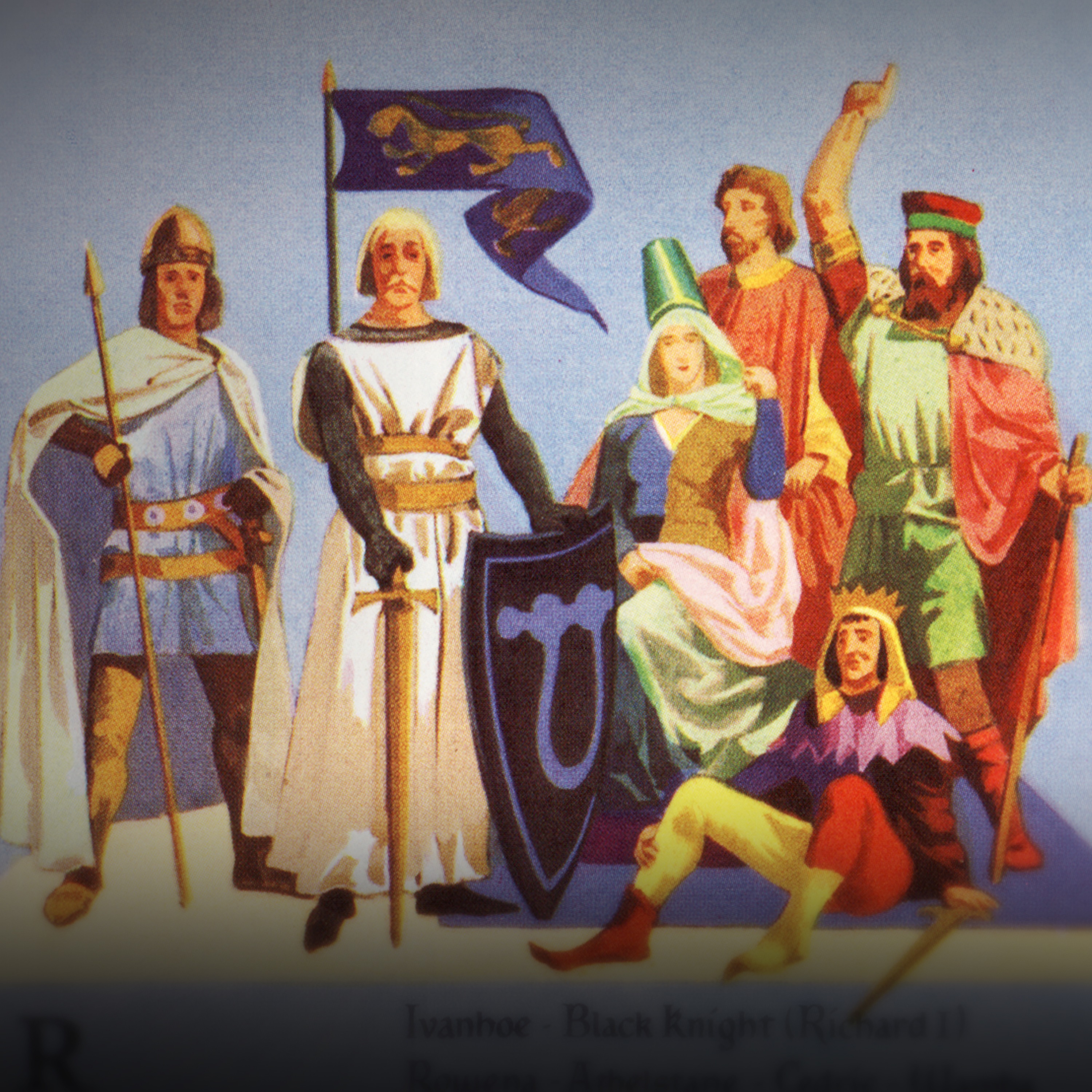
HISTORY This Week
Why the Crusades Became Cool Again
00:26:59
How Walter Scott turned the Crusades into a romantic fantasy… and how that fantasy escaped his control.
Loading summary
Transcript100 lines
- [00:01]
Sally Helm
Hey, before we jump back into the show, let's take a quick break. But not just any break. This is a refreshing break with Snapple. We all know about Snapple's iconic real facts, so let's take a minute to go over some of my faves. Snapple real fact 2002 On May 1, 1931, the Empire State Building officially opened in New York city. Snapple real fact1916 the first Nobel prizes were awarded on December 10, 1901. Snapple real fact1361 A nun held one of the first PhDs in computer science. Snapple real fact2043 On August 6, 1762, the first ever sandwich was created when someone requested a dish with meat between two pieces of bread. So grab a Snapple, take a second and enjoy the moment. Because let's be honest, this might be the most refreshing part of your day. Snapple. Make your break more interesting. Alright now let's get back to the show.
- [01:00]
Ben Dickstein
One of the things you learn doing a history podcast is that people have always cared about what they wear. Whether it was a medieval merchant, a 19th century factory worker or a soldier heading off to war, clothing wasn't just about style. It was about durability and comfort. That's just one reason I've become a fan of Quince this season. I've been wearing two things constantly Quince's organic cotton coolmax Chino and their cotton Chino drawstring shorts. Sensing a theme here, they're both simple, comfortable, well made pieces that feel like they'll be around for a long time, which is, historically speaking, exactly what people expected from their clothing back in the day. What I like about Quint's is that they focus on high quality essentials. Everything from European linen and organic cotton to bedding, kitchenware and home goods, but without the luxury markup. In fact, everything at Quint's is priced 50 to 80% less than similar brands. They work directly with ethical factories and
- [01:57]
Sally Helm
cut out the middlemen.
- [01:58]
Ben Dickstein
So you're paying for quality rather than a logo. Elevate your summer wardrobe. Go to quints.com history for free shipping on your order and 365 day returns. Now available in Canada too. That's Q-U-I-N-C-E.com history for free shipping and 365 day returns. Quince.com history
- [02:24]
Ian Duncan
the History Channel original podcast history this week June 8th, 1191 I'm Sally Helm. The Crusades have already been going on for nearly a century. Long ago, Pope Urban II called for Europe's Catholic people to retake the Holy Land from the Muslims who he said are quote a race of utterly alienated from God. And so Europe's Catholic kings have complied. The next 90 odd years in the Middle east are violent. It's what's called the First Crusade. Europeans kill tens of thousands of Muslims and Jews while capturing Jerusalem and create Crusader states to rule their newly captured territory. Also a violent endeavor. Then the Second Crusade. The French and Germans want to expand their territory in the Holy Land. But their armies are wiped out trying to capture Damascus in Syria. The Arab world starts to unify and within a couple of decades they have a leader of their own. Saladin. Saladin and his forces recapture Jerusalem in 1187 in a siege that lasts just a few days. The Europeans humiliated respond with the third Crusade. And that is where we are today. The Crusaders and the Muslim forces are battling over the city of Acre on the Mediterranean coast. The European kings are trying to re establish a foothold in the Holy Land. And Saladin is having none of it. His forces are dug in their encampment, a sea of iridescent multicolored tents lining the hills around Acre. On the other side, an armada arrives. King Richard I has come from England to try and end this battle once and for all. And today the King's arrival does rattle the Muslim forces. Richard's reputation precedes him. Some are already calling him Richard the Lionheart. But Saladin doesn't back down. A source from the Times says the Sultan took all things as they came with unmoved soul, relying on that God who always gives amply to the man who trusts in him. These two men, Richard and Saladin, will become the near mythical faces on each side of the Crusades at the time. They're each the most powerful military leader of their respective faiths and they both believe that God is on their side. They never meet face to face, but they become the faces of this holy war linked in history. But it is a history that gets largely forgotten for a very long time. In the centuries that follow, the Crusades fade into something like fairy tales, mostly detached from any real historical fact. Kind of the way we think of pirates today. Then over 600 years after Richard and Saladin face off at Acre, along comes a best selling author who needs another hit. He has debts to pay. And out of all the stories he could tell, he returns to the past. Today, Walter Scott brings back the Crusades. How did a Scottish poet revive this religious war and turn it into an international phenomenon? And how did his underlying message get lost, warped, and then repurposed to justify even more violence. Walter Scott is a sickly child. He probably has polio. And so he reads a lot. He reads Arabian Nights, a book of fantastical tales about the medieval Arab world, and. And he's also reading a fairy tale version of the Crusades.
- [06:36]
Narrator/Commentator
He's reading these strange, wild, crazy romance epics.
- [06:41]
Ian Duncan
Ian Duncan is an English professor at UC Berkeley. He's studied Walter Scott's life, and he says the stories that have come down to a young Walter Scott are far removed from the violence of the real Crusades.
- [06:55]
Narrator/Commentator
Enchanters, witches, magical events. The Crusades become the occasion for these fantastic encounters with these strange, magical, delirious other worlds.
- [07:05]
Ian Duncan
Walter Scott eventually recovers from his illness. Entering adulthood, he's expected to become a lawyer like his father. And he does go to law school.
- [07:15]
Narrator/Commentator
But Scott, you know, he passed his bar exam. But he tells stories in his autobiography about hiding romances in his law books and reading those instead.
- [07:26]
Ian Duncan
Even years later, he can't shake that childhood fascination with these fabulous tales of a lost fantastical world. And in his spare time, he decides to act on it. He starts roaming the Scottish countryside, writing down folk stories.
- [07:41]
Narrator/Commentator
He spent a lot of time just riding around to remote communities, hearing people recite these ballads.
- [07:47]
Ian Duncan
Tales like Thomas the Rhymer, who eats a magical apple that prevents him from ever telling a lie. The Young Tamley, where a boy gets taken prisoner by a fairy bound to serve hell. Scott starts publishing these stories as books, and people love them. A lot of these Scottish folktales had never been written down before, and soon enough, Scott starts writing some original folk stories. In 1805, he publishes the Lay of the Last Minstrel Book. Length of poem involving romance, goblins and wizards. It sells well. Then Marmion, a tale of Flodden Field about a morally dubious English knight that nets him a thousand guinea advance.
- [08:35]
Narrator/Commentator
The kinds of sums of money he was getting were unprecedented and huge.
- [08:41]
Ian Duncan
Scott's books haven't had the staying power of, say, his contemporary Jane Austen. But that does not mean they haven't had an impact.
- [08:49]
Narrator/Commentator
Nobody reads these Scott poems anymore, but their lines persist. Oh, what a tangled web we weave when first we practice to deceive. That's a couplet from Marmion, and there are many others.
- [09:00]
Ian Duncan
By the 1810s, Scott is one of Europe's best selling authors. And with his newfound wealth, seemingly acting on those boyhood impulses, he decides to build himself a castle.
- [09:14]
Narrator/Commentator
The place was originally called Cartley Hole, sometimes written Clarty Hole. It literally means dirty or muddy hole.
- [09:22]
Ian Duncan
Originally, Scott says he's just building a cottage. In a letter to his friend Lord Byron, he calls it a gardener's hut. But as the money keeps rolling in, it seems that he just can't help but expand his designs.
- [09:36]
Narrator/Commentator
His plans for it became ever more
- [09:38]
Ian Duncan
grandiose, a castle fit for one of his novels. While he is managing this construction, he is still writing. But by the 1820s he decides to stop writing mock Scottish folktales. He's going to return to something else that he read about in his the Crusades.
- [10:04]
Sally Helm
Hey, before we jump back into the show, let's take a quick break. But not just any break. This is a refreshing break with Snap. We all know about Snapple's iconic real facts, so let's take a minute to go over some of my faves. Snapple RealFact 2002 On May 1, 1931, the Empire State Building officially opened in New York City. Snapple RealFact 1916 the first Nobel prizes were awarded on December 10, 1901. Snapple RealFact 1361 A nun held one of the first PhDs in computer science. Snapple Real Fact 2043 On August 6, 1762, the first ever sandwich was created when someone requested a dish with meat between two pieces of bread. So grab a Snapple, take a second and enjoy the moment. Because let's be honest, this might be the most refreshing part of your day. Snapple, make your break more interesting. Alright now let's get back to the show.
- [11:03]
Ben Dickstein
One of the things you learn doing a history podcast is that people have always cared about what they wear. Whether it was a medieval merchant, a 19th century factory worker, or a soldier heading off to war. Clothing wasn't just about style, it was about durability and comfort. That's just one reason I've become a fan of Quints this season. I've been wearing two things constantly. Quince's organic cotton coolmax Chino and their cotton Chino drawstring shorts. Sensing a theme here, they're both simple, comfortable, well made pieces that feel like they'll be around for a long time. Which is, historically speaking, exactly what people expected from their clothing back in the day. What I like about Quint's is that they focus on high quality essentials, everything from European linen and organic cotton to bedding, kitchenware and home goods, but without the luxury markup. In fact, everything at Quint's is priced 50 to 80% less than similar brands. They work directly with ethical factories and
- [12:01]
Sally Helm
cut out the middlemen.
- [12:02]
Ben Dickstein
So you're paying for quality rather than a logo. Elevate your summer wardrobe. Go to quints.comhistory for free shipping on your order and 365 day returns. Now available in Canada too. That's Q-U-I-N-C-E.comhistory for free shipping and 365 day returns. Quince.comhistory.
- [12:28]
Ian Duncan
As a sickly boy, Walter Scott had loved the amazing magical, mystical tales of the Crusades knights off on faraway adventures in the Middle east with magic armor and enchanting spells. But as an adult, Scott has read adult books, books by historians of the Enlightenment, a movement of reason and logic. And those books do not glorify these bloody adventures in the Middle East.
- [12:58]
Narrator/Commentator
The official historical understanding of the Crusades and what they mean is undergoing contest and revision as this sort of regrettable upsurge of, you know, destructive primitive Christian fanaticism.
- [13:11]
Ian Duncan
There's one Enlightenment author in particular, David Hume, who characterizes the Crusades this way. He calls them the most durable monument of human folly that has yet appeared in any age or nation. Basically, he's saying that the Crusaders were violent religious fanatics. Walter Scott is reading David Hume and he's taking all this to heart. He absolutely agrees the Crusades were a bad thing, but at the same time, he can't quite shake the stories he read as a kid. So when Walter Scott sits down to write, he has both of these ideas in mind. The magical knights and the real bloody story. These ideas are contradictory. The Crusades were bad, but also all that fighting and glory and chivalry and action. Kind of cool. The book that he writes is called Ivanhoe.
- [14:07]
Narrator/Commentator
The novel is set in the 1190s
- [14:09]
Ian Duncan
during the Third Crusade. We meet the main character, a knight named Ivanhoe after his own, already fought in the Crusades under the legendary King Richard the Lionheart. Ivanhoe has to come back to England secretly because his father didn't approve of him fighting for Richard in the first place.
- [14:29]
Narrator/Commentator
The novel opens with Ivanhoe's return in disguise. He's disguised as a pilgrim who's come back from the Holy Land, returning to his ancestral home and falling in with his series of adventures.
- [14:42]
Ian Duncan
In the book's most famous scene, Ivanhoe fights in a good old fashioned tournament, jousting, sword fight.
- [14:49]
Narrator/Commentator
He's successful, but he's wounded. Effectively, he's out of action for the rest of the novel.
- [14:54]
Ian Duncan
He's flat on his back, Ian Duncan says. This is where we can see the other side of Scott's novel, that Enlightenment influence upending the expectations for this kind of heroic nature. Knight's tale.
- [15:08]
Narrator/Commentator
The protagonists of Scott's novels are brought to us not as these sort of swashbuckling, muscular, heroic figures, but as these rather mild, mannered, meek, empty, blank figures.
- [15:20]
Ian Duncan
While Ivanhoe is laid up in bed, we hear more about the Crusades. We learn that he was at the siege of Acre, fighting alongside Richard the Lionheart, who comes across as someone absurd with glory.
- [15:34]
Narrator/Commentator
The king is away on this rash adventure, which we get clearly the idea that it's either motivated by that kind of ideological fanaticism or by naked self interest.
- [15:47]
Ian Duncan
Scott writes about Richard, his feats of chivalry furnishing themes for bards and minstrels, but affording none of those solid benefits to his country on which history loves to pause.
- [16:00]
Narrator/Commentator
The Crusades themselves, I think, are seen as this disastrous distraction from what should be the proper business of government and sovereignty.
- [16:09]
Ian Duncan
One of the most revealing scenes comes when Ivanhoe gets into a debate with his nurse, a Jewish woman named Rebecca.
- [16:16]
Narrator/Commentator
It's Rebecca who's the spokesman for a greater sort of proto humanist sense of what a religious and ethical spirit can mean. She's much the most courageous and generous figure in the novel. She's, in that sense, more Christian than Christians.
- [16:31]
Ian Duncan
Rebecca asks what remains to you as the prize of all the blood you have spilled. Ivanhoe replies, what remains? Glory, maiden. Glory, Rebecca. Glory, alas, is the rusted mail which hangs as a hatchment over the champion's daughter. Dim and moldering tomb. Basically, glory's not much use if you're dead. In the book, that lesson comes for Richard the Lionheart himself. After defeating Saladin, or ending in a stalemate, depending on who you ask, he returns to England.
- [17:08]
Narrator/Commentator
It seems like we have the happy ending. The king is going to reclaim his
- [17:12]
Ian Duncan
kingdom, but then he dies in a pretty pointless way, which is what happened in real life too. He gets hit with a bolt from a crossbow while besieging a random castle in France. All that chivalry and heroism he sought ultimately leads to nothing.
- [17:31]
Narrator/Commentator
Everything just comes undone, it comes apart.
- [17:33]
Ian Duncan
It's all part of Scott's contradictory woo hoo Crusades, but also it was kind of meaningless violence. Not only is the message contradictory, but Scott is also so good at writing the fun scenes about knights.
- [17:51]
Narrator/Commentator
I mean, the whole tournament sequence is absolutely engrossing. There's a new kind of immersive reading that Scott's novels are making possible. It's as if we were actually seeing the splendid pomp and circumstance of the tournament and the battle. It's all immensely Exciting.
- [18:07]
Ian Duncan
It's so exciting that Scott's readers, by and large, miss the message about the Crusades being misguided. They tend to just hear knights are cool.
- [18:17]
Narrator/Commentator
And that's sort of what the novel gets turned into.
- [18:20]
Ian Duncan
In some cases, it literally gets turned into that simpler story because after the novel is published, it is so popular that other authors create their own versions, stage adaptations, new novels, kind of like fan fiction, but they're different from the original. For one thing, the knights tournament becomes the central spectacle of the story.
- [18:41]
Narrator/Commentator
Scott, the narrator, keeps intruding, often to remind us that there's real violence here, that this tournament actually is this really pointless murderous exercise put on for no good reason, that all kind of gets edited out. The novel gets rewritten as a much more straightforwardly romantic, romanticisation of medieval England and, you know, knights jousting and the Crusades.
- [19:03]
Ian Duncan
Scott wrote, after seeing one stage adaptation, it was an opera. And of course, the story greatly mangled and the dialogue in great part, nonsense. But all of this is happening because Ivanhoe is a hit. Walter Scott becomes an even bigger celebrity with an even bigger paycheck, which lets him keep building that castle. Abbotsford.
- [19:27]
Narrator/Commentator
It was a sort of, you know, mortar and lime and stone version of some of his more fantastical novels. This invented pseudo medieval castle.
- [19:37]
Ian Duncan
The exterior features turrets, crosses, a huge iron and oak gate he copied from another castle inside. Scott calls it his museum for living
- [19:47]
Narrator/Commentator
in to collect stuff. Bits of blanket from Rob Roy's kilt, a bottle of whiskey that Bonnie Prince Charlie took with him on his campaigns. It's this wonderful kind of compendium. As well as having this amazing library that he collected over his lifetime.
- [20:02]
Ian Duncan
Abbotsford is designed to look like an old wacky medieval castle, chock full of relics. But it also has modern touches. Gaslighting, a central heating system, pneumatic bells that connect Scott with his servants.
- [20:16]
Narrator/Commentator
Prodigiously expensive, and it eventually led to his downfall.
- [20:26]
Sally Helm
Hey, before we jump back into the show, let's take a quick break. But not just any break. This is a refreshing break with Snapple. We all know about Snapple's iconic real facts, so let's take a minute to go over some of my faves. Snapple real fact 2002 On May 1, 1931, the Empire State Building officially opened in New York City. Snapple RealFact 1916 the first Nobel prizes were awarded on December 10, 1901. Snapple Real Fact 1361 A nun held one of the first PhDs in computer science. Snapple RealFact 2043 On August 6, 1762, the first ever sandwich was created when someone requested a dish with meat between two pieces of bread. So grab a Snapple, take a second and enjoy the moment. Because let's be honest, this might be the most refreshing part of your day. Snapple, make your break more interesting. All right. Now let's get back to the show.
- [21:25]
Ben Dickstein
One of the things you learn doing a history podcast is that people have always cared about what they wear. Whether it was a medieval merchant, a 19th century factory worker or a soldier heading off to war. Clothing wasn't just about style. It was about durability and comfort. That's just one reason I've become a fan of quints this season. I've been wearing two things constantly. Quince's organic cotton coolmax Chino and their cotton Chino drawstring shorts. Sensing a theme here, they're both simple, comfortable, well made pieces that feel like they'll be around for a long time. Which is, historically speaking, exactly what people expected from their clothing back in the day. Day what I like about Quint's is that they focus on high quality essentials. Everything from European linen and organic cotton to bedding, kitchenware and home goods, but without the luxury markup. In fact, everything at Quint's is priced 50 to 80% less than similar brands. They work directly with ethical factories and
- [22:23]
Sally Helm
cut out the middlemen.
- [22:24]
Ben Dickstein
So you're paying for quality rather than a logo. Elevate your summer wardrobe. Go to quince.comhistory for for free shipping on your order and 365 day returns. Now available in Canada too. That's Q U I n c e-comhistory for free shipping and 365 day returns. Quints.comhistory
- [22:50]
Ian Duncan
if you listen to History this week, you know that we are always asking how did we get here? And there is another show that does that just through the lens of the economy. NPR's Planet Money. You might have actually heard my voice over there too. What I love about Planet Money and their sister show, the indicator from Planet Money is that every episode starts with a question and then follows it somewhere really unexpected. Like I was just listening recently to a story about why Pokemon cards are suddenly exploding in value, like outpacing some retirement accounts. And it turns into this surprisingly clear window into speculation, scarcity and human behavior. And that is what the show does so well. From the job market to the stock market to the price of groceries, it takes these big abstract forces and makes them make sense through real stories. They've asked how Russia's economy has held up after years of sanctions what a 750 pound walk robot means for the future of restaurant work. And they have even launched a satellite to understand the economics of space. It's the kind of show where you learn something, maybe laugh and walk away seeing the world a little differently. Follow NPR's Planet Money podcast and understand how money shapes the world. By 1825, Walter Scott is a hugely successful author. His books are the bestsellers of their time. He dominates the literary market of the English speaking world. But also Scott knows that people aren't fully understanding his message about the Crusades, that they aren't seeing how these wars were reckless. And on the one hand, he still wants to get that message across. On the other hand, it's great that the books are selling because he needs the money for his fantastical castle at Abbotsford. In 1825, he publishes another book, the Talisman. In it he pulls a version of the same move again.
- [25:01]
Narrator/Commentator
The Talisman is set in Palestine and it's kind of an amazing novel. It completely, I think, much more radically than I've. Ivanhoe dismantles this myth of the Crusades as a heroic Christian adventure.
- [25:14]
Ian Duncan
Scott has never been to the Holy Land, but he read Arabian Nights as a kid. That's good enough for him. This story takes place in the Middle east during the actual Crusades. But despite the bloody setting, in classic Walter Scott fashion, the book is pretty fun.
- [25:32]
Narrator/Commentator
The novel is hilarious. I mean, it has its tongue very much in its cheek. For much of the time. Time, its true sort of descendant would be something like Monty Python and the Holy Grail in its sort of sense of absurd humor.
- [25:44]
Ian Duncan
In this book, Richard the Lionheart is sick with some kind of fever. Again, we have a main character laid up in bed. Until that is, he's approached by a mysterious Muslim physician named El Hakim, who bears a mysterious stone, the Talisman, which
- [26:00]
Narrator/Commentator
is sort of semi magical. You put it in water and it restores you. It's all rather mysterious.
- [26:06]
Ian Duncan
El Hakim heals King Richard with the talisman. Scott is indulging in his childlike love of magical stories, but he is also trying to upend the prevailing European mindset about the Crusades. That mindset says the Christians were chivalrous and the Arabs were barbarians. But here it's a Muslim man who heals the crusader. And that point really gets driven home when it's revealed that El Hakim is in fact the great Saladin, the leader of the Muslim forces in disguise.
- [26:39]
Narrator/Commentator
Saladin is this figure of perfect chivalric generosity.
- [26:43]
Ian Duncan
Later in the book, Saladin and Richard compete in a trial of strength.
- [26:48]
Narrator/Commentator
Richard takes up his huge two handed sword and he hacks an anvil in half to show how strong he is. And Saladin throws a cushion in the air and slices it with this scimitar. So oriental grace and delicacy come across as much more efficacious than sort of brute armoured western brute strength.
- [27:07]
Ian Duncan
Again subverting the expectation. Saladin ends up being the hero of the story. With the Talisman, Scott has once again written a bestseller. But also once again the nuance doesn't really land.
- [27:24]
Narrator/Commentator
Reviewers at the time complain, you know, here's a novel about the Crusades, but Scott doesn't follow through in it. There's no great battle in which the Christians slaughter their enemies.
- [27:32]
Ian Duncan
They don't seem to see that that is the whole point.
- [27:34]
Narrator/Commentator
Again, I think it's easy just to read it for the adventure and overlook what's actually being said.
- [27:40]
Ian Duncan
The success of the Talisman allows Walter Scott to continue adding to his castle at Abbotsford, a conservatory, an armory. But then Walter Scott lets his own dreams of grandeur run away from him. He's been buying a lot of this on credit. And at the end of 1825 it all comes crashing down. The British economy collapses, his creditors come knocking. He doesn't have the money, so he
- [28:10]
Narrator/Commentator
sort of wakes up to find out he's been ruined.
- [28:12]
Ian Duncan
He owes around 120,000 pounds in today's money. That is something like $18 million. Declaring bankruptcy is probably the rational move, but he doesn't want to do that.
- [28:27]
Narrator/Commentator
He rejects the option of declaring bankruptcy partly because of reasons of social class. That's what tradesmen do. That's ignoble. I am a gentleman.
- [28:38]
Ian Duncan
If one of his characters did this, held on to some antiquated idea about chivalry or honor, Walter Scott might have made fun of them. But this time instead he says, I
- [28:49]
Narrator/Commentator
will repay the full debt with the labor of my pen.
- [28:52]
Ian Duncan
Walter Scott goes into overdrive.
- [28:55]
Narrator/Commentator
He's writing like a madman to repay all his creditors in full.
- [29:00]
Ian Duncan
He re releases his novels in cheaper editions that more people can buy. And it actually sorta works.
- [29:08]
Narrator/Commentator
So he makes all this money, but it eventually it kills him.
- [29:12]
Ian Duncan
The whole escapade ruins his health and within six years, Walter Scott is dead. But he has unleashed something after his death. The popularity of the Crusades as an idea. It continues to grow and his pointed criticism gets well and truly lost. Starting in the 1830s, European powers begin to turn back to the Crusader era as an Expression of their cultural character, a kind of nationalist symbol.
- [29:43]
Narrator/Commentator
It's not just return to the Crusades, but the whole chivalric middle ages in general and the sort of gothicization of national identity.
- [29:51]
Ian Duncan
Gothic architecture was the style at the time of the Crusades. That comes back and the effects are really all over.
- [29:59]
Narrator/Commentator
New works of fiction, new revisionist histories, museum exhibits, statues.
- [30:05]
Ian Duncan
In the Middle east, the Crusades also re emerge as a touchstone and Saladin as a cultural figure. And back in Europe, things continue to snowball. The French king Louis Philippe unveils something called the hall of the Crusades. It's meant to bolster France's colonial project as they expand their empire. In Great Britain, Crusader and medieval era nostalgia permeates the very seat of power.
- [30:30]
Narrator/Commentator
The houses of parliament burn down and they're rebuilt in this kind of gothic style.
- [30:35]
Ian Duncan
Up north in Scotland, Scott's influence leads to what is arguably the predecessor of today's Renaissance fairs.
- [30:42]
Narrator/Commentator
Yeah, some lord, Lord Eglinton, has all his friends dress up and apparently there are a lot of these things. They stage mock tournaments and things both in England and in the southern states.
- [30:52]
Ian Duncan
Yeah, the southern states of the United States. In the years leading up to the civil War, medieval turn tournaments become a big thing in the south, where Scott's tales of knights, white knights fighting non white Arabs take hold. Mark Twain comes up with a name for this phenomenon. He calls it Sir Walter disease.
- [31:16]
Narrator/Commentator
Twain famously blames Scott for the American civil war. He says that this was the kind of ideological fuel for the confederacy. That the young southern gentleman red Ivan her in these Scott novels and in Bude, he talks about what he calls, I think, the sham civilization of Walter Scott. For him, it's all this big, elaborate, seductive fakery that the young southern gentleman
- [31:35]
Ian Duncan
read and internalized in these southern jousting tournaments. You might have seen some of the future founding members of the Ku Klux Klan. The medieval spectacle ends up shaping the KKK in real the horses, the night, coded language. Even the practice of burning crosses is traced back to Scott's the Lady of the Lake. The crusades permanently re enter mass pop culture and politics largely because of Walter Scott. In the 20th century, they become a way to talk about conflict between western countries and countries in the Middle East.
- [32:15]
Narrator/Commentator
Clash of civilizations rhetoric. Right. That came up to particularly after 2001. This crusade, this war on terrorism is gonna take a while and the American people must be patient. And it's interesting that that's not what we find when we get back to Scott. Right. The Scott crusader novels, both the Talisman and Ivanhoe insist on this kind of complex dialogue, cultural interaction where both sides are taking something from each other and if there are any clashes or conflicts, they're kind of internal. Within the civilizations in question, there's not these two monoliths crashing against each other and that just disappears, duncan says.
- [32:58]
Ian Duncan
You can find this crusader mindsetwest versus East, Christian versus Muslim used by both terror groups in the Middle east and far right forces in the U.S. iSIS called American wars in the Middle East a failed crusade. At the Unite the Right rally in Charlottesville, Virginia in 2017, white nationalists carried shields with Deus Vult, the crusader slogan God wills it in Latin written across them.
- [33:26]
Narrator/Commentator
It's hard not to think of these invocations as to some extent in bad faith. They either seem to be these very crude instrumental readings of the past as a kind of blunt weapon just can be wielded for a certain cause. Those who are not with us must be against us. That sort of rhetoric.
- [33:42]
Ian Duncan
Now that imagery has started to break into mainstream politics. Secretary of War Pete Hegseth has tattoos of crusader symbols, including Deus Volt on his arm. He was sworn into office on a Bible with crusader symbols embossed on the COVID In March 2026, Tennessee Congress Congressman Andy Ogles posted an AI generated video of himself and government officials dressed as crusaders in front of the U.S. capitol. It's hard to predict sometimes how an individual artist will ripple through history, but it is safe to say that that is not something Walter Scott, now interred in Scotland beneath the ruins of a Gothic abbey, ever had in mind. Thanks for listening to History this Week, a Back Pocket Studios production in partnership with the History Channel. To stay updated on all things History this week, sign up@historythisweekpodcast.com and if you have any thoughts or questions, send us an email. Email historythisweekistory.com Special thanks to our guest, Ian Duncan, professor of English at the University of California, Berkeley, and author of Scott's the Novel in Romantic Edinburgh. You can find links to that and all the other books. We used to put this episode together at our website, historythisweek.com this episode was produced by Ben Dickstein and by me, Sally Helm. It was sound designed by Dan Rosado for Back Pocket Studios. Our executive producer is Ben Dickstein from the History Channel. Our executive producers are Eli Lehrer and Liv Fiddler. Don't forget to follow, rate and review History this week wherever you get your podcasts and we'll see you next week.