
Podcast
How I Doctor with Dr. Graham Walker
Hosted by Offcall · EN
I built MDCalc 20 years ago because I wanted to save myself and other doctors time and make it easy for them to integrate more evidence into their medical care. Now I’ve launched Offcall to tackle something even bigger: giving doctors back our autonomy — through salary and workload transparency. These ideas shouldn’t be radical…but here we are. I still practice emergency medicine, but I’ve spent my career breaking out of the cookie cutter version of “what a doctor looks like” or “what a doctor’s supposed to do.” That’s why I started How I Doctor: a podcast about the most creative and influential physicians and how they’re rewriting the job description. Medicine wasn’t built for creativity. But I think that’s exactly what it needs. If you’re looking for new role models, different stories, or just proof that fulfillment is still possible in this era of medicine — this show’s for you. Welcome to “How I Doctor,” where we’re bringing joy back to medicine.
If you enjoy the show, please hit the follow button! That will help us continue to bring you more great episodes every week. And don’t forget to sign up for Offcall. Join the growing movement!
Offcall: https://www.offcall.com/
LI: https://www.linkedin.com/company/joinoffcall
TikTok: https://www.tiktok.com/@offcalldotcom
IG: https://www.instagram.com/offcalldotcom/
33episodes
Episodes
Newest firstAll episodes
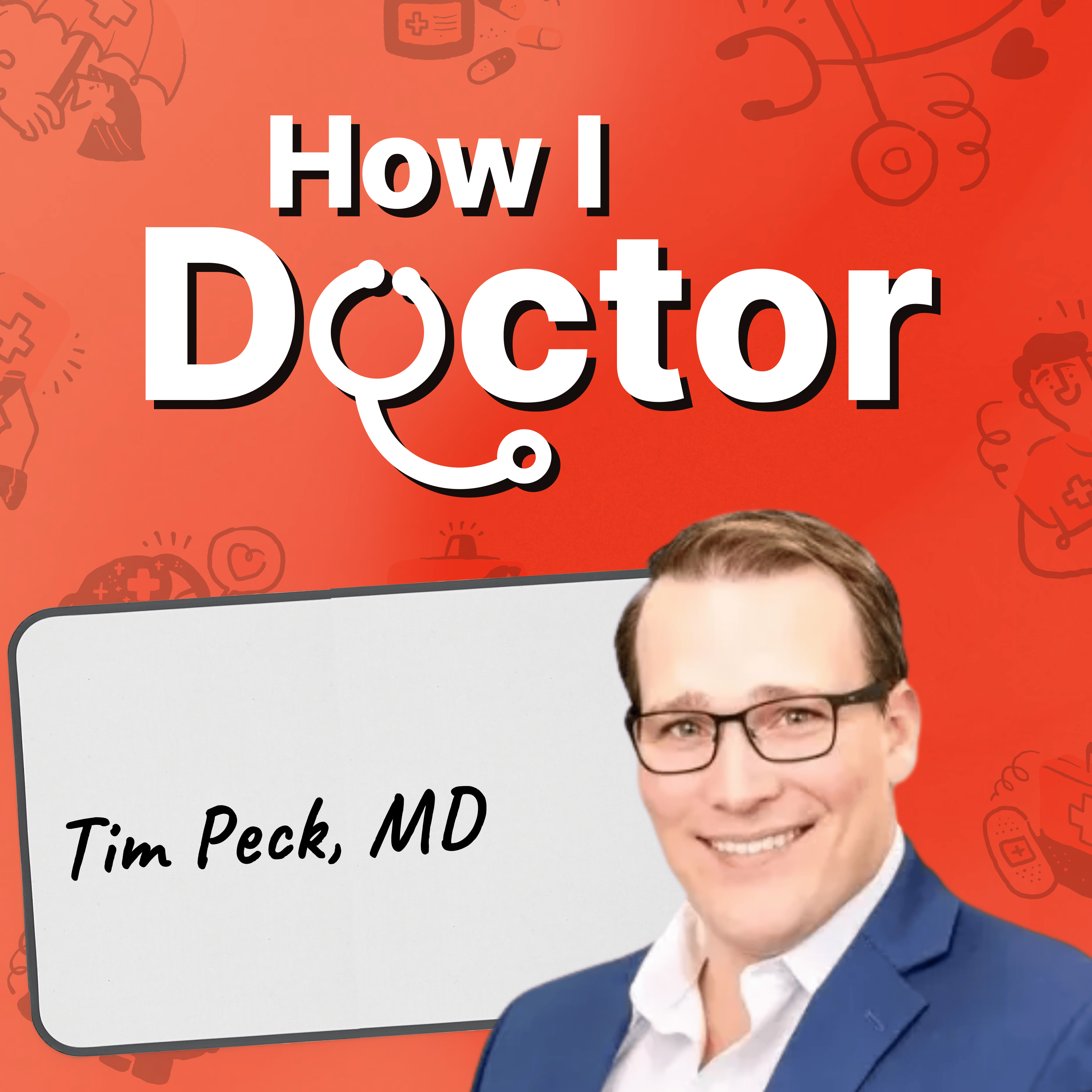
ER Doctor Running for Congress Diagnoses How to Fix the U.S. Healthcare System, with Dr. Tim Peck
Jan 1500:39:45Tap to summarizeTim Peck has spent his career practicing medicine where the system is most fragile. A Harvard-trained emergency physician, healthcare entrepreneur, and frontline clinician in rural America, Tim has worked inside nursing homes, healthcare deserts, and communities shaped by the opioid crisis—places where delays, payment failures, and policy decisions have immediate consequences.In this episode of How I Doctor, Offcall co-founder Dr. Graham Walker sits down with Tim to explore what emergency medicine teaches about leadership, systems failure, and responsibility beyond the bedside. Tim shares why ER doctors are uniquely trained to lead in chaos, how seeing patients too late distorts outcomes, and what he learned by embedding himself in the environments that generate avoidable hospitalizations.The conversation moves beyond ideology into the mechanics of why U.S. healthcare breaks down—from fee-for-service incentives and uninsured rural populations to ambulance shortages and hospital closures that happen quietly, then all at once.This is not a political debate or a campaign pitch. It’s a clinician’s diagnosis of a system under strain—and a candid discussion of what it would take to fix it.What You’ll LearnWhy emergency medicine is one of the most effective forms of leadership trainingWhat changes when doctors see patients earlier instead of downstream in crisisHow rural healthcare deserts form—and what they look like in real timeWhy nursing homes and opioid care expose the deepest system failuresHow payment models shape clinical behavior more than most physicians realize🩺 Offcall is more than a platform — it’s a community. Join today!📝 For a full transcript of this episode click HERE🎧 Subscribe to receive new How I Doctor episodes directly in your feed here: https://episodes.fm/1767429315👨⚕️Follow Dr. Graham Walker onLinkedIn https://www.linkedin.com/in/graham-walker-md/ IG https://www.instagram.com/ubergraham/ Bluesky https://bsky.app/profile/drgrahamwalker.com ✉️ Join our newsletter On/Offcall here https://offcall.beehiiv.com/subscribe 🟧 Follow Offcall on LinkedIn https://www.linkedin.com/company/joinoffcall/ IG https://www.instagram.com/offcalldotcom/ TikTok https://www.tiktok.com/@offcalldotcom
Transcribe →
Reimagining the Future of Chronic Disease Care, With Cadence CMO Eve Cunningham, MD
Jan 800:39:55Tap to summarizeEve Cunningham has spent her career navigating the hard edges of modern medicine from delivering babies and performing gynecologic surgery to leading large health system initiatives and now serving as Chief Medical Officer at Cadence. Along the way, she’s seen firsthand why chronic disease care continues to fail patients despite more data, more technology, and more dashboards than ever before.In this episode of How I Doctor, Graham Walker sits down with Eve to unpack why clinic-based, episodic care is fundamentally mismatched to conditions like heart failure, diabetes, and hypertension. She explains why early efforts at remote patient monitoring fell flat, how change management and not technology has always been the real barrier, and why most health systems struggle to turn insight into action.The conversation moves from the realities of governance-heavy decision-making and physician burnout to what it actually takes to manage patients upstream before they land back in the ICU. Eve also shares the deeply personal connection that drives her work, including how her father’s experience with chronic illness shaped her view of what patients truly need.This is not a tech demo or a sales pitch. It’s a candid discussion about redesigning chronic disease care in a way that works for patients, clinicians, and the realities of modern medicine.What You’ll LearnWhy episodic, visit-based medicine is structurally incapable of managing chronic diseaseWhat early remote patient monitoring efforts got wrong and what has finally made them workHow change management and incentives matter more than technology aloneWhy health systems struggle to act on data, even when the answers are obviousWhat proactive, upstream care looks like when someone is actually accountable🩺 Offcall is more than a platform — it’s a community. Join today!📝 For a full transcript of this episode click HERE🎧 Subscribe to receive new How I Doctor episodes directly in your feed here: https://episodes.fm/1767429315👨⚕️Follow Dr. Graham Walker onLinkedIn https://www.linkedin.com/in/graham-walker-md/IG https://www.instagram.com/ubergraham/Bluesky https://bsky.app/profile/drgrahamwalker.com✉️ Join our newsletter On/Offcall here https://offcall.beehiiv.com/subscribe🟧 Follow Offcall onLinkedIn https://www.linkedin.com/company/joinoffcall/IG https://www.instagram.com/offcalldotcom/TikTok https://www.tiktok.com/@offcalldotcom
Transcribe →
Where AI in Medicine Is Actually Headed, with Microsoft’s CMO David Rhew
Jan 100:38:25Tap to summarizeDavid Rhew has spent his career at the intersection of frontline medicine and cutting-edge technology. An infectious disease physician by training and now Global Chief Medical Officer at Microsoft, David brings a rare perspective shaped by decades of clinical work, health system leadership, and early research on AI in healthcare.In this episode of How I Doctor, Graham Walker sits down with David to unpack where AI in medicine is actually headed and why so many clinicians feel frustrated despite using these tools every day. David explains why physicians aren’t afraid of AI itself, but of poorly designed systems that remove judgment, overload workflows, and fail to reflect how medicine really works.From agentic AI and ambient documentation to population screening, risk stratification, and resource allocation, the conversation moves beyond buzzwords into the real mechanics of how AI can support better care.David makes the case that AI’s true promise is helping clinicians practice at the top of their license, identify disease earlier, and redesign care around human decision-making rather than administrative burden.This is not a futurist thought experiment or a vendor pitch. It’s a grounded, systems-level look at how AI could meaningfully improve medicine.Explore the Data📊 Want to see how your peers are actually using AI today? Download Offcall’s 2025 Physicians AI Report, featuring insights from over 1,000 physicians on daily AI use, adoption gaps, and what doctors really want from these tools:👉 https://2025-physicians-ai-report.offcall.com/What You’ll LearnWhy the biggest failure of healthcare AI isn’t the technology itself, but how it’s measured, implemented, and governedHow agentic AI with multiple models working together on discrete tasks can outperform single “super models” in complex clinical problemsWhy ambient documentation succeeded by addressing burnout and patient experience, not productivity metricsHow AI-enabled screening and risk stratification can identify high-risk patients long before symptoms appearWhat skills physicians will need in the next decade to apply AI responsibly without losing clinical judgment🩺 Offcall is more than a platform — it’s a community. Join today!📝 For a full transcript of this episode click HERE🎧 Subscribe to receive new How I Doctor episodes directly in your feed here: https://episodes.fm/1767429315👨⚕️Follow Dr. Graham Walker onLinkedIn https://www.linkedin.com/in/graham-walker-md/IG https://www.instagram.com/ubergraham/Bluesky https://bsky.app/profile/drgrahamwalker.com✉️ Join our newsletter On/Offcall here https://offcall.beehiiv.com/subscribe🟧 Follow Offcall onLinkedIn https://www.linkedin.com/company/joinoffcall/IG https://www.instagram.com/offcalldotcom/TikTok https://www.tiktok.com/@offcalldotcom
Transcribe →