Loading summary
Transcript128 lines
- [00:00]
Mary Beard
Hello, lovely listeners. If you're not yet part of our Instant Classics Book Club, well, now is the perfect time to join because we are making our way through one of the most exciting works of literature ever. That's Homer's Odyssey.
- [00:20]
Charlotte Higgins
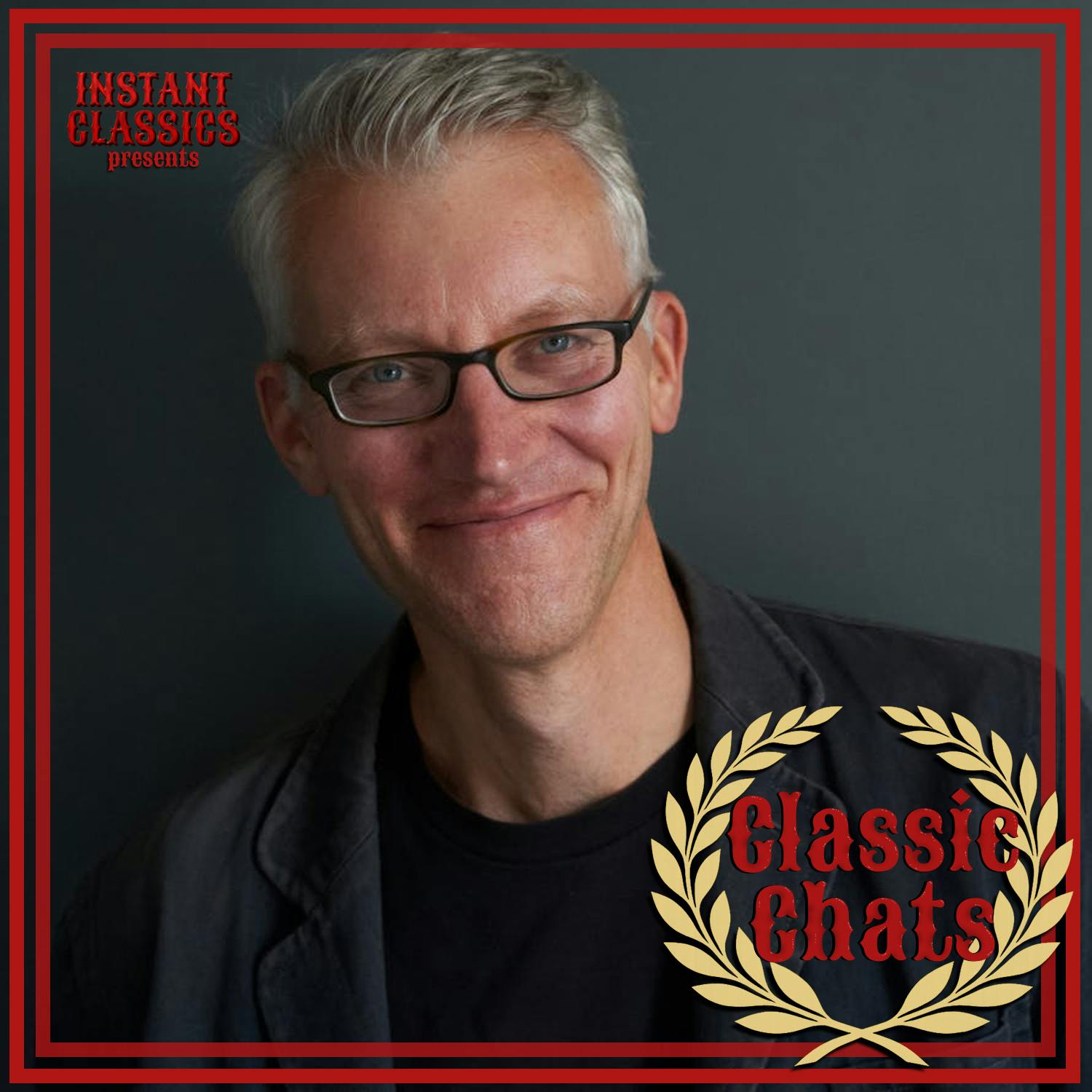
We would love you to join our book club, which we absolutely adore. So please do join now to give you all the access to our previous episodes and loads of other perks like being able to join our online community and getting early booking access to our live events. Today, we are welcoming a friend of both of ours to the podcast, who will be no stranger, I think, to anyone listening today. He is fascinated by everything from vampires to dinosaurs, from cricket to the Anglo Saxons. But we know that his heart truly lies with the ancient world of Greece and Rome. He's also one of the biggest podcasters on the planet.
- [01:12]
Mary Beard
Of course, we're talking about Tom Holland, who's now best known for his amazingly successful podcast the Rest Is History, which he co hosts with Dominic Sambrook. And together they bring to life with an enormous amount of energy and fun and humour, stories from across history, everything from the Iranian revolution to, just recently, a mighty series on Rome's wars with Carthage.
- [01:44]
Charlotte Higgins
I first Met Tom in 2003 after I read and loved his book Rubicon, which is a brilliant work of narrative history that tells the story of the collapse of of the Roman Republic and the rise of Julius Caesar. But after that, he moved on to an equally exciting account of the Persian war. It's called Persian Fire.
- [02:02]
Mary Beard
Since then, he's covered everything from the rise of Islam to the heyday of Roman power in the first and second centuries CE in his book Pax. And somehow he's also managed to tuck in some really big translation projects, Penguin Classics editions of Herodotus histories and most recently, Suetonius, biographies of the 12 Caesars.
- [02:30]
Charlotte Higgins
Today, we want to talk to Tom about his relationship with classics and ancient history, and how he develops his extraordinarily successful and prolific career as a historian. As well as about Suetonius, who was the first to second century CE biographer of the first 12 Caesars. Just as the Penguin Classics edition of his translation is newly out in paperback,
- [02:55]
Mary Beard
this is Instant Classics, the podcast that uncovers the ancient stories still shaping the world today. And I'm Mary Beard.
- [03:04]
Charlotte Higgins
And I'm Charlotte Higgins. Each week we dive into the myths, the dramas and characters of the classical world to discover what they still mean to us. Now, this week, Tom Holland.
- [03:27]
Anita Anand
To some, he is the revolutionary hero who restored China to its rightful place on the global stage.
- [03:33]
William Duranpool
To Others. He's a brutal despot accused of presiding over more civilian deaths than either Stalin or Hitler.
- [03:39]
Anita Anand
Mao Zedong has one of the most recognizable faces in the world. Yet he started life in a muddy provincial village.
- [03:46]
William Duranpool
A rebel son who hated his father, survived a 6,000 mile walk across China and rose to become a figure of titanic proportions.
- [03:55]
Anita Anand
From Empire, the Goal Hangar World History Show. I'm Anita Anand.
- [03:59]
William Duranpool
And I'm William Duranpool.
- [04:01]
Anita Anand
In this six part series, we're joined by world renowned expert Rana Mitta to explore the life of the father of Communist China, Mao Zedong.
- [04:11]
William Duranpool
We'll track his rise from a bookstore owner to a guerrilla commander. And we'll witness his ruthless elimination to secure total power. And we'll descend into the dark experiment of the Cultural Revolution, a time when ancient temples were burnt, children denounced their parents, and a nation worshipped a mango as a sacred relic.
- [04:32]
Anita Anand
Subscribe to Empire wherever you get your podcasts to listen now.
- [04:37]
Charlotte Higgins
Hey, Tom.
- [04:38]
Tom Holland
Hey, Charlotte, thank you. And Mary, thanks for that lovely introduction.
- [04:41]
Charlotte Higgins
Oh, thank you so much for coming onto our, our tiny, humble podcast.
- [04:47]
Tom Holland
Oh, Charlotte, go on with you, our
- [04:49]
Mary Beard
minnow of a podcast. So we're starstruck. You know,
- [04:55]
Tom Holland
I feel like I'm Carthage and you are Roman. You're slowly creeping up on the outside lane.
- [05:02]
Mary Beard
Look what happened to Carthage in the end, mate, you know, I know.
- [05:06]
Tom Holland
That's what I'm worried about.
- [05:07]
Mary Beard
We know our place. We know our place.
- [05:09]
Charlotte Higgins
Can we start by talking about Suetonius? Because he's quite close to our minds because this actually, it's really unbelievably beautiful in hardback, but it's just about to be in paperback. Tom, what is it about Suetonius? You know, what are his qualities? What are the things that drew you so close to him that you thought, gosh, I really must embark on a massive translation project.
- [05:33]
Tom Holland
Well, Charlotte, you say massive translation. I mean, one of the things that drew me to. It's not a massive translation. So I did do as you said, translation of Herodotus, which is the longest work of prose in ancient Greek. And that was a huge, huge task, not least because I had to dish myself Greek pretty much from scratch to do it. So it was a 10 year project. When Stuart Prophet, who runs Penguin Classics, asked if I would do another one, I thought, well, I would, first of all, I would like to do something in Latin because my Latin was, you know, I'd studied that from childhood, but not Greek, so it'd be easier. But also I thought I'd quite like to do something that's Shorter. And I also quite like to do something. I'd like to do something that's not Tacitus, because that's really difficult. I'd quite like to not do poetry, because that's also incredibly difficult. And I'd quite like to do something that would be fun and that would relate to some of the kind of the works of popular history that I've written. So Suetonius kind of selected himself, really, but also he, you know, he provided the meat that Robert Graves fed on when he wrote I, Claudius, and Claudius the God. And it was Robert Graves who wrote. Did the previous translation. And it's a fun translation, but I think not a very good translation. It's not very accurate. So I thought that there was space there.
- [07:01]
Mary Beard
We've had quite a lot to do with Suetonius, I have to say, on our podcast, because there he is writing the biography of 12 Caesars, end of 1st century CE, beginning of 2nd century CE. But of course, what he's interested in kind of gets everywhere. So I think if you go through our existing podcasts, let's say just the Roman ones, the author who comes up most probably is Suetonius, because, you know, he's got something to say about Roman emperors eating what, you know, what the fair Roman banquet was. He's got anecdotes that capture power of autocracy brilliantly. So there he is. I mean, we say Suetonius is 12 Caesars, but he's sort of. He's got something to say about so much. And I wonder. I think, you know, my guess, looking at you from the outside, is partly that's what appeals to you about Suetonius.
- [08:13]
Tom Holland
So there's that incredible list, isn't there, of the texts by Suetonius that we've lost. And they all seem to touch on dimensions of social or cultural history. So there's, you know, he's interested in food and he's interested in children's games and there's the lives of the great courtesans. I mean, so he's clearly interested in the stuff of human existence and he's applying that to the lives of the Caesars. So everyone knows Suetonius and his obsession with the sex lives of the Caesars, but it's clear that he feels, I'm sure, correctly, that what a Caesar is seen to be doing sexually situates him in the context of Roman culture more broadly. And so you're not just learning about how Augustus or Caligula, whoever, was seen, but also how the Romans understood sexuality and the same is true for food or the relationship to games or entertainments or whatever.
- [09:14]
Mary Beard
And in that sense I think he's extremely modern in terms of, you know, where the center of history was because, you know, when I was a student, I was brought up to think that the real hard hitting historian of the early imperial period at Rome was Tacitus. There was a man who had a analytical genius, damn hard to read. You know, his language is extremely difficult, but he's the guy who's really, you know, the hardcore analyst. And Suetonius was kind of, you know, a bit ditzy on the side as he was writing about all these things like, you know, what the emperor wore or what he had for lunch or whatever. And so you kind of, you put him in the second order. Now I think as modern, modern history writing has kind of got much, much more interested in what, in those apparently domestic personal details as a way of defining power. Suetonius is in some ways having a real comeback, not just as something that you can look at for a bit of amusement, but actually how you think about these guys as powerful leaders.
- [10:33]
Tom Holland
Yeah, well, I mean, I think that you could compare Herodotus to Thucydides and Suetonius to Tacitus. The Thucydides and Tacitus are seen as kind of more grown up. They're focused on politics, on the hard material of diplomatic or political history. And that both Herodotus and Caetanius have been slightly kind of sneered at for their interest in whatever it is, you know, gold digging ants or you know, which emperors wear toupees and things like that. But I certainly find the latter stuff at least as interesting as the political stuff. And I think, you know, you're absolutely right that that is the stuff of cultural history because it opens up dimensions onto aspects of the ancient world that are purely political account doesn't. And I think that the lives of the Caesars in Suetonius work are almost like clothes hangers from which he's hung all kinds of kind of cultural analysis and disquisitions. And I guess that has been an influence and a sanction to me for the kind of histories that I've written because my histories are focused on the broad brush stuff of Caesar's and political shenanigans and things. But like Sutanes did, I try to use them as ways into kind of broader discussions about how people might have lived and how they might have understood things like food or sex or whatever.
- [12:15]
Charlotte Higgins
Tom, do you think the, the, it's overstating the influence of Suetonius, to say that the way we think about political leaders today is quite influenced is quite sort of predicated on this kind of weird mix of straightforward political leadership and what politicians kind of might do in the bedroom or, you know, the overarching influence of their advisors or, you know, it feels to me we live in quite a sort of Suetonian age from the point of view of the way, you know, the media might think about power and leadership. And I'm not sure it's always to our benefit, actually. I don't know, it seems to be. There seems to be the template for how we think about powerful, especially men, actually.
- [13:01]
Tom Holland
So when I was doing the publicity for the hardback, when it came out, I did a life of Donald Trump in the Times, and it was a parody of how Seritonians would have done it. And obviously, because I'm writing Maxutonius, I have a license to mention all the most scandalous, improbable stories. So I did the thing about, you know, Trump in the hotel in Moscow being urinated on by prostitutes and the Kompromat and stuff, allegedly. I think it's true.
- [13:34]
Charlotte Higgins
Before we get Sue.
- [13:36]
Tom Holland
No, well, I just to be absolutely clear to Donald Trump, I don't think it's true, but, you know, it's the kind of detail that Suetonius would absolutely have put in. And the lawyers came back and said, oh, I don't think you can say that. So I just put a load of asterisks where it's a theme in the style of a 19th century school edition of Suetonius. And obviously in the 19th century, I mean, the amazing thing is, and Mary, you know much more about this than me, but I mean, the amazing thing is that Suetonius in the Middle Ages provided a model of how to be a Caesar. So Einhard models his life of Charlemagne on the life of Augustus. You know, every time I think about that, I think, what the hell was he doing? What was he making of all this mad stuff where Augustus is misbehaving and there is this kind of sense that these Caesars are kind of almost models to be emulated, but I don't see how anyone could ever have thought that. And today I absolutely think that people are way more interested in the kind of the scabrous detail and the innuendo and all of that kind of thing. But it's not just that, it's all also the fact that you, you feel you know these men in a way that you don't know most people from antiquity. And I think that one of the reasons why perhaps Roman history, even more than Greek history and definitely more than say, Egyptian or Persian history, is so vivid in people's imaginings is because of Suetonius is precisely the, the element of gossip that you get in it, because gossip is so fundamental to how we make sense of politicians today.
- [15:19]
Mary Beard
There's also, there is a sense in which we know that Suetonius is a palace insider. He's had jobs in the palace, he's been archivist, librarian, secretary, all this kind of stuff. He's right there, close to the center of imperial power. And occasionally there is a really obvious bit of hard hitting political analysis, slightly disguised but stares you in the face nonetheless. And I think that whenever I want to think about Suetonius cleverness, the bit I always think about is the end of the reign of Nero. We're in 68 CE and Nero is basically lost power and everybody's deserted him and there's the legions on the frontiers are going to effectively mean his days numbered by mutiny, uprising. And there's a really long, quite lengthy account of the end of Nero. And the one thing that I can't ever forget is Suetonius is trying to conjure up what it's like not just to have power, what it's like to lose power. And he says Nero is in the palace and he called out for his servants and slaves and nobody came to him, nobody did what he said at home. And I thought I was reading that just at the time of the end of the. Sorry to bring Trump in again, but it happens, the end of the first Trump administration when what the papers were telling us was that the staff in the White House simply hadn't gone to work in the final days of Trump's administration. They just didn't show up. And I thought what you've got here is a really smart, vivid and a very visual bit of analysis of what it is like no longer to command authority. And I thought there's a clever guy
- [17:37]
Tom Holland
who's picked that up and he does it with Vitellius as well, kind of hiding out in the empty palace. I mean, actually there's a kind of hint of it in with, with Claudius too, that idea of what it's like to be in an empty palace where at any minute guards are going to be appearing. But I think, I think he, he's clearly fascinated by how, how emperors die and loads of the Bravora performances in the lives detail that. So the account of Nero's death, I mean, is an amazing piece of Narrative and reportage and such kind of vivid details of, you know, he rides past the praetorian camp and his horse rears up and then they end up in this kind of terrible villa and they have to crawl in through a hole under the wall. And actually, I mean, it reminds me of Gaddafi, you know, Gaddafi likewise losing everything and ending up in this kind of squalid out of town villa. But of course it's there in, in this, the account of Caesar's assassination as well. And all because so many of the emperors do come to unpleasant ends. It enables Caesar to really kind of go to town with it. So. So I think that obviously how an emperor dies tells you a lot about his character. That would be the Roman perspective on it. And I suppose because of that, people before Suetonius have been interested in keeping details of it and records of it. And so that then provides him with the material that he can give us.
- [19:19]
Mary Beard
And death, I think is terribly important for another reason, because part of the project of Suetonius is not to tell the individual life of the emperor, though that is part of it. Part of the project is to tell the story of a dynasty. It's about. There's underlying this, there is how power is transmitted. And I think one of the reasons there's kind of, certainly the Renaissance potentates were interested in Suetonius and in illustrating the 12 caesars on their walls was because they might have been awful but by and large power was passed on. They managed, even if not keeping it in the family. Power wasn't dissipated. And that I think is a really important aspect. And so how you die and who the heir is and what happens at the transfer of power is terribly important.
- [20:22]
Tom Holland
Yes. And I think that it's clear that the house of Augustus was the primary focus of Suetonius. And it almost feels like with the death of Nero, you're moving into season two, the lives are shorter, I suppose. I mean, literally their lives are short, certainly in the era of the four emperors. And so the question of how do you become a Caesar once Nero is dead and there are no descendants of Augustus is obviously a different order. And the tone shifts really, really radically. And then you end up of course, with another dynasty, so the Flavian dynasty, Vespasian, and then Titus and Domitian. And with the death of Domitian, that's it. You know, we don't have a life of Trajan or of Hadrian, which is such a. You can entirely see why he wouldn't have done it. I mean, definitely not Hadrian. Because he got into all kinds of trouble with Hadrian. But goodness, you regret it.
- [21:39]
Charlotte Higgins
Just for our listeners, those would be the, the, the emperors who Suetonius had actually worked for. You know, his lifetime emperors. He'd actually worked for Hadrian. Yes, he, he was, he got into trouble with Hadrian. So you definitely wouldn't want to be writing up all the tittle tattle in their lifetimes. I mean, I could get you into a very, very deep water indeed.
- [22:02]
Tom Holland
No, he, so he, he lost his post due to a mysterious sex scandal in Britain.
- [22:08]
Charlotte Higgins
Well, they often do happen in Britain. Tom, when you said the thing about second season, of course it reminded me of just how televisual Suetonius is. I mean in the sense that Robert Graves, having translated Suetonius, then wrote a Claudius, his novel based on the works, which was then turned into a TV series which was hugely successful. And you point out in your brilliant introduction to your edition of Suetonius that that was a conscious. I hadn't realized it was a conscious inspiration for dynasty, the great 1980s. So.
- [22:53]
Tom Holland
Dynasty. Charlotte. It's Dynasty.
- [22:55]
Charlotte Higgins
I'm sorry.
- [22:57]
Tom Holland
Yeah, and the Sopranos and that whole tradition of kind of massive familial dramas that, that American TV started to produce in kind of the early 21st century. So I would say that, I mean Suetonis is probably the single most influential classical author on contemporary popular culture.
- [23:21]
Mary Beard
Discuss. I think we say after that.
- [23:23]
Tom Holland
Discuss.
- [23:24]
Mary Beard
I don't know. But there's a good claim. There is a good claim. But when you said after the death of Nero, you feel you're kind of now on the second season when you get the short lived emperors from the year of the four Emperors and then you get the next Dynasty, but there's only three of them. I mean, I felt in what you said there, there was the kind of translator speaking. Right. You know, once you get geneiro in your translation.
- [23:48]
Tom Holland
Yes.
- [23:49]
Mary Beard
You are on the home straight now, guys.
- [23:52]
Tom Holland
Yeah. Well also Mary, as you say, they are. That the lives are, are, are shorter. And so you.
- [23:58]
Mary Beard
Yes, you think I'm nearly there.
- [24:00]
Tom Holland
Augustus is massive.
- [24:02]
Mary Beard
Miro is pretty big.
- [24:03]
Tom Holland
Yeah, that feels like. Yeah, I mean actually I felt pretty pleased when I finished Augustus.
- [24:08]
Charlotte Higgins
Tom, how do you actually go about your translations day, Day to day? Because I remember with Herodotus you told me you would get up every morning, very early in the morning and do literally do a section. Cause it's divided into sections of varying length and you do a section a day and you would just get through it that way. How did you tactically actually do the work of the translation alongside all the other myriad things that you do.
- [24:36]
Tom Holland
Well, the strange thing is, it's that I can remember exactly where I was, where I did all kinds of stretches of it. So I began it, doing it in late. No, in late summer of 2019. And I ended up. I ended Julius Caesar, So I assassinated Julius Caesar while I was on a cricket tour in Corfu. And Harry's wedding to Meghan was going on just as I finished it. So it's really kind of imprinted on my mind. And by the time I went to the Jaipur Literary Festival in early 2020, I had reached Caligula. And I stayed in this incredible palace in India where it felt like a kind of fantastical Roman villa, kind of Piranesi designed Roman villa. So it was per. It was perfect. There were kind of long corridors and stairways and, you know, amazing views and everything. So that was perfectly appropriate to it. And then, of course, Covid hit and the rest of it was done under lockdown conditions.
- [25:44]
Charlotte Higgins
And I felt like, perfect for translation.
- [25:46]
Tom Holland
It was absolutely. I felt like a monk in a scriptorium. You know, I would get up and translate before you're confined to your scriptorium
- [25:57]
Mary Beard
and you're going to these lovely locations like Corfu and Jaipur, where are you actually doing this? Are you sitting in your hotel room early in the morning or are you doing it on the plane? How much do you do each. How much do you do each day? I mean, you said with Herodotus you had a kind of rule, it was going to be a section a day. Did you do Suetonius and were there places you got stuck? Were there some bits where you thought, that's no good?
- [26:27]
Tom Holland
The difficult bits, the most difficult bits are the bits where the point lies in a Latin word or something for which there is obviously no English equivalent. And that is always a particular challenge. I also found the details of law court reform, which Graves just basically left out. He obviously thought it was so boring he wasn't going to do. But Suetonius is obsessed by the reform of law courts, and that was slightly, slightly dragged relative to all the mad stuff about toupees or incest.
- [27:05]
Mary Beard
Yes. I haven't got my text here to check, but I think there's a strong chance that there is as much in Suetonias about the reform of law courts as there is about.
- [27:18]
Tom Holland
Yes, there is.
- [27:19]
Mary Beard
And stuff. And maybe as fashions in what we read in history change the next slate of Suetonius in 30 years time, 20 years time, he or she will be really getting off and saying, look, the bits that are crucial in Suetonius is that law put.
- [27:40]
Tom Holland
Well, they clearly are. There's something there that obsesses Suetonius. And I never felt that I quite got a handle on why it was so thrilling and exciting. But clearly it's about controlling. I mean, access to justice and law, of course, is.
- [27:58]
Charlotte Higgins
It's.
- [28:00]
Tom Holland
If you control that, then in a sense you control so much in the state. So it clearly does matter. But those were the stretches that I found least interesting, I have to admit.
- [28:13]
Charlotte Higgins
I think this is very, very understandable and human, Tom, I think you can be forgiven. Personally, I might find my eyes sliding over the law court reform passages also. But listen, after the break, we want to talk to you a bit more, Tom, about your relationship with the classical world and in general and how you got into this whole thing of the
- [28:37]
Tom Holland
Greeks and the bangs.
- [28:38]
Mary Beard
Yes, yeah.
- [28:47]
Charlotte Higgins
Tom, what. What took you to the Romans? Because Rubicon is an absolute standout masterpiece. It's just such a, you know, if you haven't read Rubicon or indeed, you know, all Tom's books are fantastic. But Rubicon's a really great place to start, I would say, with the oeuvre of Tom Holland, because it's. To me, it. It just actually made sense in a really thrilling and exciting way of a deeply confusing period of history, which actually I myself had not studied. Somehow my Roman history skipped this tremendously thrilling period of the fall of the Republic and went straight into the Imperial period. But what took you to the Romans? Because you didn't begin. I mean, it's not as if you did a Classics degree, for example, what took you to the Romans into that sort of patch of the Romans.
- [29:40]
Tom Holland
They were a childhood obsession. Because when I was very young, you mentioned I liked dinosaurs. I mean, I liked big, fierce, glamorous, exotic, extinct creatures that I could kind of, you know, be enthused by without worrying that they would come and kill me. And I guess the Romans were a kind of logical development from that. And there were two books that first kind of ignited an obsession with Rome and one was Asterix. So the first one I read was the Legionary, which was a brilliant way because it's, you know, they, Asterix and Obelix join the legions and they're surrounded by recruits from all of the other parts of the Empire. It's kind of model on the French Foreign Legion. But if you know nothing about the scope or sweep of the Roman Empire, it was a great way in because There were Egyptians and Goths and Britons and Spaniards and all kinds of people there as well. And that made the Romans seem safe and funny because nobody ever dies in Asterix. But the other book that I got given was a book called the Roman army by Peter Connolly. And I'm sure lots of your listeners will have come across him because he was. He knew. He knew everything about kind of Roman and indeed Greek warfare. But he was also wonderful illustrator. And on the COVID they showed the climactic stages of the. The Battle of Alesia. And the Gauls are trying to break through the double fortification lines that Caesar's built. And there's blood everywhere. And it was quite a Mesozoic scene. I mean, I felt I graduated seamlessly from watching tyrannosaurs devouring a triceratops to watching Caesar, you know, destroy the hopes of Gallic liberty and all of that. And because both of them were on the same subject, essentially Caesar's conquest of Gaul, that became the kind of the center of my interest in Rome.
- [31:37]
Charlotte Higgins
How interestingly. Boise.
- [31:41]
Tom Holland
Yeah, but I'm a boy, Charlotte.
- [31:43]
Charlotte Higgins
It's okay. It's just such a contrast from. From what. The way I got into it all. It's. It's really interesting. Yeah.
- [31:50]
Tom Holland
There are many roads to Rome, Charlotte.
- [31:52]
Mary Beard
There are, but it doesn't. It still doesn't quite get me from the young Tom Holland to Rubicon, because you. There's a bit of a gap here because you go off. You read English at university.
- [32:06]
Tom Holland
Well, no, Mary, because before that. Before that, I did O level Latin, as it was then, and we did Catullus. And the poems were kind of edited and presented as telling the story of his relationship with Lesbia. And I. Then I became so interested in it that after I'd done the O levels, I found Peter Wiseman's book on Catullus and situating him in the backdrop of Clodias and Clodia and Cicero. And I became fascinated by the figure of Clodia. And so it wasn't all just boys. I mean, the idea of this incredibly powerful dynastic woman who was clearly a terrifying player in the life of the late republic. And I read the Thornton Wilder book, the epistolary novel the Ides of March, in which Clodia is a leading figure and Caelus is in it and mentioning
- [33:12]
Charlotte Higgins
for our listeners, by the way. So Catullus was the great poet of the same era as Julius Caesar. He wrote a series of poems addressed to a woman called Lesbia, who is almost certainly, well, was a Pseudonym and almost certainly was a woman called Claudia who was in the kind of high political circles and kind of completely wrapped up in the events that lead to the fall of the Republic.
- [33:36]
Mary Beard
And I have to say, if I could just put the slightly more feminist point here, she was either absolutely, as Tom says, you know, there she was really powerful, really, you know, at the fall of the Republic, you know, there she is partly pulling the strings. That's one view of her. The other view would be, and all the men who are totally messing up found it very convenient to blame. To lay the blame on Claudia.
- [34:06]
Tom Holland
Indeed, Mary, but we're not going to.
- [34:08]
Mary Beard
I just wanted to put that kind of counterpoint.
- [34:11]
Tom Holland
Well, but indeed, she features in a famous speech by Cicero, the Prokileo, where, sister, it's very complicated, but Kylius may have been an associate of Catullus and he is a very upwardly mobile young man in Roman politics. He's been kind of apprenticed to Cicero, slightly gone off the rails and, and got up to all kinds of other things and has made himself the enemy of the Claudian family who are, who are completely terrifying, and he's accused of trying to poison Claudia. And Cicero's approach to this is to say, well, we can't believe a word she says because she's a prostitute and it's obviously incredibly unfair, but just essentially, you know, it gets Kylius off. And this is what we did for a level. So there were. It was kind of, you know, so I'd had. I'd had the Caesar's War in Gaul and then I'd had Catullus, which introduced me to the poetry of the period. And then the prokileo introduced me to Cicero and to the dynamics, the social and cultural dynamics of the age. And so I just, I became obsessed by the whole period and essentially, Mary, in answer to your question, what I wanted was to be a great novelist. This was my kind of insane dream. I want. And so I kind of was doing this apprenticeship of studying literature and writing fiction, but I realized I was wholly unsuited to fiction because I was so much more interested in non fiction. And I wrote very. I wrote various novels because you. None of them did.
- [36:03]
Mary Beard
You did English at university, so I did English, you've got your fixation on, and Claudia and Catullus, et cetera. But you say, no, no, I'm interested in literature.
- [36:15]
Tom Holland
I didn't have Greek, you see. And I think it was much more. I think now people would be much more understanding of that in classics departments. But I felt at the time. I haven't got Greek. I'm not qualified to do it.
- [36:27]
Charlotte Higgins
Yes, just. You can do classics, my friends, without Latin or Greek. Just to. Just to remind our listeners that this is not a closed shop anymore.
- [36:34]
Tom Holland
But I wanted to be a great novelist. I wasn't clearly not going to be a great novelist. And I wrote these vampire novels for complicated reasons I won't go into, but they were all centered in particular periods of history. And I just realized I was vastly more interested in doing the research on the history than I was on kind of the vampire stuff. And I worked out this contract, so I had to write three of them. And at the end of it, my agent said, well, you should just write whatever you want to do. I mean, that is the rule. Basically. Write what you really want to write. What would. What would you most like to write? He said, well, I really like to write a book about the Fourth Roman Republic. And it was the happiest writing experience of my life. I could not have enjoyed it more. I felt just ecstatically happy almost every day to be doing it. And again, the kind of. The memory of writing that is so vivid and warm in my memory. And Kylius has a starring role in it. I think he gives his name to an entire chapter. And it was great to have all the lads back.
- [37:39]
Charlotte Higgins
You know, your joy and glee in writing really comes out, I think, in the prose. It's such a lovely book, and I say lovely. I mean, it's strewn with blood and corpses, but it is just a fantastic book. And everything you say about, you know, Julius Caesar, Cicero, and this crucial edition of Catullus, whose poems are so personal and vivid and wreathed in love and desire and regret, it's such a heady mix. And I can see exactly how that kind of set of obsessions would lead you to Rubicon. That's a really fantastic story.
- [38:20]
Tom Holland
Tallis isn't in Rubicon named. Catullus is not named.
- [38:24]
Charlotte Higgins
He's not named in movie.
- [38:25]
Tom Holland
But he is very much a pres. His poetry is very much a presence.
- [38:30]
Mary Beard
There's a question here for me, which is, I think you've probably just given your back catalog of vampire novels quite a little boost in online sales, which is, I think, quite interesting. I think people would find them quite interesting to read.
- [38:47]
Charlotte Higgins
I've read one of them, I want to say, thoroughly enjoyed it.
- [38:51]
Mary Beard
What I wonder is coming from that background and, you know, coming now into writing, accessible but pretty solid. You know, there's. There's. There's nothing kind of cheap about Rubicon It's a.
- [39:07]
Charlotte Higgins
It's. It's the book.
- [39:09]
Mary Beard
When people say, I want a serious introduction to the. The Roman Republic, what would I read? I recommend Rubicon. So I can't help wonder whether you think that kind of that intermezzo you had in thinking about classics, you know, when you'd gone to university, you'd gone to do English, you were looking back maybe to your interest in Catullus and Kylis and all the rest of them, and you were writing vampire novels. Do you think there was some advantage in then coming back to the Roman world afresh?
- [39:51]
Tom Holland
I think so. I mean, I did quite a lot of Latin literature in the English degree. I did Milton and Virgil and, you know, I mean, I think it's having Latin is obviously a massive advantage if you're doing Renaissance literature, whatever. So. So it was. It was kind of ticking over. But I think the kind of. The. The sheer joy that I felt at returning to the late Republic and then in due course, the Persian wars, which had been my. My kind of Greek obsession, was all the more intense for the fact that I had had a kind of break from. Seemed fresh. And I also think that the vampire novels were not wasted as an apprenticeship at all, because, I mean, I always thought, Mary, that your books take, you know, kind of take the story to pieces. And in my books, I'm trying to construct a story out of fragments, and it is a very complicated one, and there are lots of. Lots of different characters, and you've got to maneuver them around. And writing a novel, in a way, is a good practice for that, because that's what you have to do with particularly kind of genre fiction. You have to introduce people and, you know, if somebody's going to be murdered in chapter six, you have to have introduced the candlestick in chapter two and so on. And I think also the other thing that the vampire novels did, which I now realize it wasn't clear to me at the time, was that they were an expression of an interest in how people understood the supernatural and a kind of interest in the way that people would have contemplated the world in a very radically different way to how, for instance, I did. And I think that what I try to do in Rubicon, and I've tried to do in all the books I've written, is to create a sense of an ancient culture as itself being a character, a character that is interestingly different. And so in Rubicon, the Republic was really a character. I think, had Simon Sharma not used the title for his book on the French Revolution, I Might have called it Citizens. I think Rubicon's probably a better title, actually. But the fact that the Romans were not like us, the fact that they were incredibly, by our standards, incredibly strange, but that once you get inside their heads and everything makes sense, that was really what I found kind of most interesting, I think.
- [42:46]
Mary Beard
I think that's really important. And it lies at the heart of what. What, doing ancient history. But really any history is all about. It's about they are not like us, you know, so when people say, oh, weren't the Romans like us? You always have to say, no, no, no. But what's interesting about them is that they're not incomprehensible, that one. I mean, I'm never sure how far I have got inside a Roman head, actually. I think it's. That's, for me, quite a big barrier to cross. But they're not totally alien. But you have to think differently about them, and you have to think differently about yourself in order to begin to understand them. And that's the kind of real zing about it, I think.
- [43:39]
Tom Holland
Yeah. I mean, I remember a particular passage which was about Alesia, this great battle where Caesar definitively crushed Gallic resistance. And was this murderous, murderous battle. And his. His campaigns in. In Gaul were terrible. I mean, Plutarch says he killed a million and he enslaved a million. But I knew that I didn't want to. To give the modern perspective on that because I assumed that everybody reading it would have that perspective and therefore it would be more interesting to try and frame it, as I. The best approximation that I could as to how Caesar would have seen it as being this. The whole campaign as this incredible ordeal in which he had proven himself. You know, a great drama of blood and conflict from which he had emerged triumphant, and he had given to the Roman people this incredible story. And I thought, I don't need to go into the fact that of course, you know, genocidal conquest and slavery is wrong, because I can just take that for granted.
- [44:57]
Mary Beard
I'm not sure you can take it for granted. I think what is surprising to me about talking to people about Julius Caesar is that when you say, look, there were people in Rome at the time of Caesar who wanted to arraign him on what we would call crimes against humanity, people find that odd, surprising, unexpected. And that's partly, I think, to go back to your Asterix stuff, is that they've read about Julius Caesar in the conquest of Gaul, in Asterix, whereas you absolutely rightly say no one ever gets killed. So we we have a, we do have a cosy image in a sense of the conquest of Gaul.
- [45:39]
Tom Holland
Yes, we do. And, and so to, to emphasize the sheer scale of the slaughter is very important. And also, of course, you're right that Cato proposes, you know, his Caesar's great enemy, the man of principle proposes handing Caesar over to the tribes that he has illegally attacked. I think, I mean, and it's not done because he's offended against human rights. So is it so much as, as he's worried that this will bring down the anger of gods? They've broken an oath and of course it's tied up with his, you know, personal and political hatred. And of course, when you write about the Romans or the Greeks, they that that phrase, the Romans contains multiplicity perspectives and experiences and attitudes. And just within the, the high political drama of the collapse of the late republic, obviously there are people with radically divergent opinions because that's why the whole thing collapses into civil war.
- [46:41]
Mary Beard
I want to, we could go on talking about this for hours, but I want to bring you to a few other topics. You've been a great supporter of classics in, you know, in the modern curriculum, in making sure that Latin is still taught, that classics still does flourish as, you know, in education. Are you optimistic about the future of classics, Latin and Greek or classical civilization or whatever?
- [47:18]
Tom Holland
I think on one level, yes, because I think the opportunities for self education are greater than they've ever been. So a podcast like this opens up, you know, whole reams of dimensions of the classical world to people in a way that simply didn't exist 10, 15 years ago. And if you want to learn more about classical antiquity in that sense, it's never been easier. But there is the kind of irreducible issue that to really get to the heart of it, you do need Latin and Greek. And the best way to have that is to study it when you're young, when your brain is kind of most receptive. And it's obviously very difficult to try and squeeze that into an already very, very crowded curriculum. But I just think that there are, you know, there are quite, really quite young students, I mean, at primary school, whatever, who are really obsessed by the ancient world and it's tragic if they don't then have the opportunity to pursue that. And so, you know, charity like Classics for all here in Britain, pushing the study of classics in state schools, I just think is doing such great work because those children at primary school who have their first experience at Latin and then perhaps will go on to study it at secondary school if they're incredibly lucky, if, if they have, you know, Classics for all, has managed to provide opportunities for that where they are. They don't have to go on and study classics at university, although if they do, I mean, that would be great, but. But it will just open up dimensions of the humanities to them in a way that very few other subjects do. And I do think that the purpose of education shouldn't solely be to prepare us for a 21st century economy. I mean, that is obviously incredibly important. But I do think that learning has its own value and that Latin in particular, but also Greek, is. It provides such a platform, it's such a source of inspiration and pleasure later in life. If you can use that to explore stuff that is just so interesting, it's
- [49:46]
Charlotte Higgins
exploring another culture, isn't it, at a distance. And there's something just so humanly valuable about thinking about what the other. However you may constitute, that it's a really good way of thinking about people who are not you. It's actually a really good way, I think, of kind of extension, extending your empathy and understanding of other people, which is the task of the 20th century, 21st century, in my view.
- [50:13]
Mary Beard
And that is the absolute key, I think, because they're all bits, there are bits and pieces, quite a lot of bits and pieces of the ancient world that I actually personally admire. But the point about doing classics is not to sit here in a course of the admiration for the Greeks and Romans. It's about being also discomforted by them, surprised by them and seeing them, as you say, Charlotte, as you know, what is most exciting about ancient Greeks and Romans is that it helps you get into a world of thinking like you're not yourself. It's about finding a different version of things. And I think that is hugely important. And Tom is right that Classics for All is doing a wonderful job in state schools, getting Latin in particular back into the curriculum. But I just, you know, if, if you. Just to reassure people if they're interested in listening to this and interested in doing classics at university, I think I'm right to say that there isn't a single university classics department in the country that will not teach you Latin and probably Greek also from scratch, if you go there. It isn't like back in the old days when you could only read classics at university if you'd already got Latin and probably Greek A level. Things have changed and it's, you know, that's great, actually.
- [51:42]
Tom Holland
I mean, I think the government could be more supportive. I think that there are all kinds of complications relating to whether ancient languages rank alongside modern languages in the weighting of the curriculum. And all they have to do is basically press a switch and that can be. That can be remedied.
- [52:04]
Mary Beard
You know, I think there's. There's a huge amount to be said, and this is a kind of personal, idiosyncratic approach, I guess. But I think one of the things that attracted me about Latin in particular was that you didn't speak it, you didn't have to speak it, and that there is this kind of sense that you could look at language without being made to ask, you know, what's the way to the railway station? And classic.
- [52:31]
Tom Holland
A double room with a shower.
- [52:32]
Mary Beard
Double room with a shower. And I think it's still the case that at GCSE level, classical languages are the only foreign languages in the English school curriculum, where you study some literature in the original. At GCSE level. And you do that because.
- [52:51]
Tom Holland
Really?
- [52:52]
Charlotte Higgins
Yeah.
- [52:52]
Tom Holland
That's amazing.
- [52:54]
Mary Beard
I'm 90% certain I'm right. More than 90%. You know, that's part.
- [52:58]
Tom Holland
Yes, they do. They need it.
- [53:00]
Mary Beard
Yes, they do. And everything else, you're asking about the way to the train station, whereas in Latin, you're reading a bit of Virgil. Now, both of those are valuable, but for me, Virgil did tend to win out.
- [53:15]
Tom Holland
Yes. Well, yeah, I mean, it's. I think, Mary, you've often said that ever since the Aeneid was finished, there hasn't been a day where someone hasn't been reading it with profit. And to be part of that tradition is a kind of wonderful thing.
- [53:36]
Mary Beard
It's wonderful. It is truly wondrous and amazing, I think, to feel part of the way people have read the Aeneid 2000 Years and in hundreds of different ways. It is extremely exciting.
- [53:52]
Charlotte Higgins
It is. It is as if, when you read the. You read Virgil now, it is as if you are stepping into a stream of continuous thought that has been flowing for 2,000 years. And it is. And by the way, that. That it could be in any number of translations. You don't have to be reading it in Latin to step into that stream, but it is a kind of wonderful sense of being, you know, handed a torch by all the. Everybody who's already read Virgil is kind of contributing to one's sense of what this poetry and.
- [54:30]
Tom Holland
Including Dante and Milton.
- [54:32]
Mary Beard
Yes. So you're in good company and desire to want to. You know, you can argue with them. You can. I think some of the nastiest people in history have admired Virgil as well as the nicest and so you're getting into cultural debate in a way that is, you know, almost irreplicable.
- [54:55]
Tom Holland
And the thing is that ultimately it's interesting, people are interested in it. And, you know, what's the purpose of life if not to be interested at the end of the day?
- [55:09]
Charlotte Higgins
What a brilliant place to end, I think, on that. You know, it's interesting, and that's why we love it. And Tom, thank you so much for coming onto the podcast and being so interesting yourself and such.
- [55:23]
Tom Holland
Oh, Charlotte, thank you very much for
- [55:24]
Charlotte Higgins
the inspiration and fun as ever. Thank you.
- [55:27]
Tom Holland
Thank you so much for having me.
- [55:28]
Charlotte Higgins
As ever, we want to know your thoughts and comments, ideas, questions. And so if you have them, please do send them to us at instant classics pod gmail.com or on our social media nstantclassicspod.
- [55:45]
Mary Beard
Bye bye.