Loading summary
Transcript63 lines
- [00:00]
A
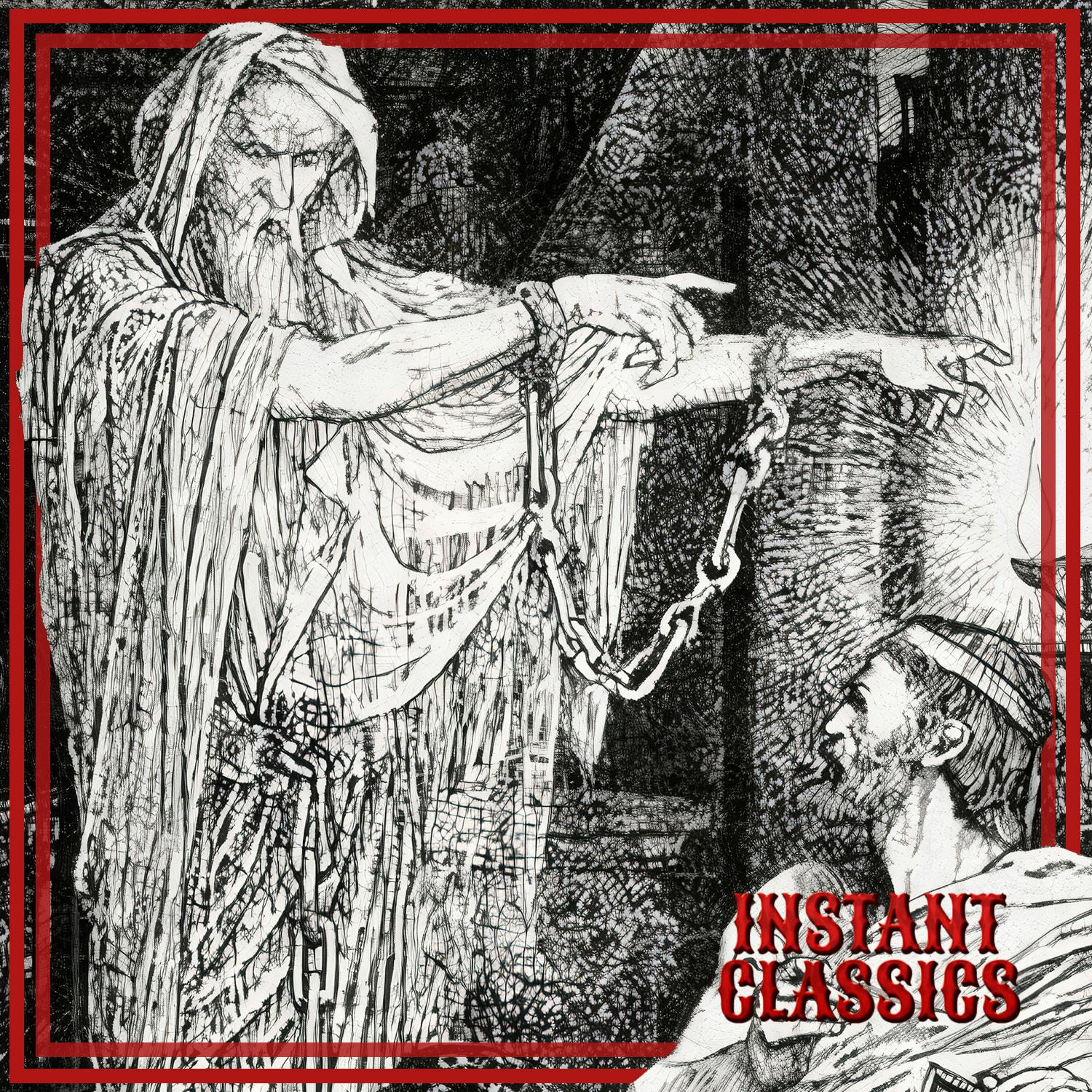
Once upon a time, a long time ago in Athens, there was a big sprawling house. It was not in a good area. It was in a unhealthy, plague ridden area. And in that house, every night people heard strange noises. The rattling of chains and fetters. It was terrifying. Sometimes people would see a grotesquely ugly old man with a big beard approaching them and he was wearing these chains and fetters and rattling them. People became so afraid in that house that they became ill and they started even to die. So eventually that house was completely abandoned. And let me tell you, nobody could sell that house. That house was real estate nightmare. It was completely unsaleable.
- [01:11]
B
That is just the beginning of a very spooky story told in the second century ce. A very upmarket Roman writer, a man we usually call Pliny the Younger. That's only to distinguish him from his uncle, Pliny the Elder. Now what is really surprising about it for me is how very recognizable that is as a ghost story.
- [01:45]
A
So over the next two weeks to mark Halloween, we are going to invest gate Greek and Roman spirits and ghouls and specters and phantoms. In this episode, we're looking at this particular ghost story by Pliny the Younger. And next week we're going to look at the equally exciting ghosts and ghouls of Greek and Roman fiction. And what we'll be asking is, what did ghosts mean to the Greeks and the Romans? Did they really believe in them?
- [02:21]
B
This is Instant Classics, the podcast that uncovers the ancient stories that still shape the modern world. I'm Mary Beard.
- [02:32]
A
And I'm Charlotte Higgins.
- [02:34]
B
And this episode, it's Roman. Ghostbusters. Foreign. Has come home to Disney plus. Let's go get ready for a new case. We're gonna crack this case and prove we're the greatest partners of all time. New friends, you are Gary Desnake. And your last name, Desnake. Dream team Hidden new habitats. Zootopia has a secret reptile population. You can watch the record breaking phenomenon at home. You're clearly worth Zootopia 2 now available on Disney Plus. Rated PG. There are an awful lot of ghosts in Roman and also in ancient Greek culture too. I mean, there's a real kaleidoscope of different specters who come up to revisit the world of the living from the world of the dead. And they fall into what Greeks and Romans would call a fairly wide but clear category. They are the restless dead. They're people who have not received a proper burial, for example, and so can't go easily down to the underworld. Where most of the Greek and Roman dead are supposed to end up, or they're people who've been nastily murdered, people who have a story to tell, or people who've really died before their time. You scratch the surface of this ancient culture and you'll find, say, you know, the Emperor Nero kills his mother. He is haunted by his mother's ghost and has to try to kind of take action to, to put her down. You find stories of men who fall in love with ghosts and you find all kinds of recipes for what you do about a ghost when you come across one. There are even state laws which tell you how to bust a ghost. And in Rome there is even a kind of Halloween festival, though it's in May actually, which tries to preempt the problems that ghosts might cause you in your house. Can you buy them off in advance?
- [05:15]
A
Typical Roman legalistic dealing there, buying off the ghosts in advance.
- [05:22]
B
But the Greeks do it too. And as we shall discover, you know, there's, there is no, you can't, you can't mess with ghosts. You have to get rid of them by fair means or foul. But let's go back to this Pliny because, because the story doesn't end with the unsaleable abandoned house that no one will buy or even rent because everybody knows it's haunted by this guy and his fetters. Right, what happens next, Ronald? Come on, tell us.
- [05:54]
A
Let me tell you a tiny little bit, maybe just a tiny bit about Pliny before we get to the rest of the letter. Because so just to put him in context very briefly, he's writing, as Mary just said, at the very, very beginning, well, the end of the first century ce, the very beginning of the second century ce. And he's quite a grand political figure. So he rises to the top of the Roman political system. He's a consul and then he ends his career being the, the governor of a province on, it's called Bithynia and Pontus, but it's the kind of black sea coast of Turkey as we'd think of it today. So he's an important guy. He was raised by his uncle, Pliny the Elder. These are slightly shades of Blackadder somehow the Pliny the Younger and Pliny the Elder. Pliny the Elder was famous for writing a 37 volume compendium of knowledge about the world. I'm not sure he had much time to devote to Pliny the Younger. But anyway, Pliny the Younger did fine
- [06:55]
B
and he's most famous now for in some way we don't quite know how this happened. He published letters he sent to his friends and they include all kinds of different sorts of information. I mean, one of the most famous ones is he gives us, in one of these letters, pretty much our only eyewitness description. He did see it from a distance, the eyewitness description of the eruption of Vesuvius which destroyed Pompeii in 79 CE.
- [07:28]
A
Yeah, and these letters give an amazing, actually an amazing flavor of Roman life in different ways. They talk about politics, he writes to his friends, he describes his country estate, all sorts of things, and he deliberately, he says in the introduction to these letters, you know, he's deliberately collecting them together for publication. So it has this kind of literary, you know, it is like a literary endeavour. It is the letter as a piece of literature.
- [07:53]
B
And in this one, I mean, he explains that he's on sort of holiday, there's a Senate, a parliamentary recess, so he's using the time for a bit of very wholesome intellectual inquiry. And he's writing to a friend with the explicit question of do we believe in ghosts or are they just a figment of the imagination? And the story of the haunted house in Athens is the central piece of evidence he gives us.
- [08:23]
A
Yeah. Writes to his. I feel slightly sorry for the person he's writing to, actually. But anyway, answer the question. Do ghosts exist? That's quite a tricky one. Anyway, the story goes on, Mary.
- [08:36]
B
It has a happy ending and a new character comes in who, if you're familiar with the stories of 19th century ghosts and ghost discovery, is very much like the sleuth after the ghost who's going to deal with it and get to the bottom of this story. And he's a philosopher called Aphanodorus. We don't know anything much more about him. And he comes along and he sees that the house is for sale or rent, and I really knock down price. And he discovers what the reason is that no one wants to buy it or rent it because it's haunted. So Athanodorus, you know, being a man who is, you know, a good scientific investigator as well as a philosopher, says, right, I will rent this and I'm going to discover what's going on. So he signs the contract, he moves in and what he does is, oh, I think what must be his first night, he sits down in the central courtyard of the house and he decides he's got to have something to be occupied with, so he doesn't get too kind of distracted by the ghost. So he brings his stylus and his papyrus and he starts writing. And sure enough piece to start with. But after, after a bit, there's the clanking. Nice. And then what should appear but the wizened old man with the grey beard loaded down by his fetters. I think there's a funny visual joke here because if we imagine what. What the standard image of an ancient philosopher was like, Athenodorus, I mean, we would imagine Athenodorus was also a wizened old man with a grey beard. So I think the philosopher and the ghost probably look quite like each other. But Athenadorus starts off by playing it cool and says to the ghost who's coming to kind of approach him, says, I'm just going to finish what I'm writing. But the ghost.
- [10:47]
A
Hang on, hang on.
- [10:49]
B
Just. Just give me. Give me a minute. But the ghost comes nearer and nearer, and Athenodorus sees that the ghost is beckoning him, and he thinks, okay, let me follow him. And up he goes. He follows the ghost to another bit of the house and the ghost suddenly disappears. Athenodorus thinks, right, I'm going to mark the spot where he disappears. And he puts a bit of grass and stuff down so he won't forget where it was. The next day he goes to the city authorities and says, we're going to dig this up, right? They dig down at the very spot the ghost had disappeared. And what do they find? They find a skeleton with fetters and chains all around it. And what happens next? They decide they will properly shouldn't have been buried underneath the floor of the house. They give him a civic expense, they give him a proper burial and hey presto, no ghost problems with the house ever again. So he was one of these restless dead who had not been properly buried. The son, no doubt, very nasty reason, had been buried actually under the floor of a house. But once he's got proper burial, he can get rest, he can go down to the underworld and everything is restored to calm and the house can be rented or sold again.
- [12:22]
A
That's a great story, and I really love that. It's a philosopher who is the ghost hunter and the ghostbuster in this story. You know, hooray for philosophers. But it's so reminiscent, you know, if we think about the ghost stories and the kind of tales of the supernatural of our own time. Not dissimilar like. It's like Abraham Van Helsing in Dracula, or almost like the, you know, the scholarly chaps in Mr. James ghost stories, or Dr. Montague and the haunting of Hill House. Although in those stories. It's often like the scholarly skeptic comes up against the supernatural, which is a completely different knowledge sphere. And there's something often made of that in this. In this case, there's no doubt about ghosts existing as far as the story, in the terms of the story.
- [13:21]
B
And I think one of the differences is that contemporary 19th century philosophers, the existence or not of ghosts is not a big deal for them. It's big in fiction. The idea of the ghost sleuth is big. But philosophers in their libraries are not thinking about ghosts. Ancient philosophers thought about ghosts a lot, about whether they existed or whether they didn't. And an awful lot hung on that question. I mean, I think mostly here of the Roman philosopher of the 1st century BCE, Lucretius, who was very concerned to say that there was no existence in any form of life after death. Life after death was impossible. Death marked the end. Ghosts were a problem for that position, because if ghosts existed, then it looked as if life was possible after death. And Lucretius has to go into all kinds of tortuous arguments about sort of about the time delay of the vision that you're seeing. You're not really seeing a ghost in real time. It's somehow you're seeing a vision from the past in order to leave his theory intact. When people thought ghosts existed.
- [14:48]
A
Yeah, exactly. He's like a materialist philosopher. So he thinks that everything is explicable by purely scientific means. You know, it's not that there is something out there.
- [14:58]
B
No. And I think that's one big difference between ancient and modern ghosts, that ancient philosophers From Aristotle, the 4th century Greek philosopher onwards, were, you know, ghosts were an important subject of philosophical inquiry, when, to be honest, I don't think they are today.
- [15:21]
A
Probably not.
- [15:22]
B
Not in the same way.
- [15:25]
A
You never know. You know, you should keep an open mind. That's what I say, Ross. You never know what's going to happen.
- [15:30]
B
And the variety of stories is extraordinary, actually, that and they fall into slightly different categories. There are enormous numbers of different words for ghosts in the ancient world. You know, there are things that are shades, there are phantoms, there are things that kind of look to us a bit like vampires, that they're not quite called that in antiquity.
- [16:00]
A
Mary, I've got actually quite a good vampire story for you from the ancient world. Why don't we take a break and I will tell it to you right after.
- [16:07]
B
Can't wait.
- [16:15]
A
So, right, this story was. Well, it appears in a book by a writer called Philostratus, who is a Greek writer. Writing in the third century ce and it is another story set in Greece, and it concerns more philosophers and it concerns a very, very handsome young philosopher, a beautiful, sexy young philosopher called Menippus. And he's living in Corinth and he himself is from Turkey. I mean, there's a lot of. Quite a trope of people coming from other places and being maybe a tiny little bit exotic. But anyway, he's really, really handsome. He's got a lovely girlfriend. But one day he's out for a walk and he meets this extraordinarily attractive woman. She's from Phoenicia, which is modern Lebanon. And she says to him, menippus, you know, you're a handsome chap. Why don't you come to my house later? It's a bit of a booty call, ancient style. Why don't you come to my house later and I'll sing to you. We will have some wine and we could see what that leads to. Anyway, Menippus goes home with this woman, has the wine, hears the music, has the sexual. It's fabulous. Every night he keeps going back. He kind of really falls hard for this woman. And his philosophy teacher, a guy called Apollonius, sort of senior philosopher figure, he says, you better watch out, Menippus, I think you're in love with someone really quite strange, you know, be careful. And Menippus says, nonsense, I absolutely adore her. I'm marrying her tomorrow. Everyone turns up for this wedding and there is this amazing feast. There are lots of kind of servant slaves handing out delicious titbits. And Apollonius says to Menippus, the young guy, he says, you know what, you're. Your girlfriend is not a human. Your girlfriend is, and this word is often translated as vampire. Your girlfriend is a supernatural being. She is maybe like a vampire, and she's going to eat you up. And at this point, the girl herself is enraged and she says, Apollo, you know, all philosophers talk rubbish. What are you talking about? We're getting married. But as she's talking, all. All the beautiful food and all the rich trappings of the wedding start sort of disappearing. And Apollonius insists that she's a supernatural being, she's not a real woman. And eventually she admits it and she says, yes, I was just fattening up, manipulate this handsome young chap before I planned to eat him up. So I think there's a lot, you know, Freud doesn't have much work to do on this one, you know, lovely ladies eating up these vulnerable, handsome young men. And the word vampire, I mean, I think it is regarded as the sort of great grandparent of 19th century vampire stories. I mean, the word used of her is it just means a kind of a scary or terrifying person or being. But it's kind of. Yeah, it's an ancestor story. Yeah.
- [20:08]
B
I think there's a real fuzzy line between what we would call a bona fide ghost, one of the restless dead and various other sorts of apparitions that are quite like that. I mean, I was reading an ancient story, the other which talked about parents who'd lost a young daughter before she got married and then found actually that she'd come back as a ghost and was having an affair with a handsome young man. And they went to the tomb and they found that her body wasn't there. So you can see that there's a, there's a spectrum here between what we might call ghosts proper and things from another world that are very like ghosts. Ghosts, yeah. But I think one of the big questions for people both in Greece and Rome was really the question of how to get rid of these properly. I mean, you know, for some people there was the Athenodorus technique. You faced the ghost down, you found out where he was wrongly buried and you put it right. But that required the, you know, sleuthing powers of the high level philosopher. And. But there were other much more routinized ways of doing that. And I think that one thing that is really striking and I've only just come across these are. They're actually the examples I've got are from the Greek world of the. Actually from the 4th century BCE, but they, I think they go through antiquity. There are actually laws and procedures laid down by the civic authorities telling you what to do. And I'm not going to, because they're quite boring. I'm not going to bore you with too much because it's very legalistic. But I think you will find this great law, it just captures it really. I'll read a few lines of it. If a person wants to purify himself from attacking ghosts, he is to call on the ghost wherever he wants and at whatever point in the year he wants and in whatever month he wants, and on whatever day he wants I'm facing in whatever direction he wants, then he is to be purified. He is to welcome the ghost and give it water for washing the hands, et cetera, et cetera. So you do see that there's artificial resources for what you do for getting rid of these creatures if you need
- [22:57]
A
to, like getting the priest in or something. I Mean, there's ways and means.
- [23:02]
B
There's. There is a kind of hint of bits of exorcism occasionally here. And you see that very, very clearly in the sort of Roman Halloween ceremony celebration that we mentioned earlier. This took place in May, and it was called the Lemuria, because one of the Roman words for ghosts was lemur. And it was what every household was supposed to do to. To make sure that it had protected itself from ghosts that might attack it. And so you. If you're. If you're the head of the house, the man in the house does this. You take your shoes off, you wash your hands, you put your thumb inside the fingers of your hand, because that's supposed to keep ghosts away. But then the key is you put some beans in your mouth and you sort of chew on them a bit, but then you spit them out, you throw them behind you, and you say, with these beans, I free myself and my family from the spirits. And then you wash your hands again and you've kind of done the job. But it's an annual ritual for making sure that what happened to that house in Pliny's haunted house in Athens doesn't happen to yours.
- [24:49]
A
Yeah. Keeping your ancestors at bay a bit, that one, isn't it? Yeah.
- [24:55]
B
And it's. Well, there's some funny kind of wordplay goes on too, isn't there, with.
- [25:00]
A
Oh, yeah, like the Ovid. Ovid connects. Ovid, the poet who wrote about this ceremony, connects it etymologically with the name Remus. Seems a bit of a stretch, Lemuria to Remus, but anyway, he does. And Remus was the brother of Romulus, So Romulus, when he was founding Rome, murdered his brother Remus, and Ovid connects it to this sort of ancestral murder and this kind of unquiet ghost of Remus. And to me, it's kind of fascinating that you have this ritual that at least some people connect to Remus, who is like the unquiet dead, the murdered brother at the very origins of Rome. So that this. The kind of idea of this, you know, the return of the repressed kind of thing, you know, he might come back and haunt you. And so he has to be. He and his ilk have to be dealt with on an annual basis.
- [25:57]
B
Yeah. Because you can never get rid of the restless dead from Rome, because Rome's founding moment actually was the murder of Remus by the founder Romulus, and Remus is the archetypal restless dead who won't ever go away.
- [26:16]
A
Yeah.
- [26:16]
B
So it's a great kind of Glimpse really of that sense of this, of ghosthood being buried absolutely at the foundation. Buried in a slightly different sense, embedded at the foundation of the city of Rome. But we need to go back to poor old Pliny, because there was Pliny writing to his mate, saying, I'm on a mission, I want to get to the bottom of these ghost stories. And his key example is this one of the haunted has. He has two other much less interesting examples in some way similar ghostly phenomenon. One is a guy who is going to take an official position in the province of Africa, and there he has an apparition again. It's one of these fuzzy boundaries between apparitions and ghosts. It's an apparition who tells him that he will become the governor of the province, but he will also die there. And indeed, that is just what happens. And there's another. Pliny starts with that in the letter as a kickoff, then has this great story about the haunted house. He then has a weird story which he says he was the witness of. He was. This is an eyewitness story. He's heard about the haunted house from other people, but he knows from his own household about what ghosts can get up to in the middle of the night. And he talks about two of his household staff, one enslaved and the other an ex slave who had woken up after a night's sleep and discovered. And there'd been people who'd spotted this, discovered that their hair had been cut off and scattered on the floor by a ghostly apparition as they slept.
- [28:27]
A
Or was it?
- [28:28]
B
Or was it?
- [28:29]
A
I said skeptically. Yeah, or was it?
- [28:32]
B
Yes. Pliny is none too sure. I mean, he had some very, very tortuous attempts at explanation of this, but what he is doing is then giving, you know, his three stories to his mate and saying, so what's the answer? The trouble is we don't have the replies from Pliny's letters, so we have no idea what his friend is called. Licinius Sura, what Licinius Sura made of all this. Whether he said, oh, for heaven's sake, Pliny, don't be so stupid, or whether he said, tricky cases there, we have no clue.
- [29:16]
A
It's so intriguing because Liciniusura also gets a letter sent to him by Pliny about another weird phenomenon that's not supernatural, it's more of a science question about the weird behaviour of a spring in Umbria. I'd love to know whether he, like, sprang into action as soon as he received one of these letters from Pliny, or whether he was more like, oh, God.
- [29:36]
B
Oh, no.
- [29:37]
A
Pointless question from Pliny the Younger. We don't know. We don't know. So I think we're left to say, what would we say if we were Licinius Sura? Mary?
- [29:51]
B
Well, I think you can guess what my Liciniusura answer is going to be. I'm going to say, this looks to me at least the haunted house story. I mean, leave the boys having their hair cut off in the middle of the night. But the haunted house story does have a very strong sniff of an ancient urban myth to it.
- [30:17]
A
Absolutely. And there's one. There's a clincher, right? There's another super, super, super similar story told by another author, by the author Lucian in the second century ce, and he was from Syria, writing under the Roman Empire. But it's a super similar story. It's set among philosophers or is told by the narrator of the story is a Pythagorean philosopher, and it's set not in Athens, but in Corinth, which is the same place as the vampire story is set in. So we have this kind of weird thing about different Greek settings, and it's almost exactly the same. There's a house that nobody could sell, nobody could live there. The philosopher who's telling the story says, well, I decided to go there. I took my books with me. The ghost tried to frighten me. I magicked him and cursed him using an incantation from my Egyptian language books, or using the Egyptian language. I sort of trapped the ghost in place. I went to sleep calmly next morning, woke up, got the staff to dig at that point where I trapped him, found the body of someone who hadn't been buried, got the body buried, House is all set absolutely fine. So structurally, I mean, apart from these sort of details about the Egyptian incantation, it's more or less exactly the same as our original story. So I'm going to urban myth.
- [31:46]
B
I think there's an even bigger clincher for the urban myth line because this is going a bit earlier, actually. But I'm going back to a comic, a comedy comic play by the Roman comedian Plautus, the end of the third century bce, beginning of the second century. And he has a play which he's adapted from some earlier Greek existence example called the Mostellaria. And the Mostellaria, really weird word, but it means something like haunted house. It comes from another of those Latin words for ghost, monstrum.
- [32:29]
A
Right.
- [32:29]
B
This is a mustelaria from a monstrum, the haunted house. Or it could mean just a ghost story and it's got a wonderfully familiar scene because as often in Roman comedies, there is a rather strict dad, a slightly wildly adolescent son, and a enslaved servant at the household who's pretty much on the son's side always, and pretty
- [33:03]
A
resourceful and clever and smug.
- [33:05]
B
And so, yeah, he's in this occasion. Dad goes off on business and the son thinks, yippee, it's time for a party at home. Dad's away. Now, this is absolutely Teenage kids classic, classic. It is the classic he. So there's a good bit of sex is involved, lot of drinking, great time. Except that dad comes back unexpectedly. We've all been there, I'm afraid, on this one. Dad comes out. What are you gonna do now? Well, luckily, the slave, who's on the kid's side and is resourceful, spots what's happening. He goes out to meet dad and then he says, I'm terribly sorry, sir, but you can't come into the house. That's why not? We've discovered that it's haunted and it would be so dangerous for you to come into the house. I have to ask you to step away for a bit while we do all the things that you need to do with a haunted house. And we've got a story very much like the Pliny story or the Lucien story. And they deflect dad to next door, and through some rather complicated and unbelievable plot twists, they manage to not have dad realizing what's been going on. And the young man gets his girl in the end, which was part of what the party was all about. So I think the fact that it's the idea of the haunted house with some of the same characteristics that we've seen comes as part of a just a neat plot twist in a Roman comedy that are quite. This is quite early suggests that that idea of the haunted house and what you do about it and how you escape and how dangerous it is is absolutely fundamental in the ancient world's Rome, but also Greece's view of the supernatural. And I'm afraid, I think probably it's told many, many, many more times than it really actually happened. But I would think that I don't
- [35:29]
A
recommend to any teenagers having a party and planning a party who are listening to this podcast to try that on their parents, unless you have incredibly gullible parents. But it's a great story and I think that's a fabulous place to end, Mary. And next time we are going to be exploring all the wonderful, ghoulish, scary stories of the undead in Greek and
- [35:54]
B
Roman fiction, in the underworld where all the dead really belong, not in haunted houses. See you next time.
- [36:04]
A
As ever, we want to know your thoughts and comments, ideas, questions and so if you have have them, please do send them to us at instant classics pod gmail.com or on our social media at Instant Classics Pod.
- [36:21]
B
Bye Bye.
- [36:29]
C
To some, he is the revolutionary hero who restored China to its rightful place on the global stage.
- [36:35]
D
To others, he he's a brutal despot accused of presiding over more civilian deaths than either Stalin or Hitler.
- [36:41]
C
Mao Zedong has one of the most recognizable faces in the world. Yet he started life in a muddy provincial village.
- [36:48]
D
A rebel son who hated his father, survived a 6,000 mile walk across China and rose to become a figure of titanic proportions.
- [36:57]
C
From Empire the Goal Hanger World History Show. I'm Anita Anand.
- [37:02]
D
And I'm William Duranpool.
- [37:03]
C
In this six part series, we're joined by world renowned expert Rana Mitter to explore the life of the father of Communist China, Mao Zedong.
- [37:13]
D
We'll track his rise from a bookstore owner to a guerrilla commander. And we'll witness his ruthless elimination to secure total power. And we'll descend into the dark experiment of the Cultural Revolution, a time when ancient temples were but children denounced their parents and a nation worshipped a mango as a sacred relic.
- [37:34]
C
Subscribe to Empire wherever you get your podcasts to listen now.