
Podcast
InsTech - insurance & innovation with Matthew Grant & Robin Merttens
Hosted by InsTech · EN
Bringing together the best technology and innovation for insurance and risk management together from around the world. Podcast hosted by Matthew Grant.
39episodes
Episodes
Newest firstAll episodes

Automated underwriting: a pioneer’s perspective (393)
Feb 800:15:07Tap to summarizeWhat actually makes automated and enhanced underwriting work in practice? In this episode, three early movers in automated underwriting share hard-earned lessons from building digital underwriting propositions that have survived real market cycles. Rather than theory or hype, this conversation digs into where technology genuinely creates advantage, where it does not, and how underwriting judgement remains central even in highly algorithmic models. Drawing on experience across cyber, US property and digital facilities, the panel explores why complexity, not commoditisation, is often where automation delivers the greatest edge. From AI-driven cyber underwriting to high-cat surplus lines property and digitally distributed specialty products, each speaker explains how they chose their focus and what they learned along the way. Key themes include the role of data discipline in sustaining AI-led underwriting, why platform design matters more than speed to market, and how underwriters’ roles are shifting from generalists to specialists embedded in algorithmic decision making. The discussion also tackles unstructured data, submission quality and why “no data, no deal” may become a defining principle of future underwriting models. What you’ll learn in this episode: Why complex risks can be better suited to automated and augmented underwriting than simple, commoditised ones How AI and machine learning are being applied in live underwriting decisions, not just analytics The importance of volume, homogeneity and risk differentiation when building algorithmic models Lessons from re-platforming early digital products and avoiding long-term technical debt How generative AI is changing data cleaning, exposure management and submission handling What enhanced underwriting means for underwriter skills, careers and decision making Featuring perspectives from Marek Shafer of Vave, Tom Squires of AEGIS London and Jonathan Spry of Envelop Risk, moderated by Matthew Grant of InsTech. You can also watch the video version of this panel here. If you like what you’re hearing, please leave us a review on whichever platform you use or contact Matthew Grant on LinkedIn. Sign up to the InsTech newsletter for a fresh view on the world every Wednesday morning.
Transcribe →
Liselotte Munk, CEO: Fadata: AI, insurance software & the future of policy admin (392)
Feb 100:18:00Tap to summarizeWhat happens when AI meets the backbone of the insurance industry - policy administration systems? In this episode, Liselotte Munk, CEO of Fadata, joins Robin Merttens to unpack how artificial intelligence is reshaping the software layer of insurance. With candid insights into Fadata’s AI strategy, Liselotte reveals how the company is using AI to accelerate software development and reduce implementation costs while improving quality. She tackles the big question: will AI make policy admin systems obsolete? Her answer offers a pragmatic view on cost, complexity, compliance and collaboration. In this conversation, Liselotte shares: How AI is already streamlining configuration, documentation and testing in core systems Why the true opportunity lies in faster implementations and reduced transformation costs How the role of developers is shifting, and what this means for insurance talent Why insurers should invest in AI to enhance - not replace - their core platforms What the smartest insurers are doing now to future-proof operations in an AI-first world If you like what you’re hearing, please leave us a review on whichever platform you use or contact Robin Merttens on LinkedIn. Sign up to the InsTech newsletter for a fresh view on the world every Wednesday morning.
Transcribe →
Tobi Schneider, Sector Engagement Lead for Financial Services & FinTech, Edinburgh Futures Institute: Creating a new kind of assurance & insurance framework for AI-related risks (391)
Jan 2500:15:28Tap to summarizeIn this episode, Robin Merttens is joined by Tobi Schneider, Sector Engagement Lead for Financial Services & FinTech at the Edinburgh Futures Institute, to unpack one of the most ambitious research initiatives currently shaping the future of AI risk in insurance. Backed by UKRI and developed in collaboration with AXA Group and three leading universities, the project aims to build a foundational blueprint for how insurers can understand, audit and underwrite emerging AI risks. Tobi shares why the shift from traditional to generative and agentic AI has outpaced current risk frameworks, leaving insurers exposed to risks that are poorly defined, difficult to monitor and impossible to price using historic loss data. He explains how his team is exploring dynamic underwriting models, parametric solutions and novel assurance techniques like LLM-based judges and automated red teaming, all with the goal of enabling safer, more accountable AI adoption. Ahead of the Agentic AI Half Day event, hosted in collaboration with AI Risk, Tobi Schneider and Lukasz Szpruch wrote an article The New Frontier: Managing and insuring generative and agentic AI risks, further exploring this topic. In this conversation, Tobi shares: Why AI systems that function “correctly” can still produce harmful or costly outcomes How traditional insurance models fail in the face of opacity, model drift and dynamic learning What makes AI risk so difficult to price and how parametric triggers can help bridge the gap Why better assurance leads to better insurance, and how incentives can drive safer AI deployment How continuous monitoring tools are being developed to audit AI models in real time What today’s early AI insurance offerings (from the likes of Munich Re and Relm) are actually covering The role of non-profit research in supporting commercial innovation without commercial bias What insurers can do now to prepare for an AI-driven future even without historical data If you like what you’re hearing, please leave us a review on whichever platform you use or contact Robin Merttens on LinkedIn. Sign up to the InsTech newsletter for a fresh view on the world every Wednesday morning.
Transcribe →
Bootstrap Confidential Episode 11: Building a bootstrapped exit with Matthew Grant (390)
Jan 1800:37:57Tap to summarizeThis week we bring you an episode of Bootstrap Confidential featuring InsTech’s very own CEO, Matthew Grant, who joined Charles Green in the latter half of 2025 to reflect on the eight-year journey of building InsTech from the ground up without outside funding, and with an intentional focus on sustainable growth. Matthew’s route to growing InsTech wasn’t typical. With a background in risk, analytics and around 400 podcast episodes as a host, he brought a deep understanding of the insurance sector and what it takes to build a commercially viable, insight-led business. The result? A thriving community of over 30,000, a high-margin membership model and a successful exit achieved through discipline, focus and clear-eyed decisions. In this conversation, Matthew shares: Why he sees bootstrapping as risk management, not risk taking The importance of paying yourself from day one and how that shaped InsTech’s trajectory Lessons from testing (and killing) products that didn’t deliver Why hiring curious, early-career talent paid off What most founders get wrong about option schemes and equity How to handle financial stress without losing your team or your sanity Why co-founders matter and why investors aren’t a substitute The hard truth about building the business your customers want, not just the one you’d love to run If you like what you’re hearing, please leave us a review on whichever platform you use or contact Matthew Grant on LinkedIn. Sign up to the InsTech newsletter for a fresh view on the world every Wednesday morning.
Transcribe →
Andy Yeoman, Founder & CEO: Concirrus: Bringing the joy back to underwriting (389)
Jan 1100:26:05Tap to summarizeIn this episode, Robin Merttens is joined by Andy Yeoman, CEO of Concirrus, to unpack how a key player in marine insurance tech has reinvented itself as a core platform provider for the specialty market, and what that transformation says about where the industry is heading. Andy shares the thinking behind Concirrus’ pivot from ship tracking to full risk lifecycle processing, what it takes to build end-to-end technology in just 18 months, and why underwriters, not just CTOs, are now leading the charge on system change. In this conversation, Andy shares: Why marine was just the beginning and why modern platforms must serve multiple lines with depth, not just breadth What today’s insurers really want from core systems: speed, interoperability and business outcomes How Concirrus became an AI-first company and what that’s meant for product delivery, talent and culture The rise of the tech-fuelled MGA and why they’re now the “risk entrepreneurs” to watch How verticalised platforms are winning over underwriters by solving for class-specific nuance What the shift from admin-heavy roles to empowered underwriting means for job satisfaction and talent retention Why managing change is as important as building tech and what Concirrus learned from its own internal AI adoption What’s next for insurance infrastructure as constraints fall away and innovation accelerates If you like what you’re hearing, please leave us a review on whichever platform you use or contact Robin Merttens on LinkedIn. Sign up to the InsTech newsletter for a fresh view on the world every Wednesday morning.
Transcribe →
David Wood, JBA Risk Management & Jochen Papenbrock, NVIDIA: Showing the world how to revolutionise modelling (388)
Jan 400:35:34Tap to summarizeHow can AI weather models improve the accuracy and scale of catastrophe modelling? Matthew Grant is joined by David Wood, Managing Director at JBA Risk Management, and Jochen Papenbrock, Head of Financial Technology (EMEA) at NVIDIA, to explore how accelerated computing is unlocking new ways to simulate and manage flood risk. JBA has long been a pioneer in flood modelling, while NVIDIA’s GPU technology has helped drive the recent breakthroughs in AI and generative modelling. Together, they discuss how high-resolution simulations, new ensemble methods and open-source tools are pushing the limits of what’s possible in climate and catastrophe analytics. Key Talking Points: The early bet – how JBA’s adoption of GPU computing over a decade ago made national-scale flood mapping possible From gaming to GenAI – how NVIDIA's evolution from graphics to AI led to the development of physics-informed weather models Ensemble power – why running 1,000+ simulations helps capture more extremes than the historic record ever could Event sets reimagined – how AI models are enabling richer, more diverse flood scenarios for Europe and beyond Real-time relevance – the potential to use AI models to simulate how a flood might unfold, as it’s happening Making AI usable – how Earth-2 Studio and open-source frameworks are opening up generative models to catastrophe modellers Proving value – how NVIDIA and JBA worked together to quantify the benefits of faster, more flexible modelling approaches Looking ahead – why cross-sector collaboration will be essential to turn acceleration into real-world impact If you like what you’re hearing, please leave us a review on whichever platform you use or contact Matthew Grant on LinkedIn. Sign up to the InsTech newsletter for a fresh view on the world every Wednesday morning.
Transcribe →
Where is the industry today? - a view from the C-suite (387)
Dec 2800:30:11Tap to summarizeIn this episode, Robin Merttens is joined by Dr Thomas Kuhnt (HDI Global SE), Ed Ackerman (Qover) and Vincent De Ponthaud (AXA) for a rare C-suite perspective on Agentic AI — what it is, how it's being deployed and why senior leaders are walking a tightrope between bold innovation and operational risk. Agentic AI promises transformative value, but for decision-makers at the top, it also brings real uncertainty. What do you build vs. buy? How do you prove ROI? And how do you prevent over-trusting agents that are inherently probabilistic? In this conversation, Thomas, Ed and Vincent share: Why Agentic AI is different from past tech trends and why this one feels real The cultural and leadership challenge of balancing excitement with governance How AXA and HDI are enabling safe experimentation at scale across complex organisations How Qover is building 20+ AI agents to automate claims micro-tasks — and when they build vs. buy What customers really think about AI agents and why nearly none opt out The risks of shadow AI and why IT needs to move faster than ever Why “human in the loop” is flawed and how user trust in AI could become a blind spot What’s missing: industry standards, agent evaluation tools and new roles like “agent managers” The case for cautious iteration, deep collaboration and constant re-evaluation Sign up to the InsTech newsletter for a fresh view on the world every Wednesday morning.
Transcribe →
Curious minds & bold beginnings (336)
Jan 5, 202500:05:18Tap to summarizeIn this special first episode of 2025, Zoja takes the hosting seat to ease us back into work and life post-New Year with a reflective and forward-looking conversation. Here’s what you can expect: 2024 Highlights: A look back at InsTech's key themes, including the growing buzz around catastrophe modeling and exposure management. Zoja shares insights from the year’s most popular webinars, including: Know Your Models: An Underwriter’s Guide to Flood Modelling (in collaboration with Fathom). JBA Risk Management’s session on lessons learned from five years of flood modeling. Flood modeling emerged as a standout topic, highlighting its importance as the second-largest driver of insured losses globally. Top Podcasts of 2024: James Orchard (QBE Ventures): Exploring investment strategies for the year ahead. Marcus Ryu (Guidewire): A personal journey into entrepreneurship and building a globally recognized company. Nicola Turner (Scrub AI): From underwriter to founder—a compelling narrative of innovation. Munich Re’s parametric experts: Insights into cutting-edge work in parametric risk management. What’s Ahead in 2025: Exponential Risk London: InsTech’s inaugural two-day conference on March 4-5, a culmination of a year’s work on catastrophe risk and exposure management. New Members Spotlight: Meet ClaimSorted, Bellwether, Grappler, OIP Robotics, Coherent, Recordr, Guy Carpenter and Federato —all new additions to the InsTech community. Join Zoja as she celebrates the successes of 2024, previews what’s coming in 2025 and shares her personal podcast recommendations to kick off the new year. Thank you for your continued support, and see you next Sunday! If you like what you’re hearing, please leave us a review on whichever platform you use or contact Matthew Grant on LinkedIn. You can also contact Hasani Jess on LinkedIn to start a conversation! Sign up to the InsTech newsletter for a fresh view on the world every Wednesday morning. Continuing Professional Development This InsTech Podcast Episode is accredited by the Chartered Insurance Institute (CII). By listening, you can claim up to 0.5 hours towards your CPD scheme. By the end of this podcast, you should be able to meet the following Learning Objectives: Identify the new InsTech members and their potential contributions to the insurance and technology ecosystem in 2025. List the key themes and standout topics from InsTech’s 2024 events, including popular webinars and podcasts. Specify the primary goals and expected outcomes of the Exponential Risk London conference in March 2025. If your organisation is a member of InsTech and you would like to receive a quarterly summary of the CPD hours you have earned, visit the Episode 336 page of the InsTech website or email cpd@instech.co to let us know you have listened to this podcast. To help us measure the impact of the learning, we would be grateful if you would take a minute to complete a quick feedback survey.
Transcribe →
Partners in paradise - Wine, birds and fabulous new friends (335)
Dec 29, 202400:37:39Tap to summarizeMatthew and Robin meet again for our final Partners’ Chat of the year to touch on the highlights of 2024 and dive into key themes shaping the insurance and technology industries. From augmented underwriting to agentic AI, they explore the trends, challenges and opportunities that defined the year—and offer insights on what’s coming in 2025. While Matthew emphasises the growing significance of secondary perils like severe convective storms (SCS), Robin reflects on how "boring but brilliant" innovations are quietly transforming the industry. Alongside these insights, expect lively discussions about digital transformation, smart follow syndication, and of course, Robin's essential holiday wine recommendations. Key Talking Points What are market makers, and how are they shaping the future of insurance? Why severe convective storms are becoming the most significant natural peril for insurers. How algorithmic syndication and smart follow innovations are transforming underwriting. The role of parametric solutions in addressing gaps left by traditional insurance models. Why claims workbenches are the next frontier in specialty insurance efficiency. Exploring agentic AI: Can insurers trust proactive, decision-making technology? The growing ecosystem of catastrophe modeling and analytics providers in insurance. The importance of networking events like curated dinners for scaling tech solutions. Robin’s Holiday Wine Picks White: Gerard Bertrand Heritage Clairette (£17 at Majestic) Red: Georgian Saperavi 2021 Bodoba Special Occasion: 2024 Château Léoville Barton Festive Favorite: The Society’s 150th Anniversary 2011 Vintage Port If you like what you’re hearing, please leave us a review on whichever platform you use or contact Robin Merttens or Matthew Grant on LinkedIn. Sign up to the InsTech newsletter for a fresh view on the world every Wednesday morning. Continuing Professional Development This InsTech Podcast Episode is accredited by the Chartered Insurance Institute (CII). By listening, you can claim up to 0.5 hours towards your CPD scheme. By the end of this podcast, you should be able to meet the following Learning Objectives: Explain how algorithmic syndication and claims workbenches are improving efficiency in underwriting and claims management. Specify the potential of agentic AI to transform insurance decision-making processes. Define the significance of secondary perils, such as severe convective storms, on insurance losses and reinsurance capacity. If your organisation is a member of InsTech and you would like to receive a quarterly summary of the CPD hours you have earned, visit the Episode 335 page of the InsTech website or email cpd@instech.co to let us know you have listened to this podcast. To help us measure the impact of the learning, we would be grateful if you would take a minute to complete a quick feedback survey.
Transcribe →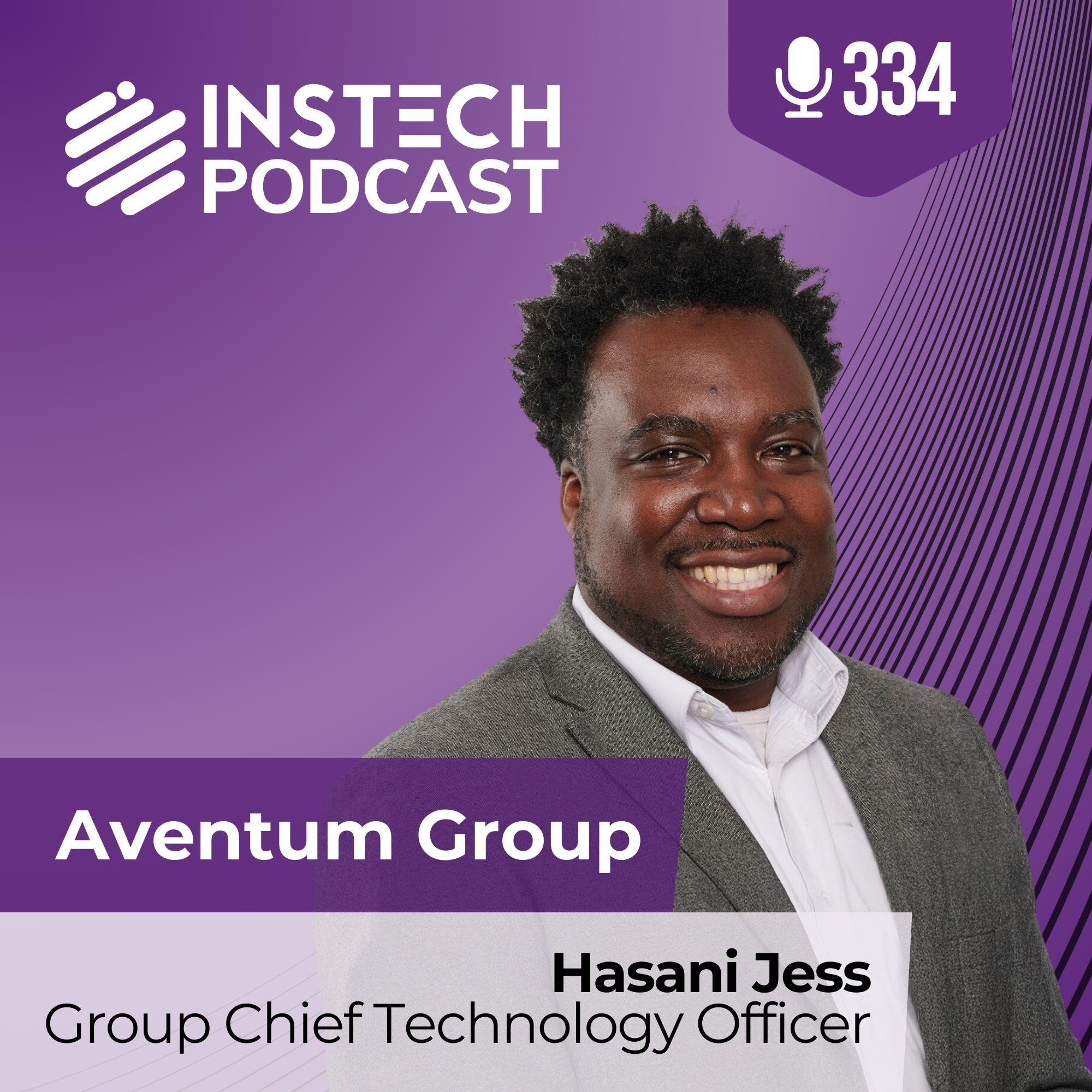
Hasani Jess, CTO: Aventum Group: Dare to discover innovation (344)
Dec 22, 202400:25:20Tap to summarizeHow can technology and culture drive successful insurance transformation? Aventum is blending innovation and ambition to transform its insurance operations into a tech-enabled powerhouse. Robin Merttens speaks with Hasani Jess, CTO at Aventum Group, about the company's growth, their approach to technology, and the cultural foundation enabling change. With over 650 employees and a tech team of more than 100, Aventum is building solutions to empower brokers, underwriters, and operational teams alike. Key Talking Points: Scaling from 450 to 650 employees while evolving technology and processes. Building an integrated platform to unify data and streamline business functions. Developing bespoke engineering solutions for competitive advantage. Adopting best-of-breed tools to complement in-house technology development. Leveraging AI to triage submissions and extract insights from unstructured data. Operating a dedicated Innovation Lab to explore future-focused technologies. Connecting brokers and underwriters with tailored workbenches and tools. Addressing challenges of legacy systems to enable consistent progress. Embedding a culture of change and innovation across the business. If you like what you’re hearing, please leave us a review on whichever platform you use or contact Matthew Grant on LinkedIn. You can also contact Hasani Jess on LinkedIn to start a conversation! Sign up to the InsTech newsletter for a fresh view on the world every Wednesday morning. Continuing Professional Development This InsTech Podcast Episode is accredited by the Chartered Insurance Institute (CII). By listening, you can claim up to 0.5 hours towards your CPD scheme. By the end of this podcast, you should be able to meet the following Learning Objectives: Define the importance of a culture of change in driving successful insurance transformation. Identify key strategies Aventum employs to address the challenges of legacy systems and enable progress. List the challenges associated with scaling technology teams to support rapid business growth. If your organisation is a member of InsTech and you would like to receive a quarterly summary of the CPD hours you have earned, visit the Episode 334 page of the InsTech website or email cpd@instech.co to let us know you have listened to this podcast. To help us measure the impact of the learning, we would be grateful if you would take a minute to complete a quick feedback survey.
Transcribe →