
Podcast
InsTech - insurance & innovation with Matthew Grant & Robin Merttens
Hosted by InsTech · EN
Bringing together the best technology and innovation for insurance and risk management together from around the world. Podcast hosted by Matthew Grant.
39episodes
Episodes
Newest firstAll episodes

Emmalina Glinskis, Floodbase & Alex Kaplan, Amwins: Insuring uncovered flood risk (333)
Dec 15, 202400:27:54Tap to summarizeYou may have heard that Floodbase and Amwins partnered earlier this year, and are combining satellite data and parametric insurance to tackle flood risk, a peril often underinsured or uninsured altogether. Matthew Grant speaks with Emmalina, who leads Public Sector Partnerships at Floodbase, and Alex, Executive Vice President for Alternative Risk at Amwins, about their work insuring golf courses, municipalities and more. The discussion highlights how advancements in satellite technology and data-driven insights are bridging gaps in traditional flood insurance, providing faster, more flexible coverage for both private and public sectors. Key Talking Points: Learn how Floodbase uses satellite data to track and monitor flood risks. Understand the limitations of traditional flood insurance coverage. Explore how parametric insurance provides flexibility and fast payouts. See how municipalities can use parametric payouts to cover tax revenue losses and community recovery. Examine how historical flood data shapes payout triggers and pricing. Discover the unique challenges of insuring golf courses against floods. Gain insight into the increasing severity of atmospheric rivers and their impacts. Understand how parametric insurance addresses gaps in public and private sector coverage. Hear how municipalities reallocate budgets to afford parametric solutions. If you like what you’re hearing, please leave us a review on whichever platform you use or contact Matthew Grant on LinkedIn. You can also contact Emmalina or Alex on LinkedIn to start a conversation! Sign up to the InsTech newsletter for a fresh view on the world every Wednesday morning. Continuing Professional Development This InsTech Podcast Episode is accredited by the Chartered Insurance Institute (CII). By listening, you can claim up to 0.5 hours towards your CPD scheme. By the end of this podcast, you should be able to meet the following Learning Objectives: Explain the benefits of parametric insurance, including faster payouts and flexible use of funds. Specify the process Floodbase uses to monitor and quantify flood water in insured boundaries. Define the term "atmospheric river" and its relevance to flood risk in California. If your organisation is a member of InsTech and you would like to receive a quarterly summary of the CPD hours you have earned, visit the Episode 333 page of the InsTech website or email cpd@instech.co to let us know you have listened to this podcast. To help us measure the impact of the learning, we would be grateful if you would take a minute to complete a quick feedback survey.
Transcribe →
Jamie Rodney & Ian Bolliger: Reask: Expanding the power of extreme weather events and risk forecasting (332)
Dec 8, 202400:28:52Tap to summarizeHow can insurers, brokers, and risk managers better understand and adapt to the growing impacts of climate change on catastrophe risks? Reask is tackling this challenge by leveraging climate science and technology to enhance traditional catastrophe modeling and provide actionable insights for the insurance industry. Matthew Grant speaks with Jamie, Reask’s CEO, and Ian, Principle Quantitative Engineer, to discuss how their innovative models integrate global climate signals and provide more accurate assessments of hurricane risks, enabling the industry to manage dynamic and long-term challenges. Key Talking Points: Discover how Reask enhances traditional catastrophe models with physics-based climate insights. The distinction between natural climate variability and human-caused change Why globally connected models help insurers see correlations across regions and diversify portfolios. How Reask validates data through transparency and peer-review methodologies. Understand how flexible tools provide actionable insights for immediate and long-term risk assessments. Why precise data enables parametric insurance policies that are more accurate and efficient. Insight into how Reask is expanding beyond insurance, using data to predict outcomes like emergency response needs. You can access the Reask science team’s research and papers here. If you like what you’re hearing, please leave us a review on whichever platform you use or contact Matthew Grant on LinkedIn. Sign up to the InsTech newsletter for a fresh view on the world every Wednesday morning. Continuing Professional Development This InsTech Podcast Episode is accredited by the Chartered Insurance Institute (CII). By listening, you can claim up to 0.5 hours towards your CPD scheme. By the end of this podcast, you should be able to meet the following Learning Objectives: Measure the impact of accurate wind speed data on the effectiveness of parametric insurance policies. Specify the distinctions between natural climate variability and anthropogenic climate change in influencing hurricane risks. Explain the role of transparency and validation in building trust and credibility for catastrophe models. If your organisation is a member of InsTech and you would like to receive a quarterly summary of the CPD hours you have earned, visit the Episode 332 page of the InsTech website or email cpd@instech.co to let us know you have listened to this podcast. To help us measure the impact of the learning, we would be grateful if you would take a minute to complete a quick feedback survey.
Transcribe →
Martin Olley, AdvantageGo & Laurence Trigwell, Insurants: Get on with it (331)
Dec 1, 202400:22:44Tap to summarizeThis week on the InsTech Podcast, Robin Merttens speaks with Martin Olley, Head of North America and APAC for AdvantageGo, and Laurence Trigwell, Head of Strategy and Chief Revenue Officer at Insurants, about how technology is transforming the commercial insurance and reinsurance landscape. Martin and Laurence explore how their respective platforms are addressing key challenges in the industry, from intelligent document processing to streamlining underwriting and policy administration. They discuss the demand for innovation, the role of AI in improving efficiency and how their recent partnership is creating seamless solutions for insurers through an integrated ecosystem. Key talking points: The shift from exploration to execution: Insurers are moving beyond AI experimentation to apply practical, value-adding solutions. Intelligent document processing: Unlocking valuable data from submissions, loss runs and slips to streamline risk operations. Ecosystem partnerships: How collaborations like AdvantageGo and Insurants deliver end-to-end solutions for clients, enhancing operational efficiency. Quick wins in tech adoption: Agile approaches, like delivering results within nine weeks, build confidence and improve adoption. Orchestrating AI and machine learning: Combining multiple technologies to optimize accuracy and decision-making. Confidence in today’s technology: Solutions are ready to deliver measurable ROI, enabling insurers to act now. If you like what you’re hearing, please leave us a review on whichever platform you use or contact Matthew Grant on LinkedIn. Sign up to the InsTech newsletter for a fresh view on the world every Wednesday morning. Continuing Professional Development This InsTech Podcast Episode is accredited by the Chartered Insurance Institute (CII). By listening, you can claim up to 0.5 hours towards your CPD scheme. By the end of this podcast, you should be able to meet the following Learning Objectives: Describe the role of AI and intelligent document processing in streamlining underwriting and risk operations. Define the concept of ecosystem partnerships and their impact on delivering integrated insurance solutions. List the key technologies, including AI, OCR and machine learning, that are enabling smarter decision-making in insurance. If your organisation is a member of InsTech and you would like to receive a quarterly summary of the CPD hours you have earned, visit the Episode 331 page of the InsTech website or email cpd@instech.co to let us know you have listened to this podcast. To help us measure the impact of the learning, we would be grateful if you would take a minute to complete a quick feedback survey.
Transcribe →
Know your models (330)
Nov 24, 202400:36:22Tap to summarizeFrom our highly successful webinar last month sponsored by Fathom, we bring to you everything you need to know about models in a bitesize podcast. Flood models play a critical role in helping insurers, brokers and risk managers assess flood risk, but their inherent uncertainties make effective use challenging. Matthew Grant leads a discussion with Dr. Oliver Wing, Chief Scientific Officer at Fathom, along with Caroline Fox from Guy Carpenter, Stefan Wunderlich from Swiss Re Corporate Solutions and Tom Philp, a flood risk consultant from Maximum Information. Together, they explore how flood models can be tailored to support underwriting decisions, portfolio management and risk selection. Oliver highlights the importance of understanding model uncertainty, while Caroline and Stefan share practical insights on using flood maps effectively, validating outputs and collaborating with model vendors to create actionable insights. Tom provides guidance on defining use cases to evaluate and implement models more effectively. Key talking points include: Flood models are inherently uncertain, requiring underwriters to consider the spread of possible outcomes. Tailoring model use to specific needs, like underwriting or aggregation, is essential for actionable insights. Low-hazard zones still carry risk, and misinterpretations can lead to costly surprises. Multi-model approaches can help, but deeply understanding one model’s assumptions can sometimes be more effective. Collaborating with model vendors enables better customization and decision-making. If you like what you’re hearing, please leave us a review on whichever platform you use or contact Matthew Grant on LinkedIn. Sign up to the InsTech newsletter for a fresh view on the world every Wednesday morning. Continuing Professional Development This InsTech Podcast Episode is accredited by the Chartered Insurance Institute (CII). By listening, you can claim up to 0.5 hours towards your CPD scheme. By the end of this podcast, you should be able to meet the following Learning Objectives: Define the concept of model uncertainty and its impact on decision-making. Identify the limitations of flood models when interpreting low-hazard zones and evaluating risk. Measure the importance of tailoring flood models to specific use cases, such as aggregation versus underwriting. If your organisation is a member of InsTech and you would like to receive a quarterly summary of the CPD hours you have earned, visit the Episode 330 page of the InsTech website or email cpd@instech.co to let us know you have listened to this podcast. To help us measure the impact of the learning, we would be grateful if you would take a minute to complete a quick feedback survey.
Transcribe →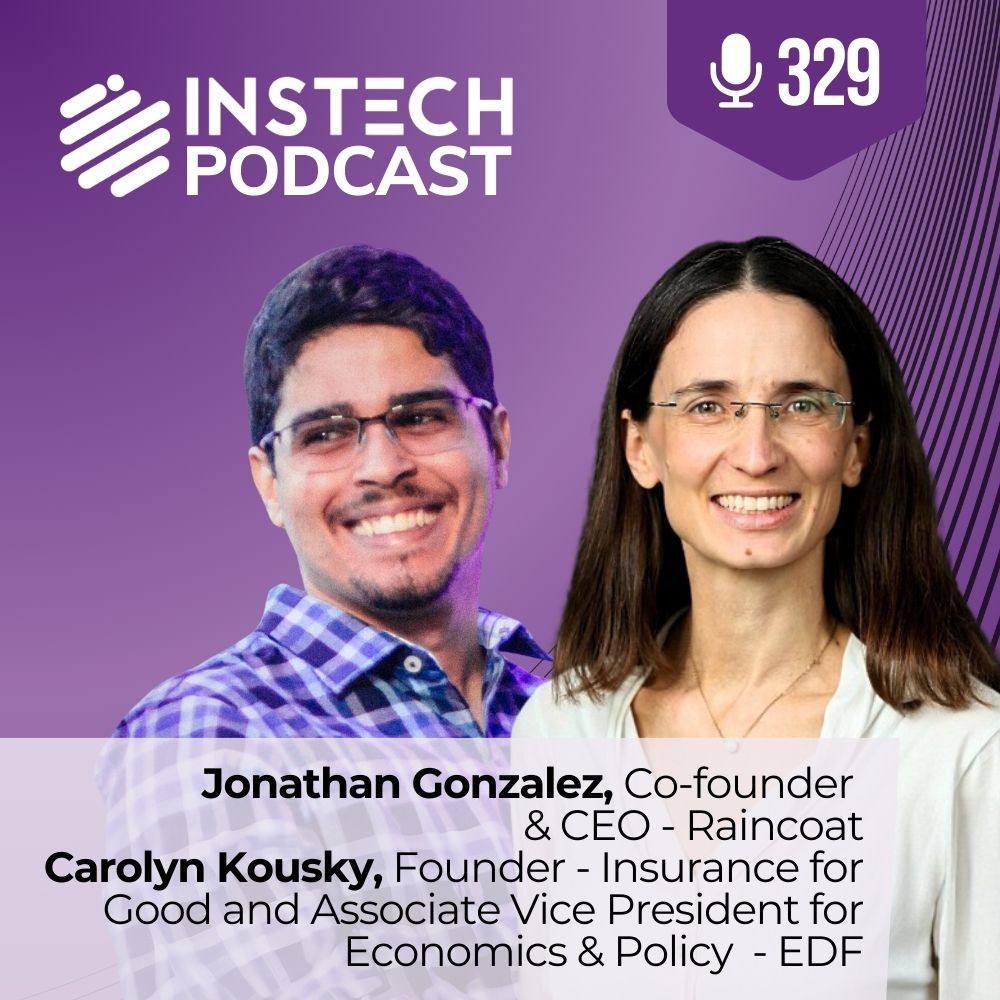
Jonathan Gonzalez, Raincoat & Carolyn Kousky, Insurance for Good & EDF: Insurance for Good (329)
Nov 17, 202400:27:28Tap to summarizeJonathan Gonzalez, CEO & Co-founder of Raincoat, takes the reins as guest host to explore one of the most pressing challenges in insurance: the disaster insurance gap. Jonathan speaks with Carolyn Kousky from the Environmental Defense Fund (EDF), about the rising economic losses from climate disasters and the need for more inclusive and innovative insurance solutions. Carolyn discusses her extensive research on climate risk management and disaster recovery, while also introducing her nonprofit initiative, ‘Insurance for Good’, which aims to bring together policymakers, insurers and community leaders to create practical solutions. Jonathan and Carolyn dive deep into how parametric insurance, policy innovation and collaboration can redefine resilience in a world of escalating climate risk. Key talking points: The scale of the disaster insurance gap: two-thirds of global disaster losses remain uninsured How parametric insurance tailors solutions to underserved communities and specific disaster needs Affordability challenges and public-private partnerships as key levers for change Using insurance innovation to cover non-property losses, such as lost income or higher living costs after disasters The role of ‘Insurance for Good’ in building a hub for education, innovation, and implementation Why regulatory frameworks need to adapt to new insurance models like parametric solutions Inspiring collaboration across sectors, from housing to climate adaptation, to enable sustainable resilience Carolyn’s optimism about how partnerships and innovation can address systemic climate challenges If you like what you’re hearing, please leave us a review on whichever platform you use or contact Matthew Grant on LinkedIn. Sign up to the InsTech newsletter for a fresh view on the world every Wednesday morning. Continuing Professional Development This InsTech Podcast Episode is accredited by the Chartered Insurance Institute (CII). By listening, you can claim up to 0.5 hours towards your CPD scheme. By the end of this podcast, you should be able to meet the following Learning Objectives: Explain the role of public-private partnerships in fostering innovative insurance solutions. Specify the advantages and limitations of parametric insurance in addressing non-property losses. List the key factors contributing to underinsurance in high-risk areas. If your organisation is a member of InsTech and you would like to receive a quarterly summary of the CPD hours you have earned, visit the Episode 329 page of the InsTech website or email cpd@instech.co to let us know you have listened to this podcast. To help us measure the impact of the learning, we would be grateful if you would take a minute to complete a quick feedback survey.
Transcribe →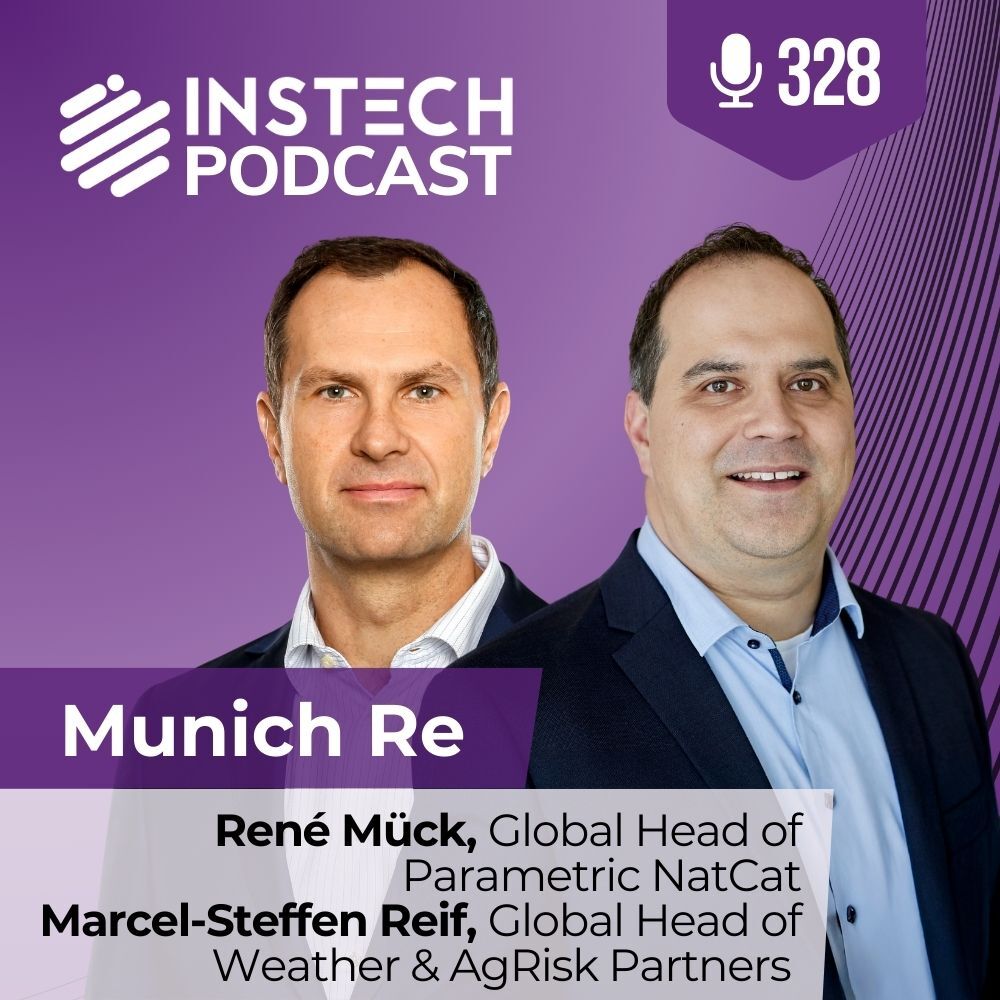
René Mück & Marcel-Steffen Reif: Munich Re: The rise of Parametric - from resilience to revenue smoothing (328)
Nov 10, 202400:22:23Tap to summarizeHow can parametric insurance transform risk management in an unpredictable world? Munich Re, a leader in reinsurance, is paving the way for innovative parametric solutions addressing weather-related and natural catastrophe risks. Robin Merttens is joined by René Mück, Global Head of Parametric NatCat, and Marcel-Steffen Reif, Global Head of Weather Agricultural Risks, to explore how Munich Re’s data-driven insurance products help corporates, public sector entities and industries navigate complex and evolving risks. A key focus of the conversation is understanding the growing demand for parametric insurance, its role in bridging protection gaps and how Munich Re is developing solutions for emerging risks like green energy and agriculture. Key talking points: What does the Capital Partners unit at Munich Re do? How parametric insurance addresses gaps in traditional coverage. Revenue smoothing for industries like renewable energy and agriculture. Client use cases – from supply chain disruptions to hurricane protection. Addressing basis risk in parametric insurance and how to manage it. Expanding applications for parametric solutions, including public sector resilience. Sensor technology and its potential to enhance parametric insurance accuracy. The importance of client education and engagement in driving adoption. If you like what you’re hearing, please leave us a review on whichever platform you use or contact Matthew Grant on LinkedIn. Sign up to the InsTech newsletter for a fresh view on the world every Wednesday morning. Continuing Professional Development This InsTech Podcast Episode is accredited by the Chartered Insurance Institute (CII). By listening, you can claim up to 0.5 hours towards your CPD scheme. By the end of this podcast, you should be able to meet the following Learning Objectives: Define the concept of basis risk in parametric insurance and its implications for claims. Summarise the role of client education in fostering adoption of parametric insurance. List the key industries benefiting from parametric solutions, including energy, agriculture and construction. If your organisation is a member of InsTech and you would like to receive a quarterly summary of the CPD hours you have earned, visit the Episode 328 page of the InsTech website or email cpd@instech.co to let us know you have listened to this podcast. To help us measure the impact of the learning, we would be grateful if you would take a minute to complete a quick feedback survey.
Transcribe →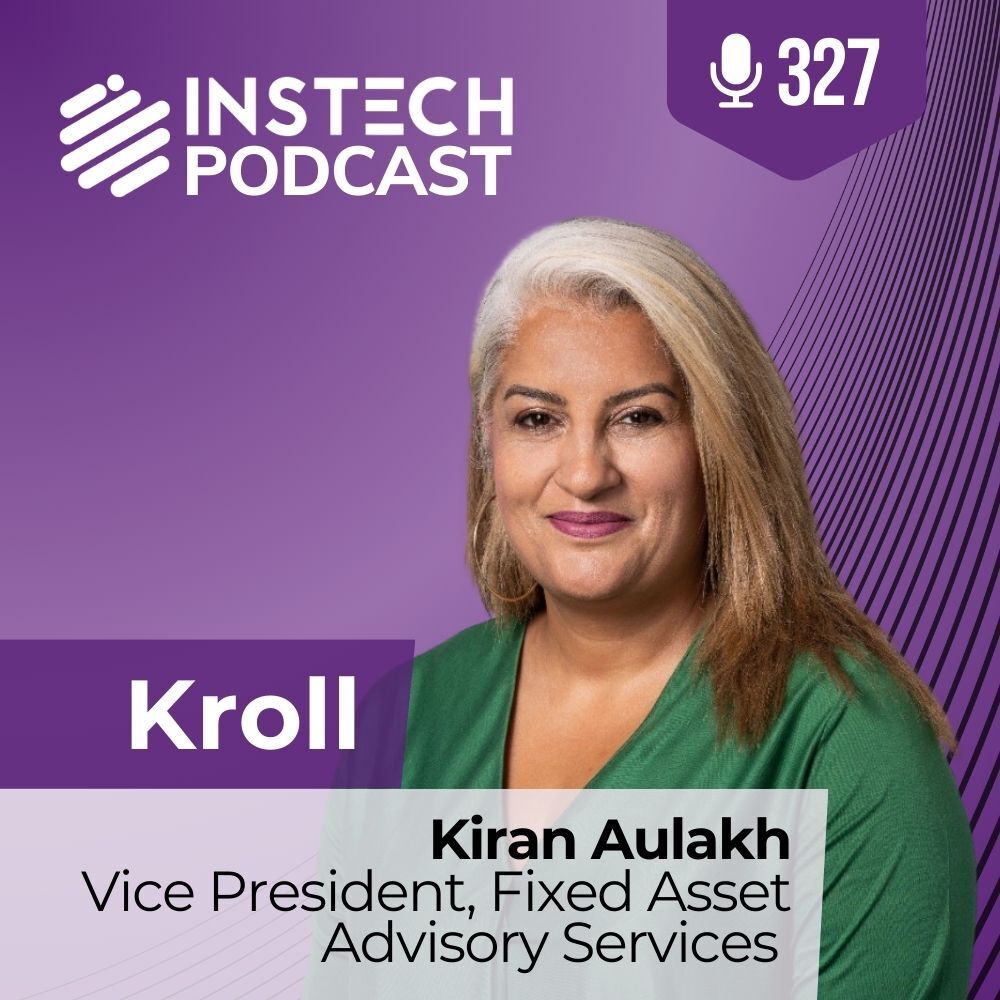
Kiran Aulakh, VP, Fixed Advisory Asset Services: Kroll: Property rebuild valuation - understanding underinsurance (327)
Nov 3, 202400:32:09Tap to summarizeHow can impartial valuations drive transparency and trust in insurance? Kroll’s platform provides property valuations through data-driven insights that benefit insurers, brokers and property owners alike. Matthew Grant sits down with Kiran Aulakh, Kroll's VP of Fixed Asset Advisory, to explore how Kroll’s platform combines technology and real-time data to assess underinsurance and overinsurance risks across vast property portfolios. Kiran shares her insights on the value of green valuations, and the importance of impartial assessments, which Kroll provides through both an API and a standalone platform for seamless integration into clients' ecosystems. Key talking points: The role of impartial valuations in improving insurer-client trust How Kroll’s platform combines technology with in-person expertise Reducing claims friction by accurately assessing property insurance needs Using valuation data to better negotiate policy terms for clients Kroll’s partnership with WTW and global insurers to streamline valuation assessments Real-time data updates and third-party integration for accurate market responses Green valuations and the impact of ESG on future property valuation trends Aulakh’s thoughts on data scalability and how it supports insurer-broker collaboration If you like what you’re hearing, please leave us a review on whichever platform you use or contact Kiran Aulakh or Matthew Grant on LinkedIn. Sign up to the InsTech newsletter for a fresh view on the world every Wednesday morning. Continuing Professional Development This InsTech Podcast Episode is accredited by the Chartered Insurance Institute (CII). By listening, you can claim up to 0.5 hours towards your CPD scheme. By the end of this podcast, you should be able to meet the following Learning Objectives: Describe the role of impartial valuations in managing underinsurance and overinsurance risks. Define the impact of valuation accuracy on insurance policy terms and claims outcomes. Measure the importance of transparent valuations in fostering stronger insurer-client relationships. If your organisation is a member of InsTech and you would like to receive a quarterly summary of the CPD hours you have earned, visit the Episode 327 page of the InsTech website or email cpd@instech.co to let us know you have listened to this podcast. To help us measure the impact of the learning, we would be grateful if you would take a minute to complete a quick feedback survey.
Transcribe →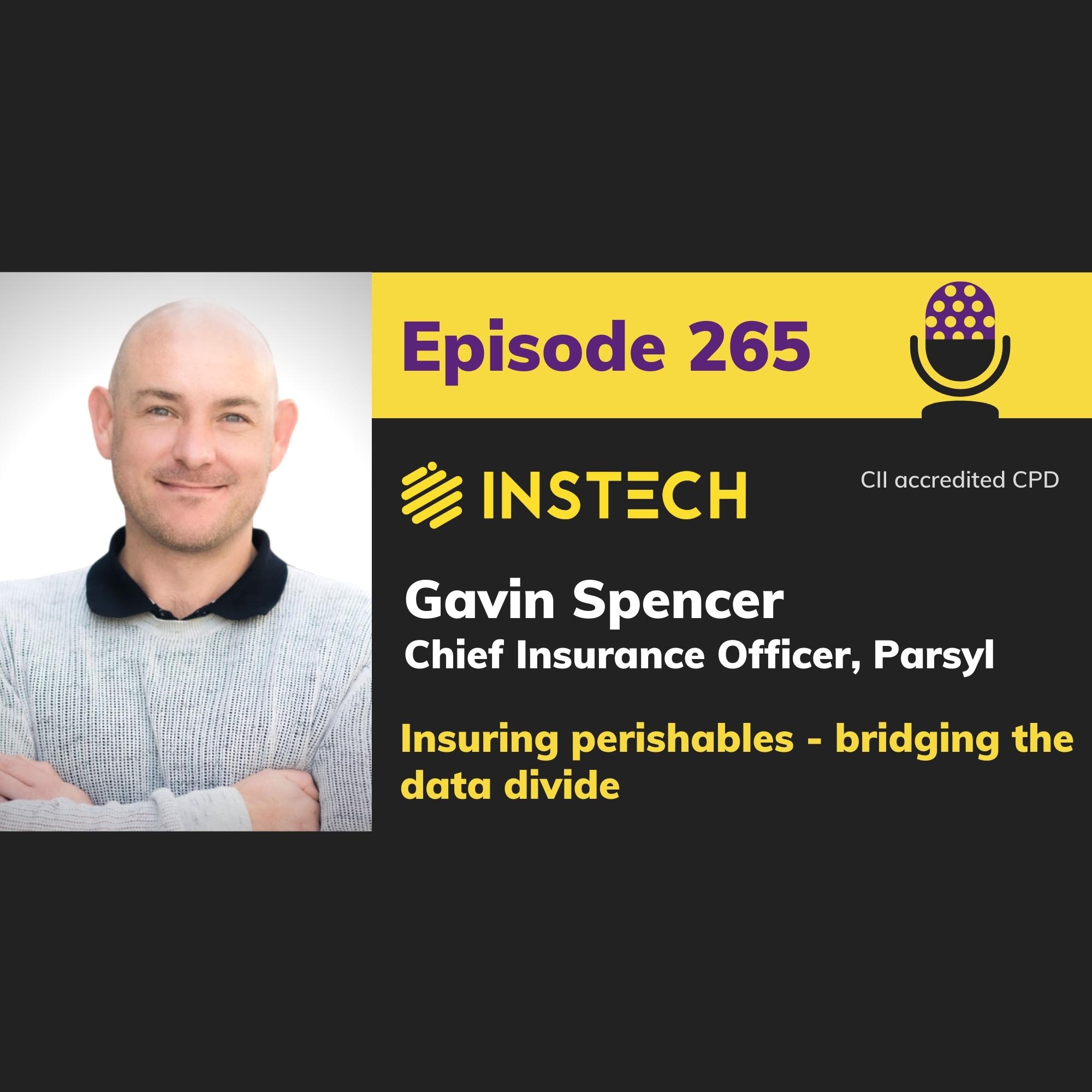
Gavin Spencer: Chief Insurance Officer, Parsyl: Insuring perishables - bridging the data divide (265)
Sep 24, 2023Summary readyParsyl is an integrated risk management and insurance solution for supply chains in food and health, which underwrites policies globally via its managing general underwriter in the US, its Lloyd’s cover holder and its Lloyd’s syndicate (Syndicate 1796). Robin Merttens is joined by Gavin Spencer, Chief Insurance Officer at Parsyl, to discuss how the company is able to establish its identity as a data-led insurtech and a Lloyd’s of London consortium. This episode touches on the importance of data in improving underwriting, growth and development of start-up businesses, as well as how traditional marketplaces can cooperate and collaborate with leaders of innovation. Talking points include: How Parsyl translates Math into English - the power of insights from data The low-hanging fruit model Lloyd’s, consortiums, syndicates and more Data Darwinism If you like what you're hearing, please leave us a review on whichever platform you use or contact Matthew Grant on LinkedIn. Sign up to the InsTech newsletter for a fresh view on the world every Wednesday morning. To find out more about InsTech, our membership and offerings visit www.instech.co or contact us hello@instech.co Continuing Professional Development - Learning Objectives InsTech is accredited by The Chartered Insurance Institute (CII). By listening to any InsTech podcast, you can claim up to 0.5 hours towards your CPD scheme. By the end of this podcast, you should be able to meet the following Learning Objectives: Explain the definition of a data-led insurtech Describe the role data plays in business growth Identify the key collaboration techniques to get the most out of your business model If your organisation is a member of InsTech and you would like to receive a quarterly summary of the CPD hours you have earned, visit the Episode 265 page of the InsTech website or email cpd@instech.co to let us know you have listened to this podcast. To help us measure the impact of the learning, we would be grateful if you would take a minute to complete a quick feedback survey.
Summary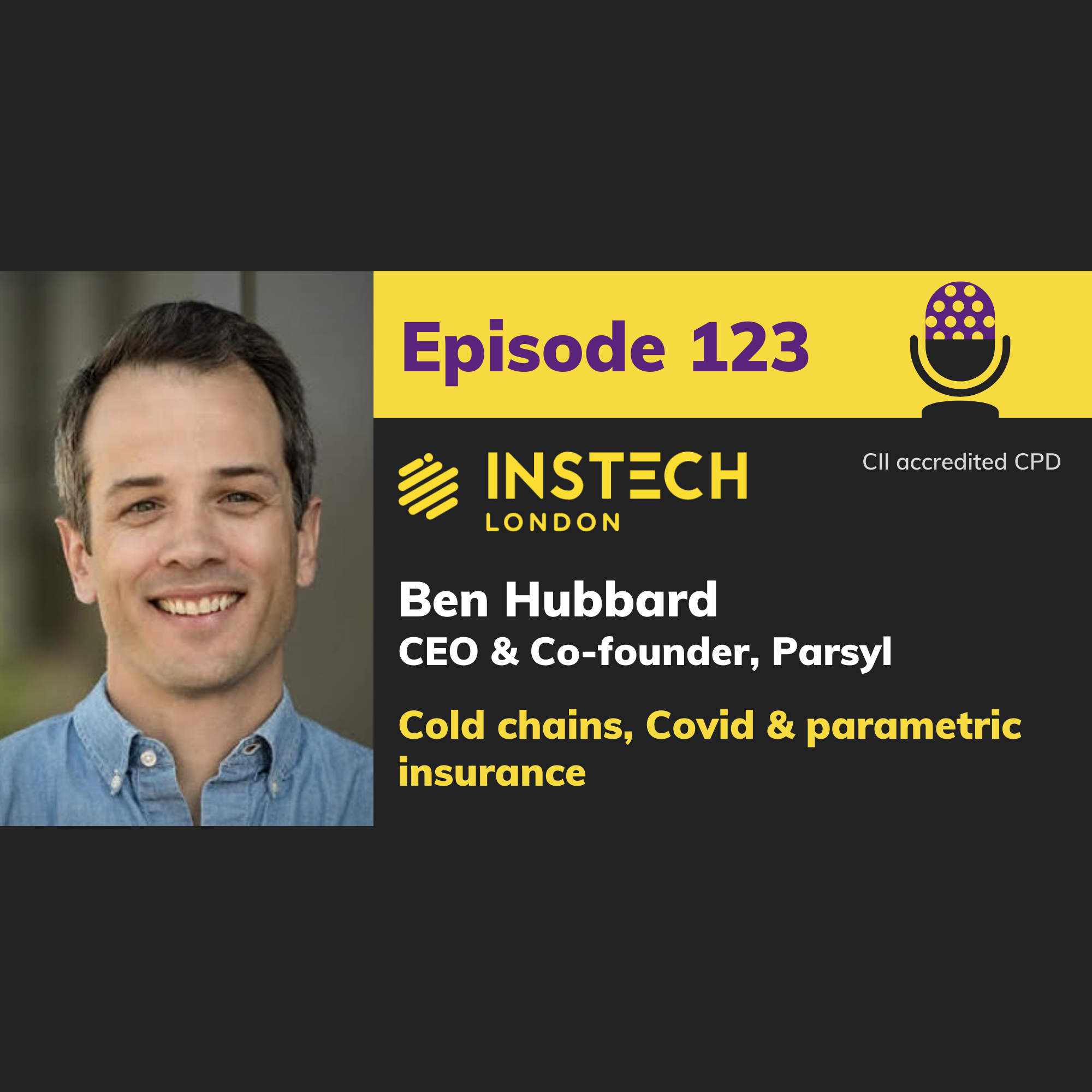
Ben Hubbard: CEO & Co-founder, Parsyl: Cold chains, Covid & parametric insurance (123)
Jan 31, 2021Tap to summarizeSince forming part of the first Lloyd’s Lab cohort in 2018, Parsyl has established itself as an innovative technology company, global cargo insurer and more recently, a vital part of the fight against Covid-19. CEO and Co-founder Ben Hubbard joins Matthew on Episode 123 to discuss the company’s rapid growth. Listen now for more on how Parsyl is using sensors to keep vaccines safe in transit, combining traditional and parametric insurance, and why companies no longer have to ‘ship and pray’. Talking points include: Using data and automation to improve cold chains Designing technology that users understand Working with government organisations MGAs and launching a Lloyd’s syndicate Scaling at speed and future plans You can read edited highlights of the conversation on the Episode 123 page of the InsTech London website. Sign up to our newsletter for a fresh view on the world every Wednesday morning. If you like what you're hearing, please leave us a review on whichever platform you use, or contact Matthew Grant on LinkedIn. Continuing Professional Development - Learning Objectives InsTech London is accredited by The Chartered Insurance Institute (CII). By listening to any InsTech London podcast or reading the accompanying transcript, you can claim up to 0.5 hours towards the CII member CPD scheme. To claim 0.5 hours for this podcast, go to the Episode 123 page of the InsTech London website, or email cpd@instech.london.
Transcribe →