← Jay'sAnalysis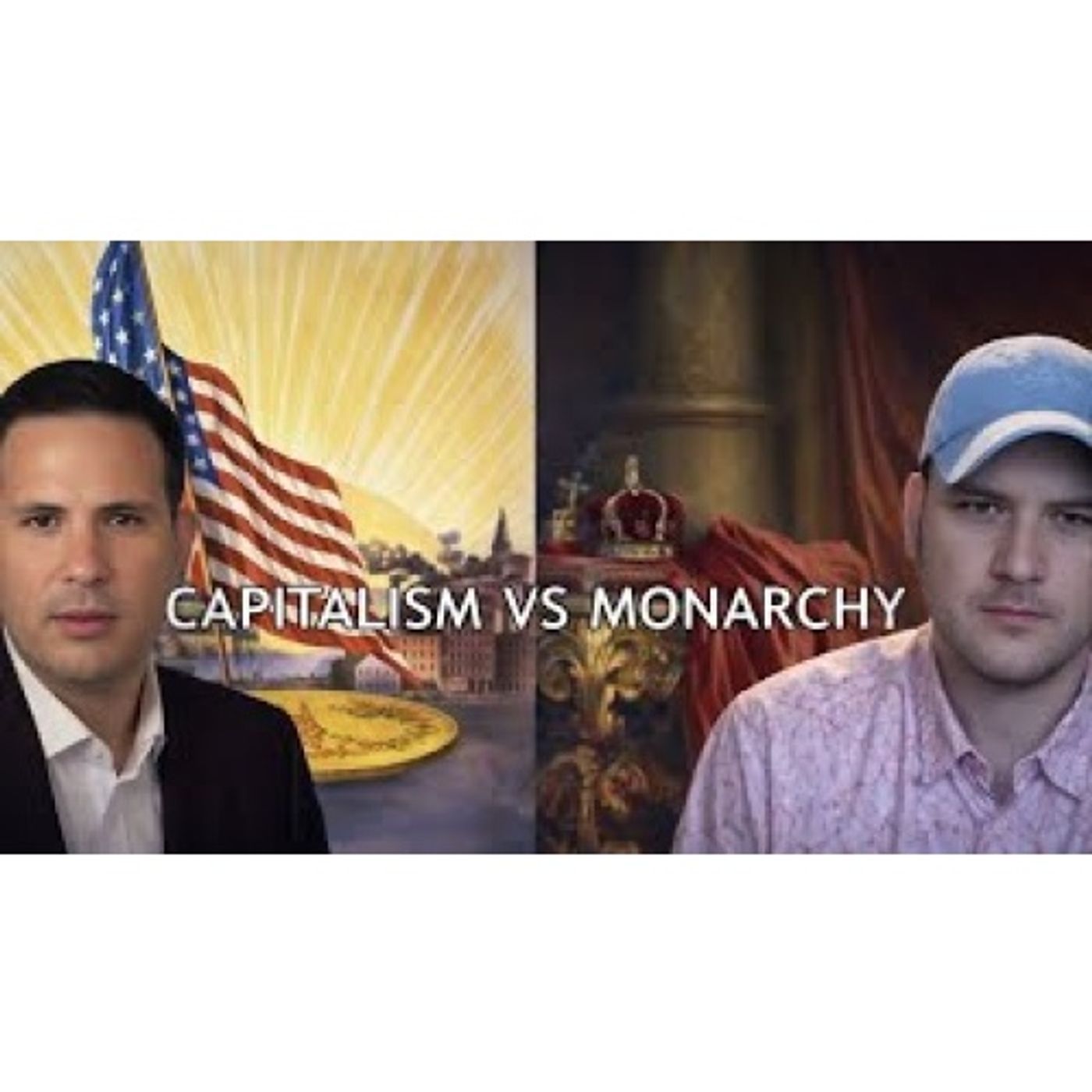
Jay'sAnalysis
Robert Taylor vs Jay Dyer Debate Capitalism vs Monarchy, Atheism vs Christianity, Orthodoxy
01:47:50
Send Superchats at any time here: https://streamlabs.com/jaydyer/tip Join this channel to get access to perks: https://www.youtube.com/channel/UCnt7Iy8GlmdPwy_Tzyx93bA/join Order New Book Available here:...
Loading summary
Transcript429 lines
- [00:01]
Host
Busted appliance. This is your sign to upgrade shop at Lowe's to get up to 35% off and next day delivery on hundreds of major appliances. Lowe's we help you Save. Valid through 318 while supplies last. Selection varies by location. Order by 4pm Available Monday through Saturday, subject to availability, fees, exclusions and restrictions apply. See Lowes.com appliancedelivery for more details. Visit your nearby Lowes on Colorado street in Kennewick.
- [00:32]
SpinQuest Advertiser
Forget everything you had planned for this weekend because you are sitting on your couch and winning from the comfort of your own home. I'm here with spinquest where you can play hundreds of slot games, all the table games you love, and you could even win real cash Prizes. New users. 30 coin packs are on sale for 10@Spinquest.com SpinQuest is a free to play
- [00:54]
SpinQuest Disclaimer
social casino void where prohibited. Visit spinquest.com for more details.
- [01:01]
Host
We got Jay Dyer, we got Robert Taylor, and they will be engaging in a debate that has a little bit of capitalism, has a little bit of communism, but a lot of Masonic influence, apparently. I want to introduce our guys first, and then we'll talk about how this debate came to be. Robert, how you doing?
- [01:24]
Jay Dyer
All well.
- [01:25]
Host
All right. So you have a YouTube channel, correct? Praxeology.
- [01:29]
Robert Taylor
I have a. I have a small YouTube channel. Yeah, you can find it under Prax Girl.
- [01:33]
Host
Okay, cool. And what's that about, really?
- [01:36]
Robert Taylor
We teach the science of human action. It's a science called Praxeology.
- [01:39]
Host
Awesome. And our man Jay Dyer. How you doing, Jay?
- [01:43]
Jay Dyer
Doing great.
- [01:43]
Host
How are you guys doing well, and most of you guys know Jay is the author of Esoteric Hollywood. I got it right here. Let's pull up the book real quick. This is one of my faves. I really enjoy Jay's book. Not only that, his girlfriend Jamie has an incredible series that I'm a huge fan of called Weird Stuff magazine. I love it. I got the third one at my place, but here are two of them. This is really, really interesting stuff. It's similar to esoteric Hollywood, all the cool stuff that you want to know. So let's get into it. How did this start? Jay favored a tweet that had a list of fake enemies. One of these fake enemies was communism. And now Robert sees this tweet that Jay favored it and he called him a communist, and Jay disagrees with that. Jay believes that communism sucks, but he really believes that there is a Masonic, and by that we mean freemason influence in both communism and capitalism. So, Jay, can you tell Us, who are the Freemasons? What are their goals and what role do they play influencing these economic systems?
- [02:56]
Jay Dyer
Yeah, Freemasonry is a secret society that comes out of the late Middle Ages that formed actually originally as Catholic Worker guilds. So it was actually a workers movement, ironically, but they had a very Catholic and theological bent over time. However, around the late 1400s, mid-1500s, it became a secret society that was focused on something more esoteric, so that they became what's called speculative Freemasons, and no longer just a guild of stonemason, stone cutters. So they did have a trade secret that they passed on, you know, stonemason cutting and so forth. But they also eventually became a tool for larger government structures to pass along secrets, to do espionage, to infiltrate other countries, and basically to spread ideologies. So over time, this became known as what we now think of as Freemasonry, as an international order supposedly dedicated to things like the betterment of society and the bettering of individuals morally. For a long time, of course, it was a strictly men's only movement, but eventually it became centered in London, so it became an extension of the British British Empire. I have books here sitting next to me that will detail the history of Freemasonry as a tool of the British Empire, not from a conspiracy vantage point, but from a strictly academic historian vantage point. So that secret society eventually became a tool for all kinds of different methods of espionage, as I said, and subterfuge. So I'm not saying that every single Freemason knows everything about this or that they have all the secrets or that they run everything in the world. Not saying that at all. I am saying, however, that especially after the French Revolution, they were successful as an organization globally in dethroning most monarchs in the world and installing democratic republics. And so one of my foci in grad school was the French Revolution. And my theory, which is not just my theory, but a lot of historians, is that the French Revolution was a merchant and banker revolution. And so essentially being fostered by the Freemasonic lodges there in France. You got two strands of masonry of revolutionary thought that come out of this. This is known as the Jacobins and the Girondins. The Jacobins are the more radical, the more French Grand Orient Lodge, Italian Grand Orient Lodge, the Pitou Lodge, more radical. This is why the French Jacobins were illuminists explicitly and total communists. This is why they murdered millions of people with the guillotine, the Committee of Public Safety, tens of thousands of people. They ransacked the Churches tried to basically destroy the country under straight up communism. So they actually held the literal Adam Weishaupt illuminous doctrine. In the US it became a different flavor of revolutionary thought. It was revolutionary capitalism. Revolutionary capitalism had other forebears in England, in Europe, David Ricardo, Hume, Paine, a lot of the Enlightenment thinkers, laissez faire, John Locke, eventually Jefferson. Jefferson borrows a lot from Locke. And that right wing revolutionary tradition in ways is more healthy obviously than the outright just women wearing beards and raising giant dildos in the middle of the city square and burning all the churches down and cutting everybody's heads off in a giant blood orbit. So revolutionary capitalism, a little more restrained at least, believes in things like private property, rights to self defense. Generally speaking, these kinds of things follow along with capitalism. But what is interesting and what I disagree with, and I'll be done here in a second, is firstly that it is itself automatically true as a system or a thought that I'm sure that's what Robert's going to argue, that it's the philosophically absolute way of studying human interaction with praxeology. Not only do I reject that, I reject the whole foundations upon which modern capitalism is built, namely materialism and all of the Enlightenment values. Except for, you know, a couple things like obviously we shouldn't be superstitious, obviously I have a high view of reason and sciences, but the rest of the Enlightenment and its attendant revolutionary thought I absolutely reject 100%. So I'm not here to defend Communism. I'm here to defend pre modern forms of organic and traditional ways of living. Now that doesn't comport well with modernity. Granted. And that's because we live in a globalist society, a globalism which has been fostered by global capitalism. So when I look at the Cold War, when I look at Communism, I do see an enemy. But I see an enemy that Professor Anthony Sutton and Professor Carol Quigley pointed out was fostered by the banking and corporate elites of the West. I see a faux enemy put into power by Western power, banking and money power, to create a Cold War dialectic, as Zbigniew Brzezinski himself said. So I see that as a managed dialectic. I don't believe that there were no bad Communists, that there are no evil dictators or tyrants. No, as an Orthodox Christian obviously I believe there were tens of millions, 60 million at least Orthodox Christians murdered in Russia by the Bolsheviks. However, the Bolsheviks were put in power by powerful Western bankers and the banking elite and the corporate elite of the West. Pretty Consistently throughout the Soviet regime after the Bolsheviks and even into Stalin, they aided in the building up of that regime. Now, why would all these capitalists be supporting all of these Communists and Marxists? And this is a question that kind of puzzles a lot of people. But when you read Quigley, when you read the Big Geostrategist, the meta, meta level of these things, when you read Professor Anthony Sutton, it's not a mystery. When you read David Rockefeller's own memoirs, we know why he went to China and set up the first bank in communist China, Chase Bank. It wasn't because he was a committed capitalist. It's because he loved the idea of Marxism concentrating and centralizing wealth so that he, as a monopoly capitalist, could come in, hoard it. It's a scam. And it's the same thing that happened in Mao's China. So when David Rockefeller writes in 1973, the New York Times editorial from a China traveler, and he says Mao is the ideal for government, he is himself admitting this very principle that I'm talking about, as well as Yale magazine's archives that I've posted on Twitter, the ancient. They are not ancient. You know, back at the time of Mao coming to power, Yale is who supported Mao. The Skull and Bone Society out of Yale is who put Mao into power. And we have the CIA even declassifying that. It was Bill Donovan himself, the founder of the OSS with British intelligence, who trained all of Mao's guerrillas. Now, why would that be? Is it just to fight the fascists? No, it's because communism and socialism most of the time serve a very specific goal for certain power elites, usually the most wealthy foundations, think tanks and families on the planet. And the way that I link that to Freemasonry is that there's no disputing, it's not a conspiracy theory that in the last 300 years of Western civilization, Freemasonry has functioned as a revolutionary force. And it doesn't matter whether it's the right wing revolutionaries of Franklin or Jefferson or any of these characters who want private property and Franklin wants to all these grandmas, right, that's what he was into. Or whether it's Adam Weishaupt and Giuseppe Mazzini and the Grand Orient revolutionaries who want to make everybody into social justice warrior trannies. These are just two arms of the same bird. So I'm all for talking about the stupidity of American dialectical politics. I just take it way back, further than American 20th century GOP Democrat crap. It goes all the way back to the French Revolution and earlier and this is my concluding point on this, is that the chiefest, the strongest argument for this point is that it's all ultimately based around usury. Usury is the most destructive force in wrecking societies because as Dante himself noticed a long time ago, I'm not saying this makes Dante, that this makes it true, but he noticed that anytime you had the users coming into power and running things from the background, your society turned into a giant Sodom and Gomorrah. So he links sodomy and usury because it creates a rapacious parasitical class. And of course usury always goes along with so called capitalism. So I reject all of these forms post 1600. I think they're all bad news because they're all based on materialism, atheism, relativism, eventually Darwinism, social Darwinism, Malthusianism, all of those fit perfectly with capitalism. And what is bringing in the global homo capitalist order? Capitalism. What is spreading trannies to the whole globe? Is it Moscow and Putin? No, it's the Fortune 100 and the giant international banks. They're the ones that are forcing this on the entire globe. So you want to fight the New World Order? You want to be opposed to the New World Order? I do. The New World Order is Walmart, it is JPMorgan Chase, it is the Fortune 100.
- [12:48]
LifeLock Advertiser
Are you a fraud paying American? It's a fact that one in four honest, hard working tax paying Americans has been a victim of identity theft with Lifelock Identity Theft Protection. Though if your identity is stolen, they fix it guaranteed and get you your money back. Last year the IRS flagged over $16 billion in refunds for identity fraud. That's billions of dollars that could come from your salary, overtime or second job. But this year you don't need to stay a victim. LifeLock monitors millions of data points per second for your personal information and alerts you to threats you could easily miss on your own. And if your information does fall into the wrong hands, only LifeLock has US based restoration specialists who are backed by the million dollar protection package. Because this tax season fraud paying American is something no American should have to claim. Visit lifelock.com SL iHeart and save up to 40% your first year. That's 40% off@lifelock.com iHeart terms apply.
- [13:47]
Robert Taylor
What's up baby?
- [13:48]
Jay Dyer
It's Bretzky and I'm here to tell
- [13:51]
Robert Taylor
you that spinquest.com is giving out free sweeps coins. All you got to do is purchase a ten dollar coin pack and guess what? They're going to give you the coins from a $30 coin pack that lets you play all your favorite games like Black Jack, Wanted Dead or Wild. And we're talking real cash prizes, baby.
- [14:09]
SpinQuest Disclaimer
Spin Quest.com Spin Quest is a free to play social casino void where prohibited. Visit spinquest.com for more details.
- [14:17]
Host
Yeah, I think you brought up some really great points. The one thing I remember after I read the Communist Manifesto, Marx goes through that whole thing without mentioning bankers. Right? He goes through the whole thing and I think to myself, man, communism is a banker's dream.
- [14:33]
Jay Dyer
It is.
- [14:33]
Host
They have everything in complete control. And I think that is really the end game. Now to.
- [14:38]
Co-host/Commentator
It's a fascinating opening salvo from Dyer.
- [14:41]
Host
Yeah, that was outstanding. That was awesome. Now Robert, we got to give Robert a chance to speak here because Robert here is, is here to defend capitalism and critique Jay on his critiques of capitalism.
- [14:55]
Co-host/Commentator
Jay goes way back and yeah, that's a problem for a lot of people nowadays. It's a very tough argument to try to get across to people in everyday life. So the advantage now as I see it, is in the hands of the capitalists, the Austrian economics people, the libertarians. They have a much easier case talking to the people than somebody like Dyer.
- [15:15]
Robert Taylor
But that's.
- [15:16]
Host
He's esoteric.
- [15:17]
Co-host/Commentator
Yeah, yeah, I mean, he's our guy.
- [15:19]
Host
Just so we, let's give Robert a chance to defend capitalism. Robert, what do you have to say to what Jay just laid before us all?
- [15:27]
Robert Taylor
Well, you know, it was an interesting history lesson and a lot of things that Jay said I actually haven't read. It's actually pretty interesting, Jay. So I'm just gonna assume that everything that you say factually is true. What, what I disagree with is your interpretation of the facts. And we've had this, we've had our personal messages before and I asked you whether you believe that theory precedes history, so you answered yes, I think that. Do you agree with that that theory precedes history,
- [16:04]
Jay Dyer
if I understand the sense that you mean it.
- [16:08]
Robert Taylor
So you need, you need a framework to interpret facts in order to be able to make an assertion. Okay, so the things that you're talking about, I generally like to say that Walmart and the bankers are part of the new world order and that they're part of the thing that's making this world an ugly place. 100% agree with, but that's not the fault of capitalism. And the reason that the way that we're going to come to agree with this is that what we need to understand is that capital, what capital is that is the thing that capitalism is all about. So can we agree that anything that destroys capital does not constitute capitalism?
- [16:57]
Host
Jay,
- [17:03]
Jay Dyer
Anything that destroys a communism is not capitalism. I guess within the system of capitalism, that would be true.
- [17:10]
Robert Taylor
A capitalist would not be in favor of destroying capital. That what he wants to do is, as Mark said, accumulate. Accumulate. Right, Yep. Okay, so in that sense, the individuals that you're talking about, when you try to smear capitalism, what you're really saying. What you're really saying is that these are people who destroy capital. And so in that sense, you're attacking the wrong dog here.
- [17:37]
Jay Dyer
Okay, right. But what I don't believe is that monopoly capitalism is somehow a deformed version of capitalism. I don't buy that argument. I'm familiar with it. I used to make that argument that. No, no, no, that's not true. Free market, when you become the monopoly capitalist. Actually, there's no reason to believe that it's not.
- [17:59]
Robert Taylor
Well, so let's run through a thought experiment. Are monopolies possible? Can they occur within capitalism? My argument is no. Now, why do I say that it's impossible for monopoly to exist in capitalism? Because a capitalist is incapable of calculating economically when there is no market and when there's no money. So if there's no medium of exchange created by the market, the capitalist cannot calculate where he should delegate his resources. This is the problem that all communist states fall into. So, like for example, in Russia
- [18:41]
Jay Dyer
when
- [18:42]
Robert Taylor
the Soviet Union collapsed, there were all these houses that were missing roofs. And the reason they were missing roofs was because they had not properly allocated steel to create certain types of nails, and so they couldn't put the roofs on these buildings. So the same problem that states come into communist states is the same problem that a large corporation, a firm, let's call it, would fall into if they were to grow too large, they would effectively start to lose the ability to calculate economically. Monopolies are not possible in capitalism. So you must be talking about something else.
- [19:20]
Jay Dyer
Well, I mean, every historian and economist that I'm familiar with talks about different phases or stages of capitalism. And I'm talking about people who are capitalists. So, for example, there's finance capital, there's monopoly capital, there's cartel capitalism. So these distinctions that we make are to a certain degree arbitrary depending upon who you talk to. So really, I guess it depends on what you mean by capitalism, because for some people, it just means the attainment of profit, the attainment of capital, the rights of private property. So depending on how narrow or how wide we want to define the terms really the essence of it. And what I'm critiquing is classical liberalism and the tradition of the Enlightenment that we are atomized individuals and that what I want to do is to focus my life and its attention on the economic sphere because the studying of the economic sphere is really the solution to all of man's ills and it's the essence of life is homo economicus, as Spengler said. And I'm saying I reject all that. So, so I don't really care whether you think that there's a different term for somebody like David Rockefeller. I mean David Rockefeller in his biography is a preeminent example of most people would say a capitalist. I mean he studied under von Hayek, he did his thesis under von Hayek. He thought that the Austrian school was absolutely amazing because it's the key to how you become a monopoly capitalist. He wrote his. I'm not saying that this proves my position, I'm just saying he's an example. You want a hard on the, on the ground example of somebody who, who operated this way.
- [20:57]
Co-host/Commentator
So yeah, so let's try to reconcile this. Let's try to get the common understanding of capitalism so we can continue forward.
- [21:04]
Robert Taylor
Robert, does anyone, does anyone want to pull the definition that Marx gave? Because I'm pretty sure he understood pretty well what capital is, what capital was
- [21:14]
Jay Dyer
in his most capitalists don't think Marx understood it well. So I don't, I mean you expect me to know that you think Marx had the correct definition? I mean, by the way, I mean this Marx did you know that Marx does not oppose capitalism.
- [21:30]
Robert Taylor
Just because Marx said certain things about capitalism doesn't mean that he understood what capitalism is.
- [21:36]
Jay Dyer
Right. You just said he had the right definition of it, of capital.
- [21:39]
Robert Taylor
Yes, capital is accumulated time.
- [21:44]
Jay Dyer
Okay.
- [21:45]
Co-host/Commentator
That'd be a materialistic way of defining it.
- [21:49]
Host
Yeah. Here's a question I want to bring up because Jay mentioned this a little bit earlier. This is a question for both of you and we'll start with Robert and then we'll go to Jay. Where are we now? Are we in a stage of late stage capitalism? Do we have true capitalism? How would you describe our current economic reality? Let's start with Robert and then we'll go to Jay.
- [22:07]
Robert Taylor
I think it would be hard to disagree with the statement that we live in the freest time that all humanity has ever experienced. There's the standard of living has only increased since the anti capitalist mentality arose in the early 1800s.
- [22:27]
Host
NJ
- [22:29]
Jay Dyer
well, this depends on what we perceive to be our standards of freedom and what it is to live a good life. I mean, if it's having a bunch of debt and if it's living in a model home in a suburb that was designed by social engineers and eating GMOs and all this stuff, I mean, it really depends on our paradigm, how we judge whether these things are pro or con. Certainly the system of capitalism, the forms of it that have come and gone the last few hundred years, have produced a lot of wealth. And the irony is that Marx knew that, and Marx himself said that that's what would bring the international order. Most of the Marxists after Marx finally came to that realization, especially the Frankfurt School, I did my grad work under a dude from the Frankfurt School, so I'm not talking out of my ass, I know what I'm talking about. And they did not see capitalism as an enemy. They finally came to realize that it's the kind of thing that ultimately brings the international order. H.G. wells, famous Marxist, talks about this in his book Open Conspiracy. And in the New World Order he says that, you dumb fellow Marxists, it's only the engine of capitalism that will create the global market that will then bring the international order. So every time I read the big social planners that I think sit above the systems of communism, Marxism, fascism and socialism, I'm talking about the Welles's, the Huxleys, the Jacques Atelier, a big globo homo capitalist who writes books about what global capitalism is going to do when it brings the international order. I see them all saying what I'm saying. So I don't think they're committed to any of these systems. I think they see the systems as tools to getting to the same end goal. I agree with that.
- [24:09]
Co-host/Commentator
So the commonality between both systems is the international aspect of it?
- [24:13]
Jay Dyer
Absolutely. That's why there was the Third Way movement, which was the idea of Alvin Toffler and a bunch of the Atlanticists and Tony Blair's government and the Clintons, they adopted this idea of the Third Way, which was cooked up by the CFR to blend Soviet style communism with Western style capitalism. And that synthesis they thought would be the best way to moving into the global order.
- [24:38]
Co-host/Commentator
That's funny. On a side note, Kurdistan is actually talked of as the Third Way in Syria right now. Just an interesting common phrase.
- [24:45]
Host
And here's one question I wanted to ask Jay. I remember you had a tweet or something that you said something along the lines of butchering this. But cultural Marxism and cultural capitalism are essentially equivalent. And can you Explain that a little bit and then Robert will give you a chance to respond.
- [25:02]
Jay Dyer
Yeah, so when I was doing my work on the Frankfurt School and when I was reading all these guys like Habermas and Luke Hasch and Horkheimer and Adorno and you start to realize that they came to the conclusion that it's not so much the system of capitalism and all this stuff that's the problem, it's the, it's a cultural critique and a cultural revolution that would be more, more effective than trying to institute a workers revolution. So Marx, most of the Marxists eventually became convinced that Marx was wrong. And you have two schools of Marxism. You have the Eastern bloc Marxists and you have the Western Frankfurt School Marxists. And so it's actually the OSS and Bill Donovan that brought the Eastern bloc Frankfurt School and Frankfurt School Marxists over to the US during the Cold War period to help set up what would be the cultural revolution in the us this was funded by the Rockefellers and Macy Foundation. Bertrand Russell was involved in this and they decided on a way to socially engineer the culture and they gave up on the idea of the economic proletariat revolution. So this is a well known development in the history of Marxism. There's only a very few hardcore classic orthodox Marxists left in the world, not very many. So what it became was cultural Marxism. And when I look at what cultural Marxism did and what it talked about and the ways that it talked about promoting degeneracy, promoting homosexuality, promoting sodomy, necrophilia, all the things that the Frankfurt School guys talk about, I see that as being pushed now by the Fortune 100 and the International bankers. So for me it's a no brainer that those two things are exactly the same.
- [26:45]
Host
Okay, and Robert, do you have any comment on that or no?
- [26:48]
Robert Taylor
Well, you know, it seems quite evident to me that the more accumulated time you have, the more capital you have, the more prosperous you are, the easier it is to make a decision between money and any end that you want to do, like walk your dog or spend time painting things. If you're spending all your time fishing and trying to feed yourself, you don't have a lot of time to decide between work and leisure. And so one of the unfortunate things I think, that comes about with accumulated wealth is that you get to see what people's true desires are. And I don't think that that's something to blame capitalism for. You should. If Jay thinks that the church is going to be the right way to lead people into thinking in a Different way, in a more aesthetically pleasing way or in a more moral way. That challenge is up to him. And capitalism, I think is the greatest mechanism to get him to achieve his goals. I think he's completely unfounded in trying to attack the system, which is a very simple concept that works on voluntary exchange between individuals as the thing that sparks the ugliness which is inside humans. The ugliness was already there. It's just that with a lot of money they can actually express it. But don't attack the system. The system working just fine.
- [28:22]
Co-host/Commentator
From the individual perspective, how do you see the international perspective of what the commonalities between socialism and capitalism, how they're both working towards internationalism.
- [28:35]
Host
I guess the question really becomes how do you truly have an economically capitalist society without foreign interference? Is that possible? You wouldn't want it because you want as much. You know what I mean? The intersection here is between globalism and a capitalist society because you know international forces are going to come into play in. In your capital you might have a.
- [28:56]
Robert Taylor
For you might have a foreign firm that has some sort of effect over an American market, Something like that. Why is that inherently a bad thing?
- [29:04]
Host
I don't think it's a bad thing at all. But is there any way to prevent foreign interference In a capitalist society?
- [29:09]
Co-host/Commentator
The motives of.
- [29:10]
Jay Dyer
Sure.
- [29:10]
Robert Taylor
People just have to decide not to buy the products.
- [29:13]
Jay Dyer
Absolutely.
- [29:14]
Robert Taylor
And that's not what they want. What they want is the products.
- [29:17]
Host
Right. So here's my follow up question to you. In a capitalist society, would capital essentially equal more freedom? There's a correlation between money and freedom. They say money doesn't buy happiness, but I mean, if you got more money, you got way more freedom. That's for sure. You know what I mean?
- [29:31]
Co-host/Commentator
Well, ask Jay that.
- [29:32]
Host
Well, I want to ask him first. What do you think about that?
- [29:35]
Robert Taylor
Happiness is defined by whatever you choose amongst against different things you could do at the same time. That's what happiness is. So what money allows is it allows you to satisfy more desires in a smaller amount of time. That's what capital is. And so does money or capitalism create more happiness? I think that the question is not properly positioned. You're happy if you own a farm. In 1800, you had a good crop, you're happy, you're happy because that is the limitations of the desires that you can execute. So I have a lot of desires. I don't think there's a logical way of saying that someone has a finite amount of desires. Capitalism creates happiness only in the sense that you can satisfy the Most amount of desires that you can come up with faster with more money.
- [30:40]
Host
Okay, cool. And Jay, because Jay, you are not a capitalist. That is correct. You are more into the monarchy as you said of the prior to the 1600s.
- [30:48]
SpinQuest Advertiser
You know what? It sucks to be bored. But when I get on my phone and play real casino games on spinquest.com the time flies by. That two hour wait at the DMV seems like 10 minutes. Play your favorite slots live, Blackjack live with a live dealer. New players, $30 coin packs are on sale for 10 bucks. Play spinquest.com and you'll never be bored again.
- [31:12]
SpinQuest Disclaimer
Spinquest is a free to play social casino void where prohibited. Visit spinquest.com for more details.
- [31:18]
SpinQuest Advertiser
Welcome to your Peloton Pilates era. Built on precision, backed by results and trusted by over 2 million members. Experienced instructors with true Pilates expertise, offering
- [31:28]
Robert Taylor
classes for every level from foundational to powerfully challenging.
- [31:32]
SpinQuest Advertiser
Choose from 10 to 45 minute sessions with little to no equipment, anytime, anywhere. And with the cross training swivel screen, you can move seamlessly from cardio to mat press. Pilates. Small moves, big impact. Find out more@1peloton.com Pilates yeah, I would
- [31:49]
Jay Dyer
say I'm a traditionalist.
- [31:50]
Host
Yeah, okay, cool. So in that sense you don't. How do you feel capitalism plays a role to freedom of the individual? Or do you think that's irrelevant? You'd rather not live in a society like that. You'd rather live in a moral society, perhaps with the church and things like that?
- [32:07]
Jay Dyer
Yeah, well, that's one thing Robert's not very, very up on is is his history of Western civilization itself and by extension Christendom. So actually when the Roman Empire was Christianized, eventually it forbade usury. For the first thousand years of Christianity, there was the forbidding of usury precisely because they understood that it would lead to the degeneration of society. And I think that it did. In fact, the systems that Robert's talking about and the ideas that what we shoot for in life is happiness, this leads to the fucking Happy Meal, which is not even a real meal. Can you imagine our medieval ancestors or people who fought in battles in times past making the pinnacle of their life happiness? No, I think this should actually sound so good. I think this should be mocked because they weren't concerned with happiness. They were concerned with things like virtue, honor, duty. And you get this in a society that's more holistic, more organic, more traditional, that's not focused on the attainment of capital. Now, I don't believe that it's wrong to attain capital. I don't believe that it's wrong to be wealthy. I mean, most of these things are talked about in a biblical perspective and there's wisdom given on these principles from a biblical perspective, especially things like being just in your dealings with money and so forth. Wealth is obviously a gift from God. I don't have any problem with that. But the problem is that when capitalism comes to the fore as a system, it makes the attainment of hedonistic goals the primacy and it gets things out of whack. Right? So it's just like in my own personal life, I should have my spiritual life, for example, ahead of just the attainment of stacking paper, stacking cash. Well, if I stack cash, I'm stacking fiat dollars anyway, which is another scam of the bankers and the internationalists. So if I'm stacking gold coins, if I'm getting my grill and shit right, that is not the telos of man. That's not. Man's end goal is to not. Is not just to be happy. So I would have to disagree. I'm running down what he was saying. I'd have to disagree with the happiness principle as man's highest goal. I would have to disagree. Huh?
- [34:15]
Robert Taylor
I didn't say that happiness. I did. That's not what I said about that.
- [34:19]
Jay Dyer
Capitalism is all about being, making you happier in your happiness.
- [34:22]
Robert Taylor
No, I said that capitalism, capitalism is the best, best system that exists to, for people to express what makes them happy.
- [34:30]
Jay Dyer
Okay, but we already.
- [34:30]
Robert Taylor
You don't agree with. You don't agree. You don't like, you don't like the fact that people like Happy Meals. Right.
- [34:37]
Jay Dyer
Well, the irony of this, what I
- [34:38]
Robert Taylor
was going to say, Donald doesn't hold guns.
- [34:40]
Jay Dyer
The irony of what I was going to say, actually they do because they work with the government and they're involved in social engineering. And so what every libertarian and capitalist doesn't seem to be able to figure out is the idea of culture being toxic and socially engineered toxic culture. So this is promoted by groups like Monsanto, groups like Big Pharma. Right. They will, they will culturally and socially engineer. For example, the recent billionaire family that got that is in a law. What are they called? I forgot their name. But the family that was getting Everybody Addicted on OxyContin and now they're being
- [35:15]
Host
sued Sadler or some shit I've heard
- [35:17]
Jay Dyer
of, this is an example of that kind of a thing where you have a big monopoly cartel in the pharmaceutical industry that's able to lobby government And I know that you don't think that's real capitalism.
- [35:29]
Robert Taylor
Yeah, that's not capitalism at all.
- [35:31]
Jay Dyer
But, but why should I not do that if I'm a so called capitalist? If it's all, it's based on a materialistic system, there's no reason why I shouldn't work with government. This is what I was when I used to read Ayn Rand. I started thinking, I started thinking, why should I not buy off government and shut everybody else down so that I can run this shit? Why shouldn't I? There's no moral to stop me from doing that.
- [35:51]
Robert Taylor
You say, well, yeah, you just, you just wouldn't be a capitalist anymore, right? You wouldn't be a capitalist anymore.
- [35:56]
Jay Dyer
Do you know what the Rockefeller said?
- [35:59]
Robert Taylor
You'd be destroying people's ability to accumulate time.
- [36:02]
Jay Dyer
Do you think they give a shit about competition? No.
- [36:04]
Host
Competition is a sin is what they said, right? Famous Rockefeller quote. Competition is a sin.
- [36:11]
Jay Dyer
So I know they're not true capitalists, right? So nobody. Here's another irony of capitalism is that it's just like Marxism. It always repeats this mantra that we've never had actual true Marxism, which has never been tried. Every time we try it, every time we try Marxism, the capitalists come and shut us down and screw us up. The CIA screws us up. This exact same thing that all the libertarians say. We've never really had a free market because the damn commies and the socialists come and fuck it all up. It's the exact same bullshit from both people.
- [36:36]
Robert Taylor
So Robert, I mean, I don't think, I don't, I don't agree with that at all. I mean, I think that there's anarchic behavior every single day. I mean, nobody's forcing us to be on this, on this chat right now. Nevertheless, here we are. So we're, we're working through a free system. And if we profit from that, then
- [36:56]
Jay Dyer
if you think this is a free system, making capital. Right. I mean, we have certain freedoms. But you really believe that this is a free system?
- [37:05]
Host
I don't know. We're on Google. Google is owned by a specific group that also owns YouTube. Nobody cut out. What is he talking about?
- [37:13]
Co-host/Commentator
It might have been on his end.
- [37:15]
Robert Taylor
No, cut out. My Internet's a little, a little shoddy.
- [37:19]
Host
All right, Anyway, so here's one question I want to ask Robert. You keep on saying this is not true capitalism, that's not capitalism. What is your definition of true capitalism? And where in the United States are we sort of running into almost a corporatism where it's sort of this merger of conglomerate.
- [37:36]
Robert Taylor
Here's the thing about capital is that capital is really a state of mind. A tool can be a good for consumption if you treat it that way, or it can be a tool of capital if you treat it that way. So it really is intentional, it's really based on intention. What is and is not a piece of capital. So for example, I mean literally a happy meal can be something that I consume, or it can be an object that I use to feed some birds so I can catch them, so I can do other things. And then it becomes a piece of capital. Whenever people are unilaterally forced to do something that they wouldn't otherwise not do, this is a form of capital destruction, not a form of capital consumption or capital creation. So anything that is forced by definition cannot be part of the capitalist system. That doesn't mean that capitalism doesn't happen. It happens every single day. People that buy and trade goods, regardless of whatever the government says or whatever these Fortune 500 companies say, they're engaging in true capitalism. So I'm not in agreement with Jay
- [38:53]
Jay Dyer
that
- [38:56]
Robert Taylor
capitalists act like Marxists. I'm sure that people make that argument. But as a person who I feel particularly capable of defending capitalism, I'm going to tell you right now, it just doesn't make any sense. Anything that forces other people unilaterally to do something against their will or through or where they're regulated. So let's say to like, let's say Jay and I want to trade and
- [39:22]
Jay Dyer
you're smarter than this. You know that private entities will, will use the media and they will use advertising, they'll use education to socially engineer people. And it's not a truly free system. You're not truly making these kinds of decisions when your whole culture, for example, is being say, fed with toxic, degenerate sexual stuff. If you have, if your children are all being sexualized by a system that promotes this stuff from the top down, that's not just, that's not the market operating. That's, that's a total top down tyranny because you don't have any say. So when you can't go to your HR department and say, hey, I don't like the tranny shit everywhere.
- [40:03]
Robert Taylor
Hey Jay, if you can't control your kids, that's your problem, dude. I'm sorry, like, if you don't know how to properly, I can't do anything for you, man.
- [40:11]
Jay Dyer
Yeah, no, you don't believe that you, that you have a duty to anyone else so you think that you. That, that. Like that. You're excused from that. But I'm saying that if you live in a society where that is promoted from the top down and you, for example, let your children live in that society, that's on you.
- [40:29]
Robert Taylor
It's on. It's on me that I let my children live in that society. What should I do not have children?
- [40:33]
Jay Dyer
No, you shouldn't. You should keep them from that kind of degeneracy. That's 100%.
- [40:39]
Robert Taylor
I agree with you 100%.
- [40:41]
Jay Dyer
What's the problem? You don't think private entities lobby to have that stuff legalized and have that stuff promoted?
- [40:46]
Robert Taylor
Yes, and I'm saying that that's not capitalism when they're lobbying to get the government, the largest holder of a gun in society, to do their bidding. That's not capitalism by definition. So how would you describe culture?
- [40:59]
Co-host/Commentator
How would you describe what Jay's talking about, pop culture? How is that. Is that part of capitalism?
- [41:04]
Jay Dyer
Is Lady Gaga and Marilyn Manson? Is that. Is that. Is that. Is that the market working or is that freaking social engineering to wreck people and screw them up?
- [41:14]
Robert Taylor
Well, yes. I mean, I think that there's a little bit of capitalism going on after the culture has been influenced by a process where the government usually. Like the CIA, like you talk about, they plunder taxes from the population.
- [41:29]
Jay Dyer
Right?
- [41:30]
Robert Taylor
Something that you're in favor with as a monarchist. They plunder taxes from the population and then they enact their agenda. Now that's not capitalism. In capitalism, you're not allowed to do that because then you're destroying capital.
- [41:45]
Jay Dyer
Yeah, but that's not actually how our system works because there's actually a public private merger and there's the rotating door system where people will go from private companies like Monsanto and Searle, then they'll go to the fda, like Rumsfeld, and they'll go back to their private company and they'll. They'll have the alt. The laws altered to just make everything degenerate and disgusting and nasty. Legal. That's what they do. That's how the system.
- [42:08]
Robert Taylor
Yeah, that's. That's democracy, bro. I'm not in favor of democracy either. In fact, I prefer monarchy.
- [42:13]
Jay Dyer
There's no reason not to do that. As a capitalist, there's nothing restraining. There's no actual reason why I shouldn't do that. Why shouldn't I have a monopoly? Right?
- [42:23]
Robert Taylor
I thought we went over this. The monopoly is not possible in capitalism.
- [42:27]
Jay Dyer
You're just redefining the word capitalism and saying that. Well, now Dave Rockefeller is not a capitalist because he has a monopoly on. I mean, again, why.
- [42:37]
Robert Taylor
Where does the word monopoly come from? Monarch rights. Monopoly. Mono. No, monopoly. There were these monopoly rights issued at the time when the monarchs existed where they would issue this thing where they would say, only this person can produce this good. Yeah, that's where the word monopoly comes from.
- [42:57]
Jay Dyer
It was part of the guild system. Right. And so part of the reason that they did that was to protect their country from outside labor forces. Right. So that's what. That's why tariffs exist, is because you don't want cheap labor coming in and destroying your people. This is why Marx is why Marx was for free trade, because he said it would fuck everybody's country up.
- [43:20]
Robert Taylor
And I'm in favor. I'm in favor of what the monarchs did on the individual level. So I'm in favor of everybody being their own king.
- [43:28]
Jay Dyer
I thought you didn't receive dummy.
- [43:31]
Robert Taylor
I just said monarchs.
- [43:32]
Jay Dyer
This is the plan of capitalists, global capitalists. They love this cheap labor dude. And what do you think cheap labor does is it destroys the existing cultures. You bring these people in to destroy the people groups. And because you don't believe that there's people groups, you just see atomized individuals. You don't see why that's a problem. But you. You don't believe that you're part of a people group because you live in the megalopolis that is itself social engineering. That tells you that the only the highest level of logic is something like the New York Stock Exchange or whatever.
- [44:03]
Robert Taylor
No, Jay, I have 35 employees. They have families. I am responsible for a lot of people and their livelihood, man. So, you know, I don't see you doing the same thing when you're constantly making videos out of your basement or whatever that is. I don't know what you're talking about. I absolutely care about the livelihood and the culture.
- [44:23]
Jay Dyer
You should have a good Internet connection there.
- [44:29]
Co-host/Commentator
We're even now.
- [44:30]
Host
I love it. Something I want to add real quick because Jay talks about this a lot in his book and also his girlfriend's book is that we mentioned Lady Gaga earlier, right? Is that capitalism? Is it social engineering? What most people don't know and what Jay talks about in his books and also his girlfriend is that there's connectivity between government Alphabet agencies and entertainers. For example, Marilyn Monroe was Department of Defense agent. Am I right about that, Jay? If I remember it from the book
- [44:59]
Jay Dyer
correctly, she had a DOD clearance.
- [45:01]
Robert Taylor
Yeah.
- [45:01]
Host
So that's what a lot of people don't know. So that's why that was such an interesting question. Is Lady Gaga capitalism at face value might be like, yeah, that's pure capitalism. But it's not because there's sort of a connectivity between a lot of these big time entertainers, especially the pop stars, which is in this book quite a bit the pop stars more so than anybody else. Jay, can you speak on that a little bit with that Lady Gaga example
- [45:29]
Jay Dyer
studied to the nth degree? It's a situation where, like you said, there's really no difference between public and private at the highest levels of control. So we can talk about this abstracted theory of there being a real separation between public sector and the private sector. And to a degree there is, depending upon what level you're talking about. But when you get up to that higher level, when you're talking about the Kissingers and the Brzezinskis and the Rockefellers and the Rothschilds and when you're talking about Soros is a great example. For example, he's a huge promoter of capitalism in other countries, right? So when he's fostering the revolution in the Ukraine, now that the revolution has happened, there's like a giant gay arch now, the Russian Friendship arch has just now been painted gay. Because they're free. They're free now. And that's why the Open Society and the Open Society Institute is nothing but a way to promote sodomy in other countries, to destroy them. So I just see that the pop stars are the exact same type of thing. They're weapons. They're weapons that you put into other countries. Another great example that I don't think Robert would agree with is porn stars or porn. This was studied in Desert Storm and they introduced porn into Iraq as a psyop to change that culture, to change the way that they lived in from a more traditional way into the modern way of abortion and infanticide and euthanasia. I just.
- [46:59]
Robert Taylor
Why are we, why are we constantly talking about what governments do when we're talking, when the argument is about capitalism,
- [47:04]
Jay Dyer
Whether our government is not a public sector thing that's run, that's run by the public sector, it's run by private entities. Oh man.
- [47:13]
Robert Taylor
So, so what you're saying, so what you're saying is just because something, Just because someone has an L, bro. If so, right? So, so if something has an LLC and is, is registered as a private organization, it's automatically private.
- [47:29]
Jay Dyer
I'm just talking, I'm talking about, I'm talking about Bayer, Monsanto, Raytheon, Boeing, JPMorgan
- [47:35]
Robert Taylor
Chase, all your, all you're saying, right, there is firms that might as well be the government. Exactly so. But that's not what I'm defending. Why would I defend that? I completely agree.
- [47:48]
Jay Dyer
You is that there's no logical reason why what you're defending doesn't lead to that. That's my whole point.
- [47:55]
SpinQuest Advertiser
I'm here with spinquest, where you can play and win from the comfort of your own home with hundreds of slot games and all of the table games you love with real cash prizes. Right now, 30 coin packs are on sale for $10. For new users, it's all@spinquest.com that's S-P-I-N
- [48:15]
SpinQuest Disclaimer
Q U E-T.com Spinquest is a free to play social casino void where prohibited. Visit spendquest.com for more details.
- [48:25]
Jay Dyer
If you work in university maintenance, Grainger considers you an MVP because your playbook ensures your arena is always ready for tip off. And Grainger is your trusted partner, offering the products you need all in one place, from H vac and plumbing supplies to lighting and more. And all delivered with plenty of time left on the clock. So your team always gets the win. Call 1-800-GRAINGER visit grainger.com or just stop by Grainger for the ones who get it done.
- [48:56]
Robert Taylor
And okay, so go ahead and explain how is it that would. I agree with voluntary exchange? How does that lead to what you're talking about?
- [49:03]
Jay Dyer
Because in the logic of the system of capitalism, if I'm David Rockefeller or if I'm Ayn Rand, or if I'm Alan Greenspan hanging out with Ayn Rand, there's nothing that stops me morally or logically from just saying, why don't I buy off government to shut down all my competition? It's only if I'm committed to the actual belief in the system of competition promoting things. And oh, this is going to make things advance. We're going to have advanced technology because of all the competition. I don't give a shit about that. I want to clamp down everybody and institute a system of control. And again, what fits so well with this system is radical social Darwinism. I mean, Jim Cramer, let's take Jim Cramer, for example, he says on interviews, I fucking love social Darwinism. I want to crush everybody. I want to win. Everybody else is a fucking loser, right? He goes nuts doing this stuff, very honest about it being total social Darwinism. And I'm saying that is completely, completely destructive to society.
- [50:01]
Robert Taylor
And all I'm saying is that, okay, well, there you just said something that is more morally reprehensible. Aesthetically unpleasing, but nevertheless, who gives a shit about that?
- [50:13]
Jay Dyer
Why not be morally reprehensible? Why not crush everybody?
- [50:15]
Robert Taylor
Well, the beauty about the beauty of the market is that you get to choose what you consume. You don't. You don't have to consume CNBC and watch Jim Cramer.
- [50:24]
Jay Dyer
That's not how the real world works, though.
- [50:25]
Co-host/Commentator
Yeah, this is the Lady Gaga point
- [50:27]
Jay Dyer
that some were kind of forced into everybody's faces. You, you're. It's like a dog. And you, the government and the corporate entities, but they shove your face into.
- [50:37]
Co-host/Commentator
Love it so much.
- [50:38]
Jay Dyer
The pedo and the homo and the Lady Gaga and you get that from, from womb to tomb. It's not a free system where you, where you can choose not to do that.
- [50:48]
Robert Taylor
I agree with that, Jay. Like I, I don't understand where we're disagreeing here. I keep telling you, system where you
- [50:53]
Jay Dyer
don't have to choose cnbc and, and
- [50:56]
Robert Taylor
yeah, to the extent that you have the freedom to choose what channel you turn to, you don't have to watch cnbc. That's correct. Plenty of people in this country that are not watching CNBC and have no fucking idea what's going on. They don't know that North Korea just denuclearized or whatever. They don't, they don't know any of these things and they have the freedom to do that kind of thing. And that's what I'm in support of. That's exactly the type of super naive
- [51:18]
Jay Dyer
way of viewing how the world really works. The world does not really work on the basis of everybody can just shut off the TV and then my family is free from a bunch of degeneracy. That's not how it works. This degeneracy will be forced into your face and it is being forced into your.
- [51:34]
Robert Taylor
And to the extent that it is forced in your face, I'm not in favor of that.
- [51:37]
SpinQuest Advertiser
Are you?
- [51:38]
Jay Dyer
Of course not.
- [51:39]
Robert Taylor
Okay, so what would happen under a monarchy?
- [51:42]
Jay Dyer
Well, again, we have examples in history of societies that I believe were more healthy and more organic, that function in that way. Because, for example, rather than everybody being at odds with one another and trying to destroy one another in a social Darwinian Jim Cramer sense, there is a common idea, a common purpose, a common goal that society has. When society loses those common goals and it becomes things like the pursuit of hedonistic pleasure, the pursuit of just pure capital, when it becomes a pursuit of greed, when it becomes usury, all of these things end up wrecking society. And we have plenty of Civilizations to look at that have. That have wrecked from that stuff.
- [52:23]
Robert Taylor
Do you agree that that's okay?
- [52:26]
Host
Yeah, yeah. I got a question for you real quick, Robert. We mentioned, Uzuri, we mentioned the fact that the Federal Reserve was established in 1913. My question to you is, is it possible to have a free market capitalist society without usury? You know, we all know the Bible story where Christ kicks out the money changers, one of my favorites. Is it possible to have a, you know, a capitalist society without usury? What do you think about that, Robert? And then we'll get to J.
- [52:54]
Robert Taylor
If by usury you mean loaning money at interest. Yeah, it's, it's. It would only be possible if people didn't prefer things sooner rather than later. Mm.
- [53:05]
Host
Okay, so, JAY Logically, because.
- [53:08]
Robert Taylor
Well, let me explain that. Let me explain that. Because if something is treated the same, okay, if someone in the mind considers two things to be the same and you were to offer one thing a year from now, and one thing now, it would be more valuable now, that's where interest comes from. And so people don't see, in this case, let's say it's a money loan. People don't see $100 today equal value as $100 a year from now. But before there was money, people still, people still had. People still sold time. That's what we're talking about here. Do you agree with that, Jay?
- [53:51]
Jay Dyer
Yeah, I mean, I'm not here to disagree with the idea of barter systems or symbolic representational forms in gold or paper notes. I don't have a problem with any of that. That's not what we're talking about. We're talking about my critique is what has developed this monstrosity that has developed out of the Enlightenment based on all of these materialistic principles. And I see them kind of coming to their own logical conclusions. And the irony is that the system ultimately becomes completely anti human. It does, I think, ultimately eat itself like an Ouroboros. And so transhumanism is really the logical result of capitalism and Darwinian social theory, the idea of actually just being anti human, going against what it is to be human. And then, But I don't know how
- [54:37]
Robert Taylor
transhumanism, what transhumanism has to do with usury or interest, because it's the end
- [54:42]
Jay Dyer
goal of the logic of this system.
- [54:47]
Robert Taylor
So people want, people want things sooner rather than later.
- [54:51]
Jay Dyer
People are just humanism. People are just interchangeable economic units. And so there's no logical reason why they should. Even in the la, in the final analysis be dealt with or used. Ultimately people should be replaced by machines because that's much more efficient. If you look into Taylorism and the idea of Taylorism and Ford's studies and radical notions of efficiency, this is why the whole society becomes Monsanto conveyor belt and every humans just become creations of conveyor belts. And this is what actually Aldous Huxley makes the argument in Brave New World. The whole purpose of the system all along, all the revolutions. Top, top global planner here he says that capitalism and Marxism and socialism all have the same end goal. And that was the point of Brave New World. That's why he names the characters Marx and Ford.
- [55:46]
Robert Taylor
I don't know what that has to do with interest, but the point is that, yes, interest is a natural occurrence. And people trade goods in such a manner in which interest is just a thing that's tacked on when you take two goods that are the same and one is traded later in time.
- [56:07]
Jay Dyer
Okay, so you know what this discussion is like back to school. And Rodney Dangerfield, who's become wealthy as a kind of con man huckster, is there with the economic professor. And the economic professor is riding on the chalkboard and he's got all these abstract theories. Ronnie Dangerfield is like, he hasn't talked about buying off the cops yet, right? So Ronnie Dangerfield as the guy on the street knows how economics really works. I know that you have a business, you know how it really works. But I'm saying at that higher level, nobody's interested in systems. Nobody's interested in being faithful to this kind of stuff. They're interested in large scale usury and actually the international banking scam of fiat currency.
- [56:49]
Robert Taylor
So, so let me, so let me slightly change the conversation here while staying on what you're talking about here and say that one of the things that is becoming very abundantly clear here is that you're not aware of what's happening on the ground level. Grassroots of how these sorts of systems that you and I both don't like, how they're actually, there's a system of capitalism that's flourishing and it's flourishing very quickly. And you seem to have absolutely no, no idea that it's, that it's occurring at all. I'll use like a good example here, Bitcoin. There's a, there's a market.
- [57:30]
Jay Dyer
What are you talking about?
- [57:32]
Robert Taylor
Right, but you don't buy it. You don't, you don't work in like a bitcoin market. So you don't actually know how much money is being traded with bitcoin on a daily basis, or else you'd know that there are systems that are actively working to destroy exactly the things that you and I both dislike, because I don't think that aesthetically or morally, we disagree at all. Like, all the things that I find reprehensible, you find reprehensible. And all the things that I think are ugly, you find ugly. So the thing is that capitalism is only growing. And part of the thing that all these systems that you're talking about, it all comes down to kind of like jurisdiction. Where do they get their power, and how can they enact their power? All these systems can enact their power on the physical world, but with the rise of cryptography and other technologies, they're losing their ability to enact power. And so these kind of things that
- [58:31]
Jay Dyer
bother you a lot of the narrative that bitcoin is going to destroy the banks and governments. I know this narrative, Robert.
- [58:38]
Robert Taylor
Yeah, so. But I'm not. I'm not. It's not a. It's not a narrative like something is going to happen in the future. It's happening now. Like, it's happening right now. A lot of big billions of dollars. There are billions of dollars being moved in bitcoin and other cryptocurrencies on a daily basis that are working to undermine those nasty elements that. That leach off of society. And so. And they're working in a capitalistic fashion. And so, you know, you seem to think that I'm, like, in favor of
- [59:11]
Jay Dyer
this Peter Thiel, a capitalist. I mean, he's a huge proponent of transhumanism and gay rights. So is Peter Thiel an example of this?
- [59:19]
Robert Taylor
Or. I mean, we can take all these people, and anytime that you can pull out a fact that says, look, this person, this person's doing this nasty thing, then I'm gonna have to say to you, well, that then that person is not a true capitalist. Like, I don't want to sound like a Marxist and say, oh, look, true capitalism has never been practiced. The thing is that true capitalism is either practiced or it's not practiced. It's happening every day. It's happening more and more, and you just have to tune in and find out what's actually going on.
- [59:56]
Host
Here's a good question. I got a good example for both of us.
- [59:59]
Jay Dyer
Conversion process. And have eyes to see the divine providential hand of the invisible market working. It's there. Trust me, it's there. But Robert, Robert. Robert has no problem having faith in that coming capitalist system.
- [60:12]
Robert Taylor
But it's not faith, dude. I see it every day.
- [60:15]
Jay Dyer
It doesn't believe in God.
- [60:16]
Host
Well, here's a good question. Here's a really good example. We'll wrap this up in the next couple questions. This debate here.
- [60:22]
SpinQuest Advertiser
Forget whatever plans you have this weekend because you're staying at home and playing on Spin Quest. And there's never been a better time to sign up than right now. New users get $30 coin packs for just $10. All the table games you love, with hundreds of slot games and real cash Prizes. That's at spinquest.com S P-I-N Q U-T.com
- [60:44]
SpinQuest Disclaimer
Spinquest is a free to play social casino void where prohibited. Visit spinquest.com for more details.
- [60:53]
Robert Taylor
The sun shining, birds are singing, and
- [60:55]
Host
all feels right in the world until the season. And suddenly you lose your motivation to get out of bed. In fact, one in five people experience some form of depression no matter the season or time of year.
- [61:07]
Jay Dyer
At the American Psychiatric association foundation, our
- [61:11]
Host
vision is to build a mentally healthy
- [61:13]
Jay Dyer
nation for all, because we want you
- [61:15]
Host
to live your best life and be
- [61:16]
Robert Taylor
your best you all year round.
- [61:18]
Host
Please visit mentallyhealthynation.org to learn more. Elon Musk makes shit tons of money off government subsidies. Essentially calls himself a socialist today on Twitter as a control.
- [61:32]
Robert Taylor
Yeah, I thought he was against socialism. I. I must have misread those tweets.
- [61:36]
Host
No. What do you say? Let's pull it up. Hold on, I'll pull it up right now.
- [61:38]
Jay Dyer
I think you.
- [61:39]
Robert Taylor
I think he misread that. I think that he was actually. He was actually mocking socialists.
- [61:44]
Host
Oh, yeah, he said they were. It was a good troll by him. He says they have no sense of humor, blah, blah, blah. But, like, what's your take on him making. Is that capitalism when you make a ton of money off government subsidies is what I'm really trying to ask here.
- [61:59]
Robert Taylor
No, absolutely not. And I think that he'd be better off rejecting all those freebies because I don't think they help him in the long run.
- [62:09]
Co-host/Commentator
Interesting.
- [62:09]
Robert Taylor
I mean, at the. At the end. At the end of the day,
- [62:15]
Jay Dyer
the.
- [62:16]
Robert Taylor
The capitalist system can only flourish if people really abide by this concept of voluntary exchange. Okay.
- [62:25]
Jay Dyer
Why should people abide by these principles?
- [62:29]
Robert Taylor
Well, I mean, I think you would say that if they don't, they go. They go to hell. Right?
- [62:34]
Jay Dyer
I'm asking you, in your system, why anyone should do anything. Sure.
- [62:38]
Robert Taylor
Well, if you don't. If you don't inject the religious aspect, the reason that they should abide by these principles is because when they put their ends and they align them with their means and they see the line of logic, they'll see that their means are counterproductive to their ends. Yeah, you might get some help from the government, and that might help you for a little time, but because fundamentally the government is based off of violence, there's nothing to stop you from being exploited in the future by the very people that you're interacting with.
- [63:11]
Host
Right. Like, just to clarify, this is what Elon Musk said. He said, by the way, I am actually a socialist, just not the kind that shifts resources from most productive to least productive, pretending to do good while actually causing harm. True, socialism seeks greatest good for all. So that was Elon Musk saying that he is in fact a socialist. I was right initially, yeah.
- [63:31]
Robert Taylor
But he's using socialism in the, in the classical sense, the way that economists used to use in the 1700s.
- [63:37]
Host
Jay, what's your comment on this? Because I think Elon Musk might be watching right now. I was tweeting at him a few times, so he's probably watching America's number one Chad Cast.
- [63:44]
Co-host/Commentator
What's up, Elon?
- [63:45]
Host
Yeah, what do you think about that when he says something like that? Because that's more in the J territory than the Robert territory. The. I'm not a capitalist. What do you think about Elon Musk's recent comments, Jay?
- [63:57]
Jay Dyer
Yeah, I don't really have much to say. I mean, I, I'm, I'm familiar with him. I don't follow him regularly. He seems to be a kind of suspicious character in terms of what he promotes, because I see him promoting a lot of the same transhumanist type stuff in a very subtle, cloaked way. So I'm suspicious of the guy, but I see him like a Bill Gates. I don't really see these people as, or like Sam Walton, if you're familiar with the history of Sam Walton. Sam Walton was raised to that position by dealings with the Rockefellers out of Arkansas and the Rothschilds setting up the system in China to basically propel Walmart to the position that it's in and destroying a whole host of family businesses and small communities. I know that's just the market working, but it's the market working according to the logic of a system where I don't give a shit about anybody else but me. And that's why Sam Walton was put into that position through deals made by big people like the Rockefellers and Rothschilds with China. That's the real story of Walmart, not the story of I raised myself up by my bootstraps and worked hard. And some people can do that, but I think at the level of a Bill Gates, the level of that Sam Walton. No, that requires this big scale backdoor smoke room dealing that is completely amoral. And that's how the real world works. It doesn't work on these principles of I'm gonna follow the principles of rational exchange and justice and not let government interfere. No, no, that's not how it works. The way it works is you get to a certain level, you know, you're Hillary Clinton and you have everybody else, that's your competition, shut the fuck down. And I see that as good. That's completely capitalism. Why not?
- [65:39]
Robert Taylor
Yeah, so, I mean, so in this case, like there, you know, Jay doesn't really want to abide by any, like, hard definitions. So that's why he's always going to get away with trying to say that these things are synonymous because he won't, like, cut a hard definition on what the difference between, you know, socialism or capitalism is. And so, you know, I just want to tell you, Jay, that there's this whole economy that's.
- [66:11]
Jay Dyer
I mean, I gave you a whole history of the differences between those things, right?
- [66:16]
Robert Taylor
There's this whole economy that is in a battle, in a clandestine battle against these forces that you're talking about that I'm against myself. And every single day they're inching more and more forward into achieving the goal.
- [66:34]
Jay Dyer
I mean, again, we're going to be ruled by who, Joby Weeks? And we're going to be ruled by some bitcoin billionaires. And that's going to be a better system than Hillary. Okay, maybe, but that's. That doesn't convince me that capital.
- [66:46]
Robert Taylor
That's not what I'm saying. I'm saying that there's a. There's a system that's coming and you seem to be oblivious to this, where these people, even the bitcoin billionaires, will be unable to enact force onto other people.
- [67:00]
Jay Dyer
You're a completely naive dupe if you believe that.
- [67:03]
SpinQuest Advertiser
You know what? It sucks to be bored. But when I get on my phone and play real casino games on spinquest.com, the time flies by. That two hour wait at the DMV seems like 10 minutes. Play your favorites to spots. Live blackjack, live craps with a live dealer. New players. 30 coin packs are on sale for 10 bucks. Play spinquest.com and you'll never be bored again.
- [67:27]
SpinQuest Disclaimer
Spin Quest is a free to play social casino void where prohibited visit spinquest.com for more details.
- [67:34]
Robert Taylor
The sun shining, birds are singing, and all feels right in the world until
- [67:39]
Host
the season changes and suddenly you lose your motivation to get out of bed. In fact, one in five people experience some form of depression, no matter the season or time of year.
- [67:49]
Jay Dyer
At the American Psychiatric association foundation, our vision is to build a mentally healthy nation for all.
- [67:55]
Host
Because we want you to live your best life and be your best you all year round. Please visit mentallyhealthynation.org to learn more.
- [68:03]
Jay Dyer
You're completely naive.
- [68:04]
Host
Dupe.
- [68:05]
Jay Dyer
I'm fully aware of the. I've watched all the.
- [68:08]
Robert Taylor
I'm living it, bro.
- [68:09]
Jay Dyer
I've watched all the bitcoin people, all of their. I'm not every talk, but I'm familiar with all the top bitcoin people in the gospels that they preach. I know all about it. I've watched Max Kaiser for years. I own bitcoin. I understand the argument, but I'm saying that it's very naive if you think that that's going to bring in a system where there's not going to be violence.
- [68:30]
Robert Taylor
Come on, dude, of course I'm not. I'm not a utopian. I'm not saying that there's not going to be violence. I'm saying that. That it will be more and more difficult for these monopolistic entities to actually force people to do anything against their will because they're gonna lose their funding.
- [68:45]
Jay Dyer
Yeah, but remember, at the end of
- [68:46]
Robert Taylor
the day, they cannot function without a market. That's. That's fundamentally the. A man who stands at a road and holds people hostage and forces them to give money. Even that guy knows that he can't just. Every time the guy walks through the road, he can't just keep taking money from him because then the guy. The guy will kill him or stop taking the road. Yeah, right.
- [69:08]
Jay Dyer
The problem with this is that you are deracinated and you don't even know it. So you don't have a heritage. You don't have an idea of continuing a tradition to your progeny. For you, it's all a system of rational calculation and how there's going to be this coming better system of bitcoin and all this stuff. And I'm telling you that humans have a much more layered aspect to what they are and what it is to be human. So I actually. I feel sorry for you that you think that the position that you have is so much more superior and that I'm just a rube living in my mom's basement, which I don't But I live in my mom's attic. By the way. You think that we're all rubes and we don't have this superior enlightenment of the Ayn Randian megalopolis. But I'm telling you that there's more to what it is to be human than to erect skyscrapers and to have Bitcoin. I know that you feel that there probably is. And I'm saying that it's not just a question of economic systems. It's also a question of man's purpose, man's man in relationship to eternity, man in relationship to God, and man in relationship to his people, his kinfolk. And the systems that you are talking about are all inherently anti collective. Now, I'm not a collectivist, but your system is predicated on anti collective in that it's.
- [70:32]
Robert Taylor
I don't, I don't agree with that. I don't agree with that. Even if you look at the history of capitalist thought, I mean, it was started by the Catholic scholastics and usury. The good arguments against usury were made up by like John Calvin and the Protestants. I don't think that there is no.
- [70:51]
Jay Dyer
Calvin was. Calvin supported usury.
- [70:56]
Robert Taylor
Yes, that's what I'm saying. I'm saying that he supported capitalist action. I'm saying that he's one of the people that developed the capitalist thought and these arguments of the alignment that led to modern, modern praxeology. Right.
- [71:13]
Jay Dyer
I went to Calvinist seminary. I know, I hate Calvinism. I know all about it. Right.
- [71:18]
Robert Taylor
And so what I'm trying to. But what I'm trying to argue against you is that there's no sense of collective. On the contrary, I would say there's a similarity between anarcho capitalists, people that believe in pure capitalism, Marxists, and that is that they both kind of hold this class theory. The only difference is that while the Marxists believe in the class system being the capitalist and the laborer, the anarcho capitalists believe that the class system is divided amongst the owner of a good and the class of people that want to expropriate that good. So in that sense there's kind of like this similarity. And I would say that anarcho capitalists and libertarians tend to lean more to the left than to the right. But so in that case I would disagree with you that there's a lack of sense of collective. I'm sure that's the case with Objectivists. But Objectivists never said that they're completely against the government. And so they have their own problems with what capitalism is, and then they don't seem to be able to
- [72:37]
Jay Dyer
put
- [72:38]
Robert Taylor
their desires in a consistent fashion. But when it comes to anarcho capitalists, which is the largest growing group of libertarians, we very much believe in the collective. I think that a lot of anarcho capitalists see eye to eye with ethno nationalists because they don't want to have influence from other cultures that might be against capitalism and have aesthetically unpleasing or morally unpleasing.
- [73:06]
Jay Dyer
I know that there are anarcho capitalists who believe that their system is compatible with other ideas like heritage, tradition, and all that. I understand that, and I know who these people are on YouTube and some of the guys that make these arguments. But I'm just saying that, again, my critique of the system is that it's all based on materialism, and so there's really no reason to prefer one over the other. I just don't see why we're supposed to.
- [73:29]
Robert Taylor
No, no. Well, you know, anarcho capitalists, they don't even use the word economics. They use this. This term called Cadillacsy. And that's specifically the reason that they use that word, catalaxy, is. Is because in Cadillacs, what they study is that let's say that there's two people selling a car, one guy selling a car for two, $2,000, and another guy's selling a car for $2,100, and they're identical cars. Well, if I'm friends with the guy that's selling it for $100 more, I may choose to buy the car from that guy. And that has nothing to do with how much money. I'm not acting like a homo economica, simply going profitable for the most profitable deal. I see more value in paying a little bit extra to work with a friend. And so, yeah, we, you know, I think you're. I think you're kind of trying to
- [74:16]
Jay Dyer
mix, like, what does this have to do. What does this have to do with the idea of heritage and tradition and passing this on in a culture? And obviously, anarcho capitalism and anarchism in all of its forms are based on revolutionary past, tossing out of everything that came before. How can you even argue that?
- [74:31]
Robert Taylor
I'm trying. I'm trying to make it clear that one of the things that we study very, very astutely is that it's not just those things that you can measure with money that are valuable to human action. People act. People act despite the monetary cost of a thing when something is important to them. Unfortunately, we live in a society where people, they've kind of lost the vision of things like religion and other important things of the family. But that's not the fault of capitalism. The fault of capitalism, one could say, is that it creates conditions in which its detractors, people with no religion, atheist, communists, where they have enough time to think up and promote their social ideals. And so in that sense, I guess you could say capitalism has like an Achilles foot or whatever. But it's. Yeah, that's not capitalism's fault.
- [75:36]
Jay Dyer
Okay, well, I mean, are you fault?
- [75:38]
Robert Taylor
Yeah, we just haven't lived long enough in a free society for people to work those things out. But, but now that we, now that we have been in a free society for quite some time, all the, all the leeches and all this, people are starting to see what it's, what it's really all about, and they are starting to rebel against that. I mean, that's what the whole alt right movement's all about, is people starting to realize that there's things that are more important than money. Yeah. I mean, if you've been living in the jungle your whole life and you finally get taken into a city and people are giving you so much shit, is free in this society, of course people aren't going to know how to react to that. It's growing pains. People are spoiled and they don't understand. It's happened so fucking quickly. I mean, we're talking about 100 years here since the Industrial Revolution. People don't know how to act. But that's just a growing pain of the coming society where people are gonna, you know, we're reaching this singularity point where people. It's not necessarily clear that we're gonna have more technology into the future. Okay. Like, I don't think that transhumanism is possible or AI is possible, but. And so it's not. It's not like we might have like incremental small improvements. Our iPhones might get better. It's not clear that we're gonna get like hyperspace travel or something that's revolutionary like that. So. Because, because that's not very clear. Okay. It means that people are, are going to have to adapt to the existing technologies, which, which they're not used to yet. It's like, you know, recently I went to Russia and all these girls are using Instagram and they're showing their asses just like in the United States. It's really sad, right, because that's, you know, the Eastern European countries and Asia were these last vestiges of where you could find like a decent woman.
- [77:35]
Jay Dyer
Right? Yeah, those damn, those damn Marxists in Instagram and Apple.
- [77:40]
Robert Taylor
Well, and so they're starting to lose that. But, you know, don't underestimate the power of adaptation to the current technologies. I think that right now, look, we're watching people. People are dumping Snapchat, people are dumping Facebook. They are getting used to having this abundance of wealth, this abundance of technology, and now they're starting to realize the things that are really important to them. And so it's like, yeah, I mean, with great power comes great responsibility. That's what, that's what capitalism, it gives people the power to enact their desires. And it's like a fuck. It's like the fucking. It's like the ring in Lord of the Rings, man. It'll give you whatever the fuck you want. The challenge, the great story, the great narrative is how America is going to, you know, resurrect itself, Rebirth. Figure out what they're gonna do with this new situation that they're in.
- [78:42]
Host
The world is yours, chico, and everything in it.
- [78:45]
Robert Taylor
I'm very, very positive about what's going on. And I see it every day. I see it every day, Jay. Like, for example, you know, you would, you know, I would find it hard to believe that, that you joined Warski's shitty, shitty stream if it weren't to profit and get more viewers, right?
- [79:02]
Jay Dyer
Well, yeah. There were multiple reasons for, for co hosting Morsky.
- [79:06]
Robert Taylor
So you agree with, with capitalizing on, on situations and likewise, I'm here to promote my channel. And here's the thing, my channel, as you've mocked in the past, has very, very few views, right? But if you go back to my old videos back in 2010, 2011, I
- [79:26]
Jay Dyer
mocked you because you were talking shit at me, which, sure, sure, sure, it's all fun.
- [79:29]
Robert Taylor
It's all fun.
- [79:30]
SpinQuest Advertiser
You know what? It sucks to be bored. But when I get on my phone and play real casino games, games on spinquest.com the time flies by. That two hour wait at the DMV seems like 10 minutes. Play your favorite slots, live blackjack, live craps with a live dealer. New players, $30 coin packs are on sale for 10 bucks. Play spinquest.com and you'll never be bored again.
- [79:54]
SpinQuest Disclaimer
Spin Quest is a free to play social casino void where prohibited. Visit spinquest.com for more details.
- [80:00]
Robert Taylor
But what I'm trying to say is that, you know, I talk about bitcoin back then in 2010, 2011, and that's the only way in which I Took donations. So despite the fact that I've got far less viewership than you, the thousands of bitcoins that I got as donations back then make it so that I get to enjoy things in a manner which might take your channel with super chats a very, very long time. And that requires foresight. And so I think that capitalism's fruits kind of speak for themselves. And I get to now have. You know, if I wanted to, I could start a channel right now with a lot more polished view. I could make it look like a. Oh, I don't know, like a prager view. Prager U. Or something like that. Make it very, very polished, because I've got the resources necessary to do that. And what. I don't think that. I don't think that. I think, you know, that I wouldn't go and start promoting it. Promoting atheism. That's not what I'm all about. I would absolutely start a channel that's talking about aesthetically pleasing things. Probably talk about movies, something that we both share an interest in. And I have. So what I'm trying to say is that even though I don't have the viewership, I now have the resources because I made the right moves and I did it voluntarily. I didn't have to exploit anybody. People sent me free donations, and now I get to enjoy the fruits of those small decisions that I made. And that's what capitalism is all about. It's fundamentally the system that rewards the entrepreneur, the person that has a vision and can see into the future and imagine and create what they want. And so right now, we're in a situation where we've got a lot of. We've got certain cultures that are promoting their views because they've made a lot of money. But that doesn't mean that Christians and people that see eye to eye with you. They've got a lot of money, dude. They have a lot of money. They just haven't learned the aesthetic thing very well because they've been stuck in this whole Protestant thing. But it's gonna change. And, you know, Jordan Peterson's a guy that's been helping that right away. Seriously. I mean, I know Protestants.
- [82:22]
Host
I know Jay does a pretty good Jordan Peterson impersonation.
- [82:25]
Jay Dyer
Radical ideologue, just like all the other radicals.
- [82:30]
Host
You don't know what you're talking about. Wow. Jordan Peterson right here.
- [82:34]
Robert Taylor
I have a friend who's a Southern Southern Baptist. He has a very profitable business down in Nashville, and I'd like you to meet him.
- [82:41]
Jay Dyer
And.
- [82:42]
Robert Taylor
And. And he's. He Comes, you know, from a Protestant background and he lived a very, you know, a very hermit like, mental life or whatever. I hope I'm not making you. I see that you're getting a little frustrated there, and I'm just trying to.
- [82:57]
Jay Dyer
I don't mind. I just don't understand where you're going with this. It's like this is like the motivational.
- [83:02]
Host
Yeah, we're wrapping it up.
- [83:03]
Co-host/Commentator
The way I understand it is that we both understand that materialism was the problem. And he brought up Peterson as a way of showing that maybe the culture is moving away from materialism naturally through capitalism.
- [83:17]
Robert Taylor
I think that people are finding that they're having a return to form and so these things might happen cyclically. I'm not really sure you're the historian, but there is a reckoning coming here where you're gonna have. I mean, you see it every day, man. You see these. You see people that are. You see all these SJWs that have like the. They have no fucking reality. Then you see all these alt rightists and all these libertarians that are trying to fucking dress well and be more conservative. I don't see why you're so fucking pessimistic, dude. Like, what's up with that?
- [83:59]
Jay Dyer
I guess I just have a. I would say a better, I believe a better sense of how things really work. And the things that you're talking about really aren't enough. They're not enough to. To see the kinds of change that are going to be substantial.
- [84:16]
Robert Taylor
You don't think you'd have an influence with billions of dollars? You don't think that if you were a billionaire? You don't think you'd have greater influence than you have today?
- [84:26]
Jay Dyer
Well, sure, but what? I don't know.
- [84:29]
Robert Taylor
So then why can't you join the team and come in for the big win, dude?
- [84:33]
Jay Dyer
Start.
- [84:33]
Robert Taylor
Start fucking embracing capitalism. Get rich.
- [84:37]
Jay Dyer
Well, first of all, I don't disclose my financial situation online, but I have started a business and I have done very well in my first two years of business. So I do have an entrepreneurial aspect. And I said at the beginning of the debate that I have absolutely no problem with entrepreneurs or private property or people attaining capital, people having savings, people. I buy gold, I have bitcoin. I have no problem with any of that. I mean, again, I think you're oversimplifying what you think the position that I have is. I'm merely critiquing the lacking points in capitalism and its foundations and its origins, because I don't believe that it's a system that operates in the abstract. I believe that it has to be connected to where it comes from historically. I'm not saying that makes it true or false, but I'm saying that the things that you're talking about, I don't think they're enough to really save Western civilization or society. It's got to be much more than that because it can't just be.
- [85:38]
SpinQuest Advertiser
You know what? It sucks to be bored. But when I get on my phone and play real casino games on spinquest.com, the time flies by. That two hour wait at the DMV seems like 10 minutes. Play your favorite slots, live blackjack, live craps with a live dealer. New players, $30 coin packs are on sale for 10 bucks. Play spin quest.com and you'll never be bored again.
- [86:01]
SpinQuest Disclaimer
Spin Quest is a free to play social casino void where prohibited. Visit spinquest.com for more details.
- [86:08]
Jay Dyer
Being successful, it can't just be more of, you know, Reagan era bullshit. It can't. That's all. The boomers got all that shit, bro.
- [86:16]
Robert Taylor
I understand that. All I know, I'm talking about practical realities here. All I know is that I have, I have a worker here, right? And I offered him a portion of ownership of my business. And that would have given him the fruits of his labor at the time of fruition, at the time that the business sold its first product and started making a profit. He didn't have the ability to wait for that. That would have been the interest generated on his own labor. So instead he gives me a discount on by accepting a salary in the present. I pay him before the product is sold. This is just a. I'm just telling you a practical thing here. So what I'm trying to say is that people, it's not usury is just like a negative term that people use in order to describe what interest is, which is a natural human desire. Certain people have low time preference. Certain people have high time preference. Some people want things now and other people want things later. So these are practical things that I've learned along the way. I'm not trying to regurgitate something from the 1800s to you. I'm telling you that I'm living this right now. I've got 35 employees that I take care of. And I do take an active role in talking to them about how they deal with their family, how they deal with their kids and their wives. I'm actually changing people because I have an influence as their boss. I'm not just talking on a YouTube channel. Here I actually have employees that I take care of. And so, you know, when there's a capitalist that doesn't do things the way that I do them, that's not a knock on capitalism, that's a knock on that asshole. You know what I mean, Jay? Get what I'm saying, dude?
- [88:07]
Host
Yeah. Jay, your final comments. We'll wrap this up with like maybe one or two more questions. Maybe we'll have a final statement here from both of our wonderful guests. The thing I'm thinking to myself right now is okay, we've got capitalism, but there's kind of a monopoly on the capital in the, in the sense that the Federal Reserve is a private conversation, private corporation. Right. So that's something I think about because you can't really compete with people who are printing cash. You know, that's pretty tough.
- [88:35]
Robert Taylor
But if you've got bitcoin, that's a
- [88:38]
Host
solid, solid argument to be seen.
- [88:40]
Co-host/Commentator
Yeah, there's a lot of big banks getting involved with bitcoin.
- [88:42]
Host
Yeah.
- [88:43]
Robert Taylor
Guys, if you, if you don't fucking understand bitcoin at this point, you're, you're missing the biggest train we all will ever pass through this, through this world. I'm telling you right now, you're making a big fucking mistake.
- [88:55]
Host
Oh, no, I'm not. I'm not downplaying bitcoin as a technology.
- [88:58]
Robert Taylor
Not to be proven. That's proven. Now there are bitcoin billionaires now, right?
- [89:03]
Co-host/Commentator
Yeah.
- [89:03]
Host
Right.
- [89:03]
Jay Dyer
But I guess, I guess even if
- [89:05]
Robert Taylor
you're a bitcoin billionaire, a bitcoin guy bought a $30 million house.
- [89:09]
Host
Oh, I believe you. But I guess the, the point Jay is conveying is sort of, you know, even if you are a bitcoin billionaire, I'm not sure you're going to be able to compete with the government. No, the monopolist who like sort of monopolized things a long time ago. You know what I mean? But I'm rooting for it, man. I'm, I'm all for it with the bitcoin thing. I absolutely love it. Robert, you've been a fantastic guest. I think you've got the best set out of anybody we've had. Just in terms of the skyline background, it looks awesome. Big glass of wine. I'm glad the lighting worked out. So, Robert, it's been absolutely a pleasure having you. I want to hang out with Jay for a little bit. Cause Jay is a three time guest on America's number one chat cast. So I want to chat it up a little bit with Jay. But Robert it's been outstanding having you. I look forward to having you on as a guest again. This is round three between Jay and Robert, so it's been really cool. Do you have any final statements, final words for Jay? Good debate. Definitely some interesting points all around. But a final word for Jay in America's number one jackass worldwide.
- [90:11]
Robert Taylor
Yeah, I just, I. You know, once again, I just want to say, Jay, that. That I really. I cannot stress enough that my success at a young age. I'm 31. Okay? I'm not trying to. I'm not trying to show off, bro. I'm trying to tell you. I'm trying to tell you something, but if you. If you can't handle.
- [90:31]
Jay Dyer
Sounds like you're making. You're trying to make up for the debate. But I, you know, you can talk all day long about how awesome everything is. I think it's kind of sad, but go ahead.
- [90:40]
Robert Taylor
No, life is not awesome. Life is full of struggles. But what I'm trying to say to you is that life that I wouldn't have had success to the point that I've had right now if it weren't for my understanding of capitalism. Because not only did it kind of create a moral background for me to approach every situation, and I'm sorry that. Yeah, it's true. Religion didn't give that to me. It was the natural law theory and all those kind of things which are not incompatible with your religious views. They basically come to the same conclusions. If it weren't for the understanding of economics and capitalism, I don't think that I would have had the kind of success that I had right now. One of the reasons that I was able to see Bitcoin very early on is precisely because I understood what money is and how it comes about. When we first saw Bitcoin back in 2010, you have to understand that we fucking didn't. We spent three or four months having nothing but debates about this thing called the money regression theorem, understanding whether bitcoin could actually be money or not. And when we came to the conclusion that it actually could be money, it fucking. It changed our entire way of thinking, and it changed our entire world. And we're still experiencing things that are happening right now due to decisions that were made past, in the past that are. That are still coming into fruition right now. And so. And I'm not saying that to you, dude, to make you jealous or try to try to brag. I'm trying to tell you that, to inspire you and let you know that with money, yes, you can become an evil fuck. I mean, my sister, right before, I
- [92:36]
Jay Dyer
never argued that money was the problem or that money was what caused people to be evil.
- [92:41]
Robert Taylor
Well, in order to accumulate money, you have to be capitalistic. Okay, this is. This.
- [92:47]
Jay Dyer
You are smarter than this, dude. You know that there were wealthy people in the world Function and people had societies prior to 1600, right?
- [92:54]
Robert Taylor
Yeah, I know that.
- [92:55]
Jay Dyer
Yeah. So were they capitalists?
- [92:58]
Robert Taylor
They were capitalistic, is what I said. Capitalistic. There's only two ways of accumulating capital. Either you steal it from someone or you earn it. There's. That's the. Those are the only two ways. There's the political means and there's the economic means.
- [93:12]
Jay Dyer
That. That's capitalism as a system you're here to defend. Did it exist as a philosophical belief system prior to these characters like David Ricardo and the laissez faire John Locke guys? Did that exist back then?
- [93:26]
Robert Taylor
It wasn't elaborated to the extent that it was elaborated in the 1800s. However, going back all the way to Aristotle, there were a lot of views on things that don't work, like, let's say, democracy. I mean, Plato and these guys, they covered those kind of things all the way back then. So there have been experiments and studies into what inflation is, going back to the 1200s in China. And there's a whole history. I can give you books on that kind of stuff. But all I'm trying to say is that these kind of lessons helped me a lot. And I haven't held a gun to anybody's head. I've accumulated everything by offering some piece of value to someone else. And we were both in a state of inequality. We both wanted things. We had things that we didn't want. We wanted things from other people. And so all I'm trying to say to you is that if you start embracing that kind of mentality and stop being so cynical, you'll find that there's a whole wealth of. There's a whole basket of wealth that you can tap into and use to promote your very awesome ideas. Because I agree with most of the stuff that you say. You're just very cynical. And by the way, just to let you guys know, I had a very popular YouTube channel in the late 2000s where I talked about the exact same things that you talked about, Jay. I talked about all these kind of things, esoteric stuff. And, and, and, and, and just to go further, my sister, you're the most
- [94:54]
Jay Dyer
arrogant douchebag I've ever met. I love you, but you're a complete fucking douchebag no, he's building his cred.
- [94:59]
Co-host/Commentator
That's it.
- [95:00]
Host
It's. Yeah, I like douchebags. The fact that he says
- [95:04]
Robert Taylor
I was YouTube.
- [95:05]
Jay Dyer
No, I think it's all bullshit. I think you're just, you're just talking st Sales bullshit. I mean I don't doubt that you have the business and all this, but now I'm a late comer to like the stuff that I talk about. Dude, I was doing this.
- [95:17]
Robert Taylor
I didn't say you're a late cut. See you're. You're just projecting the things that I'm saying. I'm trying to tell you. I'm trying to tell you that I was a cynic myself. That's what I'm trying to say to you.
- [95:27]
Jay Dyer
What you're talking about me being a cynic. I mean, I make comedy videos all the time. I'm doing great. Things are great in my life. I don't know.
- [95:34]
Robert Taylor
But in today's conversation you don't make it sound like, like we have a very good future ahead of us. And I'm very optim. I mean after Donald Trump being elected and all these kind of things, the rise of the alt right. I'm very, very optimistic. I'm not saying that the alt right is like, I don't think that they're.
- [95:50]
Host
We're outright around here. I want to clarify something on America's number one Chad cast. We represent the. Alright. We're about listening to podcasts, reading books, staying in shape and having an excellent time nationalists. We love Donald Trump. That's pretty much the out right in a nutshell. So I just had to clarify that.
- [96:06]
Jay Dyer
Welcome.
- [96:06]
Host
Yeah, yeah, we're very strong. Alrightist over on this chat.
- [96:10]
Robert Taylor
I, I will say that the other, the other, the other part that really helped me a lot was the learning game. That helped a lot as well. And I, I don't know if you guys teach that on your channel, but Game was a huge part of.
- [96:24]
Host
Oh, Manosphere. I'm. Dude, I'm literally a manosphere blogger. I, Yeah, I literally write for returnofkings.com you're looking at a manosphere blogger.
- [96:32]
Robert Taylor
I'm a friend of Rushes.
- [96:33]
Host
Yeah, yeah, we love it. You know, the game stuff, it all came so naturally to me, you know, so I, I read about it and like, yeah, I did that last week. That was easy. I already knew all this stuff. So the game stuff wasn't really that new to me. It was just telling me things I already knew and I was already practicing, you know. Should probably write a book on It. But game is huge. Game is kind of related to your field.
- [96:54]
Robert Taylor
Something, though, I see I had. I had a different trajectory here, and. And I hope we. I hope we have time just for, like.
- [96:59]
Host
Okay, go ahead, brother.
- [97:00]
Jay Dyer
Go ahead.
- [97:01]
Robert Taylor
So I. I also found it pretty. Pretty natural in the. In the beginning, but. But then I started listening to Stefan Molyneux.
- [97:09]
Host
Really?
- [97:10]
Robert Taylor
Yeah. And I kind of. I actually found myself unable to. Unable to score with, like, on these
- [97:17]
Host
dates because you're talking libertarian values and chicks hate libertarian.
- [97:21]
Robert Taylor
I was talking about, like. Like the, you know, the.
- [97:23]
Jay Dyer
The.
- [97:24]
Robert Taylor
The plight of the man, you know, in the modern world and all this kind of thing.
- [97:27]
Host
And girls are like, what? Beyonce? Hello?
- [97:29]
Robert Taylor
Yeah, yeah, yeah. And so I kind of had to discover Roosh and all these guys in order to learn. I would call it, like, social dynamics, you know, because it's not just. It's not just towards women, but learning how to talk towards men and women and learning how to kind of. What's up, baby?
- [97:45]
Jay Dyer
It's Bretzky.
- [97:46]
Robert Taylor
And I'm here to tell you that spinquest.com is giving out free Sweets coins. All you got to do is purchase a $10 coin pack, and guess what? They're going to give you the coins from a $30 coin pack that lets you play all your favorite games like Blackjack, Wanted Dead, or Wild. And we're talking real cash prizes, baby. Spin quest dot com.
- [98:07]
SpinQuest Disclaimer
Spin Quest is a free to play social casino void where prohibited. Visit spinquest.com for more details.
- [98:14]
Robert Taylor
How to center yourself. And I would say that I was natural at it. And then I had to relearn it after the fact because I. I lost it.
- [98:21]
Host
Yeah, well, I got a cousin. Who's that? You know, he's recently divorced, so I got to get him into the manosphere so he can pick up some game because he's getting back into the game. So. But yeah.
- [98:31]
Robert Taylor
Oh, you know, so making a lot of money is not enough. Obviously. You can be a complete autist and make a shit ton of money, and it's. It's no good, right? Simply. Simply being a good argument.
- [98:43]
Jay Dyer
I mean, you're. Are you just here to, like, promote your shit, dude? Which I don't care. But, I mean, this is not an argument relevant to anything.
- [98:50]
Host
Right? Yeah, we're getting a little off track. This is.
- [98:52]
Robert Taylor
I was. I was. Maybe they're hiring it up, bro. I was just trying to tell you that you shouldn't be so cynical, but, you know, you can keep. I don't think so.
- [99:00]
Host
Let's give Jay his Final statement here, Jay, closing statements. Then we'll talk to Jay for a little bit and then we'll wrap it up. Great episode, fantastic guest. So we'll give Jay his closing statement, you know, final comments to Robert here, and then we'll sort of wrap up the debate. Talk to Jay for a little call tonight. So, Jay, your final comments on Robert. You said he was a douchebag earlier, but a likable douchebag nonetheless. I don't think he's a douche. I think he's just a guy, you know, he's just a guy doing his thing. We respect and like Robert, Jay is our guy. Jay's a chad. He's a chad cast regular. He's practically in the locker room of the chad cast. That's how regular Jay is on our show. But Jay, he's like, what? Jay, final statement. Go ahead, my friend.
- [99:48]
Jay Dyer
Yeah, well, I mean, I can brag, too. I mean, I. I wrote a book, I created a TV show. I've had a tremendous amount of success in the last couple years, reach millions and millions of people. I've grown my channel tremendously. Just I've only done videos the last year. You know, we've, I think, quadrupled my, my channel in the last year to immediately hop onto Warski after having a lot of success in debates debating some of the biggest alt right people like Richard Spencer. I mean, I can sit here and brag. My girlfriend is gorgeous, she's a hottie. I mean, I can talk about that kind of shit all day. But that really, I think, is a pale replacement for solid argumentation. So I'm happy that Robert has all that success and he's done well with Bitcoin. But really, it doesn't get to the meat of the argumentation that I was trying to make about the ideas of revolutionary thought from the Enlightenment on. And I think that all of the things that I mentioned earlier, for people who are interested to read about this, I do have books that I would recommend. There's always the classic book by the guy who was in charge of the Library of Congress, James Billington, and he wrote Fire in the Minds of Men. And this is a history of revolutionary thought. And he traces it directly to the Masonic lodges. So I don't think that there's any debating that I'm 100% right about all that. There's other books that deal with that too. I'm not gonna sit here and just read off books. But there's also, my publisher publishes the extremely scholarly history of Vi Shop's group. And so this is where communism actually comes from, Perfectabilis, which is about the history of the real Illuminati out of Bavaria, which they were just communists, right. So I'm 100% opposed to communism, 100% opposed to socialism, Marxism, But I'm also opposed to modern capitalism because it has the same atheistic foundations. And so I think that people want organic, natural ways of living. And that includes people, family, tribe, nation, and all those things are good and healthy. The Russian Orthodox Church recently issued its statement, Church and Nation. And that's what I believe. I believe that that's a perfect statement of how we should view our fellow man in our society, our kin and so forth. So I think that's a much better approach. And when it comes to economics, I don't deny the rights of private property and all this, but I think it has to be set within a paradigm. Those are very difficult questions. We live in a paradigm that's completely opposed to that. So I don't have any delusions that, like I'm going to be anointed king tomorrow or anything like that, but in fact, most modern monarchies are puppets of the CIA and they're completely degenerate anyway.
- [102:30]
Robert Taylor
But Jay, I just want to ask you, like. So you never really explained why a monarchy would be preferable to a capitalist society.
- [102:39]
Jay Dyer
Yeah, because a monarchy is an immediate reflection or an icon in our theology, in our metaphysic of the family. Right. So a hereditary monarchy is an icon, an image for the whole people group to look at as a family. Now, that doesn't mean that they're always perfect, but it's the same idea as a father in a household. Father in a household is not an economic unit who's in competition with his son and his wife. He's the head of that household, and so he's a king. And so I believe in the idea of return of kings. And I mean that in quite a literal sense. And that's obviously, I think, something far down the road, but I think that that's much more natural, much more organic, and it's the way that mankind has always been governed, except for these shitty situations where there's democracies and republics that they try to institute, and those just really end up being way worse than any kind of monarchy or imperium.
- [103:31]
Robert Taylor
Yeah, but dude, I don't disagree with that. I just hope that was very clear during this debate that I don't disagree.
- [103:37]
Jay Dyer
The whole history of capital capitalism arose to get rid of the monarch. What are you.
- [103:41]
Robert Taylor
What are you gonna do? You're gonna. You're gonna. You're not gonna allow your wife to. What are you gonna. You're gonna force her to do things against. That's what a monarch would do. So you're not. You're not actually in favor of monarchy. You're. You're actually a capitalist. You just don't understand, like, what capitalism. Really.
- [104:01]
Jay Dyer
I believe that. I believe that a wife has to submit to her husband. So, yeah, you're right.
- [104:06]
Robert Taylor
But you're not gonna force her to do something against her will, are you? Because I'd like everyone in the audience to hear this. You're gonna say yes.
- [104:14]
Jay Dyer
Of course not.
- [104:15]
Robert Taylor
So then. So you actually. There are other ways to.
- [104:18]
Jay Dyer
There are other ways to force people to do something. You can. You can. You know.
- [104:22]
Robert Taylor
Yeah. Yeah. And that's what capitalism does. Persuasion. That's what game theory is all about. It's the power of persuasion. That's what we've been trying. That's what I'm trying to communicate to you, dude.
- [104:32]
Jay Dyer
I mean, I don't. I don't see what that has anything to do with the arguments about history that I'm making. That has nothing to do with what I'm talking.
- [104:38]
Robert Taylor
I asked. I asked you about.
- [104:40]
Jay Dyer
About monarchy and the family. Why would I be. Why would I want a monarchy? And I'm telling you there's. There's. Again, there's. You're just ignorant of everything before 1700 or 1600. It's like you think that nothing.
- [104:50]
Robert Taylor
All I know is that if I'm not the monarch, I'm a serf. And if I'm a serf, that might as well be a slave.
- [104:56]
Jay Dyer
That's not true at all.
- [104:57]
Robert Taylor
That's not true.
- [104:58]
Jay Dyer
No.
- [105:00]
Robert Taylor
Land of the Monarch.
- [105:01]
Jay Dyer
Revolutionary propaganda, dude, that's like basic bitch. Revolutionary propaganda that you believe and you. You don't understand. Dialectics. That's the root of this. Do you know what dialectics is in philosophy?
- [105:10]
Robert Taylor
Oh, I'm sorry. Hey, go ahead and tell me what. What dialectics is.
- [105:13]
Jay Dyer
Right, so dialect. Yeah, I'm against dialectics, by the way. Okay, so it calling me Hegel doesn't work because I reject Hegel and dialectics.
- [105:24]
Robert Taylor
So why are you bringing it up?
- [105:26]
Jay Dyer
And then. And so all I'm saying is that capitalism and communism are a classic dialectic and they both come out of the same lodge.
- [105:34]
Robert Taylor
So what do you call. What do you call a surf. What exactly is a serf and what is their position relative to the monarch? If they don't agree with the Monarch,
- [105:41]
Jay Dyer
what happens well, there have been different kinds of societies and monarchy. So not everybody who disagree with the monarch was, like, immediately put to death. Certainly there have been tyrants, but guess what? Democratic republics and republics are also tyrannical. And in fact, Hans Hermann Hoppe argues that they become more tyrannical more quickly than monarch.
- [106:01]
Robert Taylor
I told you that I find monarchy preferable to democracy. That's not the point. But what I'm trying to tell you
- [106:07]
Jay Dyer
is trying to make a dumb argument about tyrants, and you're saying that everybody's a serf. That's not exactly true. No. In fact, those kinds of societies lived on the basis of things that were more honorable, more virtuous than a society that we live in.
- [106:21]
Robert Taylor
Agreed. 100% agreed. But that doesn't mean that it's as preferable as being free to do whatever you please, so long as it doesn't interfere with the freedom of someone else.
- [106:32]
Co-host/Commentator
Yeah, that.
- [106:32]
Jay Dyer
Not that nap bullshit is retarded, dude.
- [106:36]
Robert Taylor
Well, head.
- [106:37]
Jay Dyer
Why I had a whole debate with. With Adam Kokesh on this, so you can go back to preschool and go watch the Kokesh debate if that's the level that you're at.
- [106:48]
Co-host/Commentator
That was a good debate.
- [106:49]
Jay Dyer
I'm not going to rehash the whole co. You don't have to.
- [106:52]
Co-host/Commentator
It was a good one. Everybody should go check it out.
- [106:54]
Host
Yeah, this was a good one, too. I mean, I think we covered all of it. I think Robert made every point he wanted to make. I think Jay made every point he wanted to make. So let's wrap it up with Robert. Robert, it was a pleasure having you. We'll have you on again sometime. Best of luck with everything, Robert, and we'll see you again soon on America's Number One. Chad cast. Robert, thanks for coming on, man. Good sport. Awesome guy. Anyways, so we got Jay in the building. Jay, I want to show you something that I was gonna wear today, but I unfortunately couldn't because when I got into the studio, I realized that I had actually a stain on my Boomer shirt. Dude, I was gonna wear this Boomer shirt. And I knew you were gonna be wearing a boomer shirt because it's your alter ego. And I've been thinking about boomer bashing all month long since we had that talk. Jim Go is the best boomer there is. He's one of the good ones. But Boomers, I mean, I just. Now that that meme is there, I'm so glad it happened because it kind of reminds me of the bro meme of 2007. When the bro meme came about, bro was a stereotype. And I was like, wow, finally, because I was 17 at the time and I was a quote unquote broke during that period. I was like, damn, I finally have a stereotype. I'm so excited. Bro is a meme. Fast forward to 2018. Boomer becomes a meme. And it makes so much fucking sense because these boomers, it's alcohol, it's television, it's ice cream. They're well meaning people.
- [108:22]
Co-host/Commentator
And don't forget about the clothes, dude. Don't forget about the clothes.
- [108:26]
Host
Don't get, don't get in between a boomer, their television and ice cream. They will freak. They will get violent.
- [108:31]
Jay Dyer
So I've been thinking about the grocery store and I was behind a boomer, I'm not joking, yesterday. And, and she had no food. No food. But she had a row of, of like Walmart brand ice cream, these boomers. And the ice cream was ice cream.
- [108:49]
Host
Yeah. It's out of control, man. So I've always, I've had this boomer bashing I want to get off my chest. And I know you're the guy because you have pent up rage towards boomers too. So I think you express it through comedy versus me. Right now I'm expressing it through just, just rage. I want to.
- [109:09]
SpinQuest Advertiser
I'm here with spinquest where you can play and win from the comfort of your own home with hundreds of slot games and all of the table games you love with real cash prizes. Right now, thirty dollar coin packs, packs are on sale for ten dollars for new users. It's all@spinquest.com. that's S-P-I-N Q U-E-T.com Spin Quest is
- [109:32]
SpinQuest Disclaimer
a free to play social casino void where prohibited. Visit spinquest.com for more details.
- [109:39]
Host
Do they know they're boomers? They must know they're boomers. But they don't know that they're a meme. They don't know that we were making fun of them. But when it, when I realized that boomers, okay, a lot of them are wonderful people. I've said this before. I have boomers in my life that I love. But the greatest generation truly was the greatest generation. My papa was a fucking engineer, veteran chemist at 27, right? With like six kids, right? And then after the greatest generation came the boomers. And it took a while for us to realize how good they really had it. You know what I mean? But you know, what are we going to do about these boomers, Jay? What Are we going to do gas
- [110:17]
Jay Dyer
them in the ovens, dude?
- [110:18]
Host
Oh my God, we can't go that far. Yeah, but boomers, I mean, they're just going to watch tv. They love tv. They really do love television. They love them some cable television. And I think they're going to live a life of bliss because even when I put on my boomer shirt, I'm like, wow, I feel so carefree. Who gives a shit? Rock concert this weekend. Fuck yeah. You know what I mean?
- [110:38]
Co-host/Commentator
Margaritaville.
- [110:39]
Host
Love it. I just want to put on some Boomer tunes and go fishing when I wear that shirt.
- [110:43]
Co-host/Commentator
My boomer shirt, you know, slot machines.
- [110:45]
Jay Dyer
Yeah, but Jay should have worn it with the stain. That would have been appropriate.
- [110:49]
Host
Yeah, I was thinking that too, because I was like, if this. There's a state on this boomer shirt that's even more Boomer.
- [110:53]
Robert Taylor
Yes.
- [110:54]
Co-host/Commentator
Me. It was pretty visible.
- [110:55]
Host
Yeah, I couldn't do it, but I could do it through the whole stream. But anyways, so, Jay, the Warski chapter of your life is over and I'm super excited for you because in my opinion, you saved that show. When JF left, they needed an intellectual or Warski needed an intellectual. I listened to the Ethan Ralph stream. Everything is civil between you guys, which is positive, which is super cool because everybody's kind of over this. You know, people counter signaling and people dissing each other just for the dopamine rush. We know dopamine is a factor and if you're, if you're beefing online, dopamine's a factor.
- [111:26]
Co-host/Commentator
Sure.
- [111:26]
Host
You know, so we got from the stream with Ethan Ralph that, you know, Andy's gonna concentrate more on video games and, and pornography and things like that. You're gonna more so focus on your esoteric Hollywood stuff and everybody is happy pretty much. Right?
- [111:43]
Jay Dyer
Yeah. I mean, I'm not sure what Andy's gonna do. Right. In terms of where he wants to take things. I mean, I do a whole bunch of things and always have. So I do Globalist book lecture series. I have a subscription service. I do all the stuff that I do and I'm going to continue doing that. And I was never going to quit doing that. But, you know, we just weren't having the same reactions that we were hoping for in terms of audience reception. So, you know, I'm fine with, with saying that Andy's audience didn't like me. And it was actually, you know, I was the one who went to Andy first. I said, hey, man, I just don't know that your audience is feeling my Vibe. And he said, yeah, I was going to tell you that I don't really think it's working. So, you know, I'll be. I'm always down to go on Warski Live and do his streams, but I felt like if Andy. I don't want to be there. If Andy wants his channel to do something else and go in a different direction.
- [112:33]
SpinQuest Disclaimer
Right.
- [112:33]
Robert Taylor
More video games.
- [112:34]
Jay Dyer
I'm just not a good fit for it, then there's no point in continuing to do it. I had a lot of fun. I thought we had great content. But I mean, if I'm going to bring Syrian Girl on and we're going to have a killer show, she's hot. And there's a thousand people that are going to thumb it down. His audience, wow. There's no point.
- [112:51]
Co-host/Commentator
And they have a large part of that audience that's very difficult to please. And that's Worsky's burden, I think.
- [112:58]
Robert Taylor
Interesting.
- [112:59]
Jay Dyer
That's a good way to put it. I mean, a lot of. A lot of that audience is millennial gamers. And if you're not just doing dick jokes all day, they don't give a shit.
- [113:08]
Host
Yeah, I see Warski more going into the pot. The pornography, that's more of his lifestyle, I think, where you're more of an author. So somebody we really, really enjoy on this show. Yeah.
- [113:18]
Co-host/Commentator
Jasonalysis.com.
- [113:19]
Host
yeah, he signed up today, didn't you?
- [113:21]
Co-host/Commentator
I was going. I. I came here, but I'll sign up tomorrow, actually. Yeah, I'll be a subscriber. I just preparing for all this. I just listened to all your. Your past.
- [113:31]
Host
Yeah, I've been studying up on your stuff, too. And another thing is that I want to be like the J. Dyer of hip hop. I wrote a book back in 2016 and it didn't do so great. I. It was similar to what you were talking about on a different stream. I was listening to where you write it. And then like a year. I'm sorry, a year later, I read it and I'm like, this is trash. I've gotten so much better. This is trash. I got so angry. And then what happened with me is. The book is called Barter 7. It's the conspiracy to Assassinate Lil Wayne. I'm going to rework the title, rework the COVID a little bit. Basically, In April of 2015, Lil Wayne's tour bus was shot at. The person who shot at his bus was a man named Jimmy Winford Free, a close associate of Birdman, which is Lil Wayne's surrogate father. So what I hope to do. The book is called Barter 7. And I. I've hired. Hired an editor, and we're. We're working on it every day. It's gonna be awesome. It's gonna be really funny because the characters in the book, it's all real. The characters in the book are so ridiculous that it's. It's just gonna make people laugh out loud and things like that.
- [114:33]
Co-host/Commentator
So you're gonna be the esoteric hip hop guy.
- [114:35]
Host
Yeah, that's what I want to do. Well, one of my books. I'm working on three books right now, so that's happening. Pretty excited about that. I wanted to mention that. It's going to be really funny to this book. It's going to be really, really funny.
- [114:47]
Jay Dyer
Now, are you writing, like, essays or are you doing, like, a fiction story version of it?
- [114:52]
Host
It's nonfiction. I'm giving you the real story, the real facts, the real quotes. I've watched fucking every Little Wayne interview, every Young Thug interview, freaking every Birdman interview. A little autobiography. Like, I'm gonna tell you about my experience as a fan where, you know, Lil Wayne surrogate father tried to essentially off him or hired somebody to off him. So it's a lot, you know, it's gonna be a lot. It's a very difficult book to write, so that's why it was so hard to write the first time. So it's gonna be really, really, really cool, though. It's coming out probably August. I'm really, really excited about that. But, Jay, are you gonna. Are you gonna drop a mixtape with the Boomer tune? You got, the Rasta tune. I mean, you're like four or five songs away from a legitimate mixtape. It's not a bad idea. Like, honestly, it would be a really good troll to, like, put out a mixtape, you know what I mean? Just to see how it does. Because all your fans are gonna download
- [115:49]
Jay Dyer
to redo them and do them a little more, you know, better quality, because I. I kind of do a Sam Hyde bad on purpose type thing.
- [115:56]
Host
Yeah.
- [115:56]
Jay Dyer
But they could be redone and a little more. A little better quality and mixed. That's a good idea.
- [116:02]
Host
I think that's a really good idea. But, Jay, you will always have a home on America's number one Chad cast. You are a certified Chad. You're gonna get your certification in the mail soon. Yeah. With a diploma and all that. It's going to be really great. So, Jay, talk to you again soon. My man. Always a pleasure having you, Jason.
- [116:20]
Jay Dyer
Yeah, man, thanks for having me. A great debate.
- [116:22]
SpinQuest Advertiser
You know what? It sucks to be bored. But when I get on my phone and play real casino games on spinquest.com, the time flies by. That two hour wait at the DMV seems like 10 minutes. Play your favorite slots, live blackjack, live craps with a live dealer. New players $30 coin packs are on sale for 10 bucks. Play spinquest.com and you'll never be bored again.
- [116:46]
SpinQuest Disclaimer
Spinquest is a free to play split social casino void where prohibited. Visit spinquest.com for more details.
- [116:52]
LifeLock Advertiser
Are you a fraud paying American? 1 in 4 tax paying Americans has been a victim of identity fraud with Lifelock. If your identity is stolen they fix it guaranteed or your money back. Last year billions in refunds were stolen. Could be from your salary, overtime or second job gone. But this year you don't need to stay a victim because this tax season fraud paying American is something no American should have to claim. Save up to 40% your first year. Visit lifelock.com iheart Terms apply.