← Jay'sAnalysis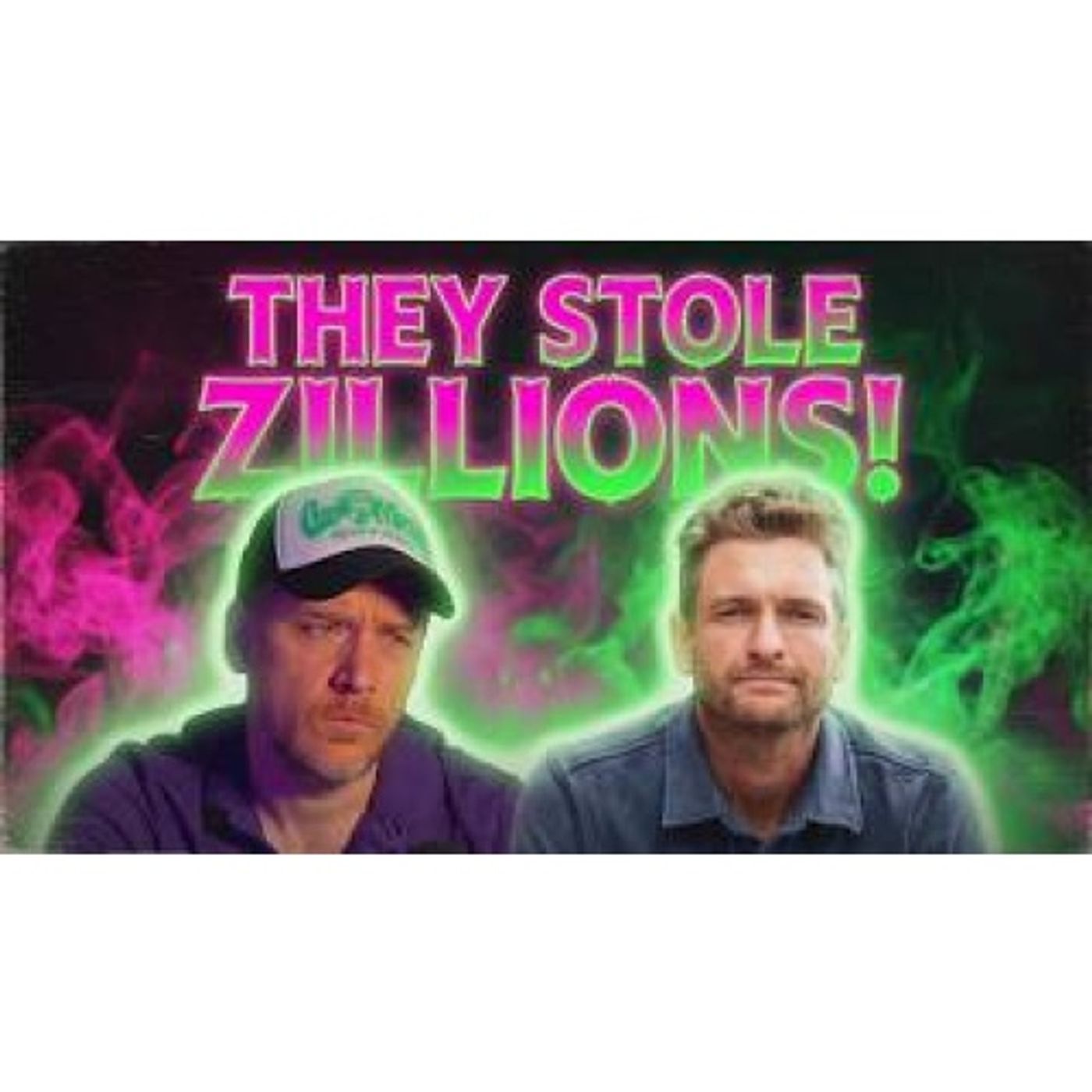
Jay'sAnalysis
THEY STOLE EVERYTHING! THE RELIGION BUSINESS: Nathan Apffel & Jay Dyer
00:59:54
Superchats at any time here: https://streamlabs.com/jaydyer/tip Join this channel to get access to perks: https://www.youtube.com/channel/UCnt7Iy8GlmdPwy_Tzyx93bA/join Get started with Bitcoin here: https://www.swanbitcoin.com/jaydyer/ Philosophy...
Loading summary
Transcript85 lines
- [00:00]
John Daly
John Daly here. You know what day it is? Neither do I. I live life daily. That's why I only spend on MotoCasino. Moto's got daily free bonuses, daily tournaments, new slots added daily. And the best part, guaranteed daily jackpots. You can't beat that. So today's the day you gripping and spending with me on Moto America's social casino. Play for free on Moto Us.
- [00:19]
Moto Casino Announcer
Moto Casino is a social casino prohibited and purchase necessary. Visit Moto Us for more details. Download the Moto Casino app.
- [00:23]
Moto Casino Voiceover
Today must be 21/ Moto Casino America Social casino.
- [00:32]
Lowe's Promo Announcer
Milo's money days are here and we're making it rain for rewards members for the first time ever, when you make a purchase of $200 or more through July 12, you'll get up to $30 back in extra Milo's money. Not a member yet. Join for free today because members get more at Lowe's. Milo's money award varies based on status. Members in gold get 30, silver get 20 and bronze get 10. Milo's money valid for 30 days restrictions and more terms@lowe's.com Milo's Moneydays.
- [01:01]
Interviewer (Jay)
All right, what's up everybody? Welcome. We have special guest today. We ended up kind of running into each other on Instagram. However, some of my best friends I've actually made through Instagram. You guys know Tristan. We met through Instagram. We've been tight buds for the last seven or eight years. So I'm glad to know this new guy's name is Nathan Apple and he has made a recent series that has premiered on Tucker. Tucker's been promoting it. They just did a big interview. I'll have a link to that interview here below in the description of the show. But he's been highlighting something that it turns out we've been highlighting as well. And he did this series again on Amazon. You can go to the website. All that will be linked below. It's called the religion business. And so before we get to the product that he put out, I want to talk about him a little bit. Can you tell us a little bit about your story, your background? I know that in the documentary you will cover a little bit about your evangelical background, but tell us about you and like, what got you to the point of wanting to make a documentary about this?
- [02:02]
Nathan Apel
Yeah, like, I was like a lot of my Christian friends, you know, born and raised in the evangelical church in a car seat at the first, you know, the front pew. And my parents sing in choir, so I sang in choir and I Went to every church camp. You could go to summer camps, fall camps, winter camps, you know, you name it. My mom was raised lds and so that's where kind of the LDS side of things plays in. And she converted to Christianity when she met my dad and they, and up going to John MacArthur's church, Grace Baptist. So I was, I was a Grace Baptist kid when I was young. I, I was spanked with, with his spanking rods, you know, his little leather
- [02:42]
Interviewer (Jay)
switches and then that was that a real thing. Like he created pro, like the church gave out or sold like spank rods.
- [02:49]
Nathan Apel
Is that real? Yeah, yeah, they sold spanking rods.
- [02:53]
Interviewer (Jay)
I did not know that. That's, that's kind of crazy. Yeah, we always, I mean, I, I, we make the joke that these kind of big evangelical and Calvinist megachurch things, like probably they're kind of like atheism factories quite a bit. So I mean, I'm not saying everybody's bad or everybody's an atheist. I'm just saying, like this kind of weird stuff does produce a lot of unbelief down the road, which perhaps is an unintended a consequence, but. So you're a church dude? I was raised Evangelical Baptist my whole life. Absolutely. Same situation. And then what, you, you, you're a surfer guy? So maybe you, what, you just started partying? You got out of church in that teenage years or.
- [03:34]
Nathan Apel
No, no, I, I was fully committed. Like I volunteered as a high school volunteer in the junior high and then in early college years I volunteered high school ministries. I, what, what happened is I had a brain injury when I was 16, so I started filming my friend surfing because I couldn't surf. And, and I like to work and so flash forward, I'm 8, 17 years old and I got, I started working with Oakley, the Sunglass Company, and for, for four years, one of their direct actors just took me around the world and for, I just went to mostly developing nations because surf, the best surf in the world is in, you know, impoverished nations. And I would go and people, I was very proud, I am proud of my faith. And so they would say, hey, you should come to this church. You know, this one surfer from Brazil is, is a Christian or, you know, in Indonesia there's this small church. So I started going to really impoverished churches everywhere I'd go. And I mean, like, like Jay, like we're talking 10 by 20 foot, 10 roof with four tree trunks holding up this metal roof with no walls in the middle of like the Honduran jungles. And so I just, I Traveled, and I'd go to seminaries. And there was one seminary in particular in Brazil, and the favelas in Brazil ran by two Americans, by a husband and wife team. They'd gone down in the 80s and never left. And they built this seminary off of never taking a dollar or asking for a dollar. And flash forward. They had a couple hundred street kids in their program, and so they would just adopt orphans off the streets in the favelas. And these kids could study scripture and get an education, and they'd learn a trade. And then when they were old, an adult and old enough, they. They'd leave, and they left with the trade. And the model was, hey, you're going to spread the gospel, tell people about Christ, but you're never going to ask for a dollar. You're going to leave with a trade.
- [05:28]
John Daly
Very.
- [05:29]
Nathan Apel
It's like very Paul, you know, And. And when I saw that model, these guys told me their story. And they went from one kid to a couple hundred, and they've had a couple thousand move through the program over the decades, and they never took a dollar. And I was like, whoa, our American model is so backwards. We've created this model of like, hey, the pastors will preach to their congregants and anybody who's in need, we're going to teach you how to fish. Because, you know, if I give you a fish, you're not going to. You're just going to eat, and I'm going to have to give you another one. But then the institutional model in America is just begging congregants fish constantly. And so it was really my overseas traveling for over a decade that made me realize just. Just the cultural model is wrong. And so then, then flash forward another decade. I just started studying the model here in America. And that's when I was like, oh, what's. What have we created? And then there. Has there been any nefarious government involvement to build this system to where the system is basically enslaved to government through this idea of tax exemption.
- [06:39]
Interviewer (Jay)
So you saw basically a radical contrast between what the experience is in other countries with people who are sincere trying to build real operations and change within communities versus what I call business, church, what you call religion business, where the model has basically copied and pasted corporate structures in the US and the first episode of the series you got into, as one of the examples, the Mormon Church, which a lot of people may not know this, but Mormon Church is actually itself kind of structured like a giant corporation. And it has these loopholes that you guys discuss with some of the experts that you bring in that allows churches to create these things called auxiliaries or associations that then allow that sort of adjacent subset thing to be literally just structured as a corporation that can then make investments on behalf of the church or the organization purely for profit. I thought that was a big mind blowing thing because we think of non profits as not making profits. But it turns out as you, you guys show, no, actually non profits are tremendously profitable. And thus there's an incentive first before we get to sort of that government stuff for people, just create a religion or a cult or a church purely for profit motives to get around tax loopholes. Could you speak to that?
- [08:06]
Nathan Apel
Yeah, 100%. You know, people, when we look at our churches today, like I, if I look at my evangelical church that I grew up in, I'd say, oh man, this is church, right? This is 2000 years of church post Christ. But in reality this model only dates back to 1913. So it's only about 112, 113 years old. And so when you start deconstructing the corporate model, like every church, every religious institution in the US that wants tax exemption is a corporation. They have a corporate structure. Now the auxiliaries, associations and conventions, those were lobbied for really in the 50s and 60s and yeah, so if because of separation of church and state in America, the state shouldn't be able to tell you what is a church. So this definition of church is already very gray and loose. And you learn this in the show, but then add auxiliary in front of the definition church. So the LDS church lobbied the IRS for that term. And so if church is gray, auxiliary is totally black. There's no legal definition to it. So when you take modern, you know, capitalistic, you know, scale and growth and profit at all costs, and you apply it to this auxiliary term, anything now can be a church. A hedge fund can be a church, A thrift store could be a church, A construction company can be a church. So you can build these conglomerates under the, this idea of, oh, stay out of our religion. To where now the LDS Church is going to hit a trillion dollars in market assets in the next 15 years. They'll be one of the biggest corporations in America, all by leveraging this idea of church, if that makes sense.
- [09:53]
Interviewer (Jay)
Yeah, no, that's, this is huge. I mean, again, I mean I've studied this stuff a lot as well like you do, and I didn't know that the Mormon church was that wealthy in terms of their assets and what they, what they have on the books. So, yeah, I'm not surprised. But also, like, the level that they're about to hit is kind of. Kind of mind blowing because one of the things that you guys brought up in documentary that we don't think about is like, if you compare it to the NBA, like to own the entire NBA would be, you know, four or five billion dollars. But that's nothing compared to what mega churches as a whole bring in. Could you speak to that disparity? Because that was just insane. I don't think people think about that much money being brought in by these sort of, you know, by these mega churches.
- [10:38]
Nathan Apel
Yeah. So I don't have the stats in front of me, but I believe it's 4 or 5 billion per NBA team. And so the church could buy the entire NBA, every team, twice over, and still have billions in the bank. And so that analogy was just to show the absolute monstrosity that is the LDS Church. And the LDS Church, the Mormon Church, wasn't really that wealthy 50 years ago. They just started leveraging again, that term auxiliary. So basically, like, their operating cost is about 7 billion with a B a year to operate their global church. So they might bring in 8 billion a year in tithing. But then their new model was in the 90s, in the late 90s. Okay, we're going to take that leftover billion and invest it in the market under this guise of auxiliary, which is Ensign Peak Advisors. That's their investment fund. And so what they weren't doing is they weren't filing what's called a 13F with the SEC. And so the government had no idea that their investments were ballooning into the billions. And so Flash forward to 2019. One of the main investors at the firm was finally, like, he was lds. And he's like, this is ridiculous. He's like, we're not helping the poor. We're not helping the needy. We're just building an empire in the name of Christ. So he blew the whistle. He went on 60 Minutes. Great guy. His name is David Nielsen. Bold, bold guy. And because of him that. Only because of what he did, was it ever exposed that the church was even growing this rapidly, to the point where last year they made 25 billion in interest alone on their money in the market. And so we've just created these. These corporate goliaths. And all they'll leverage is they'll point to government and say, hey, separation of church and state, Nathan, stay out of our church. When in reality all they're building is a corporate, you know, conglomerate that. That'll that will eventually be the biggest business in the world.
- [12:47]
Interviewer (Jay)
Yeah, I think, you know, I didn't want to misstate what I was getting at. When you get to like these TV preachers and the fact that, you know, a lot of people can see that they're, you know, taking money from grandma, you know, this, you know, the good meaning grandmother who's sending money into these, you know, remember TBN back in the day? It was a comparable to this kind of a thing that we have with, you know, the Osteens and the Kenneth Copeland's today, which I don't think TBN exists anymore. But back in the, you know, 90s and the 2000s, it was massive. And they're still a thing. Yeah, they're still a thing. Okay. I thought they were. They got bought out by like Hillsong or something like that. I don't remember exactly what I, I don't know.
- [13:25]
Nathan Apel
I've talked with one of the sons a couple years ago and yeah, they're. And then I also just had someone reach out to me talking about them selling off some of their networks for, for some of their satellites for in the billions. So I, I can't, I haven't verified any of that yet. But they're, they're very much still a, a capital driver, if that makes sense.
- [13:47]
Interviewer (Jay)
Yeah, let's talk about that. This, this idea. And you, you sketched some of this out early on. You talk about religious business or religious consumers and then the marketing of that. I think, you know, one of the things that we got into recently on some of my streams was this guy named Peter Drucker who was a big business consultant dude. And he's the guy that really set forward the model for Rick Warren and the guys that did the Purpose Driven Church, Purpose Driven life that was really big, you know, saddleback in the 2000s, you know, that was promoted by Obama, for example. He was a member of the Council on Foreign Relations. I'm speaking of Rick Warren himself. And then that kind of, when Rick Warren went away, that kind of the. I mean, it still exists, but it's like not. It doesn't have the punch that it used to have in terms of popularity because it was a quarter, sort of a cult of personality that you see with that. But the crazy thing about Peter Drucker was he was like, I'm not a believer. I don't believe in any of this. But I do understand that church is an amazing business model. And so he constructed this whole pattern of how to do business church purely at a corporate level that Integrates marketing, consumer, you know, product relation, all that kind of stuff. And again, this is just so far removed from when we read, you know, the New Testament. We read the church fathers first, second, third century. Like, we're not seeing anything like this. So. And, you know, your documentary kind of goes through, like, phases of church history up to now.
- [15:14]
Moto Casino Voiceover
Hi, Uncle Laser here. America's built on fast cars, fast food, and even faster women. Photocopy casinos built in America. You know what they're fast at? Fast cash prize redemption. You see, only Moto is us. Own and operate Moto. It's American made. That's who we are, and that's who we care about. Play for free at Moto Us.
- [15:33]
Moto Casino Announcer
Moto Casinos is social casino. Boy, we're prohibited. No purchase necessary. Visit Moto US for more details. Must be 21 plus.
- [15:39]
Moto Casino Voiceover
Moto Casino America. Social casino.
- [15:45]
Interviewer (Jay)
Could you speak to any of that model of religious consumerism? And people don't realize how studied out this is. Like marketing specialists, PhDs, teams of people work to figure out how to create a business model. But that's not what Christianity is 100.
- [16:06]
Nathan Apel
It's. It's. We've taken capitalism and consumerism and just applied that to scripture. And that is the inflection point that we're seeing. And that's why so many people are frustrated with their faith or with their idea of faith. Right. Because in the show, I think it's in episode five or six. So you're getting there. Dan Bramer, he's a Catholic professor. Brilliant. One of my favorite people in the world in regards to scholarship. He's a philosopher and theologian. You know, he says, hey, Nathan, most people have their faith in their faith in God. And so what he means by that is, like, we have our faith in the institution. Institution we've built, the model we've built. But you go back to those early church fathers or. Or the apostles in Christ, like, they had their faith in the God of their faith. You know, you look at the Old Testament, the Torah, Moses and. And Daniel and all the. All the prophets. It's like they didn't have their faith in their faith. They had the faith in the God of their faith. And that's super dangerous because that means I don't care about what culture says is right or wrong. I wanna. I wanna know my God.
- [17:09]
Interviewer (Jay)
And.
- [17:10]
Nathan Apel
And when you talk about Rick Warren, you know, he was, I would say, the one of the, you know, first players out, so to speak, of where commercialization of faith really collided with scripture. And like, even today, there's a, there's a guy, there's a pastor who I've, I'm really using as an example right now on Social. But he did a podcast the other day with one of his good friends and they talked about how they entertain their audience. And he talked, they literally use the Disneyland model. And he goes, yeah, we have to, I can't remember, but end with a bang, end with fireworks. And then he Talked about the 8 minute, we're going to post this on social media, the eight minute emotional arc of your audience and how you're supposed to pull them up and yank them down. And he's like, Disney figured this out. And I'm like, wait, do you hear yourself? You're taking Disneyland and applying it to scripture. And unfortunately, you know, human, we're not that smart. And so just like you put a candy bar in front of you of a kid, the kid's gonna eat that candy bar. You put an entertainment experience driven church in front of nine out of ten, quote, self professed Christians who have never read the full book, and all of a sudden they're gonna just naturally be pulled by the magnetism of what is corporate America. We call it like fast food Christianity, you know.
- [18:36]
Interviewer (Jay)
Perfect example. Yeah, I mean the, the, the whole model of, you know, Taylorism, corporatism, the managerial society, that whole structure was about making everything sort of boiled down to the most efficient way to do anything. So it's not about what's true or false, virtue versus vice, actually necessarily even changing lives. It's actually about the most marketable, bite sized, kind of broad market approach. In fact, Drucker even said, don't have any dogmas or have the least amount of dogmas or you know, moral requirements such as repentance because you want a broad market share. But there was a study that came out, I want to say, in the, in the late 2000s and they were studying mega churches and they came to the conclusion that even though a lot of these mega churches had massive numbers of people who would come in, they also had massive turnover rates where within two or three months a lot of these people had already gone. So it's a model that sort of churns out a faux Christianity that's not authentic. It doesn't actually change or last in people's lives. So that's what I meant by atheism factories. Not that everybody's an atheist or that they're intended to be atheism factories, but the model itself is so defective and so bizarre that it actually is kind of creating like you Said perhaps a crisis amongst a lot of people, whether, you know, Gen X, millennial, Gen Z. And so people are looking for authenticity, and I think they're able to sort of sniff out con artistry, maybe more so than perhaps boomers and other generations were able to. What do you think of that? Is that an overly positive assessment?
- [20:16]
Nathan Apel
No, I. I would. I totally agree with you. Yeah. I think, you know, you can only sell a fabricated Christianity for so long. Right. It's like people will eventually burn out and the system will eventually corrupt on itself. And so that's what we're seeing. You know, we're seeing, sadly, a lot of megachurch's kids are committing suicide. You know, it breaks my heart. And it's like. And a lot of these pastors, though, don't even reflect on themselves or the system that they've raised their kids in. You know, Rick Warren's an example of that. And it's like, have we created a system where our quote unquote, ministry is the business? So was saddlebacks ministry Rick's main focus? And did he forget? I would love to ask him this question. Like, when you look back on it now, did you forget your original main ministry is your family? Right. It's like, we've built this system. And I always say, hey, most pastors from the pulpit can preach a semi biblical, you know, story. Even. Even the super fluffy guys, it's like, yeah, people are going to leave saying, hey, I want to be a better man, a better father, a better wife, a better, you know, businessman, a businesswoman, whatever. So you have this message coming from the pulpit, but then the business model runs antithetical to the message. It's not, hey, be the light of the world, be transparent, be honest. It's, don't question anything we're doing. And if you do, you're a heretic or, you know, you're a Jezebel. And so right now, I think you and I are just living at this point in history where the collision can no longer be swept under the rug. And so you have pastors either doubling down on what on the system, or they're I. Which, thank God, a lot of them are raising their hands now going, hey, Nathan, like, the system is broken. Okay, how do we fix it? And so that's what's fun is a lot of the stuff on social media is just that collision point, and you just see people picking sides.
- [22:16]
Interviewer (Jay)
Yeah. I think one thing that probably doesn't come as a surprise to a lot of people, especially in this audience, is that obviously we could look at Kenneth Copeland and people like that or Jesse Duplantis and we see them as sort of, you know, obvious grifters. You know, they've structured everything as a corporation. And I remember reading recently, I saw something about, I didn't check to see if this was accurate, but something like Kenneth Copeland had like oil rigs that he's got set up on the church property or something like that. So, so the oil rigs are actually. But. And, and Pat Robertson actually did the same thing back when he was doing 700 Club. He had like diamond mines that he set up kind of under the religious organization. And so this is a, a loophole as you pointed out. But those are kind of the big goofy TV preachers. Did you discover that? It's not just those guys, but also other arenas where we might not expect that. I think for most Americans probably still Mormonism is a little weird. They see it as kind of a fringe thing. But what about like the Southern Baptists or people like that? Did you find similar types of things?
- [23:17]
Moto Casino Voiceover
Moto Casino America Social Casino.
- [23:23]
Moto Casino Narrator
Welcome to Moto Casino. The excitement never ends with thousands of the hottest free to play social casino games. Fastest payouts and the best promotions in the industry. No tricks or gimmicks. Owned and operated in the usa.
- [23:34]
Moto Casino Announcer
Moto Casino is a free to play social casino. No purchase necessary. 21 plus to play void we're prohibited.
- [23:37]
Moto Casino Narrator
Sign up today for a generous welcome bonus.
- [23:40]
Moto Casino Voiceover
Moto Casino America Social Casino.
- [23:45]
Moto Casino Announcer
Download the Moto Casino app today.
- [23:48]
Nathan Apel
Yeah, well, Mormonism is definitely fringe. Like it's all that is is freemasonry and Christianity combined with, you know, that that's literally what.
- [23:55]
Interviewer (Jay)
Absolutely, yeah.
- [23:58]
Nathan Apel
But in regards to the mainline faiths 100 I said on Sean Ryan and then I doubled down, I think on Tucker on the second interview I was like, hey, every full time pastor that moves into this space will eventually get eaten by it. And what I mean by that is even the small pastors, like, that's why in the show, you know that biblical, that beautiful biblical story about what's your house built on? Is it built on sand or on rock? Right now every quote unquote church in America from a legal, architectural perspective is built on just a sandy bottom. There is no need for external accountability outside of denominational accountability. And so when we build our corporate structure on non transparent, non accountable system, everybody, myself included, if I was a part of that machine, will get eaten by it. And so when there was denominations, Baptist, Methodist, Orthodox, Catholic, there is structural oversight in denominations. And as most denominations are plummeting. Non denominational, non denominationalism is climbing and the non denominational side is literally the wild west because there's no external governance that you're accountable to. And so this is just the conclusions. Like I see the non denominational space as the conclusion to the legal architecture that was found that was built in 1913. That's it.
- [25:23]
Interviewer (Jay)
So it's almost like a logical business conclusion for the whole thing.
- [25:27]
Nathan Apel
100%. Yeah. When people are like, oh, look at all the abuse that's happening in the system, look at the commercialization of it, the satellite campuses. I'm like, this is just a conclusion, it's not a symptom. It's the conclusion to the sandy bottom foundation of the legal architecture in America. And you're seeing this exported now into Africa and Europe. But our church model is just being exported, but it's not having in Europe, it's not having the effects it has in the US because their laws, thank God, are a little stricter than America's in regards to religion and religious corporations. But Africa is different. And so you're seeing this mega church disease and prosperity disease being, being leveraged on the most impoverished, you know, communities in all of Africa.
- [26:15]
Interviewer (Jay)
Yeah, that's a. One thing I want to mention maybe is the prosperity gospel side of this because that seems uniquely sort of American as well. We have the whole idea of, part of the American ethos is, you know, I've always argued that there's nothing more American than starting your own religion or your own church. I mean, that's, we got Joseph Smith classic Americana right there. And in the same vein, it's, it's sort of like that ideology of positive thinking. If you go back to like Norman Vincent Peale and you know, name it, claim it, blab it, grab it, people have shown a pretty good sort of strain of thought connecting the Norman Vincent Peale positive thinking stuff to Robert Schuller, the rise to the Crystal Cathedral. And then essentially the religion becomes something like Osteen's self help, where it's not really about the, the traditional religion, it's about another form of you individuating and having this, you know, goal that you're shooting for, which God becomes a kind of a technology of the higher version of yourself that you shoot for. That's really, I think, all the prosperity gospel stuff, obviously there's a grift element to it too. But do you see a connection with the American capitalist ideology, the individualism of American, you know, Enlightenment philosophy and this idea of, you know, prosperity gospel 100%,
- [27:35]
Nathan Apel
you know, like, it's just idolatry that, you know, we've. That's all it is. But, yeah, the prosperity gospel is a conclusion to. I call it crony capitalism. It's like this idea of. It's about me. It's about wealth at all costs, expanse at all cost. And Carl Truman in the show, he's a brilliant teacher. He talks about this idea of the American, the rugged American experience. And one thing with America is it's all about me. And I, what can I do? What can I accomplish? What can I get for myself? And when you apply that to Christianity, Christianity is actually the antithesis. It's antithetical to that concept. Right. It's like, no, it's not about me. It's about community. It's about the body, it's about the church, it's about helping the needy. And so I got eaten alive for a statement on Tucker because I was like, yeah, Christianity is not, you know, it's not capitalistic. It's actually more socialistic at its core. And I mean, like. Like, I don't see how people can fight that. Yes, socialism carries stigmas, and from a governance perspective, it doesn't work either does communism. But socialist ideals from a personal perspective actually really work.
- [28:52]
John Daly
Right.
- [28:52]
Nathan Apel
If I am blessed, I want to bless others. I want to lift the impoverished. Matthew 25:31 is all about the thirsty, the naked, the poor, the hungry, the sojourner, the prisoner. And so scripture or Christ runs antithetical to capitalism at all costs, if that makes sense. But it's almost Christianity at its core is the counterweight to capitalism. And that's why I think America flourished for a couple hundred years. But now we've taken capitalism and with our entrepreneurial, individualistic experience, smart businessmen and women have applied capitalistic ideals to Christianity. And now we have this crony, capitalistic, bastardized version of Christianity that today, you and I, I'm 41. Like, our generation was kind of that first generation, really raised in it.
- [29:48]
Interviewer (Jay)
Yeah. I think one of the things that drew me to the Orthodox Church, one amongst many, and I know that's not the topic of today, but it does relate to what you brought up is the idea that, you know, I think if you look at the. The Book of Acts, when they're all, you know, living and they have things in. In communion in the Orthodox Church, this was applied, I think, pragmatically to society to make it voluntary to where people could have that type of an outlet if they wanted to choose that life. So I Think the error comes in when government tries to sort of enforce that model or that ideal or that higher ideal perhaps upon society as a whole. So, you know, within the structure of orthodoxy, there is the voluntary giving up of that stuff and living in a sort of a communal monastic existence. But that is preserving that original, you know, New Testament idea of living that way and that, that's kind of what we ought to shoot for. And then even up into the 4th, 5th century, St. John Chrysostom wrote some very famous sermons on almsgiving and money and the purpose of money. And I think the big difference there, like you said, is that Chrysostom says that the purpose of wealth or money, if you have it, is to help other people. That's why you have it. And in the, in the model of what we're talking about, the Christianity gets perverted to be like, no, God's there as a tech, as a technology to bless you, to just simply attain more and more and more. And so, but that's, that's a means, it's not the ends, right? The ends of the wealth is to help the rest, the, you know, the good in general, not for you to just sort of store it up. And again, that should be obvious when you read, you know, Christ says it all the time, right? Do not, don't store up treasures on earth, store of treasures in heaven. So yeah, I like what you're saying there. I appreciate that. Could you speak to also you mentioned cults in the sense of like, I think Mormonism is a cult, but does this apply outside of the realm of Christianity? I know the focus is, you know, the religion business, but what about other entities as well? It's not exclusive to just sort of Christian denominations per se. It might also extend to Islamic organizations or perhaps foreign organizations, perhaps Middle Eastern, Israeli influence. Could we see other types of entities also using this, the same type of model, other religions?
- [32:11]
Nathan Apel
Yeah, yeah. I do want to say I totally agree with you that social awareness is an individual awareness, it's not a governance awareness. I totally agree with you in regards to the religion business focusing mainly on Christianity. Every mosque in the us, every Jewish synagogue, every Buddhist temple, all play by the same legal architecture that every church plays by. And so, yeah, so they all play by this unaccountable, non transparent, Sandy built legal architecture. So this is not just a Christian thing here in the US And I think foreign entities have seen that. And whether that be Islamic, Christian, Jewish, I don't care. They've all faiths are leveraging the current architecture here. In the US for their own either political gain or faith gains. This is not Christian specific.
- [33:14]
Interviewer (Jay)
Yeah, and I think we saw something like that with, for example, Israel was targeting certain evangelical churches in the, you know, out in the west that they thought could be susceptible to more positive sort of Zion's influence. And I think you did touch on that. Is that, is that something that you found also be the case?
- [33:34]
Nathan Apel
Yeah, 100%. So it's like again, as we, as we've corporatized and commercialized faith. Chris, like I say, we say in the religion business now there's a legal box every religion has to get into in the US to play if they want tax exemption. So tax exemption was the carrot to get every faith into the box. But what happens when you step into this box? This is what I love. Every mosque now looks like every church. Yeah, the thing at the top might be a little different, but they play by the same rules. And so it's like that box becomes a governmental tool. So now the federal government, who, whatever political parties in power can take that box off and it's a pawn on the chessboard, so to speak. And now foreign governments are seeing that as well, just like Israel with those faradocs and what happened. So they see the evangelical church, especially the megachurches, as the greatest way to promote whatever their political agenda is in the name of scripture. I wouldn't even say in the name of Christ, but in the name of Old Testament Torah. So, yeah, so foreign governments are seeing the box as opportunity. So we'll fund whatever we need to, to influence what's in that box.
- [34:52]
Interviewer (Jay)
And what you're speaking of here is kind of the roundabout way that I got into this subject. You got into it looking at it from, you know, your experience in other countries when you were younger and then comparing that to the model. I was studying a lot of geopolitical, you know, espionage type stuff in undergrad grad school. And so I started noticing patterns where it's like, well, why is this missionary over here being used as a spy? Why is this church over here getting government money and being used as a form of what we call soft power in terms of foreign, you know, influence operations? And I mean, it extends even to crazy stuff in the Cold War where evangelical churches in Latin South America were being used to funnel. They were, they were actually using them as vehicles to arm contras and, you know, sending weapons under the guise of, you know, church supplies and aid Red Cross. All this stuff has been used for many, many years at various levels. So this is not just restricted to soft power. There's all kinds of other types of operations that can be used. But I think what you're getting at here is, would you agree from the information, even though it wasn't directly relating to that kind of clandestine stuff, does it also seem to touch on the idea that the state, the American government, again, whether it's GOP or whether it's Democrat, they're going to try to utilize churches as forms of soft power, as basically as an NGO.
- [36:12]
Moto Casino Narrator
10 hours on my feet, traffic noise, everybody needing something from me. My head is spinning. I just need the world to stop for one second. But then I get home, shoes off, phone out, and I open Moto Casino. Hundreds of slots, classic table games. It's my instant reset set. The variety I want in the quiet.
- [36:31]
Moto Casino Announcer
I need motor casino, the social casino prohibited and purchase necessary. Visit Moto Us for more details. Download the Moto Casino app.
- [36:36]
Moto Casino Voiceover
Today must be 21 Moto Casino America.
- [36:40]
Nathan Apel
Social casino for sure. Without a doubt. You know, and you see, you see Trump doing that in, in a huge way. You know, he just said today, you know, something along the lines of I will, as long as I'm president, I will protect Christianity in the faith. You know, it's like all he's doing is scratching the megat or the evangelical back and then they'll scratch his. And it's. What we don't realize is a great example, those Faradocs and what the Israeli government was literally trying to do is they're not going to go to your mom and pop Orthodox church, you know, they're not going to go to your mom and pop Catholic church that has 150 people in the pews. It's not worth their time. They're going to go to the pastors that have 10,000 people underneath them and convince that pastor that, hey, what we're doing overseas needs to happen. Or, hey, why is, you know, the nuclear family dissolving in America. It's because of the gays, you know. No, like, let's. But, but if we can talk to 20 megachurch pastors, that's far more powerful than, than having to wrangle like let's say the Catholic Church in America or the Orthodox church in America.
- [37:49]
Interviewer (Jay)
Yeah, this is, that's a key point because when we were studying, one of you might find this interesting if you're not familiar with it. It's called the doctrinal warfare program. During the Cold War, the CIA came up with this idea headed up by a guy named C.D. jackson and some other important people working with the CIA. And they, they decided that they could capitalize on all of the denominations in the west to bring them in as part of the Cold War. And I'm not saying this because I think Soviets were good, but it was their model of how to utilize all the churches to sort of promote Americanism in the Cold War. And that relationship never left. Right. So even though the Cold War ended once, a lot of these churches, including the papacy, including a lot of the orthodox domain and the evangelicals, once they sort of made this marriage and this alliance during the Cold War, you're kind of on the hook, right? So you've kind of got this, you know, you've got new masters. That doesn't mean that you're now free, now that the wall has fallen. And so you continue to see the same types of usage or doctrinal warfare program, even though that was ended and supposedly, you know, supposedly ended, declassified, I think in 2013, that same model is not going to go away. The state's never going to say, okay, we don't care. Now you can be, do whatever you want. They're going to continue to try to use these organizations that way. And that is something that is very difficult to convey to audiences. I think your presentation is a lot more, has a lot more broad appeal because you're touching at, you're coming at it from a, a vantage point that's a little more accessible than this sort of, you know, clandestine type of stuff that we were looking at on my channel in my history. So I really appreciate what you've done with this, but I want to ask you about this idea of like, what do you think could be ways that, because we could say stuff like, well, we need more oversight or something like that. But this sort of like if you look at, for example, Trump again, there was that original spiritual advisor, that guy got busted for like underage stuff. Then you got somebody equally or more crazy with this Paula White woman who's absolutely insane. She's the spiritual advisor. And it's just crazy because they're obviously pinpointing and picking out archetype type persons to be the voice to that market share. And it's no different. This is what's crazy. If you study the Cold War, the way the Soviets, when they compromise people in the Russian church, they didn't care about the countless bishops and priests out throughout Russia because they don't have that much influence. It's exactly what you just said about mom and pop churches. They only cared about compromising and installing the the nkvd, you know, spies in the key. Huge bishoprics with giant, you know, million. Like the. The Moscow Patriarch. It was crucial. The Patri. The Patriarch of Bulgaria was crucial. So that's the same model that the Soviets are using. Same model that the Deep State, or whatever you want to call it's using. So this is a. This is a technique and a strategy that works. People have to understand this, or else we're going to keep being duped. And it's not one denomination. It's the. The state has the motivation to use anything and everything.
- [41:06]
Nathan Apel
I totally agree with you. When you look at what the church. So there's. I'm going to tell you a rad story. So this guy, I don't know if it's a guy or girl, they sent I, I a book, shows up to my PO Box maybe a month ago, and they're like, hey, we heard you on Tucker. We want to give you this book. The book's not for sale. You can't buy it. And I, like, blazed through it in three days. And it was one of the most brilliant reads I've ever read. And it was about the Founding Fathers and America, and whoever this writer is, I have no idea. I do have their P.O. box, so I'm sending them a letter because I'm like, whoever you are, I want to, like, talk with you.
- [41:47]
Interviewer (Jay)
Can we know the title? Or is it like, you don't. You don't want to say.
- [41:50]
Nathan Apel
It's called Broken Covenants. And I hope it goes for sale, because just like I feel people say, hey, Nathan, you guys are helping us articulate things we couldn't articulate. Whoever this author was helped me articulate things that I've had rattling around in my head. So I feel like they're almost like a counterpoint from a. From an American perspective. As I look at the church, they're looking at government. But what they did is they're. Is they present the argument that the reason for separation of church state. You know, right when we came over to America, you know, there was the, The. The denominations were already infighting in the colonies. They were born out Quakers tongues. Like it was. They were. They were killing people. It's like they were already weaponizing faith in denominational infighting. And so the Founding Fathers were like, dude, this is gnarly. Like, let's, you know, thank God. John, who was it. It was who founded Providence, Rhode Island? I can't remember.
- [42:51]
Interviewer (Jay)
Roger Williams.
- [42:52]
Nathan Apel
Roger Williams, yeah. So Providence was literally this. This beautiful plantation where he was like, hey, anybody of Faith can come and practice. Like, we're not here for this infighting. Hey, if you, if a Quaker stayed at my house, all of a sudden that Quaker would have his tongue bored out and I would have to pay a fee. Like, you know, Providence was like, nope, this is a place for everybody. Native Americans, you know, people coming over and it's a. And so. But this guy talks about the church and in this book, Broken Covenants, he talks about how the church was supposed to be the pressure on the U.S. government. The church was the last stand or was built to be the last stand against government oversight, against government encroachment. So this is what I hint at in the show and what I, what someone from the CIA called me and said the same thing is they're like, the government built the 14 point checklist. The CIA built this box to tuck religion into. So it takes the teeth out of religion because Christianity, when you look at what Christians did in Rome and in that early church, they were transforming empire because they didn't care about the empire. They're like, dude, we focus on something greater than you. So what better way to kneecap and bastardize a dangerous faith like Christianity and Islam than to create a little box that everybody's got to climb into and they use a carrot tax exemption to get them in. And now faith religion has no teeth anymore. We've commercialized it and capitalized it to where now the government can utilize that faith, that mainline faith, as a credule to do whatever they want.
- [44:34]
Interviewer (Jay)
I always heard, even when I was a Protestant, I always, I remember hearing that 501 C3 was actually a trap to make sure that the churches couldn't have any effect beyond personal, private influence of life. So the church could no longer speak to the culture and kind of like you said, be a version of a fourth estate. Not the media, but it was supposed to be the church calling out some of these issues in the culture. And also the idea too with like hospitals and things that would have been charitable organizations in the past would have ideally been done by the church. And then you have the state basically sort of assuming all of these roles to be every area of society's sort of like, you know, Big Daddy, you know, big, you know, 1984 big brother type stuff really. But the church should have been doing a lot of these things with the social project programs and things like that, not the state. But now the church has essentially become a kind of an adjacent arm of the state, ultimately, is what this seems to be. And it's not the state in the sense of like, oh, I'm a libertarian. No, it's more like a corporate state that's running the church as a corporate sort of franchise or like, you know, a subsidiary, basically is what's going on here. And. And money is a big part of this, but it's also not just money. I think there's ideological components to it too, to push. Like you said, when this model gets exported, it homogenizes the religions to kind of all be essentially just versions of what the real controllers, the state, America, bureaucracy, whatever, CIA. What they want in the other countries is the actual message. And this is why. And I'm not pro Russia, Soviet or China, but one of the reasons why those countries ban missionaries, not just over religious theological ideologies, because they know that the religions can also be used as tools of. Of soft power. Did you come across anything like that
- [46:32]
Nathan Apel
in our research? No, I haven't gotten into the political side of it until the last probably year because, that's when, you know, government agencies started reaching out to me. And I'm like, oh, this is different. Like, whatever. I sat with the gentleman who blew the whistle on the LDS Church on Enzyme Peak Advisors, and I had lunch with him and it was our first interaction. And he goes, I don't think you realize. And he's like, maybe you do. And I'm just a. Like I said, I'm a surfer from San Diego, right? And he who got into film because I loved action sports, and this is where I'm at 24 years later. And he goes, I don't think you realize what you've stumbled upon. You know, you've been positioned whether you believe in God or not. Like, I'm being used. And I'm. He's like, you're about to divert a trillion dollar a year river. And so, you know, there's a trillion dollars given to Christian, Christian organizations annually. And he goes, so what you don't want to do is. He's like, what are you going to do with this river? And I'm like, I don't know, damn it. And he goes, no, no, no. The smartest men and women in the world see rivers and they divert rivers. They don't dam them off. So you see, when you look at the world, you see rivers of capital, rivers of humans, rivers of resource. And if you're really trying to reform systems, don't dam it off. And so don't say don't give. No, no, no. Say give, but give to where Christ told us to give. And so you're diverting this trillion dollar river. And as soon as that's these breadcrumbs, like as soon as I had that meal, like we Mexican food and chips and stalls, I was like holy crap, like I am going to divert this river. And as soon as my, my mental game shifted to that, all of a sudden government started calling me, you know, agencies and, and it's like, oh. And it took, you know, months, but, but it's like, oh, now this, whatever our mission is, might threaten a massive revenue stream, you know, larger than the U.S. military. And so it's been military budget annually. And so it's been these breadcrumbs to where now I see the institutional church and politic, like you said, they run identical veins. And the reason is because there's a handshake deal now. And when you look at government is that book Broken Covenants. This writer is like, hey, our founding fathers were brilliant. They couldn't foresee technology and a lot of stuff that was coming down the pike. And then they also missed a couple things because all they did was study past civilization and to try to build this. And one thing they missed is they built three beautiful branches of government, but we created a fourth. And that fourth is the administrative branch, the bureaucracy that runs our government now. And you know, really the three branches don't really do much anymore. It's this bloat, this administrative bloat that steers America and that's corrupted what the founding fathers built. Now you look at the church, the institutional Christian church, right? Most of our quote unquote needs from our big buildings and our production stages and our childcare, that's all unnecessary needs that the administration in the church has created as well. So now the administration in the church is there to fill needs that were never meant to be filled. We were supposed to help the hungry, the thirsty, the naked, the poor, the sojourner, the orphan, the widowed. But instead we're focused on, oh hey, we need teachers to teach our kids. No, I can teach my own kids. Hey, I need a pastor to teach me the scriptures. I know more about the scriptures from reading them than most of these lay pastors on stage giving me a good self help message. And so we've created systems just like our government has. And now the administrative systems of both the church and government need each other and prop up each other. And so sorry to get on my little soapbox for a minute, but, but most of the institutional church is not needed. It could be gutted. And most of our government is not needed and could be gutted. And so. But it's a cancer. They're both cancers, right? And cancers feed and they have to be fed. And so they'll just continue to grow until we go through and cut that cancer out and say, okay, what works in Christianity? Helping our brothers and sisters, helping the needy, building hospitals, building orphanages. You know, that's what those early churches were doing. You know, they were radically transforming their, you know, Rome because they were built, there was no word for orphanage before the Christian church, that early church, you know, and they, they started bringing these orphans in. Why? Because Christ told us to love our neighbor. And so it's. Our government's been bastardized and our institutions have been bastardized. And so I'm here to ask questions why now with both. And it's the politic can't survive without the mainline faith. It's. Look, throughout history now, right, anytime a political apparatus starts corrupting, like our government has, what it does is it grabs onto the mainline faith and tries to force that down. Islam and the Ayatollah did that in the 70s, right? And like that's what like eroded Iran. And now look at what the mainline faith is doing. Christianity is also a total bastardization of the true faith. And so it's grabbing onto politic to force its message down the politic now. And so now we just have this handshake between politic and faith or politic and Christianity. And you have to separate the two. And the founding fathers always saw them as separate, but what's happened now is they both have these administrative states that just feed off of each other. Hence Paula White in the White House and Robert Morris in the White House. It's. They need each other.
- [52:20]
Interviewer (Jay)
That's excellent.
- [52:22]
Moto Casino Voiceover
Now Moto Casino America Social casino.
- [52:27]
Moto Casino Narrator
Welcome to Moto Casino where the excitement never ends with thousands of the hottest free to play social casino games. Fastest payouts and the best promotions in the industry. No tricks or gimmicks. Owned and operated in the usa.
- [52:38]
Moto Casino Announcer
Moto Casino is a free to play social casino. No purchase necessary. 21 plus to play Void Whipper Hill.
- [52:42]
Moto Casino Narrator
To sign up today for a generous
- [52:44]
Moto Casino Voiceover
welcome bonus Moto Casino America Social Casino.
- [52:50]
Moto Casino Announcer
Download the Moto Casino app today.
- [52:52]
Interviewer (Jay)
The the series as we know is religion business. Do you have a people can watch it of course on the Tucker Carlson Network. You've got, you've got it there. It's also available on Amazon. Is there anything else that you want to promote while we're here in this discussion? It's been a great discussion. I, I don't Want to keep you beyond almost at an hour. We're getting close to it. What?
- [53:12]
Nathan Apel
Well, I'm cruising, dude. I. I'm cruising.
- [53:14]
Interviewer (Jay)
Will there be a season two? What's, what's the plan here?
- [53:18]
Nathan Apel
Yeah. So first off, I want to tell, like, your viewers, we are not discouraging generosity or giving. Christians are the most, like, generous people in the world, as we should be. You know, we own an estimated 55% of the world's wealth. The world should look radically different because of Christ's teachings and our resources. But for some reason, it doesn't. And so we are here to encourage generous giving. We are here to, you know, give to your institute, give to whatever institution, but demand transparency and accountability with the generosity that you give. And we're not saying government should hold religions accountable in the US because government sucks as well at managing money, but the donors should be holding our leaders accountable. That is our mission and our mantra is, you should know your pastor's salary, you should know their housing allowance. You should know if the church is paying for their cars and cell phones and what the building costs are and why, and you should have voting rights on how that money is being used. So that's our call there.
- [54:26]
Interviewer (Jay)
Reminds me, I don't know if you've heard this, but I remember hearing recently that some of the famous NFL stars, sports stars, pop stars, influencers, I think perhaps even the Kardashians, they, they've gotten wind of this, and some of these people have actually created their own little churches. Have you heard of this?
- [54:45]
Nathan Apel
Yeah, the Kardashians have a church. Yeah, yeah, it's. It's the best. So I sat down with a former mob boss and he goes, nathan, if I were to get back into this in a young age, I wouldn't go into the mob or mafia.
- [54:58]
Interviewer (Jay)
Exactly. Yeah. So people are figuring out that this is an pretty classic way to kind of do the sort of loop. Even if you watch the Godfather, it's not a church. But there's this point where by Godfather 3, you know, he, he goes to the church, he gets knighted by, you know, the papacy or whatever. And then he creates the Michael Corleone foundation, which is this, you know, tax exempt NGO special foundation which allows him to expand his mafia empire. And at that point, he's just trying to purchase, I think, land deals in other countries. But if he does the land deals under a tax exempt church affiliated ngo, it works. You know, it's much smoother for Michael Corleone to do that. So even movies like the Godfather have Actually kind of been telling us kind of some of this for a while. But I really appreciate that you went into such depth and documented it so well. I'm looking forward to watching 4, 5, 6 and 7. So will there be a season two?
- [55:53]
Nathan Apel
Yeah. So season two is Matthew 25:31. So basically we look at not the world because we got to get our own communities in order before we focus global. But the American Christian church donates, or the American, when I say the church, the Body of Christ. American Christians donate enough to almost eradicate all the social problems or at least fund the solution to most social ills in America. They could wipe out the foster care system, just wipe it out. They could stop GAP homelessness. And there's programs around the US that are already having massive impact in there. Again, it goes back to the simplest thing and it's what Christ and Acts really showed is local small bodies work the best. These mega churches where there's 5,000, 10,000 people, you don't know what's going on in this huge complex. It's where there's 50, there's 100. And so it's this small community that focuses on their little 5 mile radius. How do we fix our community here? So that's what we're trying to get back to is, hey, so every episode in season two profiles one social problem in the US and then it profiles tangible legal solutions that are already happening around the U.S. so it's like, hey, here's a business model in North Carolina that wiped, that dropped their homelessness to 90% in their town. If this is the size of your town and community on the website, here's the architecture for how to build it. It's all free. And so we're tackling social program like social issues and saying we don't need the government to fix this. The church can do it. And so episode one, it's going to be a four part miniseries that all drops at once for free. But it talks about child sexual abuse in the church and then in government and then how we as a church can be a huge funder of solving this problem. Because child sexual abuse is the bedrock of most social ills. If you're abused sexually as a child, your odds of drug addiction skyrocket, your odds of prostitution skyrocket, homelessness. And so it's okay. The bedrock of most social ills is child sexual abuse. And so we're a small part of a bill that's going on Trump's desk, I think next month. And so our goal is, is twofold it's, it's legal reform at the federal and state levels and then also reactivating the body of Christ in your community. And we're showing tangible ways to do it. So it's, we tackle child sexual abuse, homelessness, foster care, elderly, and there's two others over the next two years. In the final episode will drop during the 2028 presidential primaries. And we want season two to have a major impact on the primary elections. Basically, if you're not encouraging local churches to do this and instead you're encouraging more government bloat, like you're not the political figures we need. And so the, the, the season two collides with church and state at the end.
- [59:01]
Interviewer (Jay)
And I want to ask you too, before we close it out, a figure that both of us kind of have looked at, and that's Ruslan. What are some of your thoughts on Ruslan? I know you've kind of commented on him in the past. What do you think about Ruslan?
- [59:17]
Nathan Apel
He's a byproduct of the system, just like most of these pastors. You know, he, you know, you, his story is he found God and then what did he do? He immediately went and worked for an organization. Like, if that's your thought process, if you see Jesus and quote, unquote, get saved and then you immediately turn to the institution for work and you try to build your, your what funds and put food, puts food on the table for your kids off of Christ, you are a byproduct of the machine. And like I said on Sean that I got eaten alive for Ann Tucker, if you go into the system with that mindset, you will be eaten by the system and everything. The way you read scripture, the way you preach scripture will bow and die to the demands of the machine that put food on your table.
- [60:04]
Interviewer (Jay)
Well, also the way, the way that you view everyone else is they're now there to basically be your, you know, your pay piggies.
- [60:13]
Nathan Apel
Correct. Yeah. And, and so you're the machine that you're protecting funds you. And so you are a part of consumerist Christianity. You see people in your pews as customers and consumers. And that is the bedrock of what you are. And it's, and, and that is the scales on the eyes. You know, you, the only way Ruslan will ever see different is if our God, like, has those scales fall off his eyes. And it's, and most of these pastors live and die by this mantra. It's, it's, there's, I'm probably going to get a post out today about this. But in Matthew, I think it's 15 or 17. The story about the temple tax, do you remember that? The two. I think the drachmas. And. And they say, hey, do you pay the temple tax? And. And I'm going to paraphrase the story, but it's these three pastors sitting around on a podcast talking about this, and they say, oh, yeah, you know, Christ says to Peter, go and catch a fish, and in that fish, there'll be a coin and pay the temple tax of that coin. So that coin was actually four drachmas. It wasn't two. Right. So it was two drachmas per person for this temple tax. And the story is so simple. If there's four coins that pays Jesus's temple tax and Peter's temple tax, right? But these guys use that as God will bless you if you give. He's going to double your money and double your prosperity. And. And I'm like, guys, how did you even read into that and somehow contort it to, hey, the temple tax is for us? And they even said that temple tax paid the priests. No, it didn't. Levites back then didn't take us out. Like, these guys are so biblically illiterate. But they use the scripture to justify the system they've built, and it's an expensive system, and Ruslan is just a byproduct of the cultural system. And. And he will live and die on the sword of protecting that, this cultural tradition.
- [62:19]
Interviewer (Jay)
All right, the documentary, the series, excuse me, is religion business. Nathan Apel. I have his links, his social media, all that below his Instagram as well. Thanks so much, man. It was a great conversation. I really appreciate you doing it. Looking forward to watching the rest of it. And yes, for those that are wondering, I was. It was Tucker. So you'll be seeing my episode of Tucker coming out pretty soon. They're gonna be about a week from now. So, again, support Tucker as well. Head on over to his channel and TCN network if you want to watch the documentary or over on Amazon. Nathan, thank you so much, man.
- [62:53]
Nathan Apel
Yeah, thank you, Jay.
- [62:55]
John Daly
John Daly here. You know what day it is? Neither do I. I live life daily. That's why I only spend on Moto Casino. Moto's got daily free bonuses, daily tournaments, new slots added daily. And the best part, guaranteed daily jackpots. You can't beat that. So today's the day you gripping and spinning with me on Moto. America's social casino. Play for free on Moto US Moto
- [63:15]
Moto Casino Announcer
Casino, the social casino prohibited and purchase necessary. Visit Moto Us for more details. Download the Moto Casino app today.
- [63:19]
Moto Casino Voiceover
Must be 21 Moto Casino American Social Casino.