
Podcast
Jordan Supercast
Hosted by Jordan Supercast · EN
The Jordan School District Podcast Starring Superintendent Anthony Godfrey
43episodes
Episodes
Newest firstAll episodes
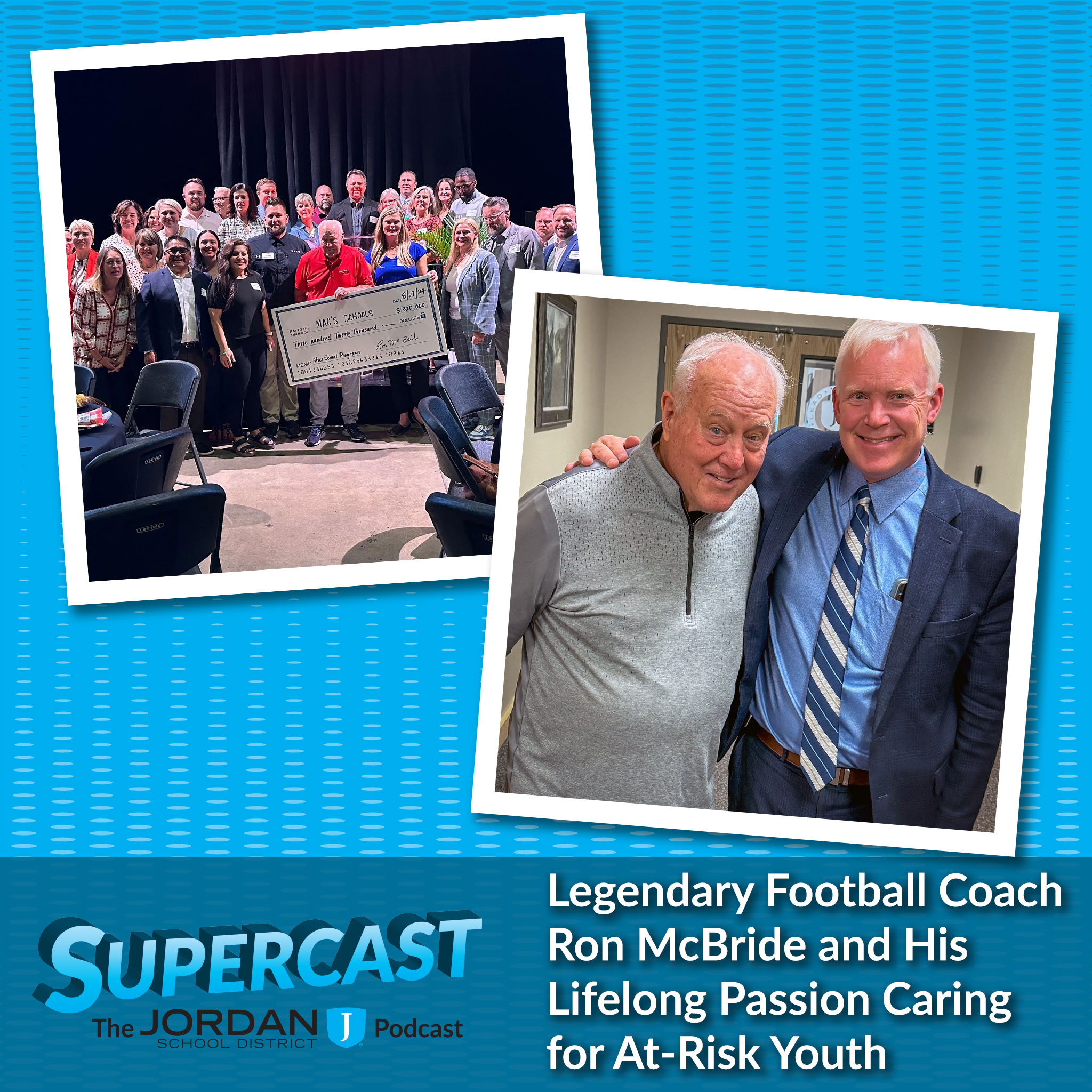
Episode 331: Legendary Football Coach Ron McBride and His Lifelong Passion Caring for At-Risk Youth
Jan 800:29:12Tap to summarizeHe is known for his winning ways at the helm as head football coach at the University of Utah, leading the Utes to historic success over 12 exciting seasons. We’re talking about Ron McBride, or Coach Mac as many have come to know him over the years. On this episode of the Supercast, we have the honor of sitting down with the legend and hearing first-hand about his time coaching, recruiting, and giving young athletes opportunities they never thought possible. Find out how Coach Mac is continuing his passionate work in our schools today with the Ron McBride Foundation, making sure at-risk youth have every chance to succeed. Plus, hear how Coach Mac impacted the life of one of our very own, Valley High Principal Jacinto Peterson. Audio Transcription Coach McBride: The world is about adversity and how you handle adversity and you got all this social media where all these kids are very mean to each other. You've got to get beyond that so somebody doesn't get their self-image spoiled. Anthony Godfrey: Yeah, and the negativity sticks with you. [MUSIC] Anthony Godfrey: Hello and welcome to the Supercast. I'm your host, Superintendent Anthony Godfrey. He is known for his winning ways at the helm as head football coach at the University of Utah, leading the Utes to historic success over 12 exciting seasons. We're talking about Ron McBride or Coach Mac as many have come to know him over the years. On this episode of the Supercast, we have the honor of sitting down with the legend and hearing firsthand about his time coaching, recruiting, and giving young athletes opportunities they never thought possible. Find out how Coach Mac is continuing his passionate work in our schools today with the Ron McBride Foundation, making sure at-risk youth have every chance to succeed. Plus, hear how Coach Mac impacted the life of one of our very own, Valley High School Principal Jacinto Peterson. [MUSIC] Anthony Godfrey: We're talking today with Coach Ron McBride. Mac, thank you so much for being here today. Coach McBride: Absolutely, Superintendent. Hey, I'm glad to be here. Anthony Godfrey: It's a real thrill. I've been telling my friends I get to talk to you today. [LAUGHTER] Coach McBride: You got to tell that to my wife. Anthony Godfrey: We have felt your support in Jordan School District through your foundation, and I think it was high time that we just talked with you about the great things that you have going and all the support that you give to our kids in need. So we just wanted to talk with you about the foundation and where that came from. Coach McBride: Actually, Lavell Edwards and myself started it nine years ago. The thing was to help the underserved kids and to give them a chance to see a brighter side of life. Basically, from the time I was in high school, junior high, I was always very involved, particularly with my teammates that were underprivileged because I came from a lower middle East LA neighborhood. So I understood, and my parents were month to month trying to keep afloat. Anthony Godfrey: So through your own experience and your experience with players who were underprivileged, you've always had this focus on helping people. Coach McBride: Absolutely, yeah. So I've always been. So when I retired from Weber, then and Lavell and I were doing the radio show on Fridays. So we said, "Let's start this foundation." West Jordan Middle was one of our first schools. Anthony Godfrey: You've done a lot of work with them consistently over the years. Coach McBride: Oh ya, lots. First of all, the principals, the vice principals, the people that worked there were outstanding. The librarian was outstanding. Anthony Godfrey: She really is. Coach McBride: Oh, yeah. And she cares. I mean, I think we did a book club was the first thing we did over there, right? Anthony Godfrey: Yeah. Coach McBride: This was many years ago. She was so appreciative and loved the kids so much. She was so excited about what we were doing, you know. Then I loved the principal, you know, and she was awesome. Anthony Godfrey: When you're able to bring resources to a school, and you see that the school has these caring adults that are trying to do their best for kids, it's got to feel good that you know that those resources are going to the right place. Coach McBride: Well, West Jordan Middle always followed up with whatever, you know. I mean, you go over there and check with their . . . watch the after school program. The lady that ran it, Ivy Erickson, one of the best people in the world. Anthony Godfrey: Yeah, she's done like it. Coach McBride: But first of all, she the kids, she's all into the young people. Anthony Godfrey: Right. Coach McBride: She's all into the young people that have problems and she's a good listener. Anthony Godfrey: Yeah. Coach McBride: And so she's excited about what she does. Anthony Godfrey: Yeah. Coach McBride: So it's easy to go there and watch her in action. Anthony Godfrey: Well, I'm thrilled that you picked West Jordan Middle and they really are amazing people there. Coach McBride: Yeah. Anthony Godfrey: There's been some turnover since you started. Coach McBride: Well, yeah, Dixie was a principal and she's at a bigger job. Anthony Godfrey: That's right. Coach McBride: And I tell you what, she's, first of all, her dad, I think, was a principal at that school. Anthony Godfrey: Right. That's right. Coach McBride: And she has a real history in education. Anthony Godfrey: Yes. Coach McBride: She's a great lady. You know what I mean? The great thing about when she was at West Jordan, it was always open anytime. Anthony Godfrey: Yeah. Coach McBride: We would go by to check out what they were doing or talk to the kids or whatever, but it was always very open to us. I think it was, that was the first school that, when Jerry Sloan was sick, we kind of dedicated that school to Jerry back then to begin with. So we called it “Jerry's Kids” to begin with over there. Anthony Godfrey: Wow. Coach McBride: And then, of course, Jerry had problems and finally, his problems took his life. It was too bad. Anthony Godfrey: Yeah, it is. You were really instrumental in helping those after-school programs happen at West Jordan Middle School. Coach McBride: Oh, absolutely. Anthony Godfrey: That made a huge difference for those students. Coach McBride: Oh, yeah. I mean, they had-- And they had a lot of things going on. Besides sports, you know, they had Pokémon and they had chess club, it's ceramics club. So they had a lot of things. Anthony Godfrey: Yeah. It was all this pent-up need from the kids and interest from the adults in providing those opportunities. Yeah, yeah. And when you come in with those resources with caring adults and needy kids, it was just an-- it's an incredible combination. Coach McBride: And they-- Anthony Godfrey: And you've allowed us to do things we couldn't do on our own. Coach McBride: Oh, absolutely. And you know, they have a lot of-- since they've kind of redid West Jordan Middle, they have a whole bunch of access to things they didn't have before. Anthony Godfrey: Yeah. Coach McBride: The shop classes are really good. Anthony Godfrey: Yeah. Coach McBride: Because, you know, in today's economy, it's important that young people know how to do a trade. Anthony Godfrey: Right. Coach McBride: Because that's where all the money is right now. Anthony Godfrey: That's right. Coach McBride: Trade-- so more young people need to go into trades because they're paying a good wage, you're going to make a good living, and you're going to be working every day. Anthony Godfrey: AI doesn't fix things or remodel things or repair things, you know? Coach McBride: Yeah, but we have a huge need in that sector. Anthony Godfrey: This feels like an extension of what you were able to do as a football coach. Coach McBride: Yeah. Anthony Godfrey: You gave kids opportunities as a football coach. Talk to me about the relationship. Coach McBride: Well, I always-- you know, we always divided the locker room into three segments because of red, yellow, and green. So the red guys were about 10% of your football team and these are guys that were underappreciated, needed academic help, needed structure help, you know? Just needed to put them on a different line. So we would put our red guys with our green guys and therefore, then they would get them to thinking a different process. Anthony Godfrey: I see. Coach McBride: The idea is to take the red guys and get them to the yellow and get the yellow to the green. So you hopefully, by the time they graduate from college, that they were all into the green zone where they could take care of their own problems, take care of their own situations, handle adversity, do things that people have to do to be successful. Anthony Godfrey: There's a lot of work off the field to help them become everything they can be. Coach McBride: It's a lot of brainwashing. [LAUGHTER] Coach McBride: So, yeah, you just have to change the way people t...
Transcribe →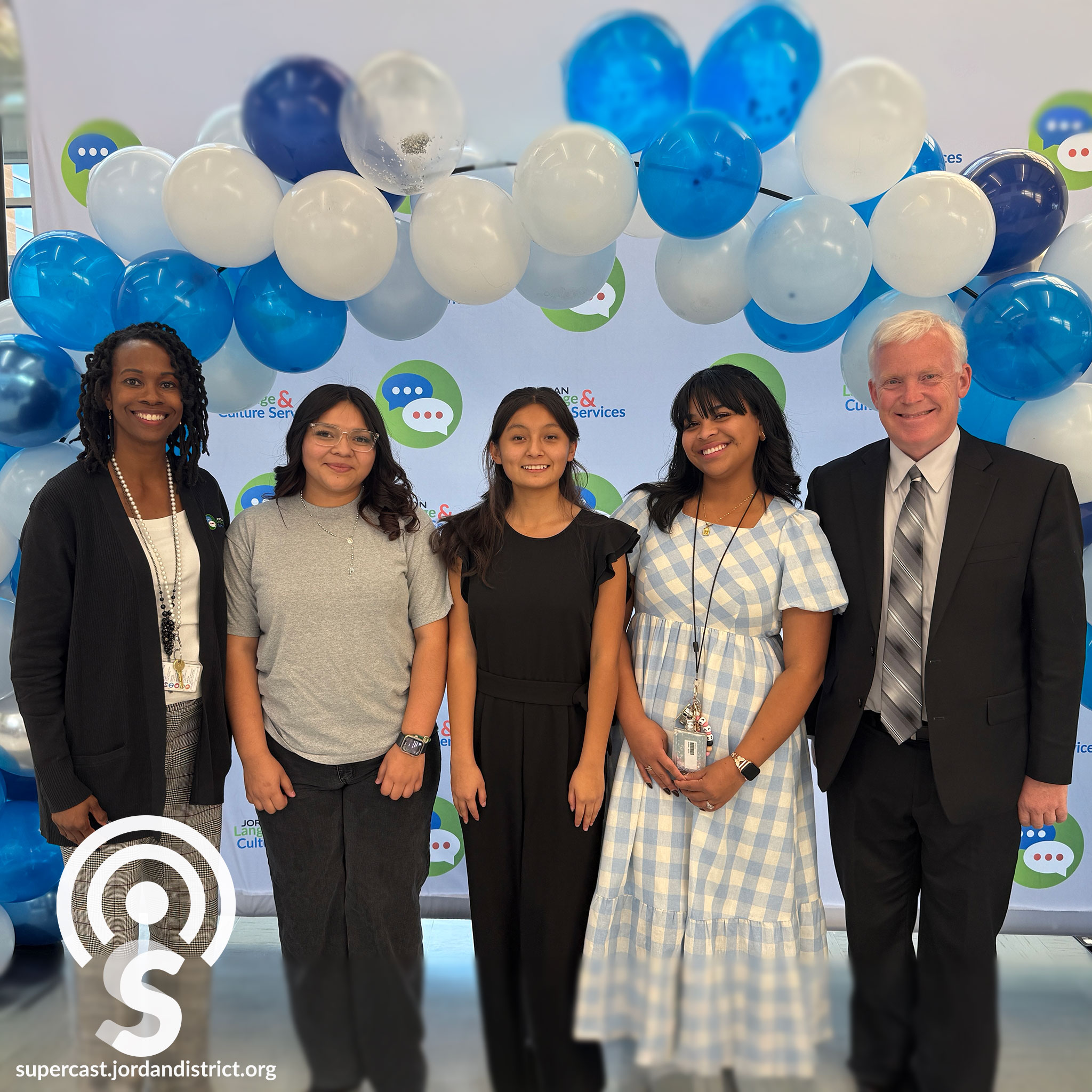
Episode 330: Multilingual Students Celebrate Success in Special WIDA Graduation
Jan 100:20:57Tap to summarizeThey have worked hard learning the English language trying to be the best they can be, making change in their own lives and the lives of generations to come. On this episode of the Supercast, we take you to a very emotional WIDA graduation. WIDA stands for World-Class Instructional Design and Assessment. Listen as we talk to graduates about the great pride they take in their achievement, becoming proficient in the English language; listening, reading, speaking, and writing. Find out what the milestone means to the multilingual students and their families now and well into the future. Audio Transcription Zaidi Aleman: Learning English is really a bridge that you can cross over and you can realize your dreams, your biggest dreams, you can do it. Anthony Godfrey: I love how you describe that. Learning English is a bridge to your dreams. Zaidi Aleman: Yes. Anthony Godfrey: And really at that point then knowing two languages at that deep level becomes a huge asset. Zaidi Aleman: Absolutely it is a huge asset. [Music] Anthony Godfrey: Hello and welcome to the Supercast. I'm your host, Superintendent Anthony Godfrey. They have worked hard learning the English language trying to be the best they can be, making changes in their own lives and the lives of generations to come. On this episode of the Supercast, we take you to a very emotional WIDA graduation. WIDA stands for World-Class Instructional Design and Assessment. Listen as we talk with graduates about the great pride they take in their achievement, becoming proficient in the English language, listening, reading, speaking, and writing. Find out what this milestone means to the multilingual students and their families now and well into the future. [Music] Anthony Godfrey: We are here at West Jordan Middle School to talk with Michelle Love-Day, the Director of Language and Culture Services, about the event that's scheduled for tonight. Michelle, introduce yourself and talk to us about what's happening. Michelle Love-Day: I'm Michelle Love-Day, Director of Language and Culture Services, and tonight we're hosting our second annual Multilingual Family Night. However, this is more than just a family night. It's a celebration of our students who have passed the WIDA, which is showing linguistic aptitude and a celebration of their English learning skills. Anthony Godfrey: What level do students need to achieve to graduate? Because a lot of people might see language skills in different ways. This is a deep level of language acquisition. Michelle Love-Day: Exactly. So language skills are not by grade level that we would think they are. So in the WIDA it is scored levels one through five. And so in order to reach aptitude and language acquisition you have to have a 4.2 composite score and a 3.5 on their written and speaking. So some of these students can pass the scores and be qualified and linguistically proficient by sixth grade. However, some students, if they've arrived and come to our country new in seventh grade, they may not be proficient till 10th and 11th grade. So everyone is different. Anthony Godfrey: It's not about the grade level. It's about the WIDA level, one through five. Michelle Love-Day:| Exactly. Anthony Godfrey: And what does a one represent and what does a five represent? Michelle Love-Day: A one means that students can communicate with simple vocabulary words and words that will help them go to the bathroom or go to the lunchroom and play with friends on the playground. A level five means they're proficient and they have the content area vocabulary that will allow them to be successful in science, math, social studies classes. Anthony Godfrey: So someone who's able to carry on conversations, who to the casual observer might seem like they have a good grasp of the English language, would be but may not have the academic knowledge yet. What number would they be? Michelle Love-Day: They could be at a level one, two, or three. And it depends because they're tested in their listening, reading, speaking, and writing. So they might be able to understand you and have a great conversation but then when it comes to writing an email or a letter they would probably struggle a little bit depending on their practice and their skill level. Anthony Godfrey: There may be those listening in who speak a second language who are saying to themselves, "I wonder where I fall? I wonder where I used to fall when I spoke that language more frequently and I wonder where I fall along the scale now?" Now you're going to introduce us to a teacher who has been instrumental in helping move students along, but you've known this teacher for some time now, is that right? Michelle Love-Day: That is correct. I think every educator has a pivotal time in their life when their former students become their colleague and so I didn't realize I was at that age of life but I am and so Zaidi Aleman was a former student when I was a literacy coach in Jordan School District and now she's teaching here in our school district again as an educator. Anthony Godfrey: So Zaidi, introduce yourself and tell me about what it's like to be a teacher now in front of your literacy coach. Zaidi Aleman: Well, I'm Zaidi Aleman. I am a third-grade teacher at Oakcrest Elementary School and it's amazing actually. I never thought that I would come and be colleagues with the people who helped me the most become who I am today. So, it's really inspirational and I really am wanting to be a inspiration to others as well. Anthony Godfrey: Tell me about teaching third grade and helping students with their language acquisition and getting that academic vocabulary. Zaidi Aleman: Well, so in third grade we also focus on WIDA Prep and we focus on, like Michelle had said, contextual and tier one instruction. So I was there as a language learner. I came to this country when I was three. I had zero language skills. I had zero English skills and it was hard and I can see that in them. I can see that it is really tough to learn a different language. I was lost and I can see that they were lost as well and so having that contextual like background and being where they are right now gives me so much empathy for them because I was there in their shoes, because I was lost, because I didn't feel enough, because I didn't feel smart enough. But like something I want us to like say to them is that you can do it. It may feel like a wall right now but learning English is really a bridge that you can cross over and you can realize your dreams, your biggest dreams, you can do it. Anthony Godfrey: I love how you describe that learning English is a bridge to your dreams. Zaidi Aleman: Yes. Anthony Godfrey: And really at that point then knowing two languages at that deep level becomes a huge asset. Zaidi Aleman: Absolutely, it is a huge asset. You can connect with so many more people, have so much empathy for other people and you can be that person who inspires other people to also become who they want to be. So you can be that person to become or you can help that person become who they want to be later in life. Anthony Godfrey: I would imagine that this creates also just a personal connection with students when they know that you have experienced the same things that they're going through and they can see that they have someone on their side right away. Zaidi Aleman: Yes, absolutely. I just want them to feel like it's not impossible. Like when they look at me or they look at other people like me, they know that it is possible to reach your dreams no matter where you start. Even if you start at zero, that's starting somewhere. You know you can reach your goals, just celebrate the small wins like the first joke that you understand, the first word you pronounce right, the first paragraph that you write, all of that is they're wins and that you're gonna, it's progress. It's progress over perfection. Anthony Godfrey: Having a sense of humor in another language is really a big step forward. Dreaming in another language is another big step. Zaidi Aleman: Absolutely, yeah. Anthony Godfrey: I said dreaming not nightmare. Nightmare in another language is a whole other thing altogether. Thank you for everything that you're doing and we are very very fortunate to have you in Jordan School District. Zaidi Aleman: Thank you so much. Anthony Godfrey: Stay with us when we come back more about the WIDA graduation. [Music] Male Voice: Never miss an episode of the Supercast by liking and subscribing on your favorite podcasting platform. Find transcripts for this episode and others at supercast.jordandistrict.org. [Music] Female Voice: They're out on the job in the rain, sleet, snow, ice, and in the sunshine. As Jordan School District students navigate their way to and from school every day, we are truly grateful for our city crossing guards. Always vigilant and looking out for students to ensure everyone's safety. Because they work so hard protecting our kids, let's give those crossing guards a hand. If you're driving near or around schools, slow down, pay attention, watch for students and staff, and follow instructions from the school crossing guards. And know our cities are always looking to hire crossing guards. If you like kids and need some flexible hours, contact your local city and apply to be a crossing guard today. Together, let's make this a safe and successful school year. Anthony Godfrey: Welcome bac...
Transcribe →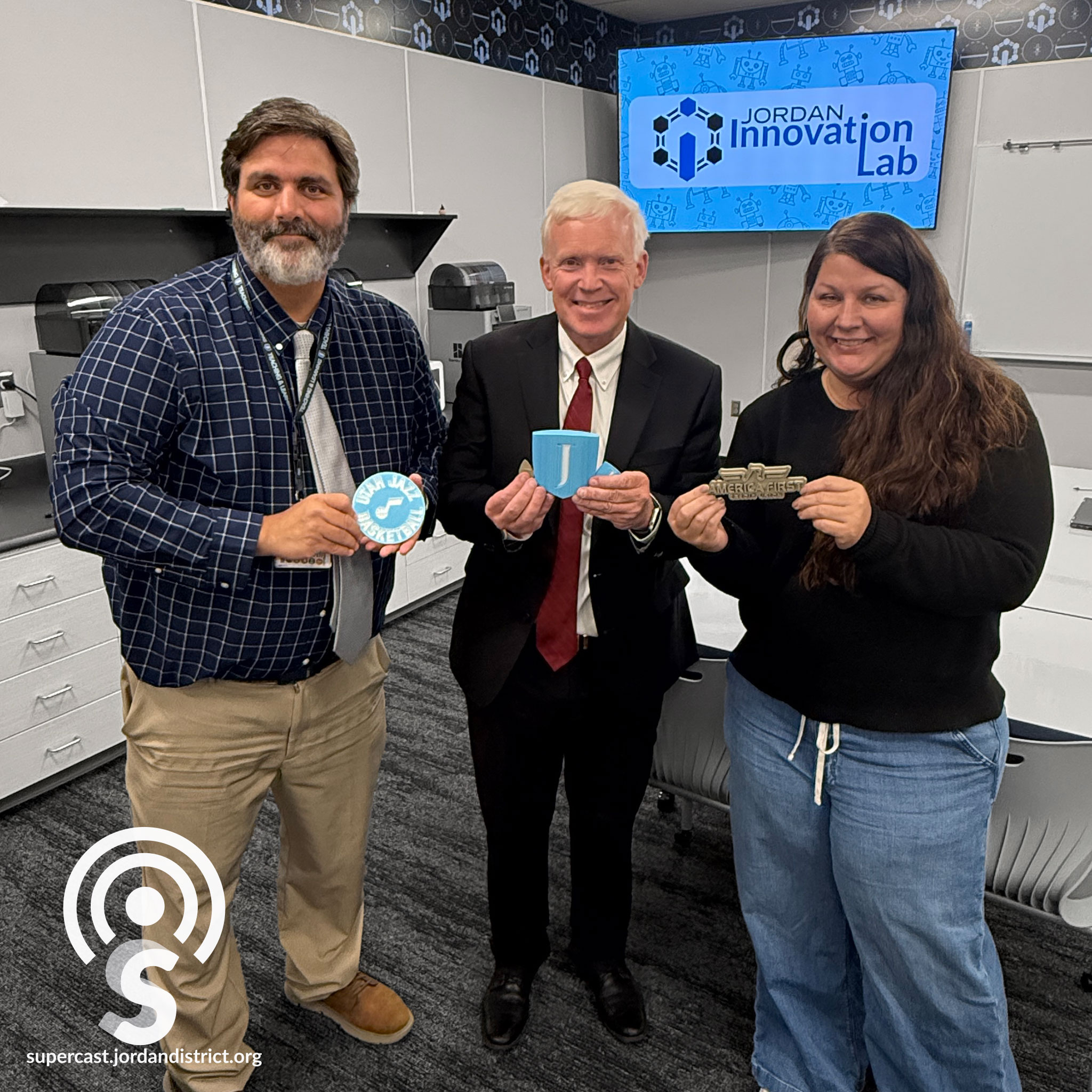
Episode 315: Inside the Brand New “High Tech Learning Lab” Where Students are Loving Exciting Hands-On Experiences
Sep 1800:20:55Tap to summarizeIt is a ‘first-of- its-kind’ High Tech Learning Lab for elementary school students in Jordan School District made possible through a partnership with the Utah Jazz, Utah Mammoth and America First Credit Union. On this episode of the Supercast, we take you inside the Learning Lab where students are wild with excitement over 3D printing, stop motion robotics, coding, and so much more. Listen and you will hear the sounds of technology hard at work. Audio Transcription Traci Rindlisbach: We thought that was so exciting to give the kids a chance to 3D print. Not just pressing a button, they're going to start modeling their prints. Jared Covili: We want students not to just be technology consumers where they just use it to find the latest game or the latest trend online. We want them to become technology creators and that's the core of what this space is. [music] Anthony Godfrey: Hello and welcome to the Supercast. I'm your host, Superintendent Anthony Godfrey. It is a first-of-its-kind, high-tech learning lab for elementary school students in Jordan School District, made possible through a partnership with the Utah Jazz, Utah Mammoth, and America First Credit Union. On this episode of the Supercast, we take you inside the learning lab where students are wild with excitement over 3D printing, stop-motion robotics, coding, and so much more. Listen and you will hear the sounds of technology hard at work. [music] Anthony Godfrey: We are at Juniper Elementary School, home of the Jordan Innovation Lab, with two of the people who helped make this possible. Please introduce yourselves and let's get right into it. Traci Rindlisbach: Hi, I'm Traci Rindlisbach. I work for Digital Teaching and Learning and I got to help set up the Innovation Lab. Jared Covili: My name is Jared Covili. I'm the administrator over the Digital Teaching and Learning Department and I'm just a fan of the Innovation Lab. Anthony Godfrey: I am a fan too. I just walked in, but I've heard so much about it and I was not able to be here for the ribbon cutting, but so many great reports about student reactions and the reactions from the donors who made it happen. But let's jump right into a project. Let's not just talk about it. Let's get down to business. So we have 3D printers all the way along this wall and you've 3D printed a bunch of things already for the launch. Tell me about that and tell me about the project we're going to do right now. Traci Rindlisbach: All right, so we bought two different types of 3D printers. We bought these Bamboo Lab 3D printers, which are super exciting because you can print four different colors and these are a little more serious 3D printers. Then we have these tiny toy boxes as well that are just like super fast prints and just like you're dipping your toes in there to start a print. Anthony Godfrey: So I didn't even see the little ones in between. So yeah, wow. So we've got 10 of them right here. Traci Rindlisbach: Yeah. Anthony Godfrey: That's amazing that this is a this is a playground for kids to well for you, too. This is this is this is pretty exciting. So what's our what's our project here? Traci Rindlisbach: Okay, so on this Bamboo printer, we've printed a whole bunch of things like when we were opening, we printed like the Jordan shield two colors, the Mammoth logos and the Jazz logos. All those logos were printed. We're just going to have you print a guitar pick for yourself since we know you're all about playing guitar. Anthony Godfrey: Absolutely. Traci Rindlisbach: So the first thing you're going to do is you're going to hit this file right here. Anthony Godfrey: Okay, so I'm accessing the templates or the designs. Traci Rindlisbach: These are just all the G codes like put on there and there's your pick right there. Anthony Godfrey: Yeah, that's perfect. Traci Rindlisbach: Yeah, just click that. Anthony Godfrey: So click on that. Traci Rindlisbach: Then the PLA we've chosen . . . Anthony Godfrey: It has a nice edge for gripping the . . That's a well-designed pick. That was a well-designed pick. Absolutely. I can really wail with this one. Traci Rindlisbach: Okay. And so we're going to do this metal PLA because we tested it with the other one and it broke. Anthony Godfrey: So okay, this is like choosing letter or legal paper. Traci Rindlisbach: Yeah. Anthony Godfrey: Yeah, except we're going to choose the right and so which, which one . . . Traci Rindlisbach: Right here this print now. Anthony Godfrey: Print now. You've already set it up to print like . Traci Rindlisbach: Yeah, you just set it. We can click right here and you can choose the different PLAs. Anthony Godfrey: Okay, right there. Traci Rindlisbach: And then it's good to go. And it's going to be printed in. See right here. 13 minutes. Anthony Godfrey: 13 minutes. Okay, we're at 0%. Temperature 69 Celsius. Okay, we're going up. Jared Covili: You're going to be able to add this to your resume. You're now officially a maker of a metal guitar pick. Traci Rindlisbach: You can sell these at your shows. Jared Covili: You can start your own Etsy shop. Anthony Godfrey: This is the one I won't flip out into the crowd. Okay, we will let a watch pot never boils and a watch print never comes to fruition. So we're going to let that simmer while we talk a little bit about how the lab started. So we were contacted by the Smith Entertainment Group, Utah Jazz, the Mammoth and America First [Credit Union] with the concept of building something that was centered around innovation, something unique for students. What excited me is that they knew that was generally in the STEM area, but it felt like there was going to be a lot of flexibility in how we shape that. So talk to me about how we decided what to do and what that partnership look like. Jared Covili: Yeah, we were approached by Mike Haynes from the Jordan Education Foundation, probably in May. He mentioned the idea that the Smith Entertainment Group and America First Credit Union wanted to help us build something that could really enhance students’ education. They said, “you know, we want it to have kind of an innovative blend to it, right? So we're not looking for traditional forms of learning. We'd like to use technology.” And immediately Traci got involved. She's one of our people that's very involved in STEM and computer science in our District. So we started talking about what would be some of the great tools that we could provide kids with this additional funds. We wanted to give them an experience that they couldn't have at their regular at the regular school. Anthony Godfrey: So what made you go this direction and tell me about what's here? Traci Rindlisbach: My STEM partner, Kelly Cannon, she works in the same department as I do. We have been really into 3D printing since we both came into this role. We thought that is so exciting to give the kids a chance to 3D print because it's like not just like pressing a button. They're going to like start modeling their prints and doing all those like engineering design processes through just learning how to 3D print and 3D printing. Anthony Godfrey: So what does it mean to model for those who haven't done 3D printing before? Traci Rindlisbach: That's a great idea. Create their prints. So they'll go into some kind of program. They could go into Tinkercad or on these toy boxes you can do modeling inside the app of itself. And so you'll just go and create whatever you want inside there and send it to this little printer and it will print what you've done. Now will it be perfect? Maybe if you did it correctly. But there's also that fun element of like they're going to go back and iterate and say, “oh, that didn't work. I'm going to fix this and this and this on my print until it's perfect.” Anthony Godfrey: Is that why we have the smaller printers so that they can dabble and kind of test things out before they go to the multi color printer or do they dive right in? Traci Rindlisbach: It's really an either situation like they could start on the toy box if they felt more comfortable with that. This is like a more entry level like modeling system. You'll just pull some shapes in and you'll start joining your shapes. You could pull in photos and you can make some lithographs where like if you put a light behind it, it shows like whatever photo you put into there. On the Bamboo, they would be modeling probably in Tinkercad and that would be a little more serious modeling, but still with shapes and things. So this one's just a more friendly model to get started with. But we did have a student on opening day who was really stoked about the Bamboos and talked about his Bamboo at home and what he's doing at home. So I think there's going to be kids coming in who've had a lot of experience with 3D printing and they're going to be able to teach the other students as well. Anthony Godfrey: OK, and tell me again, how do you model something? Do you is that essentially designing it virtually so that it can then become something that is physically tangible in the real world? Traci Rindlisbach: Yes, that's a good question. So in Tinkercad they would like design it inside the Tinkercad program and then they would slice it on the slicer and then put it right in here and it would print on out. Anthony Godfrey: So in other words, stu...
Transcribe →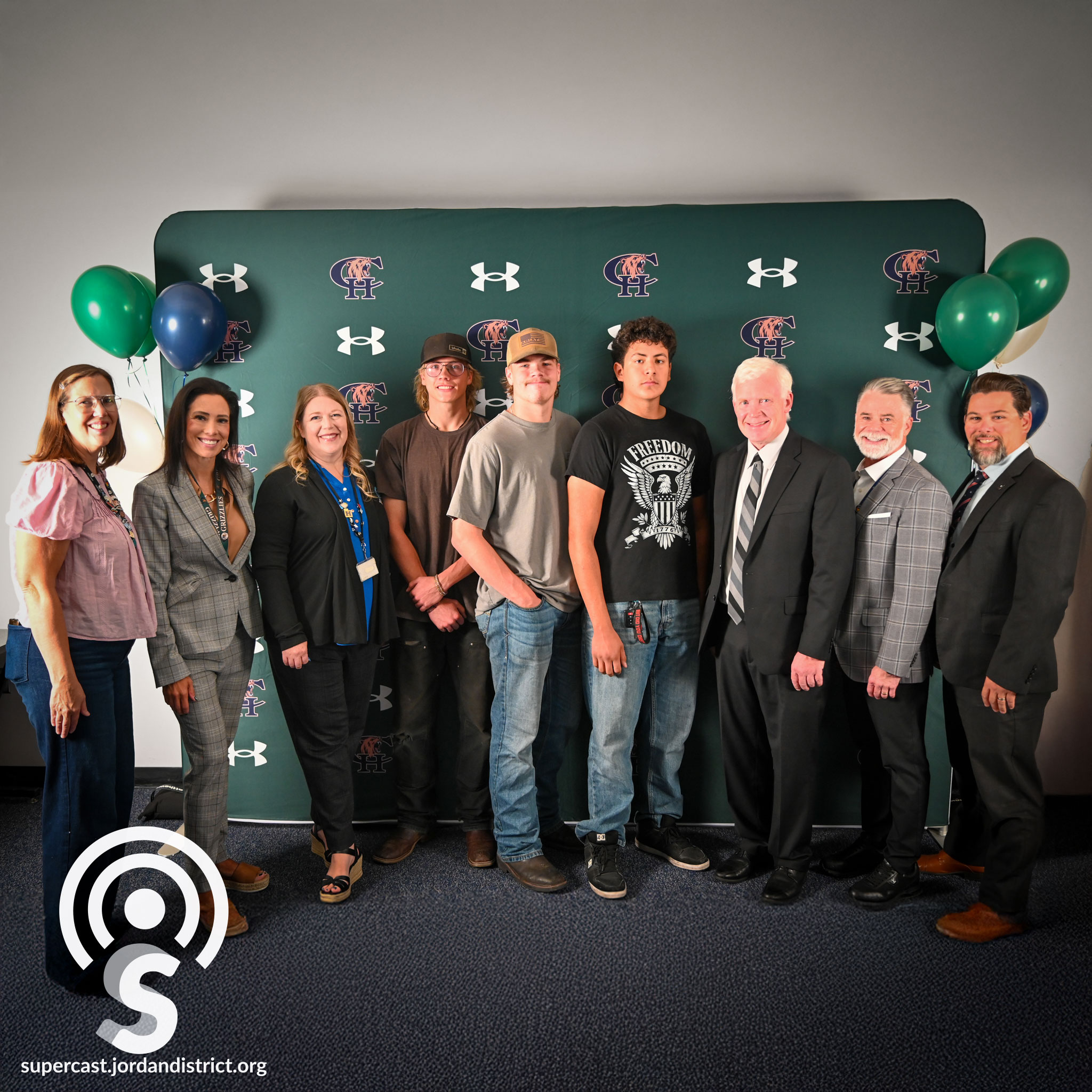
Episode 314: A Big Surprise for Copper Hills High Students Who Ran into Burning Home to Save Lives
Sep 1000:20:00Tap to summarizeThey are students at Copper Hills High School who recently risked their own lives by breaking down a front door and running into a burning home hoping to save the lives of others. On this episode of the Supercast, join us as we take you inside the big surprise where the students received a military style “Honor of Excellence” award for going above and beyond and being exemplary citizens. Audio Transcription Heidi Jacobson: They're heroes, honestly. Carter's like, "I'm not a hero.” He just did what he thought was right. Cammerin Inselsberger: My buddy Gabriel came outside and said, "Hey, there's a fire down the street." And then I remember Carter looking distinctly at me and said, "Well, come on, let's go do something." Zera Gonzales: We truly saw our sense of community in our neighborhood, especially with our boys again. We're so willing and selfless and risked so much. [Music] Anthony Godfrey: Hello and welcome to the Supercast. I'm your host, Superintendent Anthony Godfrey. They are students at Copper Hills High who recently risked their own lives by breaking down a front door and running into a burning home, hoping to save the lives of others. On this episode of the Supercast, join us as we take you inside the big surprise where the students received a military-style Honor of Excellence Award for going above and beyond and being exemplary citizens. [Music] Anthony Godfrey: We take you now to the ceremony honoring the boys who saved two dogs. [Music] Female Voice: We would like to reunite you this morning with Rocky and Simba, who you saved, and we'd have the Gonzales family come on in with the animals. They want to thank you. Matt Alvernaz: My name is Matt Alvernaz. I'm the Safety and Security Director for the Jordan School District. During my 20 years of combined service in both the military and law enforcement, I've had the privilege of taking part in the longstanding tradition of the Challenge Coin. The Challenge Coin is something that is given as a token of appreciation and respect for those who go above and beyond the regular everyday expectations of society. Each of these coins, as we give them out there, they're unique and there's only so many made. So once you're given one, then hang on to it. They’re never going to be made again. There's something that gets collected and it's something that's honored among the uniform services and the tradition I want to carry out and give to you guys. So these coins, they're honored in a way of a traditional handoff and it's given through a handshake. Everything on this coin means something. If you guys want to go over what they all represent, you can do that. So I want to congratulate you guys in the traditional way. Boys: Thank you. [applause] Anthony Godfrey: We're talking now with the three students who saved the two dogs from the fire in West Jordan City. Thank you very much for taking time. Will you introduce yourself and tell us your name, grade, and what programs you're in? Cammerin Inselsberger: My name is Cammerin Inselsberger. I am a senior at Copper Hills High School and I am in no current programs, but I was in diesel tech. Carter Jacobson: I'm Carter Jacobson. I go to Copper Hills. I am a senior as well and I'm in the diesel program at J Tech. Gabriel Hernandez: I'm Gabriel Hernandez and I'm a senior at Copper Hills and I'm also in the J Tech diesel program. Anthony Godfrey: So did you know each other before the diesel program or is that how you met? Carter Jacobson: No, we knew each other before. I knew Cammerin for like three years. He kind of introduced me to it. Anthony Godfrey: Why don't you talk me through what happened, everything from spotting the fire to going in and saving the dogs? Cammerin Inselsberger: We were doing yard work out back at my house and then we went. My buddy Gabriel came outside and said, "Hey, there's a fire down the street." And then I remember Carter looking distinctly at me and said, "Well, come on, let's go do something." And so I jumped the fence. They ran around and we just ended up down the street and just seeing if anybody was there that was getting hurt or something. Anthony Godfrey: When you first arrived, what did you think? Did you think that maybe there was somebody in the house? Gabriel Hernandez: We did after we saw the truck in the driveway and the neighbor in front of the house telling us that they haven't checked on the house yet. They just saw the fire. So we went to the window to see if there was somebody inside and we kept banging on the door. Nobody answered and Carter sees a little dog running across the hallway. Anthony Godfrey: That was enough to decide. Gabriel Hernandez: That was more than enough. Anthony Godfrey: There are dogs in there and we need to get in there. Gabriel Hernandez: Yeah. Anthony Godfrey: Now I watched on the camera how you approached the door. Tell me about working on getting in the front door. Carter Jacobson: I think my buddy's dead. Cammerin’s dead. He tried to shoulder the door first. And then I think they were thinking about breaking down the window, but I was like, "I'm just going to try to kick the door." Donkey kicked it. And so it started working. The bottom of the door cracked. I didn't let game everyone else's motivation to keep going. We kicked it down. Anthony Godfrey: Now you kicked it facing the door and then the donkey kick turned around. Carter Jacobson: I knew kicking it forward wouldn't work anymore. And then kicking it like a donkey kick would be more better because my foot’s more like flush to the door. I don't know. It was just something I thought about. Anthony Godfrey: In the moment you just thought about trying something different. What I was impressed with is that you didn't say, "Well, he tried to shoulder. I tried to kick it in. It didn't work." You just kept going and kept trying to be sure that you got in. Carter Jacobson: Yeah, it was either that or the window. Anthony Godfrey: When you got in, you still didn't know whether it was just dogs or whether there was someone in there who had maybe passed out or whatever. So what did you do once you got in? Gabriel Hernandez: I ran straight for the bathroom thinking it was a bedroom and then the propane tank caught fire and shot fire right through the window. Anthony Godfrey: Wow. What went through your mind at that moment? Gabriel Hernandez: I should get out of there. Anthony Godfrey: So where were the dogs when you got in? Carter Jacobson: I think they were... So when we walked in, Gabriel went to the bathroom and I saw the dog dart towards the kitchen. So when I walked in, they were just sitting in the laundry room, curled up in the corner. The big dog was kind of laying in front of the smaller dog protecting it. Anthony Godfrey: When you approached the dogs, did you have to carry them out or were you able to help them out? Carter Jacobson: No, we had to carry them out. Anthony Godfrey: Did they let you approach? Carter Jacobson: Yeah. Anthony Godfrey: I wondered whether in that moment they might be afraid and might not be cooperative as you're trying to say that. Cammerin Inselsberger: Yeah, they were mostly cowered down in the corner of the laundry room and so they didn't try to fight back or anything. So it's not like either of us three got hurt by the dogs because they knew something was up and so it was more so just letting us take them. Anthony Godfrey: Describe what it looked like inside the house. What was that like? Carter Jacobson: It was more... I feel like it was quiet. It was more calm before the storm because when we got in there, the side of the house was on fire. It wasn't as intense. But as soon as we got out, the rest of the house started catching on fire and the smoke detectors went off. Anthony Godfrey: How soon after you left the house did the fire department arrive? Carter Jacobson: I would say a minute after. A couple of minutes after. It was more hectic for them to get in because people were trying to drive down and see the fire and walk down so there was a lot of people blocking the street. Anthony Godfrey: Now the fire department said that you were helpful because you were first on scene. What was some of the information that you shared with them that was helpful? Cammerin Inselsberger: We saw that their propane tank started catching fire from the trailers because there was a trailer and there was one propane tank on it and there was another one on the ground. But there were also two in the back of the trailer so we were able to tell them that we saw the fire start in the back area of the house next to the house that we're in now. Anthony Godfrey: So they were able to see, they were able to better understand what happened because you were there. One of the things that we've trained our employees on over the years is that when you come up on an emergency you don't wait for someone else to come. You jump in and you do everything that you can. A lot of times people wait for an expert, you know, someone is bleeding or someone is hurt and they wait until someone else comes to do it because they're afraid of making a mistake. But I'm so impressed with the courage that you showed jumping in and just doing what needed to be done. Can you remember what was running through your mind as you went into the ho...
Transcribe →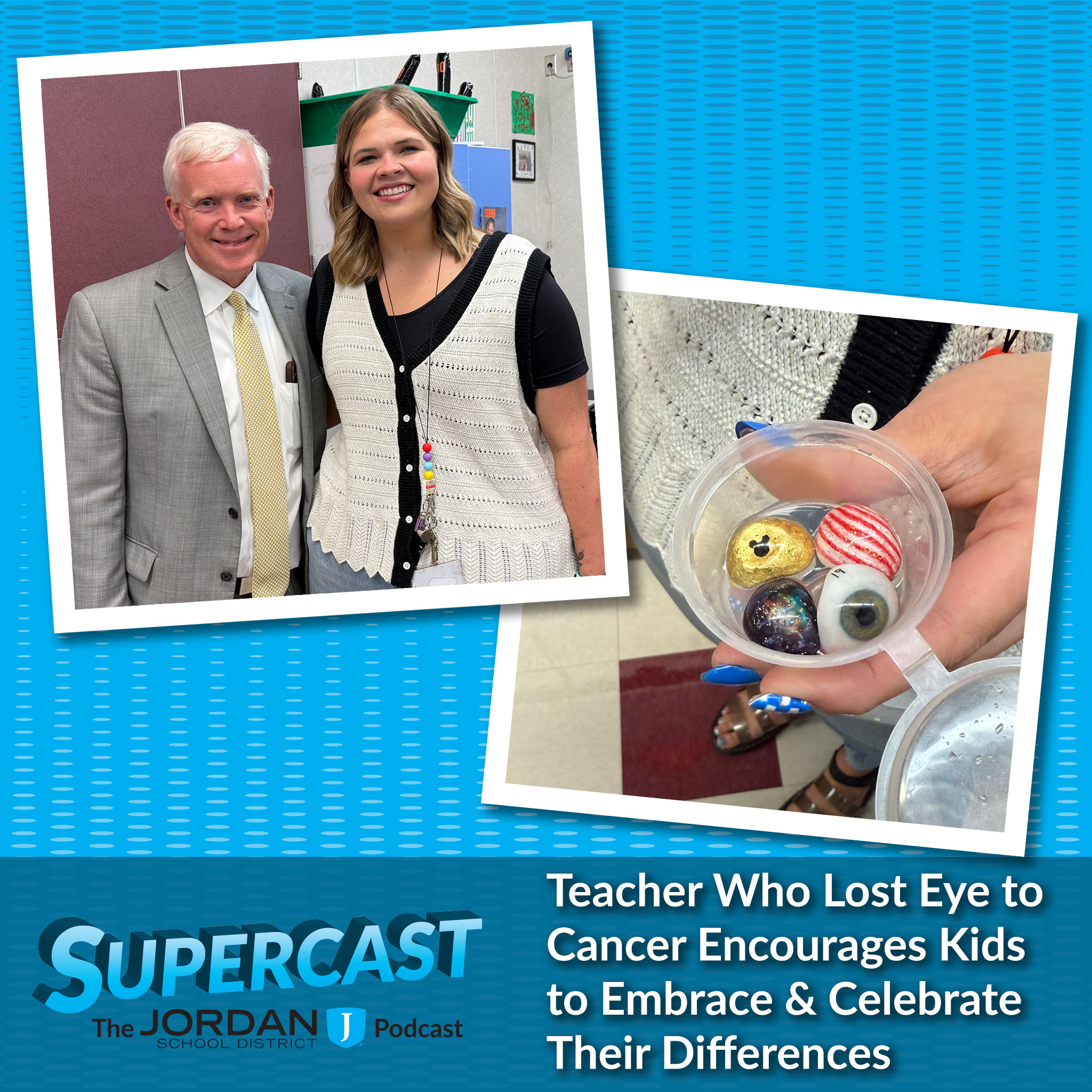
Episode 313: Teacher Who Lost Eye to Cancer Encourages Kids to Embrace & Celebrate Their Differences
Sep 400:18:40Tap to summarizeShe was just a teen when she lost an eye to a rare form of cancer, had to wear an eye patch, and suddenly became a target for hurtful teasing. On this episode of the Supercast, hear the incredible story of Columbia Elementary School kindergarten teacher Alexa Byrd. Find out how one middle school teacher taught Alexa to be proud of her eye patch as something that sets her apart. Hear how Alexa now tells her own students to take pride in their individual differences and how that message is making a difference in their young lives. Audio Transcription Alexa Bird: It's just kind of been my motto now. It's like, "Why blend in when you're born to stand out?" And so I made the decision to get my eye removed. Now I have these fun prosthetics. This year I had a student, she in the middle of the year, found out that she actually had to get hearing aids. She looked at the doctor and said, "I'm going to have special ears like Miss Bird has special eyes." I just went home and cried. [Music] Anthony Godfrey: Hello and welcome to the Supercast. I'm your host, Superintendent Anthony Godfrey. She was just a teen when she lost an eye to a rare form of cancer, had to wear an eye patch, and suddenly became a target for hurtful teasing. On this episode of the Supercast, hear the incredible story of Columbia Elementary School kindergarten teacher Alexa Bird. Find out how one middle school teacher taught Alexa to be proud of her eye patch as something that sets her apart. Hear how Alexa now tells her own students to take pride in their individual differences and how that message is making a difference in their young lives. [Music] Anthony Godfrey: We're at Columbia Elementary today talking with Alexa Bird about her teaching and her pathway to becoming a teacher. Alexa, thanks for talking with me. Alexa Bird: Thanks for having me. Anthony Godfrey: Tell me first of all just about your teaching career. You're here at Columbia for your second year. Talk to me about how all that came to be. Alexa Bird: I went to school at Utah Tech University and I've always just wanted to be a teacher. Since the time I was little, people would be like, "What do you want to be?" And I was never like the princess or an astronaut or a pilot. It was always, "I want to be a teacher." So, I went to Utah Tech and I went through their program and then I went to the job fair. I talked to Jane Olsen there and the rest was just history. She told me, "Come to Jordan." And then I got a job interview and I interviewed here and it just felt right. And I loved the energy and the community and all the questions and just felt right. And so I said, "Yes." Anthony Godfrey: Well, good job, Jane, for finding Alexa. Tell me, why did you want to be a teacher when you started out at a young age? Why has this always been of interest to you? Alexa Bird: Well, my dad is a teacher and my grandma's a teacher. So I come from a really long line of teachers and I would go to his classroom. He actually worked at West Jordan High School. Anthony Godfrey: Oh, wow. Alexa Bird: And I would be like, "I'm going to be a teacher one day," and pretending like I was him writing on the whiteboards and things. And then when I was going on with my education career in high school, I was diagnosed with medulloepithelioma, which is a cancerous brain tumor in my eye. I started finding that and I had to go to California every 12 weeks because there was no pediatric ocular oncologist in Utah. And so every 12 weeks I was going to California and I just... School was my favorite place and then it became my least favorite place really quick because not for anything except kids were really mean. They would make comments like, "Jeez, Alexa, don't stand so close. I don't want to catch cancer," or, “pretending like you have cancer, that's really rude. People die from it all the time where you don't have to pretend to have cancer to get attention.” Soon it just became my least favorite place. I felt terrible. I did radiation. So I was feeling so tired and run down because chemo doesn't really work above your shoulders and it was in my eye, so radiation was the only option at the time. Anthony Godfrey: So you had to have radiation throughout your body and you had to go 12... Every 12 weeks you had to go to California to receive it? Alexa Bird: My cancer is kind of rare, what I had. And so he's like, "I'm willing to try it if you are." So it was actually this special made plaque to fit right over my tumor and they pull the whites of your eye up and sew it right over your tumor because they couldn't just remove the tumor because it would mess up with your eye pressure and things. So the radiation was the only option and it was a one-time deal. So they put a lot of radiation in it and I'd wear it for 10 days to get it fast and quick and then take it off just as fast. But then you feel the effects for a long time after. But I had to go back for checkups. Anthony Godfrey: Wow. So you said when you had cancer. So are you beyond that at this point? Alexa Bird: Yes. I'm cancer free as of a year ago because with childhood cancer, to be considered cancer free, it's five years. Anthony Godfrey: Oh wow. Alexa Bird: I had to wait five years so I finally got it six years ago. Anthony Godfrey: And you have passed your five-year mark six years ago. Wow. So well congratulations on that. Alexa Bird: Thank you. Anthony Godfrey: It must have been particularly heartbreaking that your favorite place became your least favorite place. Alexa Bird: Mm-hmm. Anthony Godfrey: Tell me how it felt at that time. Alexa Bird: I just remember walking down the halls and I was like, "I have to put a huge smile on my face because at the time I thought, 'People can't see that I'm sick. People can't know that I feel terrible and I don't want to be hearing. I can't let them know that their little tiny jabs and their comments are getting to me." So I would walk down the halls with a smile on my face, walking down like I can't hear them whispering about me because at the time I could see the tumor. So I was wearing an eye patch so they would be like, "She's only wearing an eye patch to get attention." And so I would walk down and I would just like put my head down and smile if people talked to me. But I hated it and I didn't want to be there. And one time— Anthony Godfrey: It's exhausting to try that all the time, have to be trying to prove yourself or demonstrate to people that you really are okay even though you're not. Alexa Bird: I would go home and I would cry. I remember one time, after a particularly hard day, I was like, "I'm going to go home and I'm going to come up with every excuse and book and never have to come back to this place because I don't want to do it anymore." That was the day I was walking. I remember like it was yesterday, I was walking into math class and I was like, "I'm done. I'm done. I'm never coming back after today. Just get through the day." That's when my math teacher was there and she had this huge smile on her face. It's the kind of smile that's like, "You can't help but smile back." And she's like, "Alexa, just the person I wanted to see." I was like, "Oh, that's okay. That doesn't match my mood I'm feeling right now." Anthony Godfrey: So was this in front of the class? Alexa Bird: Yeah, it was right before the bell rings. So there were kids in there and it was just like the one minute before that everybody's like just sitting there waiting for the bell to ring. And I was like, I remember thinking, "Well, now I can't be grumpy if she's talking to me with a smile on her face. I can't help but it was the energy you can't help but matching." I remember looking at her and being like, "Yeah, I'm here." She had this box in her hand and it was filled with all different kinds of eye patches. They were like ladybugs and pink camo and sparkly. And it was just this whole box. She was like, "I drove all over town,” and we lived 45 minutes from Salt Lake. And she's like, "I drove into Salt Lake and I was looking everywhere for these for you." And she handed me the box and she was like, "You know, I've been thinking a lot about you." And it's like, "Why blend in when you're born to stand out? And you know, if you have to wear these eye patches, might as well have fun with them. You can match them to your shoes and your outfits and we can have a bunch of fun with this. So I bought this just for you.” I remember going, "Oh, wow." And from there, from that day, I would walk in with my fun eye patches and she'd be like, "Which one are you wearing?" And I'd be like, "They match my shoes today." Or, "They match my shirt." I remember she brought the joy coming back to school and she brought this... I wanted to be there. I wanted to go every day to show her which eye patch I was wearing in school. Some of the kids would catch on and be like, "Wow, I love your eye patch today." They still made those mean comments, but I loved going back to school again. And she was the reason. And it wasn't just because of the academics. It's because she genuinely took the time and showed me she loved me and I wanted to be there to be with her. It made what used to be this dark place, and it made me want to come back to school. And she doesn't realize how that little tiny impact impacted my whole life from that moment. It's just kind of been my motto now. It's like, "Why blend in when you're born to stand out?" I can teach kids that their differences make them special. And now I don't have to wear eye patches, but I have... Because when I was 17, the diagnosis wa...
Transcribe →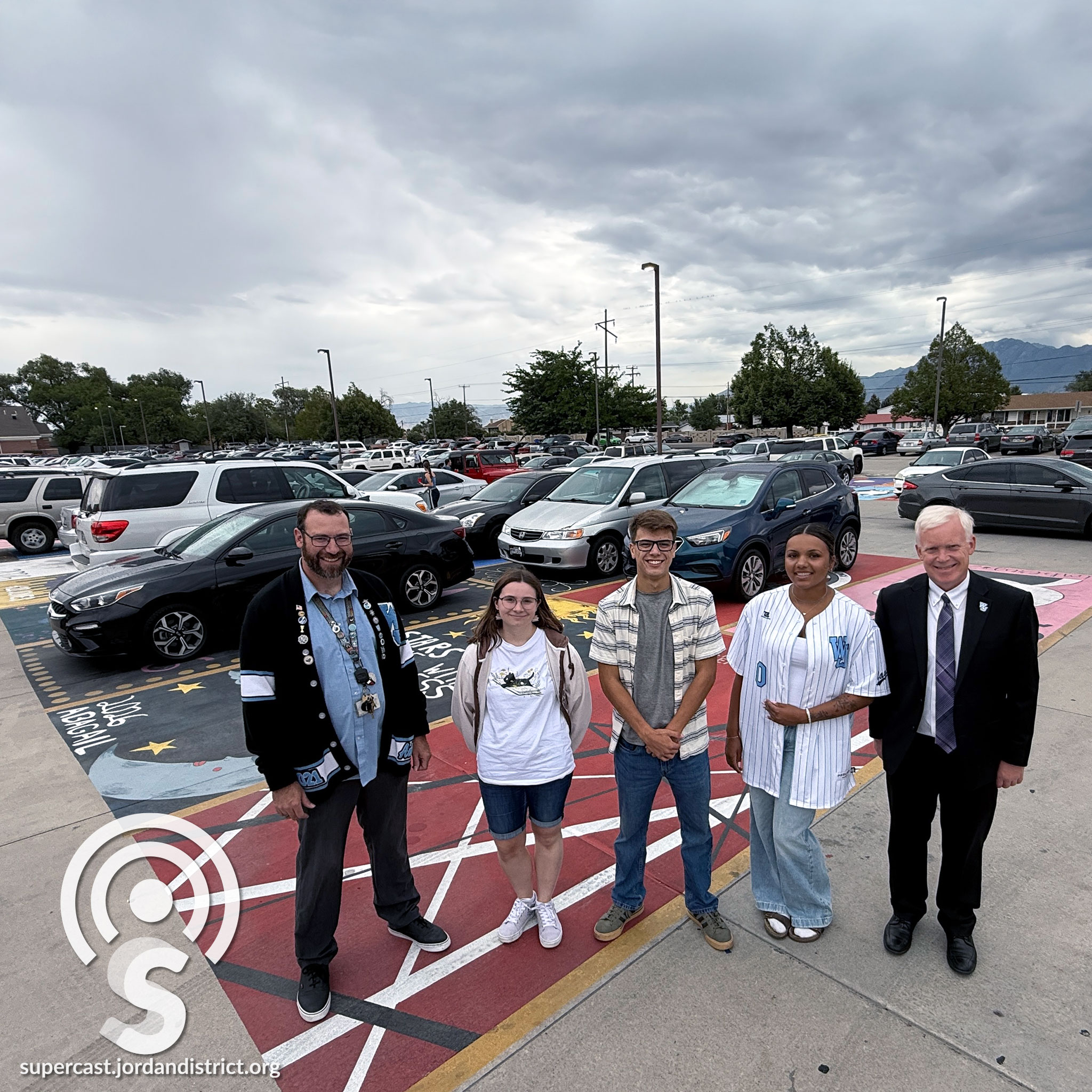
Episode 312: Paint & Park Project at West Jordan High Funding Fun Student Activities
Aug 2800:21:20Tap to summarizeIt is an impressive sight to see in the student parking lot at West Jordan High School. On this episode of the Supercast, find out how a Paint & Park project is raising money for senior class activities throughout the school year. It’s a project where some students were able to paint and personalize their parking stalls in creative works of art you simply have to see to believe. Audio Transcription Katie: It was very intimidating. I was not used to painting something this big. I've never done it before. Anthony Godfrey: Yeah, doing it at scale is a little bit more difficult, I would guess. Katie: Yeah, 100 percent. James Myers: What's awesome about this specific fundraiser is that we're going to be using all the funds specifically for this fundraiser, for the senior class. [Music] Anthony Godfrey: Hello and welcome to the Supercast. I'm your host, Superintendent Anthony Godfrey. It is an impressive sight to see in the student parking lot at West Jordan High School. On this episode of the Supercast, find out how a paint and park project is raising money for senior class activities throughout the school year. It's a project where some students were able to paint and personalize their parking stalls in creative works of art you simply have to see to believe. [Music] Anthony Godfrey: We are here at West Jordan High School with one of the student government advisors. Introduce yourself and tell us a little bit about how these parking spots came to be. James Myers: Alright, so my name is James Myers. I've been an educator here at West Jordan High School for almost nine years. Student government for the last five and with the senior painting and park, this idea, it's been about half a year in the making. So what had happened was that Principal Hutch, over winter break, he had shown me this picture of some kids that have painted their parking spots. And for charity season, one of the activities that we do is that we actually will sell parking spots to the students and they get to have that spot for the rest of the year. And so Principal Hutch sent me this picture of some students that have painted their parking spot and said, "Hey, wouldn't this be cool if we did this for our students?" Anthony Godfrey: So these were pictures from another school? James Myers: Yeah, from another school. Anthony Godfrey: Yeah. James Myers: That got me thinking, because you can’t really do that during the winter because you’ve the the snow and the ice against you. Anthony Godfrey: Sure. James Myers: What if we figured out a way to actually take advantage of the summer and actually do this during the summer? And so I started doing some research, looking around, seeing what other schools were doing. And it really, really picked up, I guess, in May. And then over the summer, I was just working on getting the designs from the students, seeing who all was interested. We started off with 47 spots over here. It was going to be 48, but we didn't take into account that light post over there. Anthony Godfrey: Darn light post. James Myers: Oh, I know. Anthony Godfrey: And you call it the senior paint and park? James Myers: Yeah, the senior paint and park. Anthony Godfrey: That's better than park and wait by a long shot. James Myers: Oh, it definitely is. And it's much nicer to look at, too. Anthony Godfrey: So you decided there were 47 spots available. And how did you decide who was going to be able to access these particular spots? James Myers: That was a little difficult to figure out at first. But in the end, what we decided was that we sent out a mass email, multiple emails , out to the seniors and also sent out on social media to see who was interested. We had a form that they could fill out and such. And in the end, we said, OK, you need to send a confirmation saying that you're indeed interested in order to get one of these 47 spots. And you also have to submit your design for approval or to receive feedback, at least. And so of the first 47 students that both sent in their confirmation and their design so that we could actually start to review it and make sure that it would meet our standards. Once they were able to do that, they were on the list. And we quickly got our 47. And I think we ended up still having like another 40 that we're still contacting wanting to be involved. Anthony Godfrey: So did you take the first 47 or was it based on the designs or how exactly did you decide? James Myers: The first 47. Anthony Godfrey: Yeah. James Myers: These students, they're smart. They have a pretty good idea of what's going to get approved and what would instantly get rejected. Anthony Godfrey: Were there any duplicate designs or did everyone have their own idea? James Myers: We had two. We had two. Apparently Red Bull is very popular. Anthony Godfrey: It gives you wings, I hear. James Myers: I have heard that as well. And I reached out to them and I went, hey, you know you're doing the same design. And they went, yeah, we both know. Anthony Godfrey: So we have two Red Bull designs out there. James Myers: We have two Red Bull designs out there. Anthony Godfrey: Have the people at Red Bull been contacted? They ought to be sending you a swag of some kind. James Myers: I know. That would be amazing. Anthony Godfrey: All right. That's the next step. That's the next step in this. See what you can raise for charity. What's being done with the funds that you raise? How are you going to use those? James Myers: What's awesome about this specific fundraiser is that we're going to be using all the funds specifically for this fundraiser for the senior class. So the seniors that paint it, they will get to reap the rewards of their actions. So we're going to make sure to use it for like the senior dinner dance, senior sunset, senior sunrise, and other activities like that that we love to put on for our seniors. Anthony Godfrey: What do you think this has meant to the students to get to personalize a spot during their senior year? James Myers: Oh, for one, it was just exciting to see them all before the school year started and just seeing them be so excited for this, their last year of high school. And they were just talking and hanging out and having so much fun. We had music going on and everything. And just being able to leave a part of themselves out here for everyone to see, I think that was just something really special. And it was just wonderful to be a part of it. Anthony Godfrey: That's awesome. Well, I can't wait to see them in person. Photos and the videos are what drew me here because they just, it looks fantastic. James Myers: Yeah. We were able to get some awesome drone footage from one of the parents of one of the students. He was also a resource officer over here, Officer Gray. So Detective Gray, he was actually the one that got all that footage of the drone. Anthony Godfrey: Oh, cool. I do hear it's caused some problems though, because other schools are now getting pressure to do the same thing because you guys are setting a trend. And other principals are saying, hey, now everyone wants us to do it as well. So you may see this spread to other schools next year. James Myers: I would be, I'm looking forward to it because there's just so many creative ideas out there and I want to see them painted. And I just hope that they all share their pictures as well. Anthony Godfrey: That's exciting. Now, from a technical standpoint, tell me what type of paint you use because when I first saw this, I thought, well, the first rain, we're going to be in trouble. So does the paint come off eventually or are these seniors now, they'll be able to come back when their children attend West Jordan High and park in their spot? James Myers: Oh, if that's the case, we're going to be running out of parking space. Anthony Godfrey: Yes. Yes. James Myers: So I went to Home Depot to get our paint. Got the cheapest stuff that they had. I mean, it was still like twenty twenty-five dollars a gallon of paint. Anthony Godfrey: Yeah. James Myers: Yeah. Except for the white paint. I was able to get the five-gallon buckets of that. So, you know, bulk paint a little bit cheaper there. We probably went through 90 gallons of this house paint. So it's house interior paint. It is washable when it's wet and you can wipe it clean. OK, at least that's what it says on the can. And so we're hoping that it will last, you know, through most of the school year. I am really interested to see what will happen come winter once all the elements and you got the rock salt and the ice scraping and everything. Anthony Godfrey: Sure. James Myers: And the plan, I guess, for next year, we're going to have to do some testing because, you know, this is the first time that we're trying this out here. Anthony Godfrey: Yeah. James Myers: With our climate would be to get some pressure washers out here to see just how effective that would be for removing it if we need to put on another base coat. Anthony Godfrey: But yeah, you can always paint over it. James Myers: Yeah, we can always paint over it. Anthony Godfrey: Yeah. OK. Well, it's really exciting. It's a creative and fun way for people to feel a greater connection to their school and to raise m...
Transcribe →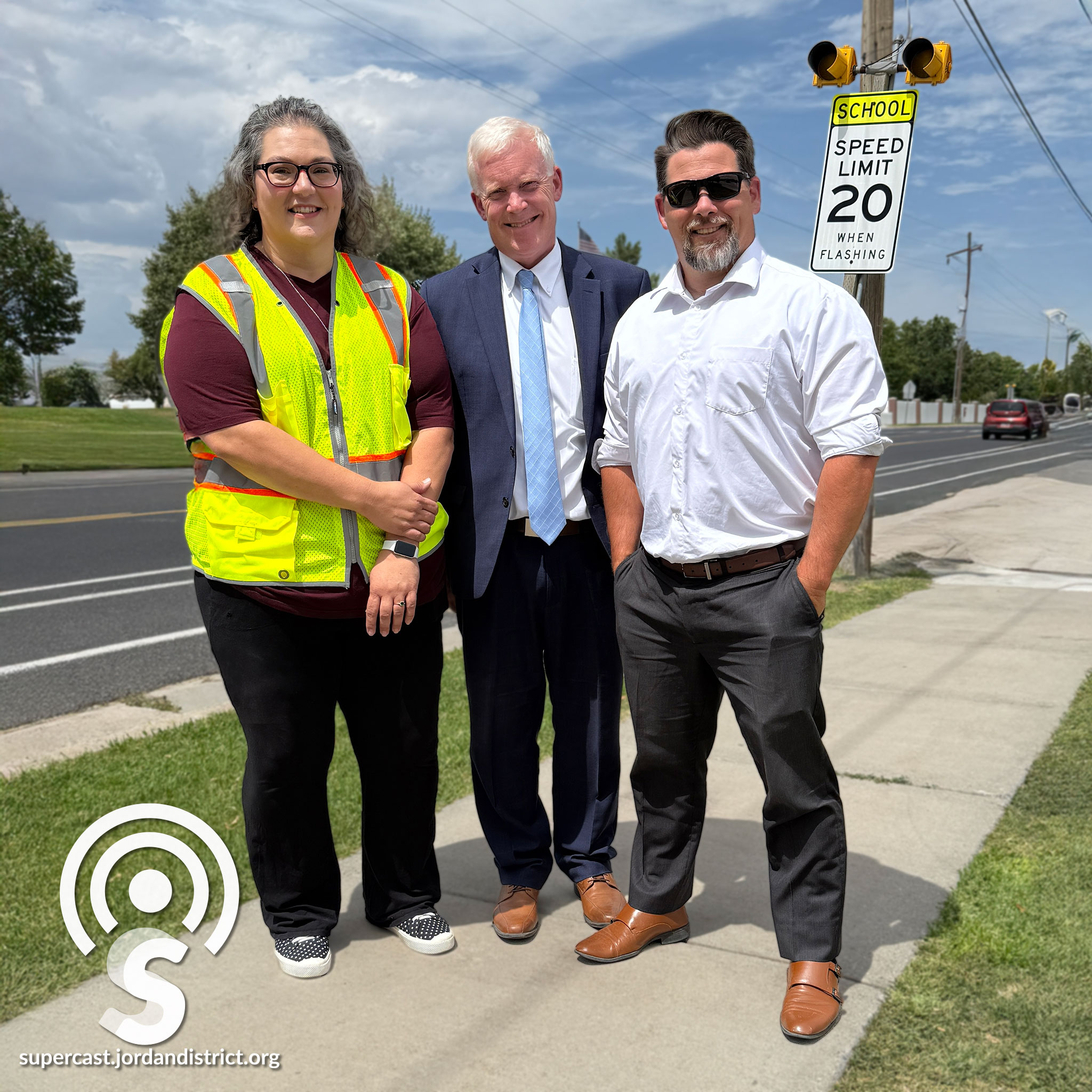
Episode 311: Let’s All Stop, Look, and Listen to Keep Kids Safe Walking to School
Aug 2100:16:19Tap to summarizeIt’s that time of year when thousands of students are making their way to school walking eagerly through neighborhoods, along established safe walking routes. On this episode of the Supercast, find out how we can all work together to better protect young pedestrians and make sure their travel to and from school is safe. Audio Transcription [MUSIC] Sarah Elliott: If we all did what we were supposed to do, the world would be a better place. But it doesn't always work that way. There are distractions and things happen and you've just gotta be aware, no matter which side you're on. Matt Alvernaz: What we're looking at is more than just how can we get the kid to school. It's what is the safest route? Sarah Elliott: Nothing's more important than keeping these kids safe. Anthony Godfrey: Absolutely. [MUSIC] Anthony Godfrey: Hello and welcome to the Supercast. I'm your host, Superintendent Anthony Godfrey. It's the time of year when thousands of students are making their way to school, walking eagerly through neighborhoods along established safe walking routes. On this episode of the Supercast, find out how we work together to better protect young pedestrians and to make sure their travel to and from school is safe. [MUSIC] Anthony Godfrey: We're here in front of Oquirrh Hills Middle School to talk about safe walking routes. Introduce yourselves and let's talk about being safe getting to school. Sarah Elliott: My name is Sarah Elliott. I'm the crossing guard coordinator for the Riverton City Police Department. Matt Alvernaz: I'm Matt Alvernaz, the school safety coordinator for Jordan School District. Anthony Godfrey: Sarah, tell me how many crossing guards do you have in Riverton City? Sarah Elliott: We have about 46 on our payroll right now. Anthony Godfrey: And many people misunderstand this, but actually the cities have the responsibility for coordinating the efforts of crossing guards, not the school districts. Tell me about how all of that works and if someone's hearing this and they're interested in applying, how they do that? Sarah Elliott: Right, so usually we're coordinated through the police departments of each city. So usually if you just Google it, you can find it pretty easily. But each police department will have their crossing guard jobs listed. Anthony Godfrey: Tell us a little bit about the training that goes into becoming a crossing guard. Sarah Elliott: So UDOT has some really great training materials that we use, videos and things, and then mostly just on the job training. Shadow a couple of shifts and then get ready to get out there and keep those kids safe. Anthony Godfrey: What are the best tips for students who are crossing the street? Let's start with the students to make sure that they're doing that safely, whether there's a crossing guard there or not. Sarah Elliott: For sure, being a responsible pedestrian is super important. The kids need to learn to make eye contact with drivers. Looking both ways obviously, but really trying to make eye contact with the driver to make sure that the driver sees them before they step out into the road. Anthony Godfrey: Should they point at their eyes with their fingers and point at the eyes of the driver, Robert De Niro style, I'm watching you? Sarah Elliott: It would probably help us out a little bit maybe. Yeah, I might put that on my guard's responsibility. Anthony Godfrey: But I have heard that over the years, make eye contact with the driver so you know that they see you. Sarah Elliott: Exactly, yeah. Then of course if it's a staffed crosswalk, kids need to wait until the crossing guard will vocally tell them to cross and also signal them to cross and they just need to be sure that they're waiting and paying attention. Anthony Godfrey: Now let's talk about drivers. What tips do you have for drivers to be sure that they are safe as they approach and ultimately go through a crosswalk? Sarah Elliott: Paying attention, that really being aware of your surroundings is important for both sides of this coin. Get off your phones, pay attention to where you are, notice the lights, make sure you're going the speed limit and just don't let other things distract you because nothing's more important than keeping these kids safe. Anthony Godfrey: Absolutely. Now, when you see the crossing guard walk out with the stop sign, you stay stopped until they and every child in the crosswalk has made it to the curb. Sarah Elliott: Right, right. Don't start going just because the kids are out of the road. The crossing guard needs to be safe too. So you need to wait until they're totally onto the curb and have put their stop sign down and then you can go ahead and proceed through the crosswalk. Anthony Godfrey: Any cautionary tales to share, things that you've seen happen that it's really what you kept repeating is just kind of the need to pay attention as a driver, but anything specific in the past that has happened? Sarah Elliott: I mean, we unfortunately have had kids get hit and a lot of close calls and it really all just boils down to being aware and paying attention. And like I said, on both sides of the coin, the pedestrians have to pay attention too. Just because you have the right of way doesn't mean you can just go. You still have to pay attention and make the right choice. Anthony Godfrey: That is the illusion sometimes. Well, I'm in the crosswalk and you're supposed to stop, so I'm gonna walk. You do have to think, I wonder if they see me? I wonder if they're paying attention? Sarah Elliott: If we all did what we were supposed to do, the world would be a better place. But it doesn't always work that way. There are distractions and things happen and you just gotta be aware no matter which side you're on. Anthony Godfrey: There are different types of crosswalks I know. There's the Beatles crosswalk on Abbey Road. Sarah Elliott: Yeah, yeah. Anthony Godfrey: There's the school crosswalk and then there's the normal crosswalk. So talk to us about the difference between, I can recognize the Beatles crosswalk. But the other two, let's talk about the distinction between those two. Sarah Elliott: So they go by lots of names, but the zebra striped or school zone crosswalk. If somebody's in that crosswalk and with a crossing guard or without, if you've got a zebra stripe crosswalk, as a driver, you need to wait until that person is completely out of the road before you go. They need to be on the curb on the other side. The ones you see at more major intersections that are just the two parallel lines, those you're gonna wait until that person is off of your side of the road and then you're safe to go ahead and proceed. Anthony Godfrey: So they start on your side and they've crossed the median and now they're on the other side of the road, you can drive through. Sarah Elliott: If it's the parallel lines. Anthony Godfrey: If it's the parallel lines, but the zebra stripe, you wait curb to curb. Sarah Elliott: You wait the whole time. Anthony Godfrey: Okay, all right, that's a good distinction. Now I'm gonna notice all the zebra stripe versus the parallel line crosswalks. Sarah Elliott: Being aware, it's part of safety. Anthony Godfrey: Okay, all right, very good. With Matt Alvernaz, our school safety coordinator for Jordan School District. Matt, what other tips do you have for drivers and pedestrians? Matt Alvernaz: You know, one thing that we were talking about beforehand was the parents. Teach your kids, don't just park somewhere and say, “Hey, run across the street over to me” because this is convenient. Teach them to go to the right way, show them the right way. And if you're gonna get out and walk with them, just because you're an adult, doesn't mean you don't have to go to the crosswalk either. Anthony Godfrey: We've all thought, I can think of moments when I was with my kids and I'm like, do I show the example of going to the light or do we dart across the street, cuz we can probably make it? And it's about setting the example at other times as well. Matt Alvernaz: Right, you wanna emulate what you want them to do when you're not there. So sure, you could make it, you're an adult, you can make it, you're safe, all that stuff, it's actually not because you're teaching them bad habits. You're teaching them, this is okay when I'm with my parents, why not when I'm not with them? And they don't usually make the best judgment. And to be honest with you, a lot of adults don't either, whether they're driving or walking. Anthony Godfrey: Right, Sarah, you used the term responsible pedestrian. It made me feel like sometimes I have not been a responsible pedestrian. Sarah Elliot: Well, we preach responsible driving. I've got two teenagers that just got their driver's licenses and so we're harping on them all the time. But the responsibility for safety falls on everybody. [MUSIC] Anthony Godfrey: Stay with us when we come back. We'll walk you through the process of how safe walking routes are established through the entire school this week. [MUSIC] Male Voice: Never miss an episode of the Supercast by liking and subscribing on your favorite podcasting platform. Find transcripts for this episode and others at supercast.jordandistrict.org. [MUSIC] Sandy Riesgraf: In Jordan School District, we like to support students in a...
Transcribe →
Episode 310: West Jordan High Graduate is Gold Medalist in Sled Hockey and in Overcoming Obstacles
Aug 1400:20:14Tap to summarizeShe is a motivational speaker, an amputee, athlete, humanitarian, and goalie for the gold medal winning U.S.A. Para Ice Hockey team. On this episode of the Supercast, we meet West Jordan High School graduate Hope Bevilhymer. We hear Hope’s inspirational story of tragic challenges in life to hard-earned triumphs. And, you’ll find out what happens when we hit the ice with this elite athlete. Audio Transcription Hope Bevelheimer: I play para, I talk to you about …. we’re in a sled. Anthony Godfrey: No one has beaten you at net in international competition. Hope Bevelheimer: Correct. I'm a three-time world gold medalist. Living, breathing, sweating hockey from all year. Amputation wasn't the end for me, it was just the beginning. But it could have been the end for me if I chose to have a PDN. [MUSIC] Anthony Godfrey: Hello and welcome to the Supercast. I'm your host, Superintendent Anthony Godfrey. She is a motivational speaker, an amputee, an athlete, a humanitarian, and a goalie for the gold medal-winning USA para ice hockey team. On this episode of the Supercast, we meet West Jordan High School graduate Hope Bevelheimer. We hear Hope's inspirational story of tragic challenges in life, leading her to hard-earned triumphs. And you'll find out what happens when we hit the ice with this elite athlete. [MUSIC] Anthony Godfrey: We're here at the Accord Ice Center to talk with Hope and Austin about hockey. Introduce yourselves a little bit and let's get into it. Hope Bevelheimer: My name is Hope Bevelheimer. I played for the para ice hockey women's team. So I play in a sled and I'm a three-time world gold medalist. Austin Facer: I'm Austin Facer. I've never won a gold medal in anything. I do a podcast called SLC Puck and just a local hockey content creator doing all kinds of goofy stuff with hockey here in Utah. Anthony Godfrey. Hope, how did you get started in hockey? Hope Bevelheimer: It was prior, I'm an amputee, it was prior to my amputation. I was born with club feet so I had more braces. I couldn't walk much. It was a lot of pain and stuff like that. And so my roommate at the time, she was a recreational therapist actually for the Salt Lake County. And so she had an adaptive program that they were starting and piloting back in 1999 and wanted to see if I wanted to participate. So I got in a sled of September 1999. Anthony Godfrey: Playing hockey since the 1900s. Hope Bevelheimer: Yes. For us, older generation, yes, the 1900s. Anthony Godfrey: That's right. And you went to West Jordan High School. Hope Bevelheimer: Correct. Anthony Godfrey: Talk to me about your time at West Jordan High. Hope Bevelheimer: Well, I was a little different student. I had 29 surgeries before I had amputated. So all my high school, junior high and school years were spent in and out of the hospital. And so I had a lot of support from the school teachers and things like that. They would show up at my house on a Monday. I wasn't homeschooled. I called it hospital schooled. They would show up at my school/house on Monday, give me a load of the work, teach me if they needed to teach me, and then come back on Friday, pick up all the work, and then give me tests and all that stuff. And then when I was in school, very supportive. I had to be in a wheelchair sometimes. I know-- I don't know if West Jordan still has it, but there was an elevator. So I had a key to the elevator, like all sorts of things. Anthony Godfrey: There is an elevator, yes. Hope Bevelheimer: So I was an elevator rider, all those things, but they made accommodations for me. And it was difficult because we didn't have Google. We didn't have all that stuff back when I was going into school. I graduated in '95, so none of this technology we had then. It was just more difficult to try to learn on your own. Because I had support from the teachers, but I was mostly in the hospital most of the time. Anthony Godfrey: Tell me about World Cup competition. You're a three-time gold medalist. Just in November, you beat Canada in Norway. Hope Bevelheimer: Yes. Anthony Godfrey: That's really exciting. Talk to me about that trajectory. Hope Bevelheimer: We have, I've played international competition for a decade. USA Hockey took us over in 2019, so we were privately, they were trying to get this going back when I started. But 2019, USA Hockey took us over, and then that's when we started doing bigger international competition. Then COVID took over. And then we got put on hold for a little bit, but I went to Czech Republic, I've been to Norway twice, I've been to all the places in Canada, but I have not lost an international competition. When I've been in net, nobody has won against me. Anthony Godfrey: No one has beaten you at net in international competition. Hope Bevelheimer: Correct. I have beat all international competitions for a decade. Anthony Godfrey: That's amazing. Hope Bevelheimer: So that is a feat that I'm very excited about. Anthony Godfrey: Yeah, that is impressive. So you started in 2019, and then everything was put on ice during COVID, or off ice during COVID, and then back on ice after COVID. Hope Bevelheimer: Correct. Anthony Godfrey: Never defeated. That's incredible. Hope Bevelheimer: The last one we just played, we went to Canada to do a border battle. We call it the border battle, it's just us and Canada. We just go head-to-head, play a three-series. It was a close game, it was four to three. So yeah, I let three goals in, but they still didn't beat me. Anthony Godfrey: Are Canadians polite even in hockey? Hope Bevelheimer: No, they don't like us. Anthony Godfrey: They don't think so. And they definitely don't like losing. Hope Bevelheimer: No, and then I like chirping in their head, so that makes it worse for them. Anthony Godfrey: Yeah, it's the trash talk. Is there a hockey trash talk? Hope Bevelheimer: There is plenty of trash talk. Austin Facer: Chirp is the term for trash talk in hockey. It's a big part of the game. A good chirp, yeah. Hope Bevelheimer: Because as a goalie, your skill is about 15%, your body is another percent, but it's a lot of mental. You have to be in your game when you're in goal. You have to have your head space on. If you don't, it's going to be a mess. So I like to get into other people's head space, so they have a messy game. Anthony Godfrey: Austin, tell me about how you got started in hockey. Austin Facer: Yeah, when I was younger, I was really into hockey movies, and The Mighty Ducks was a favorite of mine. I talk about that quite frequently on my podcast. I could probably recite the whole movie line by line. Around that same time, being like eight or nine, the Olympics were here, and there was a bigger conversation about hockey. I remember I just would beg my mom to take me to public skate at the old Bountiful Bubble Rec Center, which no longer exists. But that turned into playing and then playing all throughout high school. Kind of got out of the hockey scene for a little bit, just as an adult, just working in sports and different kinds of jobs. Kraig Williams, who is actually on your team at the Jordan School District, was a boss of mine at the Salt Lake Bees. So did a lot of sports-related jobs there. And then when the hockey club came to town, I just kind of put everything together with my sports background and love of hockey as a kid and built SLC Puck, which is a podcast that I do twice a week now. Anthony Godfrey: That's fantastic. And where can people find that? Austin Facer: You can find it way too easily. That's kind of the goal. It's on YouTube, Apple, Spotify. I have all the social media handles too at SLC Puck. So I try to put stuff out and bother people on their phones as much as possible. Anthony Godfrey: Perfect. Austin Facer: Yeah, I'm easy to find. Anthony Godfrey: I see that USA on your shirt stands for unity, sacrifice, and attitude. Talk to me about that. Hope Bevelheimer: It is that. You have to have a close-knit team. You have to sacrifice many sacrifices. For a decade for playing, I was telling my friends and stuff like that, I haven't had a real vacation because all my vacation hours go to USA Hockey because I have a regular job. So you have to dedicate. It's off-ice training. It's on-ice training. I’m living breathing sweating hockey all year. They're like, "When's your season off?" I'm like, "It's not off." On the off-season, we have to still condition and do all the things. Anthony Godfrey: Tell me what has been the greatest positive impact that hockey's had in your life. Hope Bevelheimer: Oh, it has saved my life many a time. It just has given me... It's given me hope. It's given me things to look forward to. I never thought I would be starting back in '99. Did I ever think I would be at this level of competition? No, it never crossed my mind. But the ability to just be able to participate in something that's a team effort and a group effort and you're all friends and off-ice, on-ice, all those things, the closer the team is, the better it turns out. Anthony Godfrey: How about for you? Austin Facer: I think there's just so many great life lessons that can be learned with hockey. Probably just all sports in general, but I think hockey really amplifies these attributes you need to be a successful adult. You can lea...
Transcribe →
Episode 309: Copper Hills High Marching Band Takes the Stage Performing with National Recording Artists, “AJR”
Aug 7, 202500:22:40Tap to summarizeThey are internationally known recording artists who have made it to the Top Ten of Billboard's Hot 100. The American Pop band AJR recently performed in Utah and guess what, they invited the Copper Hills High School marching band to take the stage with them. On this episode of the Supercast, find out what the high school students are saying about their experience and this incredible opportunity of a lifetime. Then, listen as Copper Hills High takes the stage for a mic check with members of AJR prior to the big show. Audio Transcription Cadence Ivins: Like getting to know Arnetta as a professional trumpet player was just really inspiring. Alex: We were the big finale. Cadence Ivins: It was definitely scary knowing that it was going to be such a big performance. Definitely a once-in-a-lifetime opportunity that you didn't want to miss. Beckett Brunson: Standing in places that some of my favorite performers have been in, it just made me feel inspired. [Music] Anthony Godfrey: Hello and welcome to the Supercast. I'm your host, Superintendent Anthony Godfrey. They are internationally known recording artists who have made it to the top 10 of Billboard's Hot 100. The American pop band AJR recently performed in Utah, and guess what? They invited the Copper Hills High School marching band to take the stage with them. On this episode of the Supercast, find out what the high school students are saying about their experience and this incredible opportunity of a lifetime. Then listen as Copper Hills High takes the stage for a mic check with members of AJR prior to the big show. [Music] Anthony Godfrey: We're here at Copper Hills High School talking with the Director of Bands. Introduce yourself and tell us a little bit about what got you here. Chris Kuhlemeier: My name is Chris Kuhlemeier. I've been here for just over three years at Copper Hills and loved every moment of it. Over the past couple years, we've been developing our program to get to a higher level of musical excellence and with that, we've just had phenomenal buy-in from our students, families and community, which allowed us to grow to this point and seize such fantastic opportunities like this. Anthony Godfrey: I've been over and talked with your students a couple of different times on various occasions. They're impressive and an energetic and enthusiastic bunch. Let's talk about your experience most recently with AJR and being able to perform with them. First of all, how did all of this come about? Chris Kuhlemeier: Oh man, it was a pure stroke of luck just a few months ago. I, along with a few other directors, it sounds like in the Salt Lake Valley, got an email from one of the producers for the band AJR. Anthony Godfrey: Let's pause right there. AJR, they're no small band playing the Velvet Room, although great bands play the Velvet Room. This is a large-scale operation. They have sold out the Delta Center. They were at USANA. This is a huge venue. So you get contacted by the producer of this well-known, rather quirky, engaging and energetic band. Chris Kuhlemeier: Absolutely. Anthony Godfrey: Tell me about your email and what happened after that. Chris Kuhlemeier: Just a few months ago, we received an email from them just toying with the idea of, "Hey, we're going on tour, this multi-million dollar national tour where we're trying to figure out ways that we want to close the show with a bang." They're notorious for doing some crazy stuff to close out each of their performances. They were toying with the idea and consulted me and others about the logistical challenges faced by bringing out a local marching band at each stop along the way. It was cool planning that out and talking some specifics and logistics with them, but we seem to be the best fit for the job as one of the earlier stops on the tour. They definitely felt that we were a well-organized program enough to be able to put this together with limited experience on their end being so early in the tour. Luckily, I was able to hop on that email very quickly and respond first. It definitely helped our case that we're one of the largest bands this close to the performance venue as well as we're one of very few bands that are as active as we are over the summer. We are constantly rehearsing and performing. Anthony Godfrey: You have access to kids over the summer, and you are super close. I've popped over to a USANA concert after work. You know what? I can make that work. I can grab a last-minute ticket and get over there. I love that. You were fast, quick on the draw. You've got a ton going on, and you're close by. Chris Kuhlemeier: The perfect storm for the perfect opportunity. Anthony Godfrey: How long ago did they lock it in with you and say we want you? Chris Kuhlemeier: It was back in early April, if I recall properly, that we received that activation email. At that point, we had no confirmations. It was all speculative until we got a confirmation just a few weeks later. It was no small task. We had a lot of preparations to do logistically before we even told the kids. In fact, we waited well over a month hiding the secret as a staff that we were doing such a big performance with our students just to figure out if we could pull it off. Bringing so many students together, getting them fitted for uniforms far earlier than we're accustomed to, having them learn and memorize music in addition to what they're already working on for their upcoming band classes, their summer parades, or even their fall show. Figuring out from an educational and pedagogical standpoint how we're going to incorporate this while demanding as little time as possible from our students so that they can enjoy some semblance of a summer. After our planning phase, we locked it in with the producers of the band, and we're able to put together a loose schedule. The beautiful thing about this year is our student body has just been so proactive and so eager to succeed, which we haven't seen culturally in this program for a long time. We're really excited to be back on the cusp of student-driven success because that's the nature of the beast. That our students were able to learn and prepare that music all by themselves all summer. Believe it or not, we got by with just a single three-hour rehearsal the day before the performance. Getting together, having the music all memorized across our group, 105 strong, got together for those three hours, polished it up, and then the next day we went out and performed. Anthony Godfrey: Over a hundred kids. Chris Kuhlemeier: Yes, 105 this year, and that was including a few eighth graders that we brought in for our summer marching band from our local feeder schools. Anthony Godfrey: What a recruiting tool. Chris Kuhlemeier: Yes, exactly, and we would not have heard the end of it if we didn't let the class of 2025 join in for one last hurrah. So some future Grizzlies and some recently graduated Grizzlies got to take part of this huge ordeal, and I'm sure it's one for the books. Anthony Godfrey: And of course you didn't say former Grizzlies because once a Grizzly, always a Grizzly. Yes, of course. Chris Kuhlemeier:Yes. Anthony Godfrey: Well, what a thrill, and how exciting that you were able to make this happen. So many logistics involved in getting over a hundred kids ready, or even earlier than normal. Chris Kuhlemeier: Absolutely. Anthony Godfrey: And I love what you said about still giving them a summer, so you took on as much of it as you could before announcing it and giving them that opportunity. Leading up to it, you announce it, you give them the music to memorize. They do that on their own, and you come together the day before for the practice. Chris Kuhlemeier: Yes. Now, that wasn't ideal, but logistically it made the most sense to give everybody as much of a summer as possible and not start too soon and forget things. We went out on a very, very tedious limb, to say the least, giving them that much time and that little margin of error. But considering the scale of things and the state of the program, we as a staff, while nervous, were relatively comfortable trusting our students to prepare, and they definitely showed up. Anthony Godfrey: I love that you had that trust in your students. We can do this. It's tight, but we know we can pull it off. Chris Kuhlemeier: And that's show business. We're getting them ready. They're, in this capacity, they're professionals. We were a band for hire, and we got to perform with the pros on a professional stage, and they gave one heck of a professional performance. Anthony Godfrey: Let's talk with them. Let's pull them in, and let's hear what that experience was like. Chris Kuhlemeier: Okay. Anthony Godfrey: Stay with us when we come back. We'll hear from the students of Copper Hills High School. [Music] Male Voice: Never miss an episode of the Supercast by liking and subscribing on your favorite podcasting platform. Find transcripts for this episode and others at supercast.jordandistrict.org. [Music] Sandy Riesgraf: Hello. I'm Sandy Riesgraf, Director of Communications for Jordan School District, and we want to invite you to connect with us. So many exciting things are happening in your child's school, your neighbor's school, in every school here, every day. Don't miss out on following the fun or simply staying informed when there's important information we need to share. Join us at JordanDistrict.org or follow us on Facebook, Twitter, and Instagram @JordanDist...
Transcribe →
Episode 308: Preparing Students for a Smooth Transition Back to School
Jul 31, 202500:19:21Tap to summarizeBefore you know it, the first bells will ring and students will fill the halls ready for new adventures in the brand-new school year. On this episode of the Supercast, we share some tips for parents on preparing kids for a smooth transition back to school. Listen and find out how you can get your students off to a successful start. Audio Transcription Transcription coming soon.
Transcribe →