
Podcast
Korea JoongAng Daily - Daily News from Korea
Hosted by Newsroom of the Korea JoongAng Daily · EN
Audio recordings of the Korea JoongAng Daily's in-depth, on-the-scene news articles and features informing readers around the world of the issues of the day in Korea.
Under the slogan "Your window to Korea", the Korea JoongAng Daily is an English-language news organization focused on Korea that strives to publish factual, timely and unbiased articles.
65episodes
Episodes
Newest firstAll episodes

한국, 해상에 묶인 러시아산 원유 확보 경쟁에 합류
Mar 2000:03:55Tap to summarizeThis article is by Sarah Chea and read by an artificial voice. 한국의 대표 영어신문, 코리아중앙데일리가 특종과 단독 인터뷰, 주요 기사를 한글로 요약해 드립니다. 독자들의 많은 성원 바랍니다. 한국이 러시아산 원유 수입을 검토 중이다. 미국·이스라엘과 이란 간 전쟁이 이어지는 가운데, 세계 4위 원유 수입국인 한국도 에너지 확보 경쟁에 나서고 있다. 20일 산업통상부에 따르면 미국이 지난 12일 이전 선적된 러시아산 원유 및 석유 제품에 대한 제재를 한시적으로 풀면서 해상에 묶여 있는 러시아 원유를 둘러싼 각국의 경쟁이 치열해지고 있다. 정부는 이미 거래된 러시아산 원유를 재협상을 통해 확보하는 방안을 검토할 것으로 보인다. 산업부 고위 관계자는 "러시아산 원유 도입 가능성을 놓고 국내 정유사들과 협의 해 검토 중인 것은 사실"이라며 "지난 12일 이전 선적 물량은 이미 다른 주체가 계약했을 가능성이 높아 이를 식별한 뒤 협상을 통해 거래하는 것을 검토 중"이라고 말했다. 한국의 이같은 움직임에 대해 블라디미르 푸틴 러시아 대통령 최측근 인사로 알려진 키릴 드미트리예프 러시아 해외투자 경제협력 특사 겸 직접투자펀드(RDIF) 대표는 19일(현지시간) 소셜미디어 엑스에 "현명한 선택"이라고 언급하기도 했다. 다만 프리미엄이 붙을 가능성이 높다. 호르무즈 해협 의존도가 높은 다른 국가도 이미 러시아산 원유를 노리고 있어 실제 도입은 쉽지 않을 전망이다. 인도는 이미 러시아산 원유 약 3000만 배럴을 확보한 것으로 알려졌고, 인도네시아와 필리핀도 러시아와 논의 중인 것으로 보인다. 대한석유협회 관계자는 "러시아산 원유는 과거에 취급해 본 유종이라 에너지 수급 여건이 악화될 것에 대비해 도입 경험이 있는 물량에 다시 주목하는 것"이라고 설명했다. 대한석유협회는 국내 4대 정유사(에쓰오일, SK에너지, GS칼텍스, HD현대오일뱅크)의 이익과 석유 산업의 발전을 위해 설립된 단체다 러시아 원유 확보에 성공하더라도 물량은 제한적일 것으로 보인다. 산업부 관계자는 "실제 도입이 이뤄지더라도 규모는 매우 소량일 것"이라고 말했다. CNBC 분석에 따르면 지난 12일 기준 전 세계 해상 약 30곳에 묶여 있는 러시아산 원유는 약 1억2400만 배럴로 추정된다. 영국의 석유회사 BP의 세계 에너지 통계 리뷰에 따르면 한국의 하루 평균 원유 소비량은 약 280만 배럴이다. 한국은 러시아·우크라이나 전쟁 발발 이후인 2022년부터 러시아산 원유 수입을 중단했다. 다만 전쟁 전 수입 비중도 2021년 기준 5.6%로 크지 않았다. 영어 원문 Korea is actively seeking to import Russian crude oil on the water, according to a senior official at the Ministry of Trade, Industry and Resource, as the world's fourth-largest crude oil importer scrambles to secure energy resources amid escalating tensions in the Middle East. Given that many countries are seeking or have already grabbed Russian crude cargoes stranded at sea following a U.S. waiver on Russian oil imports, the ministry is expected to resort to renegotiating existing contracts. "It is true that we are in discussions with Korean refiners in reviewing the possibility of bringing in Russian crude," said an official with knowledge of the matter. "We are trying to secure Russian crude products loaded on ships before March 12. Those cargoes would likely have already been contracted by someone else, so the idea is to identify them and potentially strike deals with existing holders," he said. Kirill Dmitriev, one of Russian President Vladimir Putin's close allies, took note of the move, calling it "smart." Still, the procurement — likely to come at a premium — could prove challenging, as many countries reliant on the Strait of Hormuz have already turned to alternative suppliers like Russia. India reportedly purchased about 30 million barrels of oil from Russia while Indonesia and the Philippines are also expressing interest. This came after the U.S. granted India a 30-day waiver to temporarily allow imports of Russian oil stranded at sea, in order to stabilize global oil market prices. Korea stopped importing Russian crude as of 2022 in the wake of the Russia-Ukraine war, but even before the conflict, the volume was modest at about 5.6 percent of the country's annual imports based on 2021. "Since it is a grade we have handled before, the idea is to turn back to those previously sourced barrels as energy sourcing conditions tighten," said a spokesperson at Korea Petroleum Association, a lobby representing Korea's four biggest refiners — S-Oil, SK Energy, GS Caltex and HD Hyundai Oilbank. In the case that the volumes are secured, they would cover only a few days of demand. "Even if we do manage to bring some in, the volumes would likely be very limited," the Industry Ministry official said. About 124 million barrels of Russia-origin oil exist at sea as of March 12, according to CNBC. Korea consumes an average of 2.8 million barrels of oil a day, according to BP's Statistical Review of World Energy report. Other industry insiders said that the process of acquiring Russian crude would be far from simple from both the procedural and diplomatic perspectives. "Even when the import is technically available, the country should also take into account the rela...
Transcribe →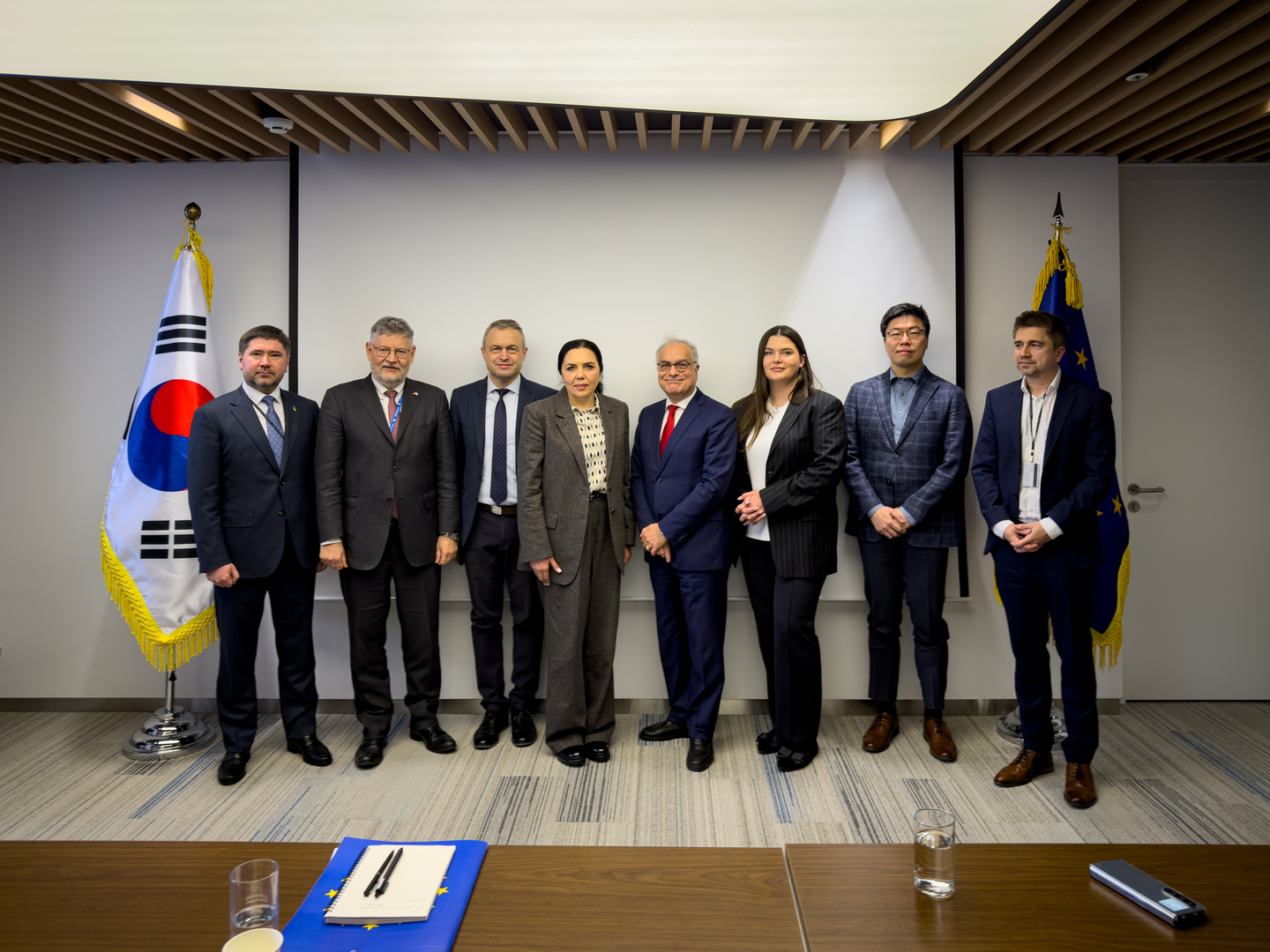
South Korea, U.S., Europe not learning lessons of drone war in Ukraine, roundtable experts warn
Mar 2000:07:05Tap to summarizeThis article is by Michael Lee and read by an artificial voice. Experts warned that South Korea, the United States and European countries remain "unprepared" for the kind of drone warfare Russia is employing against Ukraine at a panel discussion hosted by the European Union delegation and the embassies of Germany and Ukraine on Friday. Mykhailo Samus, a military expert and director of the New Geopolitics Research Network, said that large-scale drone combat has exposed deep gaps in air defense systems designed for a different era, and closing them will require far closer cooperation with Kyiv. Samus noted that fighter jets, once central to air defense, are "not very effective" against systems such as the Iranian-designed Shahed drones used by Russia. Traditional doctrines, he added, no longer match the realities of the battlefield. The panel brought together Ukrainian, European and South Korean experts to examine how Russia's war has affected global stability and its implications for the Korean Peninsula. The discussion also reflected growing concern about the war's broader ripple effects, from deepening Russia-North Korea cooperation to shifting perceptions of the United States as a security guarantor. More than four years into the Russian invasion of Ukraine, the conflict is increasingly seen as both a grinding war of attrition and a laboratory for new forms of combat, particularly in the use of drones, electronic warfare and layered defense systems. For Samus, the transformation of warfare is already complete. While noting that the basic objective of war — detecting and destroying the enemy — has not changed, he highlighted the different ways in which that objective is achieved. Describing Ukraine's battlefield as a dense network of overlapping systems that combine electronic warfare, physical interception and other non-kinetic methods, he highlighted Russian "multilayered" tactics, which center on inexpensive drones deployed in large numbers to overwhelm conventional defenses. To counter them, Ukraine has developed what he called "small air defense," a decentralized approach that differs from traditional antimissile and air defense systems. Samus noted that Ukraine has deployed tens of thousands of such systems, integrating electronic disruption with kinetic responses. Even so, he expressed concern that shortages, particularly of interceptors, will become more acute as the United States focuses on military operations against Iran and defending its assets in the Persian Gulf. Samus said Ukraine has offered to share its experience with Western partners, but warned that adaptation has been slow. "European countries haven't changed a lot," he said, referring to both military doctrine and institutional thinking. He also pointed to shifting political dynamics. In his view, former U.S. President Donald Trump has focused more pressure on Ukraine than on Russia in attempts to end the war, while Russian President Vladimir Putin is trying to consolidate gains in eastern Ukraine through negotiations without paying the cost of major offensives. "If they want to gain this territory, they need to sacrifice thousands of lives," Samus said, warning that Putin would only use negotiated gains in territory held by Ukraine to launch another war. "We need to continue fighting," he added. His remarks were echoed, in different ways, by other speakers who suggested that the war's trajectory is shaped as much by political calculations as by battlefield developments. Nataliya Butyrska, a senior fellow at the New Europe Center, argued that the premise of a near-term peace remains flawed. "Russia doesn't want peace," she said. "It's not possible, in their view, to have Ukraine as a sovereign country," she said, referring to Russia. She also noted that ending the conflict could create internal pressures for the Kremlin. "It's not in the interest of Russia to have soldiers come home to a destroyed economy," she said. She added that the war "is not ...
Transcribe →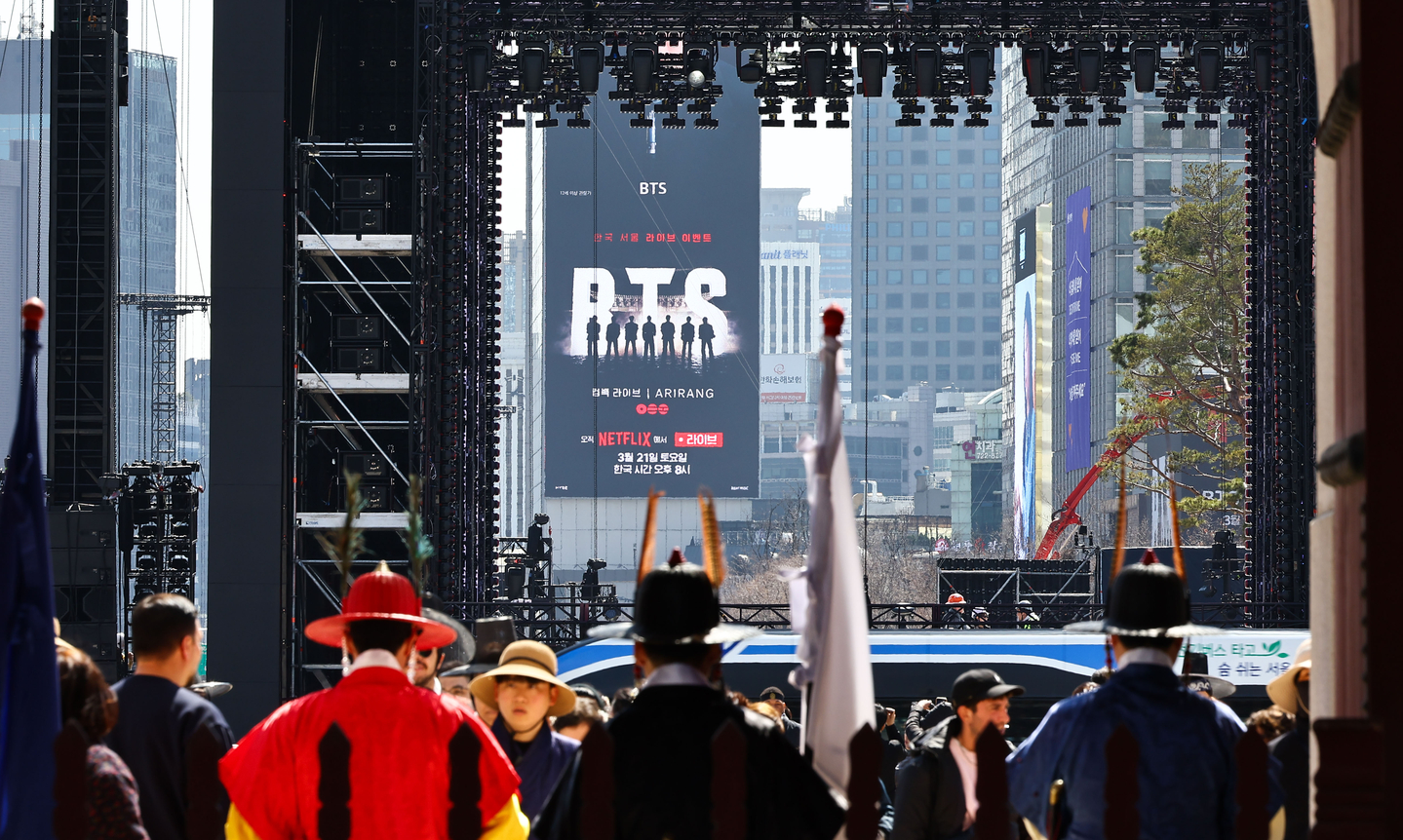
Why was Gwanghwamun chosen for BTS's 'Arirang' comeback?
Mar 2000:05:31Tap to summarizeThis article is by Kim Ji-ye and read by an artificial voice. BTS has become a global phenomenon, with the option to stage their long-awaited return anywhere in the world after nearly four years. Yet it chose Gwanghwamun — one of Korea's most historically significant sites — a decision rooted in HYBE chairman Bang Si-hyuk's belief in emphasizing the group's origins. "While preparing for this [Saturday's] performance, the question that I got asked the most amount of times was 'Why Gwanghwamun?'" said Brandon Yu, the President of HYBE Music Group APAC, during a news conference at Cinecube Gwanghwamun in central Seoul on Friday. "And I think you know all I can say is that it really truly relates to the identity of BTS." Yu added that Bang played a critical role in deciding the venue of the comeback performance in Gwanghwamun Square. "Our chairman Bang has said that if we are focused on the identity of BTS being this band that was created and originated from Korea, which gave so much joy to the world and to many fans around the world, then this historical moment and it has to be in Korea and it also has to take place in the most iconic space in Korea." Live music performance "BTS The Comeback Live: Arirang" will be livestreamed on Netflix at 8 p.m. on Saturday, marking the platform's first-ever live broadcast of a music performance in Korea. The event will be available globally in regions where the service operates. Given the historic setting, Garret English, Executive Producer of the broadcast, said the core approach to the production was "harmony." "It is an immense challenge but a really exciting one that I think that we from our first conversations were very interested in building a connection between both a modern and historical context," he said. "You'll see that we have really tried to create a creative space for the band that accentuates its location in Gwanghwamun and Gyeongbok Palace, but also provides a modern context and a variable context for that as well to really celebrate not only the environment that we're in for the city of Seoul and for the world but also provide a really dynamic production surface to do that but all with the touchstone of making sure that it was in harmony with its space and in harmony with its historical reference which has been a real honor and a pleasure to navigate." Broadcasting a real-time live event is no easy feat. Netflix has previously staged livestreams, including "Skyscraper Live" in Taiwan this January, and acknowledged the challenges involved, noting that the BTS event will be the biggest live production scheduled this year. "I'm not sure what's more intimidating, climbing a skyscraper or pleasing the BTS ARMY, but we're excited to tackle it," Bradon Riegg, the Vice President for nonfiction series and sports at Netflix, said. "I think there's a common thread between both. One is that we want to provide the greatest dreaming experience and a reliability and consistency of that and we've invested greatly in our infrastructure out here and have worked closely with our local partners, but really we view these live events as an opportunity to reach fans and members around the world in a way that is becoming increasingly tough to find singular events that really pull people together." Netflix shared that watch parties will be held around the world, allowing fans to gather in person and share the experience collectively. It expressed pride in collaborating with BTS and said it hopes the event will "set the bar for future musical performances" on the surface. Riegg also hinted that there will be some extra jolts during the event, saying, "We have a few surprises up our sleeves." However, he kept them under wraps, offering no additional details. At 1 p.m. on Friday, BTS's fifth full-length album "Arirang" was released, consisting of 14 tracks, including lead track "Swim," along with B-side tracks "Body to Body," "Hooligan," "Aliens," "FYA," "2.0," "No. 29," "Merry Go Round," "Normal,"...
Transcribe →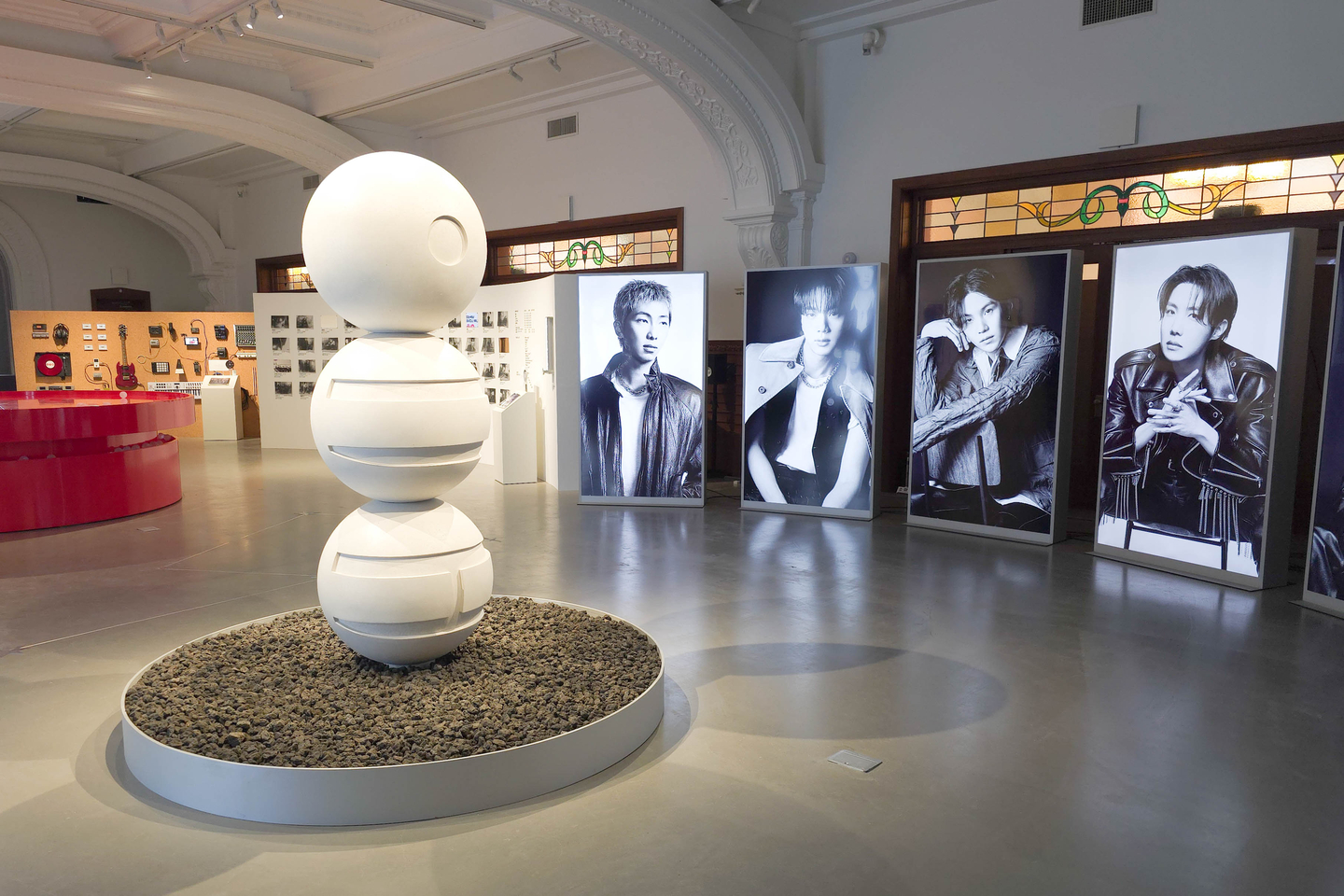
'Arirang' adoration, merch madness on offer with BTS pop-up
Mar 2000:05:25Tap to summarizeThis article is by Woo Ji-won and read by an artificial voice. A pop-up store for BTS's long-awaited fifth studio album "Arirang" opened Friday, welcoming fans from around the world to explore the group's latest universe while getting their hands on new merchandise. "BTS Pop-up: Arirang" opened at 1 p.m. on the fourth floor of The Heritage at Shinsegae The Main in Jung District, central Seoul. A separate pop-up store is also running at HYBE's headquarters in Yongsan District. The space unfolds in two parts: an immersive exhibition zone that brings the concept and message of "Arirang" to life, and a merchandise area packed with new releases. Look down, and one will find the Big Dipper constellation spread across the floor, with each star representing the group's seven members. Surrounding it like a digital Stonehenge are seven vertical screens, each showcasing a member — RM, Jin, Suga, J-Hope, Jimin, V and Jungkook — while a horizontal screen on the opposite side displays a photo of the whole group together, welcoming fans in unison. A large red circular table, dotted with a few holes like a billiards table, is scattered with white balls labeled with five keywords: "Peace," "Hope," "Love," "Dream" and "Trust." Visitors pick the word that best reflects their idea of love, then roll the ball across the surface, watching as it collides and moves unpredictably with others. "Through how the balls move — whether they drop straight in, stop midway or collide with others — the installation visualizes how one's form of love connects with others," said Seo Ji-young, who helped design the space. Encircling the installation are four themed walls, each inspired by a different version of the album: "Living Legend," "Rooted in Music," "Rooted in Korea" and "LP." One wall displays LPs in different colors personally selected by each member, paired with their portraits. Another showcases the "Living Legend" version, featuring items included in the album box set. Across the room, guitars and music-related items such as cassette tapes, headphones and microphones bring the "Rooted in Music" concept to life, while black-and-white photographs from the album photobook line the "Rooted in Korea" wall. At the far end, another interactive station titled "What Is Your Love Song?" invites fans to create their own moment. On an iPad, visitors select a track from the "Arirang" album, choose a logo and enter their name or initials. Once they tap the "Scan" button, a large screen displays the selected track's lyrics along with a BTS image and a handwritten-style message from the members. Different messages are featured for different tracks. A message for the track "2.0" reads: "Thank you for patiently waiting. Damn, it was so long for me too! This is the 2.0. I fxxxxx missed you all!!! Are we on the same page? Wonders and wander..." For the track "Swim," the message says: "It's been so long since all of us met ARMY, we're already nervous. Let's meet as much as we want next year. Wherever ARMY is, we'll come to you," accompanied by a heart with "ARMY" and "BTS" written inside. In the next room, the "Arirang" concept runs through the merchandise. On offer are 18 official items, including T-shirts for 59,000 won ($40) featuring individual members and group images, as well as hoodies in pink at 139,000 won with "What is your love song?" printed on them, along with black versions with abstract paint-style designs for 149,000 won. Five items created in collaboration with the Cultural Foundation of the National Museum of Korea's MU:DS brand add a distinctly Korean-heritage touch — from a shoulder bag embroidered with motifs inspired by the Divine Bell of King Seongdeok to layered skirts and uniquely designed hair clips based on the album logo. Hairpins combined traditional curves with modern materials, while sleek cardholders are made with smooth fabric. Other items include key chains featuring the three-sphere motif or a message-shaped cushion for 39,000 w...
Transcribe →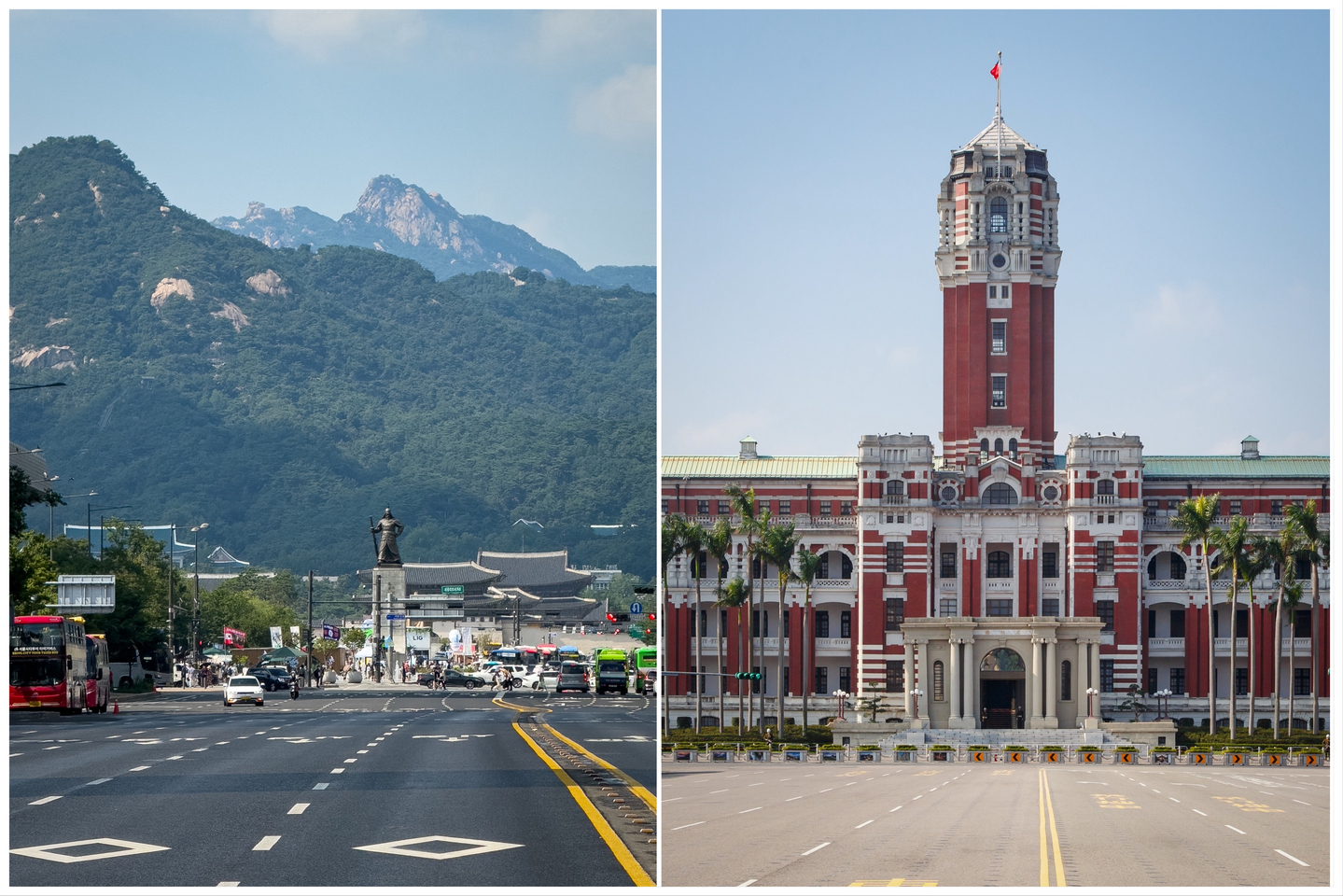
A tale of two cities: Why Seoul demolished what Taipei preserved
Mar 1900:14:03Tap to summarizeThis article is by Michael Lee and read by an artificial voice. When K-pop megaband BTS announced that its comeback album would be titled "Arirang," after the famous Korean folk song, it became clear there was no more fitting stage for the first performance of its upcoming world tour than the avenue of Sejong-daero and Gwanghwamun Square in downtown Seoul. Without the modern skyscrapers, the backdrop to the band's return closely resembles what Koreans and visitors would have seen at the end of the Joseon Dynasty (1392–1910), when the central road led to Gwanghwamun — the main gate of Gyeongbok Palace, framed by mountains to the north. It is a vista BTS fans will likely associate with their time in the capital long after the concert is over. But this background was not always the same. For much of the 20th century, the view north of Sejong-daero ended at the former Japanese Government-General Building — a domed Neoclassical edifice that loomed as a reminder of Tokyo's occupation (1910–45) of the Korean Peninsula. After liberation, the building became so closely associated with the South Korean government and the city that English-language media often referred to it as the "Seoul Capitol," despite mounting controversy over the painful history it represented. But across the East China Sea, an edifice built for a similar purpose escaped such perceptions. In Taipei, Ketagalan Boulevard — renamed in 1996 after the indigenous people who once inhabited the area — leads to a Baroque-style redbrick building constructed by the Japanese as the center of the island's colonial administration in 1919. While Seoul demolished the Government-General Building in 1995, its counterpart in Taipei serves as Taiwan's Presidential Office today. This divergence reflects how two societies, both shaped by occupation, war, dictatorship and late democratization, came to interpret the architecture of Japan's empire in fundamentally different ways: as something to be erased in one capital and absorbed into the national landscape in the other. Remaking capitals The divergence began not only with the imperial intent the buildings embodied, but with the cities that Japanese builders entered. "Seoul was already a fully formed capital with a deeply established symbolic order," said Lee Yeon-kyung, an architecture professor at Yonsei University, referring to its layout along pungsu jiri, or geomantic principles. Before the Japanese occupation began, that order included a meridian running through Gyeongbok Palace and along Yukjo Street — now Sejong-daero — which linked the royal residence to six government ministries just south of Gwanghwamun. This axis from the mountains to the north and Cheonggye Stream to the south was seen as an auspicious conduit for geomantic energy. It intersected at its southern end with the city's main east-west road, Jongno, where commerce and everyday activity unfolded. Taipei, by contrast, offered Japanese colonizers a far emptier canvas. "Historically, the center of power on the island had been Tainan," Lee said, noting that Taipei "was only designated as the provincial capital late in the Qing period." Its walls, built just a decade before Japan took control in 1895, enclosed what was still a small settlement surrounded by vast tracts of undeveloped land. That contrast shaped how colonial rule was experienced. According to Lee, building projects in Taipei "were experienced as urban expansion," while such developments in Seoul "felt much more like a foreign intrusion into an established historical core." Nowhere was this more evident than at Gyeongbok Palace, where Japanese authorities demolished all but 36 of some 300 structures to make way for the Government-General Building, which was completed in 1926 in what was once the forecourt of the royal residence. Han Jung-sun, a professor of international studies at Korea University, said the Japanese chose this location to "mutilate and imperfectly erase the icon of the conquered ...
Transcribe →
Gugak's next evolution? Korean composers expand on traditional music with Western orchestral flavor.
Mar 1900:05:56Tap to summarizeThis article is by Choi Min-ji and read by an artificial voice. When tradition meets globalization, what becomes of the new generation of creators who are tasked with finding a sweet spot between the old and the new? The National Orchestra of Korea takes a shot at giving what could be an answer — the marriage between gugak (traditional Korean music) and orchestral sounds. The national orchestra is set to present a concert featuring works exclusively by its two resident composers, Son Da-hye and Hong Min-woong, highlighting the evolving sound of Korean orchestral music. Its orchestral series III concert titled "2025 Resident Composers: Son Da-hye and Hong Min-woong" will take place Friday at the Haeoreum Grand Theater in central Seoul. The concert reflects broader efforts to expand the musical language of gugak following the influence of Western music in the 20th century. Changes in instruments and composition techniques led to the emergence of gugak orchestras that resemble Western-style ensembles. Son and Hong remain among the few resident composers — composers who work with a specific orchestra for a set period — in Korea across both traditional and Western music ensembles. The National Orchestra of Korea selected them last year as it revived its composer-in-residence program to mark its 30th anniversary. It was the first to introduce the system in the gugak orchestral field from 2016 to 2018. The concert will feature "Daejeok," an orchestral piece by Son that musically portrays Korea's royal palaces, and "Gwiro," a work by Hong that follows the journey of Princess Bari, a figure from Korean folklore, both composed over the past year in close collaboration with the orchestra. The orchestra described the works as the result of extensive discussions on themes, structure, notation, instrumentation and performance techniques. "Writing these pieces was very demanding," Son said. After their first rehearsal at the National Theater of Korea on March 12, the two composers spoke with the JoongAng Ilbo ahead of their performance on Friday. "These pieces are about twice as long as my earlier commissioned works, so they took much more effort," Son continued. "Unlike Western music, where I can preview a piece using notation software, I cannot hear gugak music in advance. It's hard to describe the mix of excitement and nervousness when I hear around 70 musicians perform my work live. Still, I trust the orchestra will deliver a strong performance." Hong also described his approach to composition in more personal terms. "I wrote this piece with specific musicians in mind rather than just instruments," Hong said. "I usually think about the general sound of an instrument like the gayageum [a traditional Korean zither], but this time, I focused on how our orchestra's lead player actually performs, including their touch and vibrato. Thinking about a real performer's breathing made the music feel more alive." Both composers draw on Korean themes and narratives. Son's new work "Daejeok" takes inspiration from Gyeongbok Palace, Changdeok Palace and Deoksu Palace — once the centers of power during the Joseon Dynasty (1392-1910). Hong's works "Gwiro" and "Swaeru" draw on Korean folktales, including the story of Princess Bari, a myth about a princess who journeys to the underworld to save her parents, and the tale of Gyeonu and Jiknyeo, star-crossed lovers separated by the Milky Way who meet once a year. Their musical paths also differ from the typical route. Both graduated from general high schools rather than arts high schools, which dominate the gugak field. Son began studying Western composition before switching to gugak composition at the Korea National University of Arts and later moved into musical theater composition in graduate school. "I started composing as a hobby in elementary school," Son said. "I used to record songs I wrote on cassette tapes and give them to friends. I decided to seriously pursue composition in my final year of ...
Transcribe →
Yellow envelope law risks overlooking incentives in market economy
Mar 1900:05:57Tap to summarizeThe author is an editorial writer at the JoongAng Ilbo. When policymakers design institutions based on one-sided perspectives, unintended consequences tend to follow. Korea has seen this pattern before. The Act on the Protection of Fixed-term and Part-time Employees, introduced in 2007 under the Roh Moo-hyun administration, aimed to protect vulnerable workers. It required companies to convert contract workers into full-time employees after two years of service. The intention was widely praised as fair and humane. In practice, however, many firms responded differently. Rather than offering permanent positions, they dismissed contract workers before the two-year threshold. What was meant to promote job security instead led to greater instability, particularly for young workers who cycled through temporary positions without gaining stable employment. It was an example of how market responses can undermine policy goals. A similar pattern emerged with the Moon Jae-in administration's push to raise the minimum wage to 10,000 won ($6.67) per hour. The policy resonated with public sentiment that workers deserved fair compensation. Yet the rapid increase placed pressure on small business owners and self-employed operators. Many responded by cutting part-time staff, often the most vulnerable workers. Convenience store owners reduced hiring, while the spread of kiosks accelerated as businesses sought to offset rising labor costs. The revision of the Distribution Industry Development Act in 2012 during the Lee Myung-bak administration followed a comparable trajectory. Designed to protect traditional markets, the law imposed mandatory closures and restricted operating hours for large retail chains. While the policy addressed concerns about small merchants, it failed to account for broader shifts in the retail sector. During this period, online commerce expanded rapidly, and the domestic market was reshaped, with Coupang, backed by U.S. capital, emerging as a dominant player. The recently implemented "yellow envelope law," which revises the Trade Union and Labor Relations Adjustment Act, may have even broader implications. On its first day of enforcement on March 10, subcontracted workers at 407 workplaces launched coordinated actions calling for direct negotiations with primary contractors. Companies have already begun accelerating automation and the introduction of robotics. The likely economic consequence is a contraction in employment. Efforts by labor unions to resist these changes may intensify, but technological adoption is part of a broader structural trend that is difficult to reverse. In some cases, expansive bargaining demands by subcontracted unions could hasten the shift toward automation rather than slow it. These policies — covering nonregular employment, minimum wages, retail regulation and labor relations — share a common feature: They were introduced with the goal of advancing fairness and protecting weaker groups. Yet their outcomes have often destabilized employment conditions for those very groups and disrupted the broader economic ecosystem. Why do such policy outcomes recur? One explanation is the tendency to focus on a single perspective. In economics, it is widely recognized that any policy produces both benefits and side effects. The absence of such balanced consideration can lead to outcomes that diverge from initial intentions. The government should consider supplementary measures without delay. Simply encouraging labor and management to resolve disputes through mediation procedures is unlikely to be sufficient. A more pressing concern is the rapid substitution of human labor with automation, even in roles that remain viable for workers. If lawmakers were to place themselves in the position of business operators, the likely response becomes clearer. Faced with repeated demands for negotiations over managerial decisions and sustained pressure for wage increases, firms may seek to reduce or terminate subcontra...
Transcribe →
What keeps a political party alive
Mar 1900:05:17Tap to summarizePark Sang-hoon The author is a political scientist. When political parties rely on ordinary members' dues rather than large donors, they are often described as "mass parties." When they reduce competition and depend on state subsidies, they are labeled "cartel parties." Korea's major parties appear to fit neither model. But a different pattern is emerging, one in which large parties generate significant revenue by leveraging the ambitions of candidates seeking elected office. If the pattern continues, it may lead to the emergence of a new type of party. Parties are no longer primarily vehicles for representation or policy formation but function increasingly like platforms that monetize access to nominations. While this tendency is not limited to any one party, the Democratic Party (DP), expected to perform strongly in the upcoming elections, offers a clear example. Contrary to the common assumption that state subsidies account for the largest share of party finances, carried-over funds make up the biggest portion of the DP's revenue. According to the National Election Commission's January report, "Overview of Party Activities and Financial Statements 2024" (translated), the party accumulated 248.9 billion won ($166 billion) in carried-over funds between 2020 and 2024, exceeding the 188.4 billion won it received in state subsidies. A key source of this accumulation is special party dues. Party income is divided into general dues, position-based dues and special dues. In 2024, total dues amounted to 37.6 billion won. However, special dues have surged during the current election cycle. As of mid-March, the DP completed candidate registration and screening and entered the preliminary primary stage. Candidates paid a registration fee of 500,000 won and screening fees ranging from 3 million won for local council seats to 8 million won for metropolitan mayoral races. Additional deposits for primary participation were also required. These payments are classified as nonrefundable special dues. Estimating the total requires several assumptions. If one assumes a relatively low competition ratio of three candidates per seat and excludes reductions or exemptions, the figures are substantial. For 17 metropolitan mayoral positions, 51 candidates would collectively pay about 800 million won. For 226 municipal chief positions, 678 candidates would contribute approximately 8.5 billion won. Extending the same method to 872 provincial council seats and 2,988 local council seats yields 22.2 billion won and 58.3 billion won, respectively. Combined, these payments amount to nearly 89.8 billion won, more than double the party's total dues collected in 2024. Position-based dues follow a similar pattern. Many party officials who pay these dues are also prospective candidates. Their payments resemble advance contributions toward future nominations. Elected officials affiliated with the party also contribute monthly dues, with governors paying 1 million won, municipal chiefs 500,000 won, provincial council members 200,000 won and local council members 100,000 won. These payments alone are estimated to total around 3 billion won annually. General dues also reflect candidate-driven dynamics. A significant portion of dues-paying members is believed to have been recruited by candidates themselves. If half of one million members were mobilized in this way, their dues for six months, totaling around 3 billion won, would effectively be borne by candidates. For candidates, the financial burden is considerable. After paying substantial sums during registration and preliminary rounds, they must continue to spend on polling and campaign costs in the main primary and runoff stages. Those who lose receive no reimbursement and are often not informed of detailed results. Internal procedures offer little recourse, as vote-counting processes are not transparent. In this system, parties primarily manage the nomination process while offering limited support in terms...
Transcribe →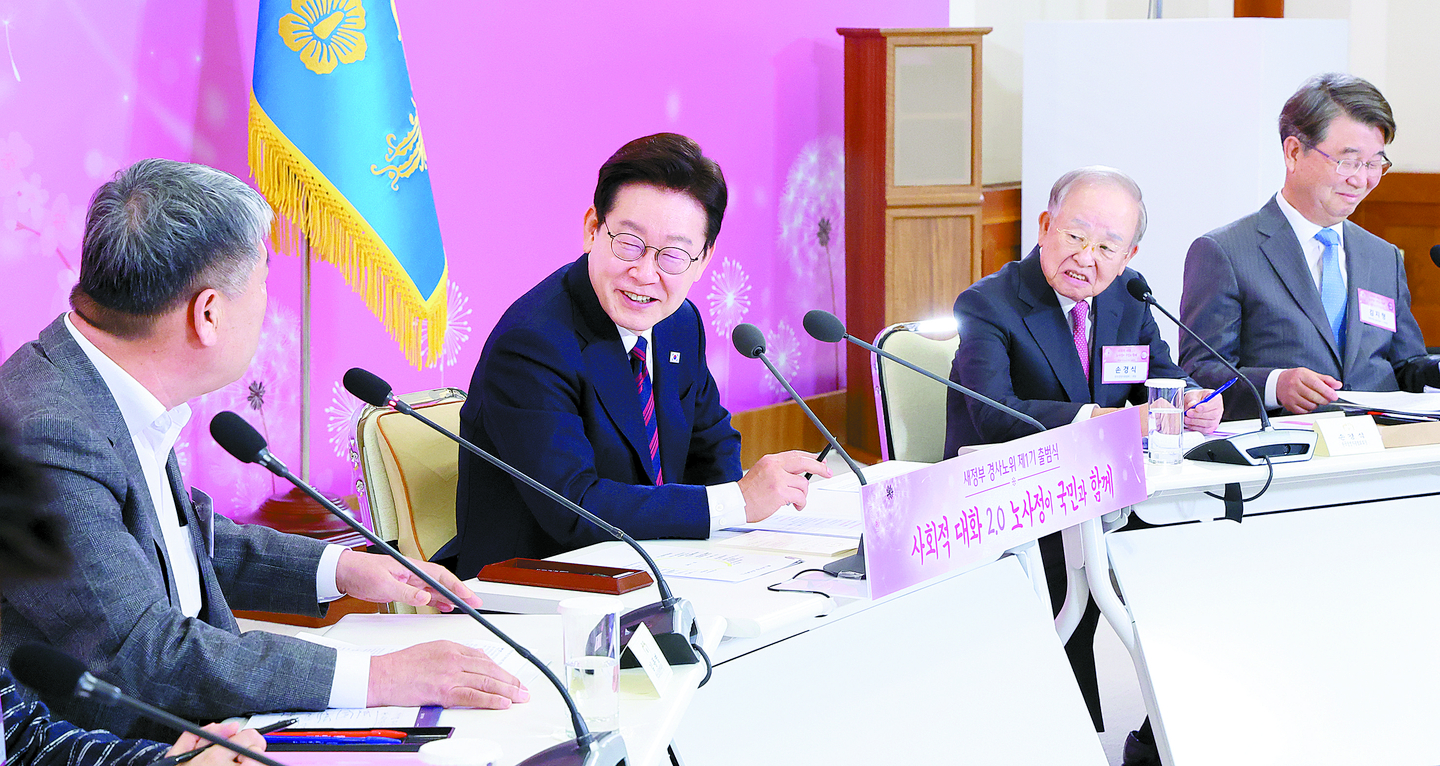
Balance needed for labor pact
Mar 1900:03:10Tap to summarizePresident Lee Jae Myung called for a broad social compromise among labor, business and government on Thursday. Speaking at a labor policy forum marking the launch of the first Economic, Social and Labor Council, Lee said that for workers, "dismissal is equivalent to death," and stressed the importance of creating conditions in which workers can accept greater employment flexibility. Lee proposed strengthening the social safety net as a solution and urged stakeholders to pursue a long-term agreement. He suggested that companies benefiting from greater flexibility should bear more of the costs of expanding social protections. His approach resembles the Danish model of "flexicurity," a portmanteau of "flexibility" and "security," which combines flexible hiring and firing practices with robust unemployment benefits and active labor market policies. In Denmark, such a system has been sustained through high unionization rates, generous unemployment support and extensive job retraining programs. By contrast, Korea's labor market remains structurally divided, raising questions about whether a similar model can be successfully implemented. While concerns from labor groups about job security should not be dismissed, the claim that dismissal is tantamount to death also reflects the extent of protection for certain portions of the work force. In a more balanced labor market, workers whose wages align with productivity would be able to transition more easily to new jobs. Instead, a dual structure has taken hold. Workers in large corporations and regular positions, often backed by strong unions, tend to receive wages that exceed their productivity, while those in small- and medium-sized enterprises or nonregular roles face more precarious conditions. According to Lee Jeong-min, an economics professor at Seoul National University, unionized regular workers in large firms have job tenures 4.8 times longer and wages 2.4 times higher than their counterparts at smaller firms without unions. Opportunities for new entrants remain limited. Only about 2 percent of new hires are in large firms with regular positions, effectively restricting access to desirable jobs for younger workers. This imbalance has contributed to rising youth unemployment, which reached 7.7 percent in February, the highest level in five years. For a meaningful compromise, trust between labor and management and balanced government policies are essential. However, recent measures, including the implementation of the "Yellow Envelope" law, discussions on extending the retirement age and proposals to shorten working hours, have drawn criticism for placing additional burdens on businesses. The government should move quickly to address uncertainties in the industrial sector, beginning with supplementary measures to refine the Yellow Envelope law. Without such adjustments, efforts to achieve a durable social agreement may face significant challenges. This article was originally written in Korean and translated by a bilingual reporter with the help of generative AI tools. It was then edited by a native English-speaking editor. All AI-assisted translations are reviewed and refined by our newsroom.
Transcribe →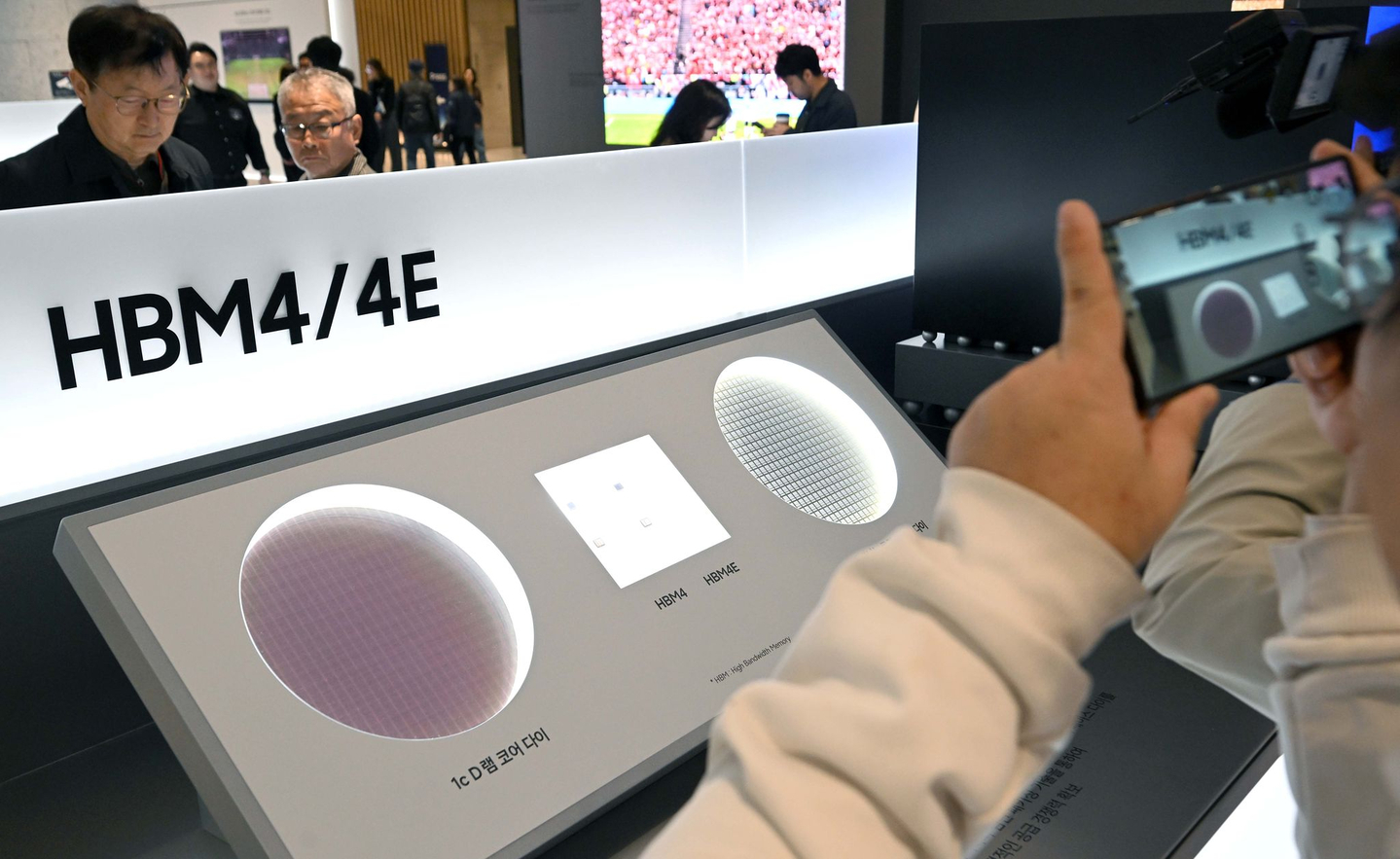
Samsung to spend record $73 billion on facilities, R&D to meet soaring chip demand
Mar 1900:03:02Tap to summarizeThis article is by Park Eun-jee and read by an artificial voice. Samsung Electronics plans to spend at least 110 trillion won ($73.3 billion) on facilities and research and development (R&D) this year, positioning itself to meet robust growth in chip demand while leaving room for sizable merger and acquisition (M&A) opportunities. The planned expenditure would set an annual record for the company, as the combined figure has never once crossed the 100 trillion won threshold. In 2025, the tech giant posted a record high of 90.4 trillion won in combined facility investments and R&D spending, according to an annual business report released on March 10. In an electronic disclosure report released Thursday, the Suwon, Gyeonggi-based electronics giant noted that the investment will be centered around semiconductors — especially high-performing ones like high bandwidth memory (HBM). "As the only semiconductor company globally capable of providing a 'one-stop solution' encompassing memory, foundry and advanced packaging, the company aims to secure leadership in the AI chip era," the corporate value enhancement plan read. "[The company] seeks to solidify its dominant position in high-value memory segments such as HBM while maintaining a sustained technological supremacy over competitors," it said. In a more future-oriented move, it also opened the door to large-scale M&A in the robotics and automotive sectors, which could be funded by its own hefty cash reserves beyond the proposed 110 trillion won. "[The company will] pursue meaningful-scale M&A in future growth areas such as advanced robotics, medical technology, automotive electronics and heating, ventilation and air conditioning segment," it stated. Samsung is ramping up its manufacturing capacity both at home and abroad after clinching large-scale deals with U.S. Big Tech firms like Nvidia, Google, AMD and Tesla. At the Pyeongtaek site in Gyeonggi, the company is upgrading dynamic random-access memory (DRAM) production to its latest 1c process, which will be used for HBM and advanced DRAM chips. Construction of the P5 facility, which had previously been delayed during the semiconductor downturn, resumed this year with a timeline accelerated by roughly six months compared to earlier plans. Beyond home turf, the United States stands as the key project area where a new chip factory in Taylor, Texas, with a price tag of $37 billion, is scheduled to be operational by the end of this year. It also received regulatory approval for the second factory earlier this month. Samsung, meanwhile, reported 126.9 trillion won in cash and cash equivalents last year, up 11.7 percent from the previous year. Net cash — cash and equivalents minus borrowings — also rebounded above 100 trillion won for the first time in three years since 2022.
Transcribe →