Podcast
Korea JoongAng Daily - Daily News from Korea
Hosted by Newsroom of the Korea JoongAng Daily · EN
Audio recordings of the Korea JoongAng Daily's in-depth, on-the-scene news articles and features informing readers around the world of the issues of the day in Korea.
Under the slogan "Your window to Korea", the Korea JoongAng Daily is an English-language news organization focused on Korea that strives to publish factual, timely and unbiased articles.
65episodes
Episodes
Newest firstAll episodes
The property divide: Real estate drives Korea's widening wealth gap
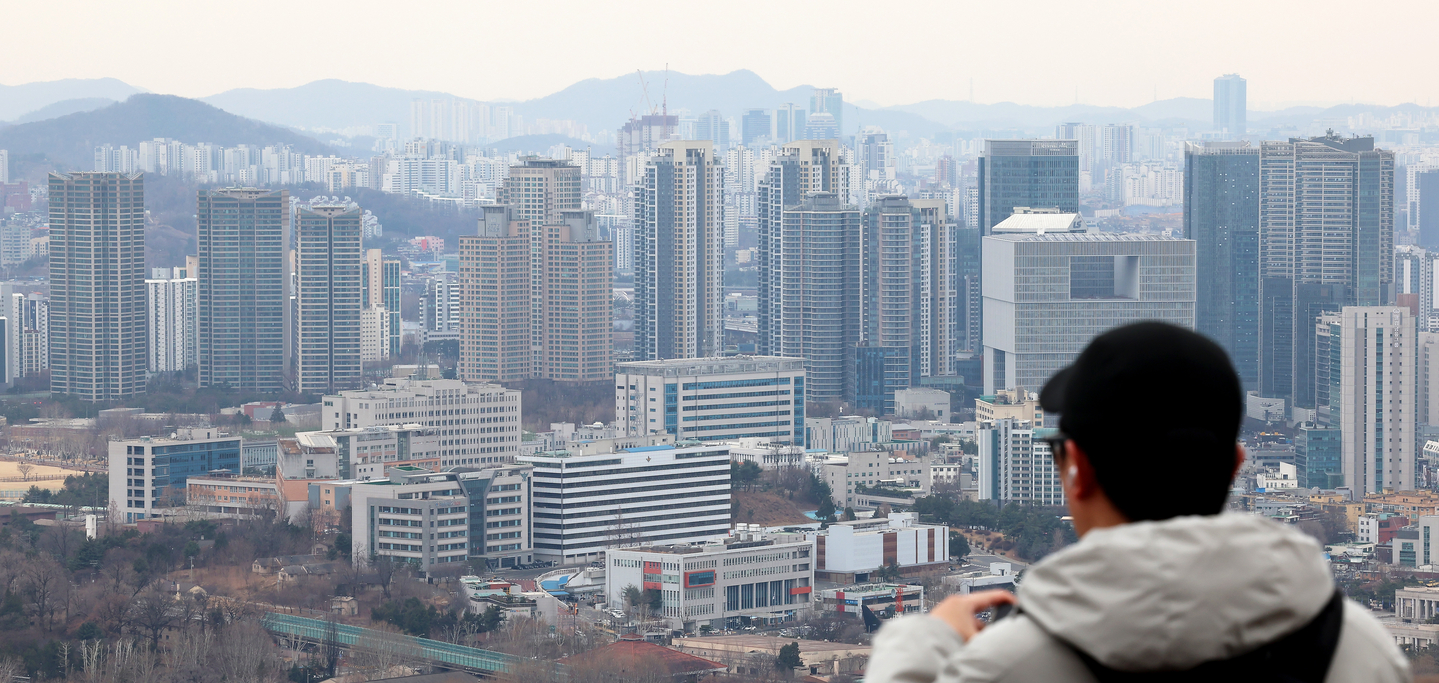
Mar 900:03:56Tap to summarizeThis article is by Kim Seon-mi and read by an artificial voice. The top 20 percent of households in Korea held about 65 percent of the country's total net assets last year, while the bottom 40 percent accounted for only 4.8 percent, according to a new analysis released on Friday. The findings were presented in a report released by Shinhan Financial Group's Future Strategy Research Institute. The report notes that inequality in Korea is increasingly being driven by assets — particularly real estate — instead of income. "With 76 percent of household assets tied to real estate, rising property prices have widened the asset gap between social classes beyond what could be explained by several years' worth of income differences," the report said. The trend is also reflected in the Gini coefficient, a measure of inequality in which figures closer to zero indicate greater equality. Korea's income-based Gini coefficient improved from 0.352 in 2017 to 0.325 in 2024. However, the Gini coefficient for net assets steadily increased during the same period, reaching 0.625 last year — its highest level since related statistics began being compiled. The report also noted that Korea's burden on housing prices is exceptionally high compared to other countries. Korea's housing price-to-income ratio stands at 24.1, compared to around 10 in countries such as the United States, Japan, Denmark and France. This means that a household earning the median income would need more than 24 years to buy a home, even if it saved all of its income. "Korea has most of its assets tied up in real estate, so even if housing prices rise, households lack readily available cash and do not necessarily experience an improved quality of life," the report said. "Debt centered on real estate leverage continues to accumulate, creating a structure that erodes consumption." The unequal structure appears to be even more severe among younger generations, according to the report. As of 2023, assets accounted for 44.7 percent of inequality among Gen Z — defined as people born after 1991, according to the National Assembly Research Service. This was higher than the share for millennials, born between 1981 and 1990, at 43.8 percent and Gen X, born between 1971 and 1980, at 42.5 percent. Among older people aged 65 or above, the figure was 31.9 percent, the lowest among the groups. "The income gap can be narrowed through welfare policies or individual effort, but gaps created by factors such as whether parents own real estate are difficult to reverse through policy once they become entrenched," the report said. The report also projected that stabilizing housing prices could help revive consumer spending among younger and middle-aged households and increase the likelihood of marriage and childbirth among young people. In Korea, 63.8 percent of young people live with their parents until marriage, then move out either through the jeonse (lump-sum deposit) lease system — 49.5 percent — or through home ownership — 24.9 percent. Lower housing purchase burdens would reduce the financial barriers to marriage. Birthrates show a similar pattern. When housing prices rise by one percent, the birthrate in the following year declines by 0.002, according to the Korea Research Institute for Human Settlements. "Demand is likely to grow among young people and newly married households for early-stage asset-building products such as savings plans designed to build seed money, youth Individual Savings Accounts and installment investment funds," the institute said. "Easing housing cost burdens could bring positive changes across household life, including a recovery in consumption and improved conditions for marriage and childbirth." This article was originally written in Korean and translated by a bilingual reporter with the help of generative AI tools. It was then edited by a native English-speaking editor. All AI-assisted translations are reviewed and refined by our newsroom.
Transcribe →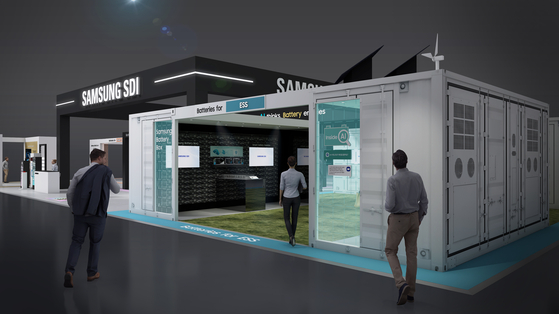
Samsung SDI to unveil batteries for humanoid robots at this week's InterBattery 2026 event
Mar 900:01:34Tap to summarizeThis article is by Sarah Chea and read by an artificial voice. Samsung SDI will unveil batteries designed specifically for humanoid robots for the first time at the upcoming InterBattery 2026 exhibition, a three-day event set to begin in Seoul on Wednesday. Solid-state batteries are often called "dream batteries" for their exceptional safety and power output, a technology that has yet to be commercially deployed. Samsung SDI is widely regarded as one of the global front-runners in solid-state battery development and is preparing for commercial production in the second half of next year. Humanoid robots require batteries that are both compact and highly energy-dense, as onboard space is severely limited. Long operating time is essential, and strong power performance is equally critical because robots experience sharp, momentary spikes in electricity demand. Solid-state batteries are increasingly seen as a key solution for these robots. The Korean battery maker will also present solutions for energy storage systems, along with ultra-high-power batteries used for uninterruptible power supplies (UPS) and battery backup units that are essential for AI data centers. Its UPS battery, the "U8A1," improves space efficiency by 33 percent compared to earlier products thanks to its higher energy density. Also on display will be the Samsung SDI's 700 watt-hours per liter prismatic battery, winner of this year's InterBattery Awards, which can power a vehicle for up to 800 kilometers (497 miles) on a single charge.
Transcribe →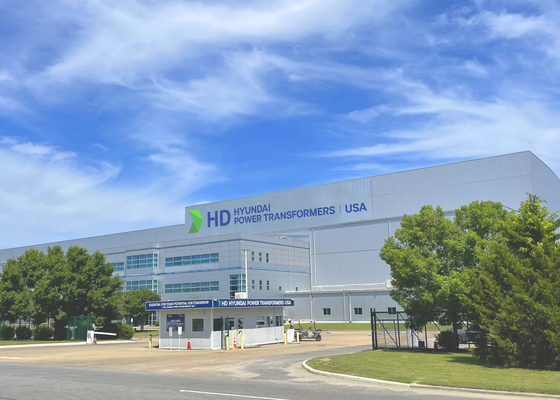
HD Hyundai Electric breaks ground on second U.S. transformer factory to meet surging demand
Mar 800:01:38Tap to summarizeThis article is by Sarah Chea and read by an artificial voice. The new facility, spanning 48,215 square meters (about 519,000 square feet), will be built on the company's existing campus in Alabama — already the largest power-transformer production site in the United States — with construction scheduled to be completed in April next year. The United States has recently been experiencing explosive growth in electricity demand, fueled by the rapid expansion of AI computing and large-scale data centers. At the same time, utilities are also racing to replace aging transmission infrastructure, leaving the industry facing a structural shortage of critical grid equipment such as high-capacity transformers. HD Hyundai Electric's U.S. sales, which stayed at roughly $100 million in 2017, surged to $400 million in 2025, while its local work force has jumped from around 100 employees in 2011 to 460 in 2025. Once the second Alabama plant is completed, it will create about 140 additional jobs. The facility will enable HD Hyundai to increase its production capacity for ultra-high-voltage transformers by roughly 50 percent in the U.S. market. "Through the construction of this second plant, HD Hyundai aims to support the expansion and strengthening of the U.S. power grid while broadening the country's industrial base in preparation for a future defined by AI," HD Hyundai Vice Chairman Cho Seok said. "We will continue to advance Korea-U. S. cooperation across a wide range of industries, including shipbuilding and construction equipment."
Transcribe →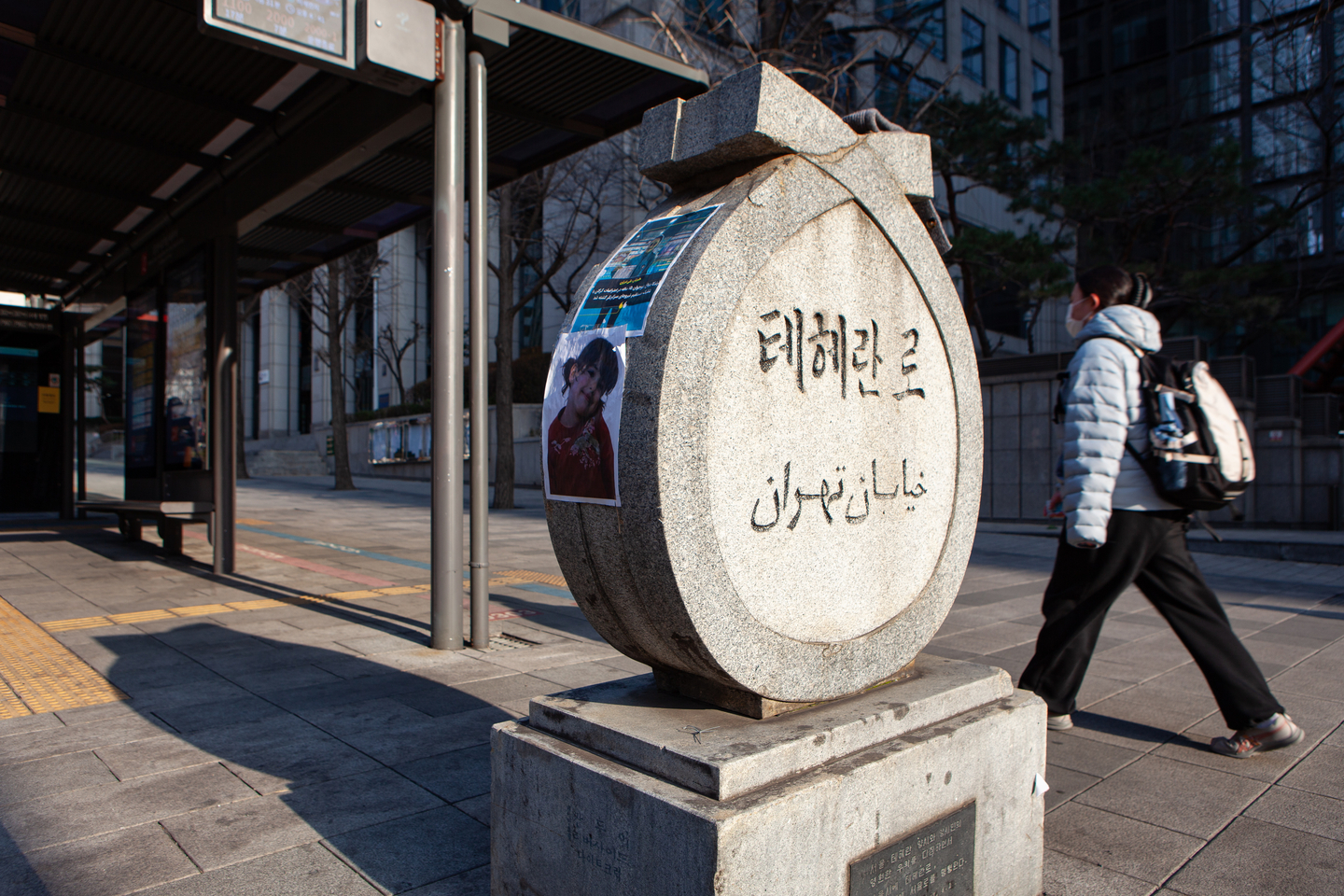
Seoul and Tehran named streets for each other — then their paths diverged
Mar 800:10:57Tap to summarizeThis article is by Michael Lee and read by an artificial voice. [EXPLAINER] Outside exit 1 of Gangnam Station in southern Seoul, along a wide boulevard lined with glass skyscrapers, stands a modest stone marker engraved with the name of the street in Korean and Farsi: Teheran-ro, christened in 1977 after Iran's capital during a visit by then–Tehran Mayor Gholam-Reza Nikpey. At the time, the gesture symbolized the rapidly growing relationship between South Korea and Iran. Today, however, the Teheran-ro marker is covered in posters of people killed during recent protests that rocked Iran — a reminder not only of the opposing political trajectories taken by Seoul and Tehran over the past five decades, but also of the gradual fraying of their relationship amid Washington's pressure on allies to isolate Tehran and Iran's suspected military ties to North Korea. The conflict that erupted on Feb. 28 between Israel and the United States on one side and Iran on the other has once again drawn attention to Seoul's complicated position in the Middle East, where South Korea maintains a long, if increasingly strained, relationship with Tehran while also deepening its defense partnerships with other states in the region. Officials in Seoul have responded to the outbreak of hostilities with cautious language that reflects those competing interests. Shortly after the first U.S. and Israeli airstrikes on Iran, the South Korean Foreign Ministry called on "all parties to make utmost efforts to de-escalate tensions." The government has also expressed concern for the safety of South Korean nationals in the region and the stability of global energy supplies. While the ministry avoided endorsing Israel's stated rationale of preventing Iran from acquiring nuclear weapons, it emphasized that Seoul remains "firmly committed to upholding the international nonproliferation regime" and "participating in efforts to resolve the Iranian nuclear issue." Seoul's carefully worded statements belie its complex set of interests. South Korea faces a nuclear-armed North Korea, depends heavily on oil from the Persian Gulf and has built expanding defense partnerships across the Middle East. Those realities give Seoul strong incentives to pursue regional stability and restraint by the warring parties. Yet the consequences of the crisis are also being felt far beyond the Gulf. For Iranian nationals living in South Korea, the escalating confrontation has stirred anxiety as they follow developments in their homeland. How have Iranians in South Korea reacted? The ongoing hostilities have divided the roughly 1,300 Iranians living in South Korea, who have held duelling rallies in Seoul in recent days. For some, the death of Iran's theocratic ruler, Ayatollah Ali Khamenei, in the opening salvo of the current conflict gave cause for celebration. During a rally on Sunday, Iranian residents called for the restoration of the country's pre-1979 monarchy as they waved the flags of the United States, Israel and prerevolutionary Iran in front of Gyeongbok Palace in downtown Seoul. For some participants, the U.S. and Israeli strikes represented the possible beginning of the end of the Islamic Republic. "Under the mullahs, our suffering has been endless and invisible," said one Iranian resident who asked to remain anonymous for fear of reprisal, referring to Iran's ruling clerics. "We don't want a government that lines the pockets of its allies in Gaza and Yemen but steals from us and crushes our voices at home," she added. "We want to be free and have better relations with the world." Other Iranians have condemned the human cost of the bombings on their country. Filmmaker Komeil Soheili, who has lived in South Korea for seven years, said that he opposes both the Iranian government and the war itself at a rally in front of the U.S. Embassy in Seoul on March 2. "I am against the dictatorship in Iran, but that does not justify war," he explained. "These are real bombs dropping on rea...
Transcribe →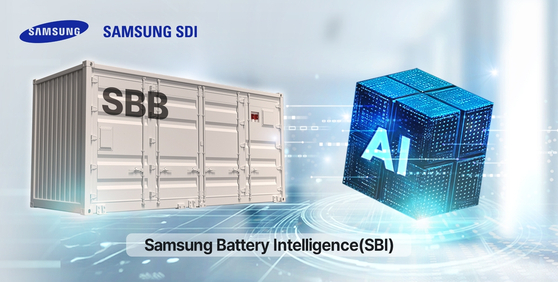
Samsung SDI unveils new AI software designed to prevent ESS fires
Mar 800:01:18Tap to summarizeThis article is by Sarah Chea and read by an artificial voice. Samsung SDI will unveil a new AI software designed to prevent fires in energy storage systems (ESS) at the upcoming InterBattery 2026 exhibition, which will kick off on Wednesday. The software, called Samsung Battery Intelligence, is designed to detect and forecast potential failures before they occur, offering a preventive approach to battery safety. It uses AI to assess the overall health of batteries by analyzing operating conditions, performance trends and early warning signs of abnormalities, according to the Korean battery maker on Sunday. The system has been trained on operational data accumulated through Samsung SDI's real-time monitoring of more than 1,400 ESS sites worldwide, resulting in precise analyses of battery lifespan, power output and overall performance. "A defining feature of the platform is its use of proprietary diagnostic indicators developed by the company to evaluate operational quality in quantitative terms," Samsung SDI said. "These indicators measure factors such as variations in battery aging rates and power stability, providing a clearer picture of system reliability, which allows clients to identify risks early and maintain batteries in optimal condition."
Transcribe →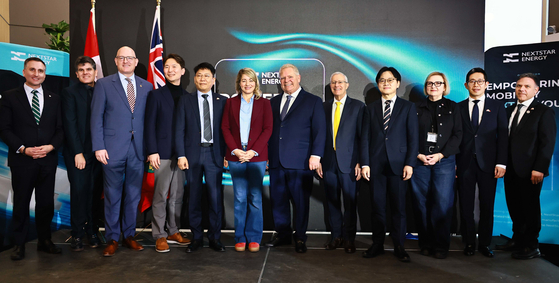
LG Energy Solution begins operations of $3.7B battery plant in Canada
Mar 800:01:34Tap to summarizeThis article is by Sarah Chea and read by an artificial voice. LG Energy Solution began operations of a 5 billion Canadian dollar ($3.7 billion) battery facility in Windsor, Ontario, Canada, on Friday. The factory, called NextStar Energy, is Canada's first and only large-scale battery facility, spanning 4.23 million square feet (1,045 acres). It will produce batteries not only for EVs but also for advanced energy storage systems, for which demand has been surging due to the AI and data center boom. The project was originally planned as a joint venture with Stellantis, but LG Energy Solution acquired the carmaker's entire stake last month and opted to operate the facility independently. The company has since announced plans to expand employment at the plant from 1,300 workers to as many as 2,500. "Choosing to manage the operation independently was a decision grounded in confidence," said LG Energy Solution CEO Kim Dong-myung. "NextStar Energy will serve as a driving force behind Canada's electrified future." Korea's Industry Minister Kim Jung-kwan participated in the plant's opening ceremony and met with Canada's Industry Minister Mélanie Joly to discuss Korea's ongoing bid for a submarine deal, which could be worth up to roughly 60 trillion won ($40 billion). Korea is competing with Germany for the project, which calls for the construction of 12 submarines to replace Canada's four aging Victoria-class vessels, scheduled to retire around 2030.
Transcribe →
Most Korean men think gender equality has 'gone far enough.' Women's institute head says not quite.
Mar 700:04:31Tap to summarizeThis article is by Woo Ji-won and read by an artificial voice. Korea recorded the largest gender divide among 29 countries on whether gender equality has "gone far enough," according to a new international survey released on Thursday ahead of International Women's Day. Sixty-five percent of Korean men agreed that "when it comes to giving women equal rights with men, things have gone far enough in my country," compared with 42 percent of women, according to the survey conducted by market research company Ipsos and the Global Institute for Women's Leadership at King's College London, polling 23,268 adults across 29 countries. The 23 percentage-point gap is more than double the global average gap of 11 points. Professor Chung Hee-jung, Director of Global Institute for Women's Leadership at King's Business School and who led the survey, said the wide gap reflects a combination of persistent structural inequalities in Korea along with political narratives that have resonated with young men. "Korean women by far have not achieved gender equality, especially in the economic areas," Chung told the Korea JoongAng Daily in a phone interview, referencing the World Economic Forum's global gap report, which shows that women remain underrepresented in leadership positions in both politics and business. "From the previous Yoon Suk Yeol of People Power Party and with Lee Jun-seok and the new Reform Party, there has been a huge amounts of rally of men, especially young men, into thinking that gender equality has gone too far," Chung said. During the 2022 presidential election, former President Yoon Suk Yeol of the then–People Power Party appealed to young male voters who felt disadvantaged by gender politics. Lee Jun-seok, a conservative politician who later founded the Reform Party, has also used rhetoric critical of feminism and has drawn notable support from young male voters. Such rhetoric has fueled sentiment among the demographic that they face gender-related disadvantages such as conscription while women receive preferential treatment. "Because especially for young men in Korea, unemployment rates are still high, young men feel like they're not getting the same opportunities that their fathers and grandfathers had despite having worked really hard to get into universities and now get jobs," she said. The average employment rate for men in their 20s from January to October last year was 57.8 percent, while for women it was 62.9 percent — a gap of 5.1 percentage points, according to data released by the Ministry of Data and Statistics. Men in this age group have lagged behind women in employment since 2011. "So there is huge amount of resentment among young people." She added that politicians and media figures are using such resentment to target women and the feminist movement to get votes for themselves. "So we have seen a lot of antifeminist movements in Korea and them using that as a momentum to gain support for a political." Although the agreement that gender equality has "gone far enough" has increased compared to 2019, when 49 percent of men and 28 percent of women agreed, Chung emphasized that structural gender inequality still remains significant in Korea, where "in many ways women still face it very badly, especially once they are married." Korea also ranked highest among the surveyed countries for perceived tension between men and women. Seventy-six percent of respondents in Korea agree that there is tension between men and women in their country, compared with a global average of 51 percent, ranking highest among the surveyed countries. The competitive nature of "every aspect of [18 to 29 year-olds'] lives" — from Korea's job market to its education system, plays some part in fueling this tension, Chung said. "They have been through competition after competition, after competition." The Korean average is 21 percent, below global averages of 39 percent. Chung said negative perceptions surrounding the term "feminism" in Ko...
Transcribe →
Most Korean men think gender equality has 'gone far enough.' Women's institute head says not quite.
Mar 700:04:31Tap to summarizeThis article is by Woo Ji-won and read by an artificial voice. Korea recorded the largest gender divide among 29 countries on whether gender equality has "gone far enough," according to a new international survey released on Thursday ahead of International Women's Day. Sixty-five percent of Korean men agreed that "when it comes to giving women equal rights with men, things have gone far enough in my country," compared with 42 percent of women, according to the survey conducted by market research company Ipsos and the Global Institute for Women's Leadership at King's College London, polling 23,268 adults across 29 countries. The 23 percentage-point gap is more than double the global average gap of 11 points. Professor Chung Hee-jung, Director of Global Institute for Women's Leadership at King's Business School and who led the survey, said the wide gap reflects a combination of persistent structural inequalities in Korea along with political narratives that have resonated with young men. "Korean women by far have not achieved gender equality, especially in the economic areas," Chung told the Korea JoongAng Daily in a phone interview, referencing the World Economic Forum's global gap report, which shows that women remain underrepresented in leadership positions in both politics and business. "From the previous Yoon Suk Yeol of People Power Party and with Lee Jun-seok and the new Reform Party, there has been a huge amounts of rally of men, especially young men, into thinking that gender equality has gone too far," Chung said. During the 2022 presidential election, former President Yoon Suk Yeol of the then–People Power Party appealed to young male voters who felt disadvantaged by gender politics. Lee Jun-seok, a conservative politician who later founded the Reform Party, has also used rhetoric critical of feminism and has drawn notable support from young male voters. Such rhetoric has fueled sentiment among the demographic that they face gender-related disadvantages such as conscription while women receive preferential treatment. "Because especially for young men in Korea, unemployment rates are still high, young men feel like they're not getting the same opportunities that their fathers and grandfathers had despite having worked really hard to get into universities and now get jobs," she said. The average employment rate for men in their 20s from January to October last year was 57.8 percent, while for women it was 62.9 percent — a gap of 5.1 percentage points, according to data released by the Ministry of Data and Statistics. Men in this age group have lagged behind women in employment since 2011. "So there is huge amount of resentment among young people." She added that politicians and media figures are using such resentment to target women and the feminist movement to get votes for themselves. "So we have seen a lot of antifeminist movements in Korea and them using that as a momentum to gain support for a political." Although the agreement that gender equality has "gone far enough" has increased compared to 2019, when 49 percent of men and 28 percent of women agreed, Chung emphasized that structural gender inequality still remains significant in Korea, where "in many ways women still face it very badly, especially once they are married." Korea also ranked highest among the surveyed countries for perceived tension between men and women. Seventy-six percent of respondents in Korea agree that there is tension between men and women in their country, compared with a global average of 51 percent, ranking highest among the surveyed countries. The competitive nature of "every aspect of [18 to 29 year-olds'] lives" — from Korea's job market to its education system, plays some part in fueling this tension, Chung said. "They have been through competition after competition, after competition." The Korean average is 21 percent, below global averages of 39 percent. Chung said negative perceptions surrounding the term "feminism" in Ko...
Transcribe →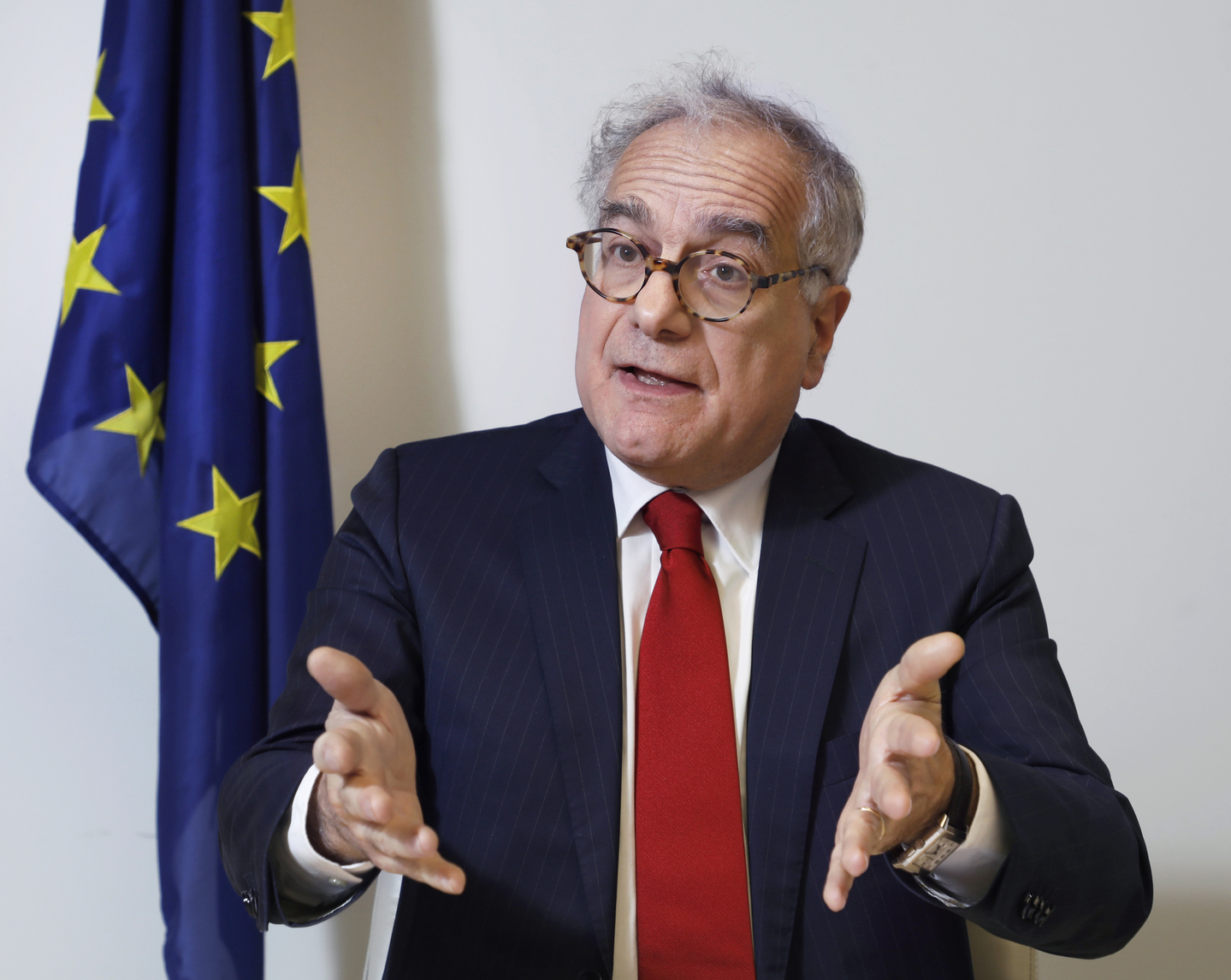
EU ambassador stresses gender equality as essential for Korea’s national competitiveness
Mar 500:04:11Tap to summarizeThis article is by Seo Ji-eun and read by an artificial voice. [INTERVIEW] European Union Ambassador to South Korea Ugo Astuto said that the shifting geopolitical landscape offers the partners a chance to deepen ties, built on the back of enhanced national competitiveness that starts with fully tapping its talent pool to avoid undermining growth and stalling innovation. "In Europe, we have a consensus on the fact that the promotion of gender equality is a matter of fairness [and] justice," Astuto said as he sat for an interview with the Korea JoongAng Daily at the EU Delegation in central Seoul on Feb. 26. "It also makes economic sense in that unless you make full use of the potential of the population, you cannot really achieve growth or innovation." The EU's program in Seoul this year is built around "Women in STEM," a theme Astuto said was chosen specifically with South Korea's strengths in mind, citing its status as an advanced economy heavily invested in green and digital transitions. Women remain underrepresented in STEM fields globally, including South Korea. Here, only about 23.9 percent of STEM doctoral graduates are women — one of the lowest shares among member states of the Organisation for Economic Cooperation and Development, underscoring persistent gender disparities in advanced scientific training. The EU Delegation in Seoul plans to mark International Women's Day — which falls on March 8 every year — on Friday at Dongdaemun Design Plaza, bringing together voices from academia, industry and research to discuss ways to strengthen women's roles in STEM. To address the structural barriers that still limit women's participation and leadership in STEM, the ambassador pointed to what he called a "holistic approach" drawn from European experiences. In practice, he said, that means combining tools that target both the workplace and the home: pay transparency, robust child care and parental leave and corporate governance goals that are backed by enforcement so they do not remain voluntary pledges. A significant milestone in this collaboration is Seoul's entry into Horizon Europe, the EU's flagship research and innovation program, in which South Korea became the first Asian country to join as a full associate member. "[This partnership] makes possible for Korean scientists to engage with European scientists at the same level, cosponsoring and bringing forward projects of mutual interest in the most innovative aspects of our economies, particularly the green and digital transition," Astuto said. The ambassador described South Korea-EU ties as deepening amid a shifting political landscape in Washington and rising protectionism. He underscored that "like-minded partners" should "come together" and bond more tightly than ever. Defense-industrial cooperation has also emerged as a sensitive but expanding pillar, as South Korean firms deepen their foothold in European markets, including in countries such as Poland, which have accelerated procurement since Russia's invasion of Ukraine. Addressing concerns that the EU's push for strategic autonomy could become a barrier for South Korean defense exports, Astuto framed the country's entry into the market as an opportunity for European security rather than a threat. "This is an integral part of our endeavor, so I would not see the one as opposed to the other," he said, as the initiative is "aimed at strengthening domestic industry and developing partnership with friends around the world globally," such as South Korea. Ukraine is the context in which Europe's security thinking has become indivisible from broader challenges that reach beyond the continent — including pressures on the rules-based order and implications for security in the Indo-Pacific. Astuto lauded Seoul's political backing, including support at the United Nations General Assembly resolution presented by Ukraine and humanitarian assistance. He also addressed a recent action that drew controversy in Seoul — a "Vic...
Transcribe →
Meanwhile : Hoffmann reads Beethoven
Mar 500:02:45Tap to summarizeThe author is a music critic and director of the classical music brand Poongwoldang. Ernst Theodor Wilhelm Hoffmann (1776–1822) worked as a musician before achieving recognition as a writer. He admired Mozart so deeply that he changed his middle name from Wilhelm to Amadeus. Yet, admiration did not translate into financial stability. Hoffmann struggled to make a living and his career was marked by repeated misfortune. In September 1808 he was appointed music director at the theater in Bamberg. The position quickly proved untenable. Orchestra members had already formed their own alliances and largely ignored the instructions of their new conductor. Performances deteriorated and Hoffmann had little opportunity to correct the situation. Within two months, he lost the post. The small house that still remains in Bamberg reflects the modest and difficult circumstances he endured during that period. Yet, during this difficult moment, Hoffmann made an important intellectual leap. Though forced off the conductor's podium, he could still write. He published an essay on Beethoven's Symphony No. 5 in the Allgemeine musikalische Zeitung, a Leipzig-based music journal. Written little more than a year after the symphony's premiere on Dec. 22, 1808, the essay captured the essence of Beethoven's music with unusual clarity. It revealed not only Hoffmann's deep musical knowledge but also his remarkably forward-looking aesthetic perspective. Hoffmann described Beethoven's music as awakening a sense of infinite longing, a defining element of Romanticism. In his words, Beethoven's music "sets in motion the levers of fear, trembling, terror and pain and awakens that endless yearning which is the essence of Romanticism." For Hoffmann, the experience of suffering deepened the will to live. This realization became a turning point in his own creative life. Through Beethoven's Symphony No. 5 (1808), widely known in Korea as the "Fate" symphony, Hoffmann believed he had glimpsed the depths of human suffering and the inner life of the soul. From that point forward, he turned increasingly to the darker aspects of the human psyche, exploring realms that reason alone could not fully grasp. His literary imagination focused on the hidden and unsettling dimensions of human experience. By confronting pain and darkness, Hoffmann believed one could protect the essential power of human imagination. This effort also meant exploring a vast realm long overlooked: the mystery of the human soul. In that sense Beethoven's music served as a kind of midwife for Hoffmann's literary career. Music and literature, like sister arts, can assist one another in deepening humanity's understanding of itself. This article was originally written in Korean and translated by a bilingual reporter with the help of generative AI tools. It was then edited by a native English-speaking editor. All AI-assisted translations are reviewed and refined by our newsroom.
Transcribe →