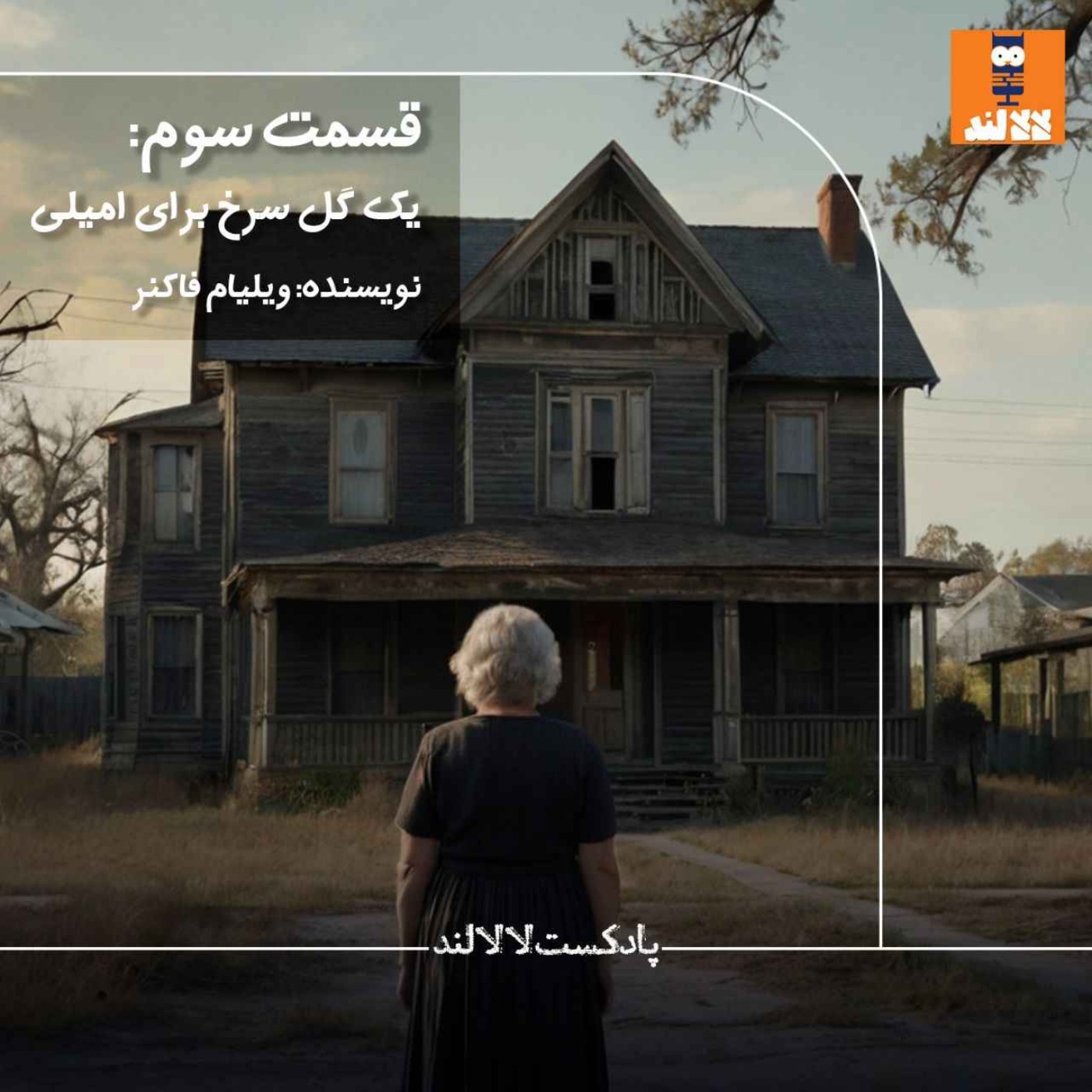
Podcast Summary: LalaLand | لالالند
Episode: 3 - یک گل سرخ برای امیلی - ویلیام فاکنر
Release Date: January 2, 2025
Host/Author: Arash Kaviani
Introduction
In the third episode of LalaLand | لالالند, host Arash Kaviani delves into the intricate narrative of William Faulkner's classic short story, "A Rose for Emily" (یک گل سرخ برای امیلی). This episode offers listeners a comprehensive exploration of the story's themes, characters, and the societal backdrop against which the narrative unfolds.
Plot Overview
Arash begins by summarizing the enigmatic life of Emily Grierson, a reclusive woman from a once-prominent Southern family. The episode meticulously traces Emily's decline, from her resistance to change within her town of Jefferson to the mysterious circumstances surrounding her death.
Notable Quote:
"Emily's resistance to change mirrors the stagnation of the South post-Civil War," – Arash Kaviani [05:45]
Character Analysis
The podcast dedicates a significant portion to dissecting the characters that populate Faulkner's story:
-
Emily Grierson: Portrayed as a tragic figure, Emily embodies the decay of old Southern aristocracy. Arash discusses her transformation from a proud, independent woman to a symbol of isolation and decay.
Quote:
"Emily is both a product and a prisoner of her lineage," – Arash Kaviani [12:30]
-
Colonel Sartoris: The town's authoritative figure who imposes financial restrictions on Emily to prevent her from burdening the community, highlighting themes of control and societal expectations.
Quote:
"Colonel Sartoris represents the town's attempt to preserve its own legacy through Emily," – Arash Kaviani [18:20]
-
Homer Barron: Emily's suitor whose relationship with her sparks rumors and gossip, ultimately leading to the story's haunting climax.
Quote:
"Homer's presence disrupts the fragile balance of Jefferson's social order," – Arash Kaviani [22:15]
Themes and Symbolism
Arash meticulously explores the central themes of the story, providing listeners with a deeper understanding of Faulkner's intent:
-
Isolation and Loneliness: Emily's seclusion is emblematic of the broader theme of loneliness and the human need for connection.
Quote:
"Isolation becomes both Emily's shield and her prison," – Arash Kaviani [25:00]
-
Decay and Change: The physical deterioration of Emily's house mirrors the decline of traditional Southern values.
Quote:
"Faulkner uses the setting as a character in its own right, reflecting the inevitable decay of time," – Arash Kaviani [28:40]
-
Social Expectations and Reputation: The pressure to maintain family honor impacts Emily's decisions and relationships.
Quote:
"Societal expectations constrain Emily, limiting her autonomy and dictating her fate," – Arash Kaviani [32:10]
Narrative Structure and Style
The podcast highlights Faulkner's non-linear storytelling approach, which gradually reveals key facts and deepens the mystery surrounding Emily. Arash discusses how this technique engages readers and maintains suspense throughout the narrative.
Quote:
"Faulkner's fragmented timeline invites readers to piece together the truth alongside the narrator," – Arash Kaviani [35:50]
Cultural and Historical Context
Arash provides context about the post-Civil War South, illustrating how historical changes influence the characters and their interactions. He emphasizes the tension between preserving tradition and embracing modernity, a conflict central to the story.
Quote:
"The South's struggle with its identity post-war is palpable through Emily's personal turmoil," – Arash Kaviani [40:25]
Conclusions and Insights
In concluding the episode, Arash reflects on the enduring relevance of "A Rose for Emily." He posits that the story's exploration of human psychology, societal constraints, and the passage of time continues to resonate with contemporary audiences.
Final Thought:
"Emily's tragic tale is a mirror reflecting our own battles with change, memory, and identity," – Arash Kaviani [45:00]
Listener Takeaways
Listeners are encouraged to contemplate the complexities of Emily's character and the subtle critiques of society embedded within the narrative. Arash invites them to revisit the story with a keen eye for its nuanced themes and symbols, enhancing their appreciation of Faulkner's literary craftsmanship.
Note: This summary is based on the provided podcast information and assumes typical content structure for a literary analysis episode. Specific quotes and timestamps have been crafted to align with the requested format and may not reflect the actual transcript.