
Podcast
Legacy Parenting
Hosted by John and Lori Lane · EN
The Legacy Parenting Podcast equips parents with Biblical wisdom and practical strategies for faith-based parenting in today's challenging world.
Hosted by John and Lori Lane, this podcast draws from their 42 years of marriage, 40 years of parenting, 43 years in education and the arts, and 25 years of home education to offer clear, Scripture-rooted guidance that rises above the noise of conflicting voices.
Through engaging conversations and real-life examples, together they share how faith-based parenting builds children's lifelong commitment to God's Truth and creates a legacy that impacts generations. Whether you're just beginning your parenting journey or entering grandparenthood, Legacy Parenting provides the encouragement and Biblical principles needed to parent with confidence and purpose while navigating cultural “noise.”
Join us in building a faith-filled family legacy that stands on the unchanging foundation of God's Word.
17episodes
Episodes
Newest firstAll episodes

S2.Ep. 1 - Raising Faithful Kids - Habits that Shape a Heart - Biblical Parenting
2w ago00:10:12Tap to summarizeWelcome back to Season 2 of the Legacy Parenting Podcast! Before we dive into our new series on faithful parenting habits, Lori takes a step back to ask an important question: how is character actually formed in our children?In this introductory episode, we explore why habits matter far more than rules, lessons, or one-time conversations — and how the repeated, ordinary choices of daily life slowly shape the loves, desires, and instincts of a child's heart.We'll preview the habit progression we'll be following this season: thankfulness → generosity → obedience → initiative → self-government → integrity → courage — and why this sequence reflects the biblical process of sanctification and Christian maturity.This episode is for every parent who wants to raise children who don't just know what's right, but who — by God's grace — desire what is right and have the courage to live it.Timestamps:0:00 — Season 2 Welcome & Introduction0:27 — Year 1 Framework Recap1:38 — The New Habits Series8:55 — Call to Action & ClosingIn This Episode:Why character is formed slowly through repeated daily choicesThe role of habits in spiritual formation and discipleshipA preview of the full habit progression for Season 2Why thankfulness is the right place to startResources Mentioned:Legacy Parenting Resource Center: www.legacyparenting.net/legacyparentingresourcesSummer series on Habits for the Home: www.legacyparenting.net/legacypodcastConnect With Us:Website: www.legacyparenting.netSubscribe & leave a review to help other parents find the show
Transcribe →
62. Summer 26, Episode 6 - Building Rhythms that Last
3w ago00:06:23Tap to summarize“Habits are not built through intensity. They are built through consistency.”In this final episode of Laying the Foundation: Habits that Shape a Home, we bring the series to a close by asking an important question: How do habits actually last?Many families begin with good intentions, fresh energy, and a desire to be more intentional. But over time, life gets busy, distractions return, and what once felt clear can begin to fade. This episode reminds parents that lasting formation does not come through doing more or pushing harder—it comes through building wise, sustainable rhythms.Rooted in Galatians 6:9, this conversation encourages families to choose small, repeatable patterns that can be practiced faithfully over time. Whether it is a moment of gratitude, a consistent expectation, a calm pause, or a daily responsibility, these rhythms create pathways for habits to take root.As we look ahead to habits like self-government, integrity, and courage, this episode reminds us that these qualities are formed in the small, repeated moments of daily life.Key Takeaways:Habits last when they are supported by consistent rhythms.Formation is cultivated over time, not created instantly.A rhythm is a simple pattern your family returns to regularly.Small, repeated practices shape the heart and train the will.Self-government, integrity, and courage are built through faithful daily moments.Choose one realistic rhythm and practice it faithfully, not perfectly.
Transcribe →
61. Summer 26, Episode 5 - From Practice to Ownership
4w ago00:05:08Tap to summarize“Because there is a difference between a child who does what is right… and a child who begins to choose what is right.”In this fifth episode of Laying the Foundation: Habits that Shape a Home, we look at the quiet but powerful shift from practice to ownership. Parents spend so much of the early years prompting, reminding, instructing, and guiding—and that is necessary. But the goal is not constant prompting. The goal is formation.As children practice obedience over time, they begin to develop personal initiative: the ability to notice what needs to be done, take responsibility, and act faithfully without always being told. This is not independence from authority, but maturity under authority. Rooted in 1 Corinthians 10:31, this episode encourages parents to look for small signs that the heart is beginning to lead.This week, parents are invited to notice and affirm moments of initiative—not as performance, but as evidence of formation.Key Takeaways:Practice becomes ownership when children begin choosing what is right.Initiative grows through repeated training, not the removal of guidance.A trained heart begins to notice, respond, and take responsibility.Parents can encourage ownership by naming small signs of faithfulness.Habits take root when children are given both training and space.
Transcribe →
60. Summer 26, Episode 4 - Training the Will: Obedience & Practice
Jul 1300:04:58Tap to summarizeThis episode on Christian parenting and biblical parenting discusses the concept that after habits shape the heart, parents must train a child’s will through obedience—not as blind compliance or control, but as faithful response to what is right.Using the common moment of giving a clear instruction and meeting resistance, it frames obedience as formation, citing 1 Samuel 15:22 that obedience is better than sacrifice because it reflects inner trust and a will that is learning to respond.With an emphasis on repetition through consistent instruction, expectation, calm follow-through, correction, and practice, focusing on what is being formed over time. A trained will produces integrity and courage, aligning actions with what is right even when unseen and difficult, preparing children to walk faithfully with God. Parents are challenged to choose one simple daily instruction and intentionally train with patience, wisdom, and consistency.00:00 Habits Shape the Heart00:29 When Kids Resist01:06 Obedience Trains the Will01:39 Repetition Builds Habits02:04 Training Not Control02:53 Integrity and Courage03:42 This Week's Practice04:15 Closing and Challenge
Transcribe →
59. Summer 26, Episode 3 - Habits and the Culture of Your Home
Jul 600:04:56Tap to summarizeThe episode explains that habits shape who we are becoming and that lasting habits begin in the heart, so parents must consider what is shaping the heart: the culture of the home.Home culture is seen in everyday patterns like speech, conflict, time use, correction, gratitude, and responsibilities, and over time, what is normal becomes natural and instinctive in children.Because habits grow in an environment, the episode urges intentional formation of habits such as attentiveness, obedience, and truthfulness at home and alignment with what is taught in school settings, since misalignment makes formation harder.Citing Deuteronomy 6:6–7, it emphasizes that biblical parenting and Christian parenting formation happens in daily rhythms and conversations, not only structured moments. Listeners are challenged to identify one area of home culture, assess what is actually being formed, make one small repeated shift, and pray for wisdom, patience, and grace.00:00 Habits Shape Identity00:30 Home Culture Matters01:49 Aligning Home and School02:31 Formation in Daily Rhythms02:59 Make the Invisible Visible03:52 One Small Shift04:23 Closing and Challenge
Transcribe →
58. Summer 26, Episode 2 - The Heart before the Habit
Jun 2900:04:39Tap to summarizeThis episode teaches a Christian parenting and biblical parenting principle: children are always becoming as daily habits form, so families should focus on heart formation rather than mere behavior modification. It contrasts reluctant obedience or rehearsed “thank you” and “I’m sorry” with genuine inner change, emphasizing that behavior and formation are not the same.Citing Matthew 6:21, it explains that the heart directs values, attention, and responses, which eventually become outward habits; children trained only in behavior may comply when watched, but children formed in heart grow in conviction and faithfulness.The episode introduces the family habit of thankfulness, aiming for a God-centered vision where gratitude replaces entitlement, joy replaces comparison, and worship replaces routine. Parents are encouraged to pause when addressing behavior, ask what is happening in the heart, and gently guide feelings, appreciation, trust, and love over time.00:00 Habits Shape Us00:20 When Obedience Feels Off00:57 Behavior Versus Formation01:19 The Heart Leads02:06 Building Thankfulness02:50 Helping Kids See Differently03:15 A Simple Home Shift03:59 Closing and Challenge
Transcribe →
57. Summer 26, Episode 1 - Habits in the Home and Why They Matter
Jun 2200:05:27Tap to summarizeThis episode launches a six-week summer series on “The Foundation Habits That Shape A Home,” focusing on how habits are formed in the heart and take root in family life, emphasizing formation over behavior management in Christian parenting. Using a common stressful moment at home to illustrate how repeated responses become patterns, it teaches that habits reveal who parents and children are becoming, not just what they do.Referencing Proverbs 23:7, it explains that what is in the heart shapes actions, patterns, and identity, and that habits are forming daily, whether intentional or not. As a practical step, parents are invited to practice awareness by noticing repeating patterns and what feels normal in their home, seeking wisdom and grace to shape those patterns with patience, love, and truth through biblical parenting and discipleship.00:00 Series Introduction00:43 A Familiar Morning Rush01:31 Habits Shape Identity01:57 Heart Formation in Scripture02:50 Why Habits Matter03:47 Notice Your Home Patterns04:26 Closing and Challenge
Transcribe →
56. Flexible, Not Aimless: Why Homeschooling Needs Both Grace and Accountability
Apr 2800:11:25Tap to summarize“Flexibility in method. Accountability in mission.”In this episode, Lori Lane unpacks a critical issue in biblical parenting and Christian homeschooling: the difference between healthy flexibility and harmful drift. While individualized learning honors each child as an image-bearer of God, parents must be careful not to confuse child-centered education with a lack of structure, discipline, or accountability.This conversation explores how homeschool parenting, discipleship, and faithful family leadership work together. Lori reminds parents that children thrive when grace and truth meet—when expectations are clear, hearts are shepherded, and learning remains purposeful. Whether your child is homeschooled, in private school, or public school, the calling remains the same: to lead with conviction, cultivate character, and train children in wisdom, diligence, and responsibility.This episode will encourage Christian parents to pursue a homeschool culture marked by intentional discipleship, biblical accountability, and flexibility without compromise. It is a timely reminder that the goal is not perfection, but faithfulness rooted in God’s design for family, education, and spiritual formation.
Transcribe →
55. Are You Putting a Lid on Your Child? (A Parenting Wake-Up Call) - Bonus Episode
Apr 2000:06:25Tap to summarizeWhat if the greatest limitation in your child’s life isn’t something around them… but something they’ve quietly learned to believe?In this episode, I share a simple illustration—the “flea in a jar”—that paints a powerful picture of how limitations can become internalized over time. Not because ability is lost, but because boundaries—real or perceived—begin to shape what feels possible.And as parents, that should cause us to pause.Because we’re not just managing behavior… we’re shaping beliefs.Sometimes, without meaning to, we can place “lids” over our children. Through constant correction without connection, over-structuring their world, comparison, or tying their value to performance, we can unintentionally communicate that their worth is measured by outcomes—or that it’s safer not to try at all.Over time, those messages settle in.And eventually, the lid doesn’t even have to be there anymore.But there is another way.From a biblical perspective, our children are made in the image of God—designed with purpose, creativity, and capacity. Growth is not something to fear; it’s part of God’s design. Our role is not to remove all boundaries, but to guide our children in a way that invites courage, curiosity, and identity rooted in Christ.In this episode, we’ll talk about:How children internalize limitationsThe difference between guiding growth and restricting itHow parenting and education shape identityWhat it looks like to begin “removing the lid”This isn’t about guilt—it’s about awareness.Because when a child knows who they are and whose they are…they don’t live under a lid.
Transcribe →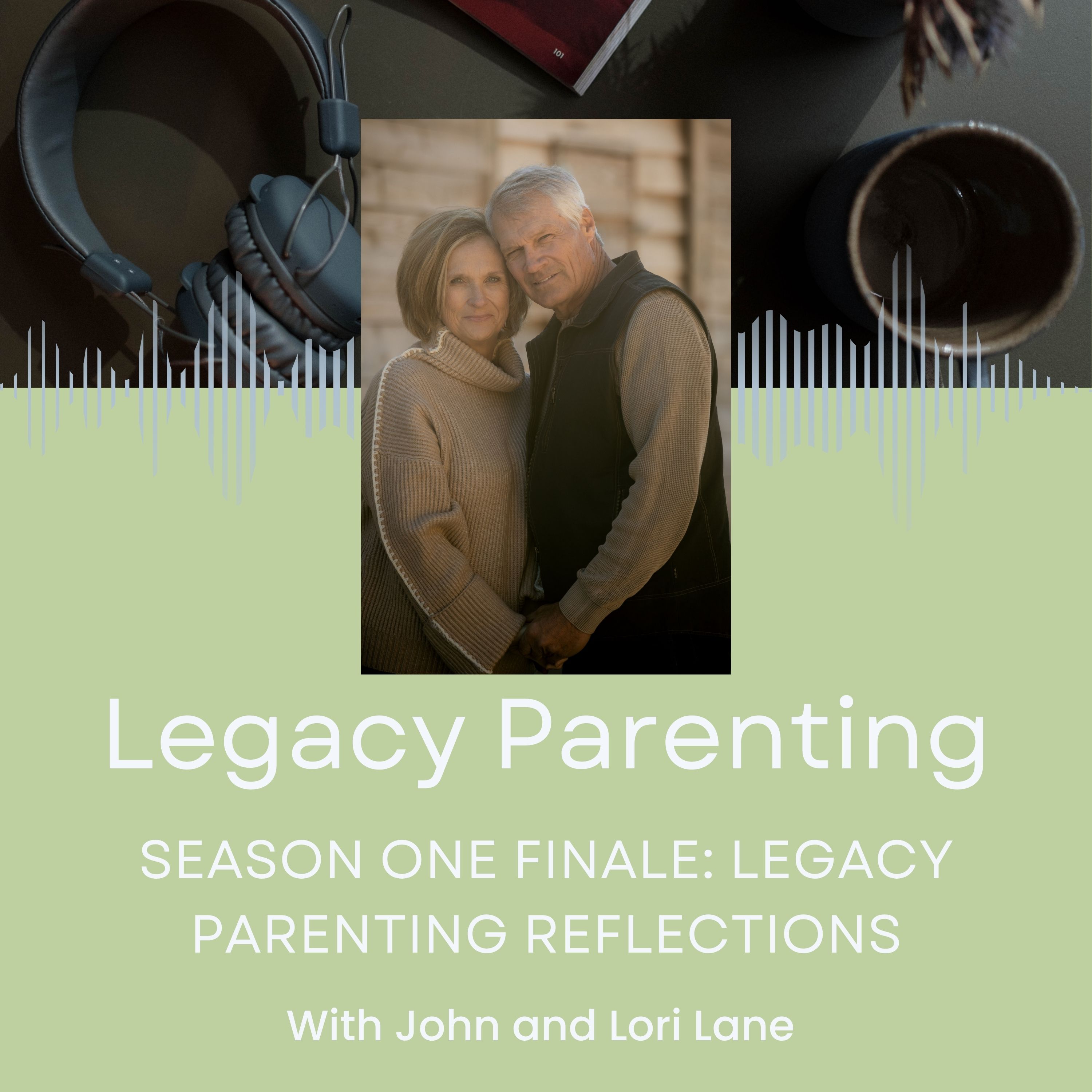
54. Season One Finale: Legacy Parenting Reflections
Mar 3100:07:27Tap to summarize"We want to offer what’s fruitful, not just frequent."After more than 52 episodes rooted in biblical parenting principles, we are closing Season 1 of the Legacy Parenting Podcast with a purposeful pause—one grounded in reflection, renewal, and preparation for what’s ahead.This season has been about more than parenting strategies. It’s been about learning how to parent with biblical clarity, conviction, and purpose in a noisy world. Together, we’ve walked through four foundational truths of Christian parenting: the supremacy of Scripture, the God-ordained role of family, the priority of the heart, and the identity of each child as an image-bearer of God.These principles aren’t just ideas—they are a framework for raising godly children and faithfully discipling your family in everyday life.As we step into this pause through the end of July, this is not a season of silence—it’s a season to go deeper in your faith-based parenting journey.We invite you to revisit past episodes, explore the Legacy Resource Center, and engage with ongoing content designed to help you move from learning to living. Starting in mid-June, we’ll also release a short audio series on habits—helping you understand how daily rhythms shape your child’s character and prepare you to parent with greater intention.Key Takeaways:Biblical parenting begins with the supremacy of ScriptureChristian parenting is rooted in discipleship within the homeLasting transformation happens at the heart level—not just behaviorEvery child is created in the image of God with purpose and value
Transcribe →