← Life Kit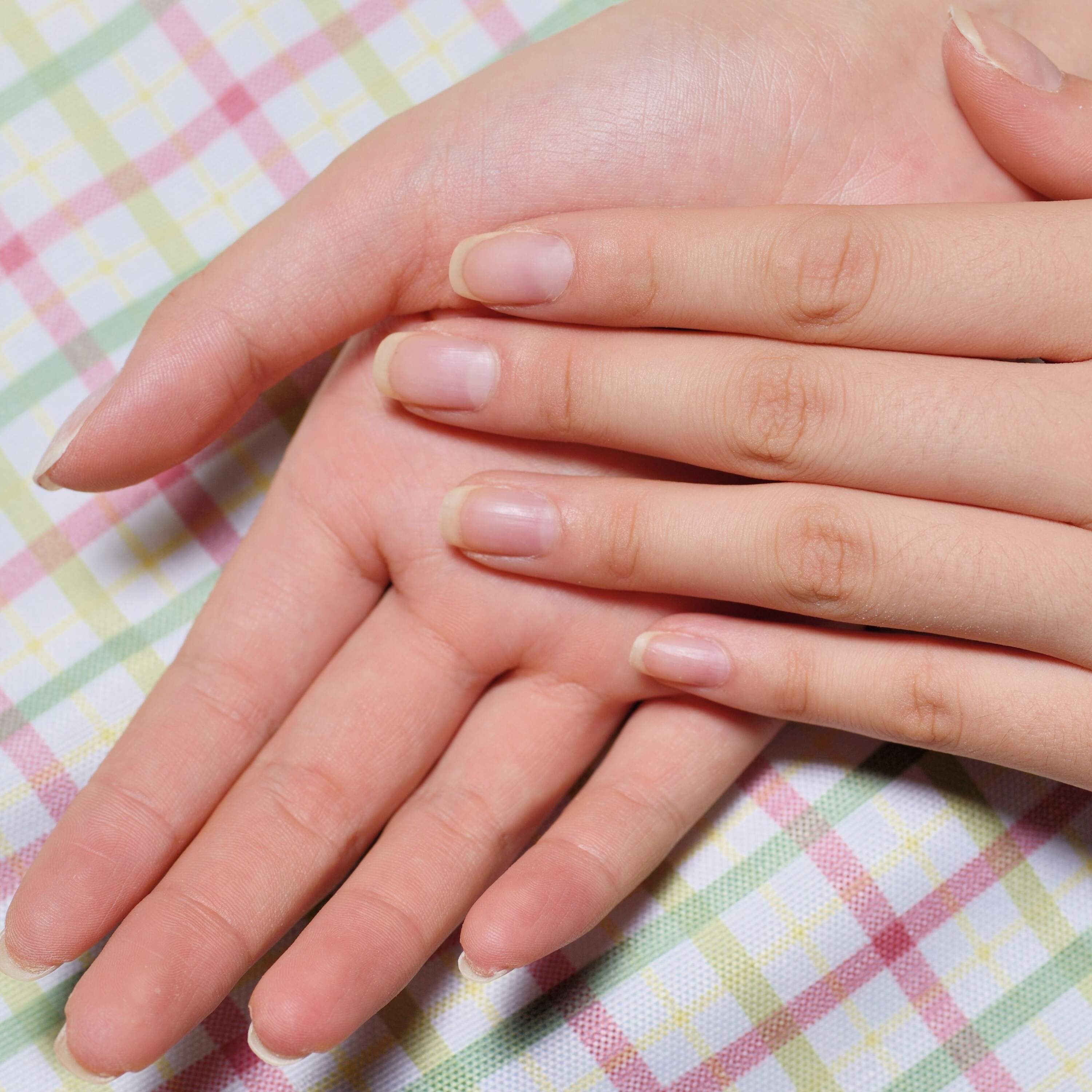
Loading summary
Transcript111 lines
- [00:00]
A
You're listening to Life Kit from npr. Hey, it's Marielle. I am always impressed by the designs people have on their nails. Nail art truly is an art. I saw a video the other day of a nail tech painting a portrait of Bad Bunny on her nails, and I said, que chevre nana? But our nails are far from just aesthetic. They're essential to our daily routines.
- [00:28]
B
If you lose a nail, try picking up a coin off the floor or try buttoning your shirt. It's hard or almost impossible to do.
- [00:36]
A
This is Dr. Sherry Lipner, a professor of clinical dermatology and director of the nail division at Weill Cornell Medical Center. Yeah, they have an entire nail division. She says along with being tools that help us handle small objects, our nails can enhance our sense of touch and protect the thousands of nerve endings in our fingertips.
- [00:56]
C
And yet, for some od, I don't know where that came from. That would be bypassed. Caring for our fingernails Our fingernails are indicators. Number one.
- [01:06]
A
That's Titillaio Bankoli, also known as the global manicurist. She's been a professional nail tech for more than 30 years, and she says our nails can be little windows into our health. Changes in the color, texture and shape of our nails can signal everything from minor injuries to vitamin deficiencies to lung disease to thyroid issues. And on the flip side, failing to care for our nails can lead to issues that extend beyond our fingers and toes. So her resounding message is, your nails deserve love and respect, and it's not hard to get started.
- [01:41]
C
File them and buff them and use your oil. Just protect yourself. That's not a luxury, that's a necessity.
- [01:48]
A
Maybe now you're wondering, what kind of oil? How often do I buff? What does a healthy nail even look like? Here's a little base coat.
- [01:56]
B
Healthy nails should be firm, they should not be soft, and they should be shiny. They can have some lines in them, but they should generally be very smooth.
- [02:06]
A
On this episode of Life kit, we've got plenty more layers of nail health for you. Reporter Andy Tagle talks with experts about how we can take care of our nails, choose better products and avoid fungus. Although that is not the only nail problem out there.
- [02:20]
D
Foreign.
- [02:26]
E
This message comes from NPR sponsor Verizon Business. Rekindle your business's spark at Verizon small business days, February 9th to 22nd with a tech check, expert advice, and a free phone book@verizon.com smallbusiness Select 5G phones only, new line device payment agreement, and my biz plan with $5 per month add on spending required credit applied over up to 36 months. Terms apply ends February 22, 2026 this message comes from Adobe. You need to make a huge presentation in an hour. Luckily, Adobe Acrobat Studio uses AI and Adobe Express to take your files and generate a presentation in a few clicks. Need a last minute pitch deck? Do that with Acrobat need to level up your presentation design? Do that with Acrobat have 30 plus documents that need to be simplified into a proposal. Do that with Acrobat learn more@adobe.com do that with Acrobat.
- [03:23]
D
Let'S get straight to the well filed point here, shall we? Sheri gave us the broad strokes of what healthy nails should look like. Let's go over a few other basics like textural and color changes. Healthy nails don't usually have ridges, indentations, cracks or divots. And when it comes to healthy coloring.
- [03:44]
F
Healthy nails typically have a pinkish nail bed. And they have the unattached nail plate tends to have some white coloration to it.
- [03:57]
D
This is Dr. Dana Stern, a board certified dermatologist in New York who specializes in nails. And since Most people have 20, she's busy.
- [04:06]
F
Very busy. There's a lot of nails in need.
- [04:10]
D
The nail bed Just to make sure we're all on the same page, here is the skin containing blood vessels and nerves underneath the nail plate. The, you know, nail part of your nail. That's the hard shell bit made of keratin. And by unattached nail plate, Dana's referring to what extends past your fingertip so the tips or ends of your nails. And there's one other thing.
- [04:31]
F
The cuticle is probably one of the most important anatomical aspects of the nail and really determines nail health and beauty to a large degree.
- [04:43]
D
That's our first takeaway. Cuticles are a critical protective barrier for your nails, so stop messing with them.
- [04:51]
B
So many people want to trim their cuticles, push their cuticles, take away their cuticles. They feel like their cuticles are overgrowing. But I think we need to go back and really understand why we have cuticles in the first place.
- [05:07]
D
Lets do it. Your cuticles are a specialized type of skin that seals the nail unit.
- [05:13]
B
The nail unit is the entire structure. So it includes the hard part of the nail, it includes the skin around the nail, and it includes the nail bed. And under the cuticle is a very important structure. That structure is called the nail matrix. That's our nail growth center.
- [05:31]
D
So your cuticle is kind of like an airtight Tupperware lid, but instead of leftovers it protects your new nail growth and seals it from bad stuff outside. Another way to think of it is.
- [05:42]
F
Like the grout between your tile and your shower. If you didn't have that grout there, water and moisture would seep into the cracks between your tiles and you'd have a whole host of issues.
- [05:53]
D
It protects that new nail from trauma and from potential outside invaders like bacteria or fungus, dirt and debris.
- [06:00]
B
So the cuticle is not something you want to play around with, manipulate or cut away. You want to keep that seal there.
- [06:08]
D
Maybe you have liquid cuticle remover as part of your home manicure kit, or you've been curious about those no soak manicures where the cuticle is meticulously removed to give your hands a cleaner look. To be absolutely clear here, the very best practice just leave them be. Don't trim, don't bite, don't pull. Don't pick. If you've got a hangnail, often a result of the skin around your cuticles getting too dry and snagging on something, you can and should use nail clippers or nail scissors to nip them at the base right away. Other than that, put the tools away and ask your nail tech to do the same. Now, if you feel like you absolutely must do something to manage them, I do this myself.
- [06:56]
F
After taking a shower or a bath. When the cuticle tissue is soft, you can gently push it back with a washcloth. It's just, as you know, effective at keeping that tissue kind of kempt and clean.
- [07:10]
D
Gentle is the key word here, because if that barrier is compromised, your new nails will tell the tale.
- [07:17]
F
If I see bumps and, you know, ridges and white patches, I know that the cuticle has been compromised for a significant amount of time.
- [07:25]
D
Reversing any kind of nail damage is slow work. It takes about six months on average for an adult fingernail to grow out, and anywhere from a year to a year and a half for an adult toenail. And yes, that timeline still applies if you're taking any nail strengthening vitamins or supplements. Yes, including that super popular one you're probably thinking about. Which brings us right to takeaway. 2. Don't bet on biotin. For a lot of people, I'd guess nail health and biotin, also known as vitamin B7, are nearly synonymous. Personally, I bought hair, skin and nail gummies religiously in years past, confident they'd give me extra shine head to toe.
- [08:08]
B
But as dermatologists, we've been trying to move the needle on this for so long, there's not great data to suggest that biotin helps the nails.
- [08:17]
D
While some of the information available does suggest biotin may improve hair and nail syndromes, specifically for people who have deficiencies in vitamin B7, be warned, they were.
- [08:28]
B
Not well done studies. They were survey based studies. They relied on patients reporting back and there really weren't objective measurements.
- [08:36]
F
The biotin studies were really not convincing. They were not large placebo controlled trials. They were very small sample sizes.
- [08:47]
D
And the issue isn't just that the promises of biotin are being oversold. In some instances, your biotin regimen can be dangerous to your health. See, back in 2017, the Federal Drug Administration issued a warning.
- [09:01]
F
There was this phenomenon called biotin interference.
- [09:04]
D
What they found was that when people consumed more than the daily recommended allowance of biotin, which FYI, not a hard thing to do, even just by taking your average daily over the counter biotin supplement. So when people took more biotin than they needed and then had lab tests.
- [09:20]
F
Done, it was interfering with the lab's ability to produce accurate laboratory results.
- [09:27]
D
And that had serious clinical misdiagnoses, incorrect care for patients, and they missed a.
- [09:34]
F
Heart attack because of this phenomenon.
- [09:36]
D
Very not good to state the obvious. All this to say, sure, a miracle pill for nail growth would be great.
- [09:46]
F
But biotin certainly is not it.
- [09:49]
D
So what dietary options does that leave us with exactly?
- [09:52]
B
As of now, my recommendations to my patients is to eat a healthy, well.
- [09:56]
F
Balanced diet, making sure that you're consuming enough protein because nails are protein derived.
- [10:03]
D
I know, I know. Basic good health. So not what you wanted to hear. Another tidbit which might not be terribly comforting, but may be helpful context here. Dana says the look of our nails, at least in part, is genetic.
- [10:20]
F
You know, you're born with thin or thick hair or curly or straight hair. You actually are born with a nail quality.
- [10:27]
D
You know that little half moon that sits right above the cuticle? It's called the lunula and it's part of your nail matrix where new nail growth happens. Sometimes it's visible and sometimes it's not.
- [10:38]
F
That's one of the first things I look at because it's important to kind of set realistic expectations and to understand that there's anatomical difference really when it.
- [10:50]
D
Comes to nails, other factors, aging, certain health conditions, or if you have a family history of something like brittle nails, you could be predisposed to the same condition. But don't lose hope.
- [11:04]
F
Where we can control things is the tools we're using, the products we're using, and kind of our nail habits.
- [11:14]
D
After the break, we'll cover all Three of those with a lovely hydrating coat of cuticle oil.
- [11:20]
F
Mmm.
- [11:20]
D
Is that lavender? All right, let's get right back to it with takeaway 3. Hydration is the name of the game.
- [11:33]
C
If our skin protects us, we need to protect our skin by cleansing it and hydrating it.
- [11:38]
D
That's Titi Laiu again, and she takes her cuticle care seriously. For her, that means applying cuticle oil to her nails and hand cream to her nails and hands every time they're exposed to water. Every time?
- [11:51]
C
Every time.
- [11:52]
D
So you keep it with you?
- [11:53]
C
Yes.
- [11:54]
E
Wow.
- [11:55]
D
The idea, she says, is to build good habits with a reach for the moon, land among the stars type mentality. So even if you fall short, you're still going above and beyond for your hands and feet.
- [12:06]
C
It's just being obsessed with yourself in a more healthy way, and choosing the.
- [12:13]
D
Right products is a part of that process. Her hand cream always contains humectants, and her cuticle oil is a combination of four. Four natural ingredients. Grapeseed oil and vitamin E for their antioxidant properties, Lemongrass as an astringent, and.
- [12:30]
C
Jojoba oil because it's a carrier oil. It helps to carry the oils together so that it can absorb into the skin over time.
- [12:39]
D
Sherry says a regimen like Titi Lyo's could make sense for people who have particularly dried out nails, but it might not be advisable for people with certain nail issues. Take chronic paronychia, for example, a condition in which the skin around the nail is inflamed and the cuticle is often missing or detached. In this case, excessive moisture can make you susceptible to a bacterial infection that turns your nails green or causes greenies, as the Internet often calls them. The point here, there are general best practices, and then there's what would make the most sense for your nails.
- [13:17]
B
In Sheri's view, people with healthy nails, they probably don't need a daily nail care routine the way we have a daily skin routine, but you should still.
- [13:26]
D
Practice awareness around your hands and feet and be prepared for when they might still need a little more tlc. That might mean investing in a cuticle oil similar to Titilio's. Or Dana says just reaching for your kitchen olive oil is an option, too, because the very best cuticle oil is the one you'll use.
- [13:45]
F
It's kind of like exercise. You know, you want to choose an exercise that you're actually going to do.
- [13:50]
D
And Sherry has a good barometer for gauging. If a moisturizer is good for you.
- [13:53]
B
Put a little bit on your hand and then turn your hand over. If it drops right down to the floor in one second, it's too thin. And if it kind of sticks to the hand, you know that it's a good moisturizer.
- [14:07]
D
Now, if you're really struggling with dryness, here's a level up.
- [14:11]
B
I oftentimes recommend a moisturizer that they put on at night and apply cotton gloves. It's a technique called occlusion, and that.
- [14:21]
D
May support your moisturizer's effectiveness. That's just one reason why nails love gloves. They don't just help keep hydration in, they help keep water out. I know that might sound a little counterintuitive. Stick with me.
- [14:39]
F
So the nail is a thousand times more absorptive of water than the skin. They're essentially like little sponges.
- [14:45]
D
So when you do a bunch of dishwashing after dinner, for example, you can put a bunch of strain on your nail cells by forcing them to repeatedly expand and contract in your dishwater, which.
- [14:55]
F
Eventually causes weakness and breakage. So easy things to combat that would be wear gloves, right?
- [15:04]
D
Rubber gloves specifically, whenever you know your hands are going to get and stay wet, like for house cleaning or gardening or washing the car. Lastly, at risk of sounding like an undercover glove lobbyist, one final recommendation. If you frequently get gels or any nail enhancement that uses that UV quick.
- [15:22]
B
Drying equipment, make sure you're using gloves to protect your skin or apply a sunscreen with an SPF 30 or higher before getting your gel manicure.
- [15:33]
D
That is, you'll want to protect your hands from that extra UV exposure during your manicure. Some nail salons will provide special fingerless gloves, or you can always cut an old pair of your own. And now that we're talking trips to your nail technician, move on over to this chair, won't you? Don't worry, I'll grab your stuff. Takeaway 4 Not all nail products or services are created equal. Whether you've had naked nails all your life, your team drugstore polish all the way, or you're planning to invite your nail tech to your wedding, there are better and worse ways to care for your claws. Let's start with basic maintenance, clipping and filing your nails. Best practice is to do both. So when you trim your nails, you should always clip straight across and then even out the edges with a nail file instead of cutting on a curve. Also, be careful how low you go.
- [16:27]
B
If you over clip or over file your nails, you can make them too thin, so you definitely don't want to do that too often.
- [16:35]
D
That proper technique is important for avoiding ingrown nails. That's when the nail curves and grows into the skin most often. It's a big toe problem and will often require professional care to correct. So again, clip, then file after you bathe is best. And while we're on the subject, it's time to level up your filing game. Out with the dusty emery board in with a glass or crystal file when.
- [17:03]
F
You file the nail with a cardboard emery board, it's actually creating these microscopic tears in the nail.
- [17:11]
D
Under a microscope, Dana says Embry board filed nails almost look like the Rocky Mountains, full of uneven, jagged crevices that can lead to breaks, splits, peeling and premature chipping of your nail polish.
- [17:25]
F
Whereas, in contrast, the glass file created a perfectly sealed, smooth edge to the nail.
- [17:33]
D
Not to mention, crystal files don't dull as easily as emery boards, and you can even pop them in the dishwasher. Next up, buffing your nails. The expert advice is be gentle and be sparing. Done right, buffing can promote healthy growth. But if you overdo it, you can thin out your nail plate. And I regret to report to any of my fellow nail salon devotees, you can also overdo it when getting gels, acrylics, and similar artificial nail products.
- [18:02]
F
If you're somebody who is into, you know, nail beautification, you do need to kind of combat that, just like you would if you were wearing heavy makeup, right?
- [18:14]
D
Acetone based polish removers can cause brittleness with frequent use. Constantly wearing nail polish on your toenails can stain them, and enhancements like hard gels or heavy acrylics have the potential to weaken or damage your nails, especially over long periods of time. So just like you want to wash your face and let your skin breathe at the end of the night, Dana says you should consider taking a break from the acrylics and the gels and letting your natural nails breathe now and then.
- [18:42]
F
You can't expect to have healthy nails if you're not kind of giving them some love in between doing all of the enhancements.
- [18:50]
D
And that's in line with official guidance from the American Academy of Dermatology. At the very least, it's a good idea to check in with your naked nails in between appointments and make sure everything looks and feels okay. Now, before you head to your next full service mani pedi, let's make sure your nail spot is as safe and healthy as possible. For starters, look for up to date licensing. If you're not sure about the cleanliness of a place, consider checking recent client reviews for mentions of infections bad habits or strong odors that could point to poor ventilation.
- [19:23]
C
Ask questions about their sterilization and sanitation practices. Ask them what do they use? How do they go about it?
- [19:33]
D
Also look at hygiene practices. How often do they wash their hands? Their surfaces? Do do they clean the foot tubs after every use? In fact, for safety, the AAD suggests not shaving your lower legs at least 24 hours before a pedicure to avoid the risk of infection in any open wounds. Now, if that nail salon checklist immediately makes you want to pull out a box of press ons, fair enough. Just know there are a few best practices to keep in mind with those too. Specifically, Titi Lio says press ons aren't made to be worn for long stretches of time.
- [20:07]
C
If you don't remove them, you're going to have living creatures underneath.
- [20:12]
D
Titi Lyo says incorrect application is common. And when press ons aren't sealed to your nail correctly, moisture and debris can get stuck in between that fake nail and your nail plate and lead to those grainies I mentioned earlier.
- [20:25]
C
It's like user error. You didn't clean them, you didn't make sure your nails were dry. You just pop them on with the glue and here we are.
- [20:34]
D
And last but certainly not least, let's talk pretty polishes. Lovely lacquers, Vibrant varnish. You know colors for your nail that come in a bottle. If you're seeking an alternative nail polish, look for plant derived or mineral based ingredients, natural pigments and water based formulas. Then when it's time to take off that Big Apple red or yellow kitty.
- [21:00]
F
Opt for an acetone free polish remover.
- [21:03]
D
It might take a little longer, but it'll be much kinder to your nails. But with all of these products, remember, even the prettiest painted set using the eco friendliest non toxic polish does not automatically equate to having healthy nails.
- [21:21]
F
Because nail cosmetics are so common and accessible, it's very easy to kind of mask or camouflage an issue that you perceive as unsightly. But it's important if you have something going on with your nail to definitely have it checked out by a board certified dermatologist to lead us out.
- [21:45]
D
Takeaway 5. Nail health is health, so Take it Seriously One nail problem that we couldn't not mention here is nail biting. Regardless of your feelings towards the habit, letting nail biting go unchecked isn't only a cosmetic or social or functional issue. It can lead to a bunch of real complications.
- [22:06]
B
Bacterial infections, fungal infections. There can be viral infections so people can develop warts around their nails. I've seen patients that spread their warts from their nails to their lips.
- [22:20]
D
So Sheri says don't just suffer in silence and don't assume Dr. Google has all the answers.
- [22:26]
B
People all come in thinking they have nail fungus. It's almost like it's the only nail condition that anyone has heard of. And they're shocked that I say, well, it could be fungus, but it could be these 20 other things and I need to do tests to figure out what you have.
- [22:43]
D
Remember, your nails can be windows to your overall health. Whitish nails could indicate a vitamin deficiency or liver disease or just a minor injury. Sometimes we can get harmless moles under our nails, just like we have moles on our skin. But it's also possible to get nail cancer.
- [23:01]
B
Think of, you know, Bob Marley, who died of a nail melanoma.
- [23:06]
D
So if you notice any odd, big or lasting changes in your nails, bring them to your primary care document or to your dermatologist at your annual skin check.
- [23:16]
F
And when you do, make sure to remove all of the polish, the acrylics, the gels from your fingernails and toenails because your nails are a very important part of that exam as well.
- [23:28]
D
And the rest of the time, try to take your lead from Titi Lyo. Make nail health a treat, not a chore.
- [23:34]
C
It's just a different type of relationship with yourself. Pay attention to those little things that you wouldn't normally pay attention to so that you can have sustainability and longevity with your health.
- [23:46]
D
Okay, let's recap. Takeaway 1 Be kind to your cuticles. No trimming, no biting, no picking, no plucking. Leave them be. Takeaway 2 Don't bet on biotin. A healthy nail diet is just a regular healthy diet. Takeaway 3 Keep those cuticles hydrated and protect those nail units by wearing just all the gloves. Takeaway 4 Some nail products are better than others. Switch to a glass nail file and don't be scared to be picky about your nail salon. Nail health is health. Include your bare fingernails and toenails in your annual skin exam. Ask for help when you need it, and bring any concerns to your doctor sooner than later.
- [24:33]
A
That was Life Kit reporter Andy Tagle. If you love Life Kit and want to support the work we do, sign up for Life Kit plus. You'll get to listen to every episode sponsor free. Go find out more@plus.NPR.org LifeKit and hey, if you want to support us, but money's tight, leave us a five star review in your podcast app. We think you're five stars. By the way, this episode of Life Kit was produced by Claire Marie Schneider. Our digital editor is Malika Garibaldi. Meghan Keane is our senior supervising editor, and Beth Donovan is our executive producer. Our production team also includes Margaret Serino, Sylvie Douglas, and Mika Ellison. Engineering support comes from Kwesi Lee with fact checking by Tyler Jones. I'm Mariel Segarra. Thanks for listening.
- [25:23]
E
This message comes from NPR sponsor Shopify. No idea where to sell? Shopify puts you in control of every sales channel. It is the commerce platform revolutionizing millions of businesses worldwide. Whether you're a garage entrepreneur or IPO ready, Shopify is the only tool you need to start, run and grow your business without the struggle. Once you've reached your audience, Shopify has the Internet's best converting checkout to help you turn them from browsers to buyers. Go to Shopify.com NPR to take your business to the next level. Today.