Loading summary
Transcript135 lines
- [00:00]
Announcer
This message comes from Great Wolf Lodge. There's adventure for the whole family, including an indoor water park that's always 84 degrees, attractions, spacious suites and more. You're just a short drive away from an unforgettable family getaway. Learn more@greatwolf.com
- [00:21]
Marielle Segarra
hey, it's Marielle Segarra. You're listening to Life Kit. I have often wondered what pregnant women can actually do in terms of exercise. I got the idea that you're not supposed to lift heavy things or jump around too much. But then there are also women online doing CrossFit. At nine months pregnant life Kit reporter Andy Tagle was confused about this during her pregnancy.
- [00:44]
Andy Tagle
I remember when I first found out I was pregnant. I had joined this boot camp gym and I'd been going pretty regularly and it was really fun and really hard. But almost immediately after seeing that positive pregnancy test, I stopped.
- [01:01]
Marielle Segarra
Stopped going. Wow.
- [01:02]
Andy Tagle
Yeah. I mean, not because my doctor told me I couldn't, not because I had read any research. I just seemed like, maybe this isn't a good idea.
- [01:10]
Marielle Segarra
What was your fear?
- [01:14]
Andy Tagle
That I might do something to hurt the baby? That, like, something might happen if I worked out too hard, you know, like if I lifted too heavy or if, like, I exerted myself too much.
- [01:27]
Marielle Segarra
Her family was protective too. And the idea wasn't just, we have to protect the baby, but also we have to protect you.
- [01:34]
Andy Tagle
As soon as we started telling my family, I just felt like there was an immediate cushioning, cushioning bordering on coddling. Like, oh, sit down, I got the dishes. You know, don't worry about that. Like, put your feet up. It was so early on that I couldn't even see the doctor. Like, the doctors wouldn't see me yet, but it was already like, take a load off was the messaging right away.
- [01:55]
Marielle Segarra
Which is nice on the one hand, right? Cause you probably get a little tired when you're pregnant.
- [01:58]
Andy Tagle
But it was like, you are delicate now.
- [02:01]
Marielle Segarra
But what Andy found in reporting this episode is that pregnant women are not delicate. They can do a lot and movement, exercise is great for them.
- [02:12]
Andy Tagle
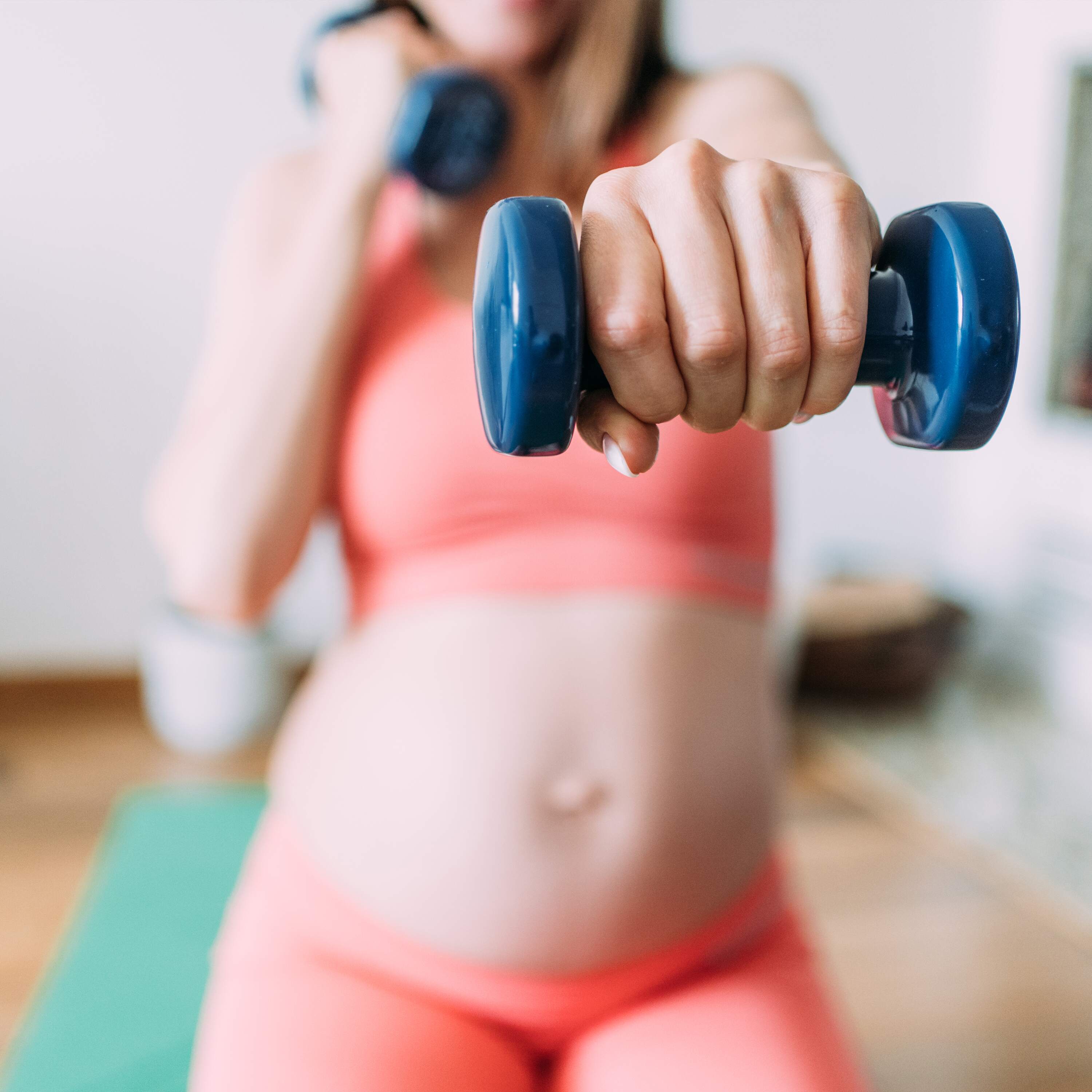
It's probably not a big surprise now to hear that just like when you're not pregnant, a pregnant person's body, brain, heart, benefits from movement, you know. And actually the recommendation is exactly the same for pregnant people as it is for everyone else. So 150 minutes of moderate intensity physical activity a week. But the most current research says only 10 to 15% of pregnant women actually follow that guidance.
- [02:40]
Marielle Segarra
Yeah, this is most of what I hear from friends who are pregnant. They're like, I'll get to that after I give birth.
- [02:49]
Andy Tagle
Yeah, but research shows that exercising regularly throughout pregnancy does not increase your risk of having a miscarriage, of having a small baby, or of having an early baby.
- [03:00]
Marielle Segarra
So anyone out there who's like on the fence about keeping up that Pilates class or their strength training, keep going.
- [03:09]
Andy Tagle
It's not just safe, it's highly recommended for your health and for babies. For starters, it can reduce pregnancy pain and make birth easier. But I should note for the record that we are not offering medical advice here. You definitely wanna check in with your doctor about what's best for your pregnancy. But we did talk to a lot of medical experts who have a lot of great tools to help keep you moving safely
- [03:32]
Marielle Segarra
after the break. How exercising can make pregnancy less painful and make birth easier. Also, specific advice and exercises for each trimester.
- [03:55]
Announcer
This message comes from Progressive Insurance. You're listening to this podcast, so you've got a curious mind. Did you know that drivers who switch and save with Progressive save over $900 on average? Visit progressive.com and get a quick quote with discounts that are easy to come by Progressive Casualty Insurance Company and affiliates. National average 12 month savings of $946 by new customers surveyed who save with Progressive between June 2024 and May 2025. Potential savings will vary.
- [04:24]
Sponsor/Advertiser
Support for this podcast and the following message come from Strawberry Me. Be honest. Are you happy with your job? Are you stuck in a job you've outgrown or never wanted in the first place? Are your reasons for staying really just excuses for not leaving? Let a career coach from Strawberry Me help you get unstuck, Discover the benefits of having a dedicated career coach in your Corner and get 50% off your first coaching session at Strawberry Me. NPR this message comes from Charles Schwab with their original podcast Choiceology. Choiceology is a show about the psychology and economics behind people's decisions. Download the latest episode and subscribe@schwab.com podcast
- [05:10]
Andy Tagle
the midterms are coming, and if you
- [05:12]
Announcer
think the news cycle feels intense now, just wait until the fall.
- [05:15]
Andy Tagle
That's why summer is a perfect time
- [05:18]
Announcer
to make sure your news diet is calibrated.
- [05:20]
Andy Tagle
I'm Ian Martinez On up first, we
- [05:22]
Announcer
unpack the three biggest stories every morning
- [05:25]
Andy Tagle
so you can stay informed and get
- [05:26]
Announcer
on with your day in fewer than 15 minutes. Follow or subscribe to Upfirst Today wherever you get.
- [05:32]
Andy Tagle
Podcasts. Congratulations, parent to be, and welcome to your guide to what to expect from your workout when you're expecting. We're Going to move through this one trimester at a time to start. Let's warm up your mindset. Maybe you're here because you're having trouble getting motivated. That makes sense.
- [05:56]
Dr. Anna Sapien
In the first trimester, many women experience fatigue, and that's a very normal part of the first trimester. People want to maybe sleep all the time.
- [06:05]
Andy Tagle
This is Dr. Anna Sapien, an OB GYN and Director of Community Women's Health at Columbia University Irving Medical Center.
- [06:13]
Dr. Anna Sapien
The advice, I always say, is to listen to your body, right? Like if something feels like it's too strenuous, it's really impossible to do, then that's, that's your body telling you to do that. And so you should listen to your cues.
- [06:23]
Andy Tagle
Takeaway one. New to this? Not feeling great. Start low, go slow, but keep at it. Whether you're a seasoned athlete or you've never stepped foot inside a gym, the beginning of being pregnant can pack a punch, to say the least. So if you're not already active, but you want to try for that 30 minutes a day of aerobic exercise five
- [06:48]
Dr. Anna Sapien
times a week, maybe work up to that. So doing maybe like 10 minutes at a time and working your way up.
- [06:54]
Andy Tagle
Now, if you are a gym regular and you're rearing to go, but you've just been feeling wiped, listen, this is
- [07:02]
Crystal Howold
your first lesson in the first trimester of mom life. And it's like you gotta change your mindset and your expectation.
- [07:10]
Andy Tagle
Crystal Howold is a women's health physical therapist as well as the co owner of Expecting and Empowered, a platform designed specifically for pregnancy and postpartum workouts.
- [07:21]
Crystal Howold
I just got my workout in myself, so that's why I have this wet hair. But you always gotta prioritize that fitness.
- [07:27]
Andy Tagle
You know, as a mom of three herself, she fully understands just how hard it can be when the first trimester puts you on your heels.
- [07:35]
Crystal Howold
So if you go for a walk because you're feeling sick, that's a win. Chalk it up. If you only feel like doing some flexibility and gentle movement because you feel like you're gonna barf, chalk it up.
- [07:47]
Andy Tagle
Because even small, regular efforts to stay active can make a difference during pregnancy and postpartum especially.
- [07:54]
Marky Davenport
We saw a 40% reduction in the odds of developing preeclampsia, gestational hypertension, and gestational diabetes.
- [08:02]
Andy Tagle
I'm guessing you're familiar with these three because they're major pregnancy complications that your doctor likely already has or will be screening you for. Each can pose a serious or even life threatening risk to both mom and baby. So I talked to Marky Davenport about this. She's a researcher at the University of Alberta in Canada who focuses on the effects of exercise before, during and after pregnancy. She says the benefits of exercising during pregnancy don't just stop with you. Babies with active moms have a lower risk of obesity and diabetes down the road.
- [08:36]
Marky Davenport
For instance, their babies have slightly stronger cardiovascular systems. Baby brain activity in the month postpartum is a little bit higher.
- [08:45]
Andy Tagle
So in this early stage of pregnancy, resolve to fit in. Movement. How and where and when.
- [08:51]
Dr. Anna Sapien
You can maybe get off one stop earlier and walk, you know, get in some more steps. Try to find a way to incorporate exercise into your daily routine.
- [09:03]
Andy Tagle
I know what you want to know next. What's the perfect pregnancy exercise routine? Right. Well, there's a short answer and a long answer.
- [09:14]
Marky Davenport
Short version, there is no one best way to exercise. I would say that the best form of activity is the one that you're going to enjoy and do and, you know, maintain during pregnancy.
- [09:26]
Andy Tagle
So if you're 12 weeks in and waking up every day still feeling jazzed about that morning jog, don't feel the need to reinvent the wheel.
- [09:34]
Dr. Anna Sapien
There's very little that you shouldn't do in pregnancy. Barring a complication in pregnancy where we are asking or recommending that you restrict exercise, then it's probably, probably fine to continue what you were doing.
- [09:50]
Andy Tagle
The longer answer is your body is going to do a lot of changing over the next several months, and the best workout will adapt accordingly. Take away two you don't have to feel this way. Add in workouts early on that can help prevent pain down the line. Heartburn, acne, constipation, nosebleeds, leg cramps, itchiness all over. As your first trimester progresses, so too does the unique parade of new body pains and surprising bodily functions that can often spur the phrase, is that supposed to be doing that?
- [10:25]
Crystal Howold
I wish that people knew that a lot of things are preventable during pregnancy.
- [10:30]
Andy Tagle
As your body grows and shifts, Crystal says, your body's different internal pressure systems can get thrown off, causing pain or problems in areas where pressure is unevenly distributed. Sciatica, for instance, can happen when the uterus puts too much pressure on the sciatic nerve. Or maybe you're dealing with hemorrhoids.
- [10:52]
Crystal Howold
Too much pressure in the pelvic floor region.
- [10:54]
Andy Tagle
But by building balance and strength in a few key areas of the body, you can alleviate or maybe even prevent some common pregnancy aches and pains. So let's walk through a few ways to do that. We'll Start with what Crystal calls a triple B breath Gonna breathe in through your nose, then down your back and into your bra line, all the way
- [11:18]
Crystal Howold
down into your butt. That's the third B, so almost think about yourself being like a tiger. Instead of the tail being tucked, think about lifting the tail out from behind you with your breath.
- [11:29]
Andy Tagle
In addition to being a useful tool for calming down your nervous system, the triple B is great for a warmup because it hits a lot of the areas that need your attention throughout your pregnancy. Your back, chest, core, hips and pelvic floor. These areas you're going to want to work out regularly. Now, what will that look like exactly? There's no official guidance on this, and check in with your doctor, of course, but Crystal very generously gave us some ideas on what an exercise plan throughout your pregnancy might look like. Let's start with a big picture overview. First, she suggests incorporating some sort of flexibility or stretching daily, plus one to two days of focused work like Pilates or yoga that can help prep your body for delivery. Aim for one cardio workout per week and three strength workouts per week. Because of that aforementioned instability and imbalance during those strength workouts, you might focus on one or two areas of the body on a rotating basis, say 15 to 30 minutes at a time to start. So maybe you do back and chest on Mondays, hips core pelvic floor on Wednesdays. If you don't already have a routine, you can just pick a few favorites from the exercises in this episode and plan to do a few rounds of between 10 to 20 reps of each exercise at a time. Ease up on the weights as your pregnancy progresses or as your body needs. Now in the first trimester specifically, Crystal
- [13:05]
Crystal Howold
says, I'm starting to think about adding that lateral hip movement. I'm starting to think about really reconnecting to my core.
- [13:13]
Andy Tagle
For your hips, you could try side lying, leg lifts, banded walks, side to side, lateral lunges, or glute bridges. Trust me, your third trimester self will thank you for all of those. You know that very distinctive waddle walk of the deeply pregnant?
- [13:30]
Crystal Howold
When we start to waddle, it means that our feet are slowly like drifting outwards. When our feet drift outwards, our hips are actually rotating outwards too. What that means is they've lost some of their lateral hip control. That's why I'm also obsessed with it in the beginning of the first and second trimester. Trying to get side to side.
- [13:54]
Andy Tagle
For your core, go for bear crawls, side planks, or bird dogs. That's the one where you start in a tabletop position and then reach out opposite arms and legs or dead bugs, which is essentially the same exercise just on your back. These are all going to target your deep core muscles.
- [14:11]
Crystal Howold
The transverse abdominis it's called. It's like your own personal pair of Spanx. So we want to learn how to use the Spanx if we can. If I have great abdominal control, one of the things I might not have is what's called pubic synthesis, better known
- [14:27]
Andy Tagle
as SPD or lightning crotch. The name is unfortunate, I know, but also appropriate.
- [14:35]
Crystal Howold
When that belly expands, there's going to be a lot more pressure on the front of the bone. But all of that pressure that's moving forward, Preventable, you know, like working on my hamstring. Strength is also going to help tilt my pelvis back, get it into nice neutral position. Preventable. So it's going to reduce aches and pains like that. It's also going to reduce complications during labor and delivery.
- [15:01]
Andy Tagle
If you're looking for more structure, more cardio or both, barre Zumba or other dance based workouts might be a good place to start. Any standard Pilates or yoga class is also sure to cover everything on Crystal's list. Just make sure you don't end up in any heated or aerial silk type classes to best protect that tiny growing bump. Speaking of safety, general guidelines are pretty straightforward. You follow the same basic best practices as you would when not pregnant. Stay well hydrated, make sure you're not going to overheat, wear supportive clothing, and the same goes for when you should worry.
- [15:39]
Dr. Anna Sapien
I think that warning signs that are true for everyone who is exercising. You know, if you are feeling very short of breath, if you're having chest pain, if you're feeling dizzy, those are cues to, to stop what you're doing
- [15:53]
Andy Tagle
when it comes to pregnancy. Specific symptoms.
- [15:55]
Dr. Anna Sapien
If you start to feel like you're having contractions, if you develop spotting, call your doctor.
- [16:02]
Andy Tagle
Okay. Those recommendations are helpful but surprisingly broad. Are you sure there's nothing else we should be staying away from Doc?
- [16:10]
Dr. Anna Sapien
Make sure that you're not doing things where there is a risk for direct abdominal trauma. Right. So things like boxing is probably not a good idea if there's that opportunity for direct abdominal trauma.
- [16:25]
Andy Tagle
Boxing, of course, that's a no brainer.
- [16:29]
Marky Davenport
Well, actually we're changing again the way that we think about most of these things. So you probably shouldn't go and be in a full out match, but that doesn't mean that you can't be hitting a bag. Right? So you can do modified activity that's going to be lower risk.
- [16:48]
Andy Tagle
And that rule goes for a lot of other physical activities too. Be discerning, of course. Avoid extreme pressure and temperatures. Anything with extreme in the name, really. Contact sports or any activity where falling is likely. Plus lying flat on your back for long periods of time, especially in the third trimester. But you have more room to move than a lot of people think.
- [17:11]
Marky Davenport
What has sort of been traditionally recommended is to avoid heavy weightlifting in pregnancy. So some people are told, don't lift over 10 pounds, don't lift over 20 pounds. Well, you kind of get into a bit of a pickle after you deliver because you walk out of the hospital or wherever and you have this lovely little say 7 pound baby and I don't know, it feels like 50 pound car seat to go with it. And so there's no reason to stop resistance training during pregnancy, strength training as
- [17:44]
Andy Tagle
that belly starts to pop. That's where we're headed after the break.
- [18:04]
Announcer
This message comes from Wise. The smart way to manage your money around the world. With Wise, you can send, spend and receive Money in over 40 currencies at the mid market rate. Learn more@wise.com Ts and Cs apply.
- [18:18]
Andy Tagle
Zendaya and Tom Holland are back in Brand New Day and the movie has a more grounded tone than we've seen from the franchise. But does it strike the right balance of fun and darkness? We'll talk about it on NPR's Pop Culture Happy Hour. Listen via the NPR app or wherever you get your podcasts. You're listening to Life Kit and it's time for takeaway 3. Keep building your strength as your belly grows. Alright, we're going to cover a lot of ground quickly in this takeaway because
- [18:51]
Crystal Howold
the second trimester is honestly golden. Golden trimester.
- [18:56]
Andy Tagle
Once you turn the Corner on week 14 or shortly thereafter, you're hopefully feeling better, brighter and more energized as you regain your vitality. Crystal says build on that momentum in your workout, particularly when it comes to resistance training.
- [19:12]
Crystal Howold
So this is when I really though start to think about my upper back and tension here. Most women will have pec weakness so their pecs start to get really tense. That's when you start to see that slump position. Because I can't hold myself upright, I want collarbones to be like nice and wide.
- [19:32]
Andy Tagle
Working with your body weight, go for incline or wall push ups. You could try any or all types of rows with free weights and at the gym, head to the seated chest press or try some standing cable flies with a wide stance that can safely accommodate that growing bump.
- [19:50]
Crystal Howold
From there, I want to work on my postural muscles so that my trunk can stay stacked over my pelvis. And again, this is going to help the pelvic floor.
- [20:01]
Andy Tagle
Postural muscles are constantly working to help keep you balanced and upright. It's a big group, but generally your neck, back, core, hip and leg muscles are all included. And the stronger they are, the better aligned you'll be. The more you can protect yourself against things like the all over back pain that can really start to come calling as that fetus grows. So next up, let's move on to training those hamstrings, which can really support your fast changing center of gravity. That could look like lateral lunges or sumo squats. That wider stance might just be comfier for you. Now for free weights, one of Crystal's favorites is a variation on Romanian deadlifts
- [20:46]
Crystal Howold
where you're bringing the opposite arm across to the opposite leg but loading it.
- [20:52]
Andy Tagle
Start in a standing position with weight in one hand, then hinge at your hip with back straight and knees slightly bent. Bring that weight down to the opposite foot, then hinge back up and switch sides. Now, if just listening to that description felt complicated, you could opt instead for leg presses or the hip abduction adduction machines at the gym. Aim for moderate resistance, meaning you should be able to have a conversation while you exercise. A final area of note in your second trimester, that diaphragm.
- [21:27]
Crystal Howold
I'm thinking about keeping space for the diaphragm, so I'm thinking about flexibility through my spine. Loading it and then I'm also thinking about breathing in that area is really important.
- [21:40]
Andy Tagle
A mermaid stretch is a fun one to try. Sit on the ground with knees bent and feet folded to the right. As you inhale, raise your left arm to the sky with your right arm on the ground for support. As you exhale, bend your torso to the right. Hold for four breaths. You should feel the stretch on your left side. You also want to keep going with deep core exercises to help combat diastasis recti. That's when your ab muscles separate from stretching during pregnancy. Heel slides are a popular recommendation in this category, as are those bird dogs from earlier.
- [22:16]
Crystal Howold
Because I'm getting the opposite side, opposite arm, opposite leg, keeping that back, what's called the posterior chain, active as long as we can.
- [22:25]
Andy Tagle
The bigger that belly, of course, the more discomfort you're likely to feel, the harder it might be to pick up those weights. So let's move on to how to keep moving in your third trimester when you make it to that home stretch, first of all, just give yourself a pat on the back. Then try to build in movement in your day that might relieve it some.
- [22:47]
Crystal Howold
Just try to create space and take the load off the back is really what the job would be.
- [22:52]
Andy Tagle
For starters, returning to that triple B breath can help massage the muscles along your neck and spine. Keeping up your cardio at least walking and strength training, or at least gentle stretching and flexibility might feel like way more of a chore as the weeks go by, but could also serve as a very necessary mood booster around this time. Another somewhat strengthening practice that can offer
- [23:20]
Crystal Howold
a lot of relief during the third trimester. Dude, just give that baby a hug all the time. Put your back up against the wall. Like that song. Put your back against the wall and then lift the baby.
- [23:30]
Andy Tagle
That'll temporarily take the pressure off of your lower back and your spine and can help you reconnect with your core while creating some blessed space around your hip joints. One last recommendation. Swimming can offer not only exercise, but pain relief and needed relaxation because as you get closer to your due date, your objective changes.
- [23:56]
Janelle Frederick
The overall goal is not how strong can I get in that last trimester, it's stretching the pelvic floor. And also, am I clear on how to let go and push through the pelvic floor without tightening it?
- [24:09]
Andy Tagle
This is Janelle Frederick.
- [24:10]
Janelle Frederick
On the social media streets, I'm known as Vagina Rehab doctor.
- [24:13]
Andy Tagle
She's a pelvic floor physical therapist who works primarily with women who are struggling with pelvic pain and painful intimacy, which
- [24:20]
Janelle Frederick
is really common during and after pregnancy.
- [24:23]
Andy Tagle
Actually, she says in the third trimester, your focus is less on exercising for pain relief and more on movement to help you have a successful delivery. That's no small thing.
- [24:34]
Janelle Frederick
You know, giving birth is the Olympics for the pelvic floor. We use our pelvic floor all the time, but we don't use it to that extent when we are pregnant and giving birth.
- [24:46]
Andy Tagle
Last up takeaway 4 pregnancy and birth are the Pelvic Floor Olympics. Train accordingly. All right, we've made it. We're knocking on your delivery date's door. Time to prepare that pelvic floor. Now, I know we've talked about this a few times on the show before, but Janelle, please remind me, what exactly is the pelvic floor again?
- [25:09]
Janelle Frederick
It's a group of muscles that sits at the the base of your pelvis. And so these are the muscles that open and relax when you're ready to pee and poop. They're the muscles that need to open and get out of the way when it's time for the baby to come through that birth canal. And so the pelvic floor is crucial to your overall confidence, your daily activity, and especially pregnancy and postpartum managing that period well.
- [25:32]
Andy Tagle
So clearly your pelvic floor is the star of the show. Let's make sure you can treat yours right. Janelle says people often assume these muscles are weak, when in reality they're really
- [25:45]
Janelle Frederick
just carrying too much in their bodies. Like, if you feel tense during the day, your vagina is probably tense too.
- [25:51]
Andy Tagle
Our top recommendation here, Find a pelvic floor PT of your own to get evaluated at any point in your pregnancy or even preconception. It's a good idea in general for your reproductive health. One in four women will experience a pelvic floor disorder in her lifetime. But if you don't have access to a PT just yet, there are a lot of simple exercises you can start with.
- [26:14]
Janelle Frederick
So pelvic floor stretches are things like happy baby, child's pose, cat, cow, diaphragmatic breathing.
- [26:22]
Andy Tagle
From there, Janelle has an exercise she recommends that isn't strictly speaking a workout, but is most definitely a stretch in the most literal sense of the word.
- [26:33]
Janelle Frederick
It's called perineal stretching.
- [26:36]
Andy Tagle
The perineum, for anyone unfamiliar, is a small section of skin and tissue between the vagina and the anus.
- [26:43]
Janelle Frederick
And when you give birth, the muscle that generally tears is this muscle right here.
- [26:48]
Andy Tagle
See, if you deliver vaginally, this area can stretch by up to 300% its normal size, which sometimes, like roughly 50 to 80% of the time, according to the most recent research, can cause the skin to tear to varying degrees. I know that sounds scary. The good news, the perineum contains muscles
- [27:10]
Janelle Frederick
just like any other muscle. You can strengthen it, you can stretch it, you can train it.
- [27:14]
Andy Tagle
So in your last trimester, Janelle suggests a regular practice of perineal stretching in addition to pelvic floor stretches to best prep for the big day.
- [27:23]
Janelle Frederick
That's the perfect time to start training those muscles to stretch and accommodate the size of the baby's head. We don't want to have a prolonged stage of labor when we're pushing for so long. That's a lot of strain on the pelvic floor. And then we want to try and limit our chances of tearing. If we can't limit it completely, maybe we can limit a grade three and grade four tear and have, you know, a low grade tear which heals way quicker and there's less pain and all that involved.
- [27:49]
Andy Tagle
Now, to be clear, this practice isn't a guarantee and actually the science is a bit mixed on effectiveness, but it's not likely to do any harm. And it's kind of the only exercise out there that may be able to offer you some relief from this. And it's really simple to do. First, you'll want to be in a seated position or lying down with back support, legs wide and knees bent.
- [28:13]
Janelle Frederick
You can use your finger and literally with some lubricant, of course. Wash your hands, cut your nails, stretch it out.
- [28:21]
Andy Tagle
There's no one agreed upon method for this, but Janelle's recommendation is to gently insert one thumb into your vagina about an inch or an inch and a half deep that's about to your first knuckle and then press and hold on the back wall of your vagina towards your anus with moderate pressure.
- [28:39]
Janelle Frederick
Because it needs to stretch downward, you're trying to actually open the tissue more.
- [28:44]
Andy Tagle
Practice this one to two times a week, working up to five minutes at a time. But again, there are lots of other ways to do this. Online tools you can use, variations in duration and hand placement, even instructions for including a partner. Whichever method you choose, when the time comes, don't forget a cool down period is a necessary part of any good exercise regimen.
- [29:08]
Janelle Frederick
Go slow and understanding with your body. You're recovering from the pelvic floor Olympics and get back to your activity and even think about like, what type of support do you need? Is it, is it someone to help you with your diet? Is it someone to help you with your mental health? Pelvic floor therapy after giving birth I think should be mandatory. Actually.
- [29:33]
Andy Tagle
Now there's a lot more we could say on this topic, but we've already run down the clock. So I'll leave you with some interesting research from Margie about exercise after giving birth.
- [29:44]
Marky Davenport
We actually found that contrary to what sort of our general idea has been to rest, relax, take it easy, especially after a cesarean section, that early movements and mobilization is actually quite beneficial for recovery and healing.
- [30:02]
Andy Tagle
We should say here mobilization is a relative term. We're talking about a slow shuffle, maybe 3,000 steps in those earliest days. So start low, go slow. Still very much applies postpartum. You want to rebuild those foundations, but don't be scared to continue to embrace movement as medicine, especially if you're having a hard time.
- [30:24]
Marky Davenport
There's people who, they're just like really struggling with the transition from pregnancy to postpartum. And going out for a walk or going out for a run is actually what helps them to maintain their identity and feel a bit more like themselves.
- [30:48]
Andy Tagle
Okay team, let's recap. Takeaway 1 It's worth it to exercise regularly during pregnancy, or at least to try. Start low, go slow, but keep at it. Takeaway 2 It's possible to prevent or alleviate some pregnancy pain and discomfort. You just have to be strategic with your workouts. Takeaway 3 Stick to strength training. You and your little one will thank you for it later. And Takeaway 4 Pay close attention to your pelvic floor for the healthiest delivery and postpartum possible.
- [31:24]
Marielle Segarra
That was reporter Andy Tagle and that's our show. This episode of Life Kit was produced by Margaret Serino. Our digital editor is Malika Garib and our visuals editor is CJ Recall. Meghan Keane is our senior supervising editor and Lauren Gonzalez is our executive producer. Our production team also includes Claire Marie Schneider and Sylvie Douglas. Engineering support comes from Jimmy Keeley. Fact checking by Andrea Lopez Crusado. I'm Mariel Segarra. Thanks for listening.
- [32:09]
Sponsor/Advertiser
This message comes from Charles Schwab with their original podcast, Choiceology. Choiceology is a show about the psychology and economics behind people's decisions. Download the latest episode and subscribe@schwab.com podcast
- [32:24]
Andy Tagle
the fatal shooting of a teenager at a protest in Seattle has gone unsolved for six years.
- [32:29]
Janelle Frederick
This is open in your face. How are there no answers?
- [32:33]
Andy Tagle
Our investigation has uncovered new evidence and witnesses who say they've never talked to police.
- [32:39]
Dr. Anna Sapien
Did police ever call you?
- [32:40]
Marky Davenport
Not once.
- [32:41]
Andy Tagle
Listen to We Keep Us Safe, a new True Crime series on the Embedded podcast from npr. Big news stories don't always break on
- [32:50]
Crystal Howold
your schedule, but with the NPR app,
- [32:52]
Andy Tagle
news, culture and podcasts are ready when you want them in your pocket. Download the NPR app today.