← Life Kit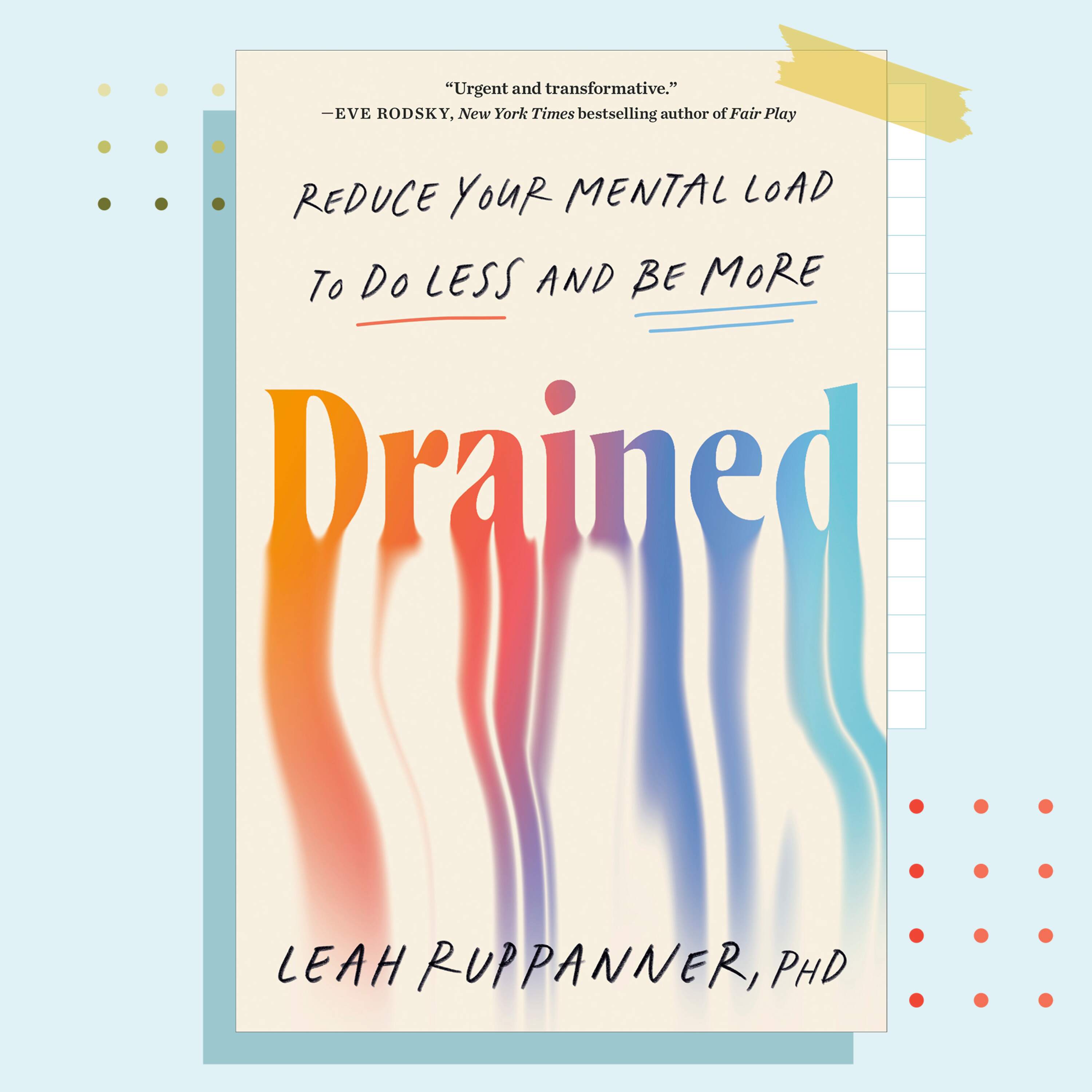
Loading summary
Transcript68 lines
- [00:00]
Andy Tagle
This message comes from usc norris comprehensive cancer center.
- [00:05]
Leah Rupanner
World class expertise, advanced treatments, clinical trial
- [00:08]
Andy Tagle
access and personalized care. Request an appointment@keckmedicine.org usccancer or 1-800-usc care.
- [00:19]
Marielle Segarra
You're listening to life kit from npr. Hey, it's Marielle. So the knob on one of my kitchen cabinets fell off the other day. I was putting away the dishes and I did try to screw it back on, but it wasn't working. I was going to need to take out the tools and I did not have the energy for that. Also, I'm going to be honest, I didn't even take the screw out. So here we are days later and every time I open the cabinet, I forget and I get poked in the hand by the pointy end of a screw. Why does it feel like there's so much we have to do just to stay alive and be reasonably comfortable? Also, these tasks, they always make themselves known to me at the least convenient times. Like I go to wash my hands and wouldn't you know it, the soap dispenser is empty. These tasks fall under the category of the mental load, which is basically the weight of all the things you need to do or think you need to do to stay alive, maintain a household and take care of your loved ones. The load feels heavy and it often feels emotional like it's deeper than the soap or the screw or the carton of milk that you just noticed is almost empty.
- [01:29]
Andy Tagle
We start to go, oh, I need to remember the milk, because if I don't, my child will be hungry in the morning. If they're hungry in the morning, they'll show up at school and they won't have enough energy because they will not have had breakfast. And then if they don't have enough energy, they might not actually do as well in the, in their test. Now if your brain starts to do this kind of like from A to B to C to disaster, this is in part because this is emotional thinking work.
- [01:54]
Marielle Segarra
This is Leah Repaner, a sociologist at the University of Melbourne who studies this concept of the mental load. And she says one tip is just to start to notice these moments and specifically how weighty a certain task feels.
- [02:07]
Andy Tagle
How can we see it? Cause once we see it, we can't unsee it. And once we see it, we can start to address it.
- [02:12]
Marielle Segarra
Leah has a new book out called reduce your mental load to do less and be more. It offers research backed tools to help identify where your energy is going and how you might spend it better. Now, research shows that women and mothers tend to carry most of the mental load in their households, and they're feeling burnt out because of it. It does feel worth acknowledging that here, but whether we're partnered or single, and regardless of our gender or sexual orientation,
- [02:38]
Andy Tagle
everyone is carrying a mental load, especially
- [02:40]
Marielle Segarra
if we're caring for other people. On this episode of Life Kit, how to lighten your mental load. Life Kit reporter Andy Tagle talks to Leah about different categories within the mental load, about how you can audit your mental load expenditure, and about why it's important to leave space for your goals and ambitions and not just the everyday tasks that need doing.
- [03:05]
Andy Tagle
This message comes from Midi Health, a virtual care platform for women in perimenopause and menopause. Chief Medical Officer Dr. Kathleen Jordan shares
- [03:14]
Leah Rupanner
the wide range of symptoms they work
- [03:16]
Andy Tagle
to address for women in midlife.
- [03:18]
Leah Rupanner
There's dry eyes, dry hair, dry skin. There's dry mouth, trouble sleeping, panic and anxiety attacks. When we ask patients about common symptoms, on average they report six MIDI Health
- [03:30]
Andy Tagle
committed to helping women in midlife with perimenopause and menopause care. Accessible via telehealth visits at.
- [03:36]
Leah Rupanner
Join midi this message comes from wise,
- [03:41]
Commercial Announcer
the app for international people. Using money around the globe, you can send, spend and receive in up to 40 currencies with only a few simple taps. Be smart, Get WISE. Download the WISE app today or visit wise.com Ts and Cs apply this message comes from Granger. This is the story of the one As a procurement manager for a hospital system, she keeps every facility in her network stocked and ready to that's why she counts on Grainger to be her single source for thousands of products, from disinfectants to lighting, air filters, and more. And with fast, dependable delivery, Grainger helps her keep every facility stocked, safe, and running smoothly. Call 1-800-GRAINGER click granger.com or just stop by Granger for the ones who get it done.
- [04:33]
Leah Rupanner
Leah says there are three characteristics of the mental load that can often make it difficult for people to talk about, let alone make changes, too. First, it's invisible and internal.
- [04:45]
Andy Tagle
So, for example, right now, as you're listening to my voice, you may simultaneously be like, oh, I gotta make sure that my kid's picked up or the dog is sick, or have I called the vet? Or have I checked in to see if my aging parent has taken their medicine?
- [04:58]
Leah Rupanner
Second, it's boundaryless.
- [05:00]
Andy Tagle
You don't go, like, I didn't do the dishes last night, let me just pack those up and put them in the car and Put them and bring them to work. You don't, but you bring your mental load everywhere and then.
- [05:09]
Leah Rupanner
And third, it's enduring because it's tied
- [05:12]
Andy Tagle
to the things we love the most. Our family, our friends, our careers, our lives, our dreams and our passions. When does that end?
- [05:22]
Leah Rupanner
Takeaway one, the mental load can be heavy and often much heavier for the women and mothers of a household. The same goes for the consequences of dropping it. You're not making it up. It's not just in your head, and it's not a personality trait. Leah, why does this all seem to matter so much more to women than to men? You know, are we all just overthinking? Are our standards just too high?
- [05:49]
Andy Tagle
That's a really excellent question. So I thank you for asking that because one of the things I could hear across all my research, across the data that I was collecting, is women felt really guilty. They felt guilty and awful. If they weren't 110% there for their family, they weren't doing absolutely everything. And then they felt incredibly guilty when they took time to rest and recover. Part of the reason why this is something that is being experienced by mothers and women in particular, and this is sometimes I write in the book, it's not that men are heartless, it's just they're not living in the same social world you're living in. So it doesn't feel as heavy for them because it's not as heavy for them. They don't feel the consequences of getting this wrong because. Because the consequences for them are less. The reason why that is true is because women are expected to be caring, thoughtful, kind, considerate, and giving all the time. And the perception of the consequences for, quote, unquote, getting it wrong or forgetting something can feel like never ending, right? And the result of that is that a lot of mothers are totally burnt out. They never feel like they're doing enough. That is such an unfair way to. To expect someone to move through the world. And they're not making this up, right? Like, they're not micromanagers, they're not perfectionists. They're not, you know, just anxious or unable to relax. The issue is, is that we hold women to a different standard.
- [07:17]
Leah Rupanner
This isn't Leah's personal opinion. That different standard is a finding from her research. It came from an experiment that Leah put together after she kept hearing again and again from men and women all over the world, women do more house cleaning because they're just more likely to see the mess.
- [07:36]
Andy Tagle
So we ran the study where we had a messy Room, Right. A messy room and a clean room. It's the exact same room. One is messy, one is clean.
- [07:44]
Leah Rupanner
So the study had two parts. The first was just seeing how men and women would rate the messiness of each room. And big surprise, men and women rated the messy room as equally messy and the clean as equally clean.
- [07:58]
Andy Tagle
So this idea that men can't see the mess or the dirt, nonsense. Stop saying that to each other.
- [08:03]
Leah Rupanner
Then Lee's lab took things one step further and named the rooms. So this room belongs to Jennifer, this room belongs to John.
- [08:10]
Andy Tagle
And then we asked like, okay, well, what would you think about Jennifer in terms of her moral character based on this room? They might say, like, well, I wouldn't judge her, but I know other people are going to judge her based on the status of this room. And so when I say this to people in the world, and in particular women, it's this kind of validation moment of like, yeah, I know. Know that if someone comes into my house and it is a mess, they are going to think that I am responsible for that. And. And they're going to view me as less. Not just messy, but like, less great as a human based on the status in my room. But they're not punishing the men in the same way.
- [08:47]
Leah Rupanner
Basically, Leah found evidence that men and women are held to a different standard when it comes to housework. Now, what can you do about this imbalance? Well, the first step, as is so often the case here at Life Kit, name it to tame it. Because we kind of know or feel just how unruly the mental load can get on the daily. Right. But by being able to slot that emotional thinking work into different categories, you can start to both get a handle on the real scope and scale of it and have language to better communicate with your household. So takeaway two, break down the specifics of your mental load so you can start to talk about it and change what needs changing. And that laundry list is probably longer than you think it is because Leah's broken down the mental load into eight different categories. Yes, eight. Let's go through them one by one. First up, life organization.
- [09:44]
Andy Tagle
Now, this is the staying on top of the planning and the tasks. You will do this in your home life. This is like, do we have everything we need at home? But you also do this at work, like making sure your work is organized and your. Your social life is organized too. The second one is emotional support. So this might be something where you know you're sitting in a meeting with a co worker or you're Sitting across the dinner table from your child or a parent or a friend, and you're looking at them and thinking, are they okay? I can't tell what's going on. I'm looking at their face. They seem a little bit depressed or they seem a little bit off or maybe frustrated.
- [10:17]
Leah Rupanner
Next, relationship hygiene. That's maintaining strong social connections at work. Yeah. Might just call it networking, but in
- [10:25]
Andy Tagle
our home lives, you might do this. When your child has a new friend and you want to connect in with their parent or you want to give them a play date. You might be thinking about, you know, the loneliness of an aging parent. Do they have people showing up? How do I bring new people in? The fourth magic making is the work of making sure traditions are carried on and events feel special. Life feels special.
- [10:48]
Leah Rupanner
Then we have dream building. Helping people in your life fulfill ambitions, passions, goals.
- [10:54]
Andy Tagle
This was one of the categories that I heard mothers say. I have lost my own ability to dream.
- [11:00]
Leah Rupanner
Next, individual upkeep. The things you need to do to keep fit and healthy.
- [11:05]
Andy Tagle
Have I gone for the walk? Do I need to get my hair cut? Have I had the dentist appointment?
- [11:09]
Leah Rupanner
And then there's safety. Anticipating real or hypothetical risks to you and your loved ones.
- [11:15]
Andy Tagle
This is one that actually mothers and fathers carried heavily and men tend to talk a lot about. I'll say I've collected data from 5,000 people recently in the U.S. this is one of the high ones that come up for those who are African American or Latino. So this is what I'm saying to you. It will fluctuate and shift over time. Right? This is something that it'll depend on your. The political circumstance. It'll depend on what's going on in the world. But safety can go from the micro to the macro of, am I, you know, locking the doors at night to, is it safe for me to walk on the streets?
- [11:47]
Leah Rupanner
And the last one, number eight, is Medicare. That's M E T A, like abstract or conceptual or Whoa. Meta.
- [11:58]
Andy Tagle
Am I creating? Raising children who will thrive into the future? And am I creating worlds that I want to live in? Is the world the way I want it to be? So those are our eight.
- [12:07]
Leah Rupanner
So now that you have that full breakdown, take a little time to think about how things are handled in your home. Does everybody share the load in each category? Takeaway 3. Interrogate why you carry the mental load you carry or don't. For example, maybe you feel entitled to do a little less of the cooking because you bring home a little more of the bacon than your partner. Maybe, you know, you're carrying a lot more around the house. But that feels just a little easier than trying to explain or offload all the planning, prepping, decision making that goes into any one family activity. In one survey, Leah and her fellow researchers found that women in the US were responsible for over 70% of the domestic mental load. And she says there are whole categories of work that she's found men and fathers don't bother to carry at all because they know their partners already have those things covered. Assumptions like that one stem from some pervasive cultural myths that Leah says do everybody a disservice.
- [13:09]
Andy Tagle
One of the biggest lies we sell each other is that women are better multitaskers than men, that their brains are just more efficient at keeping track of all these competing things that have to go on. And the research doesn't show that. Actually, what it shows is that none of us can multitask. What you're really good at doing is task switching, switching between. And when you task switch, you're actually burning through some of your cognitive capacity that it's actually draining some of your energy. Another myth we tell each other is that women are really good at household managers and men are just terrible at this. So men are really good at like running companies, right, that are complex, with a bunch of different employees, competing demands, you know, stressful moments, problem solving, but they're terrible at bringing any of those skills back at home. Like they just can't. Like those are non transferable skills. This is another thing. Men who are carers at home, who engage in the primary care of children and taking care of the household, they're healthier, they're happier, they're more balanced, kids come to them when they are hurt. What a loss for all of us to not have the gift that is men's care, the gift that is men's love, the gift that's men's engagement. And then to say to women, you're just really good at that at home, but you're super distracted at work. What a loss for us in the workplace to not have the incredible talents that women bring. Talents they develop in part through their ability to care, empathy, adaptability, time management, creative thinking.
- [14:40]
Leah Rupanner
When we get back from the break, Lee will teach you how to audit your mental load and hopefully get you on the path to less stress about book club politics and more guilt free dreaming about that solo vacation.
- [15:00]
Commercial Announcer
This message comes from Wise, the app for international people. Using money around the globe, you can send, spend and receive in up to 40 currencies with only a few simple taps. Be Smart, get wise, download the WISE app today or visit wise.com Ts and Cs apply this message comes from Granger. This is the story of the one As a procurement manager for a hospital system, she keeps every facility in her network stocked and ready. That's why she counts on Grainger to be her single source for thousands of products, from disinfectants to lighting, air filters, and more. And with fast, dependable delivery, Grainger helps her keep every facility stocked, safe, and running smoothly. Call 1-800-granger. Click granger.com or just stop by Granger for the ones who get it done.
- [15:52]
Leah Rupanner
You're listening to Life Kit and It's time for takeaway. 4. Your time and energy are limited resources Make a mental load budget to make sure you're not exceeding your daily capacity. Here's Leah's quick breakdown for how to do that.
- [16:05]
Andy Tagle
Start to see which where is it going in these eight mental load categories? Like how much is going where and in what capacity? The next thing I ask you to do is start to think about whether these things are drains or whether they're credits. Because sometimes we'll do things that we love, and it can be a drain and a credit. Sometimes we can do some things that are like good and bad, right? Because the world is often not black and white. Then I start to start to ask you to start thinking about if you could dream. Like if you could dream and go in any direction you want, your life was your own, what would you do? And then I ask you to start thinking about how do you align your mental load spending in that way? How do you hold on to the things that you have to do? How do you hold on to the things that you want to do? How do you make sure that not every day? Because I know that's unrealistic, but you're clear on where you're going and you're using your mental load energy to get there.
- [16:58]
Leah Rupanner
So refer back to those categories you've already been thinking about. Which are your favorite? Which are the absolute worst? If you're partnered, or have a roommate, or kids, or all of the above, are there perhaps any simple trades to be made? Whole items to throw away? Maybe you have a friend or co worker who has been really overdrawing your emotional support lately and it's time to kindly pull back. Maybe it's your partner's turn to handle every aspect of magic making for your kid's upcoming birthday. You both don't like it, but somebody's gotta do it. Does it always have to be you. As you're saying all of this, I'm hearing thousands of American mothers just from coast to coast listening to this and shouting back at us, like, in unison, but if I don't do it, who will? If I don't do it, they're not gonna do it. They don't know how to do it.
- [17:49]
Andy Tagle
First, I want to validate that feeling. I want to say to you, and I'm also going to say to you, I'm sure you have that feeling not only because you're feeling it, but also because you have direct experience living it. Because I heard this from the mothers, too. Like, I can let myself down, I can let my partner down, but I can't let my children down, right? Like, if I drop this and I can't have them suffer as a result of this. You have to get clear on when you're doing these things that really are critical to your children and your family, critical to your goals and your dreams and your ambition. And when you are doing things because you've been socialized into doing them, when you're doing things and you're holding the expectation up, but really, actually, if you dropped some of it down, it would be okay. You also have to get clear on what are your skills and your deficits at home, right? Because you're not going to be good at everything. And getting clear on what's your partner's and your children's skills and deficits, and how do you bring them into that takeaway?
- [18:47]
Leah Rupanner
5 separate what tasks are necessary from what might just feel necessary? Once you've got that smaller pile, look a little harder. Are there any places where you're duplicating the mental load or where you might be able to lighten that burden with outside help?
- [19:04]
Andy Tagle
There may be whole mental load categories or whole tasks where you and someone else in your life are doing them. The mental load is interesting because it's unlike, say, housework. Very rarely do we go in and redo the work that someone else has done. But the mental load, you could actually be duplicating and not even know it, right? This is in part why I want people to do the mental load audit and start having conversations with your partners or kids in the household, grandparents, anyone else who is providing care for you, because you might actually see, because it's internal, right, that you're both thinking about and keeping track of and remembering and strategizing and decision making for the same stuff. We heard this a lot about mental is to safety that, you know, parents, both parents are thinking about, you know, whether the door is locked at night. Maybe you both don't need to do that. One of you could be responsible for that and one of you is not, right? So that can be one where dropping the mental load, it doesn't get you better decision making, right? Like, it doesn't get you closer to your goals. It's just waste. Sometimes it's not waste. Sometimes, you know, you're like, okay, actually that's really helpful. We're planning for our holiday, a vacation and we love to do this and we like to talk about it and the whole family could be involved. That's useful.
- [20:13]
Leah Rupanner
Another option is outsourcing. Now, obviously not every task can be handed off to some third party and you might not be interested in ceding responsibility for some of the ones that can. Like, yeah, a sleep specialist or night nurse would really make those sleep deprived days easier. But also, maybe you're not willing to give up those late night cuddles just yet. There's nothing wrong with that. Oh, and also, even if you were
- [20:36]
Andy Tagle
willing money, right, like with whose money are you asking me to do this? You might find that there's little ways in which outsourcing can happen. It might be small things that are kind of strategic. But one of the things we looked at was, you know, technology. Can technology actually do it? Some of the things I heard through the interviews were like, you know, it's helpful for me. I don't like meal planning, but actually AI can do meal planning for me or, you know, there's apps that actually track can read your emails and start to put things into a shared calendar. So I talk about some of the apps that can do this. I don't want you to be thinking like, oh, I now have to just outsource everything, but I want you to get really clear on what's the work you hate and what are the potential options. And then one of the other things I talk about is good is good enough. Getting a good is good enough mentality, starting to think about when our standards are too high. You said this to me earlier in the interview, right? Like, are we just holding ourselves to too high of standards? Sometimes, yes.
- [21:33]
Leah Rupanner
Leah, I know you're a fervent advocate of turning things down, saying no to the things that aren't serving you. I support this fully in theory, but in practice I'm shaking in my boots. You know, I think it's really hard for, for a lot of people, not just women and mothers, it's really hard to, you know, let people down. What tools, template language do you have for us, for. For anyone out there like me who has an allergy to the word no.
- [21:57]
Andy Tagle
I understand this feeling because we want to be good and we want to be likable, and we don't want people to be disappointed at us. We don't want people to be angry with us, and we want people to be happy and we want people to feel good. One of the challenges is people often have really long lists of people that they are trying to be kind to. That can be too much. And so one piece of the mental load audit is to start to get clear on who is on your starting lineup right now. That doesn't mean you have to fire everybody. Just you can't have everyone on the field or on the court or on the diamond, whichever sport analogy you prefer. Because what I would hear would be, you know, people were weighing. One of the mothers in the book would talk about like, you know, I'm weighing the requests from my book club, from the PTA and from my parents as, as the same. And I can't say no to any of them. But if you have a moment to go, like, who's really critical right now? I think it becomes a little bit easier to say no, who's on my starting lineup and where are we trying to go? And then you start to filter through what decisions are actually worth the investment and aren't takeaway.
- [23:09]
Marielle Segarra
6.
- [23:10]
Leah Rupanner
Embrace opportunities to let go of things, tasks, relationships that are more draining than life giving. And then don't be shy about spending that surplus energy on yourself.
- [23:24]
Andy Tagle
And even if that's just going for a walk every day, think about how you'd feel if every day you went for a walk or spent 10 minutes out in the sunshine. That's your goal. Small steps, right, can have big outcomes on that. I think we have for a long time asked women to sacrifice for everyone. And what they've done is sacrifice themselves. And so what I'm asking you to do is little by little, just put yourself more center, put your dreams more center and think about how you can give back to you. Because we need you in this world right now. We need women with mental load surplus now.
- [23:59]
Leah Rupanner
Yeah, that was a really striking part of the book for me. Just dream, dream, dream, whatever you want. Like, if you had no limitations, if you didn't have to worry about when pickup was or when drop off was, what would you want to do? And how difficult it was for a lot of your subjects. Why. Why is it so hard for so many women just. Just to dream?
- [24:16]
Andy Tagle
I think that We've put so much pressure on mothers to get motherhood right that it feels like any time away is a violation of the family. Why do mothers dreams get starved? Well, it's because there's so much competing attention. There's so many other ways where you have to put your energy and your. Your talents to make sure everyone else is okay. And part of that is because you're living in these really broken systems. This is why I'm saying, like, what is the world we want to live in? Could you take one step in whatever direction you think you're most passionate about? All of a sudden you take one step and then the next and then the next, and pretty soon we'll see that we're all much further along than we ever dreamed we could be. We're looking back down from the mountain. It all starts with one step. But you have to have the energy. And you can only have the energy if you start to get strategic in your spending.
- [25:07]
Leah Rupanner
Professor Leah Rupanner, thank you so much for your time.
- [25:10]
Andy Tagle
Thank you for having me.
- [25:13]
Leah Rupanner
All right, friends, let's recap. Takeaway 1. It's not just a you thing. The mental load is a bigger burden for some than others. Usually, though not exclusively women and mothers. But we all stand to benefit by thinking critically about how we share the work in our homes. Takeaway 2. The mental load isn't just one thing. There are eight different categories. Break down the specifics of your mental load so you can start to talk about it and change what needs changing. Takeaway 3. Interrogate the role you play in your household. Have social norms positioned you to take on more or less work? How does that feel? Takeaway 4. Your time and energy are limited resources. Treat them as such by doing a mental load audit. Takeaway 5. Once you've whittled down how much of your mental load is necessary, look a little deeper. Can any of that burden be shared outsourced? Don't be scared to get creative. Takeaway 6. Let go of the tasks that are draining you. Say no more often. Then spend that surplus energy on yourself and your dreams. You don't have to feel bad about it. It's a good practice for you and for everyone around.
- [26:31]
Marielle Segarra
That was reporter Andy Taegel. By the way. If you love Life Kit and you want it to be even easier to listen to with curated playlists on popular Life Kit topics like sleep and personal finances, sign up for Life Kit Plus. You can find out more at plus.npr.org lifekit this episode of Life Kit was produced by Mika Ellison Our digital editor is Malika Greeb and our visuals editor is CJ Ricolon. Meghan Keane is our senior supervising Editor and Beth Donovan is our executive producer. Our production team also includes Claire Marie Schneider, Margaret Serino and Sylvie Douglas. Engineering support comes from Ko Takasugi Chernovin. I'm Marielle Segarra. Thanks for listening.
- [27:17]
Andy Tagle
This message comes from Charles Schwab with their original podcast Choiceology. Choiceology is a show about the psychology and economics behind people's decisions. Download the latest episode and subscribe@schwab.com podcast
- [27:32]
Commercial Announcer
this message comes from Designer Shoe Warehouse. You know that feeling when you find shoes you love at a great price and want to tell everyone about it? Find something to brag about at Designer Shoe Warehouse, like the latest styles from brands you love, the trends everyone's obsessing over, and shoes that make you feel like you. Head to a DSW store or dsw.com today for shoes that get you at prices that get your budget. W Let us surprise you. This message comes from Cachava. It can be tough to stick to your wellness routine, especially when you're on the go. Kachava's new travel packs make it easier. Just one packet provides nutrition ready for wherever life takes you with protein, fiber, grains, probiotics, electrolytes and more. Take your daily ritual with you. Go to cachava.com and use code NPR. New customers get 15% off their first order. That's K-C-H-A-V-A.com code NPR.