← Life Kit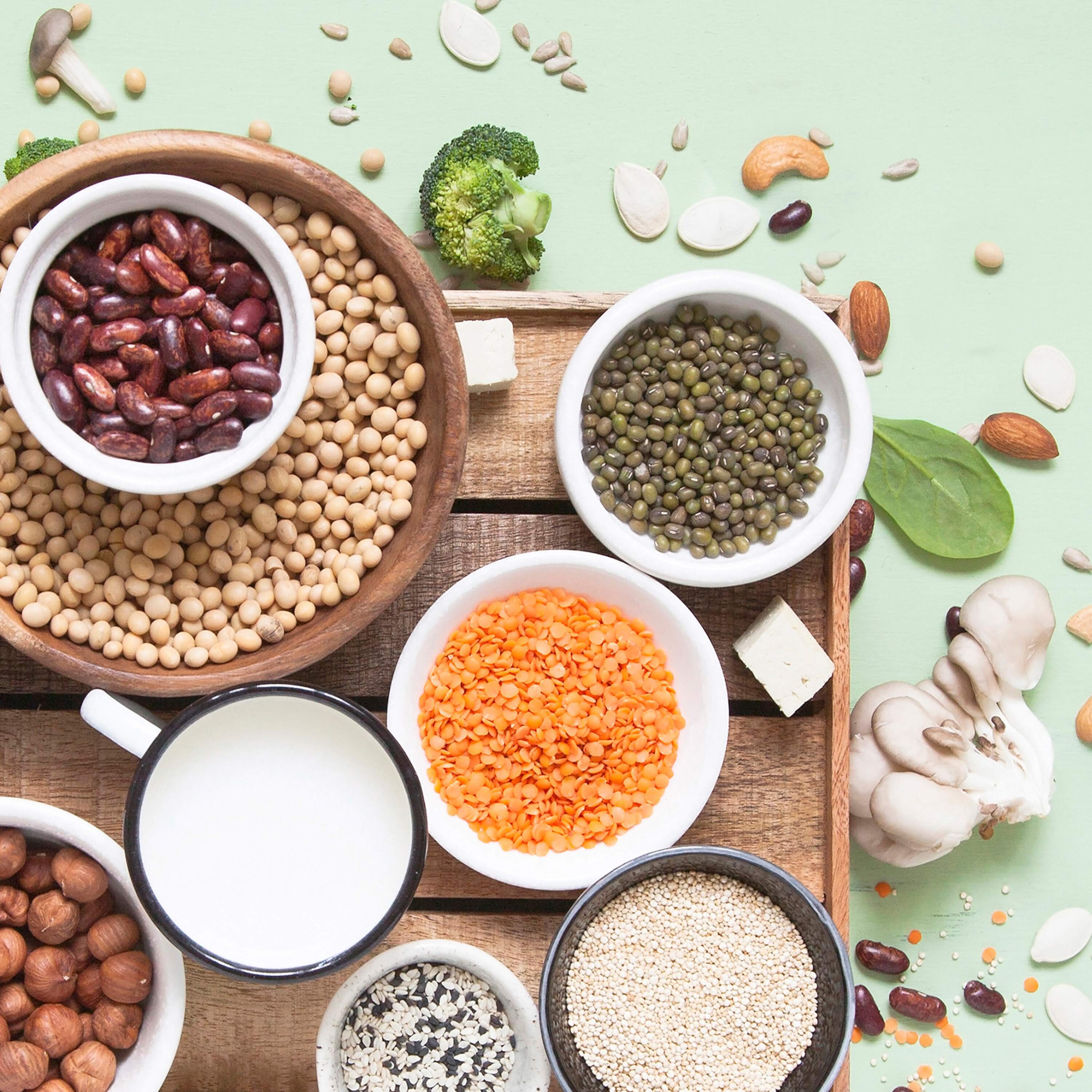
Loading summary
Transcript42 lines
- [00:00]
Marielle Segarra
You're listening to Life Kit from npr. Hey, it's Marielle. Today on the show, we're talking about protein. You may know that we need it to stay alive and that it allows us to build and repair our muscle tissue, but it does a lot more.
- [00:19]
Allison Aubrey
It also makes the enzymes your body uses to digest food. It produces the antibodies that help your immune system fight off viruses and infection. So proteins are really kind of workhorse molecules. They're absolutely essential.
- [00:34]
Marielle Segarra
This is Allison Aubrey, a science and health correspondent at npr. She's been reporting on protein lately because protein, it seems, is having a moment. In particular because Health Secretary Robert F. Kennedy, Jr. Is a big proponent. In fact, he says he personally only eats meat, fish, and fermented foods like yogurt, though I should say the federal government issued new dietary guidelines for Americans this year, and they do recommend eating plenty of fruits, vegetables, and whole grains. Back to the protein question, though. Allison wanted to strip away the noise and give people a clear sense of how much protein they actually need a
- [01:12]
Allison Aubrey
day, because the answer isn't exactly the same for everyone. Your optimal protein intake depends on who you are, and some key factors include how active you are, your age, and your body weight.
- [01:23]
Marielle Segarra
On this episode of Life Kit, a personalized protein roadmap, we'll talk about how many grams of protein you should aim for each day based on different factors. And we'll also talk about how to meet those goals. You don't have to be a carnivore. That's after the break.
- [01:42]
Wayfair/Progressive/Strawberry Me Sponsor
Support for this podcast and the following message come from Wayfair. It's Wayday at Wayfair where you can score the best deals in home and upgrade your space that work within your budget. And the best part, everything ships fast and free during Wayday. Get up to 80% off with fast and free shipping on everything. Head to Wayfair.com April 25th through the 27th to shop Wayday. That's W A Y F A I R.com Wayfair Every style, every home. This message comes from Progressive Insurance. Do you ever think about switching insurance companies to see if you could save some cash? Progressive makes it easy to see if you could save when you bundle your home and auto policies. Try it@progressive.com, progressive Casualty Insurance Company and affiliates. Potential savings will vary. Not available in all states. Support for this podcast and the following message come from Strawberry Me. If you could go back and talk to your younger self, would you tell yourself that you have a job that truly makes you happy? Many people are stuck in jobs they've outgrown or never really wanted. A career coach from Strawberry Me can help you move on to something you actually love. Benefit from having a dedicated coach in your Corner, and get 50% off your first coaching session at Strawberry Me.
- [03:01]
Carvana Sponsor
This message comes from NPR sponsor Carvana. Your time is worth more than a waiting game. Carvana gives you a transparent offer for your car in minutes and picks it up from your door. Sell your car today@carvana.com Pickup fees may apply.
- [03:16]
Short Wave Promo Speaker
Do you ever wish you could predict the future? Well, some scientists try to do that every year, forecasting when cherry blossom trees will bloom each spring.
- [03:26]
Stuart Phillips
It's a wild guess, but there is
- [03:27]
Allison Aubrey
some science involved in that.
- [03:29]
Short Wave Promo Speaker
And there is a lot riding on the peak bloom forecast, tourism, climate change models, and more. Listen to Short Wave on the NPR app or wherever you get your podcast to hear how scientists are predicting the future.
- [03:42]
Marielle Segarra
Okay, Allison, is there a recommended amount for how much protein we all need every day?
- [03:48]
Allison Aubrey
Well, the numbers have actually just been updated this year, which is part of why we are talking about this right now. So the Federal Dietary Guidelines now recommend a higher daily intake, somewhere between 1.2 to 1.6 grams of protein per kilogram of body weight each day. Now, I know that most of us in the US don't think in terms of kilograms, so you can use an online calculator to make the conversion and calculate how much protein you need. I'll say more about that in a moment. But the bottom line here is that this is a meaningful bump up from prior guidelines. And Rachel Pojnik, who has studied this for a very long time, told me she's on board with this change.
- [04:29]
Rachel Pojnik
That' the ideal range. I think that's why these guidelines were updated. And I think this is what the research has been really showing for quite some time now.
- [04:36]
Marielle Segarra
Okay, so let's say somebody weighs 150 pounds. What would they need?
- [04:41]
Allison Aubrey
Yes, absolutely. It can be complicated, but let's make it concrete here. So you take that 150 pound person. They need roughly 82 grams of protein a day on the low end and up to about 109 grams on the high end. And this is why body weight even enters into the equation. You're calculating how much protein you need based on weight.
- [05:03]
Marielle Segarra
That feels like a lot to me, but maybe it's because I don't eat a ton of meat or I don't eat meat all the time. I'm trying to figure out how this would actually look on a plate. Sure.
- [05:16]
Allison Aubrey
Well, let me just walk you through. I've thought a little bit about this in preparation and here's one way to think about hitting that range for a day for that 150 pound person. Okay, breakfast, a cup of Greek Yogurt, that's about 17, maybe 20 grams grams of protein right there. Add some nuts, a handful of nuts, you've got another 4 or 5 grams, depending on the type of nut. So you're starting the day with roughly 25 grams, you know, before you've left the house. Now, for lunch, think a cup of cooked lentils, that's about 18 grams. Add some vegetables, for instance, a cup of broccoli has about 2.5 grams of protein, give or take. Now you've got a solid meal and you've gotten more protein maybe than you realized. A snack, a handful of almonds or some say hummus with veggies, that's around 5 more grams. And for dinner, a meal that includes say a 4 ounce chicken breast, which is about 35 grams of protein. Well, then you add that all up and you are right in the target range. Now, if you're not a meat eater, you can swap in tofu at the dinner meal, which is about 3 to 4 grams of protein per ounce, or other kinds of beans.
- [06:29]
Marielle Segarra
Okay? So you can get enough protein even if you don't eat animal products.
- [06:33]
Allison Aubrey
Yes, you can. This is one of the more common questions and the science is actually pretty clear, pretty reassuring on this. You can get everything you need from plant based sources. Here's Rachel Pajednik again.
- [06:45]
Rachel Pojnik
The literature shows unequivocally that you can get enough protein and all of the essential amino acids from a plant based diet, as well as a diet that includes meat or meat derived products.
- [06:58]
Allison Aubrey
So, you know, sometimes people conflate their personal preferences or politics with the science and say, oh, you know, you gotta eat meat to get all the protein. But that is just simply not true.
- [07:08]
Marielle Segarra
Is the protein you get from plants the same as the protein you'd get from meat?
- [07:13]
Allison Aubrey
So just a little bit of context first on why people sometimes worry that they won't get enough protein from plant sources. There are about 20amino acids that the body uses as building blocks for protein, and nine of them are considered essential. What this actually means is that your body can't manufacture them on its own. So we've got to get these through the food and drinks we consume. So animal products like meat, eggs, dairy, typically supply sufficient amounts of all nine of these amino acids. And some plant sources like soybeans, which is used to make tofu are also considered, quote, unquote, complete proteins. But many plant foods have lower proportions of specific amino acids, so they are thought to be incomplete proteins. So really, this is the key message. If you eat a wide variety of plant foods to get enough of all of these amino acids. Pojenik says this is possible. I mean, think vegetables, fruits, whole grains, beans, legumes, you can kind of mix and match and cover the full spectrum. And, you know, if you're not getting everything that you, you need from food, then of course there's the protein powders and the supplements.
- [08:29]
Marielle Segarra
Okay, so you mentioned that how much protein you need depends on your body weight, but on other factors, too. What are those?
- [08:37]
Allison Aubrey
Let's talk about activity level because this is important. I spoke to a researcher named Stuart Phillips. He's at McMaster University in Canada. He studies skeletal muscle health and he told me that activity is one of the key drivers of how much protein you need. When you exercise, you're creating stress on the body and then that stress can actually increase the amount of protein your muscles use. Here he is.
- [09:04]
Stuart Phillips
When you eat more protein, you can take more up, you make more new muscle proteins and if you like, compensate for the stress of the exercise.
- [09:15]
Allison Aubrey
So there's this very symbiotic relationship between movement and protein where exercise kind of creates the need for muscle repair and protein provides the fuel to rebuild, to stay strong. And this is why many weightlifters and competitive athletes have long been told to eat on the high end of the protein recommendation. So really, the key message here is if you're working out regularly, you may want to be closer to that 1.6 grams per kilogram mark, that high end of the new guidelines as opposed to the lower end.
- [09:52]
Marielle Segarra
We will have more life kit after the break.
- [09:58]
Carvana Sponsor
This message comes from NPR sponsor Carvana. Your time is worth more than a waiting game. Carvana gives you a transparent offer for your car in minutes and picks it up from your door. Sell your car today@carvana.com pickup fees may apply.
- [10:15]
Marielle Segarra
All right, what about age? Does the amount of protein we need change based on how old we are?
- [10:21]
Allison Aubrey
So protein needs actually increase with age because the body becomes kind of less efficient at processing protein. And so bumping up intake to that higher end of the recommended range can be beneficial. And you know, these age related changes, a lot of people just don't see them coming. And by the time they notice, they may have already lost a little ground. Here's Stuart Phillips again.
- [10:45]
Stuart Phillips
People begin to lose muscle mass somewhere in their 30s and 40s and you don't notice it until maybe your 50s or your 60s, and all of a sudden you can't do one thing or another.
- [10:56]
Allison Aubrey
So, you know, maybe you go to lift your suitcase when you're on the airplane and it's hard to get it into the overhead bin or you're carrying your groceries from the car, and it's more challenging. You have to take two trips. So these are inconveniences, but they are also signals that your muscle mass has begun quietly declining. And maybe your body is telling you it's time to pay attention. So Philip says the remedy to this starts with physical movement.
- [11:22]
Stuart Phillips
If you exercise, particularly weightlifting or resistance exercise, that's going to slow muscle loss down, and that then in combination with more protein, would be even more effective.
- [11:34]
Marielle Segarra
Anything else we need to think about as we're figuring out our protein needs?
- [11:38]
Allison Aubrey
You know, I think there is something else. Women, I mean, women tend to eat less protein compared to men and also tend to do less strength training, at least historically. I know as a Gen X woman, I was late to the strength training memo. And many women have long prioritized sort of cardio over strength training. So the key message here is really simple. It isn't about being extreme or lifting heavy weights five days a week. I mean, even just adding some resistance training things like body weight exercises, you know, lightweights. Resistance bands, two to three times a week for, say, a half an hour, combined with bumping up your protein toward that higher end of the recommended range can help you maintain muscle mass, like, help you stay strong. And this can lead to a longer, healthier life.
- [12:27]
Marielle Segarra
Alison Aubrey, thank you so much for being here.
- [12:30]
Allison Aubrey
You're welcome. This is one of those topics where the science is actually pretty actionable once you cut through all the noise.
- [12:38]
Marielle Segarra
All right, time for a recap. Federal dietary guidelines recommend that adults get between 1.2 and 1.6 grams of protein per kilogram of body weight every day. Since most of us in the US don't think in kilograms, probably the easiest thing to do is use an online calculator to convert your weight into pounds and then use that number to calculate your protein needs. Say you weigh 150 pounds, that's about 68 kilograms. So you'd want to eat between about 82 and 109 grams of protein a day. If you're working out a lot, especially strength training, you'll want to aim for the top of that range. And remember that we start to lose muscle mass in our 30s and 40s. So if you're in that range or older make strength training and eating protein a priority. Oh, one more quick point. These recommendations are intended for the general public, but if you have a health condition, you want to talk to your doctor. For instance, people with chronic kidney disease might be advised to eat less protein. This episode of Life Kit was produced by Claire Marie Schneider. Our digital editor is Malika Greeb and our visuals editor is CJ Rakulan. Meghan Cain is our senior supervising editor and Beth Donovan is our executive producer. Our production team also includes Andy Tagle, Margaret Serino, Sylvie Douglas, and Mika Ellison. Engineering support comes from Stacy Abbott. Fact Checking by Andrea Lopez Crusado. I'm Mariel Segarra. Thanks for listening.
- [14:14]
Wayfair/Progressive/Strawberry Me Sponsor
This message comes from NPR sponsor CFP Certified Financial Planner professionals committed to acting in their clients best interests.
- [14:22]
Carvana Sponsor
Learn more@letsmakeaplan.org this message comes from Designer Shoe Warehouse. You know that feeling when you find shoes you love at a great price and want to tell everyone about it? Find something to brag about at Designer Shoe Warehouse, like the latest styles from brands you love, the trends everyone's obsessing over, and shoes that make you feel like you. Head to a DSW store or dsw.com today for shoes that get you at prices that get your budget dsw. Let us surprise you.